Denarau Marina, Fiji
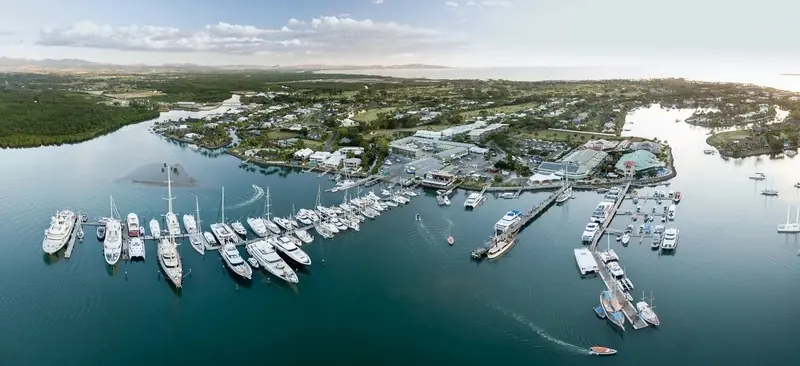
| Full name | Port Denarau Marina, on Denarau Island, a short causeway drive from Nadi on Viti Levu, Fiji's main and most populous island |
|---|---|
| Berths | 125 fully serviced commercial and private berths plus 16 swing moorings after an October 2025 expansion, including 26 dedicated superyacht berths |
| Superyacht capacity | to 115 metres LOA and 5 metres draught on the newest berths, up from a prior maximum of 85 metres |
| October 2025 expansion | a USD 6 million, four-month project adding 7 new berths, a 208-metre jetty extension, a 30-tonne travel lift and fresh dredging of the approach channel and turning basin, delivering the South Pacific's first true megayacht berth of this scale |
| Approach channel | 5 metres deep at zero tide, well marked |
| VHF | channels 16 and 14 |
| Port of entry | one of Fiji's seven designated ports of entry, alongside Lautoka, Vuda Marina (advance appointment only), Suva, Savusavu, Levuka and Rotuma |
| Pre-arrival clearance | vetting documents including vaccination status and insurance confirmation must reach Fiji Revenue and Customs Service (FRCS) at least 48 hours before arrival; clearance must be completed within 24 hours of arriving in Fiji waters |
| Fuel | high-speed pumps dispensing duty-free diesel directly on the commercial jetty |
| Cyclone season | the marina offers a sheltered cyclone mooring system and natural mangrove protection, but is explicit that it is not a full cyclone haven and vessels must evacuate for a direct threat |
| Location | about 20 minutes, roughly 9 miles, from Nadi International Airport |
| Contact | +679 675 0600 |
Fiji's newest megayacht address
Port Denarau Marina, on Denarau Island a short causeway drive from Nadi, completed a USD 6 million expansion in October 2025 that fundamentally changed what the facility can offer a large yacht. Over four months, the project added seven new berths, extended the jetty by 208 metres, installed a 30-tonne travel lift and dredged both the approach channel and the turning basin, lifting the marina's maximum vessel length from 85 metres to 115 metres.
Marina leadership described the finished project as the South Pacific's first berth built specifically for a megayacht of this scale, and framed it as a milestone for Fiji's position in the global yachting network rather than simply a local upgrade. The marina now runs 125 fully serviced commercial and private berths plus 16 swing moorings, with 26 of those positions dedicated specifically to superyachts, a meaningful jump in capacity for a single project. Before the expansion, Port Denarau's maximum was 85 metres with a 5-metre draught limit on 20 superyacht-capable berths; the new work did not simply add length, it added six further superyacht positions on top of that existing count while deepening the channel to match.
Clearing into Fiji: more paperwork than a Mediterranean stop, less than it sounds
Port Denarau is one of Fiji's seven official ports of entry, and arriving here requires genuine advance planning: vetting documents, including proof of vaccination status and confirmation of insurance, must reach the Fiji Revenue and Customs Service at least 48 hours before arrival, and immigration clearance itself must be completed within 24 hours of entering Fiji waters. The yellow Q flag flies until health authorities grant clearance or radio pratique.
A yacht planning to charter in Fijian waters carries an extra step: the Maritime Safety Authority of Fiji surveys the vessel and issues a Coastal Trading Permit for each charter, at a cost of FJD 3,450, around USD 1,725. None of this is unusually onerous by the standards of a genuine Pacific island nation, but it does require a captain to plan the 48-hour vetting window into a passage rather than arriving and expecting to clear on the spot the way a Mediterranean marina often allows. Vuda Marina, a short distance along the coast, is Fiji's other well-known port of entry for yachts and operates by advance appointment only, a useful fallback or comparison point when Port Denarau's own berths are full.
The marina calls its cyclone protection a sheltered mooring system. The marina also says, in the same breath, that it is not a cyclone haven and boats must evacuate. Both statements are true, and a boat owner needs to know which one applies to a given storm before it arrives.
The approach, the fuel, and what duty-free diesel is worth
The approach channel runs 5 metres deep at zero tide and is well marked, monitored on VHF channels 16 and 14, and the 2025 expansion's dredging work extended that depth guarantee into the turning basin as well, a material improvement for the larger vessels the new berths are built to take. High-speed pumps on the commercial jetty dispense duty-free diesel directly to visiting vessels.
Duty-free fuel is a genuine and often underrated advantage: a yacht arriving from a Mediterranean season, where Croatia's Adriatic marinas explicitly offer no duty-free fuel or supplies at all, will notice the difference immediately at the pump. Combined with the new 30-tonne travel lift installed as part of the 2025 expansion, Port Denarau now offers meaningfully more genuine self-sufficiency for a visiting yacht than it could even two years earlier.
A cyclone hole, with an honest asterisk
Port Denarau markets a sheltered cyclone mooring system, and cruising guides note the marina benefits from natural mangrove protection and in-ground cyclone holes nearby, genuine and useful features during Fiji's official cyclone season, November through April. That protection is real and worth taking seriously as a reason to consider basing a boat here through the Southern Hemisphere summer.
It is also explicitly not a guarantee. The same body of cruising information that describes the mooring system also states plainly that Port Denarau is not a cyclone haven and must be evacuated in the event of an actual cyclone, with the mangrove-lined natural protection area adjacent to the marina serving as the fallback rather than the marina basin itself. An owner planning to leave a boat here through cyclone season needs both halves of that statement, not just the reassuring one, and should have an evacuation plan agreed with the marina before the season starts rather than during an approaching storm.
The precinct beside the pontoons: buzz for some, overpriced for others
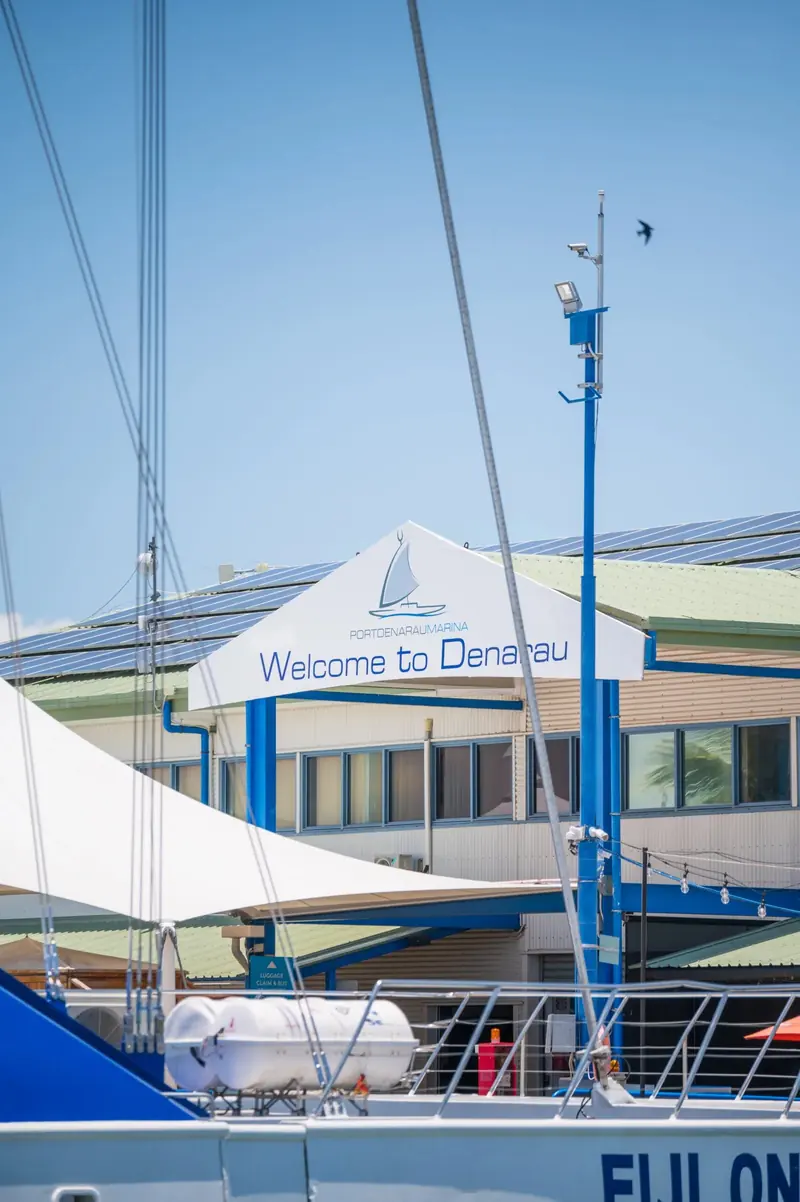
Port Denarau's retail and dining precinct sits immediately beside the marina and doubles as the departure point for day-trip and ferry traffic to the Mamanuca and Yasawa islands, and reviewers describe it in genuinely different terms depending on what they came for. Visitors passing through as ferry passengers often describe a bustling, well-run operation with an efficient ticketing and boarding system and a real buzz from the mix of international travellers.
Visitors looking for an evening out are frequently less impressed, describing the precinct as having little to do particularly early in the day, with limited and uninspiring restaurant choices, and both food and retail criticised as expensive relative to what is on offer. A crew planning to base here for any length of time should treat the wider Denarau resort strip, a short walk or shuttle away, as the more reliable source of dining variety rather than relying on the marina precinct alone.
The day-charter economy the marina is actually built around
Port Denarau's single busiest daily function has nothing to do with superyachts at all: it is the departure point for the fast-catamaran and day-cruise fleet running out to the Mamanuca and Yasawa island groups, the reef-fringed islands most visitors picture when they think of Fiji. That ferry and tour traffic is what fills the pontoons, the ticketing halls and the retail precinct every single day of the year, and it is the commercial backbone that funds a marina able to justify a USD 6 million megayacht expansion in the first place.
For an owner considering Denarau as a base rather than simply a stop, that mixed-use reality cuts both ways. It means genuinely busy, well-staffed, well-maintained public infrastructure, security, fuel, provisioning and reliable transport links, built to serve thousands of day visitors rather than a handful of yacht crews. It also means a private yacht shares its marina with a constant flow of tourist ferry traffic, tender wash and shore-side crowds, a very different atmosphere from a quiet Mediterranean marina built purely around private berths, and one worth weighing against the genuine convenience of everything being so close at hand.
What the marina does not tell you until you ask
No current superyacht berth tariff has been published since the October 2025 expansion changed the marina's capacity; the only rate sheet Yotters could locate online is dated 2019 and predates the new 115-metre berths, the extended jetty and the additional travel lift entirely. A prospective visitor, particularly for one of the 26 dedicated superyacht positions, needs to call the marina office directly for a current quote rather than trust anything published.
The transient-versus-resident split across the marina's 125 commercial and private berths and 16 swing moorings is also not published, which makes it hard to judge from outside how much room genuinely exists for a visiting yacht at short notice, especially in the newly expanded superyacht section where demand is likely to be highest precisely because the capacity is so new. Nor is there a published figure for how the marina prioritises the 26 superyacht berths between short transient calls and longer seasonal stays, a genuinely open question for any owner weighing whether to base a boat here for a full Southern Hemisphere summer rather than simply calling in for a week.
A terra, accessi e prenotazioni
| Getting there | Nadi International Airport is about 9 miles from Port Denarau, roughly a 20-minute drive, and is Fiji's main international gateway with direct service from Australia, New Zealand, North America and other Pacific hubs. Denarau Island itself is a short causeway drive from Nadi town and hosts several large resort hotels alongside the marina. |
|---|---|
| Arriving by sea | Monitor VHF channels 16 and 14 on approach. The channel into the marina is well marked and maintained at 5 metres depth at zero tide, and the October 2025 expansion included fresh dredging of both the approach channel and the turning basin to support vessels up to 115 metres. Port Denarau is one of Fiji's seven official ports of entry, alongside Lautoka, Vuda Marina, Suva, Savusavu, Levuka and Rotuma, and is generally the most straightforward and best-resourced of them for a first-time arrival. |
| Clearing into Fiji | Fiji requires pre-arrival vetting: documents, including proof of vaccination status and confirmation of insurance, must reach the Fiji Revenue and Customs Service at least 48 hours before arrival. Once in Fiji waters, immigration clearance must be completed within 24 hours, and the vessel must fly the yellow Q flag until cleared by health authorities or granted radio pratique. Charter vessels additionally need a Coastal Trading Permit from the Maritime Safety Authority of Fiji, costing FJD 3,450 (about USD 1,725) per charter. |
| How you actually reserve a berth | Berths are booked directly through the marina office on +679 675 0600; no online transient booking platform or current published day rate for superyacht berths was found, though a 2019 private berthing rate document exists on the marina's own site as a historical reference rather than a current tariff. A prospective visitor, especially for one of the 26 superyacht berths, should contact the marina well ahead given the limited number of large-vessel positions. |
| What a berth costs | No current, verifiable per-metre or per-foot day rate for a transient superyacht berth was published anywhere Yotters could find; the most recent rate document located dates to 2019 and predates the 2025 expansion entirely. Standard swing moorings have been reported around FJD 25 a night in casual cruiser accounts, though this figure is old and unverified against any current official tariff and should not be relied on for planning. |
| Fuel, water, power and what is extra | High-speed fuel pumps on the commercial jetty dispense duty-free diesel directly to vessels, a genuine cost advantage over marinas without duty-free fuel access. The 2025 expansion added a 30-tonne travel lift, giving the marina its own haul-out capability for smaller vessels; larger refit and repair work is typically arranged through contractors serving the wider Denarau and Nadi area rather than an on-site megayacht yard. |
| Where to eat, and after dark | Port Denarau's own retail and dining precinct sits directly beside the marina, and reviewers are split on it: some describe a lively, bustling atmosphere with a genuine buzz and a diverse mix of travellers, while others find the eating options limited and both food and shopping expensive for what is on offer. The Denarau Island resort strip, including several large international hotel brands, is a short walk or shuttle ride away for a wider choice. |
| The fixed dates that fill it | Port Denarau's marina and ferry terminal are consistently busy with day-trip and inter-island ferry traffic to the Mamanuca and Yasawa island groups, a rhythm that runs year-round rather than around one single fixed event. The Fiji cyclone season, officially November to April, is the calendar consideration that matters most to a boat owner rather than any single festival or show, since the marina explicitly requires evacuation planning rather than promising to ride out a direct hit in place. |
| What is NOT published | No current superyacht berth tariff is published following the October 2025 expansion; the only rate document Yotters could locate is from 2019, before the marina's capacity and berth mix changed materially. The exact split between the marina's 125 commercial and private berths, its 16 swing moorings and its 26 superyacht positions in terms of day-to-day transient availability is not published, and a prospective visitor should confirm current openings directly. The marina describes cyclone protection in two different registers, a sheltered cyclone mooring system on one hand and an explicit statement that it is not a cyclone haven and must be evacuated on the other, a genuine and important distinction for an owner to have clarified before committing to leave a boat there through the season. |
Cosa riferiscono armatori ed equipaggi
The marina reads as a genuinely busy, well-run tourist and transit hub
Visitors describe a bustling marina with a real mix of international travellers and an efficient, well-run ticketing and passenger-loading system for the inter-island ferries that also use the port, alongside praise for the marina being spacious, well maintained and very clean.
Tripadvisor reviewersSome visitors find the commercial precinct thin and overpriced rather than charming
Other reviews describe the shopping and dining precinct as having little to do early in the morning, with limited and unenticing eating options and shops and restaurants both criticised as expensive for the value on offer.
Tripadvisor reviewersThe 2025 megayacht expansion was framed by the marina's own leadership as a milestone for Fiji's yachting position
Announcing the completed expansion, marina leadership described it as marking a major milestone for both Port Denarau Marina and Fiji's position within the global yachting network, alongside the practical detail that the project delivered the South Pacific's first berth built specifically for a 115-metre megayacht.
Cynthia Rasch, quoted in Asia Pacific Boating
Cosa convince e cosa va valutato
Punti di forza
- A brand-new megayacht capability, not a decades-old claimA USD 6 million, October 2025 expansion added 7 berths, a 208-metre jetty extension, a 30-tonne travel lift and fresh dredging, lifting maximum LOA from 85 to 115 metres.
- An official port of entry with a clear, workable clearance processOne of Fiji's seven designated ports of entry, with a defined 48-hour pre-arrival vetting window and a 24-hour clearance requirement once in Fijian waters.
- Duty-free diesel on the jettyA real fuel-cost advantage over destinations, including much of the Adriatic, that offer no duty-free fuel to visiting yachts at all.
- A short, well-connected airport runAbout 20 minutes and 9 miles from Nadi International Airport, Fiji's main international gateway.
Da valutare
- No current superyacht tariff is publishedThe only rate document found dates to 2019 and predates the 2025 expansion entirely; a current quote requires calling the marina directly.
- The cyclone protection has a real limit the marina states itselfA sheltered mooring system and mangrove protection are genuine, but the marina is explicit that it is not a cyclone haven and evacuation is required for a direct threat.
- The dining and retail precinct splits opinion sharplySome visitors describe a lively, well-run hub; others call it overpriced with little to do outside ferry traffic hours.
- Berth availability across categories is not publishedThe split between commercial, private and the 26 new superyacht berths, and how much of each is open to a transient visitor, is not disclosed.
A chi si rivolge: An owner or captain who wants genuinely new, large-vessel infrastructure in the South Pacific, values duty-free fuel and a clear official clearance process into Fiji, and who plans a cyclone-season stay here with an evacuation plan agreed in advance rather than assuming the marina's own protection is a guarantee against a direct storm.