Gulf Harbour Marina (Whangaparaoa, Auckland)
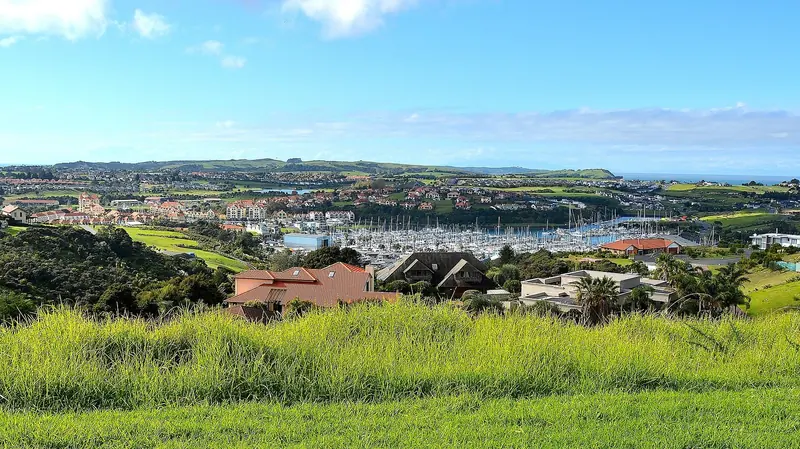
| Address | 895 Laurie Southwick Parade, Whangaparaoa, Auckland 0930, New Zealand |
|---|---|
| Coordinates | 36 37.41S, 174 47.23E |
| Opened in the mid-1990s as part of the Gulf Harbour Village development, built alongside a residential and golf resort masterplan on the Whangaparaoa Peninsula | |
| Over 1,000 berths, for vessels up to 55 m LOA and up to 4 m draft | |
| 18,500 sqm (one source | 15,000 sqm) of sealed hardstand with an on-site marine service centre |
| Travel lifts to 100 tonnes with a 7.8 m beam capacity | |
| Dry-stack storage for boats to 10 m | |
| VHF Channel 73 for the dockmaster on duty | |
| New Zealand Marina of the Year 2020-21 (NZ Marina Operators Association); highly commended, Boatyard of the Year 2022 (the 2022 title itself went to Whangamata Marina) | |
| NOT a New Zealand Customs and Ministry for Primary Industries approved place of first arrival: the current Auckland-region places of first arrival for international yachts are Westhaven Marina, Auckland Central Marina and Silo Marina (all pre-arranged clients only), none of which is Gulf Harbour - an international arrival must clear at one of those, or elsewhere such as Opua or Marsden Cove, before visiting Gulf Harbour | |
| 2026 berth rates (effective 1 December 2025), NZD/day, monohull short-term / long-term: 10.5 m $37/$27; 15 m $67/$52; 18 m $73/$62; 20 m $81/$72; 22 m $112/$100; 23 m-plus $5/metre/day. Multihull rates run higher across the same length bands | |
| Drystack (monthly, effective 2023) | NZD 425 up to 6 m rising to NZD 960 for 9.1-10 m; engine flush NZD 69 (cold) or NZD 138 (hot) |
| Haulout and hardstand fees | NZD 445 to 1,980 depending on vessel size; hardstand shed hire NZD 325 plus GST per day |
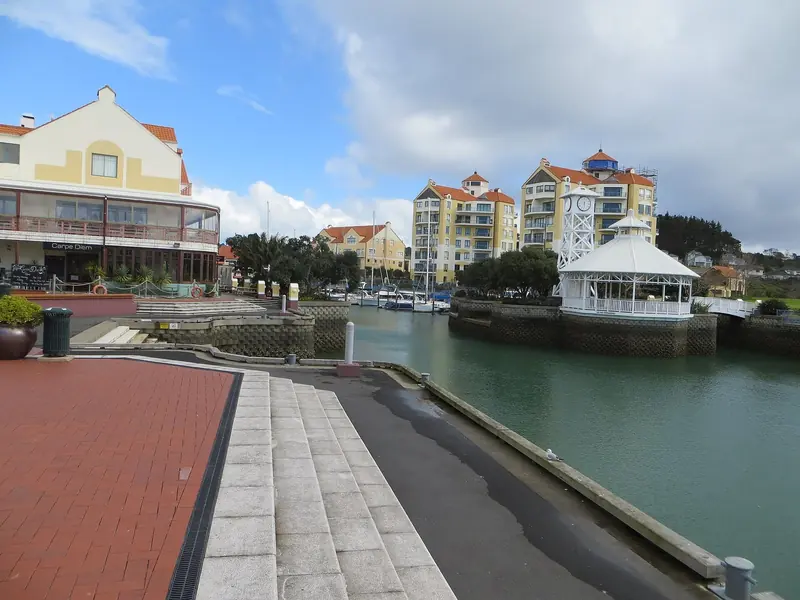
| Gulf Harbour Village retail centre includes restaurants, cafes and shops around a rotunda, plus a scheduled Fullers360 passenger ferry to downtown Auckland's Pier 8, about a 50 minute crossing, weekdays only with no weekend commuter sailings | |
| The Whangaparaoa Peninsula has a single arterial road, Whangaparaoa Road, in and out; growing housing development has increased congestion, and Auckland Transport introduced dynamic traffic lanes in 2018 to manage it | |
| Penlink, a second road link connecting the peninsula directly to the Northern Motorway, was first proposed roughly three decades ago and only reached firm, funded construction status in 2026 | |
| Gulf Harbour is the departure point for ferries to Tiritiri Matangi and Kawau Islands | |
A large, award-winning marina on an Auckland peninsula
That combination of berth count and boatyard scale puts it among the largest full-service marinas in New Zealand, built as part of the wider Gulf Harbour Village development on the Whangaparaoa Peninsula in the mid-1990s alongside a residential and golf resort masterplan rather than added to an existing working harbour.
The marina's own dry-stack storage for boats to 10 metres and haulout and hardstand services for much larger vessels mean it functions as a year-round service base for local owners as much as a berthing stop for visiting yachts, which is reflected in its two national industry awards within three years of each other.
Why an international arrival cannot simply sail straight in
This is a genuinely useful, easy-to-miss fact for a captain planning a Pacific crossing straight to a Hauraki Gulf base: a yacht must complete New Zealand Customs and Ministry for Primary Industries clearance at one of the approved places of first arrival before it can legally proceed to Gulf Harbour, even though Gulf Harbour itself is a larger, more fully equipped facility than some of the ports that do hold first-arrival status.
Once cleared, there is no restriction on moving on to Gulf Harbour for berthing, haulout or a season-long stay, so the practical effect is a planning step rather than a real barrier, but it is exactly the kind of detail a captain should confirm before assuming the nearest big marina on the chart is also the nearest legal port of entry.
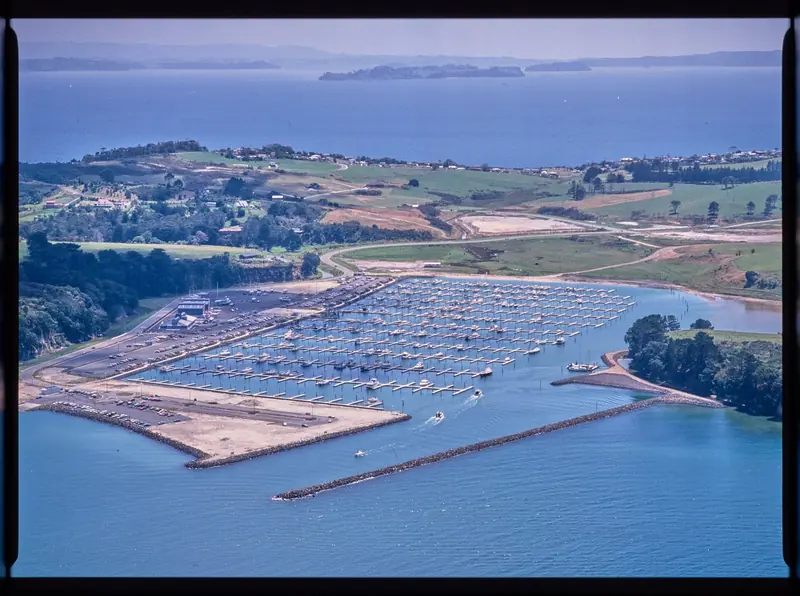
The peninsula the marina sits on has exactly one road in and out, and after thirty years of pressure a NZD 400 million second road, Penlink, only became a serious near-term reality in 2026.
Arriving by sea
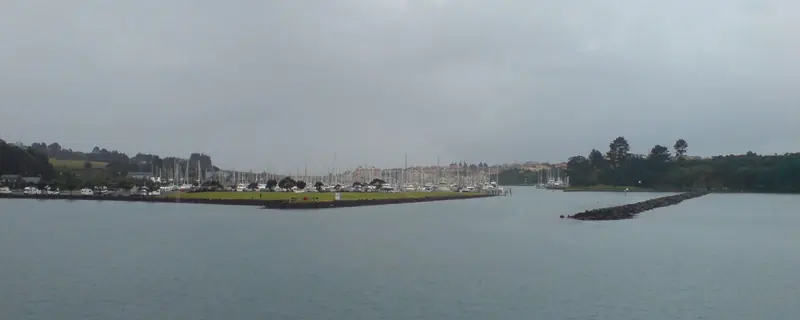
The marina's own admin office keeps published weekday and weekend hours, while boatyard bookings run on a separate weekday-only line, so an owner arranging a haulout or major service should contact the boatyard directly rather than the general marina office.
Deep-draft berths to 4 metres and the marina's 100 tonne travel lift with a 7.8 metre beam capacity mean most cruising and motor yachts likely to base in the Hauraki Gulf are within the marina's working envelope without qualification.
What a berth actually costs
That level of published detail, down to specific per-metre figures for the largest vessels, is unusually transparent for a marina of this scale and lets an owner budget a Hauraki Gulf season without a quote request, in clear contrast to several superyacht-scale Mediterranean marinas in this directory that publish nothing at all above a modest length.
Drystack, haulout and hardstand fees are equally itemised, from NZD 425 a month for a small boat's drystack space to nearly NZD 2,000 for a large-vessel haulout, giving a genuinely complete cost picture for an owner planning to base a boat here rather than just visit.
The village on the water, and the ferry that only runs on weekdays
That weekday-only city ferry is a genuinely practical gap for an owner or crew planning a weekend visit: the alternative is the peninsula's own road network into central Auckland, a longer drive that depends entirely on the single arterial road covered below.
For day cruising rather than commuting, the same waterfront gives direct access to Hauraki Gulf highlights including Tiritiri Matangi's bird sanctuary and Kawau Island, both realistic day trips from the marina's own pontoons.
One road in, one road out
Auckland Transport introduced dynamic traffic lanes on the road in 2018 specifically to manage peak-hour congestion, and a second link, the Penlink road connecting the peninsula directly to the Northern Motorway, was first proposed roughly three decades ago and only reached firm, funded construction status in 2026, a NZD 400 million project locals describe as three decades in the waiting.
For an owner or crew relying on road transport to reach the marina rather than the weekday ferry, that single-road vulnerability is worth planning around, particularly around peak commuting hours or any road incident, both of which have historically been able to cut the peninsula off from the rest of Auckland for an extended period.
What owners and reviewers actually say
One long-time user comparison specifically judged Gulf Harbour's short-term berth rate as good value relative to Auckland's central Westhaven Marina, despite the modest premium, citing the wider Hauraki Gulf access on offer for the extra cost.
The marina's two recent national industry recognitions, winning Marina of the Year 2020-21 and being highly commended for Boatyard of the Year in 2022, corroborate that owner-level praise with an independent professional judgement of the facility's actual service and maintenance standard, not just its location.
Built as part of a resort village, not a working port
That origin as a single planned development, rather than decades of incremental port growth, is part of why the marina was able to build over 1,000 berths, an 18,500 square metre hardstand and a full boatyard in one coordinated project instead of expanding piecemeal, the pattern seen at many older marinas elsewhere in this directory. Sources differ slightly on the exact hardstand figure, one citing 18,500 square metres and another 15,000, a minor discrepancy that likely reflects successive expansions rather than an error, but a captain planning a specific haulout should confirm current hardstand availability directly rather than rely on either published number, particularly around the peak summer haulout season when yard space across the whole Hauraki Gulf tends to book out well in advance.
It also means the marina's fortunes are tied closely to the peninsula's own residential and infrastructure development, including the road access problems covered above, since Gulf Harbour Village was always intended to grow as a community around the water rather than exist purely as a berthing facility.
The full cost of storage and haulout
That level of itemised detail, down to a NZD 69 cold engine flush versus a NZD 138 hot one, again reflects a marina built and run as a serious year-round service operation, letting an owner budget a full haulout and storage cycle without a quote request the way most of this directory's larger marinas still require for anything beyond a basic berth.
For an owner comparing Gulf Harbour against Auckland's more central Westhaven Marina, that fuller published cost picture, wet berth, drystack and haulout all itemised together, is arguably as useful a data point as the modest per-day berth premium noted by cruiser reviews.
Auckland's own boating calendar, a short run from the marina
Neither event is held at Gulf Harbour Marina itself, both are roughly an hour away at Auckland's downtown Viaduct, but an owner planning a March visit to the Hauraki Gulf can reasonably combine a Gulf Harbour base with both shows on the same trip, a genuine advantage of basing in the wider Auckland region rather than further from the city.
Outside that March window, the marina's own calendar runs on the steadier rhythm of resident owner activity and the Hauraki Gulf's cruising season rather than a single fixed date of its own, a real distinction for an owner who specifically wants a marina built around one big annual event.
Buying a berth outright, not just leasing one
That purchase option matters for an owner planning to base permanently in the Hauraki Gulf rather than cruise seasonally, since it converts a recurring berth cost into a capital asset that can itself be resold, a genuinely different financial proposition from every rental-only marina covered elsewhere in this directory.
The marina's own site does not publish purchase prices any more than it publishes every rental figure above the standard length bands, so an owner interested in that route should treat it, like the peninsula's road access, as a detail to confirm directly rather than assume from the general rate card alone. A berth licence of this kind also typically carries its own body-corporate-style obligations and resale conditions in New Zealand marinas generally, which is a further reason to have it reviewed on its own terms rather than compared directly against a simple rental rate.
A terra, accessi e prenotazioni
| Getting there | On the Whangaparaoa Peninsula, roughly an hour's drive north of central Auckland via the single arterial Whangaparaoa Road, or a weekday-only Fullers360 ferry (about 50 min) from downtown Auckland's Pier 8. |
|---|---|
| Arriving by sea | VHF Channel 73 for the dockmaster. NOT an approved place of first arrival - an international yacht must clear NZ Customs and MPI first at Westhaven, Auckland Central or Silo Marina (Auckland, pre-arranged), or elsewhere such as Opua or Marsden Cove. |
| Reserving a berth | Admin office +64 9 424 6200 (weekday and weekend hours); boatyard bookings on a separate weekday-only line, +64 9 884 9674. |
| What a berth costs, 2026 | Published daily rate, monohull short-term/long-term: 15 m NZD 67/52; 18 m NZD 73/62; 20 m NZD 81/72; 22 m NZD 112/100; 23 m-plus a flat NZD 5/metre/day. Multihulls higher across the same bands. |
| Services on the quay | 100 tonne travel lift (7.8 m beam), 18,500 sqm sealed hardstand, dry-stack to 10 m, power, showers, laundry, WiFi, pump-out, 24/7 dockmaster and security. |
| Where to eat within walking distance | Gulf Harbour Village's restaurants, cafes and shops around the marina rotunda. |
| Getting into Auckland city | Fullers360 ferry, about 50 minutes to Pier 8, weekdays only, no weekend commuter sailings. By road, the single Whangaparaoa Road is the only route, and it is congested at peak times. |
| What is not published | Any superyacht-specific rate above the per-metre band for 23 m-plus monohulls, and no customs/biosecurity clearance service of its own, since the marina is not an approved place of first arrival. |
Cosa riferiscono armatori ed equipaggi
Short-term berth rates compare well to central Auckland for the wider access on offer
A published cruiser comparison notes Gulf Harbour's short-term berth rate runs a few dollars above Auckland's central Westhaven Marina, but judges the difference well worth it for the marina's direct Hauraki Gulf access.
Boaties NZThe peninsula's single road access is a long-documented local problem, not a one-off complaint
Local and national reporting describes Whangaparaoa Road as the peninsula's only route in and out, increasingly congested as housing development grows, with the long-awaited Penlink second road only reaching funded construction status in 2026 after roughly three decades of advocacy.
The Post (New Zealand)Independent industry judges rate the marina's own service and maintenance highly
The NZ Marina Operators Association named Gulf Harbour Marina its Marina of the Year for 2020-21 and highly commended its boatyard for Boatyard of the Year in 2022 (judges called it an operation with a high level of attention to detail and an impressive vision for the future), an independent professional assessment separate from user reviews.
NZ Marina Operators Association
Cosa convince e cosa va valutato
Punti di forza
- Genuine scale and boatyard capabilityOver 1,000 berths, a 100 tonne travel lift and an 18,500 sqm hardstand make this a real service base, not just a pontoon.
- A fully published, itemised rate cardDaily berth rates by length, drystack, haulout and hardstand fees are all public, an unusually complete cost picture for a marina of this scale.
- Direct access to the Hauraki Gulf's best cruisingShort runs to Tiritiri Matangi, Kawau Island and the wider gulf, plus a scenic weekday ferry into central Auckland.
- Independently recognised service qualityA national Marina of the Year win plus a Boatyard of the Year highly-commended within a three-year span back up consistent owner-level praise.
Da valutare
- Not a legal port of entryAn international arrival must clear customs and biosecurity elsewhere in Auckland (Westhaven, Auckland Central or Silo Marina) or further north before it can come to Gulf Harbour.
- One road in, one road outThe whole Whangaparaoa Peninsula depends on a single arterial road that has been congested for years, with a second link only reaching funded construction in 2026 after three decades of delay.
- No weekend ferry into the cityThe Fullers360 commuter service to downtown Auckland runs weekdays only, leaving road access as the only option on weekends.
- No superyacht-specific tariffPublished rates stop at a flat per-metre figure for 23 m and over; nothing larger is separately itemised.
A chi si rivolge: An owner basing a yacht in the Hauraki Gulf for New Zealand's world-class cruising grounds, who has already cleared customs and biosecurity at an approved port elsewhere in Auckland