Gustavia (St Barths)
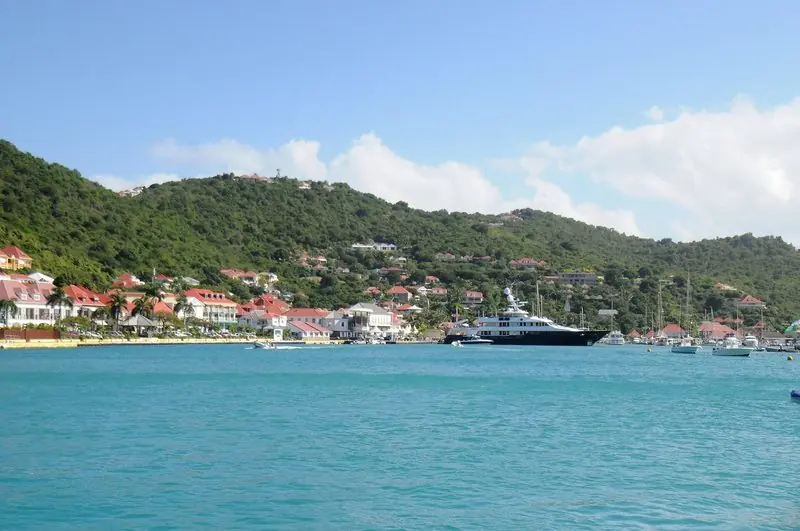
| Posizione | Gustavia, Saint-Barthelemy, Antille francesi |
|---|---|
| Amministrazione | l'ufficio portuale dell'isola e il capitano del porto |
| Ormeggio in banchina | di poppa, per yacht fino a circa 60 m |
| Yacht più grandi | danno fondo nella rada esterna |
| Porto interno | fondali modesti, con un campo boe per le barche più piccole |
| Alta stagione | Natale e Capodanno, più la regata Bucket in primavera |
| Attrattiva | il ritrovo invernale più esclusivo dei Caraibi |
| Larger yachts | anchor in the outer roadstead and tender ashore |
| Depths | not published by the port, so draught should be confirmed with the port office |
| Airport | Gustaf III, a single 646 m concrete runway with a specific pilot licence required, served by Pilatus PC-12, Cessna 208B, DHC-6 Twin Otter and Britten-Norman Islander aircraft |
| Jet access | none on the island, with guests routing through Princess Juliana on Sint Maarten by commuter aircraft or ferry |
| Season | Christmas and New Year peak plus the spring Bucket regatta, with the summer closed by the Caribbean hurricane season |
| Shore power does not appear on the pleasure port's published service list at all. Voltage, amperage and frequency are published nowhere | |
| Water, metered at the tap on every quay: EUR 0.012 per litre for a subscriber boat, EUR 0.019 per litre for a visitor, which is EUR 12 and EUR 19 per cubic metre | |
| Worked comparison | the same cubic metre of water costs EUR 6.22 at Monaco and EUR 3.79 at Antibes. Fifty cubic metres at Gustavia costs a visitor EUR 950 |
| Published services | water, wifi on a code from the harbour office, refuse with compulsory sorting, sanitary facilities, marine reserve liaison, SNSM lifeboat station, postal address for crew mail |
| Refuse containers are on the Quai General de Gaulle and the Quai de La Collectivite. Sorting is compulsory island-wide | |
| Harbour office hours | 07:00 to 18:00, seven days a week, all year. Sanitary facilities 07:30 to 18:00. VHF channel 12 |
| Formalities are compulsory for access to the pleasure port and can be started online up to 24 hours ahead, but are only registered once the document is printed and signed at the port office | |
| The port states in writing that an agent is not necessary and not compulsory at Saint-Barthelemy, because every harbour office officer is bilingual | |
| Immigration questions go to the Gendarmerie nationale, not to the harbour office | |
| Speed limit in the channel | 3 knots |
Il porto di Saint-Barthelemy
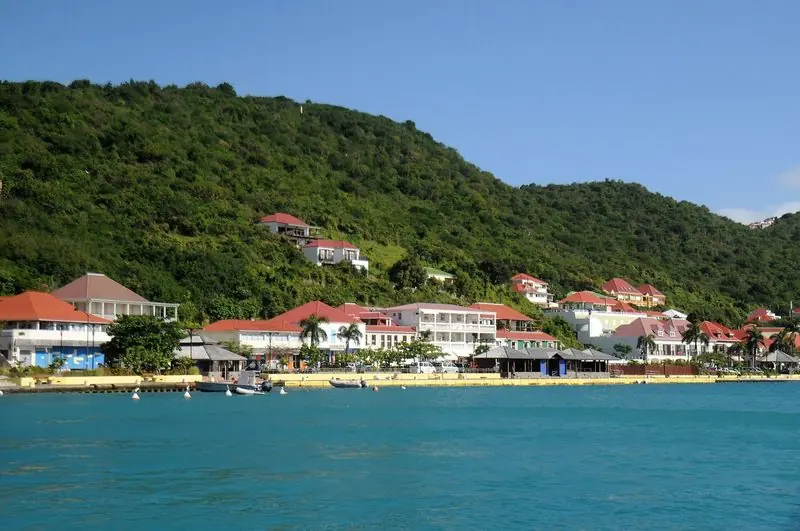
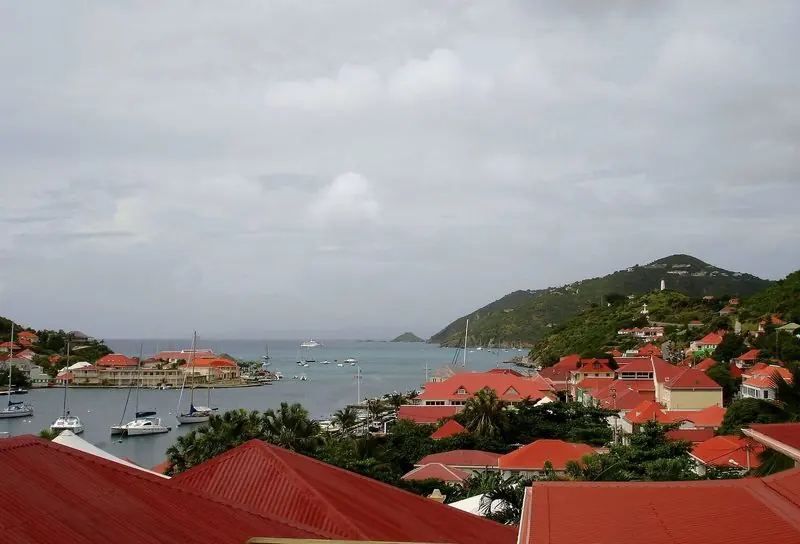
Gustavia è il capoluogo e il porto di Saint-Barthelemy, una piccola isola francese dei Caraibi settentrionali. Lo scalo si trova in un'insenatura naturale circondata dalla cittadina, con gli edifici dai tetti rossi che salgono sulle colline attorno all'acqua. Saint-Barthelemy attira da decenni un pubblico ricco e discreto, e Gustavia è il centro della sua vita nautica. Il porto è compatto e il contesto intimo. L'isola è abbastanza piccola da attraversarsi in mezz'ora di strada, quindi il porto non è mai lontano dalle spiagge e dalle ville.
Il porto è amministrato dall'autorità locale dell'isola tramite l'ufficio portuale, che controlla strettamente arrivi e ormeggi. Gli yacht devono concordare i propri movimenti con il capitano del porto prima di entrare o manovrare. Il porto è piccolo, e nell'alta stagione la domanda supera di gran lunga lo spazio. Quella scarsità definisce l'esperienza di ormeggiare qui.
Di poppa in banchina, e l'ancoraggio
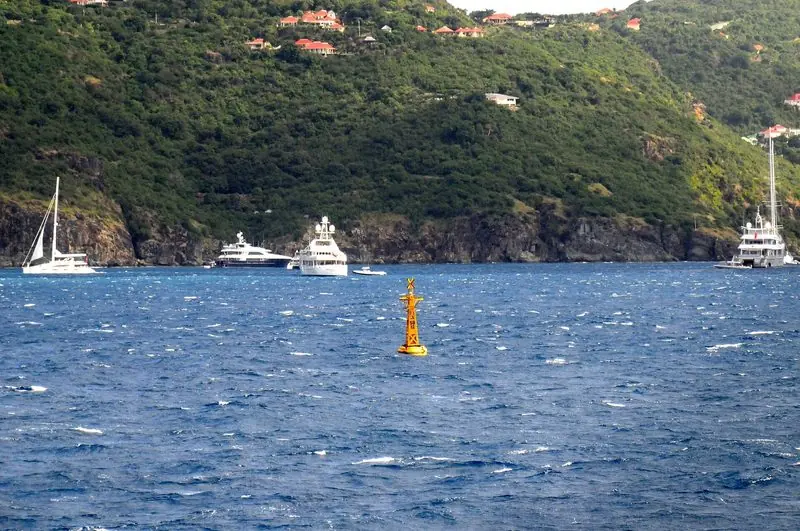
Il porto interno di Gustavia accoglie gli yacht di poppa lungo la banchina, con un campo boe per le barche più piccole all'interno. La banchina stessa si presta a yacht fino a circa 60 metri, un limite dettato in parte dalle assicurazioni e dal riparo del porto. I superyacht più grandi danno fondo nella rada esterna e scendono a terra in tender. La soluzione fa sì che gli yacht più grandi siano sempre visibili appena al largo della cittadina. I cavi di poppa vanno a robusti anelli fissati nel vecchio muro di banchina, e il personale del porto aiuta gli yacht a manovrare negli spazi stretti.
I fondali del porto interno sono modesti, quindi gli yacht di pescaggio profondo restano fuori. L'isola nel suo insieme può accogliere una flotta ampia se si contano gli ancoraggi intorno, ma i posti in banchina sono pochi e contesi ferocemente nel picco. Le prenotazioni per l'alta stagione si fanno con largo anticipo. Per un posto sulla banchina di Gustavia a Capodanno, un armatore pianifica con mesi di anticipo.
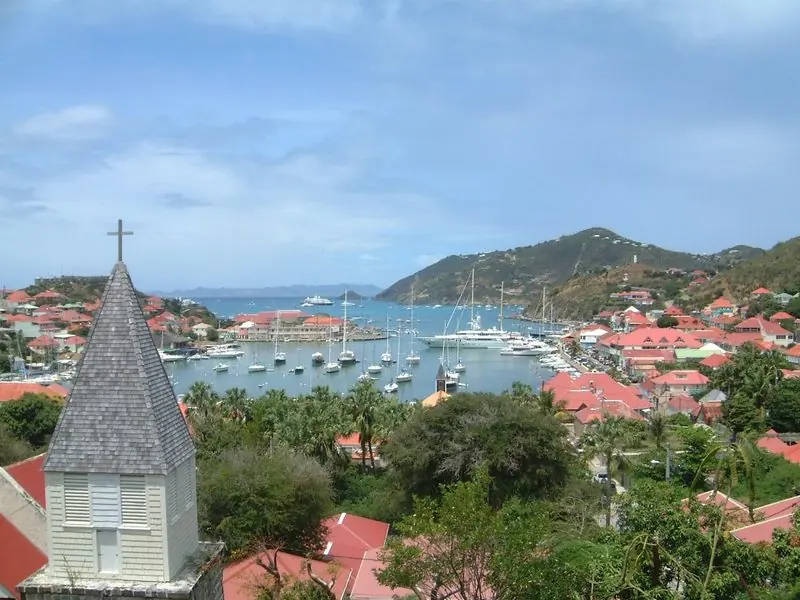
L'alta stagione caraibica, all'ancora davanti a un solo piccolo porto francese.
Servizi su un'isola piccola
Per le sue dimensioni, Gustavia offre una profondità di servizio sorprendente, calibrata sugli yacht che la visitano. Carburante e acqua si gestiscono nel porto, e una rete di agenti rende fluidi approvvigionamento e logistica. L'isola importa gran parte di ciò che le serve, quindi la catena di fornitura è ben organizzata nonostante la posizione remota. Gli equipaggi trovano l'essenziale coperto anche nei momenti più affollati. Acqua ed energia in banchina sono limitate, quindi molti yacht usano i propri impianti e fanno rifornimento quando possono.
Ciò che l'isola offre davvero è una concentrazione di lusso a terra che poche destinazioni caraibiche eguagliano. Le boutique e le ville di Saint-Barthelemy sono pensate per la stessa clientela che arriva in yacht. L'approvvigionamento arriva alle migliori forniture francesi, portate in aereo per la stagione. L'esperienza è costruita attorno alla reputazione dell'isola tanto quanto attorno al porto.
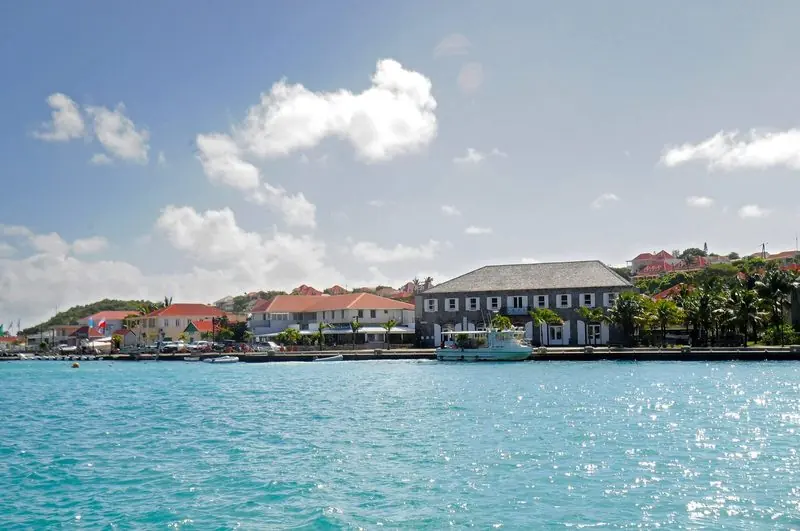
L'alta stagione caraibica
L'anno di Gustavia raggiunge un picco netto attorno a Natale e Capodanno, quando l'isola diventa il punto di ritrovo della stagione nautica caraibica. Il porto e l'ancoraggio si riempiono di alcuni fra gli yacht più grandi in navigazione, e il ritrovo della notte di Capodanno è un appuntamento fisso del calendario. La regata Bucket, in primavera, porta la flotta a vela per pochi giorni molto celebrati. Il resto dell'anno è molto più tranquillo. I prezzi salgono insieme alla domanda, e un posto per la finestra di Capodanno è tra i soggiorni brevi più cari dello yachting.
Il giro attorno al porto è denso ed esclusivo per tutto il picco, con i ristoranti e i locali della cittadina al massimo della capienza. Essere a Gustavia a Capodanno è una dichiarazione allo stesso modo in cui lo è essere a Monaco d'estate. L'isola vive in egual misura di riservatezza e glamour. Per quelle settimane è il centro del mondo dello yachting sul lato occidentale dell'Atlantico.
Dove si colloca nei piani di un armatore
Gustavia è il fuoco naturale di una crociera invernale caraibica, il posto dove stare per l'alta stagione attorno a Capodanno. Si addice all'armatore il cui yacht attraversa l'Atlantico per l'inverno e usa Saint-Barthelemy come punto più alto di un giro più ampio fra le isole. Gli ancoraggi vicini e le isole confinanti allargano la navigazione intorno. Per la stagione caraibica nessun porto ha lo stesso peso. Anguilla e St Martin sono a breve distanza e offrono agli ospiti facili gite giornaliere lontano dalla folla del picco.
Lo scalo è una destinazione stagionale più che una base annuale, e la banchina piccola fa sì che quasi tutti i grandi yacht diano fondo invece di ormeggiare. Gli armatori pianificano una tappa a Gustavia come pezzo forte di un programma invernale, spesso abbinandola al Mediterraneo d'estate. È la controparte caraibica dei grandi porti mediterranei. Il suo richiamo è la stagione e l'isola, non l'ormeggio in sé.
Services on a small island
For its size Gustavia handles yachts well, with fuel and water available in the harbour and a network of agents who make provisioning, transport, crew logistics and clearance straightforward. The island imports almost everything, and the supply chain into it is unusually well organised because the same chain feeds the hotels and villas. French provisions arrive for the season and can be sourced at a standard that surprises people.
What does not exist is technical capacity. There is no yard, no lift and no serious spares holding, and water and power on the quay are limited enough that many yachts run their own systems and top up when they can. Anything mechanical means St Maarten, which is a short hop, or a longer run to a proper Caribbean yard. A yacht that intends to spend the season here should arrive with everything working.
Security, privacy and how visible the yacht is
Saint-Barthelemy has been a discreet island for decades and the culture of the place protects the people who come to it. Crime is not a practical concern. The port is small enough that everyone in it is known to the harbour office.
Privacy from cameras is a different matter over Christmas and New Year. The quay is the town's promenade, the restaurants and bars back straight onto it, and the anchored fleet outside is photographed from every hillside and every tender. For those two weeks Gustavia is as exposed as Monaco in September. From mid-January it goes quiet.
Getting there, which is the real problem
Gustaf III airport has a single concrete runway of 646 metres running down a slope onto a beach, with an extremely steep arrival over the hilltop road on runway 10 and a specific pilot licence required to land there. The aircraft that use it are Pilatus PC-12s, Cessna 208B Caravans, DHC-6 Twin Otters and Britten-Norman Islanders. The largest type ever cleared for the airport was the DHC-7. No business jet is landing on Saint-Barthelemy.
In practice guests fly into Princess Juliana on Sint Maarten and transfer by commuter aircraft with Tradewind Aviation, St Barth Commuter or Winair, or come across by fast ferry. It works, and it is what everyone does, but an owner planning a week with family and staff should build the transfer into the plan and not assume the jet lands at the island.
The honest downside
The harbour cannot supply what people want from it. There are more owners who want to be alongside in Gustavia at New Year than there is quay, by a wide margin, and no amount of money changes the physical length of the wall. Prices for that window are among the highest short-stay costs in yachting. The island is expensive across the board and the peak weeks are priced accordingly.
The rest of it is the geography. This is a seasonal destination with a hurricane exposure that closes the summer, no technical support, a runway that excludes jets, and an island small enough to cross in half an hour, so a family staying a fortnight will have seen it. Owners treat Gustavia as the centrepiece of a Caribbean winter and pair it with the Mediterranean for the other half of the year.
What the port supplies, which is less than expected
The pleasure port publishes its service list and shore power is not on it. What is on it is water, wifi, refuse, sanitary facilities, a working relationship with the island's marine reserve and an SNSM lifeboat station of its own. Water is metered at the tap on every quay and it is expensive: EUR 0.012 per litre for a subscriber boat and EUR 0.019 per litre for a visitor, which is EUR 12 and EUR 19 per cubic metre. Set against Monaco at EUR 6.22 and Antibes at EUR 3.79 for the same cubic metre, water at Gustavia costs three to five times Riviera prices, which is what desalination on an island of 25 square kilometres costs. A visiting yacht taking 50 cubic metres pays EUR 950 for it.
Sorting refuse is compulsory across Saint-Barthelemy and the port provides the containers on the Quai General de Gaulle and the Quai de La Collectivite. Wifi is open to anyone on a code collected from the harbour office. The showers and WCs are reserved to port users and open 07:30 to 18:00. The harbour office itself is open 07:00 to 18:00 every day of the week and all year round, and works VHF channel 12. What the port does not list, and shore power is the conspicuous absence, is a question to put to the port office before the passage rather than an assumption to make on arrival.
Who clears the yacht, and why an agent is optional here
Entry and exit formalities are compulsory for access to the pleasure port, and there are two ways to complete them. Either at the port office directly, or online through the port's own clearance system no more than 24 hours ahead. The online route does not finish the job. The port states that the formality is only registered once the document has been printed and signed at the port office, so the online form saves the queue and not the visit. Immigration is handled separately by the Gendarmerie nationale, which is who to contact about anything to do with a crew member's status rather than the harbour office.
On agents the port is unusually direct, and it is worth taking at face value. Every officer in the harbour office is bilingual, and the port states in writing that it is in no way necessary for a vessel to have an agent at Saint-Barthelemy to represent her, then repeats on its formalities page that an agent's presence is not compulsory. Very few ports at this level publish that, and most of the ones that do not are protecting a local trade. Speed in the channel is limited to 3 knots, and the port repeats the limit on every page of its own site, which is a fair indication of how it is treated.
A terra, accessi e prenotazioni
| Booking the quay | The pleasure port does not take advance reservations by name; an owner or agent contacts the harbour office directly (VHF 12, or its online clearance system up to 24 hours ahead) with the yacht's dimensions and dates, and berthing is allocated from there. For the Christmas and New Year window, space on the wall is spoken for months ahead regardless. |
|---|---|
| What it costs to sit alongside | The port publishes no berth rate of any kind. What it does publish is water, metered at EUR 0.012 per litre for a subscriber and EUR 0.019 per litre for a visitor (EUR 12 to 19 per cubic metre) - three to five times the Riviera price at Monaco (EUR 6.22) or Antibes (EUR 3.79). A visiting yacht taking 50 cubic metres pays about EUR 950 for water alone. |
| What is not published | No maximum draught or depth alongside, no berth tariff, and no shore power specification (voltage, amperage or frequency) appear anywhere on the port's own site. A deep or power-hungry yacht should raise all three with the harbour office before committing to a date. |
| Do you need an agent | The port states in writing that an agent is not necessary or compulsory, because every harbour office officer is bilingual - unusually direct for a marina at this level. Most large yachts use one anyway for provisioning, transport and crew logistics rather than for the clearance itself. |
| Getting there | No jet lands on the island: Gustaf III airport's 646 metre runway takes only Pilatus PC-12s, Cessna 208B Caravans, DHC-6 Twin Otters and Islanders. Guests fly into Princess Juliana on Sint Maarten and transfer by commuter aircraft or fast ferry. |
| Technical support | There is no yard, no lift and no serious spares holding on the island. Anything mechanical means a short hop to St Maarten or a longer run to a proper Caribbean yard, so a yacht wintering here should arrive with everything already working. |
| Next door | The quay is the town's promenade: duty-free boutiques and restaurants back directly onto it, and the anchored fleet outside is in full view from every hillside. The season runs Christmas through the spring Bucket regatta; the Caribbean hurricane season (roughly June to November) closes it. |
Cosa riferiscono armatori ed equipaggi
The waters here are unusually weather-reliable for a Caribbean venue
In seventeen years running the St Barths Bucket, the regatta has lost only a single race day to weather - a track record its own race chairman points to as evidence the trade-wind season around the island is dependable rather than lucky.
Peter Craig, St Barths Bucket regatta race chairman, via Boat InternationalThe approach still needs a careful eye, tradewinds or not
The Caribbean's most established cruising guide warns sailors approaching St Barths to study the charts and keep a good lookout rather than trust the marked channel blind, noting that the navigation lights and buoys on the approach have been known to fail or shift position.
Chris Doyle, Doyle Guides, via Caribbean Compass
Cosa convince e cosa va valutato
Punti di forza
- The one anchorage everyone else is watchingAt New Year the Gustavia roadstead is the most photographed gathering of large yachts in the Caribbean, and a berth or a good anchoring spot puts an owner in the middle of it.
- Duty-free and well organised for its sizeSaint-Barthelemy sits outside EU customs and VAT as a free port, and despite the island's tiny scale, agents, provisioning and fuel and water are handled efficiently through a supply chain built to feed the same hotels and villas.
- Genuinely weather-reliable racing and cruising conditionsTrade winds hold the season at a steady mid-20s Celsius, and the St Barths Bucket's own race chairman has lost only one race day to weather in seventeen years running it.
Da valutare
- The quay cannot supply the demand for itThere is more demand for a New Year berth than there is wall, by a wide margin, and no amount of money lengthens the quay - an owner deciding in October is usually deciding to anchor, not berth.
- No technical capacity at allNo yard, no lift and no meaningful spares holding on the island; a mechanical problem means St Maarten at best.
- No jet accessThe 646 metre runway excludes every business jet; guests transfer via Sint Maarten by commuter aircraft or ferry, which has to be built into any plan.
- Basic facts the port will not publishNo berth rate, no maximum draught and no shore power specification appear anywhere on the operator's own site, which leaves a captain confirming by phone what most marinas of this standing publish outright.
A chi si rivolge: Armatori che attraversano verso i Caraibi per l'inverno e vogliono Saint-Barthelemy come pezzo forte.