Marina Genova (Genoa)
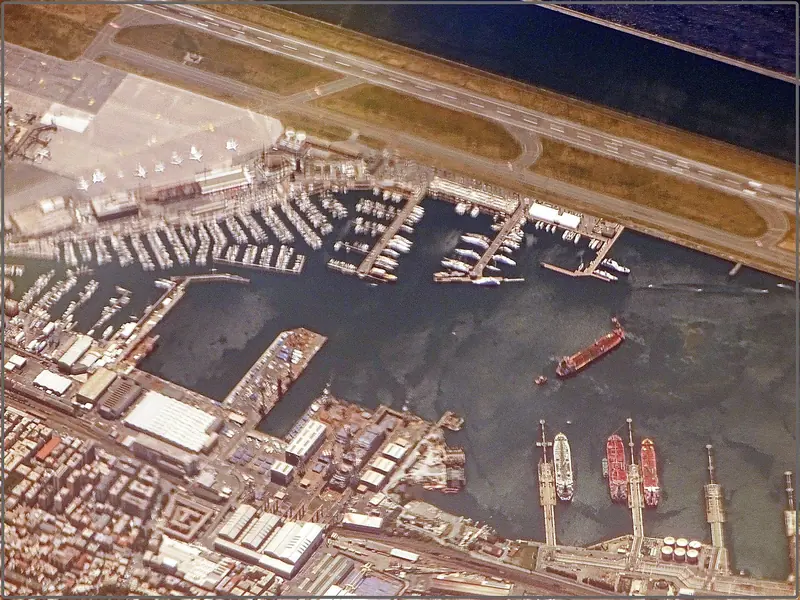
| Posizione | Sestri Ponente, estremità di ponente del porto di Genova, Liguria, Italia, a 44 25.0 N 008 50.3 E, immediatamente a nord della pista dell'aeroporto |
|---|---|
| Nome ufficiale | Porto Turistico Camillo Luglio, dal nome della famiglia di cantieristi che è attiva su questo specchio d'acqua fin dagli anni Sessanta |
| Gestore | Marina Genova Aeroporto, società con Giuseppe Pappalardo amministratore delegato e circa 100 addetti |
| Realizzazione | proposta nel 1994, approvazione ministeriale nel maggio 1998, lavori principali dal 2002 al 2007, tre bacini su circa 210.000 metri quadrati di superficie d'acqua |
| Posti barca | 500 secondo il porto, di cui 100 posti da superyacht per unità da 30 m in su. Le fonti però non concordano: altre dicono 600, più di 400, oppure circa 1.200 per l'intero fronte mare di Sestri Ponente |
| Unità ammesse | da 8,5 m a 130 m fuori tutto, baglio massimo 18,5 m, pescaggio massimo 15 m |
| Profondità | da 2,7 m a 15 m nei bacini secondo Sea-Seek, con 15 m sottobordo alla banchina carburante; il porto non pubblica alcuna profondità propria |
| Carburante | banchina di 150 m, cinque pompe ad alta portata, accisa assolta e in esenzione, più di 6 milioni di litri erogati nel 2024, il 43 per cento in più del 2023 |
| VHF | la pagina contatti del porto indica il 73 per l'ormeggiatore di guardia notturno e il 74 come canale del marina. Tre elenchi terzi pubblicano il 71, così confermate prima dell'arrivo |
| Refit in loco, a Sestri Ponente | Cantieri Navali di Sestri, travel lift Ascom da 420 tonnellate per unità fino a 43 m, gru a ponte da 400 tonnellate, circa 13.000 metri quadrati. Mostes, travel lift da 160 tonnellate fino a 30 m e gru da 85 tonnellate |
| Refit in città, a levante | Amico and Co, circa 65.000 metri quadrati, travel lift da 835 t e 320 t, ShipLift da 4.000 t per unità fino a 95 m aperto nell'ottobre 2019, dodici posti coperti, bacini fino a 200 m, 24 posti da refit fino a 110 m con 630 A da terra |
| Riconoscimenti di qualità | RINA MaRINA Excellence con punteggio massimo, più i rating 24 Plus e 50 Gold per unità sopra i 24 m e sopra i 50 m. Membro istituzionale del SEA Index dal 14 luglio 2025 |
| Elettricità ed energia | impianto fotovoltaico di 7.000 metri quadrati con 800 pannelli attivo dal gennaio 2025, circa 500 MWh l'anno, due ricariche rapide Aqua superPower fino a 320 kW, sei punti per veicoli elettrici, cinque Seabin |
| Aeroporto | Genova Cristoforo Colombo, circa cinque minuti su strada, pista di 2.916 m su una penisola artificiale, 1.335.095 passeggeri nel 2024, nessun volo intercontinentale |
| Gestione | fatturato 2024 più alto di EUR 15 milioni, il 20 per cento in più del 2023, occupazione fra il 90 e il 100 per cento negli ultimi mesi, 254 arrivi di superyacht, 6.855 giornate di sosta di superyacht |
| Durata del posto | gli annunci dei broker indicano quasi tutti contratti in scadenza nel 2052, mentre il materiale di vendita del porto ha parlato di concessione fino al 2092 e di durate di 20, 35 e 90 anni |
L'aeroporto è a cinque minuti, e quanto vale davvero
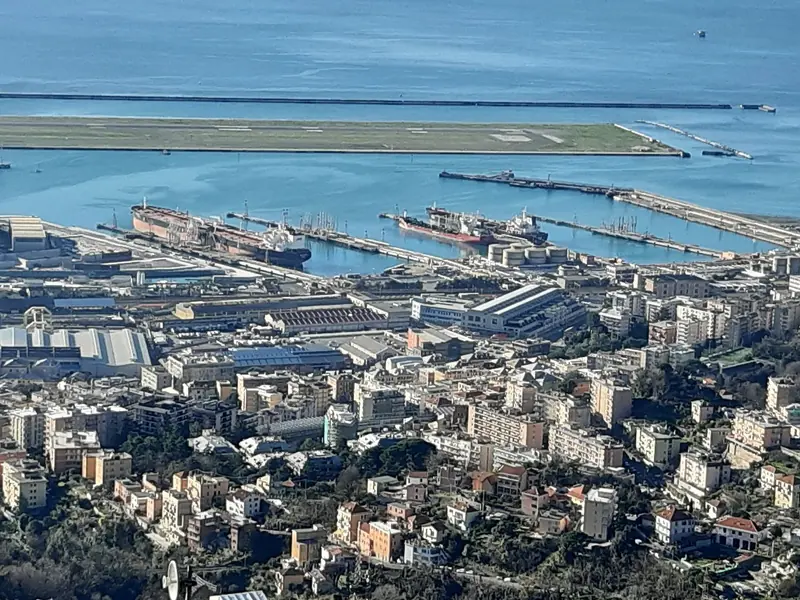
L'aeroporto Cristoforo Colombo di Genova è su una penisola artificiale spinta in mare fra il 1954 e il 1962, con una sola pista, la 10/28, che è lunga 2.916 metri. È 7,4 chilometri più a ovest del centro della città, nel quartiere di Sestri Ponente, e Marina Genova è immediatamente a nord, dentro lo stesso tratto di porto. Gli annunci dei broker collocano il porto turistico a circa 5 chilometri dal centro e a cinque minuti dal terminal: le due cifre descrivono lo stesso breve tragitto attorno alla testata della pista. Per un armatore che deve gestire i cambi degli ospiti questo è il valore più alto del posto, perché chi atterra alle 11:00 è a bordo prima di mezzogiorno, e ad Antibes, a Portofino o a Porto Cervo non succede.
Il limite è ciò che a Genova arriva davvero. Nel 2024 lo scalo ha movimentato 1.335.095 passeggeri con 15.941 movimenti aerei, cioè il ventunesimo traffico italiano, e non ha alcun collegamento intercontinentale. Ryanair, ITA Airways, Aeroitalia e Wizz Air coprono la maggior parte del traffico su rotte europee e nazionali. Gli ospiti che arrivano da fuori Europa passano da Milano o da Roma e proseguono in auto, in treno o con un aereo leggero: così un trasferimento di cinque minuti diventa un trasferimento di tre ore, ed è il dettaglio che quasi tutti gli armatori scoprono tardi. Sulla porta c'è la stazione ferroviaria di Genova Sestri Ponente-Aeroporto, e il porto offre ai propri ospiti una navetta gratuita per l'aeroporto e per il Porto Antico, nel centro storico della città, a levante: è un servizio che la direzione ha confermato pubblicamente nell'agosto 2026, rispondendo alla lamentela di un visitatore sull'isolamento.
Che cos'è questo porto, e chi lo ha costruito
Il nome formale sui documenti di concessione è Porto Turistico Camillo Luglio, dal nome della famiglia che su questo specchio d'acqua ha avuto un'attività di riparazioni navali fin dagli anni Sessanta, stretta fra i capannoni di Fincantieri e l'ex area di Piaggio Aero. La proposta è del 1994, l'approvazione ministeriale è del maggio 1998, e un accordo interistituzionale fra comune, autorità portuale e regione nel 2000 ha sbloccato le aree. I lavori principali sono andati dal 2002 al 2007. Ne sono usciti tre grandi bacini con una superficie d'acqua di circa 210.000 metri quadrati, 38.000 metri quadrati di superficie costruita e una disponibilità di parcheggi che le fonti non quantificano allo stesso modo, fra i 700 e i 2.500 posti.
Il materiale del porto parla di 500 posti barca per unità da 8,5 a 130 metri, di cui 100 per unità da 30 metri in su. Gli elenchi di settore scompongono più in dettaglio la fascia alta: circa 41 posti fra 24 e 30 metri, 34 fra 31 e 50 metri e 25 da 51 metri in su. Anche questi fanno 100, però non sono gli stessi 100, perché la scomposizione di settore parte da 24 metri e il porto parte da 30: le due letture non si possono sovrapporre. E il conteggio non si assesta mai. Il gestore dice 500, una piattaforma di prenotazione dice 600, un profilo societario italiano più di 400, e le guide nautiche che descrivono l'intero fronte mare di Sestri Ponente, e non soltanto questo porto, arrivano a circa 1.200. Per una grande unità ciò che conta sono i 100 posti da superyacht e i massimi che ci stanno dietro: 130 metri fuori tutto, 18,5 metri di baglio e 15 metri di pescaggio, con la banchina carburante dragata alla stessa profondità di 15 metri.
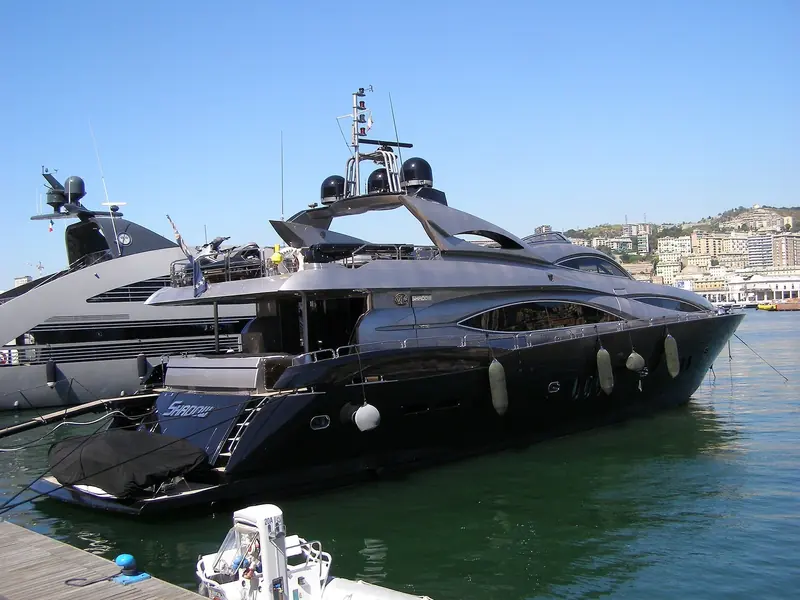
I vostri ospiti sono a bordo cinque minuti dopo l'atterraggio, dietro il pontile c'è un travel lift da 420 tonnellate, e di tutto ciò non esiste un solo prezzo pubblicato.
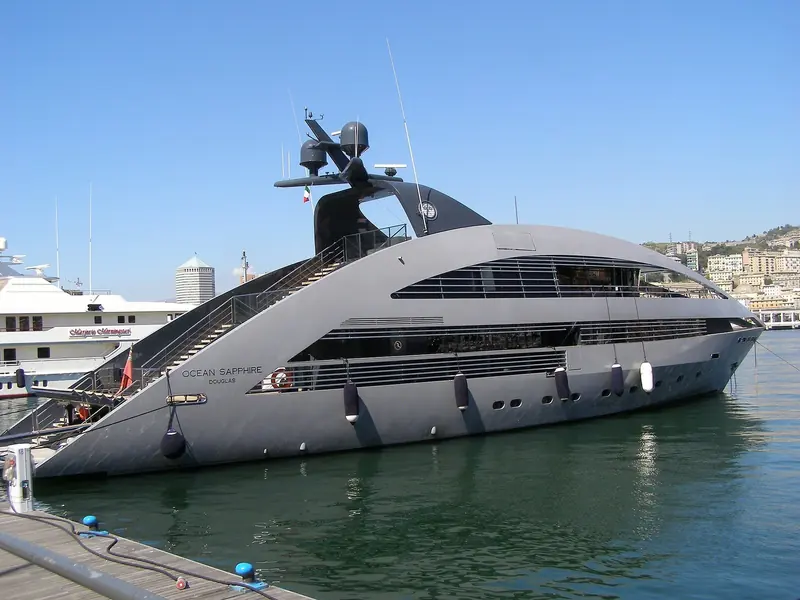
L'avvicinamento, e il porto operativo che si condivide
Questo non è un porto turistico da resort con un ingresso riservato. La città è uno dei maggiori porti commerciali del Mediterraneo e l'avvicinamento a Sestri Ponente attraversa i suoi bacini di ponente. Un canale dragato di grande profondità per le petroliere passa dentro la zona, segnalato da boe numerate, e le guide nautiche prescrivono alle unità da diporto di tenersi almeno 50 metri più a sud di esse per non intralciare il traffico commerciale. L'imboccatura è sul lato occidentale del bacino e da mare si riconosce perché alle spalle ci sono quattro grandi edifici bianchi sulla collina. Una guida dei porti liguri riporta che l'attività del marina viene sospesa fino a dieci minuti per volta mentre le petroliere manovrano lì vicino: è una cosa reale attorno a cui costruire l'orario di partenza, ed è una cosa che nessun depliant nomina.
Fatevi confermare il canale radio prima di fidarvene, perché le fonti si contraddicono. La pagina contatti del porto indica il VHF 73 per la chiamata notturna all'ormeggiatore di guardia e il VHF 74 come canale del marina, mentre Superyachts.com, Yacht Digest e MarinaReservation pubblicano tutti il VHF 71. Chi ha chiamato davvero racconta che sul canale 73 la risposta è stata immediata e che due addetti a bordo di un tender lo hanno accompagnato all'ormeggio. L'arrivo notturno è il punto debole, perché chi entra la prima volta può trovare i bacini interni poco illuminati, e una guida nautica di lungo corso consiglia all'unità che raggiunge Genova per la prima volta dopo il tramonto di valutare piuttosto il bacino Duca degli Abruzzi, a levante, cioè di lasciare perdere Sestri Ponente per quella sera. I cancelli restano chiusi fra l'01:00 e le 06:00 e l'hospitality desk lavora dalle 09:00 alle 18:00, così un arrivo fuori orario lo gestisce l'ormeggiatore di guardia sul cellulare e non l'ufficio.
Alare senza uscire da Sestri Ponente
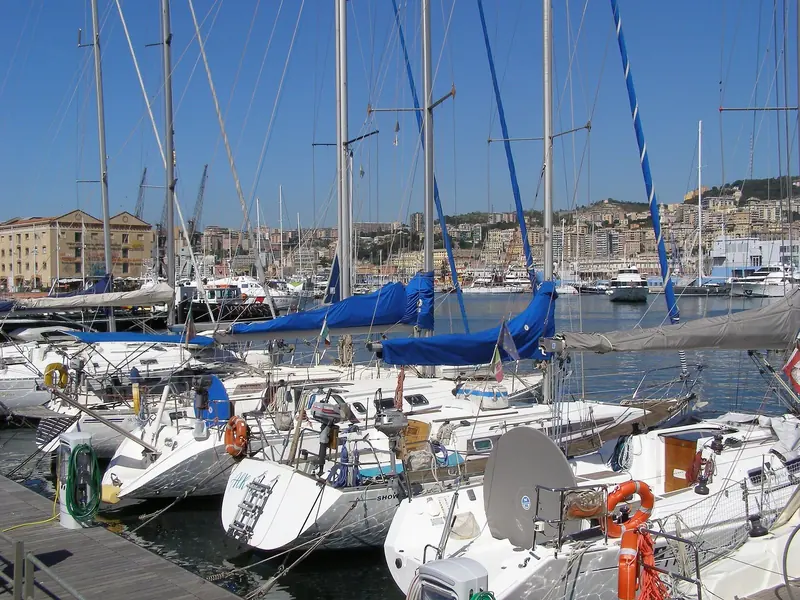
Molte unità scelgono questo bacino non perché ci siano i pontili, ma perché dietro, imbullonato alla banchina, c'è dell'altro. Cantieri Navali di Sestri è dentro lo stesso complesso, su circa 13.000 metri quadrati, il che ne fa uno dei cantieri più grandi della Liguria, e ha sostituito il vecchio travel lift da 300 tonnellate con una macchina Ascom da 420 tonnellate che ala e vara unità fino a 43 metri. Accanto ci sono una gru a ponte da 400 tonnellate, una gru mobile da 60 tonnellate, carrelli da 40 e 200 tonnellate e un carrello ABI. Il cantiere muove circa 250 unità l'anno e gestisce un proprio bacino di circa 150 posti fino a 45 metri, con acqua ed elettricità sui pontili.
Per i lavori più piccoli, Mostes è dentro il porto con una gru da 85 tonnellate e un travel lift da 160 tonnellate per scafi fino a 30 metri, su due aree esterne di circa 4.500 metri quadrati ciascuna, cinque capannoni e due officine. Fra i due cantieri, un armatore può far alare, verniciare, antivegetare e rivarare qualunque cosa fra un motoscafo di 12 metri e un'unità di 43 metri senza affrontare un trasferimento. Sopra i 43 metri l'alaggio deve avvenire altrove in città, ed è il tema della sezione successiva. Lo storico cantiere navale di Fincantieri a Sestri Ponente è il vicino immediato, ed è il motivo per cui il contorno ha l'aspetto che ha, ma anche il motivo per cui qui esiste una manodopera specializzata.
Il cluster genovese del refit, e l'allarme che si dà da solo
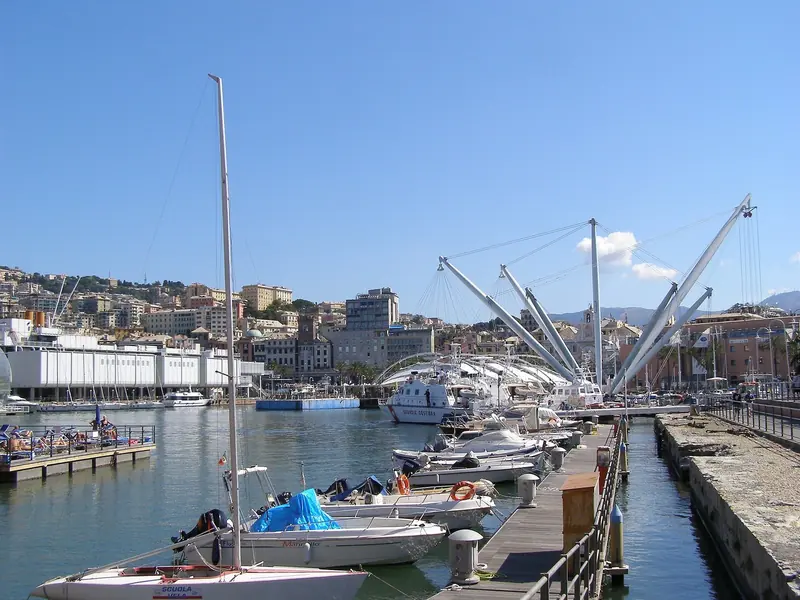
Genova è uno dei due o tre veri cluster mondiali del refit dei superyacht, ma la capacità pesante non è a Sestri Ponente: è all'estremità di levante del porto, a circa 20 minuti di percorso lungo lo specchio portuale. Amico and Co occupa lì circa 65.000 metri quadrati vicino al centro della città, con due travel lift da 835 e 320 tonnellate, uno ShipLift da 4.000 tonnellate entrato in funzione nell'ottobre 2019 dopo un investimento da EUR 27 milioni, che porta a terra scafi fino a 95 metri, dodici posti coperti per unità fra 50 e 75 metri, un bacino di carenaggio coperto di 102 per 18 metri, con 31 metri di altezza libera e l'accesso ai bacini di Ente Bacini da 170 e 200 metri. Il suo marina tecnico ha 24 posti da refit fino a 110 metri con elettricità da terra fino a 630 ampere. Il cantiere segue più di 130 progetti l'anno. T. Mariotti e San Giorgio del Porto, entrambi nel gruppo genovese GIN, aggiungono il refit su grandi navi e su megayacht.
Il cluster pubblica i propri numeri, e nel 2026 quei numeri portavano un avvertimento. L'associazione Genova for Yachting, sulla base di uno studio di The European House Ambrosetti, ha quantificato l'impatto economico del 2025 in EUR 663 milioni, il 5 per cento in più dei EUR 630 milioni del 2024, con 3.240 addetti, EUR 234 milioni di contributo al PIL ligure e 12.400 membri di equipaggio che hanno base in città. Però le giornate totali di sosta delle unità sono scese da circa 77.000 a circa 71.000, un calo di circa l'8,5 per cento, e il segmento fra 50 e 75 metri è arretrato per la prima volta. Il valore per giornata di presenza è salito quanto bastava a mascherare tutto ciò nel dato di sintesi. Alberto Amico ha detto pubblicamente che Genova è rimasta ferma troppo a lungo e rischia di perdere terreno come hub di riferimento mondiale, e l'associazione ha chiesto quella governance integrata pubblico-privata che Barcellona e la Costa Azzurra hanno già. Un armatore che sceglie la base invernale deve leggerlo come una partita competitiva ancora aperta, perché chiusa non è.
Carburante, elettricità e la spesa in banchina
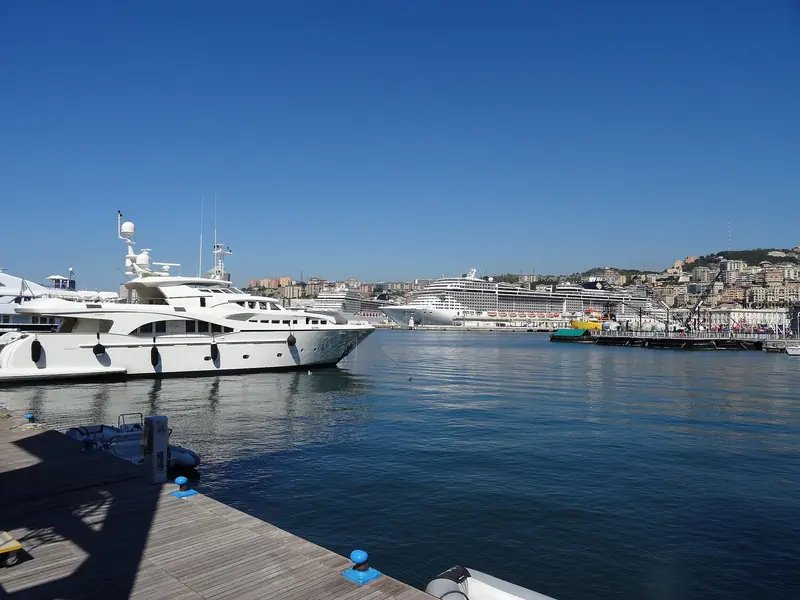
La stazione carburante è l'asset singolo più forte del porto, e il porto lo dichiara: è la più grande banchina di rifornimento del Mediterraneo, con 150 metri di ormeggio, cinque pompe ad alta portata, 15 metri d'acqua sottobordo e bunkeraggio con accisa assolta oppure in esenzione per le unità in registro commerciale. Alla stessa banchina c'è il prelievo delle acque nere, e il bunkeraggio può anche essere portato al proprio posto barca. La quantità erogata regge l'affermazione: nel 2024 Marina Genova ha erogato più di 6 milioni di litri di carburante, il 43 per cento in più del 2023. Nessun prezzo al litro è pubblicato: si prende una quotazione in giornata, come ovunque in Italia.
Il resto delle utenze è contabilizzato singolarmente per posto barca e, cosa insolita per un porto di queste dimensioni, non è tabellato da nessuna parte in pubblico. Un posto da 35 metri messo in vendita indica 64 ampere di alimentazione da terra, acqua e due posti auto, ed è l'unico amperaggio concreto che Yotters è riuscita a trovare associato a un posto barca identificato. Separatamente, e da non confondere con l'elettricità al posto barca, il porto ha installato due punti di ricarica rapida Aqua superPower per unità elettriche fino a 320 kW e sei punti di ricarica per veicoli elettrici nel parcheggio. Un impianto fotovoltaico di 7.000 metri quadrati con 800 pannelli è entrato in funzione nel gennaio 2025 e produce circa 500 MWh l'anno, e cinque Seabin raccolgono le microplastiche nei bacini. Il 14 luglio 2025 il porto è entrato nel SEA Index, lo schema di benchmarking della CO2 dei superyacht, come membro istituzionale.
Quanto costa un posto barca, e ciò che non viene mai pubblicato
Marina Genova non pubblica alcun listino, di nessun genere. Ogni pagina del sito che tocca il denaro finisce così in un pulsante di richiesta preventivo, e non c'è online né in alcun documento scaricabile una tariffa giornaliera, mensile o annuale per nessuna fascia di lunghezza. Ciò non equivale a dire che una tariffa non esista. Il porto ha il proprio Regolamento di esercizio ed uso del Porto Turistico Camillo Luglio, e l'articolo 9 stabilisce che per le imbarcazioni in transito le tariffe sono fissate in anticipo dalla società, su base oraria o giornaliera, sono esposte presso gli uffici della società e le modalità prevedono il pagamento anticipato da parte dell'equipaggio. Il prezzo del transito, così, è fissato ed è esposto. Solo che è esposto dove può leggerlo unicamente chi è già in piedi a Sestri Ponente. Le uniche cifre solide e datate del mercato sono sul lato della rivendita, dove i posti barca si scambiano come diritti pluriennali e i broker li pubblicano apertamente. Nel 2026 Cambiaso Risso ha offerto il posto K09, 22 per 6,2 metri, a EUR 350.000 più IVA con un posto auto e un magazzino, e il posto J18, 45 per 11 metri, a EUR 1.350.000 IVA assolta con quattro posti auto, entrambi con contratto fino al 2052. Bluewater ha proposto un posto di 35 per 9 metri a EUR 1.600.000 con contratto fino a fine 2052. SuperYachts Monaco ha proposto il posto K13 da 65 metri a EUR 2.500.000 IVA assolta.
L'annuncio del J18 porta il numero di cui un armatore ha più bisogno e che tutti gli altri omettono: spese di gestione annue di circa EUR 20.000 più IVA su un posto da 45 metri, oltre al 4 per cento di imposta di registro, a EUR 500 di registrazione del contratto e alle spese notarili all'acquisto. Attenzione al disaccordo sulla durata. Gli annunci dei broker mostrano quasi tutti scadenza nel 2052, mentre una notizia di vendita di posti barca parla di disponibilità con concessione fino al 2092, e le pagine di vendita del porto hanno citato durate di 20, 35 e 90 anni. Non è lo stesso bene e la differenza vale decenni di valore: leggete l'atto e non l'annuncio. Per un'unità di passaggio l'unica indicazione pubblica sul transito è quella della piattaforma Navily, che stima circa EUR 98 a notte per l'unità media della propria comunità, una cifra che a un armatore di 40 metri non dice assolutamente nulla.
La settimana del Salone Nautico, e il resto dell'anno
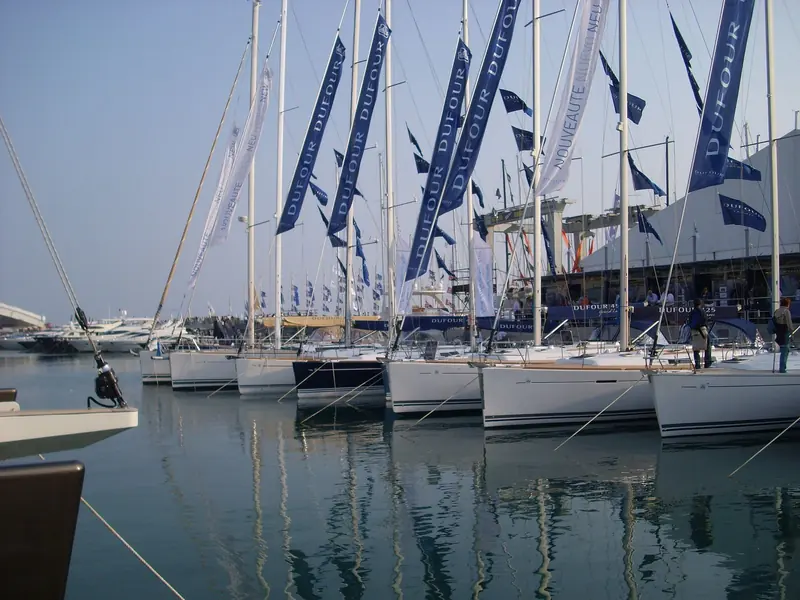
Il Salone Nautico Internazionale di Genova è il punto fisso del calendario di questo porto, anche se qui non si svolge. La 66esima edizione va dal 1 al 6 ottobre 2026 al Waterfront di Levante, dalla parte opposta della città, su più di 200.000 metri quadrati fra terra e acqua con l'85 per cento degli spazi all'aperto, più di 1.000 espositori, più di 2.500 unità esposte e un'affluenza dell'ordine delle 350.000 persone. L'edizione 2026 amplia l'area dedicata alle unità sopra i 24 metri e aggiunge il nuovo Palasport, più i TechTrade Days il 1 e il 2 ottobre. Ciò che questo significa a Sestri Ponente sono due settimane prima e due dopo il Salone in cui posti barca, camere d'albergo, auto e slot di cantiere in tutta la città sono già impegnati.
Fuori dal Salone, il porto organizza attività proprie, in particolare Yacht and Garden a maggio, una rassegna di giardinaggio e cultura sulle banchine a ingresso libero, e un raduno di unità d'epoca. I numeri di gestione dicono ciò che il calendario produce davvero: Marina Genova ha chiuso il 2024 con un fatturato consolidato più alto di EUR 15 milioni, il 20 per cento in più del 2023 e il 32 per cento in più del 2022, con un'occupazione dei posti barca fra il 90 e il 100 per cento negli ultimi mesi contro l'86 per cento del 2022, 254 arrivi di superyacht e 6.855 giornate di sosta di superyacht, e circa 100 addetti. L'amministratore delegato Giuseppe Pappalardo, in carica da vent'anni, ha descritto la strategia come un investire in anticipo sulle necessità delle unità fino a 130 metri. Un'occupazione di fatto piena è una buona notizia per il gestore, e una cattiva notizia per un'unità che a settembre cerca un posto con poco preavviso.
I difetti, detti onestamente
Tre lamentele ricorrono e sono tutte e tre fondate. Il contorno è industriale: il cantiere di Fincantieri da un lato, l'aeroporto dall'altro, traffico di portacontainer e di petroliere sull'acqua, e niente del piacere visivo di un porticciolo ligure. Il rumore degli aerei è reale, ed è una cosa che i visitatori dicono senza giri di parole. E il porto è tagliato fuori dalla città in un modo che i cinque minuti dall'aeroporto mascherano bene. I diportisti nel 2026 lo hanno descritto come isolato, con un paio di ristoranti e qualche ship chandler e poco altro, scomodo da lasciare senza auto e caro per andare in città e tornare. La direzione ha risposto pubblicamente indicando che dentro il porto ci sono quattro ristoranti, due bar e due ship chandler e la navetta gratuita per l'aeroporto e per il Porto Antico: è una replica corretta, ma non è una smentita.
Ciò che conta operativamente è la risacca. Il vento pericoloso della Liguria è il libeccio da sudovest, che per questo tratto di costa è il vento che manda onda di traverso, e un libeccio forte chiude il porto alle unità da diporto. Anche con tempo stabile, l'equipaggio di un catamarano ha riferito nel giugno 2026 che nel bacino c'è una risacca costante con vento nullo, sufficiente a strappare in avanti l'unità sui suoi cavi, e ha consigliato di mettere le spring. È coerente con un bacino che si apre su un grande porto commerciale e non su una darsena chiusa. Le altre carenze segnalate sono minori ma vanno messe a bilancio: in banchina non c'è alcuna disponibilità di adattatori per l'alimentazione da terra, la qualità dei servizi igienici è giudicata adeguata e non buona, e la pratica di arrivo è sembrata pesante a diversi ospiti di una sola notte. Genova in sé è splendida, ma bisogna andarci.
A terra, accessi e prenotazioni
| Getting there | Genoa Cristoforo Colombo airport is about five minutes from the quay by road, round the head of its own artificial peninsula. The airport moved 1,335,095 passengers in 2024 and has no long-haul, so intercontinental guests come via Milan or Rome. Genova Sestri Ponente-Aeroporto railway station is on the doorstep and the A10 motorway is minutes away. The marina runs a free shuttle for guests to both the airport and the Porto Antico in the old city, which is the answer to the isolation complaint. Airport listings put a flat taxi fare of about EUR 25 into the city centre, on a single source, and visiting crews consistently describe getting to and from town as expensive. Hire a car if you are staying more than a couple of nights. |
|---|---|
| Arriving by sea, and clearing in | You are entering a major commercial port. A dredged deep-water tanker channel runs through the approach marked by numbered buoys and pleasure craft are asked to keep at least 50 metres to the south of them. The marina entrance is on the western side of the basin, recognised from seaward by four large white buildings on the hill behind. Local port guidance records that marina operations pause for up to ten minutes while oil tankers manoeuvre. Call the marina before you commit: the operator's own contacts page gives VHF 73 for the night dockmaster and 74 as the marina channel while several directories publish 71, and crews report raising staff immediately on 73 and being met by two men in a tender. Gates are closed 01:00 to 06:00 and the hospitality desk works 09:00 to 18:00; the out-of-hours mobile line is the sailors' number. Italy is in the EU and Schengen, so an EU-flagged yacht arriving from another EU port has no formalities, but visitors have reported more paperwork than they expected for a single overnight stay. |
| Reserving a berth | Berths are contracted directly with the marina on +39 010 6143420 or [email protected], and every published page routes you to a quote request rather than a price. Transit berths are assigned by the marina before you come in, and Article 9 of the port regulation requires a boat to wait outside the port area until the office has cleared it and named a berth; consent is discretionary and can be refused. The same article caps a transit stay at seven days, after which the berth is reassigned if others are waiting, so a longer visit is a contract conversation rather than an extension. Book early and book seriously for the Genoa International Boat Show window in the first week of October, when the whole city is full, and for the summer peak: occupancy ran between 90 and 100 per cent through recent months and the marina logged 254 superyacht arrivals in 2024. Long-term positions are bought rather than rented, through brokers including Cambiaso Risso, Bluewater, YachtZoo, TWW Yachts and SuperYachts Monaco, all of whom list Marina Genova berths openly. |
| What a berth costs | There is no published tariff of any kind, at any length, for any season, although the marina's own port regulation confirms that hourly and daily transit rates are pre-set and posted at the office. One clause from that regulation changes what a night is worth: the daily tariff covers the night and the following day only until 09:00, which is early by Mediterranean standards, and an hourly tariff counts every hour or part of an hour. Both are payable in advance. The public price signal is the resale market, and in 2026 it read as follows. Berth K09 at 22 by 6.2 metres, EUR 350,000 plus VAT, one parking space and a storage unit, lease to 2052. Berth J18 at 45 by 11 metres, EUR 1,350,000 VAT paid, four parking spaces, lease to November 2052, with annual service charges of approximately EUR 20,000 plus VAT. A 35 by 9 metre berth with 64 amp shore power and two parking spaces, EUR 1,600,000, lease to the end of 2052. Berth K13 at 65 metres, EUR 2,500,000 VAT paid. Buying costs add 4 per cent registration tax, a EUR 500 contract registration fee and notary fees. For a transient, the cruising platform Navily estimates about EUR 98 a night for the average boat in its community, which is a useful anchor for a 12 to 16 metre yacht and no guide at all above 24 metres. |
| Fuel, water, power and what is extra | The fuel quay runs 150 metres with five high-power pumps, 15 metres of water alongside and both duty paid and duty free supply for commercially registered yachts, with delivery to your own berth as an alternative and waste water pump-out at the same station. The marina describes it as the largest fuelling quay in the Mediterranean; the volume through it, over 6 million litres in 2024, supports the claim even if the superlative is theirs. No price per litre is published. Water and electricity are individually metered at each berth from a dedicated column, but no per kilowatt-hour or per cubic metre rate is published either, and no amperage table exists: the only concrete figure attached to a named berth is 64 amps on a 35 metre position. Visiting crews report the marina holds no shore power adaptors, so bring your own. Parking is charged, with a flat EUR 10 for stays past ten hours up to 24. |
| Lifting out and refit | Cantieri Navali di Sestri works inside the same complex on about 13,000 square metres with a 420 tonne Ascom travel lift that hauls yachts to 43 metres, a 400 tonne overhead crane, a 60 tonne mobile crane and 40 and 200 tonne bogies, moving roughly 250 boats a year. Mostes covers the smaller end with a 160 tonne travel lift to 30 metres and an 85 tonne crane, five hangars and two workshops. Above 43 metres you move along the harbour to Amico and Co, about 20 minutes away, where a 4,000 tonne ShipLift takes hulls to 95 metres to ground level, two travel lifts of 835 and 320 tonnes cover everything below that, and twelve covered slots hold yachts of 50 to 75 metres. T. Mariotti and San Giorgio del Porto handle the largest work. That combination is the reason to base a yacht here at all. |
| Eating and drinking within walking distance | The marina village has four restaurants and two bars by the operator's own count, with other listings describing eight dining points across the estate. San Giorgio is the waterfront restaurant, run by the Scala family who have been in the trade over forty years. L'Osteria Marina cooks seasonal Ligurian. Marina Sushi covers Japanese, Chinese and Thai plus grill. Panino Marino does fish in a sandwich format for a quick lunch. Molly Malone's, opened in 1999, is the Irish pub and the first in western Genoa. The four-star MarinaPlace Resort and Spa faces one of the three basins and is where guests without cabins go. Beyond the gate, the Sestri Ponente shopping street is a short walk and is where the neighbourhood actually eats. For anything approaching Genoa's real food, the old town is a taxi or the shuttle. |
| The fixed dates | The Genoa International Boat Show, 66th edition, runs 1 to 6 October 2026 at the Waterfront di Levante on the eastern side of the city, over 200,000 square metres with 85 per cent outdoors, more than 1,000 exhibitors, over 2,500 boats and attendance around 350,000, with TechTrade Days on 1 and 2 October and an expanded area for yachts over 24 metres. It does not take place at Marina Genova but it fills Marina Genova. The marina runs Yacht and Garden in May, a free-entry garden and culture show on the quays, and a classic boat gathering. Plan berth, hotel, car and any yard slot for the show fortnight months ahead. |
| What is NOT published | Everything to do with price. No daily, weekly, monthly or annual berthing tariff at any length. No fuel price. No per kilowatt-hour electricity or per cubic metre water rate, despite everything being individually metered. No shore power amperage table. The berth count is unsettled between 500, 600, over 400 and about 1,200 depending on who is counting and what they include. The working VHF channel is published three different ways, 73 and 74 by the marina and 71 by the directories. And the tenure on a berth you buy is advertised variously as running to 2052, to 2092, or on 20, 35 and 90 year terms, which is a difference of decades of value. Get the channel, the rate and the lease term in writing from the marina office before you commit to any of them. |
Cosa riferiscono armatori ed equipaggi
Convenient for the airport, cut off from everything else
Monica, aboard a 16.45 metre motorboat, wrote in July 2026 that the marina is very convenient for picking someone up or dropping them off at the airport but is quite isolated, with a few chandlers and a couple of restaurants and bars and little more, and that getting out to explore is tricky without a car. The marina's management replied publicly in August 2026, accepting the location point, noting the free shuttle to both the airport and the Porto Antico, and listing four restaurants, two bars and two ship chandlers on site.
NavilyThere is a surge in the basin even with no wind
Matt and Naomi, on a 13.45 metre catamaran in June 2026, called on VHF 73, were answered at once and were guided onto the berth by two staff in a tender. They then reported a constant swell in the basin in zero wind, enough to jerk the boat forward on her lines, and advised rigging springs. They also found the marina held no shore power adaptors. They rated it a good stopover regardless.
NavilyAircraft noise and the cost of getting into town
Andreas, on a 10 metre motorboat in June 2026, praised the staff as very friendly and helpful but described the aircraft noise as annoying, the trip between the marina and the city as expensive, and the sanitary installations as no better than average. Oguz Erdem, on an 11.71 metre sailing yacht the same month, found the marina far from the centre, expensive, and heavy on paperwork for a single night.
NavilyThe marina is close to full and knows it
Marina Genova closed 2024 with consolidated turnover above EUR 15 million, up 20 per cent on 2023 and 32 per cent on 2022, with berth occupancy running 90 to 100 per cent in recent months against 86 per cent in 2022, 254 superyacht arrivals and 6,855 superyacht stopover days, more than 6 million litres of fuel supplied and about 100 people employed. Chief executive Giuseppe Pappalardo, twenty years in the job, described the strategy as investing ahead of the needs of yachts up to 130 metres.
The MediTelegraph, Marina WorldThe Genoa cluster is warning about itself
Genova for Yachting, using a study by The European House Ambrosetti, reported a 2025 economic impact of EUR 663 million against EUR 630 million in 2024, 3,240 workers and 12,400 crew based in the city, but total yacht stay days down from about 77,000 to about 71,000, roughly 8.5 per cent, with the 50 to 75 metre segment falling for the first time. Alberto Amico said Genoa has stood still too long and risks losing position as a global reference hub, and the association called for the integrated governance that Barcelona and the French Riviera already have.
Genova for Yachting, The European House Ambrosetti, Primocanale
Cosa convince e cosa va valutato
Punti di forza
- The shortest airport transfer of any major Mediterranean marinaCristoforo Colombo airport is about five minutes by road from the quay, on its own artificial peninsula immediately south of the basins, with a free marina shuttle to the terminal and to the old port.
- Serious lifting capacity behind the pontoonA 420 tonne Ascom travel lift takes hulls to 43 metres inside the same complex, with a 160 tonne lift for anything to 30 metres, so a refit does not begin with a delivery passage.
- A world-class refit cluster twenty minutes along the harbourAmico and Co runs a 4,000 tonne ShipLift to 95 metres, 835 and 320 tonne travel lifts, twelve covered slots and docks to 200 metres, alongside T. Mariotti and San Giorgio del Porto.
- Water and fuel for the largest yachts afloat130 metres LOA, 18.5 metres of beam and 15 metres of draught, with 15 metres alongside a 150 metre fuel quay running five high-power pumps duty paid or duty free, over 6 million litres through it in 2024.
- A real village, not a car park with cleatsFour restaurants and two bars on site, a four-star hotel facing the water, two chandlers, a large parking provision that no two sources count the same way, a photovoltaic array covering 7,000 square metres and RINA MaRINA Excellence certification at maximum score.
Da valutare
- No published price for anythingNo berthing tariff at any length or season, no fuel price, no rate for the metered water and electricity, and no shore power amperage table. Every route ends in a quote request.
- Surge in the basin, and a wind that closes the portA catamaran crew reported constant swell in zero wind, enough to snatch the boat forward on her lines. A strong libeccio from the southwest, the cross-swell wind of this coast, closes the port to pleasure traffic.
- Industrial surroundings and aircraft noiseFincantieri's shipyard on one side, the runway on the other, tanker traffic across the water, and marina operations that pause for up to ten minutes while tankers manoeuvre. Visitors describe the noise as annoying, not incidental.
- The old town is not walkableCruising visitors in 2026 called the marina isolated and awkward to leave without a car, and expensive to get in and out of the centre. The five-minute airport line does not extend to the city.
- The airport that makes the place has no long-haulGenoa handled 1,335,095 passengers in 2024 and flies European and domestic routes only, so intercontinental guests route through Milan or Rome and the transfer advantage disappears.
- Effectively full, and the tenure is muddledOccupancy has run 90 to 100 per cent, so short-notice berths are hard in season and impossible in show week, and broker listings put leases at 2052 while marina material has referred to 2092 and to 20, 35 and 90 year terms.
A chi si rivolge: Un armatore per cui un trasferimento aeroportuale di cinque minuti e una capacità di sollevamento pesante sulla stessa banchina valgono più di un porto bello e di un centro storico raggiungibile a piedi.