Marina Port Tarraco (Tarragona)
| Posizione | Moll de Llevant, dentro il porto di Tarragona, Costa Dorada, Spagna |
|---|---|
| Posti barca | 32, dimensionati da 45 m a 160 m LOA |
| Posizioni più grandi | un posto da 160 m per 32 m e uno da 150 m per 30 m |
| Profondità | pescaggio medio superiore a 9 m in tutta la marina |
| Imboccatura del porto | 350 m di larghezza con circa 22 m d'acqua |
| Alimentazione da banchina | fino a 1.600 A a 400 V, più un allacciamento 6.600 V / 2.000 kVA per gli yacht più grandi |
| Base tariffaria | si paga sulla dimensione del posto barca in lunghezza per larghezza, non sullo yacht |
| Tariffa pubblicata dal 1 gennaio 2026 | un posto da 35 m per 8 m a EUR 205 al giorno per soste fino a una settimana, oppure EUR 4.200 al mese |
| Tariffa pubblicata dal 1 gennaio 2026 | il posto da 160 m per 32 m a EUR 3.380 al giorno, oppure EUR 61.440 al mese |
| Utenze sulla tariffa 2026 | elettricità EUR 0,29 per kWh, acqua EUR 4,90 al metro cubo, tassa portuale inclusa e IVA esclusa |
| Ormeggio di fianco | l'ormeggio di fianco comporta un sovrapprezzo del 50 per cento rispetto alla poppa a banchina |
| Aeroporti | Reus 7 km, circa 10 minuti, e Barcellona El Prat circa 80 km |
| Berth mix from the marina's published berth map, checked 28 July 2026: 5 berths of 45 m by 10 m, 2 of 50 m by 12 m, 2 of 60 m by 14 m, 7 of 70 m by 15 m, 4 of 80 m by 16 m, 3 of 90 m by 18 m, 3 of 100 m by 20 m, 2 of 115 m by 22 m, 3 of 130 m by 25 m, 1 of 150 m by 30 m and 1 of 160 m by 32 m | |
| Berth count is 33, not the 32 usually quoted. The marina's own services page states 33 berths from 45 m to 160 m, checked 28 July 2026 | |
| Berths by size band | 26 of the 33 take 60 m and above, 17 take 80 m and above, 10 take 100 m and above, and only 2 take more than 130 m |
| Mid-range tariff valid from 1 January 2026: an 80 m by 16 m berth at EUR 846 per day for stays up to seven days, EUR 589 per day beyond seven, EUR 15,360 per month or EUR 73,728 for six months | |
| Shore supply frequency | the marina publishes 400 V and a 6,600 V connection but not the frequency, checked 28 July 2026. The Spanish grid runs 50 Hz |
| Local winds | the llevant from the east and the garbi, the afternoon southwesterly sea breeze of the Catalan coast |
| Spanish matriculation tax (IEDMT) | 12 per cent, the same charge the Ibiza and Palma entries carry |
Un'enclave da yacht dentro un porto commerciale
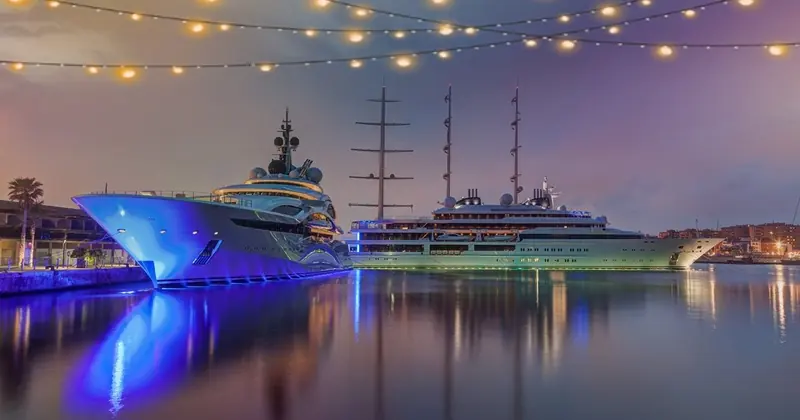
Marina Port Tarraco occupa il Moll de Llevant, una banchina collocata dentro il porto di Tarragona, sulla Costa Dorada spagnola. Il porto attorno è uno dei pesi massimi commerciali del Paese, con 32,33 milioni di tonnellate di merce movimentate nel 2024 e il primo posto in Spagna per i prodotti agricoli, e con una storia lunga legata agli impianti petrolchimici dell'entroterra. Il bacino degli yacht è un'enclave chiusa dentro quel demanio, recintata e gestita a parte. L'armatore che arriva in auto passa davanti a terminal alla rinfusa e gru prima di raggiungere la sbarra della marina.
Ed è proprio quella paternità industriale a rendere utile il posto. I porti commerciali si dragano per le navi, quindi l'acqua è profonda dove un porto turistico costruito apposta sarebbe basso. La marina dichiara un pescaggio medio di oltre nove metri sui suoi posti barca, e l'imboccatura del porto è larga 350 metri con circa 22 metri d'acqua sotto. Qui non ci sono affatto pontili per barche piccole. Il posto più piccolo sulla mappa è di 45 metri.
L'avvicinamento, e che cosa ci fa il tempo
La marina sta più o meno a 41 06,5 N, 001 14,6 E, un avvicinamento costiero lineare da entrambe le direzioni lungo la costa catalana. Si entra dall'imboccatura principale del porto commerciale, che è larga, profonda e libera da ostacoli, e il porto è chiuso dietro lunghe dighe foranee che una volta dentro danno un buon riparo. Su questa costa non ci sono vincoli di marea che valga la pena mettere in conto. Il comandante che arriva di notte entra da un'imboccatura commerciale illuminata, senza nessun canale boato stretto da percorrere a tentoni.
L'unica avvertenza meteo è l'onda lunga. I dati del traffico marittimo di Tarragona segnalano restrizioni al porto per onda lunga, e un forte vento da sudest può rendere scomodo l'avvicinamento esterno anche se il bacino resta calmo. All'interno la marina è ben protetta e gli yacht stanno tranquilli per tutti i mesi invernali. La Costa Dorada è un tratto di costa meno drammatico del Golfo del Leone più a nord, dove il maestrale fa i suoi danni peggiori. Gli armatori che hanno visto uno scafo spingere sui parabordi ad Antibes di solito notano la differenza.
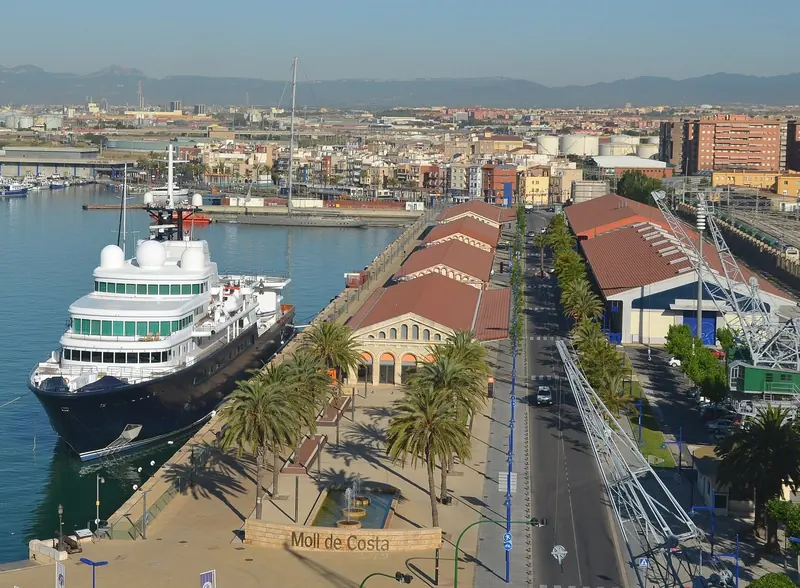
Un porto commerciale merci si rivela l'unico posto del Mediterraneo occidentale con abbastanza acqua sotto uno scafo grande.
Dimensioni dei posti barca e che cosa si trova davvero
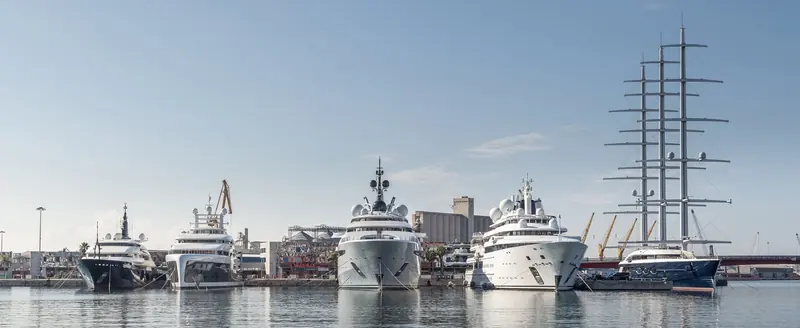
La mappa dei posti barca è insolitamente leggibile. Cinque posizioni da 45 metri, due da 50, due da 60, sette da 70, quattro da 80, tre da 90, tre da 100, due da 115, tre da 130, una da 150 e una da 160. Trentadue posti barca in totale, e per conto della stessa marina più della metà accoglie uno yacht sopra i 70 metri. Per un armatore nella fascia dai 60 ai 90 metri questo è uno dei pochissimi indirizzi del Mediterraneo in cui la sua misura è il centro della gamma e non l'eccezione.
La disponibilità è migliore che nei porti glamour perché a Tarragona non ci si ormeggia per l'indirizzo. D'estate c'è movimento, con gli yacht che fanno tappa tra le Baleari e la costa francese, e la marina si riempie per l'inverno di barche in rimessaggio tra due stagioni e di unità in attesa di uno slot di cantiere. Le due posizioni più grandi sono posti singoli, quindi l'armatore di un 150 metri si contende esattamente uno spazio. Per la fascia alta conviene chiedere con mesi di anticipo.
Come si prende un posto barca e quanto costa
I posti barca di Port Tarraco si affittano, non si comprano. Non c'è nessun titolo da acquistare e nessuna concessione lunga che passi di mano in privato come succede alle posizioni di Monaco o Porto Cervo, quindi l'armatore tratta direttamente con la marina e paga per il tempo che usa. I periodi sono strutturati in soste fino a sette giorni, soste oltre i sette giorni, mensili, trimestrali e semestrali, con la tariffa giornaliera che scende man mano che l'impegno si allunga. Per le soste più lunghe si trovano accordi su misura.
Il prezzo si fa sul posto barca, misurato lunghezza per larghezza, e non sullo yacht che lo occupa, cosa che conta per uno scafo largo di baglio per la sua lunghezza. Sulla tariffa pubblicata come valida dal 1 gennaio 2026, un posto da 35 per 8 metri costa EUR 205 al giorno per una sosta di una settimana o meno, EUR 168 al giorno oltre quel limite ed EUR 4.200 al mese. Il posto da 160 per 32 metri costa EUR 3.380 al giorno oppure EUR 61.440 al mese. La tassa portuale è compresa e l'IVA no, l'elettricità è a EUR 0,29 per kWh e l'acqua a EUR 4,90 al metro cubo, e stare di fianco invece che con la poppa a banchina aggiunge il 50 per cento.
Energia, rifiuti e il cantiere dentro il cancello
L'alimentazione da banchina arriva a 1.600 ampere a 400 volt, con un allacciamento da 6.600 volt e 2.000 kVA disponibile per gli yacht più grandi, il che significa che uno scafo di 100 metri può reggere il proprio carico alberghiero senza generatori mentre è ormeggiato. Acqua dolce e scarico delle acque nere ci sono a ogni posto barca. I rifiuti vengono ritirati sotto certificato MARPOL. L'assistenza all'ormeggio è prevista in arrivo e in partenza, che in una giornata di vento con una barca di 90 metri non è una cortesia ma un requisito.
La ragione per cui molti armatori sono qui è PTW Shipyard, che opera dentro la marina e prende yacht fino a 50 metri a terra e fino a 140 metri in acqua. La marina lavora anche a stretto contatto con Astilleros de Mallorca e Pinmar Yacht Supply, quindi verniciatura, falegnameria e lavorazioni specialistiche si possono portare dentro. Uno yacht può così restare al suo posto barca, farsi fare i lavori e non affrontare mai un trasferimento verso un cantiere. Per un armatore che guarda il calendario tra una consegna a settembre e una traversata caraibica a dicembre, sono settimane vere risparmiate.
Sicurezza, dogana e quanto è riservata
La marina è conforme al codice ISPS, recintata, con accesso controllato, sorveglianza presidiata sulle 24 ore e videosorveglianza. È un sito industriale controllato, quindi il pubblico non può semplicemente camminare lungo la banchina e fotografare il ponte di poppa di uno yacht, che è l'opposto di quello che succede a Monaco o a Portofino. Ospiti e fornitori vengono registrati in entrata e in uscita. L'equipaggio conserva la riservatezza che un posto barca in centro città cancella.
La marina ha anche lo status di Operatore Economico Autorizzato, un accreditamento doganale dell'Unione europea che accelera lo sdoganamento delle merci, cosa che conta quando un refit tira dentro pezzi da tre Paesi. Il regime doganale e IVA spagnolo qui è lo stesso del resto del Paese, quindi la posizione fiscale di un armatore non cambia spostandosi a Tarragona. Quello che cambia è l'attrito burocratico su ricambi e provviste. Gli armatori con un programma tecnico pesante lo valutano più di quanto si aspettassero.
A terra, e la corsa fino a Barcellona
Il centro storico di Tarragona è a quindici minuti a piedi dalla banchina ed è patrimonio mondiale dell'UNESCO, costruito sulla capitale provinciale romana di Tarraco, con un anfiteatro sopra il mare e un circo conservato sotto le strade medievali. È una vera città catalana che lavora, circa 130.000 abitanti, con buoni ristoranti e nessuna scena yachting degna di nota. La stazione ferroviaria è a 500 metri dalla marina, e l'alta velocità arriva a Madrid in meno di due ore e mezza. L'aeroporto di Reus è a sette chilometri, circa dieci minuti.
Barcellona è a circa 80 chilometri lungo la costa, un'ora scarsa di auto, il che mette i suoi ristoranti, le sue gallerie e l'aeroporto di El Prat dentro una serata facile. Per una settimana in famiglia le spiagge della Costa Dorada sono larghe e sabbiose, PortAventura World e Ferrari Land sono a venti minuti di strada, e il golf è discreto. La marina mette a disposizione un van di cortesia con autista e ha un centro fitness sul posto. Niente di tutto questo è Saint-Tropez, e gli armatori che scelgono Tarragona non stanno cercando Saint-Tropez.
Stagione, tempi e il difetto da dire
Tarraco lavora tutto l'anno e fa i suoi affari migliori fuori stagione. Gli yacht arrivano a ottobre e novembre per il rimessaggio invernale e i periodi di cantiere, ripartono ad aprile e maggio per le Baleari, e passano a luglio e agosto come tappe di trasferimento. La marina si posiziona come rifugio invernale, e trattenere l'equipaggio qui è più facile che in una città di cantiere isolata, perché la città ha scuole, ospedali e vita normale. È in primavera che i posti si stringono, perché tutti vogliono essere fuori prima di giugno.
Il difetto è il contesto. Il posto barca sta in un porto industriale con movimenti di merci, polvere quando lavorano i terminal alla rinfusa e una vista di gru dal sun deck. Sulla banchina non c'è nessuna scena serale e non c'è nessuna ragione perché un ospite salga a bordo per il posto in cui si trova. Gli armatori che vogliono che il proprio yacht faccia parte di una cartolina lo detesteranno. Gli armatori che vogliono nove metri d'acqua, un cantiere sul posto e un posto barca che riescono davvero ad avere lo prenderanno tutte le volte.
The llevant, the garbi, and the frequency nobody prints
The wind here has names. The llevant is the easterly that comes in off the sea with cloud and rain and pushes swell into the outer approach, and it is the one that makes the entrance uncomfortable rather than the basin. The garbi is the afternoon southwesterly sea breeze that builds through the summer day along the Catalan coast and drops in the evening, which is a manoeuvring consideration for a beamy hull coming off a berth at four in the afternoon and nothing at all at eight in the morning. Neither is a mistral. The Costa Dorada sits south of the Gulf of Lion and the difference in a winter lay-up is the whole point of coming here.
The gap in an otherwise exact page is the frequency of the shore supply. Port Tarraco publishes 1,600 A at 400 V and a 6,600 V, 2,000 kVA connection for the largest hulls, and states neither the frequency nor whether the high-amperage supply is hard-wired by the marina or plugged by the crew. Checked on 28 July 2026, that information is not on the marina's site or in its customer service guide. Spain runs 50 Hz, so a 60 Hz yacht arriving from the United States or the Caribbean needs a converter or stays on generators, and on the one page in this set that quotes a 6,600 V connection that is the fact with the most to lose from an assumption. It is a question for the berth enquiry and not one to settle on arrival.
The 12 per cent that meets a yacht in Spain
Spain charges a matriculation tax, the Impuesto Especial sobre Determinados Medios de Transporte, at 12 per cent. It bites on first registration of a recreational vessel over 8 m under the Spanish flag, and it also bites on a foreign-flagged yacht put to use in Spain by a Spanish resident or by a company established in Spain, which is the version that catches owners who assume flag alone settles it. It is a one-off charge on value, not an annual one, and it is the same 12 per cent the Ibiza and Palma entries on this site already carry.
It is raised here because Port Tarraco is sold explicitly as a base rather than a stop, and a base is where the residence question gets asked. An owner using the marina as a winter lay-up between Mediterranean seasons is in a different position from an owner who has moved a yacht, a management company and a household to Spain, and the second of those needs the exemption route confirmed in writing before the hull arrives rather than after. Commercial registration and genuine charter use are the usual answers and both come with conditions that are checked. This is a matter for a Spanish tax adviser and the point of naming it is that the question exists at all.
A terra, accessi e prenotazioni
| Peak-season berth rate, 100m yacht | EUR 1,321 per night for a 100m x 20m berth booked for 7 nights or fewer, or EUR 920 per night if booked for longer than 7 days (roughly EUR 9,247 for a 7-night stay at the short-stay rate). Per Port Tarraco's own rate card effective 1 January 2026; VAT not included, T5 port tax included; rate is for stern-to mooring, alongside mooring adds a 50 per cent surcharge. |
|---|---|
| How to reserve | Contact Port Tarraco directly at [email protected] or +34 977 244 173. The marina states its offers are 'always personalised and adapted' to the yacht, so quote LOA, beam and dates rather than expecting a published instant rate for anything but the smallest berths; no fixed minimum lead time is published. |
| Eating within walking distance | In the old town: Casa Balcells on Pla de la Seu facing Tarragona Cathedral, and Solric Alta Taverna on Placa de la Font for tapas and terrace dining. In the port district of El Serrallo, a cluster of seafood restaurants sits near the fishing harbour. All are a walk or short taxi from the marina gate, not inside it. |
| Transport and services nearby | Reus airport is about a 7 to 10 minute drive. Barcelona's airports are roughly 90km away. Tarragona's main train station is about 500 metres from the marina, with the AVE high-speed line about 15 minutes away giving a Madrid journey of around 2.5 hours. |
| Check before booking | Confirm current cargo-port traffic conditions with the marina before setting an ETA. Port Tarraco sits inside a working commercial port that runs 24/7, and leisure vessels must give way to manoeuvring merchant ships, keep 50 metres clear of vessels at anchor or working, and monitor VHF Channel 16 while transiting. |
Cosa riferiscono armatori ed equipaggi
The Emir of Qatar's superyacht keeps returning to Port Tarraco
Al Lusail, the 123m Lurssen delivered in 2017 to Sheikh Tamim bin Hamad Al Thani, Emir of Qatar, has been reported making repeat, low-profile calls at Port Tarraco while cruising the Spanish coast. Qatari Diar's original 2011 purchase of the marina was widely reported at the time as intended partly to secure a discreet home berth of this kind for the family's fleet.
LuxurylaunchesMarina's own management says trading turned around after 2015
Marc Colls, Port Tarraco's General Manager, has said management took over in 2011 'when the general economic situation was very different' and that business has been markedly better since 2015. This is the marina's own promotional account of its history, not an independent visitor's report.
Marc Colls, General Manager, Port Tarraco, quoted by CharterworldCurrent owner-operator compares the infrastructure directly to Port Adriano
When Mallorcan marina group Ocibar bought Port Tarraco from the Qatari Diar fund in February 2020, its chief executive said the infrastructure 'matches what we are offering in Port Adriano.' This is an operator's own assessment, made to justify the acquisition, not a customer's review; Ocibar also runs Port Adriano and Marina Botafoc.
Antonio Zaforteza, CEO, Ocibar, quoted by SuperyachtNewsThe refit contractor on site describes Tarragona as a winter refit push
Carlos Morales, Managing Director of Astilleros de Mallorca, said opening a service base at Port Tarraco in 2021 was 'a very important and positive step' for supporting captains and engineers with refit, repair and maintenance plans over the winter season. This is the shipyard's own account of why it set up there, not an independent yacht's report.
Carlos Morales, Managing Director, Astilleros de Mallorca, quoted by SuperyachtNews
Cosa convince e cosa va valutato
Punti di forza
- First Mediterranean superyacht marina wired for 6.6kV shore powerPort Tarraco added 6.6kV onshore power on top of its existing 1,250-amp/400V connections, a commercial-marine-grade voltage not otherwise offered at Mediterranean superyacht marinas at the time it was installed. The marina's own marketing team framed it as getting ahead of expected EU rules that will require shore power for yachts and merchant ships in port.
- Room for a fleet of giants at once, not just oneBeyond individual berths, the basin has a 140 metre waiting quay and the capacity to moor six or more yachts over 100 metres simultaneously, a scale few deep-draft Mediterranean marinas can match.
- A genuine refit cluster inside the gate, not one contractorAstilleros de Mallorca (founded 1942, operating at Port Tarraco since 2021) and PTW Shipyard both work on site. PTW runs a 300 tonne travel lift and hard standing for yachts up to 45m, a technical dock for yachts up to 85m, and can work on yachts up to 120m at the berth itself, with Pinmar Yacht Supply also on site for outfitting. A refit can be organised without moving the yacht to Barcelona.
- A regional airport minutes from the gangway, plus railReus airport is roughly a 7 to 10 minute drive from the marina. Tarragona's own train station is about 500 metres away, and the AVE high-speed line is reachable in about 15 minutes, putting Madrid around 2.5 hours away by rail. This is useful for crew changes and short-notice arrivals without routing everyone through Barcelona.
Da valutare
- Reus airport does not cover most owners' likely home routesReus is a budget-and-charter airport. Its scheduled network (Ryanair, Jet2, TUI, easyJet, Vueling) leans heavily on UK and Ireland leisure routes such as Dublin, London Stansted and Manchester, with no long-haul service. Owners and guests arriving from outside Europe still need Barcelona's airport, roughly 90km away, or a private jet into Reus itself.
- A lingering industrial reputation the marina is still working to shakePort Tarraco's own current CEO has acknowledged that early complaints about the working coal-handling side of the port, dating to the marina's 2007 development, left an association that 'has stuck in some people's minds,' and that rebranding since the 2020 Ocibar takeover is partly aimed at dispelling it.
- Mooring the wrong way costs 50 per cent moreUnder the marina's own 2026 rate card, published rates are for stern-to (Mediterranean-moor) berthing. A yacht that needs to lie alongside instead pays a 50 per cent surcharge on the base rate, before VAT.
- It is still a working cargo port's fairway, not a private lagoonUnder Tarragona Port Authority rules, leisure and sailing vessels crossing the port must keep at least 50 metres clear of any ship at anchor or manoeuvring, give way to manoeuvring merchant vessels, and keep a listening watch on VHF Channel 16. The commercial port runs 24 hours a day, 365 days a year, so that traffic can appear at any hour.
A chi si rivolge: L'armatore di uno yacht dai 60 ai 140 metri che ha bisogno di acqua profonda garantita, di un cantiere di refit sullo stesso sito e di un posto barca che riesca davvero a prenotare.