ONE15 Marina Sentosa Cove (Singapore)
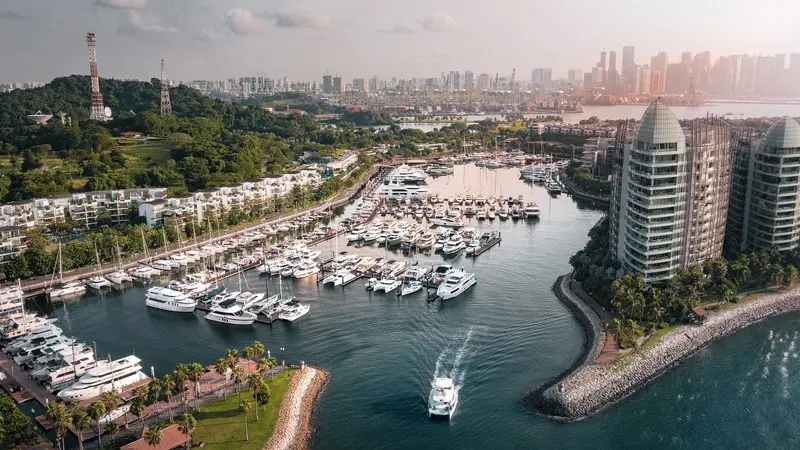
| Posizione | Sentosa Cove, Singapore, a 1 14,50 N, 103 50,40 E, sul canale VHF 77 |
|---|---|
| Gestore | operativa dal 2007, parte del gruppo SUTL |
| Posti barca | 270 posti in acqua, di cui circa 32 da mega yacht, più 60 posti a secco |
| LOA massima | 220 piedi, circa 67 metri, con un pescaggio massimo dichiarato di 4,5 metri |
| Riconoscimenti | costruita secondo lo standard Platinum Gold Anchor e accreditata Superyacht Ready nel 2022 |
| Premi | International Marina of the Year nel 2022 e nel 2023, e Best Asian Marina sette volte |
| Alimentazione da banchina | a contatore, fino a 500 ampere trifase, con acqua potabile a contatore e un sistema di svuotamento delle casse |
| Formalità | l'unica marina privata di Singapore con dogana, immigrazione e sanità marittima sul posto |
| Tariffa di ormeggio 2026 oltre i 120 piedi: SGD 8,83 al piede al giorno per i non soci e SGD 7,63 per i soci, GST compresa | |
| Tariffa mensile 2026 oltre i 120 piedi | SGD 190,31 al piede per i soci, oppure SGD 158,60 al piede con impegno annuale |
| Carburante | benzina e gasolio venduti ogni giorno dalle 8 del mattino alle 11 di sera, con sconti quantità fino al 20 per cento oltre i 5.000 litri |
| A terra | 26 camere d'albergo, ristoranti, una lounge per i soci, piscina, palestra, campi da tennis e da pickleball, e una navetta per VivoCity |
| Frequency and voltage | the marina publishes up to three-phase 500 A and states neither, checked 28 July 2026. Singapore runs 50 Hz at 230 V single phase and 400 V three phase |
| What 500 A three phase at 400 V amounts to: about 346 kVA, which is a genuine large-yacht supply and enough to carry a 60 m hull alongside without generators in equatorial heat | |
| How many of the roughly 32 mega yacht berths take over 50 m, against the 67 m ceiling, is not published, checked 28 July 2026 | |
| The published maximum draught of 4.5 m is the binding constraint and applies against a 220 foot maximum length. A 67 m yacht drawing more than 4.5 m does not fit whatever its length | |
| There is no superyacht travel lift on site. The marina's 60 dry berths are for small craft, so any haul-out means leaving Singapore | |
| Hull fouling intervals in equatorial water are not published by the marina and no diving or antifouling schedule is quoted, checked 28 July 2026 | |
Uno yacht club con attaccata una marina
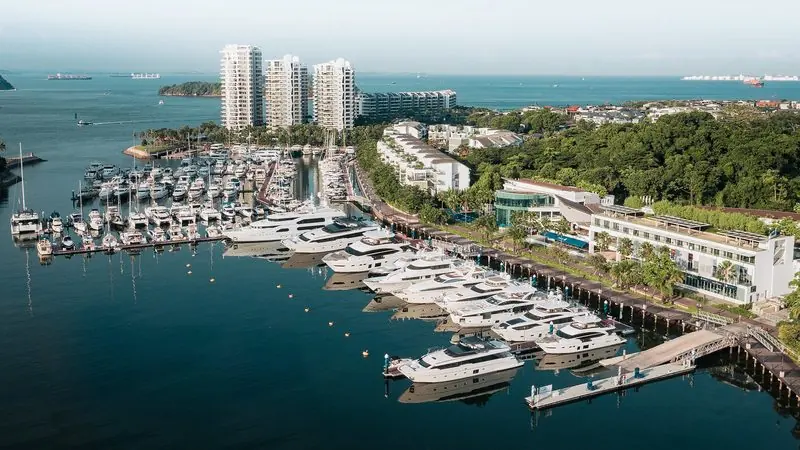
ONE15 ha aperto nel 2007 dentro Sentosa Cove, il quartiere residenziale chiuso sul mare all'estremità orientale dell'isola di Sentosa. È un club privato tanto quanto una marina, con 270 posti in acqua di cui circa 32 dimensionati per mega yacht, 60 posti a secco, una club house, 26 camere d'albergo, ristoranti, una piscina e campi da tennis. Titolari di posto barca e soci condividono le stesse strutture.
Gli standard sono verificati da terzi, il che vale qualcosa in una regione dove la qualità delle marine varia parecchio. La marina è stata costruita secondo lo standard Platinum Gold Anchor fissato dalla Yacht Harbour Association e dalla Marina Industries Association, è stata accreditata Superyacht Ready nel 2022, ed è stata nominata International Marina of the Year due volte e Best Asian Marina sette volte. La lunghezza massima è di 220 piedi, circa 67 metri, con un pescaggio massimo dichiarato di 4,5 metri.
L'avvicinamento attraverso l'acqua più trafficata del mondo
Arrivare a Sentosa Cove significa attraversare o costeggiare lo Stretto di Singapore, una delle rotte commerciali più utilizzate al mondo, con ancoraggi pieni di petroliere e portacontainer e un flusso continuo di traffico nello schema di separazione. Non è acqua difficile, e richiede una guardia seria e una comprensione operativa di dove le navi mercantili possono stare. La marina lavora sul canale VHF 77.
Una volta dentro, il bacino è chiuso, calmo e completamente riparato. Singapore sta quasi sull'equatore, quindi non c'è stagione dei tifoni né stagione dei cicloni in nessun momento dell'anno, che è un vantaggio strutturale reale rispetto a Hong Kong, a Phuket o a qualunque punto del Pacifico meridionale. Quello che il clima consegna sono caldo e umidità costanti sui trenta gradi, due monsoni e le improvvise linee di groppi che arrivano da Sumatra prima dell'alba.
Sull'equatore non esiste una stagione delle tempeste, che è una forma di sicurezza che nessun ormeggio mediterraneo o caraibico può offrire.
Formalità sul molo
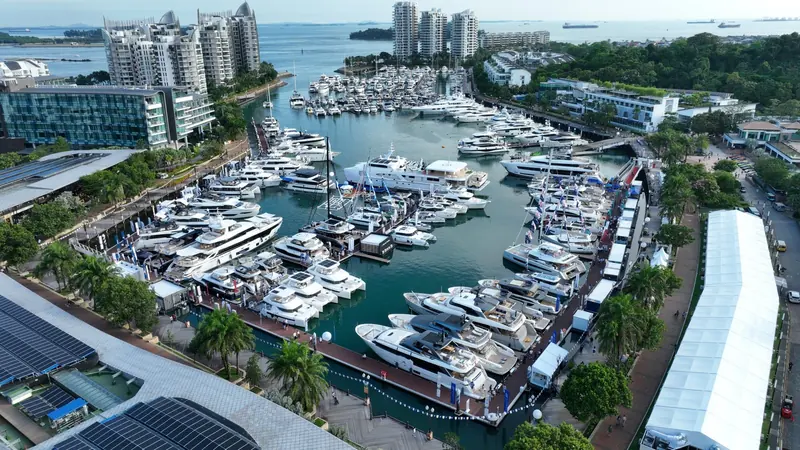
La marina ha dentro il proprio perimetro un presidio di dogana, immigrazione e sanità marittima ed è l'unica marina privata di Singapore ad averlo. Per l'armatore che arriva dall'Indonesia o dalla Malesia questo toglie l'obbligo di sdoganare altrove e poi riposizionarsi, cosa che in questa parte di mondo può altrimenti mangiarsi una giornata. Singapore è una giurisdizione efficiente e le carte funzionano quando vengono presentate nel modo giusto.
Oltre all'arrivo, le questioni su cui vale la pena farsi consigliare sono la licenza di uno yacht usato commercialmente e il trattamento del charter, perché la marina applica sovrapprezzi di conseguenza. Un'unità con licenza di charter paga il doppio della tariffa di ormeggio e un posto commerciale porta un sovrapprezzo del 15 per cento. Beni e servizi a Singapore scontano il 9 per cento di GST, che è compresa nelle tariffe pubblicate dalla marina.
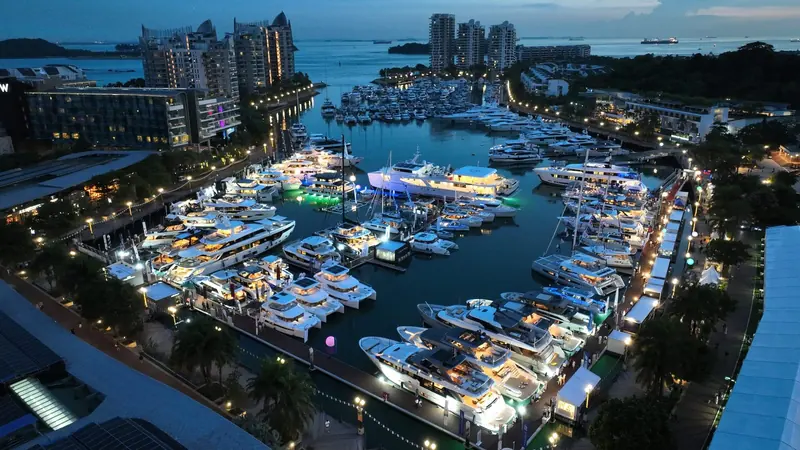
Quanto costa
ONE15 pubblica il tariffario completo, calcolato al piede e comprensivo di GST. Oltre i 120 piedi un non socio paga SGD 8,83 al piede al giorno e un socio SGD 7,63. Uno yacht di 60 metri misura circa 197 piedi, quindi una notte da non socio fa circa SGD 1.740. Al mese, un socio oltre i 120 piedi paga SGD 190,31 al piede, oppure SGD 158,60 con impegno annuale, che per lo stesso yacht fa circa SGD 37.500 al mese o SGD 31.200 con la tariffa annuale.
Gli addebiti si basano sulla misura fisica dell'unità o sulla lunghezza del posto barca, a seconda di quale sia maggiore, con un addebito minimo di 35 piedi, e un catamarano o un monoscafo largo che sborda dalla propria assegnazione paga un 100 per cento aggiuntivo. Per le unità dei soci che restano oltre un mese serve un deposito pari a due mesi di ormeggio. Il carburante si vende in marina ogni giorno dalle 8 del mattino alle 11 di sera, con sconti quantità che arrivano al 20 per cento oltre i 5.000 litri di gasolio.
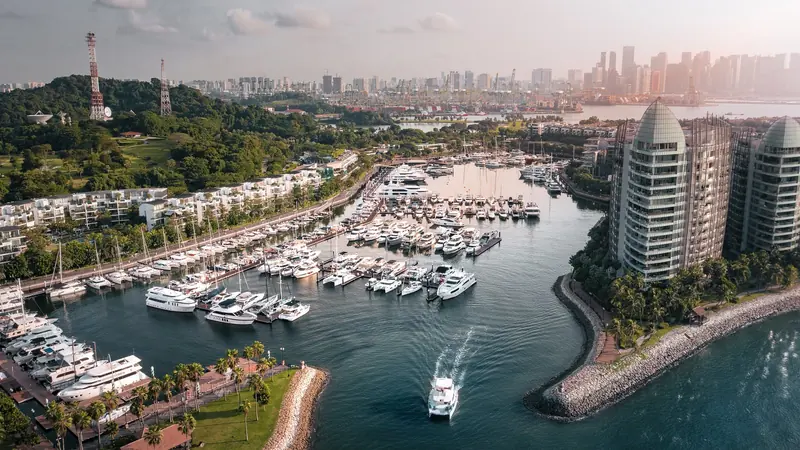
Energia, rifiuti e gestione quotidiana
L'energia è a contatore e arriva fino a 500 ampere trifase, che copre la flotta accettata dalla marina ma che vale la pena verificare rispetto alle esigenze di una specifica unità prima dell'arrivo. L'acqua potabile è a contatore al posto barca e su tutta la marina c'è un sistema di svuotamento delle casse. Un impianto antincendio copre i pontili e un servizio di navetta con buggy muove le persone tra i posti barca e la club house.
Il Sudest asiatico non è una regione da refit come lo sono la Florida o il Mediterraneo settentrionale, e i cantieri commerciali di Singapore sono tarati sul naviglio mercantile. Meccanica ordinaria, elettronica e mestieri d'interni ci sono e sono competenti. Qualunque cosa strutturale o una verniciatura completa significa una navigazione fino a Phuket, dove il gruppo gestisce una marina gemella a Panwa, oppure una traversata più lunga verso Australia o Nuova Zelanda.
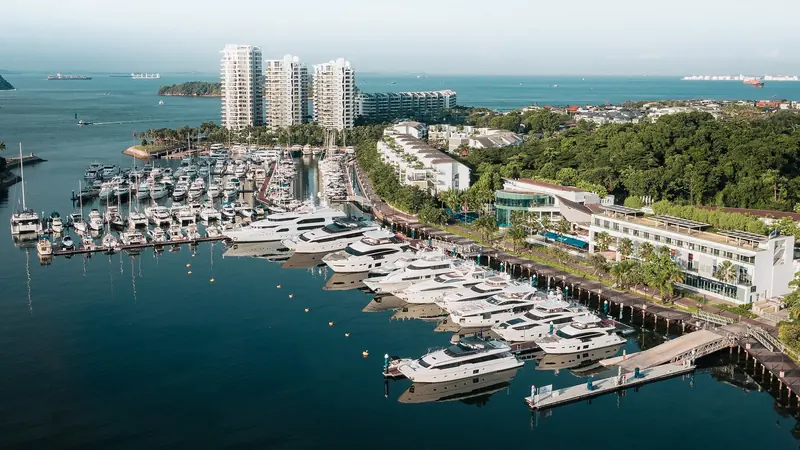
Sicurezza e riservatezza
La marina è chiusa da cancelli con vigilanza sulle 24 ore e videosorveglianza ovunque, dentro Sentosa Cove, che è a sua volta un'enclave residenziale controllata. Singapore ha uno dei tassi di criminalità più bassi tra i Paesi sviluppati e il livello ambientale di sicurezza è tale che gran parte delle precauzioni che un equipaggio prende ai Caraibi qui non servono. Gli ospiti vanno e vengono senza scorta.
La riservatezza è buona per gli standard di questa lista. Sentosa Cove è residenziale e non una passeggiata turistica, quindi non c'è nessuna folla di passaggio che fotografa il ponte di poppa. La club house e i suoi ristoranti sono per soci e loro ospiti, senza accesso al pubblico. L'armatore che vuole essere visto troverà in Singapore un pubblico stranamente indifferente.
La città, e dove va davvero uno yacht
Changi è a 30-40 minuti dalla marina ed è uno degli aeroporti meglio collegati al mondo, con voli diretti per Europa, Australia, Nord America e ogni capitale asiatica. La città ha l'infrastruttura bancaria, legale e di family office che spiega perché tanta ricchezza internazionalmente mobile tenga qui un indirizzo. Assistenza sanitaria, scuole e cibo sono eccellenti, e trattenere l'equipaggio è più facile che in gran parte dell'Asia.
La navigazione è il punto debole e lo sanno tutti. Singapore in sé non ha nessun posto dove andare. Gli ancoraggi veri più vicini sono nelle isole Riau indonesiane, un'ora o due a sud, e il gruppo gestisce lì una marina propria a Nirup Island. La costa est della Malesia e Tioman sono a una giornata, Langkawi e Phuket a una navigazione di diversi giorni attorno alla penisola, e il Borneo e le Anambas ripagano un impegno più lungo. Le formalità di ingresso e uscita da Indonesia e Malesia richiedono un agente e pazienza.
Stagione, tempi e il difetto da dire
Qui non c'è stagione, ed è questo il punto. Il clima equatoriale fa sì che uno yacht possa essere usato o messo in lavorazione in qualunque mese, e l'assicurazione non impone un piano per le tempeste con nome perché di tempeste con nome non ce ne sono. I due monsoni spostano la direzione del vento e lo schema delle piogge senza chiudere nulla. La navigazione regionale è più facile grosso modo da marzo a ottobre, quando il monsone di nordest si è allentato.
Le riserve sono caldo, distanza e l'assenza di qualunque meta verso cui navigare. Trenta gradi e novanta per cento di umidità sono faticosi per gli ospiti e ancora più duri per le macchine, l'aria condizionata gira in permanenza, e la crescita sullo scafo è abbastanza rapida da richiedere attenzione costante. Questo è un posto in cui tenere uno yacht vicino agli affari di un armatore e da usare come base per viaggi in Indonesia e Thailandia. Come destinazione di crociera a sé non esiste davvero.
Three hundred and forty-six kVA, and what it is worth here
The marina publishes a metered supply up to three-phase 500 A and, checked on 28 July 2026, states neither the voltage nor the frequency. Singapore runs 50 Hz at 230 V single phase and 400 V three phase, which puts a European yacht on the right frequency and an American one on a converter. Worked out, 500 A of three phase at 400 V is about 346 kVA, and that is a genuinely useful number rather than a marketing one. In a climate that holds thirty degrees and high humidity all year, air conditioning is the dominant hotel load and it never switches off, so the difference between a dock that can carry it and one that cannot is measured in generator hours every single night of the year.
That makes the shore supply here worth more than it would be in a temperate marina, and it is the practical argument for keeping a yacht in Singapore rather than at anchor in the Riau islands. The counterpart is what the marina does not say. There is no travel lift on site capable of a superyacht, the 60 dry berths being small craft storage, so any haul-out is a passage out of Singapore. And the fouling question, which is real in equatorial water and moves faster than most owners expect, is not sized anywhere. Neither a diving interval nor an antifouling interval is published, checked 28 July 2026, and both belong in a running budget for a yacht kept here rather than in an observation about warm water.
Four and a half metres, and how many big berths there really are
The headline is 220 feet, roughly 67 m, and the number that actually governs is the published maximum draught of 4.5 m. A 60 m yacht drawing 4.8 m does not fit this marina regardless of what the length limit says, and that is the check to run first rather than last. Of the 270 wet berths, around 32 are described as mega yacht berths, and how many of those take over 50 m against the 67 m ceiling is not published, checked 28 July 2026. On a marina that is otherwise unusually precise about money, publishing rates per foot per day and per month for members and non-members, the absence of a size breakdown at the top of the range stands out.
The rest of the proposition is settled and worth restating in that light. The customs, immigration and quarantine facility on site is the only one at a private marina in Singapore, which removes the single most tedious part of arriving. There is no typhoon season and no named storm plan, so insurance behaves differently here from Hong Kong or Phuket. What the marina cannot supply is somewhere to go, and the answer to that is the Riau islands an hour or two south, which sit in Indonesia and require a cruising permit and an agent. That permit, its lead time and its cost are the gating item on the whole cruising argument and are not documented on the marina's material.
A terra, accessi e prenotazioni
| Getting there | Changi Airport is 30 to 40 minutes away by car; ferries from Batam and Bintan land at nearby HarbourFront. |
|---|---|
| By sea | The marina works VHF channel 77. The approach crosses or skirts the Singapore Strait, one of the world's busiest shipping lanes, so a proper watch matters more than local knowledge. |
| Reserving a berth | Book through the marina office. Peak season, November to April, fills first and vessels over 80 feet should reserve well ahead. Member vessels staying beyond a month post a deposit of two months' berthing. |
| What a berth costs | Above 120 feet: SGD 8.83 per foot per day for non-members, SGD 7.63 for members, GST included. A 60 m yacht runs to roughly SGD 1,740 a night. |
| Monthly rate | Above 120 feet: SGD 190.31 per foot for members, or SGD 158.60 per foot on an annual commitment. For a 60 m yacht that is around SGD 37,500 a month, or SGD 31,200 annually. |
| Fluids | Shore power metered up to three-phase 500 A, about 346 kVA. Potable water metered at the berth. Diesel and petrol sold dockside 8am to 11pm, with bulk discounts up to 20 per cent above 5,000 litres. |
| Clearance | Customs, immigration and quarantine are on site, the only private marina in Singapore with all three together, which saves a day for a yacht arriving from Indonesia or Malaysia. |
| Haul-out | No superyacht travel lift on site; the 60 dry berths are small-craft storage only. The nearest capable yard is across the strait in Batam, Indonesia, 45 to 60 minutes away, with lifts up to 700 tons handling hulls to 80 m. |
| Where to eat | Quayside Isle's restaurant row is a five-minute walk from the pontoons. Sentosa Cove Village carries a supermarket and a 24-hour convenience store for provisioning. |
| After dark | The clubhouse, pool and members' lounge stay open to berth holders. Sentosa's beach clubs and Resorts World are a short taxi away, though Sentosa Cove itself stays quiet after dinner. |
| Fixed dates | Peak season runs November to April. Shoulder season, May to August, suits refits and quieter cruising. There is no named-storm season at any point in the year. |
Cosa riferiscono armatori ed equipaggi
Crews who have based here describe it as an easy, low-drama stop
Captain Mark of the yacht Batavia and his crew named ONE15 among the marinas that made their season, singling out the staff and the shoreside facilities. The marina published the account itself rather than an independent survey, so it reads as a satisfied-customer story rather than a critical review, and no negative first-hand account from a captain or owner is publicly attached to their name.
Captain Mark, M/Y Batavia (via ONE15 Marina)
Cosa convince e cosa va valutato
Punti di forza
- No storm seasonSingapore sits almost on the equator, so there is no typhoon or hurricane plan to write, unlike Hong Kong, Phuket or anywhere in the Caribbean.
- Clearance on the dockThe only private marina in Singapore with customs, immigration and quarantine together on site, which removes a full day of transiting for a yacht arriving from Indonesia or Malaysia.
- Genuine large-yacht powerA metered three-phase 500 A supply works out to about 346 kVA, enough to run a 60 m yacht's air conditioning around the clock in equatorial heat without falling back on generators.
- Independently rated, not just self-reportedPlatinum Gold Anchor status from the Yacht Harbour Association and Marina Industries Association, plus repeat International Marina of the Year wins judged outside the marina itself.
Da valutare
- Nowhere to actually cruiseSingapore itself has no cruising ground. The nearest anchorages are an hour or two south in Indonesia's Riau islands and require a separate cruising permit and an agent to clear.
- No haul-out on siteThe 60 dry berths are small-craft storage only. Anything needing a lift means a passage across the strait to Batam, or further afield if the work is a full repaint.
- Heat and fouling nobody sizesA steady 30 degrees and high humidity mean air conditioning runs continuously and hull growth is fast, yet the marina publishes no antifouling or diving interval to budget against.
- The top end of the berth list is unpublishedAround 32 berths are described as mega yacht sized, but how many of those actually clear 50 m against the 67 m ceiling is not stated anywhere.
A chi si rivolge: L'armatore con una vita d'affari asiatica che vuole lo yacht a 40 minuti da Changi, un uso su tutto l'anno e nessun piano uragani da scrivere.