Pier Sixty-Six Marina (Fort Lauderdale)
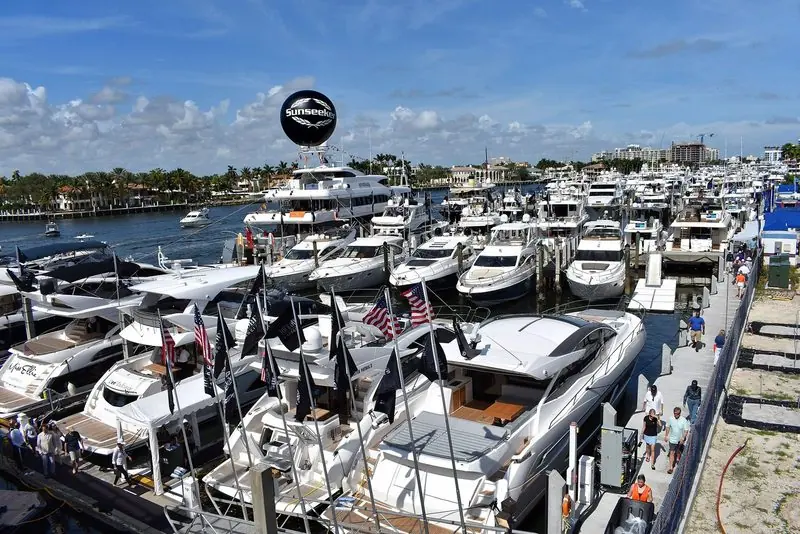
| Posizione | 2301 SE 17th Street, Fort Lauderdale, Florida, la prima marina dentro Port Everglades |
|---|---|
| Posti barca | 164 posti in acqua profonda per unità da 40 a 400 piedi (circa da 12 m a 122 m) |
| Fronte di ormeggio | 5.000 piedi lineari, cioè 1.525 metri, divisi tra Pier North con 127 posti e Pier South con 37 |
| Pescaggio massimo | 30 piedi, cioè 9,1 metri |
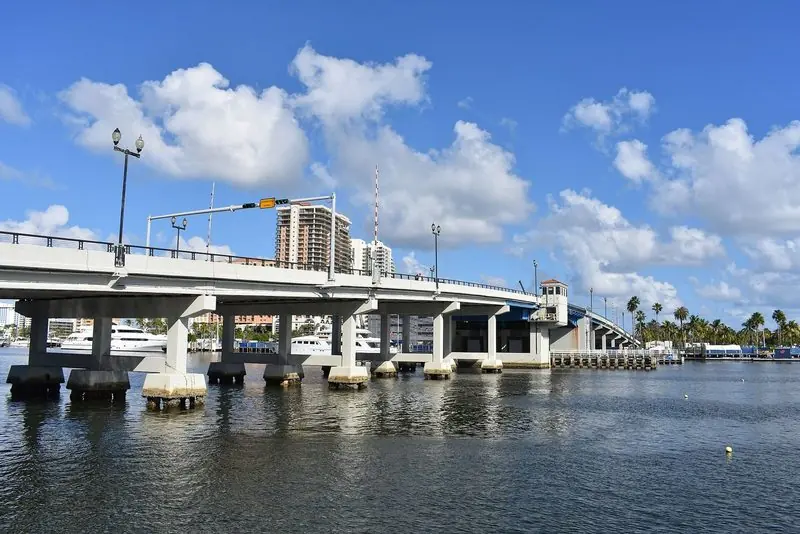
| Ponte | Pier South non ha nessun ponte tra sé e l'oceano, Pier North sta dentro il ponte a bascula di SE 17th Street, con 55 piedi di franco a ponte chiuso |
| Alimentazione da banchina | da 30 ampere a 1.000 ampere |
| Carburante | rifornimento e bunkeraggio ad alta portata al posto barca, venduto esentasse |
| Canale d'ingresso di Port Everglades | 500 piedi di larghezza e 45 piedi di profondità |
| Riqualificazione | una ricostruzione da USD 1 miliardo di resort, marina e residenze firmata Tavistock, con l'hotel riaperto nel 2024 |
| Eventi | sede del Fort Lauderdale International Boat Show, dal 28 ottobre al 1 novembre 2026 nella sua 67esima edizione |
| Refit nelle vicinanze | Safe Harbor Lauderdale Marine Center, 65 acri sul New River con un sollevatore da 485 tonnellate |
| Fisco della Florida | l'imposta statale sulle vendite e sull'uso all'acquisto di un'unità è del 6 per cento, con un tetto di USD 18.000 in base allo Statute 212.05 |
| Shore power, from the marina's own site checked 28 July 2026: up to 1,200 A per pedestal | |
| Frequency | Florida runs 60 Hz at 120 V, 208 V and 480 V. Pier Sixty-Six publishes neither voltage nor frequency, checked 28 July 2026, on the dock where the Mediterranean fleet arrives after crossing west |
| A 50 Hz yacht therefore needs a frequency converter aboard or stays on generators. Converter availability at the pedestal is a question for the slip booking and is not answered on the marina's site | |
| Customs cannot be cleared at the marina. The marina runs a shuttle to the US Customs office, and US and Canadian nationals may report through the Mobile Passport app | |
| The 17th Street bascule bridge opens on the hour and the half hour on demand and is hailed on VHF channel 19. Pier South needs no bridge, Pier North does | |
| The property is a designated Foreign Trade Zone | |
| Dock detail | floating docks with 3 feet of freeboard, 2 inch pump-out and water connections, 30 feet of water alongside |
| Tidal range | about 2.5 feet on a normal tide and 3.5 feet on a king tide |
| Fort Lauderdale International Airport | 4.8 miles by road |
Il primo ormeggio dentro l'imboccatura
Port Everglades è un porto artificiale tagliato dritto dall'Atlantico, e il suo canale d'ingresso corre largo 500 piedi e profondo 45 prima di restringersi a 450 piedi e 42 attraverso il bacino di evoluzione. È acqua da navi mercantili, dragata per petroliere e navi da crociera, e uno yacht di qualsiasi dimensione entra ed esce e basta. Pier Sixty-Six sta sulla 17th Street Causeway subito all'interno, il che ne fa la prima marina che uno yacht incontra dopo la boa d'atterraggio.
Il valore pratico di quella posizione è il tempo. Uno yacht a Pier South può mollare gli ormeggi ed essere nella Corrente del Golfo in venti minuti, senza nessun ponte da aspettare e nessun canale basso da percorrere a tentoni. Bimini e il banco delle Bahamas sono a circa cinquanta miglia nautiche a est attraverso la Corrente, cioè una mattinata. Fort Lauderdale non ha marea di cui tenere conto né chiusure stagionali.
Due pier e un ponte
La marina è divisa dalla SE 17th Street Causeway. Pier South porta 37 posti barca su 2.000 piedi lineari e non ha nessun ostacolo di ponte tra sé e l'ingresso del porto, motivo per cui gli yacht più grandi e più alti vanno lì. Pier North tiene 127 posti su 3.000 piedi lineari e sta dentro il ponte. In totale la marina dichiara 5.000 piedi lineari di ormeggio, 164 posti in acqua profonda e un pescaggio massimo di 30 piedi.
Il ponte è a bascula, con 55 piedi di franco verticale ad alta marea media da chiuso, e apre a ogni ora e mezz'ora dalle 7 del mattino alle 7 di sera. Da febbraio 2026 resta chiuso nelle ore di punta dei giorni feriali, alle 7.30 e alle 8.30 del mattino e alle 4.30 e alle 5.30 del pomeriggio, salvo nelle festività federali. Uno yacht con un arco alto o un albero ormeggiato a nord del ponte è quindi su un orario deciso dai pendolari della Broward County. Gli armatori a cui la cosa importa prenotano a sud.
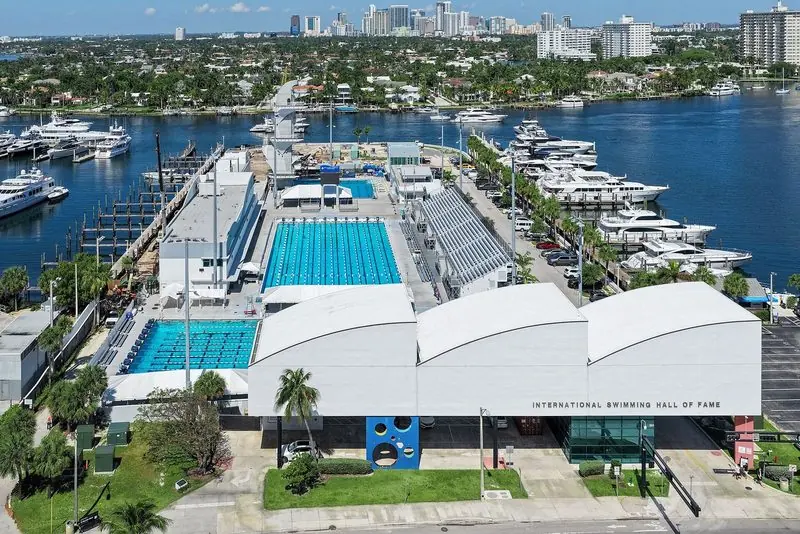
Venti minuti dal molo alla Corrente del Golfo, e ogni mestiere di cui uno yacht possa avere bisogno dentro un raggio di cinque miglia.
Come si prende un posto, e su che cosa si paga
A Pier Sixty-Six tutto si affitta. I posti barca si quotano al piede al giorno, con formule mensili e annuali disponibili e tariffe che salgono nettamente durante l'inverno e attorno al boat show. Qui non si vende e non si concede nulla in perpetuo come può accadere per un posto mediterraneo, anche se la riqualificazione comprende residenze private i cui proprietari hanno accordi di ormeggio propri. L'armatore prende un posto barca come prende una suite d'albergo.
La disponibilità segue la stagione. Da fine ottobre, quando il boat show riempie ogni marina della contea, fino ad aprile, l'ormeggio nel Sud della Florida è davvero stretto e i posti buoni vanno ai clienti abituali e agli yacht che si sono impegnati per tempo. L'estate è tranquilla, economica e calda. La settimana in assoluto più difficile per trovare qualcosa è quella del boat show, quando gran parte della flotta mondiale è in città.
Energia, carburante e il fattore fiscale
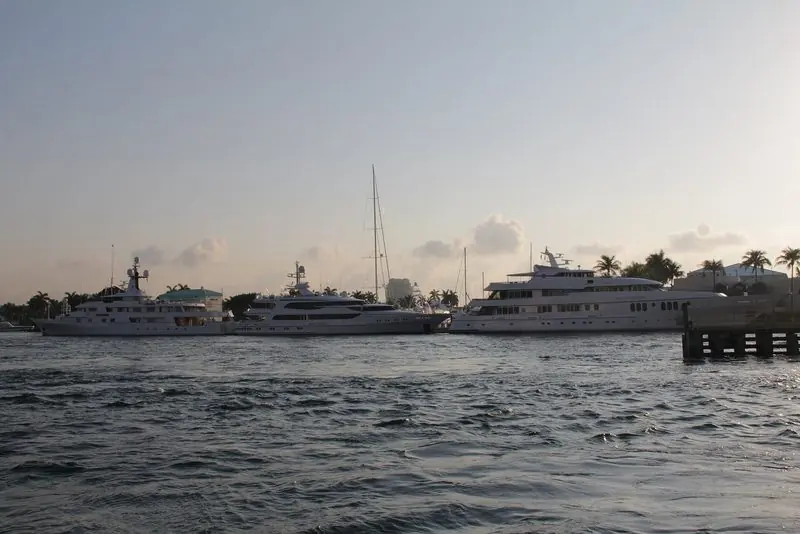
L'alimentazione da banchina va dal servizio domestico da 30 ampere fino a 1.000 ampere, che copre tutta la flotta che la marina accetta. Acqua dolce, svuotamento delle casse al posto barca, wifi gratuito e parcheggio vicino all'unità sono standard. Il rifornimento si fa al posto barca con pompe ad alta portata, quindi uno yacht di 60 metri fa carburante senza muoversi, e il carburante è venduto esentasse.
Il trattamento fiscale della Florida è gran parte del motivo per cui tanti yacht sono basati qui. L'imposta statale sulle vendite e sull'uso all'acquisto di un'unità è del 6 per cento ma ha un tetto di USD 18.000 in base al Florida Statute 212.05, quindi l'imposta su uno yacht da USD 40 milioni è la stessa di uno da USD 300.000. La Florida non applica imposta statale sul reddito. Gli armatori hanno comunque bisogno di una consulenza seria su imposta sull'uso, consegna e tempo di permanenza della barca nello Stato, perché le esenzioni hanno condizioni e le trappole sono ben documentate.
I mestieri sulla porta di casa
Fort Lauderdale si definisce la capitale mondiale dello yachting e l'affermazione regge all'esame. Ogni grande broker, società di gestione, agenzia di equipaggi, ship chandler e fornitore specializzato tiene un ufficio a pochi chilometri da questo molo, e i pezzi che a una marina mediterranea arriverebbero in una settimana qui arrivano nel pomeriggio. Per un armatore si traduce in periodi di cantiere più corti e in meno scuse.
Per i lavori strutturali i cantieri sono nell'entroterra sul New River. Safe Harbor Lauderdale Marine Center copre 65 acri ed è descritto come la più grande struttura di riparazione per yacht degli Stati Uniti, con cinque sollevatori tra cui uno da 485 tonnellate, capannoni coperti e una base di fornitori residenti. Anche Derecktor e Bradford operano in zona. Il percorso del New River comporta diversi ponti e un pilota, quindi il transito va programmato.
Sicurezza, riservatezza e il resort di sopra
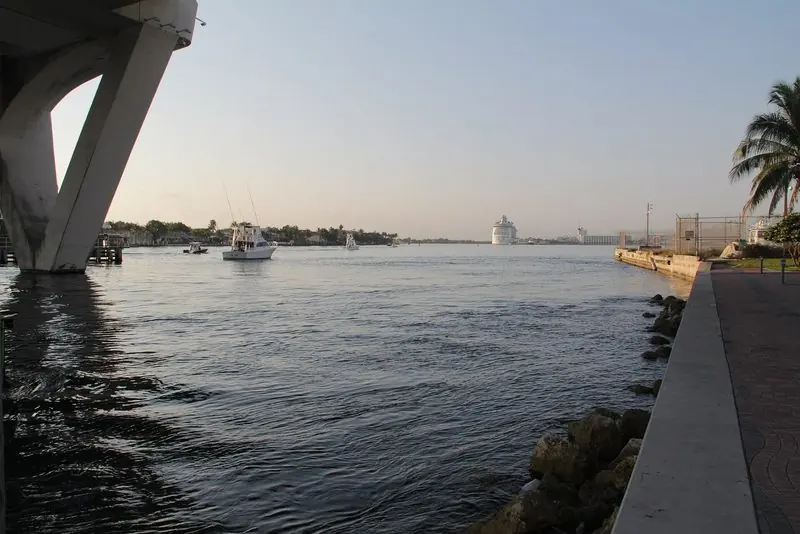
La marina ha vigilanza sulle 24 ore con accesso controllato ai moli, servizio di concierge e parcheggio a fianco dell'unità. Quello che non è, è riservata. Pier Sixty-Six sta su una causeway trafficata tra una strada pubblica e un porto commerciale attivo, i moli si vedono dal ponte e dai ristoranti, e Port Everglades è uno dei porti crocieristici più trafficati al mondo, quindi in un sabato d'inverno passano vicinissime diverse navi molto grandi.
La riqualificazione ha cambiato il carattere del posto. Tavistock ha speso circa USD 1 miliardo per ricostruire il resort, la marina e un insieme di residenze, con l'hotel e la sua celebre sommità girevole riaperti nel 2024 e con l'aggiunta di una passeggiata di negozi e ristoranti sulla marina. Il che porta gente. Gli armatori che nel Sud della Florida vogliono l'anonimato tengono lo yacht su un molo residenziale privato su per il New River o alle Las Olas Isles.
A terra, voli e una settimana in famiglia
Fort Lauderdale-Hollywood International è a circa dieci minuti dal molo e gestisce sia voli di linea intercontinentali sia uno dei traffici di jet privati più pesanti degli Stati Uniti, con Miami International a 40 minuti a sud come alternativa. È il transfer aeroportuale più corto di qualunque grande centro yachting al mondo. Gli ospiti arrivano e sono a bordo prima che l'equipaggio abbia finito le carte.
La città in sé è una città che lavora, con buoni ristoranti, spiagge dall'altra parte della strada e le Everglades a un'ora verso ovest. Per una famiglia il punto è lo yacht, perché la destinazione sono le Bahamas. Abacos, Exumas ed Eleuthera danno due settimane di acqua trasparente e navigazioni corte, e le formalità d'ingresso alle Bahamas sono lineari. Nel Sud della Florida il tempo invernale è secco e caldo, con fronti freddi ogni una o due settimane che portano una giornata di vento da nord e una Corrente del Golfo increspata.
Stagione, tempeste e il difetto da dire
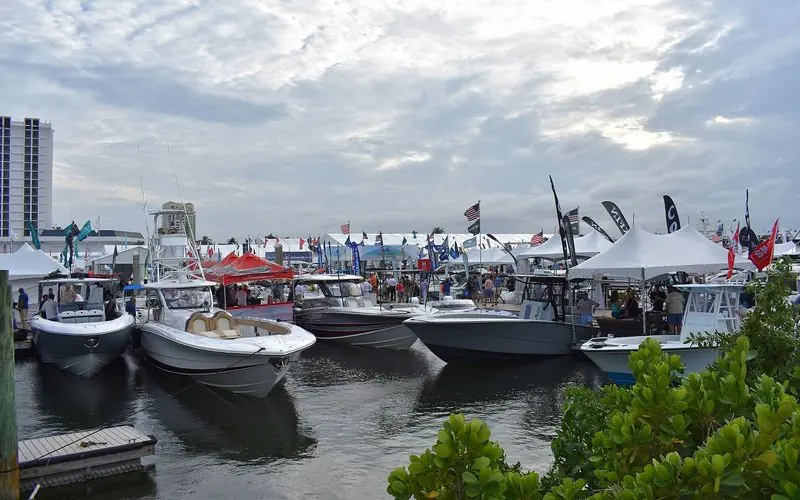
La stagione della Florida va dal boat show di fine ottobre a Pasqua. Il Fort Lauderdale International Boat Show è la più grande esposizione in acqua al mondo e si distribuisce su sette sedi, tra cui Pier Sixty-Six Marina e il Superyacht Village a Pier Sixty-Six South, con la 67esima edizione in programma dal 28 ottobre al 1 novembre 2026. Da giugno a novembre la stagione atlantica degli uragani mette il Sud della Florida in piena zona, e la maggior parte delle polizze impone piani per le tempeste con nome agli yacht che restano.
I difetti sono caldo, esposizione e traffico. Agosto a Fort Lauderdale è brutale e umido, la causeway è rumorosa e l'orario del ponte irrita chiunque sia ormeggiato a nord di esso. Questo è un posto da cui far funzionare uno yacht, non un posto in cui sedersi a guardare un panorama. Gli armatori lo scelgono perché tutto quello di cui potrebbero avere bisogno sta dentro cinque miglia.
Sixty hertz, and what a European yacht does about it
This is the dock where a Mediterranean yacht arrives after crossing west, and it is one of two pages in this set where the frequency of the shore supply decides whether the boat plugs in at all. Florida runs 60 Hz, at 120 V, 208 V and 480 V depending on the service. A yacht wired for the European 50 Hz standard cannot simply connect. It needs a frequency converter aboard, or a converter supplied at the pedestal, or it runs its generators and pays for the fuel and the hours. Checked on 28 July 2026, Pier Sixty-Six publishes 1,200 A per pedestal and states neither the voltage nor the frequency, which is a strange omission on a marina that markets itself to owners who have never been able to plug in since leaving the shipyard.
The practical sequence is to settle it at the booking and not on the quay. A captain should ask what voltage and frequency the specific pedestal delivers, whether the marina has converters and at what rating, whether the connection above a given amperage is made by the dock team or by the crew, and what the changeover costs. The same question travels the whole American east coast and the Caribbean, so an owner basing a European hull in Florida for a winter usually solves it once, aboard, rather than negotiating it at every marina. On a yacht that arrives without a converter, generator hours become a real line in the winter budget and the maintenance schedule shifts with them.
The federal paperwork, which is not done here
The single most useful thing the marina says about formalities is that they do not happen on its dock. Customs cannot be cleared at Pier Sixty-Six. Arriving vessels take a shuttle the marina arranges to the US Customs office, and US and Canadian nationals have the option of reporting through the Mobile Passport app. That is a materially different arrival from Yacht Haven Grande, where Customs and Border Protection sit on the property, and it needs planning into the first day rather than discovering at the fuel dock. The property itself is a designated Foreign Trade Zone, which is a customs status attaching to goods on the site and not a clearance point for the yacht.
Three federal points shape a European yacht's first Florida winter and none of them are marina matters. Customs and Border Protection issues a cruising licence to recreational vessels of certain flags, which relieves the yacht of formal entry and clearance at each subsequent US port, and eligibility turns on a reciprocity list that CBP maintains and revises, so the flag is checked against the current list rather than assumed. Crew need the correct visa class before arrival, and a B1 or B2 is not automatically the right answer for a paid crew member on a foreign-flagged yacht. Above all, the Passenger Vessel Services Act prohibits a foreign-flagged vessel from carrying passengers for hire between two United States points, which means the Riviera charter model does not transfer to Florida and an owner who assumes it does is exposed. Formally importing a foreign-built hull into the United States attracts duty under the tariff schedule and is a decision taken with an American maritime attorney, not a broker.
A terra, accessi e prenotazioni
| Contact and VHF | VHF 16/71 for hailing; marina office (954) 728-3578 or [email protected]. Confirmed on the marina's own site and matched by Dockwalk's marina database. |
|---|---|
| Operator | CoralTree Hospitality Group runs the reopened resort and marina day to day, under owner/redeveloper Tavistock Development Company. Marina Director is Megan Lagasse - 20 years in the trade, including a stint at IGY's Yacht Haven Grande in St. Thomas and four years as Bahia Mar's general manager, per the marina's own site and the Marine Industries Association of South Florida. |
| Booking a slip | Reservations go through an online slip-rental form or a direct call/email to the marina office, giving vessel specs and arrival/departure dates. The marina's public FAQ does not publish an advance-notice window or a deposit figure, and draws no public distinction between transient and annual terms - that is negotiated directly with the dockmaster. |
| Pricing | No official rate card is published anywhere findable. The only per-foot figure that turned up - roughly USD 7 to 9 per foot per night for transient dockage, from a Fort Lauderdale yacht brokerage's marina guide - has no second source to confirm it, so treat it as indicative only, not a quote. |
| Fuel | Tax-free, in-slip diesel bunkering at up to 200 gallons per minute. The mechanism behind the tax-free claim is real, not just marketing copy: the marina sits inside a CBP-designated Foreign Trade Zone tied to Port Everglades. |
| Shore power | The marina's own site cites pedestals up to 1,200 amps; a 2025 trade piece aimed at captains (The Triton) cites 30-amp to 1,000-amp service. The two do not agree at the top end, so read the ceiling as roughly 1,000 to 1,200A rather than a hard number until confirmed dockside. |
| Getting there | FLL airport is about 5 miles away, roughly 10 to 15 minutes by road. Signature Aviation is the FBO at FLL itself. Banyan Air Service, often mentioned in the same breath, is actually based at Fort Lauderdale Executive Airport (FXE) - a separate general-aviation field a short drive away, not at FLL. |
| Customs | No CBP office on site. Per the marina's own FAQ, crew either take a marina shuttle to the U.S. Customs office or use the Mobile Passport app - consistent with clearance itself not happening dockside. |
Cosa riferiscono armatori ed equipaggi
Depth through the whole approach is the standout, not just at the dock
A 50ft sailboat drawing 8ft found 10ft of water the entire way from the canal to the berth, which the reviewer called the single most important feature for his boat - and it held. The same reviewer warned the marina basin entrance, off a canal off the New River, is hard to pick out after dark, and vanishes entirely behind a docked megayacht if one happens to be blocking the sightline.
William Mcnutt, S/V Vacatio (Waterway Guide review, Jun 2025)Floating docks with dockside trash pickup, but no showers or laundry on site
The same reviewer praised the floating docks and a feature he said he had not seen anywhere else - a trash bin at the end of each finger dock that staff empty for you - plus a free filtered-water kiosk for drinking (the tap water in Fort Lauderdale runs high in sulfur and there is no equivalent filtering for tank fills). His complaint: no showers, no laundry on site, and the nearest laundromat is coin-operated, expensive and 'sketchy'.
William Mcnutt, S/V Vacatio (Waterway Guide review, Jun 2025)Staff and location draw praise across different ownership eras of the docks
A second reviewer, docked here in a 55ft sailboat before the most recent redevelopment phase, called the harbor location and access great and singled out then-marina manager Megan and her staff by name as 'a great amazing team', noting the docks had recently been rebuilt while the original 1957 hotel tower was still under reconstruction.
Richard Alcott, S/V Sea Cloud (Waterway Guide review, Jan 2021)
Cosa convince e cosa va valutato
Punti di forza
- A real Foreign Trade Zone, not just a pricing gimmickThe tax-free fuel rests on the marina sitting inside a CBP-designated Foreign Trade Zone linked to Port Everglades - a legal status, not a discount policy the marina could revoke.
- Genuine marina-industry leadership installed for the reopeningCoralTree Hospitality brought in Megan Lagasse as Marina Director - prior stops at IGY's Yacht Haven Grande and four years running Bahia Mar - ahead of the 2025 relaunch. That is a marina professional, not a hotel generalist covering the waterfront.
- The trade is voting with its feetThe reopening was timed to the 66th Fort Lauderdale International Boat Show in October 2025, and Azimut and Benetti opened their Americas headquarters on site - a concrete signal from manufacturers, not just PR.
- Crew welfare beyond the dockA 13,000 sq ft Zenova Spa with nine treatment rooms, a 24-hour Technogym fitness center, and up to 12 planned food-and-beverage concepts on property give crew stuck aboard for a season somewhere to actually go.
Da valutare
- No published rate cardPricing is opaque. The one per-foot figure found (roughly USD 7 to 9/ft/night, from a brokerage's marina guide) is uncorroborated - the real number comes from calling, not from browsing.
- Still finishing as of the 2025 reopeningRestaurants such as Garni and Pelican Landing were still opening through spring 2025 after the headline relaunch, and reporting on the project does not describe the full 12-concept dining rollout as complete until around October 2026 - book early in the cycle and part of what is advertised may not be open yet.
- Two piers split by a working causeway bridgePier North and Pier South sit on opposite sides of the 17th Street Causeway Bridge, so which side a yacht is assigned changes the walk - or tender - to the resort core. Worth asking at booking; the marina does not volunteer it.
- Published specs are not fully reconciled since the rebuildEven basic numbers disagree between the marina's own site and trade coverage - shore power cited at both 1,200A and 1,000A is the clearest example - which suggests the post-renovation spec sheet has not been fully cleaned up yet.
A chi si rivolge: L'armatore che divide l'anno tra Florida e Bahamas e dà valore alla profondità delle maestranze, alla certezza fiscale e a un transfer aeroportuale di dieci minuti.