Port Camargue (France)
| Location | Le Grau-du-Roi, Gard, southern France, on reclaimed dune and marsh between the Pointe de l'Espiguette and the town's separate fishing harbour |
|---|---|
| Scale | 172 hectares, about 10 km of quays and pontoons, around 5,000 berths in total: roughly 2,760 in the public port and 2,240 privately owned in the residential marinas, plus about 250 for visitors (Office de Tourisme du Grau-du-Roi; France 3 Occitanie, 2019) |
| Widely reported as Europe's largest pleasure marina and the world's second-largest after San Diego, California, a comparison repeated by the port's own tourism office and by regional press; we could not independently verify the San Diego comparison against US port data | |
| Older or differently-dated counts vary | Wikipedia cites 4,600 berths, Noonsite and France Today cite 4,500 (2,105 public, 2,242 private), sea-seek.com cites 4,800; the gap looks like different count dates rather than one disputed figure |
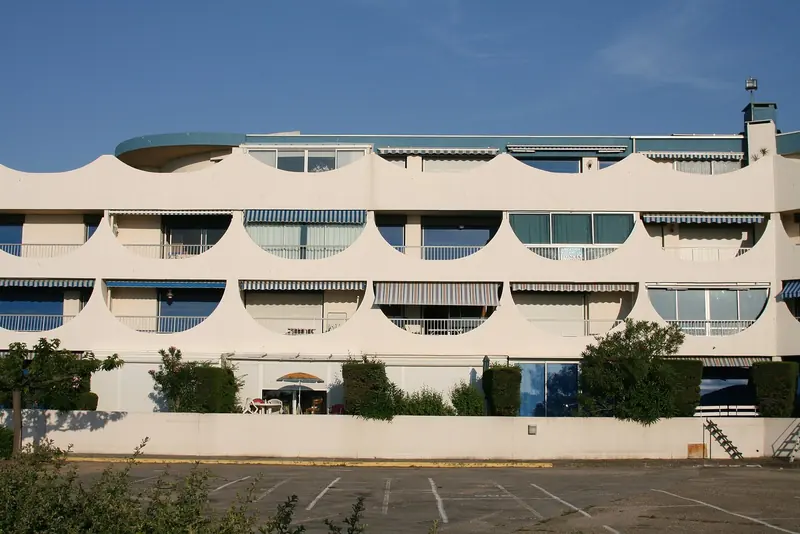
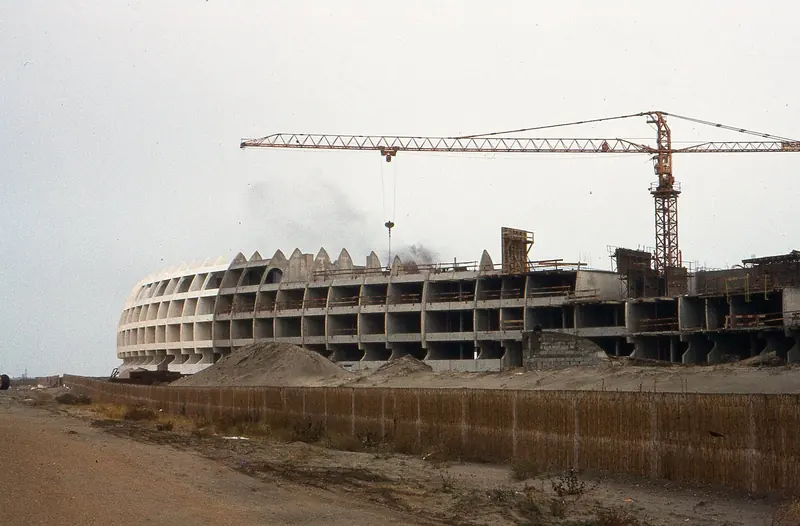
| Architect | Jean Balladur, also the architect of La Grande-Motte, appointed from 1963 under the state's Mission Racine coastal development programme; first basins and pontoons built from 1969, port opened 4 June 1969, capitainerie completed 1973 |
| Heritage | six of the port's 1970s buildings, the capitainerie, Le Suffren, Le Grand Pavois, Les Jardins du Port, Le Grand Galion and Les Camarguaises Sud Marina, were given France's 20th-Century Heritage label in 2015 (French Ministry of Culture, Merimee database) |
| The defining layout | a residential canal with the boat moored in front of the house rather than in a separate marina block; roughly half the port's berths, about 2,240, belong to individual homeowners rather than the port authority |
| Approach | entered by a channel opening to the northwest with a sandy, regularly-dredged bottom averaging about 5 metres; VHF channel 9 to the harbour office, monitored 24 hours in season (Noonsite; bateaux.com) |
| Dredging history | the southern approach channel was dredged of about 4,500 cubic metres of sand and silt in February 2021 after depths fell below 2.2 metres in places, a 3.6 million euro, five-port Occitanie programme, 50 percent subsidised by the state and region (France 3 Occitanie) |
| A separate, larger 2014 project lowered the harbour floor by 70 cm near the technical zones, removing 40,000 cubic metres at a cost of 4.2 million euros, using a process the port described as zero-discharge because part of the sediment carried old PCB contamination (ActuNautique.com) | |
| 2026 published tariff, category IX (18 to 23.99 m LOA, up to 7 m beam), escale rate: EUR 62/87/105 a night for low/mid/high season, EUR 306/431/529 a week, EUR 1,095/1,503/1,851 a month (Port Camargue, official 2026 tariff brochure) | |
| Above 24 m the tariff switches from a flat category rate to a per-metre rate: category X (24 to 29.99 m) EUR 5 to 7/m a day across the three seasons, category XI (over 30 m) EUR 6 to 8/m a day; boats over 24 m are asked to contact the capitainerie directly rather than book off the printed table | |
| Long-stay published rate, category IX | EUR 5,598 for a 6-month summer contract (1 May to 31 October) or EUR 7,556 for a full calendar year, 2026 tariff |
| Included in the base at-berth rate | mooring, 24-hour surveillance, standard 220V/10A power, water, battery charging, refuse collection and showers (badge issued after 7 days); a separate flat EUR 21 water/electricity consumption package is charged to boats in transit, per the 2026 brochure |
| Waiting list | France 3 Occitanie reported close to 500 people on Port Camargue's public waiting lists at the port's 50th anniversary in 2019, some registered more than 15 years earlier; the port runs three separate lists, for professionals, local residents and others |
| Boating-forum threads on Hisse et Oh (2012 to 2015) describe individual waits of 10 years or more and cite a year, 2015, in which only 16 of 1,359 people on the waiting list were offered a berth, requiring 72 separate offers to find 16 takers | |
| Private berths | owners hold the mooring structure (appontement) but not the water plan in front of it under the port's own rules, and cannot rent a berth out independently of the house; a 2021 port proposal to let out around 10 empty owner berths via a concierge scheme was blocked by the ALPC2 owners' association, which cited contracts running to December 2051 |
| Fixed date | Les Nautiques de Port Camargue, an in-water boat show staged in the port's own basins, ran its 32nd edition 3 to 6 April 2026, with around 650 boats, 250 exhibitors and reported attendance of 40,000 to 45,000 over four days, free entry, parking and shuttles (bateaux.com; boatcible.com) |
| Getting there | Nimes-Ales-Camargue airport about 50 km/35 minutes by road; Montpellier-Mediterranee airport about 27 km/21 minutes; Montpellier itself about 37 km |
| What is not published | how many of the roughly 2,240 privately-owned berths are actually occupied by a boat at any given time, a current position-by-category figure for the public waiting list, or a per-litre diesel price at the 24-hour fuel quay |
Berths built into the front garden
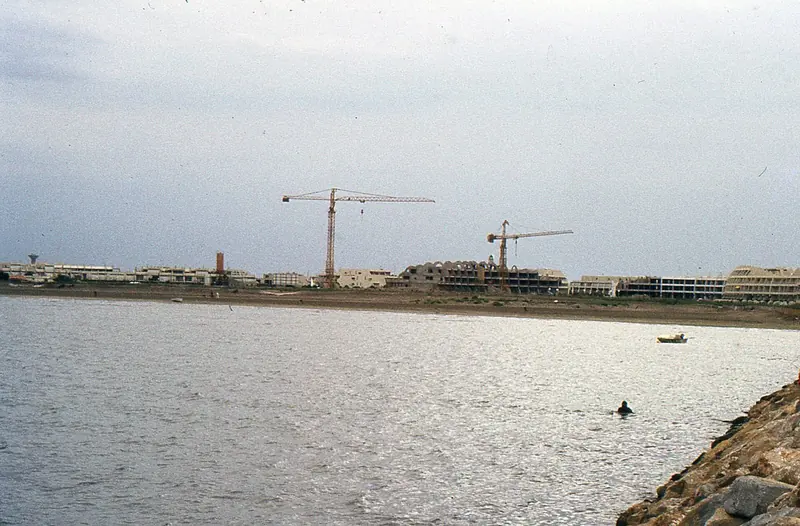
Port Camargue did not grow out of an existing harbour. It was drawn on a map of empty dune and marsh south of Le Grau-du-Roi from 1963, when the Nimes Chamber of Commerce and Industry brought in Jean Balladur, the architect of the Mission Racine programme that also built La Grande-Motte along this coast, to design a resort built entirely around boats. The first basins, quays and pontoons went in from 1969 and the port opened formally on 4 June 1969, with the capitainerie, a 1973 Balladur building, following soon after. Six of the marina's original 1970s structures, the capitainerie itself, Le Suffren, Le Grand Pavois, Les Jardins du Port, Le Grand Galion and Les Camarguaises Sud Marina, were given France's 20th-Century Heritage label in 2015, their scalloped concrete loggias and fish-motif lattices now protected rather than merely dated.
The idea that made the place famous is simple and, on this coast, still unusual: a resident's boat moors on the canal directly in front of the terrace, not in a rented slip a walk away. Roughly half the marina's berths, around 2,240 of the total, belong outright to the owners of those houses rather than to the port authority, and the other 2,760 make up the public port that a visiting or renting boat actually books into. The whole layout covers 172 hectares with about 10 kilometres of quays and pontoons. Older counts, including Wikipedia's, put the total closer to 4,500 to 4,800 berths; the harbour's own tourism office and the regional press both currently cite the 172-hectare, 5,000-berth figure, and the gap looks like a difference in count date rather than a live dispute.
The approach is sand, not swell
The sea approach itself is not technically hard. The channel opens to the northwest with nothing blocking the swell on the run in, and the harbour office answers on VHF channel 9, monitored around the clock through the summer. What actually catches boats out is the bottom. It is sand, it moves and the charted average depth of around 5 metres is a description of a dredged channel, not a permanent fact. In February 2021 the southern approach channel needed a dedicated dredge, 4,500 cubic metres of sand and silt lifted out after depths had fallen below 2.2 metres in places, part of a 3.6 million euro programme shared across five Occitanie ports and half subsidised by the state and the region.
That was a channel fix. A larger, separate project in 2014 lowered the harbour floor itself by 70 centimetres near the technical zones, 40,000 cubic metres removed at a cost of 4.2 million euros, using what the port described as a zero-discharge process because part of the sediment carried old PCB contamination. Neither project is unusual for this port, it is a recurring maintenance line rather than a one-off and a captain planning to bring anything with real draught in for the first time should check current soundings rather than the chart depth alone.
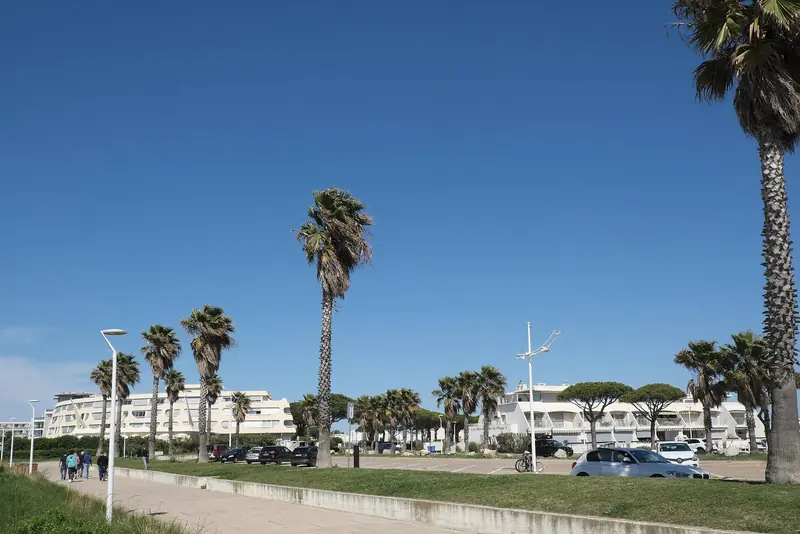
Half of Europe's biggest marina is not the port's to rent out at all - it belongs to the houses behind the quay.
What it costs, by the book
Port Camargue does not price by square metre the way the Cote d'Azur marinas do. The 2026 tariff runs eleven length categories, each with a flat daily, weekly or monthly rate that changes with three seasons, low (November to March), mid (April, May, June, September, October) and high (July, August). A 20-metre boat sits in category IX, 18 to 23.99 metres, up to a 7-metre beam: EUR 62 a night in low season, EUR 87 in mid season and EUR 105 in high season, published by the port itself for 2026. A week runs EUR 306, 431 or 529 across the same seasons and a full month EUR 1,095, 1,503 or 1,851. Above 24 metres the categories switch to a per-metre rate rather than a flat fee, EUR 5 to 7 a metre a day depending on season for 24 to 29.99 metres and EUR 6 to 8 a metre for anything over 30, and the brochure asks anything over 24 metres to contact the capitainerie directly rather than book off the printed table.
The at-berth rate is meant to cover the basics: mooring itself, round-the-clock surveillance, standard 220V/10A power, water, battery charging, refuse collection and showers, the last unlocked by a badge issued after seven days on site. The same 2026 brochure separately lists a flat EUR 21 water and electricity consumption package charged to boats in transit, on top of the mooring fee. A permanent berth, where one can be had, is priced the same way over a full year: category IX runs EUR 5,598 for a six-month summer contract or EUR 7,556 for the full year on the 2026 sheet. What none of this tells a buyer is whether a berth will actually be offered, which is a separate and much harder problem.
Getting a berth here is not like booking a hotel
Booking a stopover under 24 metres is ordinary: contact the capitainerie, or in season simply call up the harbour office on VHF channel 9 and take what is offered. Getting a permanent berth is not. The port runs three separate waiting lists, for professionals, local residents and everyone else, ranked by boat length category and the queue moves slowly enough that it is a running complaint on French boating forums. Threads on the Hisse et Oh forum from 2012 to 2015 describe individual waits past ten years, one poster citing a locally announced 17-year wait in his category, and a single year, 2015, in which only 16 of 1,359 people on the list were offered a berth, and it took 72 separate offers to find 16 takers willing to accept what came up. At the port's own 50th anniversary in 2019, France 3 Occitanie reported close to 500 people still on the waiting lists, some registered more than fifteen years earlier.
The other half of the marina is not the port's to allocate at all. Roughly 2,240 berths belong to individual homeowners, who under the port's own rules own the mooring structure itself but not the water plan in front of it, meaning they cannot simply rent the berth out independently of the house. That distinction became public in 2021 when the port proposed a small concierge scheme to let out perhaps ten empty owner berths for the summer season, and the ALPC2 association of marina owners blocked it, pointing to contracts that run to December 2051. For a buyer, the practical route into Port Camargue that most people actually use is to buy an existing boat that already comes with a berth attached, public or private, rather than to queue for one on its own.
Fuel, power and what's on the quay
Fuel is sold around the clock from a dedicated quay, and the free services that go with it are genuinely free: a pump-out for bilge and black and grey water is available at the fuel quay 24 hours a day at no charge, and the Cleanerblue on-board waste-water collection service is also free to users. Standard mooring includes 220V/10A power and water; boats needing more can take an annual power contract from EUR 390 a year at 16A or 32A single-phase up to EUR 1,838 a year at 63A three-phase, or pay a per-day, per-10-amp supplement if they need extra power while in transit. Wifi is free across the port outside the private Marinas sector, and the car parks carry electric-vehicle charging points with live availability shown on a smartphone app, part of a Smart Grid system the port installed in 2018 aimed at cutting water and power consumption by 10 to 20 per cent.
The technical zone runs travel-lifts and gantries to 80 tonnes, and short haul-and-launch work is priced by length category on the 2026 sheet, from EUR 128 for the smallest boats in low season up to a quote on request above 18 metres. Trailerable boats under 7 metres get a public slipway and a dry-storage park, with day, week or month rates and separate summer and winter season packages. Three sailing schools work out of the port through the season: UCPA's Ecole de Mer, a 3,000 square metre building on the outer harbour with room for 140 people learning catamaran, windsurfing and kitesurfing, which added a 410-panel, roughly 160kWc solar roof in 2026 funded partly through an EU regional grant; the Societe Nautique du Grau du Roi, based on the Quai d'Escale; and Camargue Nautique Club, which takes children from age five through optimist, catamaran and wingfoil programmes.
Eating on the quay and after dark
Eating within walking distance means eating on the port's own quays rather than in a separate old town, because there is no separate old town here, the marina is the destination. Le Moai and L'Amarette both sit on the waterfront in the Route des Marines area, Marina Beach runs a beach-club restaurant open 9am to 8pm through the week and until 1am on Fridays and Saturdays, and Le Bistrot du Port serves a simpler menu of fresh fish, burgers and Camargue specialities on the quay itself. The Forum square adds bakeries, ice cream and food trucks through summer and fresh catch from Le Grau-du-Roi's own fishing fleet, moored a short walk away round the point, reaches several of these kitchens daily.
After dark, what is actually published is thin and that itself is worth saying plainly: this is not a marina with a Saint-Tropez-style nightclub scene on the doorstep. Grau-du-Roi's town beach, casino and main promenade are physically close but separated by dunes, with no bus route connecting them to the marina and a walk of around 25 minutes each way, so an owner wanting a night in town is better off with a car, a bike or a taxi than a stroll along the quay. Within the marina itself, the restaurants and beach clubs along the water are the evening, rather than any bar district of their own.
The calendar: Les Nautiques and the sailing schools
The fixed date on Port Camargue's own calendar is Les Nautiques de Port Camargue, an in-water boat show staged directly in the port's basins rather than at an exhibition hall. The 2026 edition, its 32nd, runs 3 to 6 April over the Easter weekend: around 650 boats afloat and ashore, 250 exhibitors covering everything from engines and electronics to sailmaking and clothing, and reported attendance of roughly 40,000 to 45,000 people over the four days, with free entry, parking and shuttle buses. A dedicated tent for sea fishing gear is new for 2026, alongside the usual seafood and regional food stalls.
Outside that week, the sailing schools are the recurring calendar rather than a single headline event: UCPA, the Societe Nautique du Grau du Roi and Camargue Nautique Club between them run stages through the school holidays and across the summer for children and adults, from first sails in an Optimist to wingfoil and multihull courses, and the Vivre la Voile association adds outings and private charters on an 11-metre habitable sailboat out of the same basins. None of the schools publish a single unified 2026 calendar, each runs its own booking page.
The honest downside
The two real weaknesses here are structural rather than seasonal. Getting a permanent berth is genuinely difficult: three separate waiting lists, reports of waits running past a decade and in some categories closer to two, and a port that itself acknowledged close to 500 people still queuing at its 50th anniversary. Anyone who wants to own here rather than simply visit should plan on buying a boat that already comes with a berth, public or private, because starting from zero on the list is a multi-year commitment before a single night is spent aboard.
The second weakness is geography. Port Camargue is genuinely separated from Le Grau-du-Roi's town beach and casino, a walk of about 25 minutes with no bus connecting the two, which is exactly what keeps the marina's own 1970s architecture and canals quiet and undiscovered by the resort's day-trippers, and exactly what an owner wanting an evening in town has to plan around. Add a sandy approach channel that needs dredging on a recurring cycle, most recently in 2021 and before that in 2014 and the honest picture is a marina built for the boat and the house behind it rather than for a stroll into a historic port town.
A terra, accessi e prenotazioni
| Nearest airports | Nimes-Ales-Camargue about 50 km/35 minutes by road; Montpellier-Mediterranee about 27 km/21 minutes; Montpellier itself about 37 km. |
|---|---|
| VHF and approach | Harbour office on VHF channel 9, monitored 24 hours in season. Entrance channel opens to the northwest with no swell trap, sandy bottom averaging about 5 m but regularly dredged (most recently February 2021); check current soundings rather than chart depth alone. |
| How berths are actually reserved | A stopover under 24 m is booked directly with the capitainerie; over 24 m you are asked to contact them individually rather than use the printed tariff. A permanent berth is a different matter: three separate waiting lists (professionals, local residents, others) with reported waits of a decade or more and close to 500 people still on the lists at the port's 50th anniversary in 2019. Roughly half the marina's berths are privately owned by house owners and are not the port's to allocate at all; buying an existing boat that already comes with a berth is the route most people actually use. |
| Berth cost | 2026 published tariff, category IX (18 to 23.99 m): EUR 62/87/105 a night for low/mid/high season, EUR 306/431/529 a week, EUR 1,095/1,503/1,851 a month. Above 24 m, EUR 5 to 8 a metre a day depending on season and category. A permanent category IX contract is EUR 5,598 for 6 months (May to October) or EUR 7,556 a year, subject to a berth being available. |
| Fuel and fluids | Fuel sold 24 hours a day from a dedicated quay; per-litre price not published online. Bilge, black and grey water pump-out is free at the fuel quay around the clock, and the Cleanerblue on-board waste service is free to users. |
| Services on the quay | Standard berths include 220V/10A power, water, battery charging, waste collection and showers (badge after 7 days). Higher-amperage annual contracts run EUR 390 to EUR 1,838/year; transiting boats pay a EUR 21 flat water/electricity package. Free wifi outside the private Marinas sector, EV charging in the car parks and a technical zone with travel-lifts to 80 tonnes. |
| Eat on the quay | Le Moai and L'Amarette on the Route des Marines waterfront, Marina Beach (9am to 8pm, to 1am Fridays and Saturdays) and Le Bistrot du Port for fresh fish and Camargue specialities, all within a few minutes of the pontoons. |
| After dark | No nightclub scene on the marina itself; Le Grau-du-Roi's town beach, casino and promenade are about a 25-minute walk away with no bus connection, so a car, bike or taxi is the practical way in for an evening in town. |
| Fixed dates | Les Nautiques de Port Camargue, an in-water boat show in the port's own basins, ran its 32nd edition 3 to 6 April 2026 (around 650 boats, 250 exhibitors, 40,000 to 45,000 visitors). Sailing schools (UCPA, Societe Nautique du Grau du Roi, Camargue Nautique Club) run stages through the summer without a single published joint calendar. |
Cosa riferiscono armatori ed equipaggi
Getting a berth here can mean a decade or more on a list, not months
Threads on the Hisse et Oh boating forum running from 2012 to 2015 describe individual waits past ten years, one poster citing a locally announced 17-year wait in his category, and a 2015 count in which only 16 of 1,359 people on the waiting list were actually offered a berth, taking 72 separate offers to find 16 willing takers.
Hisse et Oh boating forumThe port itself admits it turns away almost everyone who asks
At Port Camargue's 50th anniversary in 2019, the port's own figures put close to 500 people still on its public waiting lists, some of them registered more than 15 years earlier.
France 3 OccitanieHalf the marina answers to its homeowners, not to the harbourmaster
A 2021 report on the port's attempt to rent out around ten empty owner berths through a concierge scheme found it blocked by the ALPC2 owners' association, whose members hold contracts running to December 2051 and argued the port had no right to let their unused berths regardless.
ici.fr (France Bleu)The marina most visitors to the beach resort next door never actually see
A regional feature on Port Camargue described it as separated from Le Grau-du-Roi's own tourist beach by the dunes, a 25-minute walk with no bus link, so that most holidaymakers in the resort never discover the 5,000-boat marina behind it.
Le Journal Catalan
Cosa convince e cosa va valutato
Punti di forza
- The 'boat outside your door' concept is not a marketing line, it is built into hundreds of real housesSix of the marina's original 1970s buildings, including the capitainerie and the scalloped, fish-motif blocks Le Suffren and Le Grand Galion, were given France's 20th-Century Heritage label in 2015 and the private canal-house layout Jean Balladur designed from 1963 is still exactly how roughly half the port's 5,000 berths function today.
- It is still Europe's biggest working stage for the trade, not just parking for boatsLes Nautiques de Port Camargue, held in the port's own basins, drew around 650 boats, 250 exhibitors and a reported 40,000 to 45,000 visitors over four days for its 32nd edition in April 2026, a scale few other marinas on this coast could host inside their own pontoons.
Da valutare
- A newcomer without an existing boat-and-berth deal effectively cannot get in quicklyThe port's own figures put close to 500 people on its waiting lists in 2019, some registered more than 15 years earlier and boating-forum accounts from 2012 to 2015 describe individual waits past a decade with as few as 16 of 1,359 applicants offered a berth in a single year.
- The approach channel silts, and depth is a moving target, not a fixed chart figureThe southern channel had shoaled to under 2.2 metres in places before a 4,500-cubic-metre dredge in February 2021, and a separate, larger dredge in 2014 removed 40,000 cubic metres to lower the harbour floor itself by 70 cm, both signs of a recurring maintenance problem rather than a one-off fix.
- It is genuinely cut off from the resort town next doorLe Grau-du-Roi's own tourist beach and casino sit about a 25-minute walk from the marina with no bus route connecting the two, so an owner wanting a night in town, rather than on the quay, needs a car, bike or taxi.
A chi si rivolge: The owner who wants a house with the boat moored outside the window rather than a rented slip, and who has either already found one or is prepared to wait years for the chance.