Port Hercule (Monaco)
| Posizione | Monaco (La Condamine), Costa Azzurra |
|---|---|
| Gestore | Societe d'Exploitation des Ports de Monaco (SEPM) |
| Posti barca | circa 700, di cui una trentina per visitatori |
| Posti per grandi yacht | circa 110 posizioni per unità oltre i 24 m |
| LOA massima | gli yacht più grandi fino a circa 135 m sul molo esterno |
| Fondali | da pochi metri alle banchine a circa 30 m |
| Alta stagione | Gran Premio di Monaco a fine maggio e Monaco Yacht Show a fine settembre |
| Grand Prix week, 2026 | best trackside Grand Prix berth for a 50-59 m yacht about EUR 110,135 for the week |
| Annual berth, 2026 | annual berth for a 20 m yacht about EUR 25,000 to EUR 35,000 |
| Alternative with purchasable tenure | Cala del Forte, Ventimiglia, Monaco Ports-owned, 35 m concession quoted around EUR 1.6 million in 2026 |
| Services | 220V and 380V shore power, BP fuel station in port, grey water collectors, contracted black water pumping |
| Fixed dates 2026 | Formula 1 Grand Prix 5-7 June, Monaco Yacht Show 23-26 September |
| Shore power, Digue Rainier III | six points at 410 V, 2,000 A, 1,250 kVA, plus one high-voltage point at 6,600 V, 300 A, 3,400 kVA (port booklet, updated 20 March 2025) |
| Frequency | not published by the port. Monaco is on the European 50 Hz grid and no 60 Hz supply is advertised, so a 60 Hz yacht converts on board |
| Shore connection is compulsory on the dyke, sewage discharge is prohibited, radars off at the port entrance | |
| Pilotage compulsory for movements inside the port by yachts of 80 m and over | |
| Metered fluids | EUR 0.4188 per kWh and EUR 6.2245 per cubic metre of fresh water, VAT included, 2025 schedule |
| Depth on the dyke | 8 m of clear water maintained above the ground lines by tension, moorings at 15 m, marked by diver-set buoys |
| Weather limit on the dyke for yachts under 200 m: Beaufort 10 off the land (48 to 55 knots), Beaufort 8 off the sea (34 to 40 knots), above which the port can order the yacht off the berth | |
| Cost, 2026 published passage card, Hercule outside the dyke, VAT included: 50 to 54.99 m at EUR 500.40 a day low season and EUR 1,258.80 high season | |
| Cost, 2026 published passage card | 60 to 64.99 m at EUR 662.40 a day low and EUR 1,549.20 high, high season 1 May to 1 October 2026 |
| Cost, winter card 2026-2027, 1 October to 1 May, VAT included: EUR 97,456.80 for 50 to 54.99 m, EUR 116,722.80 for 60 to 64.99 m | |
| Multihull surcharge | 60 per cent on the Hercule passage and winter cards |
| Dyke fender wall | 22 units of 2,300 x 3,000 mm, 200 tonnes, 299 kNm energy, with four ground lines rated 60 to 80 tonnes horizontal traction |
Il porto al centro del principato
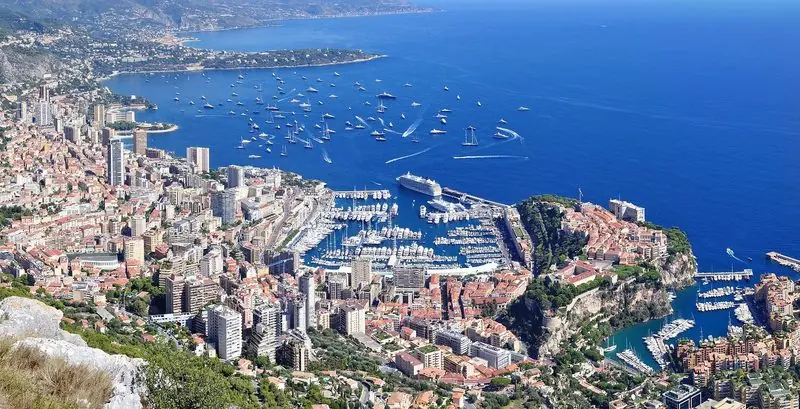
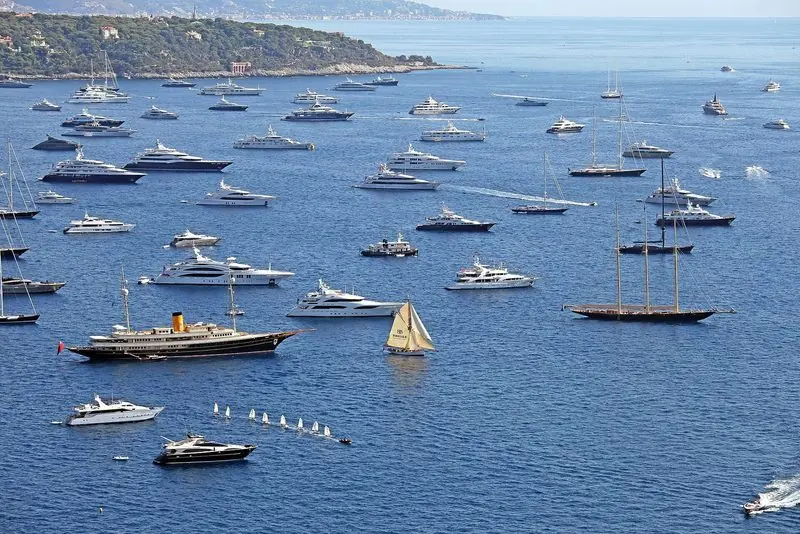
Port Hercule occupa il quartiere della Condamine, fra il centro storico di Monaco-Ville e le torri di Monte-Carlo. È uno dei pochi porti naturali davvero profondi di questo tratto di costa, ed è per questo che attira navi dall'antichità e yacht da oltre un secolo. L'acqua sta a ridosso della città, quindi qui uno yacht ormeggia fra banche e alberghi invece che su una lingua di terra guadagnata al mare. Quella vicinanza è tutto il senso del luogo.
Il porto è gestito dalla Societe d'Exploitation des Ports de Monaco, l'ente pubblico che amministra i due porti del principato. Un lungo frangiflutti e una grande diga galleggiante riparano il bacino dall'onda che può entrare da sud. I fondali vanno da pochi metri vicino alle banchine a circa trenta nelle parti esterne, così il porto può accogliere scafi grandi che altrove toccherebbero. Il sito è stato affinato in decenni di opere pubbliche, non costruito dal nulla.
Che cosa può accogliere il bacino
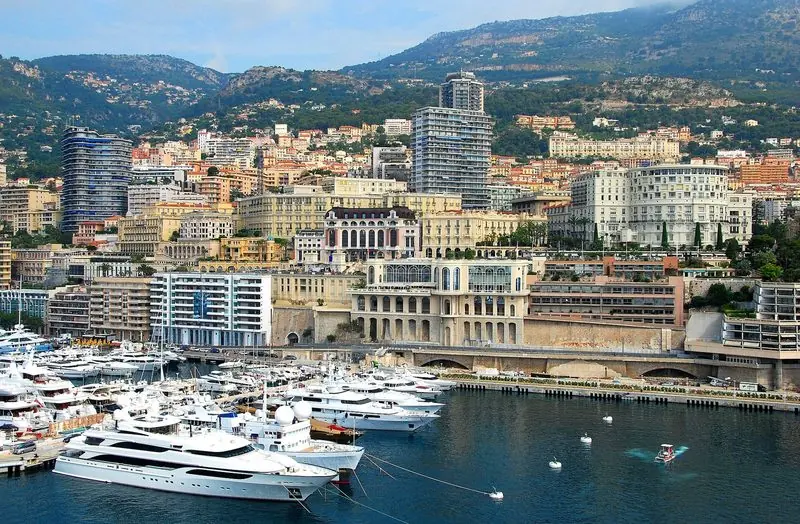
Port Hercule conta in tutto circa 700 posti barca, una cifra che comprende tutto, dalle piccole unità locali ai visitatori più grandi. Circa un centinaio di quelle posizioni sono dimensionate per yacht sopra i 24 metri, e un numero minore di posti per visitatori si libera nel corso dell'anno mentre gli armatori vanno e vengono. Le banchine sono disposte in modo che gli yacht più grandi stiano lungo i muri esterni, dove l'acqua è più profonda. Lo spazio vicino al centro è tra i più contesi del Mediterraneo.
Il porto può accogliere yacht fino a circa 135 metri, con i più grandi ormeggiati di poppa al molo esterno, dietro la piscina. Il fondale del posto e l'imboccatura riparata fanno sì che il baglio sia raramente il fattore limitante. I posti permanenti qui non si liberano quasi mai, e le locazioni di lungo periodo sulle posizioni migliori passano di mano privatamente a prezzi che arrivano ai milioni. Gli armatori che vogliono certezze tendono ad assicurarsi un posto molto prima di averne bisogno.
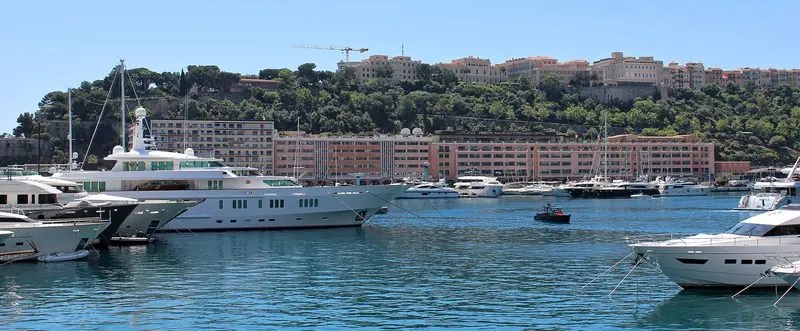
L'indirizzo che non ha bisogno di spiegazioni, al centro visibile del mondo dello yachting.
Servizi costruiti per una flotta esigente
Per essere un piccolo Stato, Monaco ha una panchina profonda di mestieri marini a pochi passi dalla banchina. Carburante e alimentazione elettrica da terra si gestiscono al posto barca, e l'ufficio del porto coordina i movimenti che un bacino affollato impone. Approvvigionamento e supporto agli equipaggi stanno a poca distanza a piedi verso l'interno. Un armatore raramente deve mandare lo yacht altrove per le attenzioni di routine.
Il principato avvolge il porto anche in servizi che con il mare non c'entrano nulla. Private banking e family office si concentrano nel giro di poche strade dall'acqua, il che conta per il tipo di armatore che tiene qui uno yacht. La sicurezza è stretta in tutto lo Stato, e quella rassicurazione è parte di ciò che un posto a Monaco compra. Il risultato è un porto in cui lo yacht e gli affari dell'armatore stanno nello stesso fazzoletto di terra.
La stagione e il giro
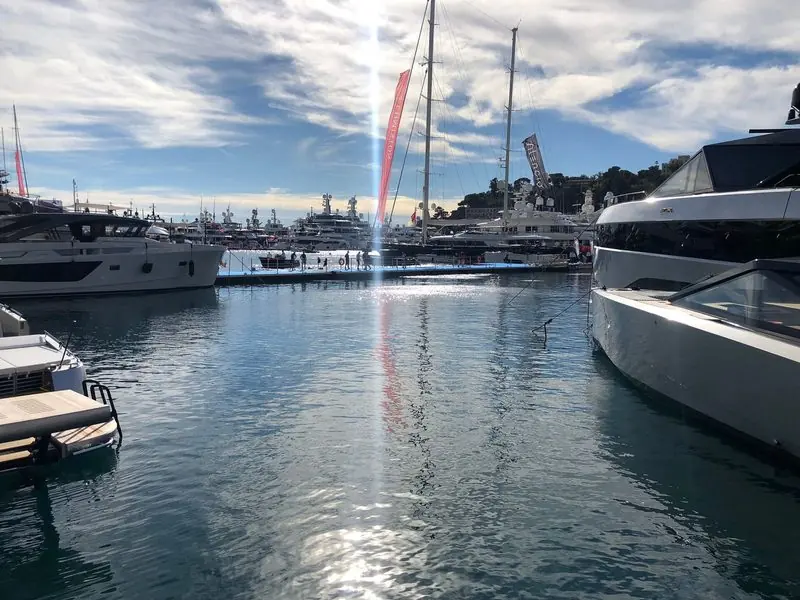
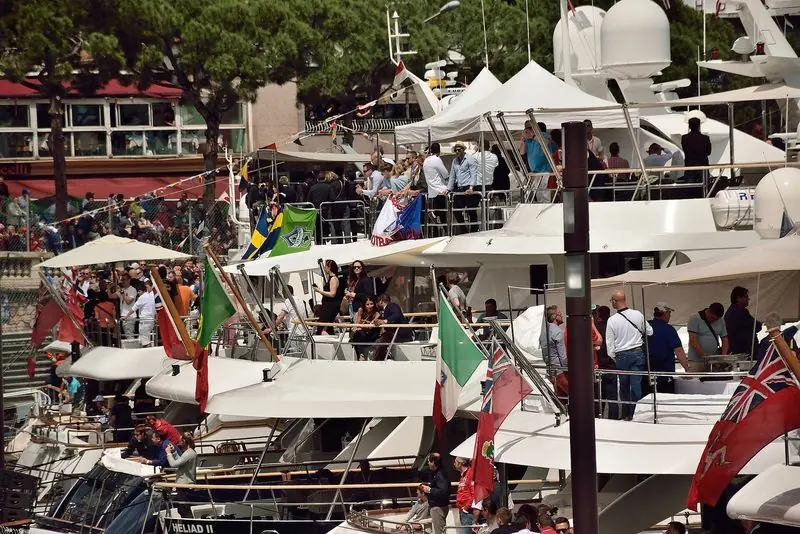
Due date dominano l'anno monegasco. Il Gran Premio di Formula 1 di fine maggio trasforma il porto in una tribuna, con gli yacht stipati bordo a bordo lungo le banchine che costeggiano il circuito. Il Monaco Yacht Show di fine settembre riempie il bacino dei vari più recenti e dei broker e degli acquirenti che li seguono. Nel mezzo, il porto resta affollato per tutta l'estate dagli armatori che usano Monaco come base.
Il contesto attorno al porto è denso, e lo è per scelta. Ristoranti e terrazze d'albergo guardano dritti sull'acqua, e farsi vedere è parte dell'attrattiva per molti armatori. Non è un porto tranquillo né riservato, e questo lo sa chiunque tenga qui uno yacht. Per chi vuole che il proprio arrivo si noti, nessun altro posto barca del Mediterraneo lo fa con altrettanta evidenza.
Dove si colloca nei piani di un armatore
Port Hercule funziona meglio come posto da esposizione e base estiva che come luogo dove nascondersi. Sta a poca navigazione da Saint-Tropez a ovest e dalla Riviera ligure a est, così un armatore può usarlo come perno per l'intera stagione del Mediterraneo occidentale. Il calendario degli eventi dà forma all'anno, e molti armatori pianificano i propri spostamenti attorno ai due grandi fine settimana. Poco altro sulla costa concentra tanta attenzione in un solo bacino.
Il rovescio della medaglia sono il costo e l'esposizione. Un posto qui comanda un sovrapprezzo che riflette l'indirizzo più che i metri quadri d'acqua, e il porto offre poca riservatezza in piena estate. Gli armatori che tengono alla calma affiancano spesso un posto a Monaco a un porto base più tranquillo altrove. Come dichiarazione di arrivo al centro del mondo dello yachting, però, resta il metro su cui gli altri vengono misurati.
Privacy, and the fact that there is none
Monaco is one of the most heavily policed and surveilled square miles in Europe, and that reassurance is a real part of what the berth buys. Crime against a yacht or its guests is close to a non-issue. Access to the quays is controlled and the port office knows every movement in the basin.
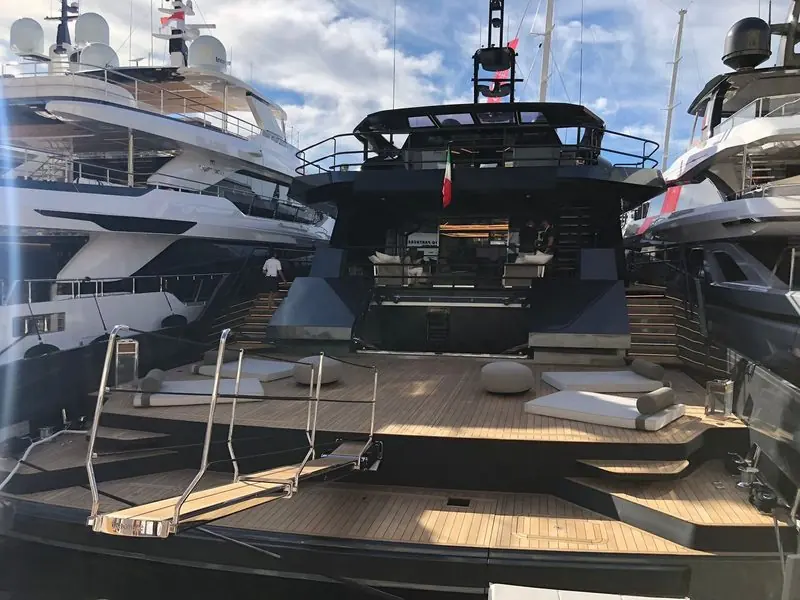
Privacy from the public is a separate matter. Restaurant terraces, hotel rooms and the Boulevard Albert 1er look straight down onto the water from close range, the quays are a public promenade for much of the year, and during show and race weeks the yacht is photographed continuously from a few metres off the passerelle. An owner who wants the boat unseen should not take a berth here.
Ashore, and getting to it
The harbour is the middle of the town. The Casino square, the Hotel de Paris and the Yacht Club de Monaco are within a short walk of the quays, and the banking and family-office cluster that many owners deal with sits in the same few streets. For a week with family the constraint is that Monaco is small and built up. There is one usable beach at Larvotto, the Oceanographic Museum and a good deal of shopping, and after four or five days most families want the tender or the car.
Access is the strongest argument for the port. Nice Cote d'Azur is the closest airport with long-haul and private-jet handling, and Monacair runs a scheduled helicopter shuttle from there to the Monaco heliport at Fontvieille in seven minutes, roughly every half hour from early morning. The road transfer is around 30 kilometres and unpredictable, sometimes over an hour in summer traffic. Italy is twenty minutes east and Saint-Tropez is a comfortable morning's run west.
When to be there and when not
Two weeks dominate the year. The Formula 1 Grand Prix, which in 2026 moved out of its traditional May slot to 5 to 7 June, packs the harbour rail to rail along the circuit quays and rewrites the port's rules for a fortnight either side. The Monaco Yacht Show follows on 23 to 26 September 2026, filling the basin with around 120 superyachts and the brokerage world that follows them. Both are effectively closed to anyone who did not arrange a place well in advance.
The workable weeks are the rest of the summer, June through to mid-September, when Monaco functions as a base for the Riviera and the Italian coast. Spring and late autumn are pleasant and quiet, and winter berthing is genuinely available at reduced rates because much of the fleet has gone to refit or across the Atlantic. The weather that ends a day here is an easterly, which builds a short sea outside the port and makes the coastal run east towards Italy unpleasant well before it troubles the basin itself.
The honest downside
An owner cannot own the asset. Everything an owner spends on a Monaco berth is rent on something the state can decline to renew, allocated under a system that puts nationality and residency ahead of the size of the yacht or the length of the relationship. For an owner used to buying his way to certainty, that is the hard part, and it is why so many have quietly taken concessions at Ventimiglia instead and accepted the fifteen-minute shuttle.
The rest of it is crowding and cost. The basin is tight, movements are choreographed, wash from the constant traffic makes the inner berths lively, and in peak weeks the yacht becomes public scenery. Event prices have risen sharply since 2019. Most owners who want calm pair a Monaco berth with a quieter home port.
The shore power on the Rainier III dyke, in numbers
The port publishes what it built for mega yachts on the Digue Rainier III and the figures are unusually specific. Six shore power points deliver 410 V at 2,000 A, rated 1,250 kVA each, and a single high-voltage point delivers 6,600 V at 300 A, rated 3,400 kVA. The high-voltage position is the one to plan around, because a yacht taking it steps the supply down through her own transformer rather than plugging a standard cable, and it has to be arranged with the Capitainerie before arrival. Six units at 410 V and one at 6,600 V is also the practical measure of how many mega yachts the dyke can serve at once. All figures from the port's own superyacht infrastructure booklet, updated 20 March 2025.
Frequency is not stated anywhere in that booklet. Monaco sits on the European 50 Hz grid and the port advertises no 60 Hz supply, so a yacht built for 60 Hz converts on board. Running generators instead is not an option, because connection to shore power is compulsory at the dyke and discharge of sewage is prohibited. Fluids are metered rather than bundled, at EUR 0.4188 per kWh and EUR 6.2245 per cubic metre of fresh water, both with VAT included, on the March 2025 schedule. Two further port rules catch crews out. Radars must be switched off at the port entrance, and pilotage is compulsory for any movement inside the port by a yacht of 80 m or over.
The published tariff, and the winter number that matters more
Monaco publishes a passage tariff for Port Hercule outside the dyke, with VAT at 20 per cent already included. On the 2026 card a yacht of 50 to 54.99 m pays EUR 500.40 a day in low season and EUR 1,258.80 a day in high season, and a yacht of 60 to 64.99 m pays EUR 662.40 and EUR 1,549.20. High season runs 1 May to 1 October 2026, low season either side of it. The same card gives monthly rates of EUR 13,749.60 and EUR 25,207.20 for the 50 to 54.99 m band, and it runs in length bands all the way to 210 to 219.99 m. A multihull pays 60 per cent on top. Berths on the dyke itself are not on the passage card and are quoted by the Capitainerie.
The winter card is the one that shapes a season. Hivernage 2026-2027 covers 1 October 2026 to 1 May 2027 and is quoted as a single figure for the whole period, VAT included: EUR 97,456.80 for a 50 to 54.99 m yacht and EUR 116,722.80 for 60 to 64.99 m. Worked through, a 62 m motor yacht wintering at Hercule commits EUR 116,722.80 for the berth, then adds metered power at EUR 0.4188 per kWh and water at EUR 6.2245 per cubic metre on actual consumption, then adds the diver. Divers are chargeable to the yacht every time a dyke position has to slip and re-connect its ground lines so a neighbour on La Cloche can lift her anchor, which happens on someone else's schedule and not on the owner's.
The wind that empties the dyke, and the 8 m that is the real depth
Port operations have a published weather limit and it is asymmetric. For a yacht under 200 m on the Rainier III dyke, the threshold to remain alongside is Beaufort 10 with the wind off the land, which the port gives as 48 to 55 knots, and Beaufort 8 with the wind off the sea, 34 to 40 knots. Above either figure the port authority can require the yacht to leave the berth. It takes a full gale off the land to move a boat off the dyke and only a strong breeze off the sea, which is a plain statement of where the exposure lies. The sea wind here is the easterly, and it closes the coastal run east towards Italy long before it troubles the inner basin.
The depth figure that binds on the dyke is not the 30 m under the outer pier. The mooring system is dimensioned for winter conditions and works on four ground lines rated at 60 to 80 tonnes of horizontal traction, with concrete blocks and submerged buoys sitting at 15 m. Those lines must be held in tension for the entire stay, and the yacht is required to tell the Capitainerie if tension cannot be maintained, because the tension is what keeps 8 m of water clear above the lines. A diver sets marker buoys on the 8 m point when a yacht connects. A hull drawing more than that has a problem the headline harbour depths do not disclose. The fender wall she lies against runs to 22 units of 2,300 x 3,000 mm, 200 tonnes in total, rated at 299 kNm.
A terra, accessi e prenotazioni
| Getting there | Nice Cote d'Azur is the airport. Monacair and Blade fly the 18 km to the Monaco heliport at Fontvieille in about 7 minutes, from around EUR 195 a seat, and the heliport is 1.8 km and about four minutes by car from the quay. The train from Nice-Ville to Monaco-Monte-Carlo takes about 22 minutes for under EUR 10, and the station is a short walk from the port. |
|---|---|
| Arriving by sea | Call the Port Authority on VHF channel 12 or +377 97 77 30 00. Reception runs 07:30 to 21:30 in season with a watchman around the clock. The speed limit inside the port is 3 knots, and yachts of 80 m and over take a compulsory pilot for movements inside the harbour. |
| Reserving a berth | For an ordinary visit there is no advance reservation: you call the pilot station on channel 12, and the port asks for 24 hours notice for a large yacht. Grand Prix week works the opposite way. Requests go through the SEPM online portal as a full dossier with original documents and an endorsement letter, there is a booking fee of EUR 300 including VAT, and an allocation committee weighs each application on the yacht, the intended use and the hospitality brief. Late or incomplete submissions are not reviewed at all. |
| Services on the quay | Fresh water and 220 V and 380 V power on the quays and pontoons, a BP fuel station at the landing stage, 12 showers and 20 WCs, and wifi at extra cost. Grey and black water go to the collection network or to an authorised contractor; discharging overboard is prohibited. |
| Eating within walking distance | Quai des Artistes is the Parisian-style brasserie on the quay itself, built around a seafood counter. La Rascasse sits on the Grand Prix bend and is the crew institution, recently reworked around a motorsport sports-bar identity. The Marche de la Condamine food hall at Place d'Armes, at the head of the port, is the affordable end and serves 18:00 to 21:30 Tuesday to Sunday. Le Louis XV at the Hotel de Paris is the three-star for guests, a short ride up the hill. Beefbar is worth knowing but sits at 42 Quai Jean-Charles Rey, which is Fontvieille, not this port. |
| After dark | La Rascasse and La Mome, the rooftop over the port, are the two on Port Hercule itself. Jimmy'z Monte-Carlo, Sass Cafe and Twiga are the late rooms up the hill. Maona runs seasonally in the summer months and Coya from April to October. |
Cosa riferiscono armatori ed equipaggi
Easterly swell was the harbour's historic weakness, and the dyke is the answer
Port Hercule was long exposed to swell driven by easterly winds, which is precisely what the 352 m, 160,000 tonne semi-floating dyke built under Prince Rainier III was designed to stop. It works, but Fontvieille is still the better shelter from a hard easterly, which is why some captains move rather than sit it out.
Hydro International, and the Societe d'Exploitation des Ports de MonacoYou cannot buy a berth here, and that shapes the whole ownership plan
Berths are state-owned and rented only, with priority to Monegasque nationals and then residents, so owners routinely secure a position years before taking delivery of the yacht that will use it. Those who want tenure they can actually own go to Cala del Forte at Ventimiglia, which Monaco Ports owns, where a 35 m concession was quoted at around EUR 1.6 million in 2026.
Societe d'Exploitation des Ports de Monaco, and 2026 market reportingGrand Prix week is an application, not a booking
An allocation committee reads every dossier and weighs the yacht, the intended use and the hospitality brief, in collaboration with the Automobile Club de Monaco. Incomplete or late applications are not reviewed. Owners who treat race week like a marina reservation do not get in.
Societe d'Exploitation des Ports de Monaco, Automobile Club de MonacoLa Rascasse is where the crew actually go
It sits on the Grand Prix bend on the quay itself and is named repeatedly in crew guides as the port's own bar rather than a guest destination, which is useful to know in both directions when an owner is deciding where to take a party.
Superyacht Services Guide, VisitMonaco
Cosa convince e cosa va valutato
Punti di forza
- The only deep natural harbour on this coast40 m at the entrance and 2.5 to 55 m in the basin, with an outer pier built for cruise ships to 300 m.
- Everything is walkableStation, food hall, brasseries and the crew bar are all on or beside the quay, and the heliport is four minutes by car.
- Fully sheltered since 2002The semi-floating dyke closed the easterly-swell weakness the harbour carried for a century.
- The address does work no other berth doesTwo fixed events a year put the world's buyers, brokers and yards on this quay.
Da valutare
- You can never own the berthState-owned, rented only, with priority to nationals and residents. Planning years ahead is not optional.
- Visitor capacity is very smallAbout 30 of the 760 berths are held for visitors, and only around 110 are sized for yachts over 24 m.
- Race week pricing sits in a category of its ownAbout EUR 110,135 for a 50 to 59 m yacht for the week, reported in 2026.
- The rules bite, particularly on the dykeShore connection compulsory, sewage discharge prohibited, radars off at the entrance, and a compulsory pilot at 80 m and over.
A chi si rivolge: Armatori che vogliono una base estiva e un posto da esposizione al centro visibile della flotta mediterranea.