Port Pierre Canto (Cannes)
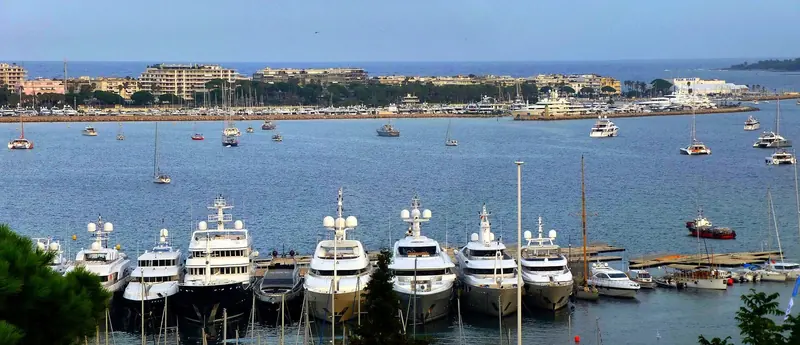
| Posizione | La Croisette, Cannes, il più orientale dei due porti turistici di Cannes, ai piedi di Pointe Croisette di fronte alle Iles de Lerins, a 43 32.5 N 007 01.8 E secondo il pieghevole dei porti del Comune, imboccatura segnalata da un fanale verde a occultazione con settore bianco sul molo sud e da un fanale rosso a occultazione sul molo ovest |
|---|---|
| Gestore | Ville de Cannes, tramite la regia municipale Regie du Port Canto, con tariffe fissate da delibera del consiglio comunale, il tariffario 2026 votato il 18 dicembre 2025 |
| Posti barca | 553 su 10,6 ettari secondo le pagine porti e lavori del Comune; l'enciclopedia francese e l'ufficio del turismo dicono circa 530, gli annuari di settore da 598 a 600 |
| Dimensioni ammesse | il Comune dichiara fino a 90 m; la fascia più alta del tariffario 2026 è la categoria R, 80 m e oltre, su una larghezza di posto superiore a 14 m |
| Baglio e pescaggio | le larghezze di posto vanno da 2,70 m in categoria A a oltre 14 m in categoria R, e i fondali cartografati vanno da 2 m a 7 m; il Comune indica un pescaggio massimo di 7 m e non pubblica alcuna profondità sottobordo per posto o per categoria |
| Imboccatura e velocità | imboccatura larga 110 m, 3 nodi dentro il porto |
| VHF | canale 9 per accesso e sicurezza, canale 23 per il bollettino meteo |
| Corrente di banchina | il tariffario 2026 elenca noleggi di prese da 16 A a 600 A, da EUR 2,80 al giorno per 16 A fino a EUR 127,30 al giorno per 600 A |
| Utenze a consumo 2026 | elettricità EUR 0,53 per kWh e acqua EUR 3,60 per metro cubo, entrambe comprese nel canone di ormeggio fino alla categoria I.1, 21,99 m, a un forfait del 4 per cento del canone |
| Carburante | stazione in loco dal 2017, self service dalle 06:00 alle 22:00 tutto l'anno, presidiata dalle 08:30 alle 19:30 da metà giugno a metà settembre. Nessun prezzo alla pompa è pubblicato |
| Rifiuti e ambiente | aspirazione delle acque nere gratuita per unità fino a 25 m, raccolta differenziata, Pavillon Bleu dal 2008 e certificazione AFNOR Ports Propres dal 2019 |
| Titolo di godimento | solo noleggio. Port Canto non vende alcuna concessione d'uso né alcun posto acquistabile, solo noleggio in transito, stagionale e di lungo periodo |
| Accanto | il Vieux Port de Cannes, gestito dal 2022 da Marina du Vieux-Port de Cannes SAS, azionisti IGY Marinas e Fayat, su una concessione di 30 anni, 727 posti e fasce tariffarie fino a 134,99 m su una larghezza di posto di 24 m |
| Aeroporti | Nice Cote d'Azur a circa 30 km e 30-45 minuti sulla A8, Cannes-Mandelieu a circa 5 km a ovest e secondo aeroporto francese per l'aviazione d'affari, da Nizza a Cannes circa 7 minuti in elicottero |
| Maggiorazione per manifestazioni | l'ormeggio durante le manifestazioni organizzate all'interno del porto è la tariffa giornaliera aumentata del 50 per cento, scritta nel tariffario comunale 2026 |
| Date fisse 2026 | Yachting Festival dall'8 al 13 settembre, Regates Royales dal 19 al 26 settembre, Festival del cinema dal 12 al 23 maggio, MIPIM dal 9 al 13 marzo, Cannes Lions dal 22 al 26 giugno, MIPCOM dal 12 al 15 ottobre |
Il secondo porto di Cannes, e come ci è arrivato
Port Canto occupa l'estremità orientale della Croisette, ai piedi di Pointe Croisette, con lo sguardo che attraversa la baia verso le Iles de Lerins. Fu inaugurato il 19 luglio 1965 dopo diciotto mesi di cantiere e prese il nome di Port Pierre-Canto nel settembre 1966, con il principe Rainier III di Monaco e la principessa Grace a fare da padrino e madrina. Se esiste, lo si deve a un uomo solo: Pierre Canto, amministratore locale, propose il progetto nel 1958, ottenne per la sua società una concessione statale di cinquant'anni con decreto ministeriale del 13 marzo 1964 e pagò tutto di tasca propria, con un costo di costruzione di otto milioni di franchi. Fu il primo porto costruito da privati in Francia, e come tale venne gestito per cinque decenni e non per quattro: cinquant'anni dal decreto del 1964 portano al 2014, che è esattamente la data indicata dalla pagina lavori del Comune per l'avvio della gestione municipale.
Privato non lo è più. Il porto è passato alla Ville de Cannes ed è oggi gestito in regia municipale, indicato nei documenti tariffari del Comune come Regie du Port Canto e, in una clausola, come la regia del secondo porto di Cannes. Le pagine portuali del Comune danno 553 posti barca su 10,6 ettari. L'enciclopedia francese e l'ufficio del turismo di Cannes dicono entrambi circa 530, e gli annuari di settore 598 o 600, per cui il numero che vi viene citato dipende interamente da chi ve lo dà. Quello che non è cambiato è l'acqua: fondali cartografati da 2 a 7 metri, un'imboccatura larga 110 metri e un limite di 3 nodi una volta dentro. Marinetek ha fornito nel 2015 pontili pesanti in calcestruzzo con impalcato in legno duro, costruiti in Lettonia e progettati perché il bacino potesse in seguito essere riconfigurato per unità più grandi.
Chi gestisce Port Canto, chi gestisce il Vieux Port, e perché la differenza si vede in fattura
I due porti di Cannes sono ormai governati in modi completamente diversi, e l'armatore che li confronta sta confrontando una tariffa pubblica con una tariffa di concessione. Port Canto è del Comune. Le sue tariffe stanno nel Recueil des tarifs della Ville de Cannes, sotto il Budget annexe des ports communaux, sono fissate da una delibera del consiglio comunale e il tariffario 2026 è stato votato il 18 dicembre 2025. Vuol dire che ogni fascia, ogni maggiorazione e ogni tessera di parcheggio è un documento pubblico che potete leggere prima ancora di telefonare alla capitaneria. Il Vieux Port è invece una concessione: nel febbraio 2022 il Comune ha assegnato un contratto di 30 anni a Marina du Vieux-Port de Cannes SAS, i cui azionisti sono IGY Marinas e il gruppo francese di costruzioni Fayat, chiudendo 56 anni di gestione da parte della CCI Nice Cote d'Azur. IGY indica per il Vieux Port 727 posti, e la concessione porta con sé un programma di investimenti da EUR 56,2 milioni al netto delle imposte fino all'inizio del 2027.
Una precisazione va fatta, perché torna in continuazione quando si parla di Cannes. La SEMEC, Societe d'Economie Mixte pour les Evenements Cannois, non gestisce nessuno dei due porti. La SEMEC è il braccio eventi e turismo del Comune in regime di delega di servizio pubblico: gestisce il Palais des Festivals et des Congres e l'ufficio del turismo, ed è per questo che il calendario di Cannes è quello che è. Lo Yachting Festival è organizzato da RX France, non dalla SEMEC e non da nessuno dei due porti. Perciò, quando un broker vi dice che è il Comune a controllare gli ormeggi a Cannes, ha ragione a metà. Il Comune controlla direttamente Port Canto e, come autorità concedente, fissa il quadro del Vieux Port, ma i prezzi quotidiani, le regole di prenotazione e la tariffa eventi del Vieux Port sono del concessionario, e non sono le stesse regole.
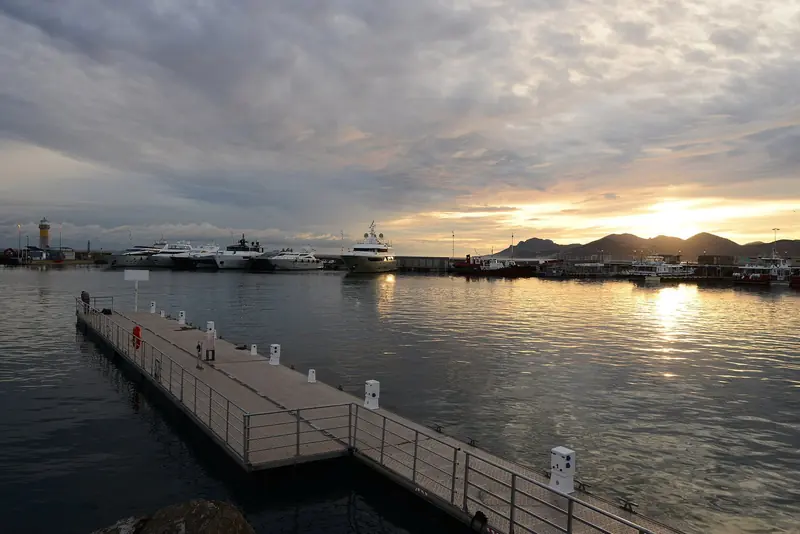
Port Canto pubblica le sue tariffe al centesimo, e uno di quei centesimi è la riga che dice che un posto durante una manifestazione dentro il porto costa la tariffa giornaliera più il 50 per cento.
Quale yacht va dove, e l'inversione di prezzo che nessuno si aspetta
La divisione è semplice. Il tariffario 2026 di Port Canto va dalla categoria A, fino a 7,49 metri su una larghezza di posto di 2,70 metri, alla categoria R, 80 metri e oltre su un posto più largo di 14 metri. Il Comune pubblicizza un massimo di 90 metri. Il tariffario del Vieux Port va ben oltre: le sue fasce yachting si fermano a 64,99 metri, e le sue fasce superyachting corrono da Z03 a 71,99 metri fino a Z12 a 134,99 metri su una larghezza di posto di 24 metri. Se il vostro baglio massimo supera i 14 metri, e su uno scafo dislocante moderno di 60 metri capita molto spesso, le categorie di Port Canto non hanno una casella per voi, mentre quelle del Vieux Port ce l'hanno. È questa singola dimensione, non la lunghezza, a smistare davvero la flotta fra i due bacini.
Poi arriva la parte che sorprende. Port Canto è il più piccolo, il secondo porto, ed è il più caro a notte nella parte alta della sua scala. Uno yacht nella fascia da 50,00 a 59,99 metri paga EUR 976,70 al giorno a Port Canto nella stagione da maggio a settembre, sul tariffario comunale 2026. Al Vieux Port, un'unità fino a 53,99 metri paga una tariffa base di EUR 570,00 al giorno nella stagione dal 15 aprile al 14 ottobre, sul tariffario 2025 del concessionario. Sono anni tariffari diversi e limiti di fascia diversi, quindi lo scarto va letto come un ordine di grandezza e non come un confronto pulito, ma la direzione non è in dubbio: il porto comunale non è l'opzione economica. Quello che ha è un carattere diverso. Port Canto è sempre stato il lato vela, brokeraggio e tender di Cannes, che è esattamente il ruolo che lo Yachting Festival gli assegna ogni settembre, ed è a terra più tranquillo e più verde delle banchine di lavoro del porto vecchio.
Quanto costa un posto a Port Canto, per intero
Il tariffario comunale 2026, tutti gli importi comprensivi di IVA francese al 20 per cento e di un eco-contributo del 4 per cento, fissa la stagione da maggio a settembre e la bassa stagione da ottobre ad aprile. Tariffe giornaliere in stagione: EUR 23,10 fino a 7,49 metri, EUR 69,70 nella fascia da 14,00 a 15,99 metri, EUR 170,70 da 24,00 a 25,99 metri, EUR 346,90 da 30,00 a 34,99 metri, EUR 531,80 da 35,00 a 39,99 metri, EUR 749,30 da 40,00 a 49,99 metri, EUR 976,70 da 50,00 a 59,99 metri, EUR 1.218,70 da 60,00 a 69,99 metri, EUR 1.485,80 da 70,00 a 79,99 metri e EUR 1.774,00 da 80 metri in su. In bassa stagione le tariffe scendono a circa la metà: EUR 375,00, EUR 488,60, EUR 621,20, EUR 776,80 e EUR 955,70 sulle stesse cinque fasce alte. La settimana è conteggiata come sei giorni e il mese come ventiquattro, così una sosta lunga viene tariffata in automatico invece che negoziata. I multiscafi pagano 1,7 volte la tariffa della loro categoria di lunghezza.
La convenzione annuale di ormeggio, riservata ai titolari di una convention annuelle d'amarrage ai sensi dell'articolo R.5314-31 del codice dei trasporti francese, è dove stanno i soldi veri: EUR 10.695,40 all'anno da 14,00 a 15,99 metri, EUR 30.681,40 da 24,00 a 25,99 metri, EUR 71.296,40 da 30,00 a 34,99 metri, EUR 142.319,60 da 40,00 a 49,99 metri, EUR 185.717,80 da 50,00 a 59,99 metri, EUR 233.611,70 da 60,00 a 69,99 metri, EUR 287.818,70 da 70,00 a 79,99 metri e EUR 347.907,60 da 80 metri in su. I contratti annuali e pluri-mensili si pagano o per intero in anticipo o con addebito diretto, e due addebiti respinti consecutivi rendono immediatamente esigibile l'intero saldo. C'è una condizione che coglie di sorpresa gli armatori che trattano un posto come un magazzino: chi ha una convenzione annuale è soggetto a un obbligo di uscita in mare, e se non vi ha ottemperato entro la fine del secondo anno il porto applica una penale del 15 per cento del canone annuo della categoria. Vale la pena conoscere anche lo sconto professionale, del 30 per cento sulle tariffe di sosta per le imprese della filiera nautica titolari di un contratto di ormeggio nei porti comunali, mentre un'imbarcazione di riconosciuto interesse storico ottiene il 50 per cento sulle tariffe di sosta.
I lavori, in entrambi i porti, dal 2024 al 2027
Il programma di Port Canto è poco glamour e tutto strutturale. La fase uno, la riqualificazione della banchina ovest con un vero schema di circolazione e un percorso pedonale, fioriere, reti rifatte e nuova illuminazione, è partita nel novembre 2024. La fase due è quella che conta per una barca: il rinforzo delle dighe sud e ovest, la posa di massi di protezione e l'innalzamento del muro paraonde per limitare le tracimazioni dell'onda, con la consultazione per la direzione lavori prevista per il febbraio 2025. La motivazione dichiarata dal Comune è abbastanza chiara, cioè dare agli impianti una protezione ottimale contro il mare e un riparo migliore alle unità ormeggiate. In altre parole, è la stessa autorità portuale a considerare marginali le dighe esistenti, e spende di conseguenza. Né il budget né una data di completamento della fase due sono stati pubblicati.
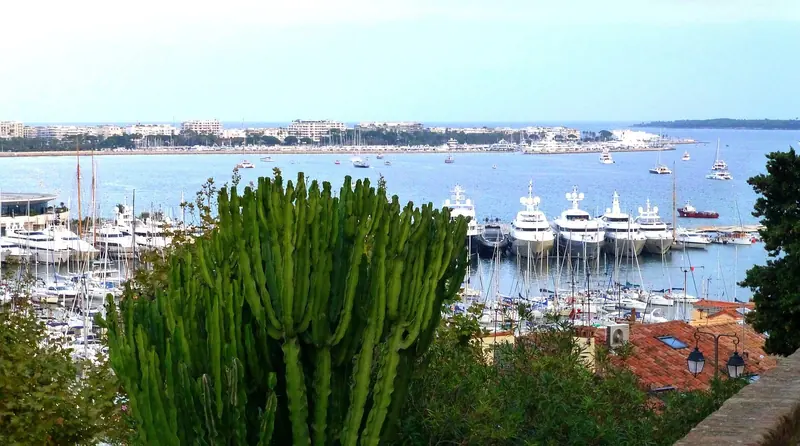
Accanto, il Vieux Port viene ricostruito su scala ben più ampia nell'ambito della concessione, con lavori dall'inizio del 2024 e un polo servizi atteso per il 1 gennaio 2027. Il parcheggio Laubeuf diventa una struttura semi-interrata su tre livelli da 414 posti, contro i 312 precedenti, con sopra un giardino pubblico di 4.500 metri quadrati; il villaggio dei pescatori ha aperto sull'Esplanade Pantiero; l'area di carenaggio e la zona tecnica, stazione di rifornimento compresa, vengono spostate e ammodernate; e il pontile Albert-Edouard viene prolungato per accogliere nove grandi unità in più, con una crew house accanto. Le cifre riportate per il prolungamento parlano di una lunghezza di circa 250 metri, un ettaro di specchio acqueo in più e posti per unità fino a 75 metri. Yotters non ha potuto verificare questi tre numeri da una seconda fonte indipendente e non ci pianificherebbe ancora una stagione. Quello che è fuori discussione è l'effetto sul salone, perché il Vieux Port non poteva più ospitare tutto quello che ospitava prima mentre i lavori erano in corso.
Lo Yachting Festival, e cosa fa alla disponibilità e al prezzo
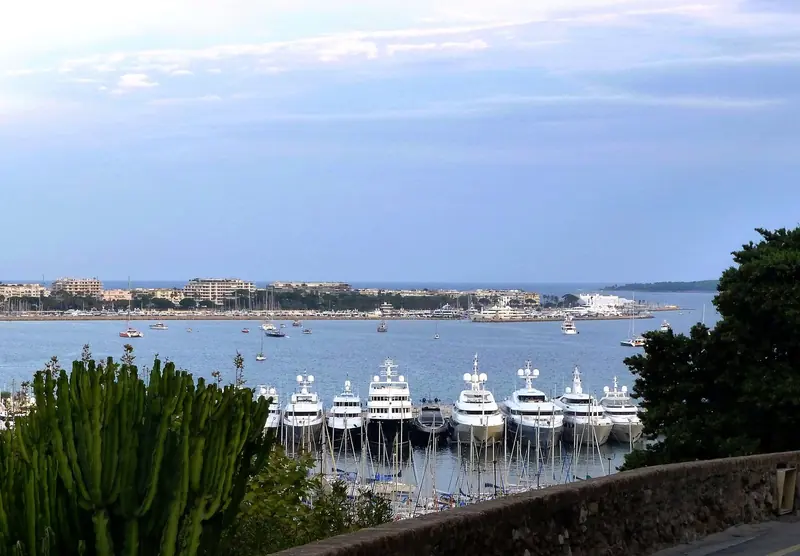
Il Cannes Yachting Festival si tiene dall'8 al 13 settembre 2026, alla sua 49esima edizione, organizzato da RX France, con più di 680 espositori, oltre 700 barche da 5 a 50 metri e circa 150 anteprime mondiali, distribuite fra i due porti con una navetta via mare gratuita ogni dieci-quindici minuti su una traversata di otto minuti. Dal 2024 Port Canto porta una quota del salone molto più grande di prima, perché i lavori al Vieux Port hanno messo fuori servizio delle aree di accoglienza. Per l'edizione 2024 due zone hanno attraversato la baia: una Mega Yachts Area con 1.500 metri quadrati di strutture a terra e spazio in acqua per una quindicina di unità, annunciata allora per barche fino a 55 metri, e una Small Boats Area con 1.700 metri quadrati a terra per motoscafi da 8 a 12 metri. Sono i dati del 2024 e non hanno tenuto. La descrizione del salone 2026 fatta da RX France assegna a Port Canto una Sailing Area, presentata come la più grande esposizione a galla di barche a vela al mondo, una Power Boat Marina per unità a motore fino a 12 metri e un'area Brokers and Toys per yacht di brokeraggio dai 25 metri, disposti su un anello di circa 2,5 chilometri, e non nomina alcuna Mega Yachts Area a Canto; il Vieux Port tiene i motoscafi nuovi, con i grandi yacht sul Quai Max Laubeuf. Leggete la planimetria dell'anno in cui andate, non l'annuncio del 2024. La conseguenza pratica per un armatore è semplice: per una quindicina di giorni, contando montaggio e smontaggio, il porto è il salone e ormeggi ordinari non ce ne sono.
La conseguenza sul prezzo è scritta nel tariffario, non si negozia. Il tariffario 2026 di Port Canto stabilisce che i canoni di ormeggio durante le manifestazioni organizzate all'interno del porto sono le tariffe giornaliere aumentate del 50 per cento. Così la fascia da 50,00 a 59,99 metri passa da EUR 976,70 a EUR 1.465,05 al giorno. Il Vieux Port affronta lo stesso problema con uno strumento distinto e molto più pesante, la tariffa Quai d'Honneur, applicata agli yacht che partecipano a manifestazioni internazionali e assegnata con una procedura formale di candidatura che riguarda il pontile Albert-Edouard nord e sud, la stazione marittima e le banchine Pantiero, Large e Saint-Pierre. Sul tariffario 2025 del concessionario la tariffa Quai d'Honneur è di EUR 654 al giorno fino a 28,99 metri, EUR 2.073 fino a 53,99 metri e EUR 10.354 fino a 134,99 metri. Contro una tariffa base di EUR 570 a 53,99 metri, fa circa tre volte e mezzo il normale. Il Vieux Port applica inoltre il doppio della tariffa Quai d'Honneur allo yacht a cui è stato intimato di liberare il posto e non lo libera, e raddoppia la tariffa di stagione per ogni ormeggio non autorizzato. Prenotate in primavera un posto a Cannes per settembre, oppure mettete in conto di stare alla fonda.
Il vento, l'onda lunga e le due dighe
La baia di Cannes è un mezzo bacino con un'apertura di 7,5 chilometri orientata da nordovest a sudest. Diventa profonda in fretta, con un massimo intorno ai 100 metri e l'isobata dei 100 metri a soli 600 metri circa dalla costa, ma il tratto fra le isole di Lerins e Pointe Croisette non supera mai i 5 metri, ed è per questo che il canale delle isole è un passaggio da conoscenza locale e non una scorciatoia. I venti dominanti sono di sudest e di nord. Gli unici dati quantificati che Yotters sia riuscita a trovare su di essi vengono da uno studio di morfologia costiera del Golfe de la Napoule, e sono velocità medie di lungo periodo alla scala della baia, non valori di raffica, di burrasca o di tempesta: medie intorno ai 3-9 nodi, ai minimi in ottobre e ai massimi in marzo e aprile. Lo stesso studio descrive i venti di sudest di primavera e d'autunno come venti forti che superano raramente gli 8 metri al secondo, cioè 15,5 nodi, forza 4 Beaufort. È un tetto su una media di lungo periodo, non il tempo su cui un armatore fa i suoi piani, e non va letto come un valore di burrasca. Quello che lo studio afferma senza numeri è che proprio quei venti di sudest di primavera e autunno generano le grandi onde lunghe e il trasporto sedimentario lungo questo litorale. L'onda lunga raggiunge la costa con venti da sud a sudovest e da ovest a sudovest quando rinforzano, e il libeccio colpisce il golfo per poco e duro, capace di un innalzamento marcato del livello del mare e di tempeste violente sulla linea di riva.
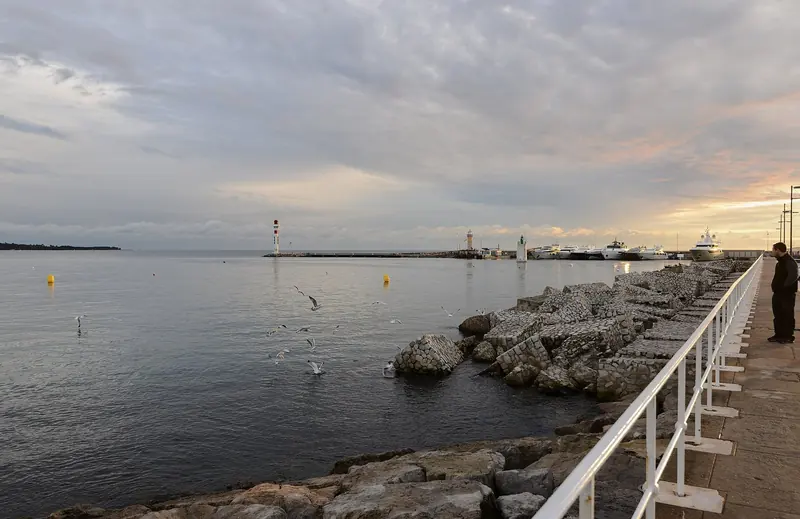
La protezione di Port Canto sono due dighe che fanno due mestieri diversi, e il Comune le nomina esplicitamente: la diga ovest ripara il porto dal maestrale, la diga sud dall'onda lunga del largo. È tutto qui, ed è il motivo per cui nella pubblicistica di crociera questo porto viene descritto come il più esposto dei due bacini di Cannes, con onda corta sui pontili appena il vento supera i 15 nodi circa, mentre il Vieux Port sta meglio riparato dietro Pointe Croisette e le Lerins. Nessuno dei due è una Tivat o una Porto Cervo dove l'acqua semplicemente non si muove. Port Canto è un porto di Riviera su una baia aperta con un fetch modesto verso sud e sudest, e il modo onesto di programmarlo è aspettarsi un posto vivo, a tratti scomodo, con un vento di sudest di primavera o d'autunno, e non uno specchio d'olio. Il rinforzo in corso delle dighe, massi di protezione e muro paraonde innalzato, è un'ammissione diretta che le tracimazioni ci sono.
Come arrivarci, e le formalità di ingresso
Nice Cote d'Azur è la porta per il lungo raggio, a circa 30 chilometri e a 30-45 minuti sulla A8 con traffico normale, e la tariffa fissa del taxi indicata per il 2026 è di EUR 85 a tratta per una berlina, soggetta a variazione di notte, nei fine settimana e nei giorni festivi, con un van a circa EUR 110 e un van premium a circa EUR 130. Gli operatori di transfer privato pubblicizzano tariffe fisse tutto compreso da circa EUR 80, con pedaggi, bagagli e accoglienza. Per un aereo privato la risposta è Cannes-Mandelieu, circa 5 chilometri a ovest della città, secondo aeroporto francese per l'aviazione d'affari, che smista i passeggeri molto in fretta. In elicottero da Nizza a Cannes ci vogliono circa sette minuti, con atterraggio all'eliporto di Cannes sul Quai du Large. Yotters non ha potuto confermare presso alcun operatore una tariffa pubblicata in vigore per quella tratta, quindi chiedete un preventivo invece di fare il budget sulle cifre tonde che circolano. Cannes ha anche una stazione sulla linea costiera, davvero utile per l'equipaggio e per gli ospiti che arrivano da Nizza, Antibes o Monaco.
Le formalità dipendono interamente da dove arrivate. Cannes è in Francia, quindi dentro l'unione doganale UE e nell'area Schengen, e uno yacht in arrivo dall'Italia o dalla Spagna non ha nulla da fare. Uno yacht in arrivo da fuori Schengen, che su questa costa di solito vuol dire Montenegro, Turchia, Tunisia o Regno Unito, deve entrare o da un valico di frontiera designato o in uno dei 53 porti turistici autorizzati dal protocollo marina introdotto dalla dogana francese nel 2024. Il modulo di pre-arrivo va inviato al porto almeno 24 ore prima dell'arrivo, oppure alla partenza dal precedente porto extra Schengen se la traversata è più breve, e comandante ed equipaggio presentano passaporti, documenti di bordo e la dichiarazione di controllo di frontiera in entrata o in uscita alla Police aux Frontieres e, dove richiesto, alla Douane. Yotters non ha potuto confermare da una fonte primaria se Port Canto sia esso stesso nell'elenco del protocollo marina, quindi fatelo confermare dalla capitaneria invece di darlo per scontato, e in ogni caso chiamate il canale VHF 9 per accesso e sicurezza. Il canale 23 trasmette il bollettino meteo.
Cosa c'è a terra, e cosa manca
Port Canto ha rifatto lo spazio pubblico prima delle dighe. L'Espace Grand Large, una piazza centrale alberata inaugurata nel maggio 2021, ospita tre marchi internazionali, e il porto oggi è un luogo dove si cammina e non un parcheggio con dei pontili attaccati. Baoli è l'ancora: un ristorante, il rooftop all'aperto Cloud Nine e un club notturno in un unico indirizzo, da più di vent'anni il posto di Cannes dove la cena diventa notte, con il riconoscimento Maitre Restaurateur e una cucina mediterranea e asiatica sotto lo chef esecutivo Remi Solaz. Le Cercle des Marins sta accanto, mediterraneo e stagionale, con una terrazza che guarda dritto dentro il porto. Harry's Bar ha aperto nel porto nel giugno 2021. Fuori dal cancello siete sulla Croisette, con il Palm Beach alle spalle e le sale da pranzo di Carlton, Martinez e Majestic a piedi o a un taxi molto breve. Il porto ha il Pavillon Bleu ininterrottamente dal 2008 e la certificazione AFNOR Ports Propres dal 2019, rinnovata ogni anno.
Le mancanze sono reali e vanno dette. A Port Canto non c'è cantiere, non c'è travel lift e non c'è area di carenaggio; l'area di carenaggio di Cannes è al Vieux Port ed è essa stessa in corso di spostamento nell'ambito dei lavori della concessione, quindi un alaggio è una navigazione e non una passeggiata. C'è una stazione di rifornimento in loco, self service dalle 06:00 alle 22:00 tutto l'anno e presidiata dalle 08:30 alle 19:30 da metà giugno a metà settembre, ma il Comune non pubblica da nessuna parte un prezzo alla pompa. E non c'è nulla da comprare: Port Canto non vende alcuna concessione d'uso né alcun posto acquistabile, solo noleggio in transito, stagionale e di lungo periodo, il che qui toglie dall'equazione l'intero mercato della rivendita dei posti barca in Riviera. È uno scambio equo se volete un prezzo pubblicato e nessun capitale a rischio. È il porto sbagliato se speravate di assicurarvi una posizione permanente a Cannes come fa un armatore ad Antibes o a Porto Cervo.
A terra, accessi e prenotazioni
| Getting there | Nice Cote d'Azur airport is about 30 km away, 30 to 45 minutes on the A8 in normal traffic. The fixed taxi fare quoted for 2026 is EUR 85 one way in a sedan, EUR 110 in a van and EUR 130 in a premium van, subject to change at night, at weekends and on public holidays; private transfer firms advertise all-inclusive fixed rates from about EUR 80 including tolls, luggage and meet-and-greet at baggage claim. For a private aircraft the answer is Cannes-Mandelieu, roughly 5 km west of town, France's second business aviation airport, with very fast passenger processing. Nice to Cannes by helicopter is about seven minutes, landing at the Cannes heliport on Quai du Large; no operator fare for that leg could be confirmed from a primary source, so ask for a quotation. Cannes also has a mainline coastal railway station, which is the realistic option for crew rather than for guests. |
|---|---|
| Arriving by sea, and clearing in | The Ville de Cannes ports leaflet gives the position as 43 32.5 N 007 01.8 E and marks the entrance with two lights: a green occulting light with a white sector on the south jetty and a red occulting light on the west jetty. Work VHF channel 9 for access and security; channel 23 carries the weather bulletin. The entrance is 110 metres wide and the limit inside the port is 3 knots. The city states a maximum draught of 7 metres and publishes no alongside depth by berth or by category, so a hull drawing more than about 4 metres has to have its specific berth confirmed by the harbour office. Mooring is stern-to on the main ground chain with lazy lines, and berthing on a chain and anchor requires authorisation. France is inside the EU customs union and Schengen, so a yacht arriving from Italy or Spain has no formalities. A yacht arriving from outside Schengen must enter either at a designated border crossing point or at one of the 53 marinas authorised under the marina protocol introduced by French customs in 2024, sending the pre-arrival form at least 24 hours before arrival, or on departure from the last non-Schengen port if the passage is shorter, and presenting passports, ship's papers and the entry or exit border-control declaration to the Police aux Frontieres and where required the Douane. Yotters could not confirm from a primary source whether Port Canto itself is on that authorised list, so ask the harbour office rather than assume it. |
| Reserving a berth, and the waiting list | Everything runs through the city's boating portal at portscommunaux.cannes.com, where you reserve a stopover, join the waiting list for an annual agreement and check your rank on that list. The harbour office is on +33 4 92 18 84 84 and [email protected]. A reservation only becomes effective when a deposit of 25 per cent of the stay has been paid; cancel at least seven days before the start of the stay and the deposit is returned against an IBAN, cancel inside seven days and the Regie du Port Canto keeps it whatever the reason. Everything is payable in advance, by card or in cash up to EUR 300. For September, book in the spring: the Yachting Festival and the Regates Royales fall in the same month and the whole bay is committed. |
| What a berth costs, 2026 | All figures are the Ville de Cannes 2026 municipal tariff, inclusive of 20 per cent VAT and of a 4 per cent eco-participation, with the season running May to September and the off season October to April. Daily in season: EUR 23.10 up to 7.49 m, EUR 69.70 at 14.00 to 15.99 m, EUR 170.70 at 24.00 to 25.99 m, EUR 346.90 at 30.00 to 34.99 m, EUR 531.80 at 35.00 to 39.99 m, EUR 749.30 at 40.00 to 49.99 m, EUR 976.70 at 50.00 to 59.99 m, EUR 1,218.70 at 60.00 to 69.99 m, EUR 1,485.80 at 70.00 to 79.99 m and EUR 1,774.00 at 80 m and over. Off season the same top bands run EUR 375.00, EUR 488.60, EUR 621.20, EUR 776.80 and EUR 955.70. A week is six days and a month is twenty-four days. Multihulls pay 1.7 times their length category. The annual mooring agreement runs EUR 10,695.40 at 14.00 to 15.99 m, EUR 30,681.40 at 24.00 to 25.99 m, EUR 71,296.40 at 30.00 to 34.99 m, EUR 142,319.60 at 40.00 to 49.99 m, EUR 185,717.80 at 50.00 to 59.99 m, EUR 233,611.70 at 60.00 to 69.99 m, EUR 287,818.70 at 70.00 to 79.99 m and EUR 347,907.60 at 80 m and over. A stop of under an hour is free, the next three hours are charged at half the passing rate and beyond four hours the full daily rate applies. |
| Fuel, power, water and everything that is extra | Water and electricity are bundled into the berth fee up to category I.1, meaning 21.99 metres, at a notional 4 per cent of the fee. Above that they are metered at EUR 0.53 per kWh and EUR 3.60 per cubic metre on the 2026 tariff. Shore outlets are rented separately by the day, from EUR 2.80 for 16 A through EUR 13.70 for 63 A, EUR 27.50 for 125 A, EUR 54.80 for 240 A and EUR 127.30 for 600 A, against replacement charges from EUR 81.50 for 16 A to EUR 6,364.80 for 600 A. Those are replacement prices, not deposits: neither city document says anything is taken on issue. The penalty for an outlet you do not hand back is the one line where the city's own two 2026 schedules disagree. The Extraits des tarifs 2026 says three times the rental price; the full Recueil des tarifs 2026, from the same council deliberation of 18 December 2025, says one and a half times the replacement price. On a 600 A outlet that is EUR 381.90 against EUR 9,547.20, so get it confirmed in writing before you take one. A daily tourist tax applies on top, at EUR 0.54 for 12 to 15.99 m, EUR 0.81 for 16 to 19.99 m, EUR 1.08 for 20 to 25.99 m and EUR 1.62 for 26 m and above, halved for annual agreement holders and free below 12 m. Parking is free for the first hour all year, then EUR 0.90 a quarter hour capped at EUR 21 by day and EUR 10 overnight, with a EUR 32 charge for a lost ticket; visiting crews can buy a day card at EUR 10.90, a week at EUR 30.90 or a month at EUR 84.50. Fuel is on site and self-service from 06:00 to 22:00, but no price is published. Pump-out is free up to 25 m, and there is a laundry, showers, free wifi and free bicycles from May to September. |
| The Yachting Festival, and the fortnight around it | The 2026 Cannes Yachting Festival, the 49th edition, runs 8 to 13 September, organised by RX France, with more than 680 exhibitors, over 700 boats from 5 to 50 metres and around 150 world premieres, split between the Vieux Port and Port Canto with a free shuttle boat every ten to fifteen minutes on an eight minute crossing. Since 2024 Port Canto has taken a much larger share of the show because of the Vieux Port works, gaining, in 2024, a Mega Yachts Area with 1,500 square metres ashore and in-water space for about fifteen units up to 55 metres, and a Small Boats Area with 1,700 square metres ashore for motorboats of 8 to 12 metres. Those are 2024 figures. For 2026 RX France describes Port Canto as a Sailing Area, a Power Boat Marina for motorboats up to 12 metres and a Brokers and Toys area from 25 metres on a loop of about 2.5 kilometres, with no Mega Yachts Area named at Canto, so confirm the layout for the year you are attending. Counting build-up and breakdown that is roughly a fortnight in which the port is the show. The 2026 municipal tariff prices berthing during events held inside the port at the daily rate plus 50 per cent, so the 50 to 59.99 metre band becomes EUR 1,465.05 a day. Land occupation during the Palais congresses, the Yachting Festival, the Jumping and the Regates Royales carries a further 20 per cent on the square-metre rates. |
| The rest of the Cannes calendar, and what it does to the bay | Cannes is an events town first and a yachting town second, and the dates drive both availability and price. In 2026: MIPIM from 9 to 13 March, the Film Festival from 12 to 23 May, Cannes Lions from 22 to 26 June, the Yachting Festival from 8 to 13 September, the Regates Royales from 19 to 26 September and MIPCOM from 12 to 15 October. The Regates Royales, in its 48th edition, is run by the Yacht Club de Cannes and brings around 150 classic yachts to the bay, based at Quai Laubeuf. At the Vieux Port these weeks trigger the Quai d'Honneur tariff, which on the concessionaire's 2025 schedule is EUR 654 a day up to 28.99 m, EUR 2,073 up to 53.99 m and EUR 10,354 up to 134.99 m, against a EUR 570 base at 53.99 m, and a yacht told to vacate a berth and refusing pays double the Quai d'Honneur rate. At Port Canto the equivalent is the flat 50 per cent event uplift. Either way, an owner who wants Cannes in September and has not booked by spring is anchoring in the bay and tendering in. |
| Eating and drinking within walking distance, including after dark | The port's own square, the Espace Grand Large, opened in May 2021 and turned the quays into somewhere you would walk rather than drive through. Baoli is the address that made Port Canto's reputation after dark: a restaurant with a Maitre Restaurateur award, a Mediterranean and Asian menu under executive chef Remi Solaz, the open-air Cloud Nine rooftop and a late-night club, all in one building, and it has been the Cannes dinner-into-night venue for over twenty years. Le Cercle des Marins is next door, Mediterranean and seasonal, with a terrace looking straight down the port. Harry's Bar opened at the port in June 2021, continuing a cocktail lineage that started in New York in 1911. Step out of the gate and you are on the Croisette, with the Palm Beach behind you and the dining rooms of the Carlton, Martinez and Majestic a walk or a two-minute taxi west. During the Yachting Festival the Quai Saint-Pierre restaurants at the Vieux Port typically run mains in the EUR 22 to 35 range, which is the sane end of the Cannes market. |
| What is NOT published | There is no pump price for the fuel station, anywhere, despite the city publishing every other rate down to a EUR 15.50 blank parking card. There is no annual figure for how many berths are actually free in a season, and no published length for the waiting list, only a portal that tells you your own rank once you are on it. The berth count is unsettled: the city says 553, the encyclopedic record and the tourist office say about 530, and directories say 598 or 600. The maximum LOA is unsettled too, with the city advertising 90 metres, the tariff topping out at a band called 80 metres and over, and third-party directories quoting 70 or 80. The date of the municipal takeover is reported inconsistently, the French encyclopedic record putting it at 2002 and the city's own works page at 2014, although the arithmetic favours the city: the ministerial decree of 13 March 1964 granted a fifty-year concession, and 1964 plus fifty is 2014. And there is no budget and no completion date for the phase two dike reinforcement, which is the works that most affects how the port lies in a blow. |
Cosa riferiscono armatori ed equipaggi
Of the two Cannes ports, Canto is the one that moves
Cruising and show coverage of the bay puts it plainly: the Vieux Port sits well protected behind Pointe Croisette and the Iles de Lerins, while Port Canto is the more exposed of the pair, with noticeable chop on the pontoons once the wind is over about 15 knots. The mistral pushes through from the northwest but rarely causes serious disruption in September, when air temperatures run 24 to 28 degrees and the sea is around 22.
Boat TomorrowThe port authority itself treats the breakwaters as marginal
The city's works programme states that the west dike shields the port from the mistral and the south dike from offshore swell, and phase two of the modernisation is dedicated to reinforcing both, installing protective armour and raising the crest wall to limit wave overtopping and better protect moored vessels from erosion. Phase one on the west quay began in November 2024 and the safety works went to project-management consultation in February 2025.
Ville de CannesThe event surcharge is in the tariff, not in the negotiation
The 2026 municipal schedule, voted by the town council on 18 December 2025, states that berthing fees during events organised inside the port are the daily rates increased by 50 per cent, and that land occupation during the Palais congresses, the Yachting Festival, the Jumping and the Regates Royales carries a further 20 per cent. The same document penalises an annual holder who has not met the obligation to take his boat out, at 15 per cent of the annual fee for his category by the end of the second year.
Ville de Cannes, Direction des FinancesNext door, a show berth is a different animal entirely
The Vieux Port concessionaire operates a Quai d'Honneur tariff for yachts attending international events, allocated by a formal candidature procedure covering the Albert-Edouard jetty north and south, the maritime station and the Pantiero, Large and Saint-Pierre quays. On the 2025 schedule it is EUR 654 a day up to 28.99 m, EUR 2,073 up to 53.99 m and EUR 10,354 up to 134.99 m, against a EUR 570 season base at 53.99 m. A yacht notified to vacate and refusing pays double the Quai d'Honneur rate, and an unauthorised berth is charged at double the season rate.
Marina du Vieux-Port de Cannes (IGY Marinas)You cannot buy your way in
Brokers who place yachts in Cannes report that no leasehold berths exist at Port Canto and that the port offers pass-through, seasonal and long-term rental only, with mooring on the main chain and anchor by authorisation and a 3 knot limit inside the 110 metre entrance. That removes the Riviera berth-resale market from the equation here, in either direction.
Allied YachtingThe pontoons are 2015, and were built to be moved
Marinetek supplied heavy-duty concrete pontoons with hardwood decking and an adjustable mooring cleat fixing system as part of a two-phase renovation, manufactured in Latvia and delivered in 2015, and describes the units as designed to allow future reconfiguration for larger superyachts. That is a useful signal for an owner reading the port's long-term direction, because the basin is not fixed in its current layout.
Marinetek
Cosa convince e cosa va valutato
Punti di forza
- The price is public, to the centEvery band, surcharge, outlet rental, tourist tax and parking card sits in the Ville de Cannes 2026 tariff, voted by the council on 18 December 2025. On a coast where most superyacht marinas quote on application, you can budget a season here before you speak to anybody.
- A Croisette address with a quiet, planted port behind itThe Espace Grand Large, opened May 2021, plus Baoli, Le Cercle des Marins and Harry's Bar, with the Palm Beach and the Croisette hotels within a walk, and none of the working-quay traffic of the old harbour.
- Long stays are priced by formula, not by hagglingA week is charged as six days and a month as twenty-four, and the annual mooring agreement is a published figure at every band, from EUR 10,695.40 at 14 to 15.99 m to EUR 347,907.60 at 80 m and over.
- Real airport optionalityNice Cote d'Azur about 30 km for long haul at a fixed EUR 85 taxi, Cannes-Mandelieu about 5 km for private aircraft as France's second business aviation airport, and a seven minute helicopter hop from Nice landing at Quai du Large.
- Environmental credentials that are auditedPavillon Bleu continuously since 2008 and AFNOR Ports Propres certification since 2019, renewed annually, with free pump-out up to 25 m and sorted waste collection.
Da valutare
- The more exposed of the two Cannes portsChop on the pontoons above about 15 knots, spring and autumn southeasterlies that drive real wave action into this bay, and a city works programme currently reinforcing both dikes and raising the crest wall specifically to limit overtopping.
- Beam, not length, will disqualify youThe tariff's berth widths stop a little above 14 metres. A 60 metre displacement yacht with an 11 or 12 metre beam fits; the Vieux Port's schedule runs to 24 metres of width at 134.99 metres and Port Canto's does not.
- It is the expensive one, which nobody expectsEUR 976.70 a day in the 50.00 to 59.99 m band on the 2026 municipal tariff, against a EUR 570.00 base at up to 53.99 m at the Vieux Port on the concessionaire's 2025 schedule. Different years and band edges, but the second port is not the cheap port.
- September is effectively closed, and priced 50 per cent up when it is notThe Yachting Festival takes the port for roughly a fortnight with build-up and breakdown, the Regates Royales follow the week after, and the tariff sets berthing during events inside the port at the daily rate plus half again.
- No yard, no lift, and nothing to buyThere is no careening area or travel lift at Port Canto, so a haul-out is a passage to the Vieux Port, whose own careening area is being relocated under the concession works. And there is no leasehold and no purchasable berth, only rental, so no permanent position in Cannes is available here at any price.
A chi si rivolge: Un armatore di uno yacht da 30 a 70 metri con baglio sotto i 14 metri circa che vuole un indirizzo sulla Croisette a un prezzo comunale pubblicato e verificabile, e che non ha bisogno né di un cantiere, né di una posizione permanente, né di un posto che un giorno possa rivendere.