Puerto del Buceo (Montevideo)
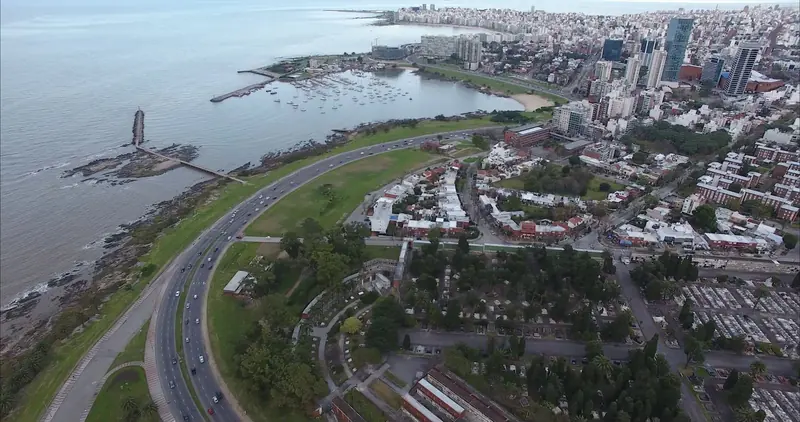
| Location | Buceo bay, on Montevideo's Rambla, Uruguay, coordinates approximately 34 51'57"S, 56 07'30"W |
|---|---|
| 10 minutes from downtown Montevideo, about 15 minutes from Carrasco International Airport | |
| Port administration is split | the Direccion Nacional de Hidrografia (DNH), Uruguay's national hydrography authority, controls 29 utility berths (18 for artisanal fishing, 11 for traffic and port-authority vessels); all sport and leisure berths are separately administered by the Yacht Club Uruguayo (YCU) |
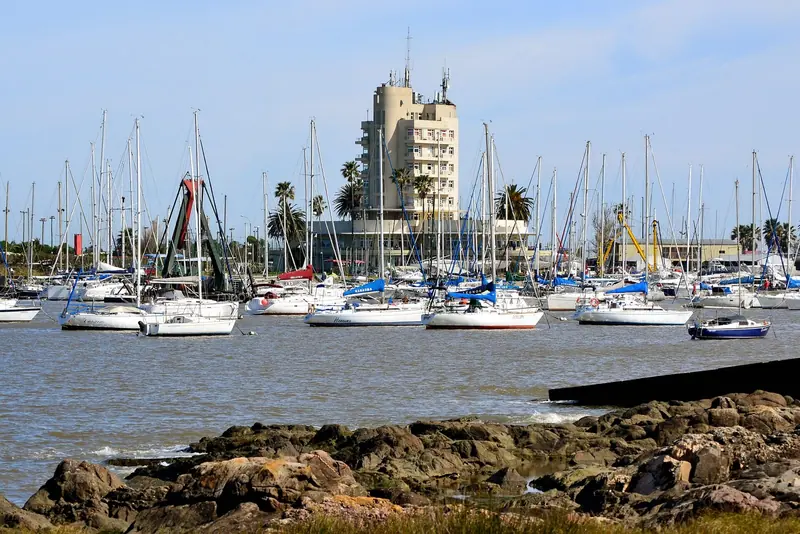
| Yacht Club Uruguayo founded 1906 by a group of young sailors on Montevideo bay; moved to Buceo and built its landmark eight-storey, ship-shaped clubhouse in 1939, designed by architects Jorge Herran and Luis Crespi; declared part of Uruguay's national historical heritage in 1997 | |
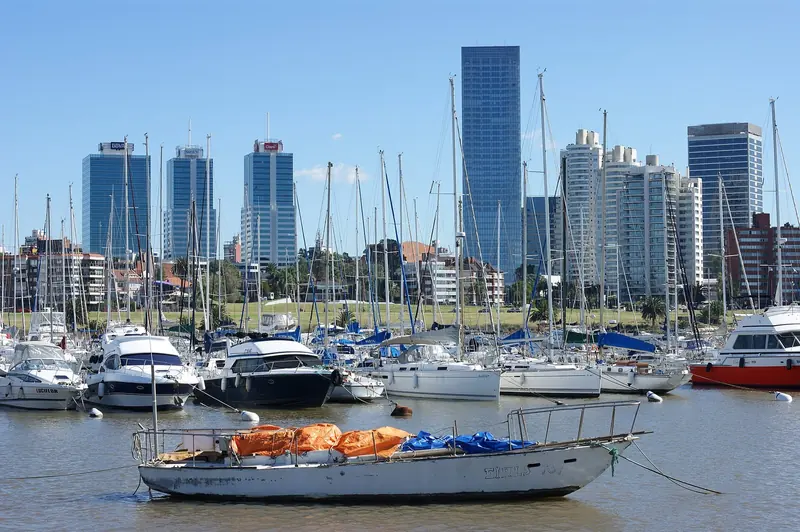
| YCU accommodates over 300 boats with 24 hour embarkation service; club amenities include two swimming pools, six tennis courts and multiple five-a-side football courts | |
| YCU represents World Sailing (formerly ISAF) in Uruguay; its first international sailing contact dates to 1909, with visiting sailors from Argentina's yacht club | |
| YCU later expanded with branches at Punta del Este and Santiago Vazquez | |
| Depth at the marina | 2 to 3 metres, or less at some of the outer berths, a hard limit on the size of yacht that can safely berth here regardless of published LOA figures elsewhere |
| DNH office hours | Monday to Friday, 9:00 to 16:30 |
| No published transient or annual berth tariff was found on the Yacht Club Uruguayo's own site for this page; a dedicated transient-rate page exists on the club's site but returns no figures without a direct enquiry | |
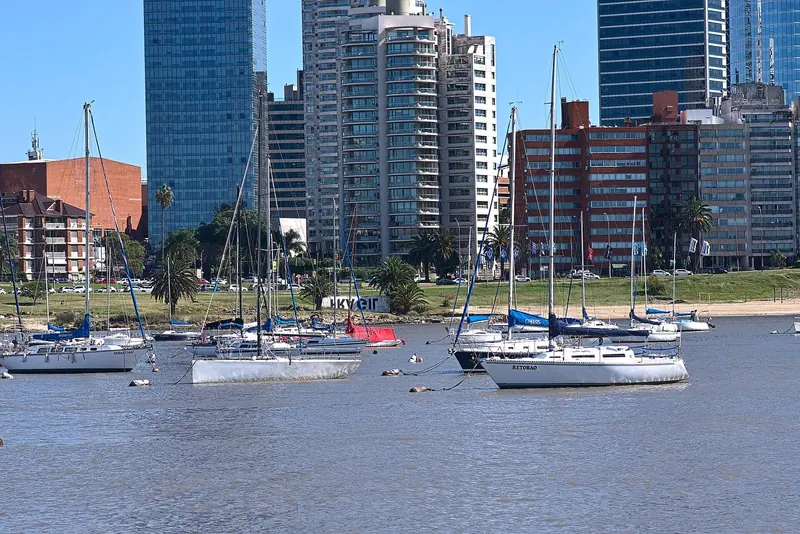
| The bay carries a working artisanal fishing fleet alongside the yacht club, with fishermen's stalls selling fresh fish and seafood-based handicrafts on the quay | |
| The surrounding Buceo neighbourhood grew through the 20th century as a seaside resort area; the 1959 Edificio Panamericano and the modern World Trade Center Montevideo towers now stand beside the port | |
| Punta del Este, Uruguay's main yachting and resort hub with a marina and travel lift, lies about 80 nautical miles east and is the region's usual base for anything the Buceo's shallow water cannot take | |
| Montevideo (Puerto del Buceo) is a recognised port of entry into Uruguay, alongside Punta del Este | |
A yacht club building shaped like a ship
That makes it one of the more architecturally distinctive yacht club buildings anywhere in this directory, a genuine landmark rather than a functional clubhouse with a flag on top, and it anchors a club whose own history runs back to 1906, when a group of young sailors first organised racing on Montevideo's bay.
The club's international standing predates the building by three decades: its first international sailing contact came in 1909, with visiting sailors from Argentina's yacht club, and it now represents World Sailing, formerly ISAF, in Uruguay, a national governing role few marinas in this directory can claim.
Two authorities share one small port
That division matters practically: an owner or agent arranging a berth here needs to go through the Yacht Club Uruguayo directly for a recreational yacht, not the port authority, whose 29 berths are reserved for fishing and official vessels rather than visiting or resident leisure boats.
The club itself is a large, well-resourced operation by any measure, over 300 boats accommodated with 24 hour embarkation service, plus two swimming pools, six tennis courts and multiple five-a-side football pitches on its own grounds, more social and sporting infrastructure than most yacht clubs of comparable size carry.
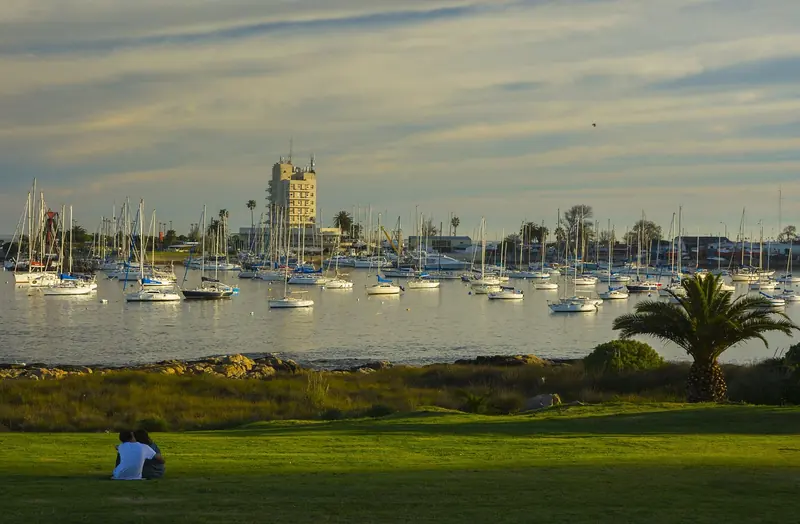
The clubhouse an owner ties up in front of was designed in 1939 to look like a ship from the outside, prow at one end and stern at the other, and it has been a protected part of Uruguay's national heritage since 1997.
The depth that limits everything else
This is not a published LOA restriction the way a marina's rulebook sets one; it is a straightforward result of the bay's own natural depth, and it means Puerto del Buceo functions as a base for cruising sailboats, sportfishers and smaller motor yachts rather than as a genuine superyacht stop.
For anything drawing more than about 3 metres, the honest answer is to look instead to Punta del Este, roughly 80 nautical miles east, which carries a marina and a travel lift built for larger vessels and is the region's usual superyacht-season base rather than Montevideo itself.
Getting there and clearing in
That central location, a working port of entry a short taxi ride from both the airport and the city centre, is a genuine practical advantage over more remote entries in this directory, particularly for an owner or crew flying in to join the boat rather than sailing it in themselves.
The Direccion Nacional de Hidrografia office that handles the utility side of the port keeps standard weekday hours, 9:00 to 16:30, so an arrival timed for a weekday during business hours will find the clearance process most straightforward.
What a berth actually costs
That is a genuine information gap rather than a design choice this page can explain, unlike Marina di Varazze's deliberately private, occupancy-driven pricing covered elsewhere in this directory: the desk found no trade report, forum account or independent source anywhere that names an actual Buceo berth rate in any currency.
An owner planning a stay should treat this as a straightforward call or email to the Yacht Club Uruguayo directly, and this page will be updated the moment a verifiable figure surfaces.
A working fishing port as much as a yacht club
That mixed character, working fishing boats moored a short walk from a century-old yacht club, is unusual among the more purpose-built resort marinas elsewhere in this directory, and it gives an owner genuine local colour and fresh seafood on the doorstep rather than only a marina restaurant row.
The surrounding Buceo neighbourhood itself has grown into one of Montevideo's more developed districts, anchored by the 1959 Edificio Panamericano and the more recent World Trade Center Montevideo towers standing beside the port, alongside a walkable stretch of the city's famous Rambla promenade.
Punta del Este, not Buceo, is the region's superyacht season
An owner planning a full Rio de la Plata season should treat the two as a pair: Puerto del Buceo for a central, historic, easy-to-reach base in the capital itself, and Punta del Este for the deeper water, larger facilities and the region's peak summer social season when a bigger yacht is actually involved.
That two-port pattern, a shallow historic capital-city club plus a deeper-water resort marina down the coast, is closer to how Rio de Janeiro's Marina da Gloria and the wider Brazilian coast function elsewhere in this directory than to a single all-purpose Mediterranean marina, and it is worth understanding before assuming one Uruguayan port can do everything.
A national sailing institution, not just a local club
That national role means Puerto del Buceo is genuinely the administrative and competitive centre of Uruguayan sailing, not simply the largest yacht club that happens to be near the capital, and an owner interested in racing rather than only cruising will find the calendar and the contacts to do so run through this club specifically.
The club's own expansion, adding branches at Punta del Este and at Santiago Vazquez on the Rio de la Plata's inland side, further extends that national footprint, giving a member effective access to three distinct Uruguayan boating environments, capital-city bay, resort coast and river, through a single membership.
What is genuinely unresearched here, and why
That is itself a useful finding rather than an evasion: Uruguay, and Montevideo specifically, remains a genuinely under-documented cruising ground by the standards of this directory, and an owner planning a first visit should budget extra time for direct enquiries the way a Mediterranean or Caribbean season rarely requires.
This page will be updated as soon as a verifiable tariff, a dredging record or a named first-hand clearance account surfaces; until then, the honest position is that Puerto del Buceo's history, architecture and administration are well documented, while its day-to-day running costs and current maintenance are not. That distinction between well-sourced history and thin operational detail is itself genuinely worth stating plainly and in full, rather than smoothing over the gap with a confident-sounding estimate this page cannot actually stand behind.
A regional gateway, not just a local harbour
That ferry link runs from Montevideo's main passenger terminal rather than from Buceo directly, a short taxi ride from the marina, but it means guests or crew can fly into Buenos Aires, one of South America's better-connected international airports, and reach the boat by ferry and taxi inside a single working day. A slower, cheaper alternative also exists via Colonia del Sacramento, a roughly hour-long ferry crossing from Buenos Aires followed by a road transfer to Montevideo, which some visitors prefer for the chance to see Colonia's own well-preserved colonial old town along the way, itself a UNESCO World Heritage Site since 1995 and a worthwhile stop in its own right for anyone with a spare afternoon on the crossing rather than only a connection to make.
For an owner planning a season that spans both Uruguay and Argentina, that combination, a historic yacht club base in Montevideo, a four-hour ferry to Buenos Aires, and Punta del Este's deeper water 80 nautical miles the other way, gives Puerto del Buceo a genuinely central position in the southern Atlantic's least-covered cruising region.
A neighbourhood that grew up around the port
That mix of a 1930s ship-shaped yacht club, a 1950s residential landmark and present-day corporate towers on the same short stretch of waterfront gives Puerto del Buceo a layered, genuinely lived-in city character rather than the purpose-built resort feel of several other marinas in this directory.
For an owner or crew based here for any length of time, that means real city infrastructure, offices, services and everyday shopping, within walking distance of the boat, alongside the working fishing stalls and the yacht club's own social and sporting facilities already covered above. It is a genuinely different proposition from berthing at a purpose-built resort marina, closer in character to keeping a boat in a real, functioning city neighbourhood than to a holiday development built around the water.
A terra, accessi e prenotazioni
| Getting there | About 10 minutes from downtown Montevideo and roughly 15 minutes from Carrasco International Airport. |
|---|---|
| Arriving by sea | Puerto del Buceo is a recognised Uruguayan port of entry. DNH utility office hours Monday-Friday, 9:00-16:30. Sport and leisure berths are administered separately by the Yacht Club Uruguayo, not the port authority. |
| Reserving a berth | Directly through the Yacht Club Uruguayo (+598 2622 1221); the DNH's 29 berths are reserved for artisanal fishing and official traffic, not leisure yachts. |
| What a berth costs | Not published. The Yacht Club Uruguayo's own transient-rate page carries no figures without a direct enquiry; no independent source found names an actual rate. |
| The depth limit | 2 to 3 metres, less at some outer berths - a hard physical ceiling on yacht size regardless of any published LOA elsewhere. For larger yachts, Punta del Este (about 80 nm east) is the region's real superyacht base. |
| Services on the quay | 24 hour embarkation service, two swimming pools, six tennis courts and football pitches at the Yacht Club Uruguayo; fresh fish and seafood handicraft stalls from the working artisanal fishing fleet. |
| Where to eat and walk | Montevideo's Rambla promenade runs past the port; the surrounding Buceo district carries restaurants and is anchored by the 1959 Edificio Panamericano and the World Trade Center Montevideo towers. |
| What is not published | Any berth tariff, transient or annual, in any currency. |
Cosa riferiscono armatori ed equipaggi
Independent visitor accounts describe the port as far more than its marina
Reviews of Puerto del Buceo describe it as historically important, touristic, sporting and social all at once, much more than the marina run by the yacht club alone, citing the fishermen's stalls, the Rambla walk and nearby restaurants.
Tripadvisor reviewersThe clubhouse's heritage status is independently documented, not a club claim
The 1939 ship-shaped clubhouse, designed by architects Jorge Herran and Luis Crespi, was declared part of Uruguay's national historical heritage in 1997, a government designation rather than the club's own description.
Wikipedia, cross-referenced against Uruguayan heritage recordsThe port's split administration is confirmed by the regulator itself
Uruguay's Ministry of Transport and Public Works publishes the port's own berth breakdown: 29 total DNH-administered utility berths (18 fishing, 11 traffic and port-authority), with all sport berths separately run by the Yacht Club Uruguayo.
Ministerio de Transporte y Obras Publicas (Uruguay)
Cosa convince e cosa va valutato
Punti di forza
- A genuinely historic, architecturally distinctive yacht clubThe 1939 ship-shaped clubhouse is a protected national landmark, not just an old building with a bar.
- Unmatched central location for a capital city10 minutes from downtown Montevideo and 15 from the international airport, a recognised port of entry in its own right.
- A real, large club communityOver 300 boats, 24 hour embarkation, and sporting facilities (pools, tennis, football) most yacht clubs this size do not carry.
- A working fishing port on the same waterFresh fish and local colour on the quay alongside the yacht club, rather than a purely manicured resort setting.
Da valutare
- Shallow water rules out most larger yachts2 to 3 metres of depth, less at some outer berths, is a hard physical limit regardless of any published length figures.
- No published pricing anywhereNeither the club nor any independent source names an actual berth rate in any currency.
- Split administration could confuse a first-time visitorThe port authority and the yacht club run separate berths side by side, and only one of them, the club, actually takes leisure yachts.
- Not the region's real superyacht baseAnything beyond a modest draft has to look to Punta del Este instead, 80 nautical miles further east.
A chi si rivolge: An owner cruising the Rio de la Plata and southern Brazil who wants a genuine, century-old yacht club base close to Montevideo's centre, and who is planning a Punta del Este season for anything drawing more than about 3 metres