Silo Marina (Auckland)
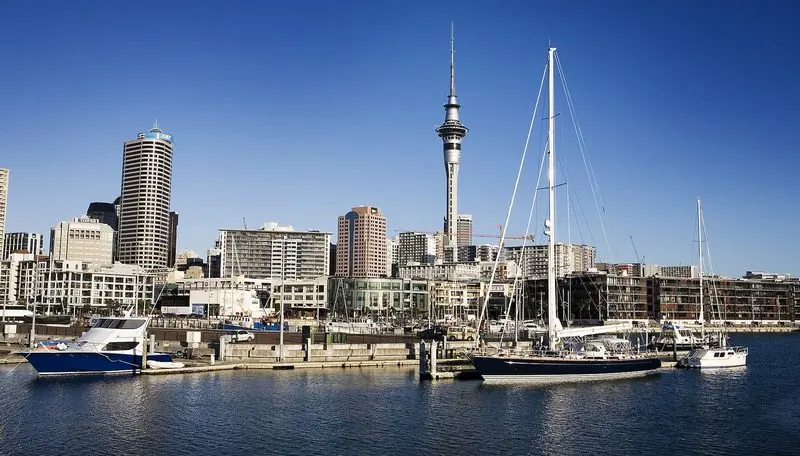
| Posizione | Jellicoe Street, Wynyard Quarter, sul lato sud del Waitemata Harbour di Auckland, accanto a Westhaven Marina |
|---|---|
| Gestore | Auckland Council, attraverso Auckland Marinas |
| Posti barca | otto, da 140 m, 140 m, 95 m, 95 m, 92,5 m, 92,5 m, 90 m e 90 m |
| LOA massima | 140 m |
| Profondità | da 4,5 m a 6,5 m |
| Alimentazione da banchina | 400 volt a 50 Hz, da 125 ampere fino a 750 ampere per posto barca, con tutto ciò che supera i 125 ampere collegato in modo fisso |
| Sicurezza | pontili interamente chiusi con accesso a tastierino e videosorveglianza sulle 24 ore |
| Formalità | Silo e Auckland Central sono le uniche marine di Auckland che possono sdoganare unità oltre i 24 metri con la dogana e con il Ministry for Primary Industries |
| Biosicurezza | la Nuova Zelanda richiede uno scafo pulito all'arrivo, con il biofouling rimosso meno di 30 giorni prima dell'arrivo oppure un accordo di pulizia da eseguire entro 24 ore dall'arrivo |
| Accanto | Orams Marine, con un travel lift da 820 tonnellate che alza yacht fino a 75 m LOA |
| Capannoni Orams | due capannoni di lavorazione coperti da 60 metri e uno da 50 metri |
| Navigazione | l'Hauraki Gulf comincia all'imboccatura del porto, e il Pacifico tropicale è a una settimana verso nord |
| Published berthage rate from 1 October 2025: NZD 11.50 per metre per day for a rental of up to one month, and NZD 9.50 per metre per day for one month or more, both exclusive of GST | |
| Utilities on the same rate card | electricity NZD 0.41 per unit and water NZD 7.00 per cubic metre, exclusive of GST |
| Bio-waste removal fee NZD 250 including one 60 kg bin, NZD 150 for each additional bin, plus a bunkering levy of NZD 0.05 per litre | |
| New Zealand GST is 15 per cent and the rate card is quoted net of it | |
| Vessels clearing Customs and MPI at Silo without being berth customers pay an additional berthage charge | |
| Berth designations and lengths | J1 95 m, J2 140 m, J3 140 m, J4 92.5 m, J5 92.5 m, J6 95 m, J7 90 m, J8 90 m |
| Depth is published as a marina-wide range of 4.5 m to 6.5 m and is not broken down berth by berth, checked 28 July 2026 | |
| Shore power | 400 V at 50 Hz, 125 A to 750 A per berth, 125 A on five-pin plugs and everything above hard wired by the marina |
Otto posti barca in mezzo a una città
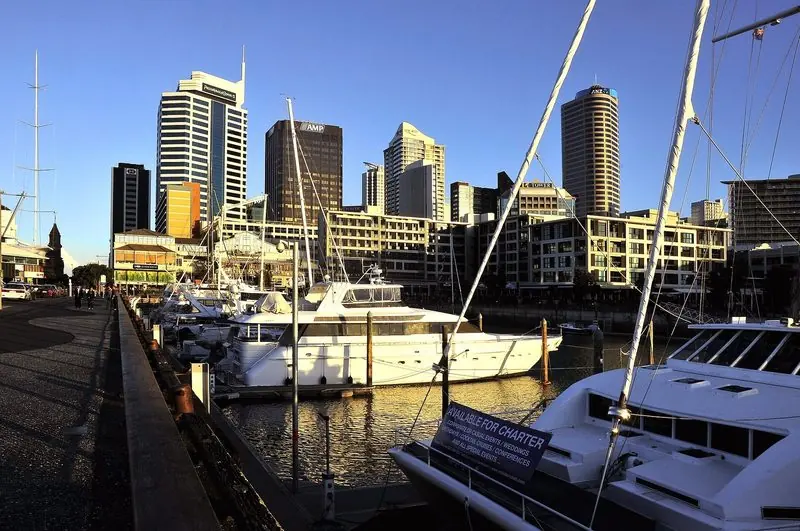
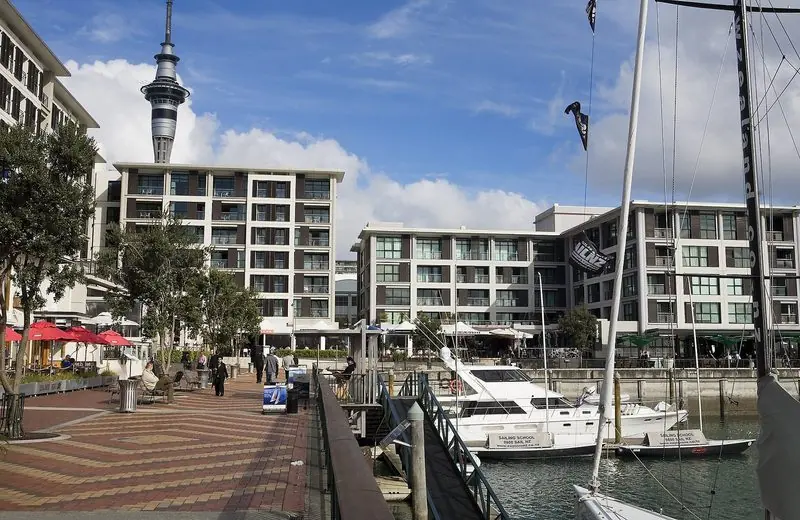
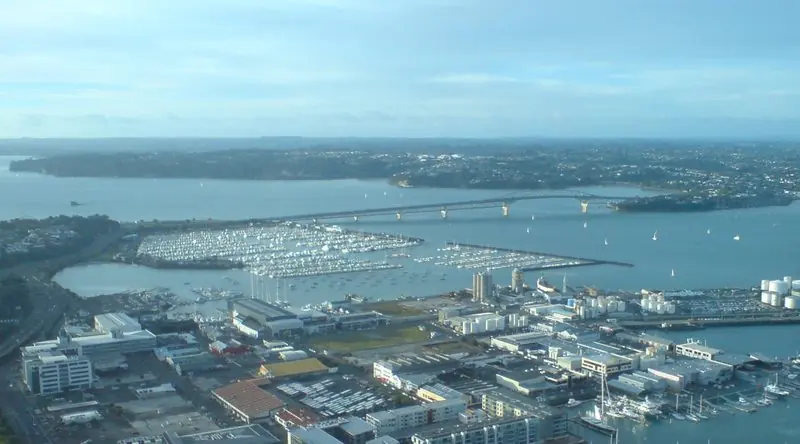
Silo Marina occupa la punta di Wynyard Point, nel porto interno di Auckland, un ex deposito di serbatoi ricostruito come quartiere sul mare. È piccola e voluta così. Otto posti barca, due da 140 metri, due da 95, due da 92,5 e due da 90, con profondità da 4,5 a 6,5 metri. Auckland Council la possiede e la gestisce attraverso Auckland Marinas, insieme alla ben più grande Westhaven Marina lì accanto.
La proposta è la concentrazione. Uno yacht qui è a due passi dal centro città, a meno passi ancora dalle imprese nautiche raggruppate nel Wynyard Quarter, e dentro un recinto chiuso con accesso a tastierino e copertura continua delle telecamere. I titolari dei posti barca citano la posizione come la ragione per cui tornano. Non esiste una struttura equivalente in nessun altro punto del Pacifico meridionale.
L'avvicinamento e il porto
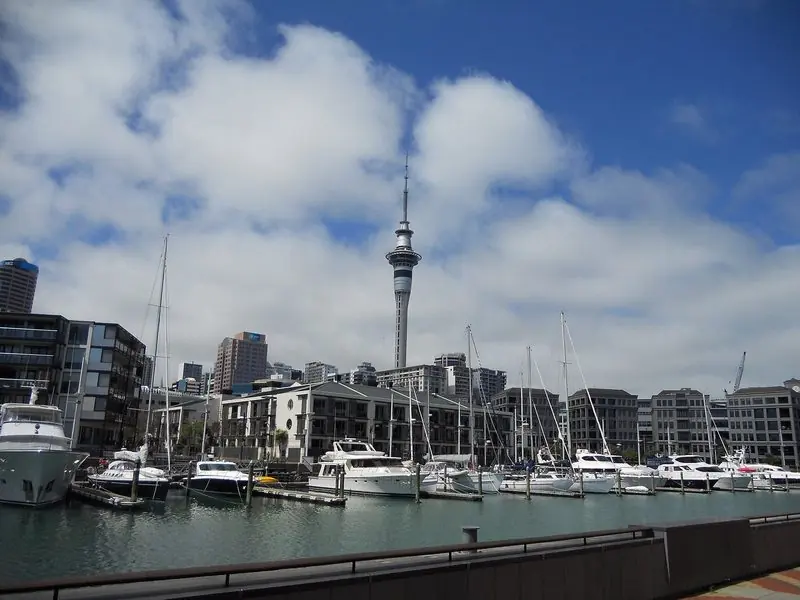
L'accesso passa attorno alla punta nord di Wynyard Point, dalla stessa imboccatura di Westhaven Marina, uscendo dal Waitemata. Il porto è profondo, ben segnalato e trafficato di traghetti, e non c'è nessuna barra né bassofondo da negoziare. La Nuova Zelanda ha una marea vera ma niente che condizioni questa marina. Orams, che gestisce i posti superyacht adiacenti, dichiara accesso in acqua profonda senza limiti di altezza d'aria, cosa che conta per un grande yacht a vela.
Il tempo di Auckland è temperato e mutevole, con i venti più forti da sudovest in inverno e uno schema estivo di venti stabili da nordest interrotti dai fronti. L'Hauraki Gulf immediatamente fuori è riparato da Great Barrier Island e dalla Coromandel, ed è per questo che la città naviga quanto naviga. In tarda estate capita che scendano da nord cicloni tropicali in fase di esaurimento, previsti con giorni di anticipo.
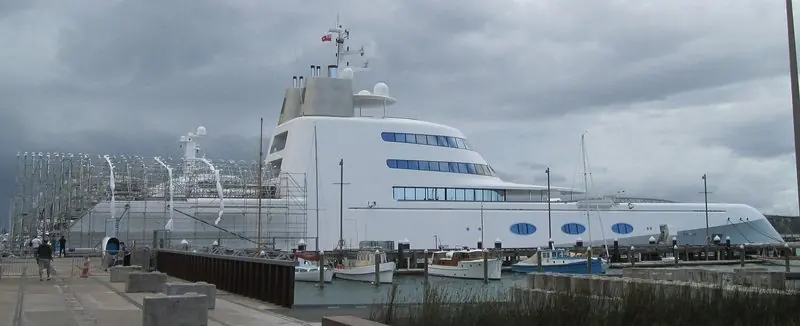
Due posti da 140 metri, un sollevatore da 820 tonnellate nell'isolato accanto e il resto del mondo a diverse settimane di distanza.
Energia, rifiuti e come si prende un posto barca
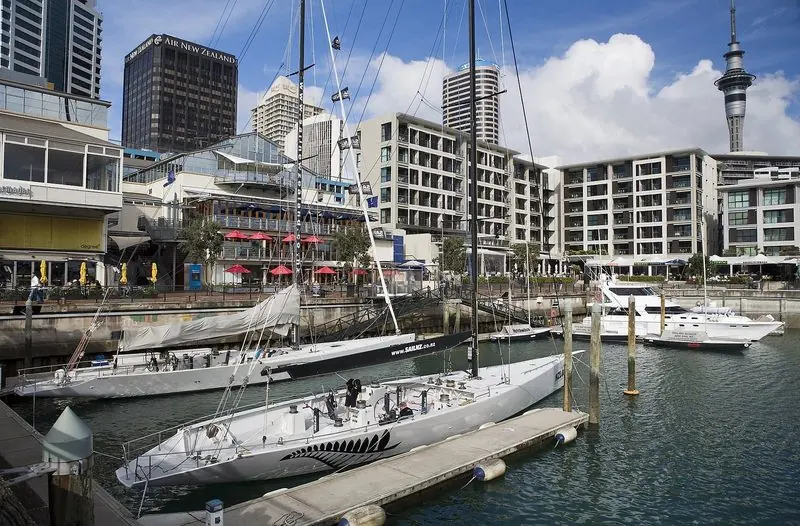
Ogni posto barca porta una fornitura a 400 volt e 50 hertz da 125 ampere fino a 750 ampere, con le prese da 125 ampere su spine a cinque poli e tutto ciò che è più grande collegato in modo fisso, quindi l'assetto di alimentazione da banchina di uno yacht va discusso prima dell'arrivo. Orams gestisce uno svuotamento sottovuoto per acque nere e grigie ai suoi posti da 90 metri. Carburante, provviste e l'intera gamma di maestranze tecniche stanno dentro il quartiere.
I posti barca si affittano e Auckland Council pubblica un tariffario, con l'ormeggio calcolato per lunghezza e la marina che prende le prenotazioni direttamente. Non si vende e non si concede nulla in perpetuo. Con soli otto posti barca, la disponibilità nell'estate australe è il vincolo, e gli armatori che programmano una stagione neozelandese si impegnano presto. I posti alternativi sono a Orams e ad Auckland Central Marina, che prende yacht fino a 50 metri.
Il cantiere che giustifica il viaggio
Orams Marine fa refit di yacht ad Auckland dal 1987 e usa un travel lift da 820 tonnellate che alza superyacht fino a 75 metri di lunghezza fuori tutto, la capacità più grande del Pacifico meridionale con ampio margine. Ha due capannoni di lavorazione coperti da 60 metri e uno da 50 metri, quindi verniciatura e lavori strutturali si fanno in ambiente controllato. I suoi posti barca da 90 metri permettono di lavorare in acqua sugli yacht troppo grandi per il sollevatore.
L'industria nautica neozelandese è la ragione per cui un armatore europeo prende in considerazione di venire fin quaggiù. Il Paese si costruisce in casa le barche della Coppa America, ha una base di mestieri profonda e davvero capace, e i cantieri hanno la reputazione di consegnare nei tempi. Il costo del lavoro è più basso che in Europa e il cambio ha generalmente giocato a favore di un armatore estero. L'inghippo è il trasporto, perché qualunque pezzo non presente nel Paese arriva in aereo dall'altra parte del mondo.
Dogana, biosicurezza e la regola dello scafo pulito
Silo e Auckland Central sono le uniche marine di Auckland in grado di sdoganare unità oltre i 24 metri con la dogana neozelandese e con il Ministry for Primary Industries, mentre Westhaven gestisce tutto fino a 24. Gli yacht in arrivo devono presentarsi in un luogo di primo approdo approvato, prenotare un posto barca e poi prenotare le formalità direttamente con dogana e MPI. È il nulla osta completo di biosicurezza a permettere a uno yacht di muoversi liberamente in acque neozelandesi e di restare oltre venti giorni.
Il regime sul biofouling è il più severo al mondo e coglie di sorpresa parecchi. Il Craft Risk Management Standard impone che un'unità arrivi con lo scafo pulito, cioè con il biofouling ispezionato e rimosso dallo scafo, comprese le aree di nicchia, meno di 30 giorni prima dell'arrivo, oppure con un accordo documentato per la pulizia entro 24 ore dall'arrivo. Dal 1 maggio 2025 è obbligatoria una segnalazione preventiva di biosicurezza. Ci sono yacht a cui è stato ordinato di lasciare le acque neozelandesi per non essere in regola, e il costo di una sorpresa in mezzo all'oceano si evita del tutto con un alaggio alle Figi o a Tahiti lungo la discesa.
Riservatezza e la città attorno
I pontili sono chiusi e sorvegliati, e il Wynyard Quarter, per quanto pubblico, è un lungomare che lavora e non una passeggiata costruita per guardare le barche. Un titolare di posto barca citato dalla marina la descrive come vicina ai fornitori e alla città eppure abbastanza appartata da mantenere la riservatezza a bordo, che è un riassunto corretto. Auckland è un posto senza ostentazione. Nessuno farà una scenata per uno yacht.
La città in sé ha circa 1,7 milioni di abitanti, buoni ristoranti, ospedali e scuole decorosi e un aeroporto internazionale a 30-40 minuti dalla marina, con collegamenti intercontinentali per Asia, Nord America, Australia e Golfo. I voli per l'Europa comportano almeno uno scalo e buona parte di una giornata. Quella distanza è il fatto più grande in qualunque decisione di basare qui uno yacht.
Dove va lo yacht da qui
L'Hauraki Gulf comincia all'imboccatura del porto e contiene Waiheke con i suoi vigneti, Great Barrier, Kawau e un centinaio di ancoraggi raggiungibili in giornata. A nord di Auckland la Bay of Islands è una comoda navigazione notturna ed è l'area di crociera neozelandese classica. I Marlborough Sounds e il Fiordland sono più lontani e ripagano un impegno più lungo.
Il quadro più ampio è il Pacifico. Figi, Tonga, Nuova Caledonia e Vanuatu stanno più o meno a una settimana verso nord, e la Polinesia francese è più a est attraverso gli alisei. Gli yacht che fanno questo giro passano l'inverno australe ai tropici e scendono a sud in Nuova Zelanda per l'estate, ed è questo che trasforma Silo Marina nel porto base stagionale degli stessi yacht anno dopo anno.
Stagione, tempi e il difetto da dire
La stagione dei cicloni nel Pacifico meridionale tropicale va grosso modo da novembre ad aprile, e la Nuova Zelanda sta sotto quella fascia, quindi gli yacht scendono a sud per l'estate australe da dicembre a marzo e risalgono a nord a maggio. Vuol dire che l'estate neozelandese è la stagione di navigazione e l'inverno neozelandese è la stagione dei refit, che è l'opposto di ogni assunto europeo. I posti barca a Silo sono più stretti da dicembre a febbraio.
I difetti sono distanza, dimensioni e burocrazia. Otto posti barca non sono molti, un trasferimento dal Mediterraneo prende diverse settimane e una bolletta di carburante importante, il regime di biosicurezza non perdona, e beni e servizi scontano il 15 per cento di GST. Gli inverni di Auckland sono piovosi e ventosi. Gli armatori che fanno il viaggio in genere lo fanno una volta, restano due o tre stagioni e intanto si portano a casa un refit.
What the rate card actually says
Auckland Council publishes the Silo berthage rates as a one-page card and the numbers are plain. From 1 October 2025 a berth rental of up to one month is charged at NZD 11.50 per metre per day, and a rental of one month or more drops to NZD 9.50 per metre per day. Both are exclusive of GST, which New Zealand levies at 15 per cent. Electricity is NZD 0.41 per unit, water is NZD 7.00 per cubic metre, bio-waste removal is NZD 250 including one 60 kg bin with NZD 150 for each additional bin, and fuel carries a bunkering levy of NZD 0.05 per litre. A vessel that comes alongside only to clear Customs and the Ministry for Primary Industries without being a berthing customer pays an additional charge that the card names but does not price.
Worked through, a 70 m yacht on the long-term rate is NZD 665 a day, NZD 19,950 for a thirty-day month, and NZD 22,943 once GST is added. The same yacht on a two-week visit pays the short-term rate of NZD 805 a day, NZD 11,270 for the fortnight, NZD 12,961 with GST. Against a Mediterranean summer berth that is not expensive, and against the cost of getting a hull to New Zealand it is close to a rounding error, which is the honest shape of the decision. The berth is not what an owner is paying for on this side of the world. The yard is.
Which berth, and how much power it carries
There are eight berths and the marina names them. J2 and J3 are the 140 m positions, J1 and J6 are 95 m, J4 and J5 are 92.5 m, and J7 and J8 are 90 m. Depth is published as a marina-wide range of 4.5 m to 6.5 m and, checked on 28 July 2026, Auckland Council does not attach a figure to an individual berth. With only eight positions that is a table that would fit on one line, and its absence is the one thing a deep-draught yacht cannot resolve from the website. A hull drawing more than 4.5 m should get the sounding for the specific berth in writing at the time of booking, because the difference between the top and the bottom of that range is two metres.
The power note is the best in this set and deserves reading as a specification rather than a boast. Every berth carries 400 V at 50 Hz, from 125 A up to 750 A. The 125 A units run off five-pin plugs that a crew can connect. Everything above 125 A is hard wired, which means the marina makes the connection and it is arranged before arrival, not improvised on the quay. At the top of the range, 750 A of three-phase at 400 V is roughly 520 kVA, which is enough to carry the hotel load of a large yacht alongside without running a generator. Very few marinas anywhere publish that number, and fewer still say who does the plugging.
A terra, accessi e prenotazioni
| VHF and phone | VHF Channel 73; marina office +64 9 355 7479, staffed 24/7 (confirmed on the operator's own contact page and matched by an independent aggregator; a second phone number, +64 9 355 1837, turns up on some third-party marina databases - likely a stale or sister-office line, so treat the 7479 number as current). |
|---|---|
| Operator | Run by Auckland Council's marina arm out of the Auckland Central Marina office at 141 Halsey Street - the same back office that runs Silo, Auckland Central and Viaduct marinas. |
| Berthage rate | Published at NZD 7.50 per metre per day on the marina's rate schedule (matched on two independent booking-aggregator sites quoting the same figure); power and water are metered and billed separately on top of that - exact per-unit rates were not independently confirmable, so are not quoted here. |
| Booking process | No online instant-book for vessels over 30m - allocation goes through the marina office directly. During the 2020-21 America's Cup season, every vessel over 25m wanting to berth between 1 October and 31 March had to file a formal Expression of Interest, and both Silo and neighbouring Viaduct ran at full capacity that summer - a sign of how tight notice needs to be around a big regatta year. |
| Biofouling / clean-hull rule | New Zealand's Craft Risk Management Standard for biofouling has been in force since 15 May 2018. A vessel must arrive with a demonstrably clean hull, or be hauled and cleaned within 24 hours of arrival at an MPI-approved facility. Compliance is normally shown through continuous hull-maintenance records or an inspection/clean carried out within 30 days before arrival - MPI wants the paperwork, not just a clean hull on the day. |
| Customs and biosecurity on arrival | An Advance Notification of Arrival must reach NZ Customs at least 48 hours before the vessel crosses the 12-nautical-mile territorial limit. On arrival, everyone and everything stays aboard until boarded and cleared by a Customs officer and an MPI biosecurity officer - standard procedure at any New Zealand Port of First Arrival, which includes Silo Marina. |
| The yard next door | Orams Marine's 820-tonne travel lift went into service in January 2021 (first haul-out 13 January, a 34.8m vessel) and can take yachts up to roughly 75m LOA, with deep water access and no air-draft restriction - the largest travel lift of its kind in the South Pacific. Orams operates on a 125-year Council land lease from Panuku Development Auckland, on a site marine trades have used since 1908. |
| Getting there | Auckland Airport is about 21km / 23 minutes' drive from Wynyard Quarter by road. There is no heliport at the marina itself, but Auckland's city-waterfront heliport sits nearby on the downtown waterfront and is used by local charter operators for CBD transfers - worth booking ahead rather than assuming walk-up availability. |
Cosa riferiscono armatori ed equipaggi
The marina's own published endorsement centres on location, not price or facilities
Silo Marina's own website carries a single published berth-holder quote, attributed only to the yacht's name: praise for being close to Auckland's marine contractors and walking distance to the city centre while still private enough aboard. Treat this as the marina's own selected testimonial, not an independent review - no third-party review platform (Waterway Guide, Superyacht Services Guide) currently carries a posted review of Silo Marina at all, which is itself notable for a facility this size.
Vessel 'Slim', published on silomarina.co.nz
Cosa convince e cosa va valutato
Punti di forza
- First and only Superyacht Ready-accredited marina in New ZealandSilo and Auckland Central marinas received Gold Anchor and Superyacht Ready accreditation from the Marina Industries Association in September 2023, presented by MIA CEO Suzanne Davies to Auckland Council's marinas team - a formal, dated industry credential, not marketing language.
- Genuine deep-water refit capability on the doorstepThe 820-tonne Orams travel lift (operational since January 2021) can haul yachts to roughly 75m LOA with no air-draft restriction - a rare combination in the South Pacific and the reason boats route through Auckland rather than just anchor off.
- City-centre convenience with full official clearance statusSilo Marina is a recognised Port of First Arrival for vessels over 24m (alongside Marsden Cove in Whangarei), within walking distance of Auckland's CBD - clearance happens on the pontoon rather than requiring a tender run to a separate customs dock.
Da valutare
- It's a genuine detour, not a stopoverAuckland to Suva, Fiji is roughly 1,100 nautical miles - about 7 to 10 days for a typical cruising yacht, faster for a performance motor yacht. New Zealand is a deliberate seasonal commitment (most boats migrate north around May to June, back south ahead of the November to April cyclone season), not somewhere to drop in on a whim.
- No public real-time rate cardCurrent, official per-metre pricing is not posted on the marina's own site in an easily citable form - the NZD 7.50/m/day figure only surfaces through third-party booking aggregators referencing the marina's rate schedule, and exact power/water unit rates could not be independently confirmed.
- Very few slots for very large yachtsWith only a handful of berths at the top end of the size range, capacity gets absorbed fast around big events - both Silo and Viaduct ran fully booked through the 2020-21 America's Cup summer, and vessels over 25m had to file a formal Expression of Interest just to be considered for that season.
- Biosecurity paperwork has to be sorted well before arrival, not on the dayThe clean-hull requirement wants evidence - inspection or cleaning within the 30 days before arrival - so a crew that leaves hull compliance to the last minute risks a haul-out-on-arrival scramble rather than a straightforward pontoon clearance.
A chi si rivolge: L'armatore che gestisce un programma nel Pacifico, o che è disposto ad attraversare un oceano per un refit in un Paese che consegna nei tempi.