Vilamoura Marina (Algarve)
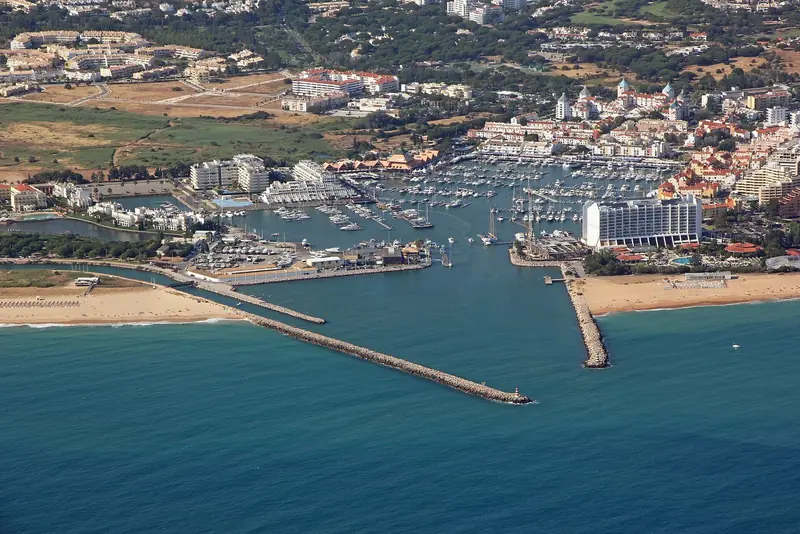
| Posizione | Vilamoura, Quarteira, Loule, Algarve centrale, Portogallo, a 37 04.38 N 008 07.31 W |
|---|---|
| Gestore | Marina de Vilamoura S.A., parte di Vilamoura World, già Lusotur |
| Proprietà | acquistata da Lone Star nel maggio 2021 per oltre 100 milioni di EUR da investitori portoghesi guidati da Joao Brion Sanches con Filipe de Botton e Alexandre Relvas, insieme ad Arrow Global |
| Concessione | la concessione Marina de Vilamoura corre fino al 2060; la Nova Marina nell'avamporto è una concessione distinta di Docapesca, Portos e Lotas, S. A., contrattata l'11 agosto 2023 con Podio Navegante, S. A. |
| Posti barca | 825 pubblicati dal marina e dalla TYHA, per barche da 6 m a 60 m, più 68 posti su tre pontili nella Nova Marina del bacino esterno, aperta nel novembre 2024 |
| Taglie ammesse | il listino del bacino storico corre in classi da 3 m a 40 m fuori tutto, con il solo Cais de Honra al di sopra; il listino proprio della Nova Marina porta una riga tariffaria completa per barche oltre 40 m. La sua home page dice che i suoi posti prendono da 20 a 50 m, la sua pagina dei posti barca dice da 20 a 40 m |
| Limiti di baglio per classe | 5,70 m fra 20 e 26 m, 6,90 m fra 26 e 35 m, 8,30 m fra 35 e 40 m, misurati compresi i parabordi e ogni sporgenza di prua o di poppa |
| Fondali | 4,0 m all'imboccatura e nel bacino della Nova Marina; la scheda tecnica del marina stesso indica per il bacino delle barche 3,3 m e 2,0 m |
| Imboccatura | circa 75 m fra due testate di molo illuminate, orientata a sudest, con i portolani che avvertono che può essere pericolosa con il levante |
| VHF | canale 9 per traffico generale e di lavoro, presidiato 24 ore, nominativo Vilamoura Radio; canale 16 per chiamata ed emergenza |
| Fanali | faro di atterraggio a 18 m di elevazione, bianco, periodo 10 secondi, 19 miglia; fanale d'ingresso est verde e fanale ovest rosso, ciascuno a 14 m e 5 miglia |
| Cantiere | travel lift da 60 tonnellate, gru da 6 e da 2 tonnellate, scalo di alaggio, rimessaggio a secco per 200 barche, area fai da te e velaio |
| Stato doganale | marina portoghese designato per le formalità di arrivo dall'estero; la GNR timbra i passaporti in banchina |
| Accreditamenti | TYHA Five Gold Anchor Platinum, primo marina del Portogallo accreditato a quel livello, nel gennaio 2023, più ISO 9001, ISO 14001 e la Bandiera Blu europea |
| Premi | TYHA Superyacht Marina of the Year 2025, annunciato al Southampton International Boat Show il 24 settembre 2025; Best Portuguese Marina ai Publituris Portugal Travel Awards per 14 anni consecutivi fino al 2025 |
| Aeroporto | Faro dista circa 25 km e meno di 30 minuti di strada per la N125 e la N396; Lisbona è l'alternativa per il lungo raggio |
Che cosa è davvero Vilamoura
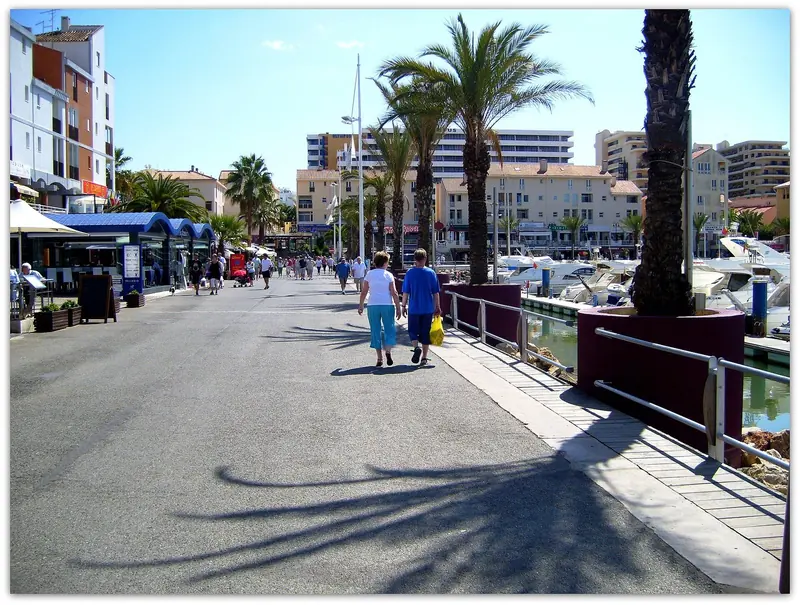
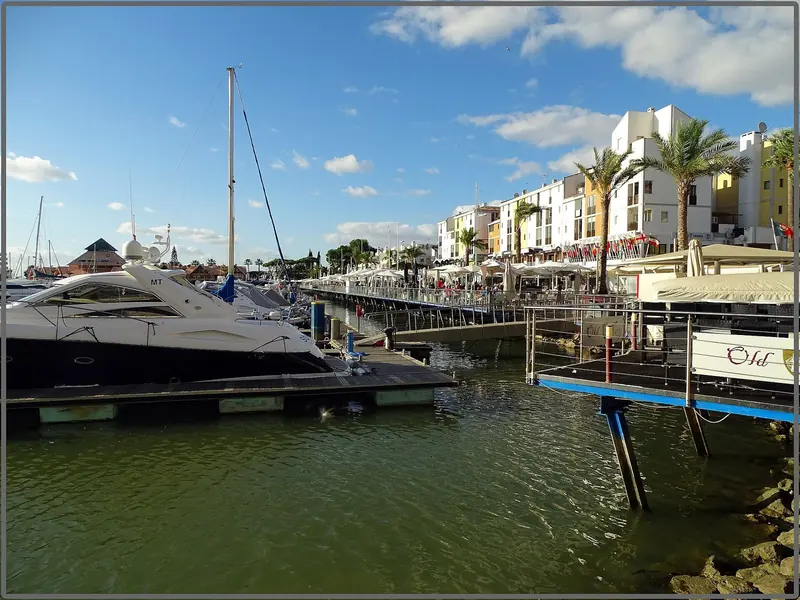
Vilamoura non è un borgo di pescatori a cui è cresciuto intorno un porto turistico. È una località costruita a tavolino su circa 2.000 ettari, pianificata dal 1966 dal banchiere portoghese Cupertino de Miranda attraverso la società di gestione Lusotur, e il marina aprì nel 1974 come primo porto turistico costruito in Portogallo. Tutto quello che si vede intorno all'acqua è stato disegnato insieme all'acqua: cinque campi da golf, un casinò, alberghi, palazzine di appartamenti e una promenade di ristoranti che corre per tutta la lunghezza delle banchine nord e ovest. Il sito romano di Cerro da Vila, dove si produceva la salsa di pesce garum, sta a poche centinaia di metri dai posti barca ed è l'unica cosa nell'area più antica degli anni Sessanta.
Per un armatore questo ha conseguenze nei due sensi. Il lato buono è che una località costruita intorno a un porto mette ogni cosa a distanza di passeggiata dal pontile, tiene la banchina illuminata e presidiata tutto l'anno e offre all'equipaggio un posto dove vivere in febbraio. Il lato cattivo è che in luglio e agosto si ormeggia nel mezzo di una destinazione balneare dell'Algarve di massa, con il traffico, il rumore e la folla che questo comporta, e uno yacht di 35 metri in prima fila fa parte del panorama per diverse migliaia di persone al giorno. Se quello che si compra è la discrezione, questa è la costa sbagliata.
L'imboccatura, e perché guarda dalla parte sbagliata
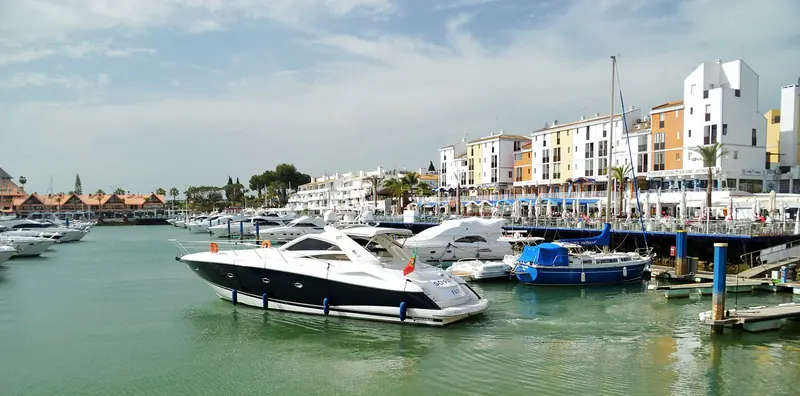
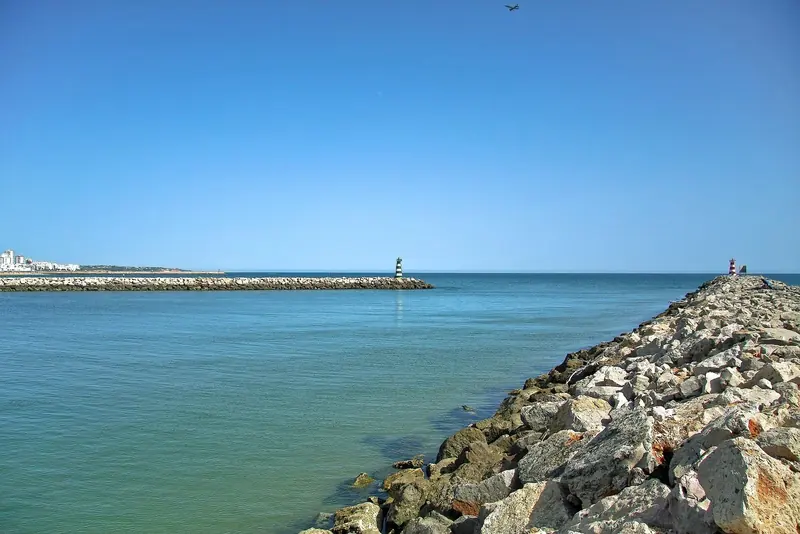
L'atterraggio è facile da individuare e più difficile da imboccare di quanto sembri. Il marina pubblica un faro di atterraggio a 18 metri di elevazione, luce bianca con periodo di 10 secondi, visibile 19 miglia, con una luce verde sul fanale d'ingresso orientale e una rossa su quello occidentale, entrambi a 14 metri e visibili 5 miglia. I portolani danno il varco fra le due testate dei moli intorno a 75 metri e segnalano che guarda a sudest. Arrivando da ovest i moli si distinguono a qualche miglio dalla costa, e il Vilamoura Marinotel alle loro spalle è il riferimento cospicuo quando i moli stessi si confondono con la spiaggia.
Il sudest è il problema. È l'unico quadrante da cui soffia il levante dell'Algarve, e i portolani sono espliciti nel dire che l'imboccatura può diventare pericolosa con il levante. Un vento da sudest infila vento, onda lunga atlantica e deflusso del marina e della Ribeira de Quarteira nello stesso varco di 75 metri, e l'indicazione generale portoghese per qualsiasi imboccatura su barra con mare lungo è di entrare poco prima dell'alta marea, in modo che il riflusso non contrasti l'onda. In una giornata stabile l'ingresso è un non evento per qualunque taglia di barca il marina accetti. In una dura giornata invernale di vento da mare è una decisione vera, e uno skipper appena arrivato da Gibilterra con vento da est dovrebbe tenere Portimao o Lagos come alternativa invece di forzare.
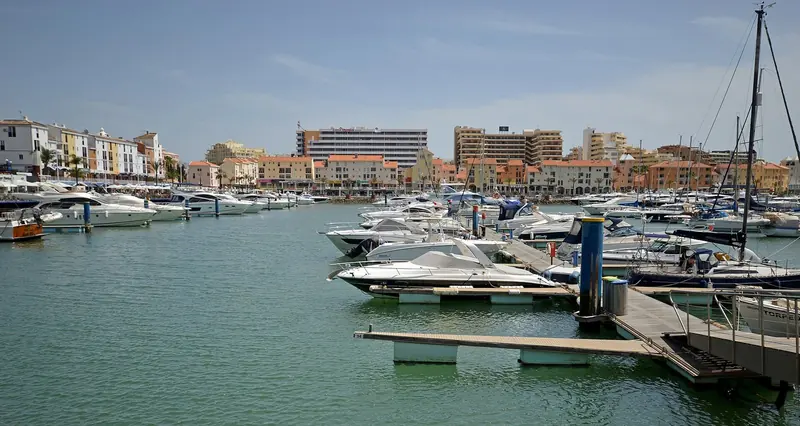
Qui i listini sono due, non uno. Il bacino storico si ferma a 40 metri; la Nova Marina accanto tariffa uno yacht oltre i 40 al giorno, alla settimana, al mese e fino a cinque anni, e per un anno in classe VII chiede 3.054 EUR in più del bacino accanto al quale è stata costruita.
La sabbia, la draga e il molo da 84 metri
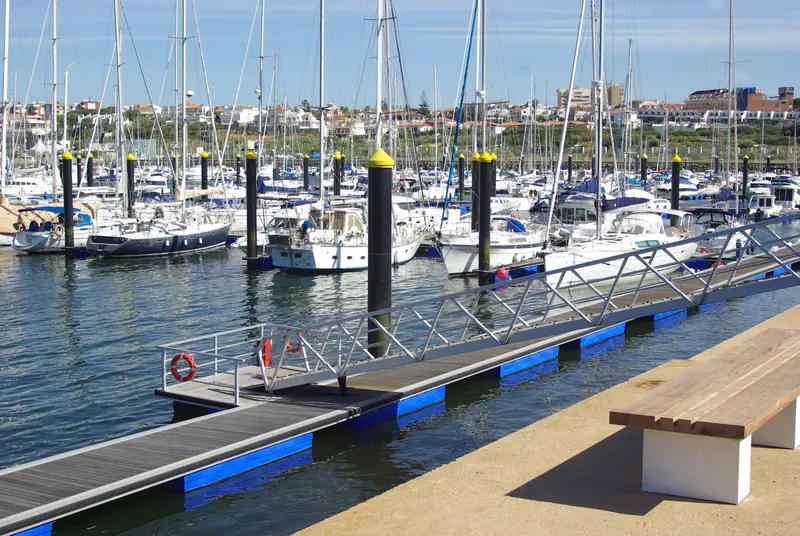
La costa dell'Algarve muove la sabbia da ovest verso est, e i frangiflutti di Vilamoura stanno di traverso su quel percorso. Non è una voce di corridoio: alla presentazione del nuovo bacino esterno, nel gennaio 2024, l'ingegnere ambientale del progetto, Katrin Schifferegger, ha dichiarato alla stampa riunita che gli specialisti ritengono che i moli del marina interrompano o condizionino il trasporto di sedimenti da ovest a est lungo la costa dell'Algarve, e che l'ampliamento previsto andasse perciò studiato con rigore per essere certi di non peggiorare l'effetto. Gli studi sono stati condotti con l'Università dell'Algarve e l'Università di Aveiro. Il molo ovest è stato poi prolungato di 84 metri su un allineamento obliquo, e la diga della Ribeira de Quarteira di 86 metri, quest'ultima verificata in modo specifico perché non strozzasse il corso d'acqua alzando il rischio di esondazione a monte.
Il dragaggio che accompagna tutto questo non è un dettaglio. I soli lavori del 2024 hanno tolto dal bacino esterno fra 150.000 e 195.000 metri cubi di sedimento. Schifferegger ha descritto il materiale come pulito ma fine, fangoso, nero e maleodorante, il che lo rendeva inadatto al ripascimento delle spiagge e inadatto a essere restituito alla deriva litoranea: è finito perciò in quattro punti di sversamento a sei miglia dalla costa, sull'isobata dei 40 metri, in forza di un titolo privato d'uso del mare rilasciato dalla DGRM, la direzione generale portoghese delle risorse naturali e dei servizi marittimi. Sono gli stessi punti che il marina usa per le sue campagne di dragaggio di manutenzione ordinaria. Quello che un armatore deve portarsi via da questa storia è che le profondità citate qui sono profondità mantenute, non naturali, e che la capacità del marina di tenere i propri numeri dipende da un programma di dragaggio autorizzato che prosegue a tempo indeterminato.
Il taglio dei posti barca, e dove finiscono i numeri pubblicati
Il marina e la Yacht Harbour Association pubblicano entrambi 825 posti per barche da 6 a 60 metri. Come siano tagliati davvero lo dice il listino. Le classi sono tredici, e la cosa notevole è che la maggior parte di esse è sdoppiata sul baglio: la classe VII prende da 20 a 26 metri ma solo fino a 5,70 metri di larghezza, la classe VIII da 26 a 35 metri fino a 6,90 metri, la classe IX da 35 a 40 metri fino a 8,30 metri. La scheda 2025 precisava inoltre che la classe si assegna sulle dimensioni massime, comprese le sporgenze a prua o a poppa, e che la misura del baglio comprende i parabordi; quelle note non sono ripetute sul listino 2026, le cui uniche note a piè di pagina sono la visita logistica a metà della tariffa giornaliera, i multiscafi con il 100 per cento in più e l'IVA aggiunta all'aliquota di legge. Un flybridge moderno di 26 metri è spesso più largo di 6,90 metri, quindi misurate il vostro baglio prima di dare per scontata una classe, e i multiscafi pagano il doppio della tabella.
Nel novembre 2024 la proprietà ha aperto quella che chiama Nova Marina: tre pontili galleggianti con 68 posti nel vecchio bacino peschereccio dell'avamporto, che aveva ospitato la flotta da pesca di Quarteira fino alla costruzione di quel porto. La profondità lì è di 4 metri. Ogni nuovo posto ha il proprio impianto di aspirazione delle acque nere, la ricarica per barche elettriche e la lettura da remoto di acqua ed elettricità, un sistema che secondo Vilamoura World non era mai stato usato prima in Portogallo. Guardate bene con chi state trattando, perché non è la stessa società. La Nova Marina è una concessione separata, rilasciata da Docapesca, Portos e Lotas, S. A. con contratto firmato l'11 agosto 2023 a Podio Navegante, S. A., con un proprio regolamento di esercizio pubblicato sul Diario da Republica il 18 novembre 2024 come Regulamento n. 1326/2024 e un proprio regolamento tariffario, Regulamento n. 970/2025, pubblicato il 5 agosto 2025. Ha un sito proprio, una reception propria e un listino proprio. L'operatore non è d'accordo con se stesso sulla taglia di barca che accetta: la home page della Nova Marina dice 68 posti per barche fra 20 e 50 metri, la sua stessa pagina dei posti barca dice da 20 a 40 metri, e la riga in cima al listino porta soltanto l'intestazione per barche oltre 40 m, senza alcun limite superiore stampato. Quello che il marina non ha fatto è aggiornare il proprio dato di facciata: continua a pubblicare 825 posti, esattamente come faceva prima che i 68 esistessero, e quindi non è chiaro se quel numero sia ormai un totale o ancora il solo bacino storico.
Quanto costa un posto nel bacino storico, e che cosa la tabella non dice
Vilamoura pubblica un listino completo, che è più di quanto facciano quasi tutti i porti di questa guida. La tabella 2026, datata 13 gennaio 2026, fissa l'alta stagione dal 1 luglio al 31 agosto, la media su giugno e settembre e la bassa dal 1 gennaio al 31 maggio e dal 1 ottobre al 31 dicembre. Un posto di classe VII, da 20 a 26 metri, costa 252,20 EUR a notte in alta stagione, 222,80 EUR in media e 72,80 EUR in bassa, con la settimana a 1.699,00 EUR, 1.481,40 EUR e 492,80 EUR e il mese a 6.985,40 EUR, 6.084,20 EUR e 1.990,40 EUR. Un posto di classe IX, da 35 a 40 metri, sta a 360,30 EUR a notte in alta e a 110,40 EUR in bassa. L'IVA si aggiunge all'aliquota di legge sopra ogni cifra, il 23 per cento nel Portogallo continentale.
Il valore sta nei numeri lunghi. Un contratto annuale su un posto di classe VII vale 26.846 EUR per il 2026, con un onere di manutenzione di 2.395,10 EUR l'anno che si applica solo ai contratti superiori all'anno e una voce separata di acqua ed elettricità di 185,50 EUR al mese. Sommando il tutto, per il solo bacino storico il conto annuo prima dell'IVA arriva a circa 31.470 EUR, ed è questa la cifra che un armatore dovrebbe mettere a bilancio. La stessa tabella arriva a cinque anni, 99.331 EUR per la classe VII. Durate più lunghe esistono ma per esse non è stampato alcun prezzo: la scala dei giorni di cantiere della scheda 2025 elencava periodi di locazione di 10 e 20 anni, e il regolamento tariffario della Nova Marina prevede formalmente permanenze indivisibili di 10 e 20 anni. Rapportato alla tariffa giornaliera, un mese di bassa stagione a 1.990,40 EUR per una barca di 26 metri è uno dei posti invernali serviti più economici di tutta la costa atlantica europea.
Sdoganarsi arrivando da Gibilterra o dalle Canarie
Vilamoura è uno dei marina portoghesi designati a svolgere le formalità di arrivo dall'estero, quindi non serve una sosta separata. La prassi, secondo Noonsite, è che uno yacht in arrivo da fuori dell'Unione europea o con equipaggio extra UE ormeggi e scenda a terra con passaporti, documenti di bordo e assicurazione, e che la GNR, la guardia nazionale, timbri i passaporti. Il pontile di accoglienza sta a dritta nel canale fra la torre di controllo e gli uffici, e la reception è aperta dalle 08:30 alle 21:30 dal 1 giugno al 15 settembre, dalle 08:30 alle 19:30 in aprile, maggio, settembre e ottobre e dalle 08:30 alle 18:30 per tutto l'inverno. Il canale di lavoro è il VHF 9, presidiato 24 ore con nominativo Vilamoura Radio; il 16 è solo chiamata ed emergenza. Gibilterra dista 140 miglia secondo il conto del marina stesso, Lisbona 160, Puerto Banus 190, Madeira 500 e le Azzorre 860.
I due avvicinamenti più comuni sono giuridicamente diversi e conviene sapere su quale ci si trova. Gibilterra è paese terzo: fuori dall'Unione europea, fuori dall'unione doganale, fuori dal territorio IVA e fuori da Schengen, quindi una traversata da lì è un arrivo esterno a tutti gli effetti e la dogana si interesserà alle provviste e allo stato della barca. Le Canarie sono spagnole e dentro Schengen, quindi in una navigazione verso nord nessuno controlla i passaporti, ma stanno fuori dal territorio IVA e accise dell'Unione, il che significa che il carburante e le provviste esentasse imbarcati a Las Palmas sono materia doganale anche se l'equipaggio non lo è. Noonsite riferisce inoltre che la dogana portoghese sorveglia gli yacht extra UE rispetto a un limite di 180 giorni. È una regola diversa dai 18 mesi di ammissione temporanea validi in tutta l'Unione, non una contraddizione. L'ammissione temporanea è un beneficio doganale che sospende dazio e IVA all'importazione. I circa 180 giorni sono la soglia dei 183 giorni scritta nel codice portoghese dell'imposta di circolazione, che fa rientrare nell'imposta annuale un'unità non immatricolata in Portogallo una volta che abbia passato nel paese più di 183 giorni nell'anno solare, consecutivi o no. I due orologi corrono insieme e nessuno annulla l'altro, quindi uno yacht di bandiera extra UE può essere tranquillamente dentro i suoi 18 mesi di ammissione temporanea e dovere comunque l'imposta di circolazione portoghese. Fatevi mettere per iscritto tutte e due le cose da un agente portoghese prima di programmare una permanenza lunga.
Il quadro fiscale, e l'argomento di vendita che non funziona più
Il Portogallo è giurisdizione IVA piena dell'Unione al 23 per cento sul continente, con il 22 per cento a Madeira e il 16 per cento alle Azzorre, quindi immettere in libera pratica uno yacht qui costa sensibilmente di più che farlo attraverso le isole, e ogni fattura del marina su questa banchina porta l'aliquota continentale. Uno yacht di bandiera extra UE in uso privato, di proprietà di un residente fuori dall'Unione, può navigare in ammissione temporanea con esenzione dall'IVA all'importazione fino a 18 mesi, ma il regime è severo: solo uso privato, nessuna modifica, riesportazione alla fine. Il Portogallo applica separatamente un'imposta annuale di circolazione sulle imbarcazioni da diporto private in base alla potenza del motore, l'imposto unico de circulacao o IUC, e l'aliquota è pubblicata, non misteriosa. La categoria F del codice riguarda le unità da diporto private con potenza propulsiva di 20 kW o più immatricolate dal 1986, e l'aliquota 2026 è di 2,95 EUR per kW; le tabelle non sono state aggiornate all'inflazione per il 2026, quindi la stessa cifra vale dal 2024. Uno yacht con 500 kW di potenza installata paga perciò 1.475 EUR l'anno. Per le unità immatricolate in Portogallo il periodo d'imposta è l'anno solare e il pagamento scade entro la fine di gennaio. Le unità non immatricolate in Portogallo vi rientrano una volta che restino nel paese per più di 183 giorni, consecutivi o no, nell'anno solare, e in quel caso l'imposta si versa entro 30 giorni dalla fine di quel periodo: è per questo che un contratto invernale di nove mesi è da sempre il modo in cui gli armatori la evitano.
Sul fronte della residenza le cose sono cambiate e buona parte del marketing dell'Algarve non se n'è accorta. Il regime del Non-Habitual Resident, lo schema a tassazione forfettaria che ha venduto moltissime case e moltissimi posti barca in Algarve, si è chiuso ai nuovi ingressi il 1 gennaio 2024 con la legge di bilancio di quell'anno, con una finestra transitoria esaurita il 31 marzo 2025. Il suo sostituto, l'incentivo fiscale alla ricerca scientifica e all'innovazione, chiamato di solito IFICI o NHR 2.0, è entrato in vigore nel dicembre 2024 con effetto retroattivo al 1 gennaio 2024. Dà un'imposta piatta del 20 per cento sui redditi portoghesi da lavoro dipendente e autonomo fino a dieci anni, ma è condizionato a una qualifica di livello 6 EQF, in sostanza una laurea triennale, più tre anni di esperienza pertinente in un'attività ammissibile, e la domanda va presentata entro il 15 gennaio dell'anno successivo a quello in cui si diventa residenti. L'IFICI è pensato per ricercatori e lavoratori qualificati, non per armatori in pensione, e chi compra un posto barca qui nel 2026 non deve mettere in conto il vecchio NHR.
Tempo, onda lunga e la brezza del pomeriggio
Qui siamo in Atlantico, non in Mediterraneo, e la differenza si vede nell'onda più che nel vento. La costa sud è riparata dalla terra rispetto ai grandi sistemi atlantici di nordovest, quindi Vilamoura riceve una versione filtrata di quello che Lagos e Sagres prendono in pieno, ma una lunga onda da sudovest gira comunque intorno a Capo San Vincenzo e arriva all'imboccatura senza vento locale a sostenerla. Le note nautiche per questa costa danno venti prevalenti da nord a nordest da maggio a ottobre, con una brezza forte che si alza all'inizio del pomeriggio e tira fino al tramonto, entrando da sudovest e rotando per ovest verso ovest-nordovest o nordovest. Quella brezza quotidiana coglie di sorpresa gli equipaggi: la mattina è piatta, e alle tre c'è vento vero da vela e un'onda corta al traverso di qualsiasi barca ormeggiata di poppa.
Dentro, il marina è un bacino scavato dietro due moli ed è tranquillo con quasi ogni tempo. L'esposizione è al varco, non al posto barca, e il rischio specifico è il vento da sudest. Sul piano commerciale conta che la stagione di spalla dell'Algarve sia lunga: un posto preso da ottobre a 1.990,40 EUR al mese per una barca di 26 metri compra un tempo che un armatore nordeuropeo chiamerebbe estate, cosa che non vale per la spalla adriatica o ligure alla stessa cifra. L'inverno è mite e piovoso, e la finestra affidabile per una stagione piena va grosso modo da aprile a ottobre invece che dal giugno a settembre mediterraneo.
Di chi è, la concessione e quanto stanno spendendo
La proprietà è passata di mano ripetutamente e chi firma un contratto di cinque anni dovrebbe conoscere la catena. Lusotur ha gestito la località dall'inizio; gli attivi sono passati per Andre Jordan, poi al gruppo spagnolo PRASA, poi alla banca spagnola BBVA, che nel 2015 ha venduto al fondo americano Lone Star. Nel maggio 2021 Lone Star ha ceduto Vilamoura World a un gruppo di investitori portoghesi guidato da Joao Brion Sanches, con Filipe de Botton e Alexandre Relvas, insieme al gruppo d'investimento britannico Arrow Global, per oltre 100 milioni di EUR. L'operazione comprendeva l'intero capitale sociale di Vilamoura World, 21 lotti edificabili, il 49 per cento della società di infrastrutture Inframoura, il centro equestre, un parco ambientale di 200 ettari, il sito museale di Cerro da Vila e il marina, riportato come l'attivo di maggior valore del pacchetto. La concessione del marina corre fino al 2060.
Nell'ottobre 2023 la proprietà ha annunciato un rilancio di Vilamoura da 500 milioni di EUR, di cui l'ampliamento del porto era una voce fra le altre. La Nova Marina da 23 milioni di EUR è stata costruita senza fondi europei, è partita il 23 gennaio 2024 e ha aperto nel novembre dello stesso anno, e Arrow Global ha rilevato separatamente gli ex alberghi e campi da golf Dom Pedro nella stessa tenuta, cosicché marina, alberghi e golf stanno ora dentro una sola proprietà. Si noti che il bacino esterno non sta su quella concessione: la Nova Marina poggia su un contratto separato con Docapesca, firmato l'11 agosto 2023 con Podio Navegante, S. A. Il marina ha ISO 9001, ISO 14001, la Bandiera Blu europea e il rating Five Gold Anchor Platinum della Yacht Harbour Association, per il quale è stato il primo porto in Portogallo ad essere accreditato, nel gennaio 2023, quando l'operatore disse che al mondo lo avevano soltanto dieci marina. Ha vinto il premio Best Portuguese Marina ai Publituris Portugal Travel Awards per 14 anni consecutivi fino al 2025, e la TYHA lo ha nominato Superyacht Marina of the Year per il 2025 al Southampton International Boat Show il 24 settembre 2025, con la Yalikavak Marina seconda. Quel curriculum è l'argomento onesto a favore di Vilamoura: non i posti barca più grandi e non l'acqua più profonda, ma il porto meglio gestito del paese a distanza netta, con una concessione abbastanza lunga da rendere sensata la firma di un contratto pluriennale.
A terra, accessi e prenotazioni
| Getting there | Faro is the airport, about 25 km away and under 30 minutes by road on the N125 and N396, and it is one of the shortest airport transfers of any marina on the Atlantic coast. What it costs depends entirely on how you book it and the sources do not agree: pre-booked private transfer operators advertise from about EUR 33 to EUR 48 for up to eight passengers in 2026 listings, while an Algarve travel guide reports a metered taxi at over EUR 50 to EUR 60 for the same run. Uber and Bolt operate at Faro and are reported at roughly half the metered taxi. There is no direct bus: you take the 14 or the 16 into Faro bus station and then the 9 to Vilamoura, which takes over two hours with waiting. Faro's schedules are short-haul European; a guest arriving long-haul routes through Lisbon and drives down the A2. |
|---|---|
| Arriving by sea and clearing in | Call Vilamoura Radio on VHF 9 before you close the coast; it is manned 24 hours and channel 16 is for calling and emergency only. The gap between the breakwater heads is about 75 metres and faces southeast, which means an easterly levante puts wind, swell and outflow through the same slot, and the standing advice for any Portuguese bar in a swell is to enter shortly before high water rather than on the ebb. The reception pontoon is to starboard in the channel between the control tower and the offices. There is no lock and no bridge. Vilamoura is a designated marina for arrival formalities from abroad, so a yacht coming in from Gibraltar, Morocco or the Canaries clears here: go ashore with passports, ship's papers and insurance, and the GNR stamps passports. Reception is 08:30 to 21:30 from 1 June to 15 September, 08:30 to 19:30 in April, May, late September and October, and 08:30 to 18:30 from November to March. |
| Reserving a berth | Berths are contracted directly with the marina, on +351 289 310 560 or at [email protected], with a second reception at Rocha Baixinha on +351 289 302 395 covering the outer basin. There is no published waiting list and no berth broker acting as gatekeeper, which is unusual at this size and is a real advantage over the Riviera. For a summer week in July or August book months ahead; for a low-season month or a year you can generally deal at short notice, and the annual and multi-year rates are printed rather than negotiated, so you know before you call what the number is. The 2025 sheet noted that the class is assigned on measured maximum dimensions including bow and stern projections, with the beam figure including fenders; that note is not repeated on the 2026 card, but declare honestly anyway rather than be reassigned a class up on arrival. Anything over 40 metres is a Nova Marina enquiry rather than a main marina one, on +351 289 310 560 or [email protected]. |
| What a berth costs in the old basin, 2026 tariff | The rate card is dated 13 January 2026. High season is 1 July to 31 August, medium season is June and September, and low season is 1 January to 31 May and 1 October to 31 December. Nightly, high season: EUR 83.10 for 12 to 15 m, EUR 134.00 for 15 to 20 m, EUR 252.20 for 20 to 26 m, EUR 326.00 for 26 to 35 m and EUR 360.30 for 35 to 40 m. The same bands in low season: EUR 28.80, EUR 45.80, EUR 72.80, EUR 94.00 and EUR 110.40. Monthly, low season, is where the value sits: EUR 824.00 for 12 to 15 m, EUR 1,990.40 for 20 to 26 m and EUR 2,969.40 for 35 to 40 m. A one-year contract for 20 to 26 m is EUR 26,846, and for 35 to 40 m EUR 36,426; five years runs to EUR 99,331 and EUR 134,774 respectively. All figures are before VAT, which is added at the legal rate, 23 per cent on the mainland. Multihulls pay 100 per cent more than the table. A logistics visit of up to four hours is charged at half the applicable daily rate. |
| What a berth costs on the Nova Marina card | The outer basin bills on its own sheet, published by Podio Navegante, and unlike the old basin's card it carries no date on its face; the file was put up in August 2025. The seasons are the same: high 1 July to 31 August, medium June and September, low 1 January to 31 May and 1 October to 31 December. Class VII, 20 to 26 m: EUR 280 a night in high season, EUR 250 in the shoulder and EUR 90 in low; EUR 1,895, EUR 1,650 and EUR 605 a week; EUR 7,780, EUR 6,780 and EUR 2,440 a month; EUR 7,000 for three months, EUR 11,550 for six, EUR 29,900 for a year and EUR 110,660 for five, with conservation and maintenance at EUR 2,225.48. Class IX, 35 to 40 m: EUR 460, EUR 405 and EUR 155 a night, EUR 46,430 for a year, EUR 171,780 for five, conservation EUR 3,456.18. And the row the old card does not have at all, boats over 40 m: EUR 865, EUR 750 and EUR 290 a night; EUR 5,709, EUR 4,900 and EUR 1,910 a week; EUR 22,836, EUR 20,300 and EUR 7,770 a month; EUR 22,330 for three months, EUR 36,540 for six, EUR 73,000 for a year, EUR 116,790 for two, EUR 170,800 for three, EUR 221,900 for four and EUR 270,000 for five, with conservation and maintenance at EUR 5,615.00. All before VAT at the legal rate. Multihulls pay 100 per cent more, a logistical visit of up to four hours is half the applicable daily rate, and the concessionaire reserves the right to meter and recharge water and electricity. Price the two basins against each other before you choose: a class VII year is EUR 29,900 out here against EUR 26,846 inside, and a class IX year EUR 46,430 against EUR 36,426. |
| Fuel, power, water and the extras | There is a fuel jetty on site selling diesel and petrol, and the marina does not publish a pump price, so budget from a fresh quote. Portugal is inside the EU excise area and the national duty-free diesel scheme is written for licensed fishing vessels, so a private yacht pays fully taxed fuel here, which is the single clearest cost disadvantage against Gibraltar 140 miles away. On the berth the daily and weekly rates include water and electricity, but annual and multi-year contracts carry a separate monthly line: EUR 93.40 for 12 to 15 m, EUR 185.50 for 20 to 26 m and EUR 288.30 for 35 to 40 m in 2026. Contracts over a year also carry an annual maintenance charge, EUR 2,395.10 at 20 to 26 m and EUR 3,719.70 at 35 to 40 m. Approved 220/380 V shore plugs are compulsory: the marina rents one for EUR 1.23 a day or sells them at EUR 12.20 for 32 A, EUR 62.50 for 63 A and EUR 108.80 for 125 A, VAT included, on the 2025 sheet, and water hose nozzles are free. Pump-out is free and, per Noonsite, comes to the yacht. |
| Haul-out, yard and the boatyard allowance | The yard is on site and it is genuinely equipped: a 60 tonne travel hoist, 6 tonne and 2 tonne cranes, a slipway, forklifts, boat stacks, a do-it-yourself work area, dry storage for 200 boats, towing, hull cleaning and a sailmaker, with independent trades on the site covering upholstery, awnings, refrigeration, hull painting, gelcoat, electrics and brokerage. Sixty tonnes is the ceiling and it is the ceiling that matters: it will lift a sailing yacht into the high teens or a light motor yacht around 20 metres, and it will not lift a 26 metre flybridge, so the marina's own superyacht end has no haul-out. The berth contract carries a written allowance of free days ashore in the yard, on a scale in the tariff: 3 days for a 3 month rental, 6 for six months, 12 for one or two years, 15 for three years, 20 for four or five years and 30 for a ten or twenty year rental. It applies only during the low season for hardstanding, and not to boats with a beam over 4.90 m. |
| Eating and drinking within walking distance | The whole marina front is restaurants and you can reach every one of them from the pontoons without a car. Willie's is the fine-dining benchmark in Vilamoura, classic European under chef Willie Wuger, who marked 25 years in 2025, and it sits a short ride inland rather than on the water. On the quay itself: Akvavit, a marina-front room since 1990 doing Nordic, French and Portuguese seafood at the quieter end; Casa do Pescador and Ostra D'Ouro for Portuguese and Mediterranean seafood; Il Lamparo for Italian with the yachts in front of it; Mughal Clay for Indian at the cheaper end; and Pepper's Steakhouse inside the Tivoli Marina hotel. The 19th Hole beside the Tivoli is the sports bar on the boardwalk and the default crew room. After dark the promenade stays busy well past midnight in season, MoTAO turns from restaurant into a club with live DJs, and there is a casino on the resort. Out of season the front thins out considerably but does not close. |
| The fixed dates that fill it | The Marina de Vilamoura International Boat Show is the big one and the 2026 edition is behind us: it ran from 6 to 14 June 2026, 11:00 to 21:00 daily, with about 100 boats, around 30 exhibitors and 50 brands, and free admission. The marina calls that the 28th edition and the show's own site calls it the 29th, so the count is not settled even between the organisers. It takes over the marina front for nine days in the middle of the shoulder season, and no 2027 dates were published at the time of writing, so treat the first fortnight of June as gone every year until they are. On the racing side, the 470 European Championship was sailed here from 6 to 14 March 2026. The dinghy and small keelboat calendar is close to continuous, and the next published fixtures at Vilamoura are the Skiff Junior European Championship for 49er, 49erFX and Nacra 17 from 10 to 14 November 2026, the 10th Algarve Dragon Winter Cup from 20 to 22 November, the 3rd Youth Portugal Grand Prix from 22 to 24 November and the 9th Portugal Grand Prix from 26 to 29 November, with further rounds in February and March 2027. The International Carnival Sailing Tournament, run by the Vilamoura Marina International Club and first held in 1974, is a long-standing fixture of the Portuguese dinghy calendar. None of these takes berths from cruising yachts, but they fill the hotels and the restaurants. |
| What is NOT published | Not what the old rate card suggests. Marina de Vilamoura's own 2026 card stops at 40 metres and offers only the Cais de Honra above it, at EUR 690.90 a day in high season, EUR 603.00 in the shoulder and EUR 220.60 in low season, with no week, month, year or multi-year figure, and no published maximum LOA, beam or depth for the honour quay itself. What the old card does not carry, the Nova Marina card does: a full row for boats over 40 m running from EUR 865 a day to EUR 270,000 for five years. So a 45 metre owner can budget a season at Vilamoura from public information, but only in the outer basin and only on another company's tariff. Beyond that: the Nova Marina card carries no date at all, where the old basin's is dated 13 January 2026. No fuel price is published. No shore power amperage or voltage is published beyond the requirement for 220/380 V plugs and the 32 A, 63 A and 125 A sockets the marina sells, so a large yacht cannot confirm from public sources what she can draw. Berth occupancy and any waiting list are not published. And the berth headline itself is unresolved: the marina, TYHA and the Superyacht Services Guide all still say 825 for 6 to 60 metres, exactly the figure published before the 68-berth Nova Marina opened in November 2024, so it is not clear whether 825 is now the total or still just the old basin. Ask before you count on a number. |
Cosa riferiscono armatori ed equipaggi
The breakwaters are known to hold back the coast's sand, and the marina lives on a dredging permit
Presenting the new outer basin in January 2024, environmental engineer Katrin Schifferegger said specialists consider Vilamoura's moles to interrupt or condition sediment transport along the Algarve coast from west to east, and that the 84 metre extension of the west mole had therefore to be studied rigorously, with the University of the Algarve and the University of Aveiro, to be sure the effect was not worsened. The works removed 150,000 to 195,000 cubic metres of sediment, too fine, black and odorous for beach nourishment, which had to be dumped at four points six miles offshore at the 40 metre contour under a maritime use title from the DGRM. Those are the same points used for the marina's routine maintenance dredging.
BarlaventoThe new basin is a converted fishing harbour, not new water
Schifferegger explained that the Nova Marina reuses the existing berthing basin in the outer harbour, which held Quarteira's fishing fleet until the Quarteira fishing port was built, and that the advantage was not having to create an infrastructure from scratch with all the negative impacts that carries. Smaller boats went to the north side, larger ones to the south. The project had been on the drawing board since 2006. Construction began on 23 January 2024 with dredging, at a cost of EUR 23 million and without European funding.
BarlaventoThe marina's own case for the expansion is that the big boats were sailing straight past
Isolete Correia, board member of Vilamoura World and the executive responsible for the project, said the new marina was highly differentiating for the destination and responded to evident market demand from large vessels that were at that time passing offshore. This is the operator's own statement rather than independent reader experience, and Yotters has found no published occupancy or utilisation figure for the new pontoons to test it against.
ECOIt is well run, and the facilities list is unusually complete for the Atlantic coast
Noonsite describes Vilamoura as a large and well-run marina, expanded in 2024 with the Nova Marina section for vessels over 22 metres in the entrance basin, and lists fuel, free pump-out that comes to the yacht, laundry, chandlery, wifi, provisions, ATM, bars, restaurants, shops and a yacht club, plus a boatyard with a 60 tonne hoist and 2 and 6 tonne cranes covering all repairs including a sailmaker, with self-service sail washing and drying. It also notes there is no weekly discount structure and that high season pricing starts on 1 June, which matches the marina's own tariff treating June as medium rather than low season.
NoonsiteNot everyone likes it, and the objection is the resort rather than the marina
In a UK cruising forum thread comparing the Algarve marinas, the poster Webcraft dismissed Vilamoura outright as horrible in his opinion, while the rest of the thread discussed Lagos, Portimao and Albufeira in detail. That is one opinion and it comes with no operational specifics, but it is consistent with the recurring complaint about the place: the marina is excellent and the resort around it is a mass-market Algarve holiday destination in July and August. Yotters found no independent published criticism of the marina's operation itself.
YBW ForumThe trade keeps voting for it
Vilamoura took Best Portuguese Marina at the Publituris Portugal Travel Awards for the 14th consecutive year in July 2025, in the marina's 50th anniversary period, and in September 2025 the Yacht Harbour Association named it Superyacht Marina of the Year at the awards announced during the Southampton International Boat Show on the 24th, with Yalikavak Marina in Turkey the runner-up. It was also the first marina in Portugal accredited at Five Gold Anchor Platinum, in January 2023, and it carries ISO 9001, ISO 14001 and the European Blue Flag. For a buyer, a 14 year run at a national trade award plus a global category win is a better proxy for consistent operation than any single year's marketing.
Publituris Portugal Travel Awards, The Yacht Harbour Association, Marina World
Cosa convince e cosa va valutato
Punti di forza
- Two full rate cards, and between them they price everything the marina takesThe old basin's card, dated 13 January 2026, gives day, week and month in three seasons plus one, two, three, four and five year contracts, the maintenance charge and the water and electricity line, in classes to 40 m. The Nova Marina's own card runs the same ladder and adds a filled row for boats over 40 m, EUR 865 a day to EUR 270,000 for five years. Almost no marina at this level prints either, and it means you negotiate from a printed number.
- The cheapest serious winter berth on the European AtlanticEUR 1,990.40 a month before VAT for a 20 to 26 m boat in low season 2026, in a climate where October to May is genuinely usable, with the yard, the fuel jetty and the airport all inside 30 minutes.
- The best-accredited marina in the country, and the trade calls it a superyacht portThe first Five Gold Anchor Platinum marina in Portugal, accredited in January 2023, plus ISO 9001, ISO 14001 and the European Blue Flag, Best Portuguese Marina at the Publituris awards for 14 consecutive years to 2025, and TYHA's Superyacht Marina of the Year for 2025 ahead of Yalikavak. That last one cuts against the resort framing and should be read alongside it.
- A half-hour airport runFaro is about 25 km and under 30 minutes on the N125 and N396, which beats almost every Mediterranean superyacht port, and the yard, chandlery, sailmaker and provisioning are all on the same site.
- A designated clearance port, so a passage from Gibraltar or the Canaries ends where you berthVilamoura handles arrival formalities from abroad on the quay with the GNR stamping passports, so there is no separate customs stop to plan and no detour to a commercial port.
Da valutare
- The entrance faces southeast, into the levanteAbout 75 metres between the breakwater heads, and cruising guides warn the entrance can be dangerous in an easterly levante, with wind, Atlantic swell and the outflow of the marina and the Ribeira de Quarteira all in the same slot. Enter shortly before high water in a swell, and have Portimao or Lagos as an alternative.
- The water is shallower than the headlineThe entrance and the new outer basin carry 4.0 m, but the marina's own technical page quotes the yacht basin at 3.3 m and 2.0 m. A 40 m yacht drawing over 3.5 m needs written confirmation of her berth, not a brochure figure.
- The old basin stops at 40 metres, and the answer above it is a different companyMarina de Vilamoura's own card prices nothing over 40 m except the Cais de Honra, at EUR 690.90 a day in 2026 high season with no longer term quoted at all. The full over-40 tariff sits on the Nova Marina card, a separate concession held by Podio Navegante with its own reception and its own regulation, and that card carries no date on its face. Two operators, two sheets, one estate.
- The beam limits are tight and multihulls pay doubleThe 20 to 26 m class is capped at 5.70 m of beam and the 26 to 35 m class at 6.90 m, measured including fenders and bow and stern projections, so many modern flybridges fall a class up. Multihulls pay 100 per cent above the table.
- Sixty tonnes is the whole haul-out capabilityThe travel hoist will not lift anything much over 20 m, so the marina's own superyacht end has no lift-out and heavy work leaves the Algarve. A yard on site is not the same as a yard that can take your boat.
- Fully taxed fuel, 140 miles from duty-free GibraltarPortugal's tax-exempt marine diesel scheme is written for licensed fishing vessels, so a private yacht bunkers at full duty here. The marina publishes no pump price either, so you cannot even size the gap before you arrive.
- It is a mass-market resort in high summerThe marina sits inside a 2,000 hectare holiday development with a casino, five golf courses and a promenade of restaurants, and a large yacht on the front row is public scenery in July and August. Discretion is not on offer at any price.
A chi si rivolge: L'armatore di una barca da 15 a 40 metri che vuole una base atlantica certificata, aperta tutto l'anno e completamente servita, con un listino pubblicato, una vera tariffa invernale e mezz'ora di trasferimento dall'aeroporto e, nel bacino esterno, l'armatore di uno yacht oltre i 40 metri che vuole una tariffa annuale stampata invece che su richiesta, anche se a quella taglia nessuno troverà qui un mezzo di sollevamento capace di alzarlo.