Awake
| Categoria | jetboard elettriche ed eFoil |
|---|---|
| Fondata | 2017 da Philip Werner, Daniel Aronsson e Mikael Kajbring, dopo la precedente avventura di Werner nelle tavole da surf elettriche del 2013 |
| Origine | progettata e sviluppata in Scandinavia, parole dell'azienda |
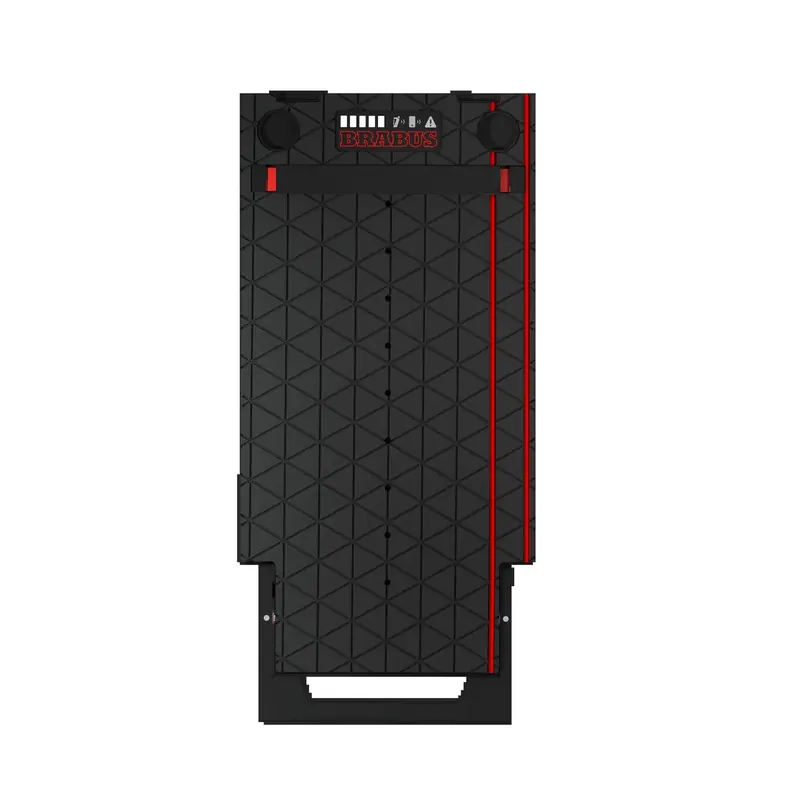
| Jetboard | RAVIK Explore, RAVIK Adventure, RAVIK Ultimate, più un'edizione limitata BRABUS |
| RAVIK Explore | 21 kg, 121 litri, 11 kW, fino a 40 km/h, fino a 60 minuti, EUR 9.990 IVA esclusa |
| RAVIK Adventure | 23 kg, 71 litri, fino a 50 km/h, fino a 45 minuti, EUR 13.990 IVA esclusa |
| RAVIK Ultimate | 16 kg di composito in carbonio, 51 litri, fino a 55 km/h, fino a 35 minuti, EUR 15.990 IVA esclusa |
| eFoil | VINGA Carve a EUR 11.990 IVA esclusa, con varianti Adventure e Ultimate |
| Batterie | Flex Battery LR 4 a EUR 2.990 e XR 4 a EUR 4.990, entrambe IVA esclusa |
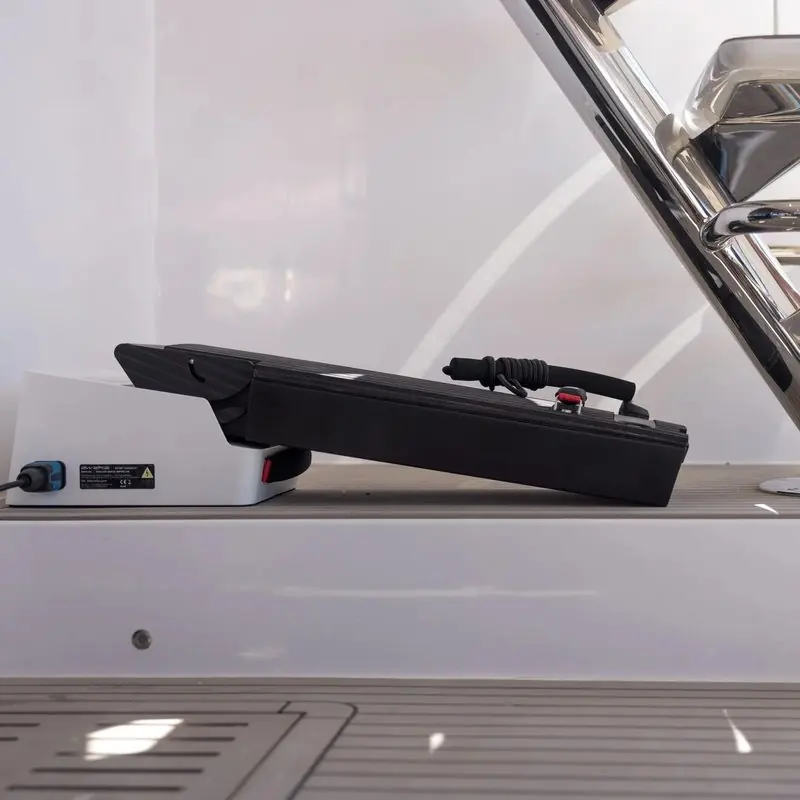
| Flex Battery XR 4 | 18,5 kg, circa un'ora di utilizzo, impermeabile fino a 10 metri, 5,5 kg più leggera del pacco che ha sostituito |
| Garanzia | due anni su tavole e batterie |
| Compatibilità incrociata | la stessa batteria Flex 4 e lo stesso radiocomando fanno funzionare sia le jetboard sia gli eFoil |
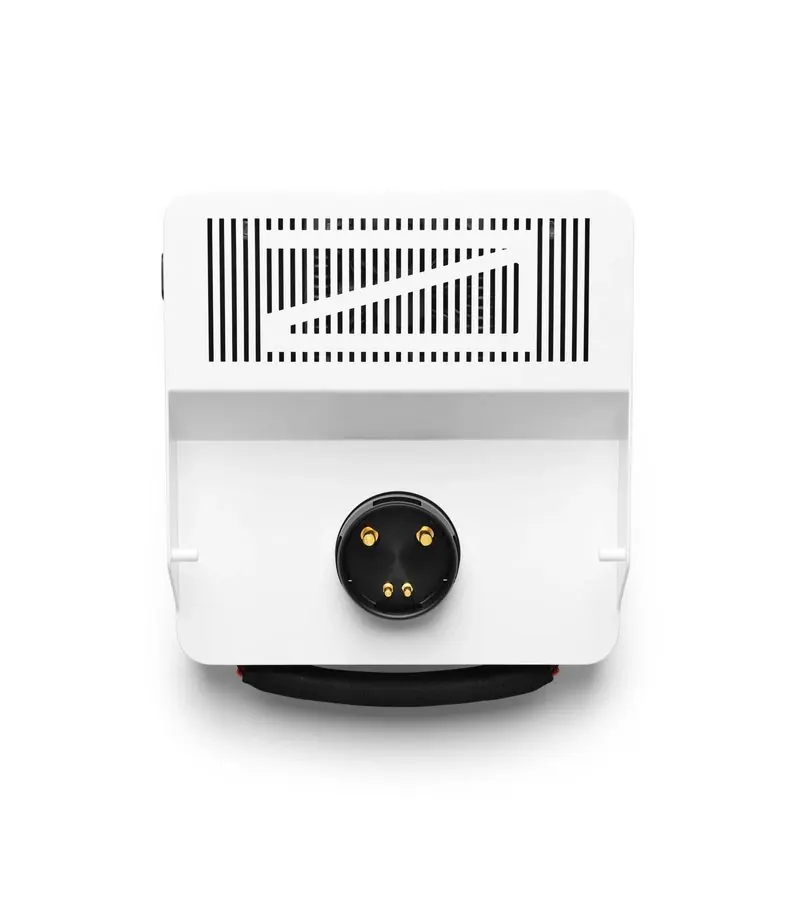
| Charge time | Awake publishes none on its own battery or charger pages. A dealer listing read in July 2026 gives the Flex Battery Charger at two hours or less, against about 60 minutes of riding on an XR 4 |
| Flex Battery Charger | USD 1,390 net on Awake's own United States store, July 2026. Awake sells only one charger and describes it as a speed charger |
| Flag reach | Part A Chapter 14 of the Red Ensign Group Yacht Code covers the United Kingdom, the Cayman Islands, Gibraltar, the Isle of Man and the other British Overseas Territories and Crown Dependencies |
| Marshall Islands | the 2026 edition of Yacht Code MI-103, effective 1 January 2026, adds specific rules for spaces used to store or charge lithium-ion powered toys and tenders |
| Malta | a Transport Malta Commercial Yachting Notice of 22 June 2022 and Information Notice 45 of 7 September 2022, written as strong recommendation, with the Commercial Yacht Code 2025 Revision 1 as the surveyed document |
| IMO | no mandatory instrument covering portable lithium battery powered craft aboard yachts as of July 2026. Class: DNV's Battery (Safety) notation triggers only above 50 kWh aggregate, and Lloyd's Register LR-GN-052 of 10 June 2025 is advisory |
| Charging locker | no marine manufacturer publishes a price. EN 14470-1 Type 90 industrial cabinets listed at EUR 3,270 net (asecos ION-CHARGE 90) and GBP 4,571.04 net (asecos ION-CORE-90), both July 2026, neither UK marine type approved |
Un secondo tentativo sulla stessa idea
Philip Werner ha costruito la sua prima tavola da surf elettrica nel 2012 e nel 2013 ha avviato un'azienda attorno a quell'idea. Non è diventata quello che voleva. Nel 2017 ha fondato Awake con Daniel Aronsson e Mikael Kajbring per costruire jetboard elettriche come si deve, ed è il secondo tentativo quello che è arrivato sugli yacht. La linea di eFoil, VINGA, è seguita nella primavera del 2022 sulla stessa architettura di batteria e radiocomando.
Awake parla insolitamente poco di sé. L'azienda descrive le proprie tavole come progettate e sviluppate in Scandinavia e sul proprio sito non mette molti dettagli societari, cosa che vale la pena sapere prima che un armatore ci faccia affidamento per l'assistenza in un mercato lontano. Quello che pubblica è una specifica chiara per ogni tavola e ogni batteria, che è più di quanto riescano a fare diversi concorrenti.
Le jetboard RAVIK
Tre tavole condividono un motore da 11 kW e differiscono per carena e volume. La Explore è la tavola per principianti a 21 kg e 121 litri, con carena a doppio canale, velocità massima di 40 km/h e fino a un'ora di utilizzo, a EUR 9.990 prima dell'IVA. La Adventure scende a 71 litri su una carena a V, pesa 23 kg, arriva a 50 km/h ed è a listino a EUR 13.990. La Ultimate è la tavola in composito di carbonio da 16 kg e 51 litri, buona per 55 km/h.
La Ultimate costa EUR 15.990 prima dell'IVA e compra 35 minuti di utilizzo, che è il compromesso che tutta la gamma rende visibile. Più velocità e meno volume significano meno tempo in acqua. C'è anche una BRABUS x Awake Shadow Explore a EUR 15.900, edizione limitata costruita con la casa di elaborazioni tedesca che produce anche i tender Brabus Marine. È la carena della Explore con un altro vestito.
Il prezzo della tavola è metà della storia e l'altra metà è la batteria.
Flex 4, e che cosa limita davvero una sessione
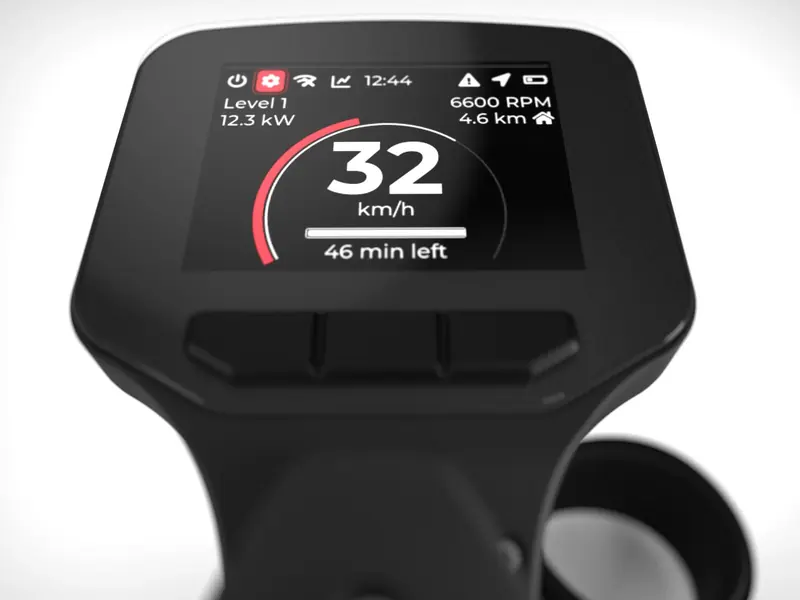
Ogni tavola attuale usa il sistema Flex 4, un pacco modulare che si aggancia alla tavola senza attrezzi e si accoppia da solo con il radiocomando HC 4. La Flex Battery LR 4 è a listino a EUR 2.990 prima dell'IVA e la più grande XR 4 a EUR 4.990. La XR 4 pesa 18,5 kg, dà circa un'ora di utilizzo, è dichiarata impermeabile fino a 10 metri ed è 5,5 kg più leggera del pacco che ha sostituito.
Il dettaglio importante per uno yacht è che una batteria è una sessione. La ricarica non è abbastanza rapida da far girare un solo pacco tra un ospite e l'altro, quindi una tavola che deve essere disponibile tutto il giorno ne vuole due o tre. A EUR 4.990 l'una prima dell'IVA, le batterie possono costare quanto la tavola. Awake vende batterie e radiocomandi come articoli separati sul proprio negozio, quindi un armatore dovrebbe stabilire esattamente che cosa copra un prezzo quotato prima di firmare.
VINGA, il lato eFoil
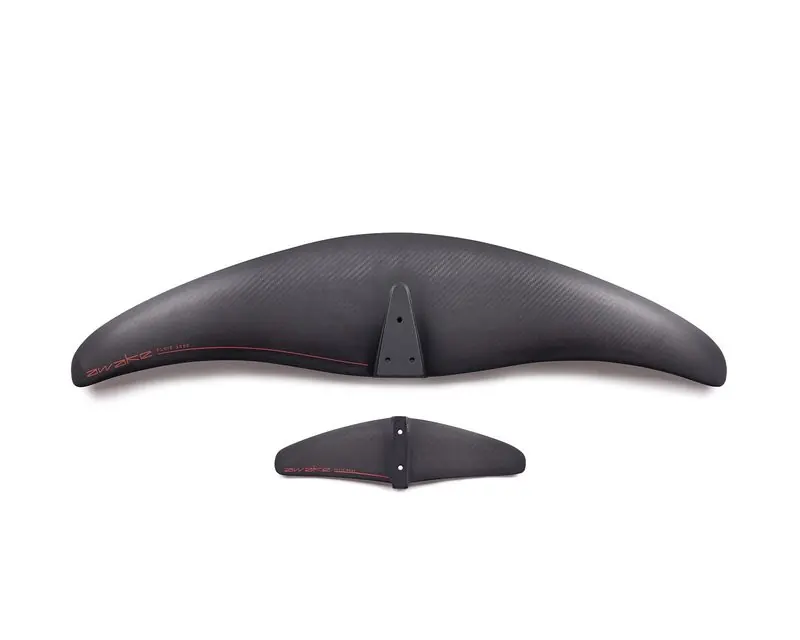
VINGA è la risposta di Awake a Lift e Fliteboard, lanciata nel 2022 e costruita per funzionare con la stessa batteria Flex e lo stesso radiocomando delle jetboard. La Carve è la tavola intermedia a EUR 11.990 prima dell'IVA, con le varianti Adventure e Ultimate sopra e sotto per la crociera e per le prestazioni. Il sistema Click-to-Ride aggancia tutto l'insieme senza attrezzi.
Condividere la batteria tra le due linee di prodotto è l'argomento più forte per comprare Awake. Uno yacht che porta due jetboard RAVIK e un eFoil VINGA ha bisogno di un solo tipo di pacco, di un solo caricatore e di un solo armadio di ricarica, il che semplifica la parte del possesso di un water toy che dà più problemi. Di contro, il VINGA è un eFoil più recente e meno collaudato delle tavole con cui compete.
Come si usa, e dove si ferma
Una jetboard è più facile di un foil da iniziare e più difficile da padroneggiare. Il rider si sdraia sulla tavola, sale in ginocchio sotto potenza e si alza quando la tavola è in planata, e il gas è un grilletto in una mano. La Explore è davvero indulgente, ed è per questo che Awake la posiziona per gli ospiti senza istruttore e con supervisione minima. La Ultimate a 51 litri non regge un adulto da ferma e pretende un rider capace.
Le velocità massime tra 40 e 55 km/h sono reali ma l'andatura di crociera utile sta ben sotto. L'onda corta punisce una jetboard più di quanto punisca un foil, perché la carena resta in contatto con la superficie. In un ancoraggio affollato di agosto l'acqua di solito è buona solo presto. Le autonomie dichiarate tra 35 e 60 minuti valgono per un rider leggero in buone condizioni, e un rider pesante a tutto gas ne vedrà sensibilmente meno.
Portarla a bordo e caricarla a norma
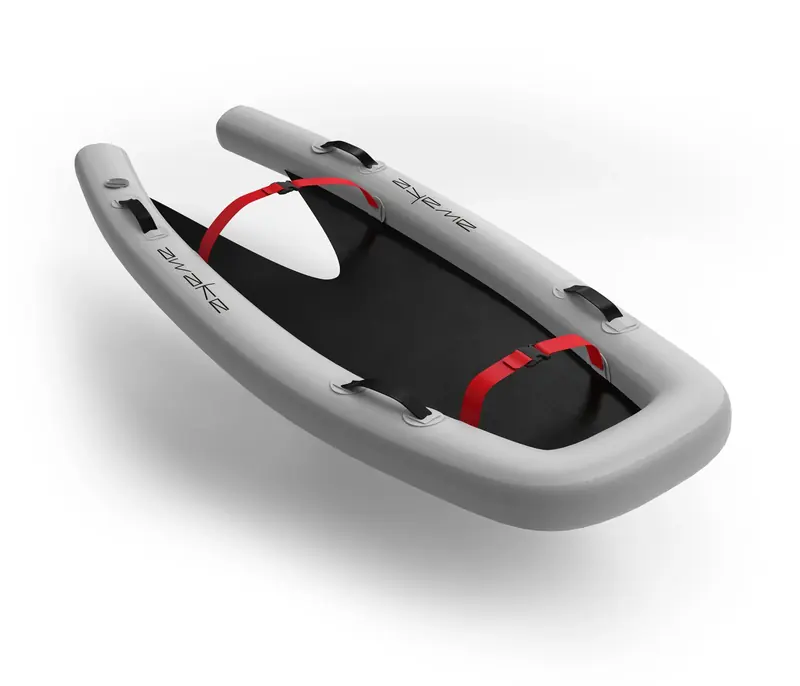
Le tavole sono la parte facile. Tra 16 e 23 kg una RAVIK è un trasporto per una persona sola e vuole una rastrelliera a parete o un gavone di circa due metri, senza gru, gruetta o piani di sollevamento. La batteria Flex esce e va a un punto di ricarica, ed è lì che comincia la complicazione. Un pacco da 18,5 kg non è una cosa che un ospite porta su per una passerella.
Il lato ricarica è regolamentato. La Maritime and Coastguard Agency britannica ha pubblicato la MGN 681 (M) Amendment 1 il 19 dicembre 2025, che copre sicurezza antincendio, stoccaggio e ricarica delle piccole unità elettriche a bordo di yacht sotto bandiere del Red Ensign Group, con stivaggio in armadio dedicato obbligatorio per le batterie di scorta sopra i 100 Wh e omologazione britannica obbligatoria per i nuovi contenitori di ricarica dal 1 gennaio 2027. I pacchi Awake stanno ben oltre quella soglia. La formazione dell'equipaggio sulla fuga termica fa ormai parte delle aspettative.
Quanto costa, e il numero sotto al titolo
I prezzi pubblicati escludono l'IVA, che nella maggior parte dei mercati europei aggiunge un quinto o più alla cifra consegnata. Una specifica realistica per uno yacht è una tavola, due batterie e un caricatore, e sulla Adventure si arriva vicino a EUR 24.000 prima delle tasse. La Ultimate con due pacchi XR 4 sale ancora. Sono numeri piccoli rispetto a uno yacht. Sono anche circa il doppio di quello che il solo prezzo della tavola lascia intendere.
I costi di esercizio sono modesti. L'elettricità per una carica è trascurabile rispetto all'assorbimento giornaliero di uno yacht, e non ci sono carburante, olio, anello di usura della girante nel senso in cui li ha una tavola a benzina, né manutenzione stagionale del motore. Il consumabile è la batteria, e i due anni di garanzia Awake sono il metro con cui un armatore deve misurare per quanto tempo aspettarsi che un pacco tenga le prestazioni dichiarate prima di doverlo sostituire.
Assistenza, ricambi e il legame con Brabus
Awake vende tramite rivenditori e tramite i fornitori specializzati di water toy che servono Mediterraneo e Caraibi, e in quasi tutte le aree di crociera abituali le tavole si possono noleggiare o far assistere attraverso quei canali. L'azienda è piccola, e la cosa taglia in due modi. Il contatto diretto è facile e gli aggiornamenti firmware arrivano dalla sua app, ma dietro non c'è nulla di equivalente a una rete ricambi Brunswick o BRP.
Il rapporto con BRABUS dà al marchio una seconda via verso il mondo degli yacht, perché Brabus Marine costruisce tender e day boat che già stanno accanto a yacht più grandi. Il caso difficile resta la batteria guasta. I pacchi al litio sciolti viaggiano in aereo come merce pericolosa UN3480, solo su aerei cargo e limitati al 30 per cento di stato di carica, quindi in alta stagione una sostituzione è questione di giorni nella migliore delle ipotesi.
Contro JetSurf, Radinn e i foil
Le tavole a benzina di JetSurf sono più leggere, più rapide da rifornire e meno care da far girare, e sono la scelta per chi vuole una macchina da corsa. Radinn, anch'essa svedese, compete direttamente con Awake sulle jetboard elettriche. I costruttori di eFoil, Lift e Fliteboard, si contendono lo stesso ospite e vincono sull'autonomia, perché un foil usa una frazione dell'energia per percorrere la stessa distanza.
Awake vince sulla combinazione di silenzio, nessun carburante a bordo e una sola famiglia di batterie per due tipi di tavola. Perde sull'autonomia contro un foil e sulla profondità dell'assistenza contro i grandi gruppi. In generale per usarne una non serve licenza, ma per quasi tutte le autorità portuali del Mediterraneo una tavola a motore è un'unità a motore, e le regole di distanza dalle spiagge si applicano. L'interruttore a laccio da polso va indossato tutte le volte.
Class, the IMO, and the price of the locker
Nothing above the flag adds a binding requirement. The International Maritime Organization has no mandatory instrument reaching a portable battery aboard a yacht as of July 2026, and its lithium work sits in the Maritime Safety Committee's review of alternative fuels and new technologies, where MSC 109 added swappable traction battery containers to the list under review and identified nineteen regulatory gaps and MSC 110, sitting from 18 to 27 June 2025, closed the review of regulatory barriers. DNV's Battery (Safety) notation becomes mandatory only above 50 kWh of aggregate installed capacity, which no locker of jetboard packs approaches. Lloyd's Register published LR-GN-052, Guidance Notes on Lithium-Ion Battery Powered Crafts and Vehicles carried on Yachts, on 10 June 2025, addressed to designers, builders and operators as advice rather than rule. ISO 23625:2025 governs lithium-ion batteries above 500 Wh installed in small craft, which catches an electric tender and not a board.
The locker itself is the line nobody prices. The marine active-suppression systems sold against MGN 681, the RACLAN boxes and the modular RAMBSS, and the passive ZARGES BatterySafe cases, were all quotation only in July 2026, with no manufacturer publishing a figure. What is priced publicly is the shore-side industrial cabinet built to EN 14470-1 Type 90, one of the standards the note names. In July 2026 a German supplier listed an asecos ION-CHARGE 90 with pull-out shelves at EUR 3,270 net of VAT, with an internal envelope of 470 by 452 by 582 mm and shelves rated at 25 kg, and a United Kingdom supplier listed the taller asecos ION-CORE-90 at GBP 4,571.04 net or GBP 5,485.25 gross. An 18.5 kg XR 4 pack is the heaviest of the mainstream toy batteries and still inside that 25 kg shelf rating, though two per shelf is not. Neither cabinet carries UK marine type approval, the thing that becomes mandatory on UK-registered yachts from 1 January 2027, and MCA Safety Bulletin 35, updated 15 November 2024, found that a container advertised as fully MGN 681 compliant was not able to comply fully and warned that no international standard governs these products.
Informazioni pratiche
| RAVIK Explore price | EUR 9,990 ex. VAT (about EUR 11,900 with 19% German VAT), per Awake's own EU store |
|---|---|
| RAVIK Adventure price | EUR 13,990 ex. VAT (about EUR 16,650 with VAT) |
| RAVIK Ultimate price | EUR 15,990 ex. VAT (about EUR 19,030 with VAT) |
| BRABUS x Awake SHADOW Explore (limited edition) | EUR 15,900 ex. VAT |
| VINGA Carve (eFoil) price | EUR 12,900 ex. VAT on Awake's own site; Ritz Marine's independent 2026 model guide puts the wider VINGA range (Carve through Adventure/Ultimate) at roughly EUR 11,900-14,990 |
| Extra or replacement battery | Flex Battery LR4 EUR 2,990 ex. VAT / Flex Battery XR4 EUR 4,990 ex. VAT on the EU store; the US store lists the same batteries at $3,990 and $5,990 ex. VAT respectively, so US pricing runs noticeably higher than the EUR list price even after currency conversion |
| Battery charger and accessories | Flex Battery Charger EUR 1,090 ex. VAT (EU) / $1,390 (US); Battery Backpack about $130; hand controllers EUR 590-690 ex. VAT |
| How to buy | Order directly at awakeboards.com or awakeboards.us (an account manager follows up after checkout), or through authorized dealers such as Luxury Surf (Fort Lauderdale), SHAKA Jetboards (Mystic, CT), and E-Surfer (Berlin); Awake and its retail partners offer free test rides at locations including Germany, Mallorca and Ibiza |
| Service and long-term reliability data | No public, standardized annual-service price could be confirmed from two independent sources, so no figure is given here; Awake publishes a global warranty policy covering material and workmanship defects, but buyers should confirm current service-plan cost with a dealer directly. No independent long-term reliability or durability track record is publicly available -- reviews so far are first-ride or short-term tests, not multi-season ownership reports |
| Comparable alternatives for price context | Fliteboard runs from about $6,995 for the entry Air up to roughly $14,000-20,000 for Ultra/designer editions; Lift Foils is priced around EUR 15,999 for a comparable set, positioning it near Awake's upper range; Radinn's X-Sport jetboard is the budget outlier at roughly EUR 6,000. This puts Awake in the same premium tier as Lift, above Fliteboard's entry-level options, and well above Radinn |
Richiedi un preventivo per Awake.
Indicaci il modello e dove deve arrivare. La redazione ottiene un'offerta scritta dal costruttore o da un rivenditore autorizzato, la confronta con i prezzi pubblicati in questa pagina e ti risponde via email. Senza impegno e senza costi.
- 01Un'offerta scrittaNella tua valuta, con IVA, consegna e tempi indicati, non una cifra da catalogo.
- 02Consegnato dove si trova lo yachtIn marina, in cantiere o al tuo indirizzo, con i documenti che una batteria al litio o un sollevamento con gru richiedono.
- 03IndipendenteYotters non è legato a nessun rivenditore, quindi l'offerta viene confrontata prima di arrivarti.
Cosa riferiscono armatori ed equipaggi
First-hand test found the entry jetboard genuinely easy to learn
Micah Toll tested the RAVIK 3, RAVIK S, and VINGA for Electrek and got up and riding the RAVIK 3 within his first attempts, calling it noticeably more beginner-friendly and stable than other electric surfboards he had tried. He struggled far more on the narrower RAVIK S and could not get up on the VINGA eFoil even after about 30 minutes, showing the learning curve rises sharply across Awake's own range.
Micah Toll, ElectrekRepeat industry tester rates the VINGA a clear step up
Mike Zed, who runs Jetsurfing Nation and had previously tested Awake's RAVIK ONE, RAVIK 3, and RAVIK S, reviewed the VINGA and concluded 'we have a winner here' and said he was excited to see Awake enter the eFoil category, though he gave no detailed breakdown of flaws in that particular piece.
Mike Zed, Jetsurfing NationHands-on European reviewer confirms strong high-speed handling but shorter real-world range than spec
E-Surfer's tester (roughly 90 kg) rode the RAVIK 3 and RAVIK S with the Flex XR battery and reported constant grip even on rough water and in radical curves and clean acceleration, but only got about 30 minutes of riding time with an aggressive style despite the XR battery being marketed for longer sessions. He also noted the board bag is sold separately and the board ships in a large wooden crate rather than a soft case.
Andreas, E-Surfer (Jetboard Experte)Review team flags weight and control layout as real day-to-day friction
Boat & Sail Magazine's reviewers (Christos Nicolaou, Bradley Axmith, and Torben Lonne) praised the RAVIK 3's speed and jump capability but called out the ~88 lb (with battery) board as cumbersome to carry on land, said the thumb throttle controller needs an adjustment period, and described the deck control layout as cluttered.
Boat & Sail Magazine
Cosa convince e cosa va valutato
Punti di forza
- Jet-drive propulsion holds grip in chop where prop-driven rivals struggleMultiple hands-on testers (E-Surfer, Electrek) specifically called out the linear jet drive for maintaining traction and control in rough water and tight turns, which is the main mechanical differentiator Awake cites against prop-based jetboard competitors.
- Genuinely accessible for a first-timer on the entry jetboardElectrek's Micah Toll, testing cold, got from prone to standing and riding on the RAVIK 3 within his first session and called it easier to learn than other electric surfboards he had tried, which supports Awake's beginner-friendly positioning for the Explore/RAVIK 3-class board specifically.
- Shared battery ecosystem across the whole lineAwake's own product pages show the RAVIK jetboards and VINGA eFoils draw on the same Flex battery family (LR4/XR4), so an owner who buys into both product lines is not maintaining two incompatible battery systems, a point also highlighted in Ritz Marine's 2026 brand comparison as a structural advantage over single-category rivals.
Da valutare
- Price puts it well outside mainstream watersports spendEven the cheapest current model, the RAVIK Explore, lists at EUR 9,990 ex. VAT (about EUR 11,900 with German VAT) on Awake's own site, and the top RAVIK Ultimate and VINGA Adventure/Ultimate variants run well into the EUR 15,000-20,000 range with an XR battery. Electrek's Toll called cost a bigger barrier to entry than the riding skill itself, and GearJunkie's write-up said the high price caters to a slim, exclusive market.
- Heavy and awkward to move around on landBoat & Sail Magazine measured the RAVIK 3 with battery at roughly 88 lb and called it cumbersome to carry; forum discussion on the E-Surfer community forum flagged board weight (cited around 35 kg for an early model) as a recurring complaint, with posters wanting something closer to 25 kg.
- Top-performance model trades away range and beginner usabilityRitz Marine's 2026 model comparison notes the RAVIK Ultimate is rated for only up to 35 minutes of ride time on its standard battery and explicitly warns its low-volume hull makes it less stable at slow speeds and harder to mount from the water -- the fastest board in the range is also the least forgiving and shortest-legged one.
- eFoiling remains genuinely hard even on Awake's hardwareElectrek's Toll, who succeeded on the RAVIK jetboard the same day, could not get up on the VINGA eFoil even after about 30 minutes of attempts, illustrating that Awake's engineering does not remove the underlying difficulty of learning to foil, regardless of brand polish.
A chi si rivolge: Gli armatori che vogliono una tavola veloce senza benzina a bordo e senza motore da mantenere, e che sono disposti a comprare subito la seconda e la terza batteria.