Fliteboard
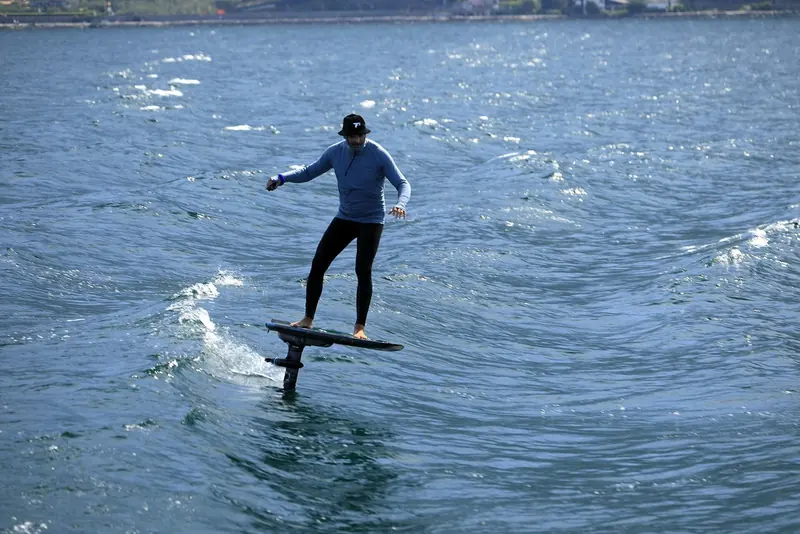
| Categoria | tavole elettriche a foil, note come eFoil |
|---|---|
| Fondata | 2016, Byron Bay, Nuovo Galles del Sud, da David Trewern |
| Proprietà | Brunswick Corporation da settembre 2023, gestita dentro Mercury Marine |
| Guida | David Trewern è rimasto fondatore e amministratore delegato dopo la cessione |
| Operatività | quartier generale a Byron Bay con basi nei Paesi Bassi e negli Stati Uniti |
| Rete | più di 330 rivenditori Flite e Fliteschool nel mondo |
| Gamma attuale | Series 6, annunciata il 18 gennaio 2026, sette modelli |
| Modello d'ingresso | ICON, 100 litri, 5 ft 8 in, da USD 10.999 |
| Batterie | Flitecell Nano 806 Wh, Sport 1,6 kWh, Explore 2,1 kWh |
| Autonomia | fino a 45 minuti con la Nano, 90 minuti con la Sport, 2,5 ore con la Explore |
| Propulsione | Flite Jet 2 con girante completamente schermata, oppure Flite Prop per i rider più pesanti |
| Velocità | le prove dei rivenditori registrano 40 km/h per un rider di 80 kg sull'ala Flyer |
| Fast charger, 25 A, USD 1,210 July 2026: Nano in 50 minutes, Sport in 1 hour 15 minutes, Explore in 1 hour 45 minutes | |
| Slow charger, 6 A, USD 260 July 2026 | Nano under 3.5 hours, Sport under 6 hours, Explore under 9 hours |
| Flag reach | Part A Chapter 14 of the Red Ensign Group Yacht Code covers the United Kingdom, the Cayman Islands, Gibraltar, the Isle of Man and the other British Overseas Territories and Crown Dependencies |
| Marshall Islands | the 2026 edition of Yacht Code MI-103, effective 1 January 2026, adds specific rules for spaces used to store or charge lithium-ion powered toys and tenders |
| Malta | a Transport Malta Commercial Yachting Notice of 22 June 2022 and Information Notice 45 of 7 September 2022, written as strong recommendation, with the Commercial Yacht Code 2025 Revision 1 as the surveyed document |
| IMO | no mandatory instrument covering portable lithium battery powered craft aboard yachts as of July 2026. Class: DNV's Battery (Safety) notation triggers only above 50 kWh aggregate, and Lloyd's Register LR-GN-052 of 10 June 2025 is advisory |
| Charging locker | no marine manufacturer publishes a price. EN 14470-1 Type 90 industrial cabinets listed at EUR 3,270 net (asecos ION-CHARGE 90) and GBP 4,571.04 net (asecos ION-CORE-90), both July 2026, neither UK marine type approved |
Una giornata senza vento a Byron Bay
David Trewern, imprenditore seriale ed ex detentore di un record mondiale di kitesurf, stava aspettando che finisse una giornata di bonaccia a un evento di kitefoil nel 2016 quando si è chiesto che cosa servisse per volare su un foil senza vento. Ha abbozzato la risposta a casa, a Belongil Beach, e ha fatto volare un prototipo nello stesso anno. Il video di un primo vero passaggio, girato a Belongil a settembre 2017, ha viaggiato abbastanza da creare una lista d'attesa prima che il prodotto esistesse. Il primo dipendente è stato assunto alla fine di quell'anno.
Quello che è seguito è stato insolitamente rapido per un'azienda nautica. Fliteboard ha raccolto un round di serie B guidato da Victor Smorgon Partners con investitori tra cui il golfista Adam Scott, ha costruito una rete di rivenditori e scuole in Europa e Nord America e ha depositato più di cinquanta brevetti su propulsione e sicurezza. Le tavole si progettano a Byron Bay. L'azienda oggi ha operazioni nei Paesi Bassi e negli Stati Uniti accanto alla base australiana.
Brunswick, e come leggerla da armatore
Brunswick Corporation ha comprato Fliteboard a settembre 2023 e l'ha collocata dentro Mercury Marine, la sua attività di motori fuoribordo. Trewern è rimasto come fondatore e amministratore delegato. Per un acquirente la cosa conta più di quanto di solito contino le notizie societarie, perché Brunswick è il più grande gruppo nautico da diporto al mondo e la sua infrastruttura di rivenditori e ricambi è esattamente quello che di solito manca a un marchio di water toy.
L'effetto pratico è su garanzia e ricambi. Una tavola venduta tramite un rivenditore collegato a Brunswick sta dentro una catena di fornitura costruita per i motori, il che significa che la disponibilità dei pezzi si comporta più come un prodotto nautico che come un prodotto da surf. Significa anche che il marchio è ora soggetto alle priorità di una società americana quotata. Dopo la cessione Fliteboard ha continuato a rilasciare generazioni annuali, l'ultima delle quali è la Series 6 di gennaio 2026.
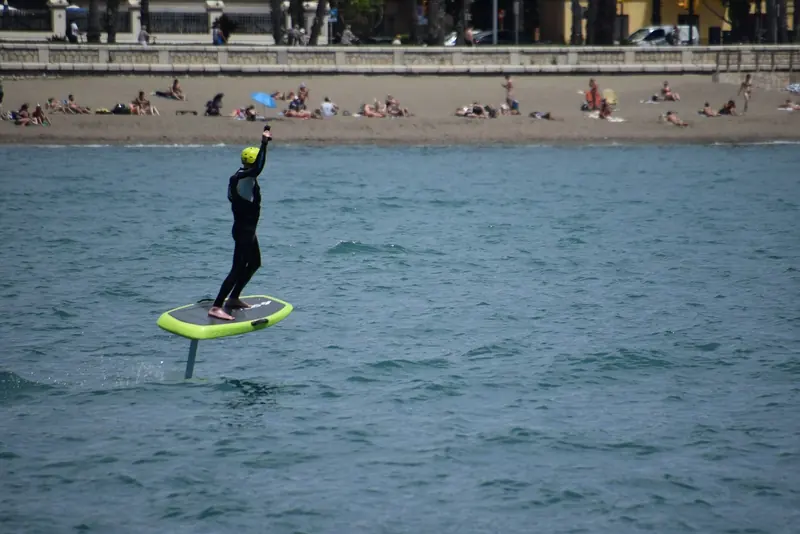
L'eFoil che ha smesso di essere una novità ed è diventato una riga nella specifica di consegna.
La gamma Series 6
La Series 6 è stata annunciata il 18 gennaio 2026 e si divide in sette modelli per tipo di rider. ICON è la tuttofare da 100 litri, 5 ft 8 in per 28 in, con prezzo da USD 10.999 ed è la tavola su cui deve stare chi parte da zero. PRO scende a 67 litri di carbonio per chi arriva dagli sport da tavola. ULTRA L3 è una tavola da onda da 49 litri con l'albero spostato 2 cm in avanti e un'unità di propulsione larga appena 46 mm. RACE è il modello per la velocità.
Sotto le tavole in carbonio stanno le gonfiabili e lo scooter. Flite AIR è da 110 litri e si sgonfia dentro una sacca, AIR PRO è da 80 litri e più vicina come sensazione alla PRO in carbonio, e il Flitescooter è una piattaforma da 237 litri di circa 38 kg con manubrio, per chi su una tavola non è mai salito in piedi. In cima c'è la collezione Flite x Marc Newson. A marzo 2026 un rivenditore maltese elencava le tavole Newson da circa EUR 18.595.
Batterie, e quanto dura davvero una sessione
Ogni tavola della Series 6 prende le stesse tre Flitecell. La Nano tiene 806 Wh, pesa 6,2 kg ed è dichiarata fino a 45 minuti. La Sport tiene 1,6 kWh, pesa 10,6 kg ed è la scelta standard fino a 90 minuti. La Explore tiene 2,1 kWh, pesa 14,5 kg ed è dichiarata fino a due ore e mezza. Quei numeri sono tetti misurati con un rider leggero su un'ala efficiente.
In pratica un ospite di 90 kg che impara su una ICON scarica un pacco Sport ben prima di un'ora, perché il tempo passato a cadere e a ripartire costa più del tempo passato a volare. È questa la cosa più utile da capire prima di comprare. Uno yacht che vuole due ospiti sul foil per tutto un pomeriggio ha bisogno di tre o quattro pacchi e di un posto dove ricaricarli a norma, e la decisione sulla batteria pesa sul costo dell'operazione più di quanto pesi la tavola.
Come si usa, e che cosa non farà
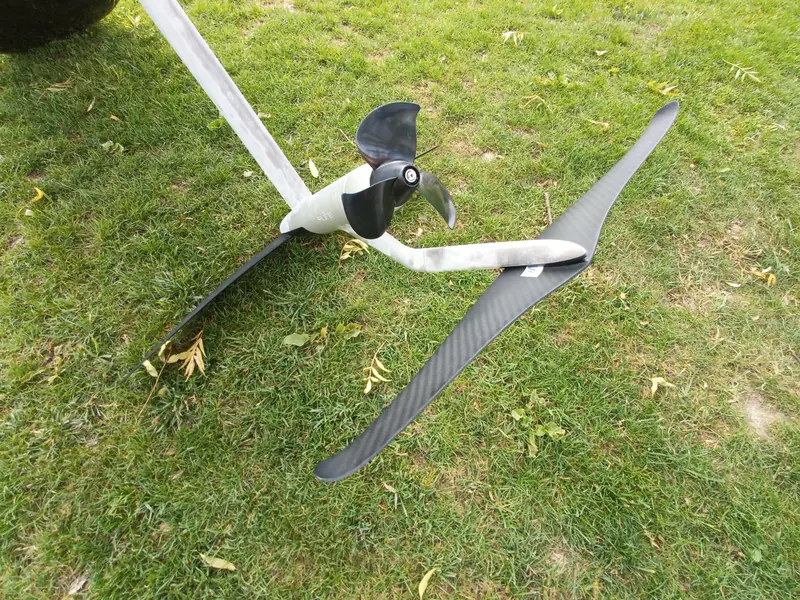
La propulsione è affidata al Flite Jet 2, una girante completamente schermata senza parti in movimento esposte, che è la ragione per cui molti yacht da charter preferiscono Fliteboard per gli ospiti che non hanno mai volato su un foil. Flite Prop è l'alternativa a elica aperta ed è offerta per i rider più pesanti che hanno bisogno di spinta in più. Le prove dei rivenditori mettono un rider di 80 kg a 40 km/h sull'ala Flyer e a 34 km/h sulla Cruiser. La velocità di crociera per un rider normale è vicina alla metà.
Nella maggior parte dei Paesi per usarne una non serve nessuna licenza, ma agli occhi di quasi tutte le autorità portuali e dei comuni costieri del Mediterraneo una tavola a motore è un'unità a motore, e i divieti in spiaggia sono reali. Casco e gilet protettivo sono standard in qualunque Fliteschool seria. Nulla rovina l'esperienza più in fretta dell'onda corta. In un ancoraggio affollato di agosto, entro tarda mattinata l'acqua di solito non vale più la pena.
Stivaggio, peso e dove è consentito ricaricare
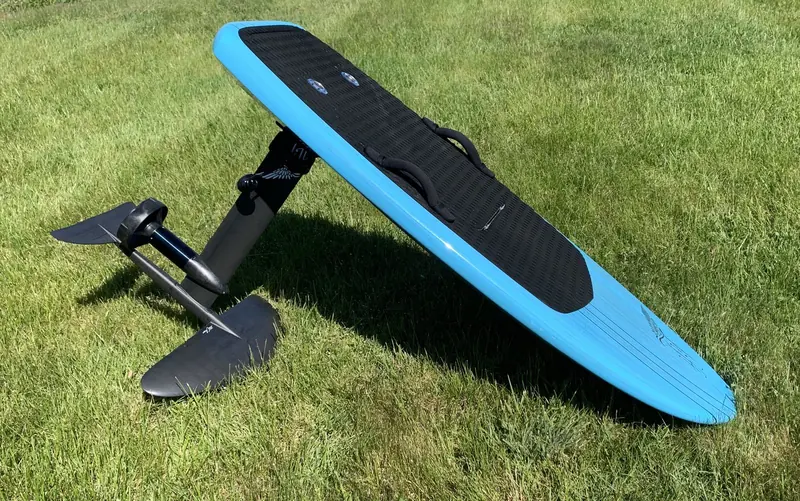
Una ICON con pacco Nano pesa circa 31 kg completa e si scompone in tavola, albero, propulsione, ali e batteria, quindi non serve nessuna gru né gruetta. I modelli gonfiabili AIR sono quelli da guardare se lo spazio in garage è davvero stretto, perché si sgonfiano dentro una sacca. Una tavola in carbonio richiede comunque circa 1,8 m di lunghezza libera di rastrelliera o gavone per la ICON.
Il lato ricarica è ormai regolamentato. La Maritime and Coastguard Agency britannica ha pubblicato la MGN 681 (M) Amendment 1 il 19 dicembre 2025, che copre sicurezza antincendio, stoccaggio e ricarica delle piccole unità elettriche a bordo di yacht sotto bandiere del Red Ensign Group. Le batterie di scorta sopra i 100 Wh richiedono uno stivaggio in armadio dedicato conforme a determinati standard europei, e dal 1 gennaio 2027 i nuovi contenitori di ricarica installati su yacht di bandiera britannica dovranno avere l'omologazione britannica. Ogni Flitecell sta ben oltre quella soglia.
Quanto costa comprarla e quanto tenerla
Il listino di marzo 2026 di un rivenditore maltese metteva una ICON o una PRO complete tra circa EUR 9.750 ed EUR 11.150 a seconda di batteria e propulsione, la ULTRA L3 attorno a EUR 12.999, la Flite AIR attorno a EUR 6.495 e la AIR PRO attorno a EUR 8.349. Il Flitescooter stava vicino a EUR 11.149. I prezzi statunitensi della stessa Fliteboard partono da USD 10.999 per una ICON. Le Flitecell di scorta sono un acquisto a quattro cifre l'una.
La batteria è il consumabile e il caricatore è il costo fisso. Al di là di quello, far girare un eFoil costa poco. L'elettricità per una carica completa è trascurabile rispetto al consumo giornaliero di uno yacht, e i pezzi di usura sono ali, guarnizioni e ferramenta dell'albero. Il guasto caro è una batteria allagata, che non è una riparazione. Risciacquare unità di propulsione e giunto dell'albero in acqua dolce dopo ogni uso è quello che lo evita quasi sempre.
Assistenza e ricambi nell'arco di una stagione
Più di 330 rivenditori e Fliteschool portano il marchio, e la densità in Europa è l'argomento più forte a favore di Fliteboard contro i suoi rivali. Ci sono punti vendita e scuole Flite lungo la Riviera francese e italiana, alle Baleari, in Croazia e in Grecia, oltre che ai Caraibi, il che significa che una tavola in genere si ripara o si sostituisce dentro la stessa tratta di crociera. La proprietà Brunswick ha aggiunto una seconda via ai ricambi attraverso la rete Mercury.
Il caso difficile resta la batteria. I pacchi al litio sciolti viaggiano in aereo come merce pericolosa UN3480, ammessi solo su aerei cargo e limitati al 30 per cento di stato di carica dalle regole IATA, quindi una Flitecell di ricambio ad agosto in Sardegna non compare dall'oggi al domani. Gli armatori che usano il toy sul serio portano una scorta dal primo giorno. Il ripiego realistico quando un pacco muore a metà stagione è il noleggio locale tramite un fornitore per yacht.
Fliteboard contro Lift e la fascia più economica
Lift Foils ha creato la categoria nel 2018 e resta il riferimento per la qualità costruttiva in carbonio, con un LIFT5 completo a USD 14.999. La risposta di Fliteboard è l'ampiezza di gamma. Vende più in basso, più in alto e più largo, e i modelli gonfiabili AIR e il Flitescooter raggiungono ospiti che su una tavola in carbonio non si alzerebbero mai. L'e-tron foil di Audi e Takuma stanno nella stessa fascia premium, e Waydoo taglia i prezzi di tutti.
Dove Fliteboard perde è l'esclusività. Il marchio è ormai abbastanza comune sugli yacht da charter da non segnalare più nulla, e i modelli d'ingresso si vedono costruiti su un prezzo. Dove vince è la seconda settimana di una stagione storta, quando a una tavola serve un pezzo e il rivenditore è a quaranta minuti. L'armatore che sceglie tra i due dovrebbe chiedere all'equipaggio dove sarà davvero lo yacht ad agosto.
Class, the IMO, and the price of the locker
Neither class nor the IMO adds anything binding on top of the flag. The International Maritime Organization has no mandatory instrument reaching a portable battery aboard a yacht as of July 2026. Its lithium work runs through the Maritime Safety Committee's review of alternative fuels and new technologies, where MSC 109 added swappable traction battery containers to the list under review and identified nineteen regulatory gaps, and MSC 110, sitting from 18 to 27 June 2025, closed the review of regulatory barriers. DNV's Battery (Safety) notation becomes mandatory only above 50 kWh of aggregate installed capacity, roughly twenty-four times a Flitecell Explore, so a rack of boards never triggers it. Lloyd's Register published LR-GN-052, Guidance Notes on Lithium-Ion Battery Powered Crafts and Vehicles carried on Yachts, on 10 June 2025, and it is advice rather than rule. ISO 23625:2025 covers lithium-ion batteries above 500 Wh installed in small craft, which catches an electric tender rather than a board carried aboard.
The certified locker is the one line in the whole exercise that nobody prices. The marine active-suppression systems sold against MGN 681, the RACLAN boxes and the modular RAMBSS, and the passive ZARGES BatterySafe cases, were all quotation only in July 2026. Published prices exist only for shore-side industrial cabinets built to EN 14470-1 Type 90, one of the standards the note names. In July 2026 a German supplier listed an asecos ION-CHARGE 90 with pull-out shelves at EUR 3,270 net of VAT, internal envelope 470 by 452 by 582 mm with shelves rated at 25 kg, and a United Kingdom supplier listed the taller asecos ION-CORE-90 at GBP 4,571.04 net or GBP 5,485.25 gross. A 14.5 kg Explore pack fits either. Neither carries UK marine type approval, which is what becomes mandatory on UK-registered yachts from 1 January 2027, and MCA Safety Bulletin 35, updated 15 November 2024, found that a container advertised as fully MGN 681 compliant could not comply fully and warned that no international standard governs these products at all. A quotation that claims compliance is worth reading against that bulletin.
Informazioni pratiche
| Entry price | ICON from USD 10,999; Flite AIR and AIR Pro inflatable boards from about USD 6,995, positioned as the value entry point against hardboard rivals starting nearer USD 9,695. |
|---|---|
| Top of range | Flite Ultra L2 at about USD 15,780 and the Flite x Marc Newson limited edition at USD 19,995, both July 2026 prices. |
| Ride time and charging | 45 minutes on the Nano battery up to 2.5 hours on the Explore pack; a 25 A fast charger (USD 1,210) refills the Explore in about 1 hour 45 minutes, versus under 9 hours on the standard 6 A charger. |
| Weight | Roughly 33 to 34 kg (about 74 lb) for a standard board and mast without battery, per independent testing, which is a two-person or crew lift for stowage and launch on most yachts. |
| Warranty and service | Sold and serviced through Fliteboard's own dealer and Fliteschool network of more than 330 locations, under Brunswick Corporation ownership since September 2023, which gives it wider service coverage than most eFoil brands still run independently. |
| What is not published | Fliteboard does not publish a standard warranty term or battery-cycle-life figure on its public pricing pages, so a buyer should get both in writing from the dealer before ordering rather than assuming a figure. |
Cosa riferiscono armatori ed equipaggi
Independent testers call the ride surprisingly approachable
Trialling a Fliteboard for Robb Report, Viju Mathew found it surprisingly stable and easy to manoeuvre, which is the opposite of what a first-time rider expects walking up to a hydrofoil board.
Robb Report (Viju Mathew)Noise, vibration and battery life beat testers' expectations
The Foiling Magazine's test centre found motor noise and vibration far better damped than rival boards, and both boards they tested still had more than half their charge left after a 90-minute session, ahead of the published ride-time figures.
The Foiling Magazine, test centreThe Pro board is a real step up in difficulty, not a marketing label
The same test centre described getting the Fliteboard Pro up and flying as a genuine challenge, closer to learning a small tow board than to the standard board's more forgiving pitch and roll, and said initial acceleration needs a rider to hold a fairly severe angle of attack that catches people used to unpowered foiling off guard.
The Foiling Magazine, test centre
Cosa convince e cosa va valutato
Punti di forza
- One of the fastest genuine learning curves in the categoryFliteboard's own guidance of most riders up and flying within about 20 minutes holds up against independent testing, and reviewers consistently rate the standard board's pitch and roll as forgiving enough for a first-time guest to progress in a single session.
- Backed by the largest dealer and service network in the categoryMore than 330 Flite dealers and Fliteschools worldwide, plus Brunswick Corporation's ownership since September 2023, means a board bought for a yacht based in the Mediterranean has a real chance of parts and qualified service wherever it actually cruises, which is not true of every eFoil brand.
Da valutare
- The Pro and race-tuned boards are not beginner equipmentTesters who found the standard board approachable still described the Fliteboard Pro as a genuine challenge to get flying, with a steeper angle of attack required on take-off, so a yacht outfitting its toy locker for mixed-ability guests needs at least one standard-range board alongside anything faster.
- It is heavy enough that guests will not be carrying it themselvesA standard board and mast run to roughly 33 to 34 kg (about 74 lb) before the battery, which is manageable with the grab handles but is a two-handed lift on and off a swim platform, so it is a crew task on most boats rather than a guest grabbing it solo from a rack.
A chi si rivolge: Gli armatori che vogliono ospiti di ogni livello in acqua e mettono una rete di rivenditori a portata di ancoraggio davanti all'ultimo cinque per cento di qualità costruttiva.