Garmin Marine
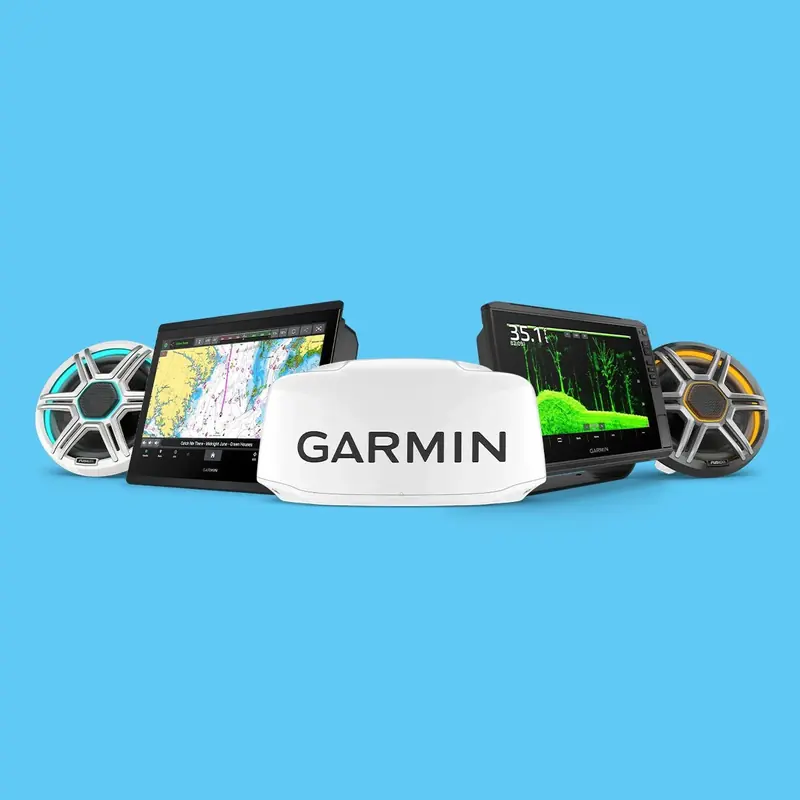
| Category | marine electronics spanning chartplotters (GPSMAP), radar (GMR Fantom), autopilot (GHP Reactor), sonar including Panoptix and LiveScope live imaging, marine audio (Fusion) and electronic charts (Navionics), all under one brand |
|---|---|
| Parent company | Garmin Ltd, founded in 1989 by Gary Burrell and Min Kao; its first product was a USD 2,500 panel-mount GPS receiver aimed squarely at the marine market, debuted at the IMTEC boat show in 1990 |
| Scale | the marine segment reported USD 1.18 billion in net sales for fiscal 2025, up 10 percent year on year and about 16 percent of Garmin's total revenue, per the company's own 10-K filing with the US Securities and Exchange Commission |
| Acquisitions that built the current range: Nexus Marine AB (sailing instrumentation, 2012), Fusion Electronics (marine audio, 2014) and Navionics (electronic charts, 2017); Navionics was itself founded in 1984 by Giuseppe Carnevali and Fosco Bianchetti as the maker of the first marine electronic chartplotter | |
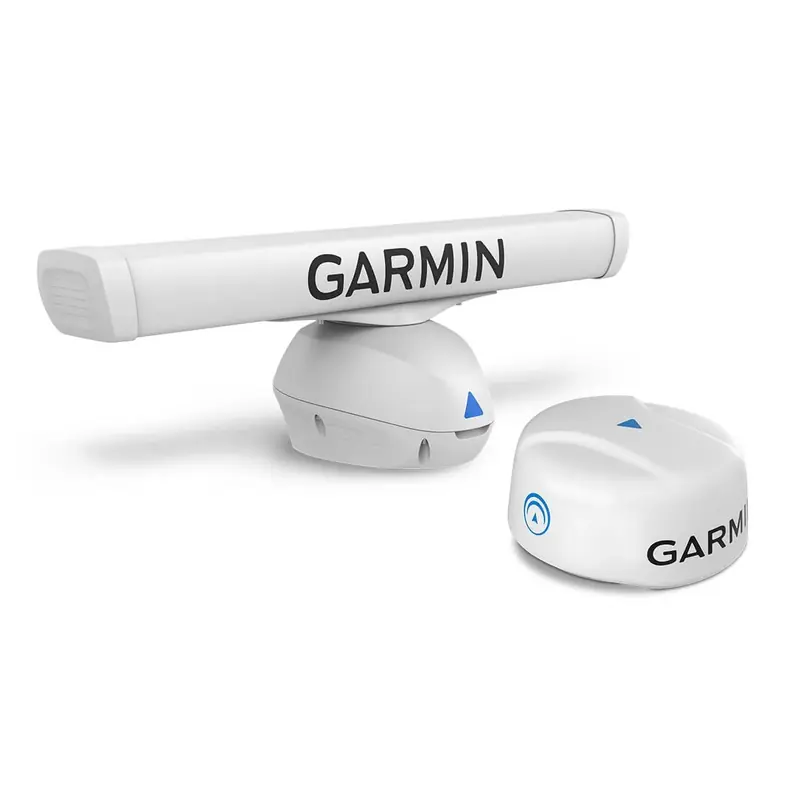
| Radar range | GMR Fantom solid-state dome radars run from the Fantom 18 (listed at USD 1,999.99) to the Fantom 24 (USD 2,799.99), both covering out to 48 nautical miles with Doppler-based MotionScope moving-target detection |
| Autopilot range | the GHP Reactor series lists from about USD 999.99 up to USD 6,796.99 depending on pump and drive type, across sail and power installations |
| Chart subscription | Garmin Navionics+ cartography costs about USD 49.99 a year for one region, rising to USD 124.99 a year for the premium Garmin Navionics Vision+ US East chart, a recurring cost on top of the hardware price |
| Known fault | large-format multifunction display screens in the 7600 and 7610/7612 series have a well-documented history of delamination, addressed through a dedicated Garmin service-alert replacement process rather than denied |
| Builder relationships | Grady-White is a confirmed example of a boatbuilder fitting a complete Garmin electronics package as standard equipment, matched to each model and scaled to boat size |
| Sonar | Garmin's Panoptix system, launched in 2015, was the first sonar to give anglers real-time live imaging, later extended into the LiveScope line used on bow-mounted trolling motors |
How Big Is Garmins Marine Electronics Business Really
Garmin Ltd's fiscal 2025 10-K, filed with the US Securities and Exchange Commission, breaks out marine segment net sales at USD 1,182,615 thousand against total company net sales of USD 7,245,519 thousand, putting marine at roughly 16 percent of everything Garmin sells across watches, automotive, aviation and outdoor products combined. For scale, that single marine segment alone reported more revenue than Garmin's entire auto OEM business, USD 664.7 million, in the same period.
Garmin has claimed the largest market share in marine navigation electronics for decades; a 1999 figure put it at roughly 50 percent of unit volume in the North American marine and recreational market, a dated number worth treating as historical context rather than a current claim, since Garmin's own more recent filings report revenue rather than unit share. Its principal named competitors across the category today are Raymarine, Furuno and Simrad, the last a Navico brand alongside Lowrance and B&G, with Humminbird, a Johnson Outdoors division, competing specifically in fishfinders.

Where Did Garmins Marine Business Actually Come From
Gary Burrell and Min Kao, both formerly of AlliedSignal's defence navigation work and Burrell before that of aviation radio maker King Radio, incorporated the company in 1989 under the name ProNav, changing it to Garmin, a blend of their own first names, in 1991 after a trademark dispute. Their first product, the GPS 100 panel-mount receiver, debuted at the IMTEC boat show in 1990 at USD 2,500, aimed directly at boaters as a replacement for paper charts, and its success set the marine market as Garmin's founding business rather than a later add-on.
The current product range was assembled through acquisition far more recently. Garmin bought Nexus Marine AB, a Swedish maker of sailing instrumentation, in September 2012; New Zealand's Fusion Electronics, maker of marine audio systems, in 2014; and Navionics, the Italian electronic-charting company, in October 2017. Navionics itself was founded in 1984 by Giuseppe Carnevali and Fosco Bianchetti, whose Geonav is credited as the first marine electronic chartplotter, and the company Garmin bought employed more than 350 people out of Viareggio, Italy at the time of the deal.
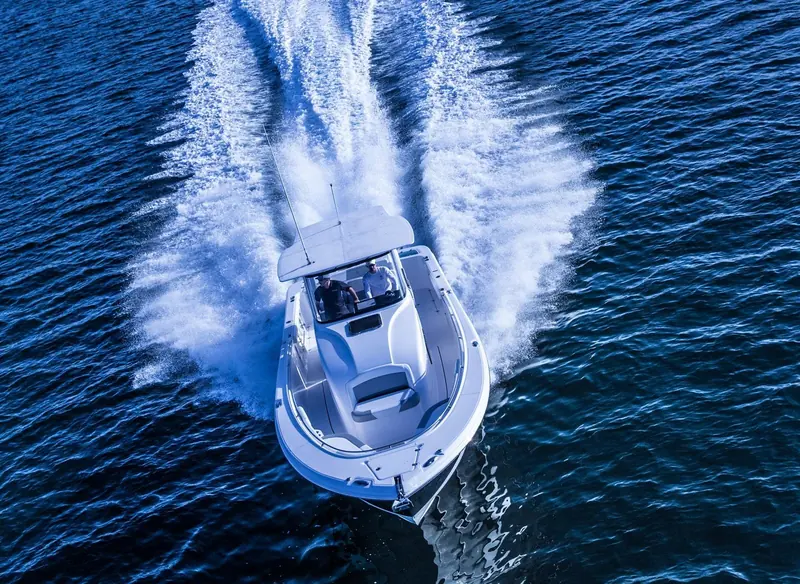
Garmin's own 10-K puts its marine segment at USD 1.18 billion in 2025; its cheapest chart subscription for that hardware costs another USD 49.99 every single year.
What Is Actually In Garmins Marine Range Today
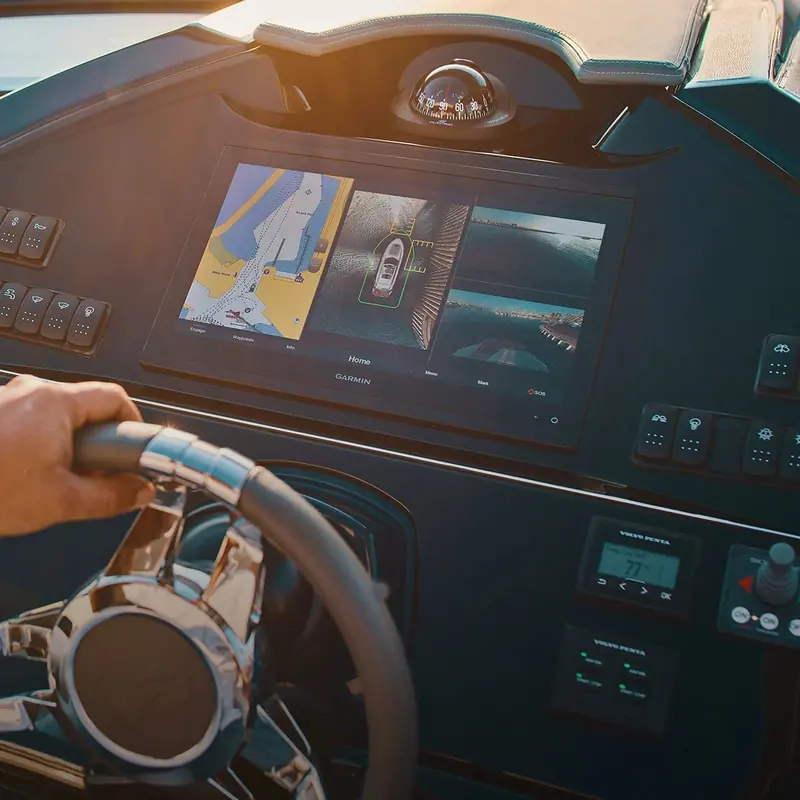
The GPSMAP line runs from smaller helm displays up to the 22-inch, 4K GPSMAP 9222, which Garmin states processes seven times faster than the previous generation and tracks GPS, GLONASS, Galileo and BeiDou satellites simultaneously at a 10 Hz update rate for steadier position tracking near masts and superstructure. GMR Fantom dome radars, the 18 and 24, are solid-state units using Doppler-shift MotionScope processing to flag moving targets distinctly from stationary ones, covering out to 48 nautical miles; larger open-array Fantom models extend that range further for bigger vessels.
The GHP Reactor autopilot series covers both hydraulic and mechanical drive types with a SmartPump option, and Panoptix, launched in 2015, was the first sonar system to give anglers real-time live imaging underwater rather than a historical trace, an idea Garmin later extended into LiveScope, a forward-looking live sonar typically mounted on a bow trolling motor. Fusion, Garmin's marine audio brand since the 2014 acquisition, sells everything from complete stereo and speaker kits to its premium Apollo and Signature Series 3i speaker lines, and the ActiveCaptain app layers crowd-sourced marina and hazard data plus chart updates onto any compatible chartplotter, while OneHelm, expanded to include nine additional partner companies in 2019, is built to let selected non-Garmin devices integrate with a Garmin display rather than requiring an all-Garmin boat.
Do Garmin Marine Charts Cost Extra Every Year
Chart pricing moved from a one-time purchase model to an annual subscription in recent years, a shift multiple boaters have flagged directly as a cost they did not expect when they bought their hardware, according to a pricing guide compiled by boating publication Wavve Boating. At USD 49.99 a year for basic Navionics+ coverage of one region, rising to USD 124.99 a year for the premium Vision+ chart covering the US East coast, the subscription is a recurring cost that sits entirely on top of whatever the chartplotter itself cost.
The billing mechanism has caused a specific, documented problem of its own. A Grady-White owner posting as Hookup1 on the Grady-White Owners Forum in April 2024 described trying to renew built-in charts through the ActiveCaptain App Store on an iPhone and being charged the full USD 149.99 list price rather than the roughly USD 74.99 renewal rate Garmin's own site offered, with Apple's in-app purchase system refusing a refund on two separate attempts; the poster's own advice, after eventually getting Garmin customer support to help resolve it, was to manage chart purchases and renewals directly through garmin.com rather than through the app, since Garmin's own sale pricing is not always passed through to the App Store.
How Reliable Is Garmin Marine Hardware, And What Actually Fails
Owners on The Hull Truth's marine electronics forum have reported delamination, a visible separation between the display's glass and its underlying layers, on 7612xsv, 7612 and 7608 units specifically, a fault multiple posters note is not unique to Garmin and has also affected older Furuno TZT displays. Marine electronics dealers quoted in the same discussions frame it as a real but proportionally rare issue once weighed against total units sold across Garmin, Furuno, Simrad, Lowrance and Humminbird combined.
Garmin's response is a named service-alert program: owners who contact the company directly with photographs of delamination have in a number of documented cases had affected units replaced free of charge, including at least one case where three delaminated 7612xsv-class displays were replaced and upgraded to newer 8612xsv, 8610xsv and 8610 units at no cost, even in some instances outside the original warranty period. That outcome is not universal; other posters in the same threads report less success once a unit is clearly out of warranty, so the honest summary is that Garmin generally stands behind the fault rather than that every owner gets a free replacement automatically.
Which Boatbuilders Actually Fit Garmin As Standard
Grady-White pairs every model with a complete Garmin electronics package as standard equipment, matched to the boat's size rather than sold as a generic kit, according to dealer and marine press descriptions of the line-up. This page could not independently confirm the same standard-fit relationship at other named builders sometimes assumed to run all-Garmin helms, so it reports only what is directly confirmed rather than extending the claim across the wider market.
OneHelm, Garmin's cross-brand integration platform, added nine additional marine companies to its roster in 2019, aimed at letting equipment from those partners talk to a Garmin chartplotter rather than forcing an owner to replace working non-Garmin gear. The real trade-off buyers should weigh is the reverse case: once a boat's chartplotter, autopilot, radar and transducer network are all Garmin, moving any single one of those components to a rival brand risks losing the integration between everything that stays, a genuine lock-in cost of choosing the most complete single-brand ecosystem in the category.
What Does Retrofitting Garmin Marine Electronics Actually Involve
One boat owner, writing on the SailNet Community forum, described a roughly two-year process to get AIS components working correctly with a Garmin chartplotter, a job that ultimately required help from a Garmin-certified technician to resolve compatibility issues that were not obvious from the installation manual alone. That is a single account rather than a typical timeline, but it is a useful caution against assuming any marine electronics integration, even within a single brand's own ecosystem, is a same-day job.
New-build integration is generally simpler, since a builder such as Grady-White wires the NMEA 2000 backbone, mounting points and power runs at the factory to match the specific Garmin package fitted. Retrofit jobs, particularly forward-looking sonar transducers of the LiveScope type mounted on a bow trolling motor, or a radar dome added to an existing arch or mast, involve real mechanical and wiring work a dealer or qualified installer typically handles rather than a straightforward owner task.
Where Do Real Owners Land On Garmin Marine Overall
Marine electronics dealers comparing brands describe Garmin's actual failure rate as extremely low relative to the volume it sells, and at least one Hull Truth thread is titled plainly Garmin Customer Service is the Best, a genuine, if single, data point for the positive side of the ledger rather than proof every owner has the same experience.
Set against that are two specific, named, dated problems this page could verify directly: the Hookup1 chart-renewal overcharge on the Grady-White Owners Forum in April 2024, resolved only after contacting Garmin support directly, and the documented run of 7600 and 7610/7612-series screen delamination cases on The Hull Truth, which Garmin has mostly, though not universally, resolved through free replacement. Buying the largest, most integrated brand in marine electronics means buying into that trade-off: broad compatibility and a strong service backstop, alongside a recurring chart subscription and a known, if generally well-handled, hardware fault on some of its own bigger displays.
Informazioni pratiche
| Chartplotter price range | From about USD 3,058.69 for a mid-size GPSMAP 7612-class display up to USD 10,099.99 for the 22-inch, 4K GPSMAP 9222, per current retail listings. |
|---|---|
| Radar price range | GMR Fantom dome radars list from USD 1,999.99 (Fantom 18) to USD 2,799.99 (Fantom 24); larger open-array Fantom models for bigger vessels are not priced in retail listings this page reviewed. |
| Autopilot price range | The GHP Reactor series lists from about USD 999.99 up to USD 6,796.99 depending on pump and drive type. |
| Chart subscription, recurring, not one-time | Garmin Navionics+ runs about USD 49.99 a year for one region; the premium Garmin Navionics Vision+ US East chart runs USD 124.99 a year, on top of whatever the chartplotter itself cost. |
| Builder-fit and OEM | Grady-White fits a complete Garmin package as standard equipment, scaled to each model; Garmin's OneHelm platform added nine additional partner companies in 2019 to integrate selected non-Garmin devices with a Garmin display. |
| What is NOT published | No total price for a complete factory-fit or retrofit package as actually installed; no independent, non-Garmin confirmation of current unit-level market share, only the company's own segment revenue reported in its 10-K. |
Richiedi un preventivo per Garmin Marine.
Indicaci il modello e dove deve arrivare. La redazione ottiene un'offerta scritta dal costruttore o da un rivenditore autorizzato, la confronta con i prezzi pubblicati in questa pagina e ti risponde via email. Senza impegno e senza costi.
- 01Un'offerta scrittaNella tua valuta, con IVA, consegna e tempi indicati, non una cifra da catalogo.
- 02Consegnato dove si trova lo yachtIn marina, in cantiere o al tuo indirizzo, con i documenti che una batteria al litio o un sollevamento con gru richiedono.
- 03IndipendenteYotters non è legato a nessun rivenditore, quindi l'offerta viene confrontata prima di arrivarti.
Cosa riferiscono armatori ed equipaggi
Grady-White fits a complete Garmin package as standard equipment
Grady-White pairs each model with a complete Garmin electronics package as standard, matched and scaled to the specific boat rather than sold as a generic aftermarket kit.
Grady-White Owners ForumMultiple owners report large-format MFD screen delamination
Owners of 7612xsv, 7612 and 7608 units reported visible delamination between the display glass and its underlying layers; Garmin's own service-alert process replaced and in some cases upgraded affected units, including one report of three delaminated 7612xsv-class displays replaced with newer 8612xsv, 8610xsv and 8610 units at no charge.
The Hull TruthA named owner was overcharged USD 75 renewing charts through the App Store
Posting as Hookup1 in April 2024, an owner described being charged the full USD 149.99 list price rather than the roughly USD 74.99 renewal rate when renewing built-in charts through the ActiveCaptain App Store, with Apple's payment system refusing a refund twice before Garmin's own customer support helped resolve it.
Hookup1 (Grady-White Owners Forum)A two-year AIS integration needed a certified technician to finish
One owner described a roughly two-year process getting third-party AIS components to work correctly with a Garmin chartplotter, ultimately resolved only with the help of a Garmin-certified technician.
SailNet Community
Cosa convince e cosa va valutato
Punti di forza
- One integrated ecosystem across every core systemGarmin's own chartplotter, radar, autopilot, sonar, audio and charts are built to work together on a single display, a genuine convenience against assembling a helm from five different brands that may not talk to each other cleanly.
- Real scale and a strong service backstopA USD 1.18 billion marine segment and confirmed builder relationships such as Grady-White's standard-fit package mean many boats arrive already wired for Garmin support, and the company's delamination service-alert program has replaced affected large-format displays in a number of documented cases.
- LiveScope and Panoptix are a genuine differentiatorGarmin's 2015 Panoptix launch was the first sonar to give anglers real-time live imaging rather than a historical trace, and the later LiveScope line built a specific, strong reputation in the bass and inshore fishing market that rivals have had to chase rather than lead.
- Garmin generally stands behind its known screen faultRather than disputing the delamination pattern on 7600 and 7610/7612-series displays, Garmin runs a named service-alert replacement process that has covered a number of cases even outside the original warranty period.
Da valutare
- A real, recurring subscription cost on top of the hardwareNavionics+ and Vision+ chart subscriptions run USD 49.99 to USD 124.99 a year depending on coverage, and billing through the ActiveCaptain App Store has produced at least one documented overcharge that Apple's own refund process would not resolve without Garmin stepping in directly.
- A specific, well-documented hardware faultScreen delamination on the 7600 and 7610/7612-series large-format displays is real and recurring enough that Garmin runs a dedicated replacement process for it, and outcomes for owners outside warranty are not universally as generous as the best-documented cases.
- No published price for a complete OEM or retrofit packageIndividual component prices are public, but the total cost of a factory-fit or retrofit package, as actually installed on a specific boat, is negotiated per builder or dealer rather than published anywhere.
- A largely closed, single-brand ecosystemOnce a boat's chartplotter, autopilot, radar and transducer network are all Garmin, replacing any single component with a rival brand risks losing the integration between everything that stays Garmin, a real lock-in cost of choosing the most complete single-brand system in the category.
A chi si rivolge: Buyers who want one brand's chartplotter, radar, autopilot, sonar and audio all talking to each other without hunting down third-party compatibility, and who are prepared to budget for an annual chart subscription and, on some older large-format displays, a known screen fault.