Raymarine
| Category | multifunction displays, radar, autopilot and sonar for yachts |
|---|---|
| Origins | Submarine Signal Company (1923) into Raytheon (1946); Autohelm autopilots founded separately by Derek Fawcett in 1974 as Nautech Limited |
| Independence | management buyout from Raytheon in January 2001, backed by private equity firm Hg; listed on the London Stock Exchange December 2004 |
| Ownership | administration in 2008, acquired by FLIR Systems May 2010; Teledyne Technologies acquired FLIR for about USD 8.2 billion including debt, closing 14 May 2021 |
| Headquarters | Fareham, Hampshire, UK |
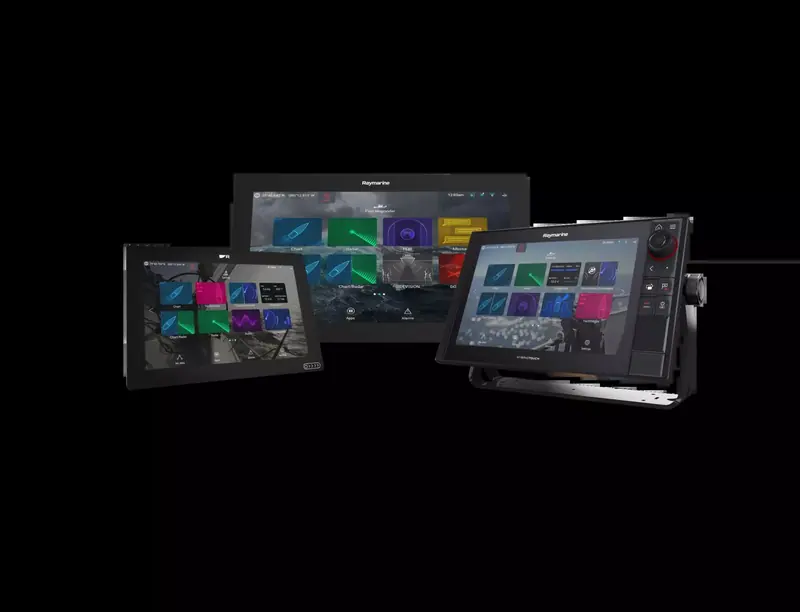
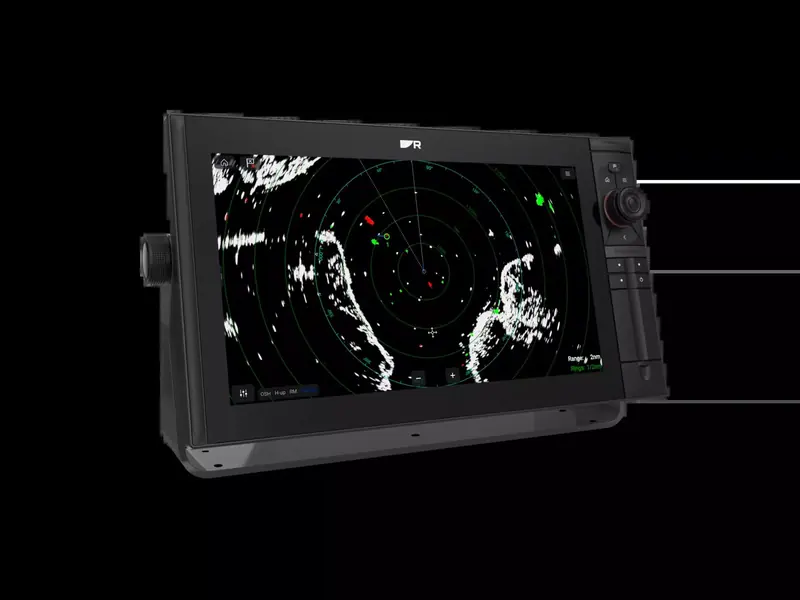
| Current MFD line | Axiom+ (7, 9, 12in), Axiom XL and Axiom 2 XL (16 to 24in glass-bridge), Axiom 2 Pro (9, 12, 16in), all on LightHouse 4 |
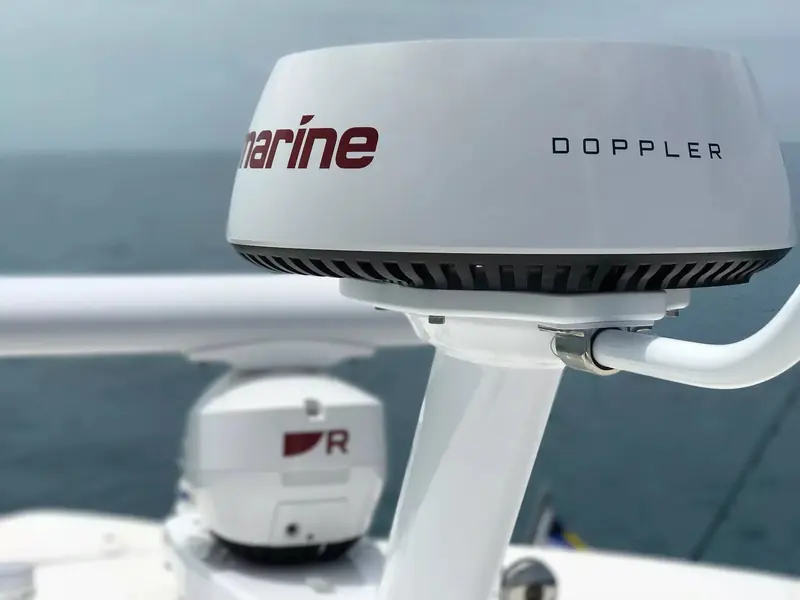
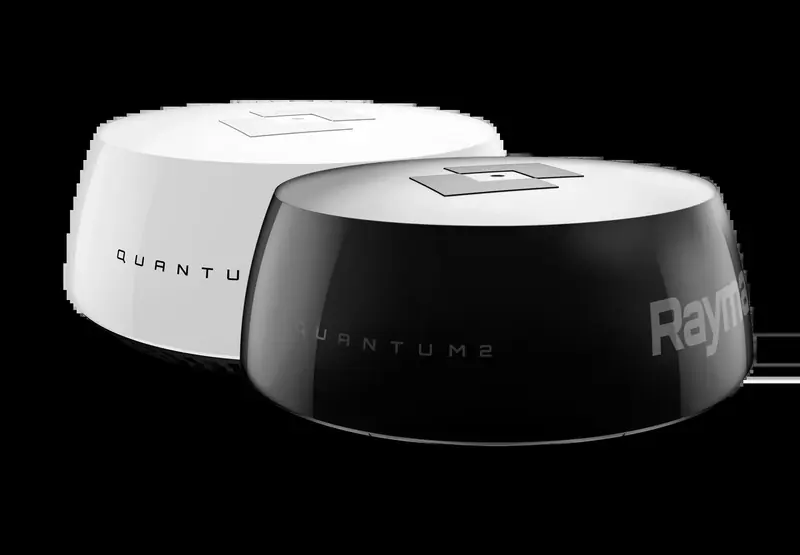
| Radar | Cyclone solid-state open array (55W to 72nm range, 110W Cyclone Pro to 96nm) and Quantum 2 radome (24nm, about 3.5 lb, WiFi-connected) |
| Autopilot | Evolution line, EV-1/EV-2 sensor cores with p70s/p70Rs control heads; per one app vendor's fleet telemetry, about 69 percent of sampled cruising-sailboat autopilots |
| Thermal integration | Teledyne FLIR M100/M200 cameras unlock ClearCruise IR Analytics, automatic non-water object detection, on quad-core Axiom displays |
| Pricing | Axiom+ 9in MFD about USD 1,400; Cyclone open array USD 6,999.99 to 9,749.99 depending on power and array length; Evolution EV-100/150/200/400 packages EUR 1,495 to 2,995 in Europe |
| Trustpilot's aggregated customer reviews of raymarine.com average 2.2 out of 5, with recurring complaints about repair turnaround and phone support | |
From Raytheon's marine radar to an independent company, twice sold
The radar and instrument side of Raymarine traces to 1923, when acoustics pioneer Reginald Fessenden worked with the Submarine Signal Company on an early commercial fathometer; Submarine Signal merged into Raytheon in 1946, forming a marine division that built radar, Loran C and later GPS and fishfinder products. The autopilot side began separately: Derek Fawcett, a mechanical engineer and sailor, founded Nautech Limited in 1974 to build a low-cost leisure autopilot under the Autohelm brand, and his team developed the SeaTalk instrument network protocol in 1989. Raytheon bought Nautech in 1990 for its European distribution, and the combined marine electronics business became independent in January 2001 through a management buyout backed by the private equity firm Hg, floating on the London Stock Exchange in December 2004.
The 2008 financial crisis pushed Raymarine into administration, and FLIR Systems acquired the company in May 2010, folding it into FLIR's brand family. A decade later, on 4 January 2021, Teledyne Technologies announced a deal to acquire FLIR Systems in cash and stock worth roughly USD 8.0 billion, closing 14 May 2021 at an aggregate value including assumed debt of about USD 8.2 billion. Raymarine now operates as Teledyne Raymarine inside Teledyne's Digital Imaging segment, alongside the Teledyne FLIR Marine thermal camera line, and in July 2026 Teledyne promoted Michelle Hildyard to General Manager of both brands together, based in Fareham. Panbo's Ben Stein, writing as the Teledyne deal was announced in January 2021, called Raymarine's prior research and development commitment serious and predicted Teledyne's lidar expertise could feed future collision-avoidance features, while flagging that FLIR had tried to sell Raymarine as a non-core asset before the pandemic paused that plan.
Axiom displays, Cyclone radar, Evolution autopilot: the range today
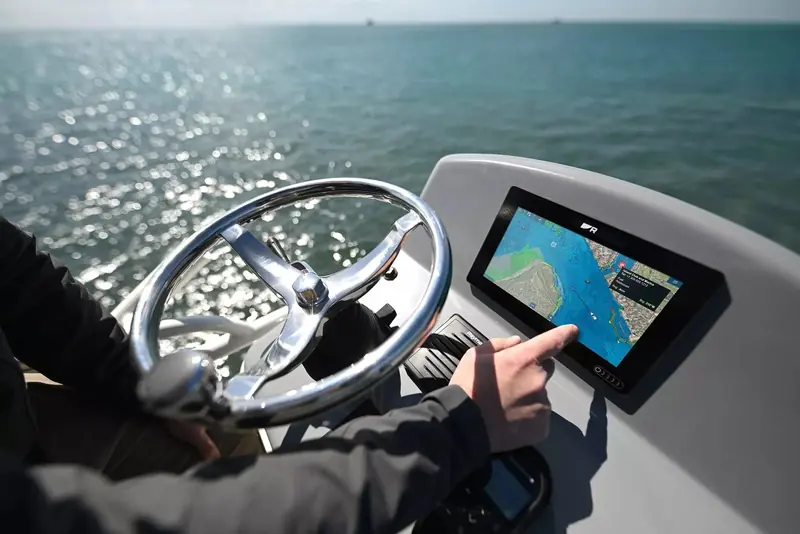
The Axiom+ family ships in 7, 9 and 12 inch screens; Axiom XL and the newer Axiom 2 XL cover glass-bridge installations at 16, 19, 22 and 24 inches with optically bonded IPS panels for bright-sun readability. Axiom 2 Pro, shown at the Progressive Miami International Boat Show, moved from four-core to six-core processors and comes in 9, 12 and 16 inch sizes with a built-in GPS. Every current Axiom model runs LightHouse 4. On radar, Cyclone is Raymarine's solid-state, non-magnetron open array: the 55W version with a 4 foot array is rated equivalent to a 6 kW magnetron set with range to 72 nautical miles, and the 110W Cyclone Pro with a 6 foot array claims 12 kW equivalence and 96 nautical miles. Quantum 2 is the lightweight, WiFi-connected radome aimed at sailboats, at about 3.5 lb and 24 nautical miles range, a real gap against Furuno's comparable DRS4D-NXT dome, which is specified to roughly 48 nautical miles with true Doppler ARPA tracking.
The Evolution autopilot line pairs an EV-1 or the more capable EV-2 sensor core with an ACU drive computer and a p70s or p70Rs control head, the Rs adding a rotary knob for one-handed course changes. RealVision 3D is the flagship sonar suite, combining CHIRP DownVision, CHIRP SideVision and a gyro-stabilised 3D mode from a single transducer. Thermal integration is a genuine point of difference: paired with sibling brand Teledyne FLIR's compact M100 or pan-and-tilt M200 cameras, a quad-core Axiom display unlocks ClearCruise IR Analytics, which scans the thermal feed for non-water objects, frames likely collision threats and triggers MFD alarms, a capability neither Garmin nor Furuno has an in-house thermal partner to match in the same integrated way. SeaTalkng is Raymarine's NMEA 2000 cabling implementation, colour-coded to prevent miswiring, and RayNet is its ruggedised waterproof Ethernet system for networking displays, sonar modules and cameras.
The autopilot is close to the default choice on a cruising sailboat. The radar dome is not the longest-range dome you can buy.
What a suite costs, from one screen to a full refit
Representative US and European prices, gathered from named retailers since Raymarine does not publish a uniform global list: an Axiom+ 9 inch display with no transducer or charts runs about USD 1,399.99. A Quantum 2 radome (Q24D) lists at USD 1,949.99 in the US and EUR 2,100.80 in Europe. Cyclone open array pricing spans USD 6,999.99 for the smallest 55W, 3 foot configuration to USD 9,749.99 for the 110W, 6 foot Cyclone Pro. Evolution autopilot control heads (p70s or p70Rs) run about USD 608.99 each, with sensor cores from USD 750.99 (EV-1) to USD 2,311.99 (EV-2); European packaged kits run EUR 1,495 for an EV-100 Sail through EUR 2,995 for an EV-400. A FLIR M100 thermal camera adds USD 2,495.
Chart and subscription costs are separate: LightHouse Charts start at USD 79 for a single region, with a North America bundle at USD 149.99 including a first year of LightHouse Premium, an aerial-imagery and points-of-interest service Raymarine values at USD 49.99 a year and which renews at USD 99.99. Installed system cost for a full suite is not published by Raymarine or any dealer body as a standard figure. Individual owner accounts on Trawler Forum describe installation labor running at roughly 150 percent of hardware cost in one case, about USD 7,000 in gear against USD 10,000 in installation, and a separate full two-display Raymarine upgrade costing about USD 15,000 all in; both are individual anecdotes rather than an audited average and should be read as illustrative rather than typical.
Against Garmin, Furuno and Simrad: strongest on autopilot, behind on radar range
The clearest quantified figure on autopilot market position comes from Orca, a sailing navigation app whose February 2026 blog post reported that among autopilot-equipped boats in its own user fleet, Raymarine accounted for 69 percent, Navico's B&G and Simrad combined for 21 percent and Garmin for 8 percent, with Raymarine's EV-series computers alone representing 40 percent of the sample. That is a single app vendor's self-reported telemetry rather than an audited industry study, but it is directionally consistent with decades of Autohelm and Nautech history in exactly this niche and with the volume of positive Evolution owner comments found on YBW Forum and Cruisers Forum.
On radar, the comparison runs the other way. Furuno's solid-state DRS4D-NXT dome is specified at roughly 48 nautical miles maximum range with dual simultaneous range rings and full ARPA target tracking using true Doppler processing, tracking up to 100 targets on some sets, against Raymarine's comparable Quantum 2 topping out at 24 nautical miles, a real, named, twice-the-range gap that reviewers consistently flag as the professional-grade benchmark for collision avoidance. Raymarine's counter-argument is weight and installation simplicity: Quantum 2 at about 3.5 lb with WiFi data and power lets an installer skip running cable up a mast, against the heavier wiring Furuno and Simrad's higher-power domes need. On software, a long-running YBW Forum thread comparing all four brands has posters consistently praising Garmin's interface as never needing a manual, while describing Furuno's NavNet TZtouch3 as the steepest learning curve of the group and Simrad and B&G, both under Navico, as sharing hardware with mainly sailing-specific software polish differentiating the two.
Fast hardware, software that lags behind it
Ben Ellison's original Axiom launch coverage on Panbo in February 2017 called the new quad-core hardware fast and capable but noted the displays shipped somewhat late without several significant features that were promised for a later software update, a pattern that recurred in later Raymarine coverage: forum threads on LightHouse 4 upgrade paths in 2024 and 2025 show the same dynamic, including a firmware version, v4.6.74, that Raymarine had to tell owners not to run after release. Practical Sailor's June 2025 chartplotter guide reviewed the Axiom 2 Pro S and called it perhaps the best-looking display of the group on graphics and menus, but quoted named marine electronics specialist Michael Garretson saying dealers pretty much only install or recommend Raymarine to customers who already have Raymarine radar or autopilots aboard, and relayed that several professionals in the trade told the publication Raymarine used to set the standard for marine electronics but is currently falling behind the competition with products carrying both hardware and software issues.
Forum sentiment splits by hardware era. Cruisers Forum's Axiom Pro issues thread and The Hull Truth both carry owner complaints about touchscreens becoming unresponsive when wet, addressed in newer units by a HydroTough coating, software updates that owners say sometimes have to be rolled back while a fix is prepared, and at least one report of a display switching off for no reason and losing GPS lock. Trustpilot's aggregated customer reviews of raymarine.com average 2.2 out of 5 stars across the reviews sampled, with recurring themes of slow repair turnaround, defective replacement units and limited phone support, a crowd-sourced rather than audited figure but notable for its volume and consistency with independent complaints found on PissedConsumer. Set against all of that, Evolution autopilot owners on the same forums are mostly positive on ordinary passage performance, smooth and accurate course-keeping, even where the same threads separately flag a comparatively high failure rate for Evolution drive units and, in at least one long discussion, blunt criticism of after-sale support.
Informazioni pratiche
| Representative prices | Axiom+ 9in MFD: about USD 1,399.99. Quantum 2 radome: USD 1,949.99 (US), EUR 2,100.80 (EU). Cyclone open array: USD 6,999.99 to 9,749.99 by power and array length. Evolution control head (p70s/p70Rs): about USD 608.99 each; EV-1 sensor core USD 750.99, EV-2 USD 2,311.99; European packaged kits EUR 1,495 to 2,995. FLIR M100 thermal camera: USD 2,495. |
|---|---|
| Charts and subscriptions | LightHouse Charts from USD 79 for a single region; a North America bundle at USD 149.99 includes a first year of LightHouse Premium (aerial imagery, points of interest), valued at USD 49.99 a year and renewing at USD 99.99. Third-party Navionics charts, a Garmin-owned product, are also supported. |
| Installed suite cost | Not published as a standard figure by Raymarine or any dealer body. Individual owner accounts: installation labor at roughly 150 percent of hardware cost in one case (about USD 7,000 in gear, USD 10,000 installation); a separate full two-display upgrade at about USD 15,000 all in. Both are anecdotes, not audited averages. |
| Real alternatives | Garmin Marine: most intuitive interface per repeated reviewer and forum consensus. Furuno: DRS4D-NXT dome radar to roughly 48nm with true Doppler ARPA tracking, against Raymarine's Quantum 2 at 24nm; steepest software learning curve of the group. Simrad/B&G (Navico Group): shared hardware, sailing-specific software polish on the B&G side. |
| Fit and installation constraints | ClearCruise IR Analytics (automatic thermal object detection) needs a quad-core Axiom display paired with a Teledyne FLIR M100 or M200 camera; non-Axiom or non-quad-core displays can show the thermal video feed over IP but without the analytics layer. |
| What is not published | No independently audited, cross-brand radar range test exists; all range figures are manufacturer spec sheets. No current, dateable confirmation of where Teledyne-era hardware is manufactured. No official market-share figures beyond one app vendor's self-reported fleet telemetry. |
Cosa riferiscono armatori ed equipaggi
Fast hardware, features that arrived late
Covering the original Axiom launch, the review found the new quad-core hardware fast and capable but noted the displays shipped somewhat late without several significant features that were promised for a subsequent software update, a pattern that recurred in later hardware generations.
PanboThe trade's own verdict on where the brand stands today
Reviewing the Axiom 2 Pro S, the guide called it perhaps the best-looking display of its group on graphics and menus, but quoted a named marine electronics specialist saying dealers mostly install Raymarine only for customers already committed to the brand, and relayed that several trade professionals see it falling behind Garmin and Furuno on both hardware and software reliability.
Practical SailorWhat owners actually complain about
Forum threads describe touchscreens becoming unresponsive when wet on older units, addressed by a later HydroTough coating, software updates that sometimes need to be rolled back while a fix is prepared, and individual reports of a display switching off and losing GPS lock.
Cruisers ForumA crowd-sourced but consistent support complaint
Aggregated customer reviews of raymarine.com average 2.2 out of 5 stars, with recurring themes of slow repair turnaround, defective replacement units and limited phone support availability.
Trustpilot
Cosa convince e cosa va valutato
Punti di forza
- Autopilot dominance in the cruising sailboat segmentOrca's fleet telemetry puts Raymarine at 69 percent of sampled autopilots against 21 percent for Navico's B&G and Simrad combined and 8 percent for Garmin, consistent with decades of Autohelm and Nautech pedigree in exactly this niche.
- Thermal-camera integration no rival matches the same wayClearCruise IR Analytics, automatic non-water object detection fused into the chartplotter via sibling brand Teledyne FLIR's M100/M200 cameras, is a capability Garmin and Furuno have no in-house thermal partner to replicate in the same integrated form.
- A fast-moving hardware refresh cadencePanbo's coverage across 2017, 2023 and 2026 shows successive processor, sonar and display-coating upgrades (Axiom, Axiom Pro 2, Axiom 2) that keep the range current against Garmin and Navico.
Da valutare
- Software repeatedly ships behind the hardwarePanbo documented this as early as the 2017 Axiom launch, and forum threads on 2024 and 2025 firmware upgrades, including a version Raymarine had to tell owners not to run, show the same pattern persisting.
- A named, dated reputation slide versus competitorsPractical Sailor's June 2025 guide quotes a named marine electronics dealer stating that professionals in the trade see Raymarine falling behind Garmin and Furuno on both hardware and software reliability, and that dealers mostly sell it to customers already committed to other Raymarine gear.
- Weaker radar range than Furuno's comparable domeQuantum 2 tops out at 24 nautical miles against roughly 48 for Furuno's DRS4D-NXT, with Furuno also offering true Doppler ARPA tracking Raymarine's dome line does not match.
- Broad, consistent complaints about repair and supportTrustpilot's aggregated reviews of raymarine.com average 2.2 out of 5, with recurring themes of slow repair turnaround, defective replacement units and limited phone support, echoed independently on PissedConsumer and in individual forum posts.
- No published, audited installed-suite costA buyer pricing a full refit has only individual owner anecdotes to go on, ranging from roughly USD 17,000 in one case to USD 15,000 all in for a smaller two-display job, with no dealer-body benchmark to check either against.
A chi si rivolge: Owners refitting or newly wiring a navigation suite on a 21 to 33 m yacht who value Raymarine's thermal-camera integration and autopilot pedigree, and who are prepared to weigh a documented pattern of software trailing hardware against those strengths.