Rolex
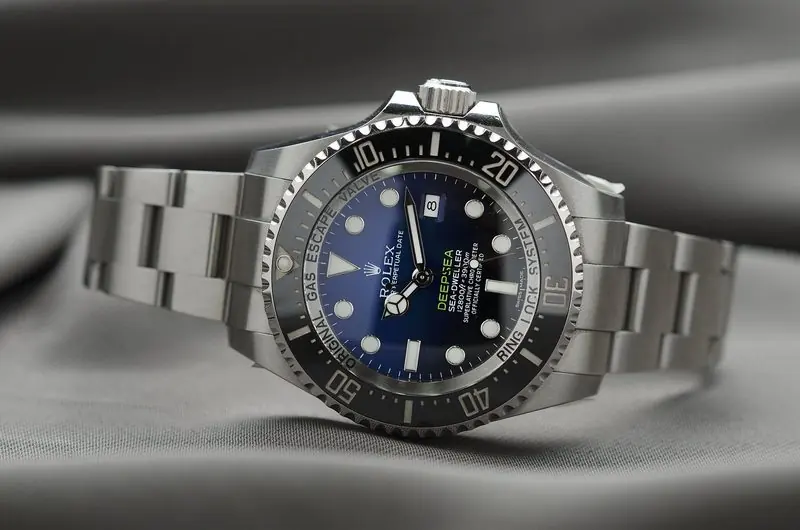
| Categoria | orologi di lusso con tradizione velica |
|---|---|
| Fondazione | 1905, da Hans Wilsdorf |
| Sede | Ginevra, Svizzera |
| Orologio nautico | lo Yacht-Master, lanciato nel 1992 |
| Innovazioni | la cassa impermeabile Oyster e il movimento a carica automatica Perpetual |
| Sponsorizzazioni | title sponsor di molte importanti regate internazionali |
| Appuntamenti di punta | Rolex Sydney Hobart, Rolex Fastnet e Maxi Yacht Rolex Cup |
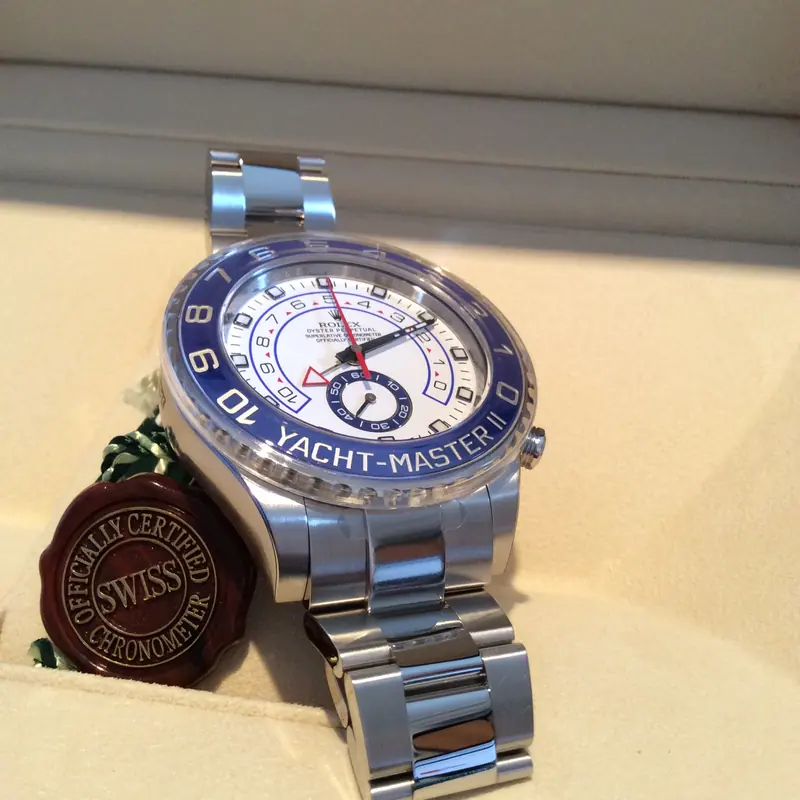
| The 2026 change | the countdown is now programmed from the lower pusher instead of the Ring Command bezel, with the countdown hands running anticlockwise |
| Yacht-Master II prices, July 2026 | USD 20,300 in Oystersteel and USD 57,800 in 18 ct yellow gold |
| Water resistance | the Yacht-Master case is guaranteed to 100 m, and the bezel is bidirectional |
| Guarantee and service | a five-year international guarantee on new watches, with Rolex recommending a service roughly every ten years |
| Sailing | title sponsor of fifteen major international events, including the Rolex Sydney Hobart and Rolex Middle Sea Race since 2002, the Maxi Yacht Rolex Cup since 1985, the biennial Rolex Fastnet Race and the Rolex SailGP Championship since 2024 |
Un orologiaio costruito sull'Oyster
Rolex fu fondata nel 1905 da Hans Wilsdorf, che nel 1919 trasferì l'attività a Ginevra. L'azienda costruì la propria reputazione sulla precisione e sulla cassa Oyster sigillata e impermeabile introdotta negli anni Venti. Seguì un movimento a carica automatica, da cui nacque il nome Oyster Perpetual che definisce ancora gran parte della gamma. Queste innovazioni resero gli orologi Rolex adatti a una vita attiva, compreso il tempo passato sull'acqua. Il marchio è cresciuto fino a diventare uno dei nomi del lusso più riconosciuti al mondo.
L'impermeabilità sta al cuore della storia Rolex, il che dà al suo legame con la vela una logica naturale. Le stesse qualità che si addicevano a subacquei ed esploratori si addicevano anche ai velisti. Nel corso del Novecento l'azienda ha costruito un catalogo di orologi strumento per attività esigenti. I suoi orologi sono diventati simboli di conquista tanto quanto strumenti. Quella doppia identità è alla base della sua posizione nello yachting.
Lo Yacht-Master
Rolex ha lanciato lo Yacht-Master nel 1992 come orologio rivolto al mondo della vela e del mare. Univa la robustezza della cassa Oyster a uno stile nautico e a finiture adatte a un pubblico di appassionati di yachting. Da allora la linea è cresciuta e comprende diverse varianti in materiali e misure differenti. Un modello Yacht-Master successivo ha aggiunto una funzione di conto alla rovescia per le regate, destinata ai velisti agonisti. Insieme questi orologi formano il legame più esplicito del marchio con lo sport.
Lo Yacht-Master è un orologio da stile di vita radicato nell'immaginario della vela. Porta al polso i codici del mondo dello yachting in modo riconoscibile. Per armatori e appassionati segnala un legame con il mare e con la cultura che circonda lo sport. La linea è diventata uno dei pilastri della gamma Rolex accanto al Submariner e al Daytona. Il suo nome lega il marchio alla vita di bordo più apertamente di qualunque altro modello sul quadrante.
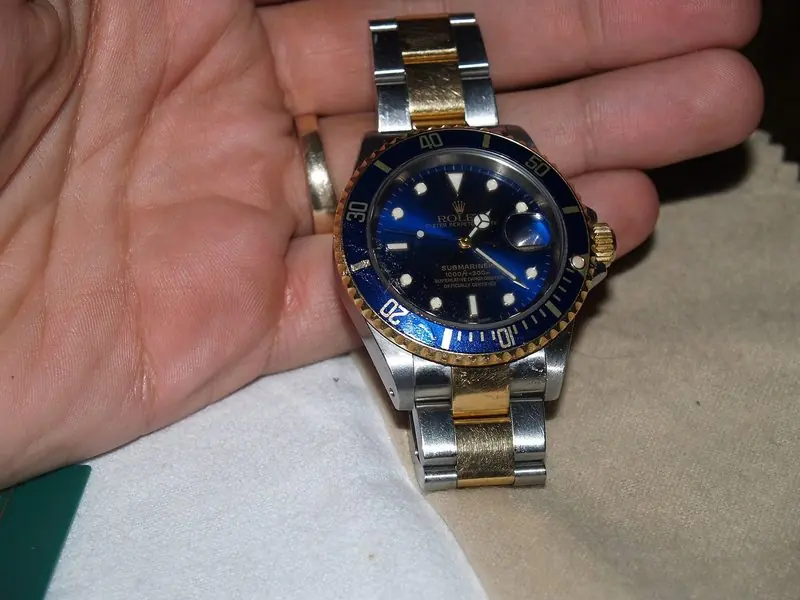
L'Oyster che è andato per mare, e il nome dietro le più grandi regate dello sport.
Ingegneria di precisione
Rolex è nota per costruire i propri orologi secondo uno standard interno rigoroso, controllando gran parte del processo in casa. La cassa Oyster è progettata per tenere fuori l'acqua sotto pressione, qualità dimostrata in decenni. I movimenti sono costruiti e collaudati con tolleranze strette per precisione e affidabilità. I materiali, dall'acciaio all'oro alla ceramica, sono lavorati con finiture elevate. Questa ingegneria è la base della reputazione del marchio.
Per un orologio associato al mare, impermeabilità e resistenza sono essenziali e non decorative. Rolex ha passato un secolo ad affinare queste qualità. Uno Yacht-Master è costruito per sopravvivere a un uso reale sull'acqua oltre che per fare la sua figura. Quell'affidabilità è parte di ciò che l'acquirente paga. L'artigianato dietro l'orologio è all'altezza del prestigio del nome sul quadrante.
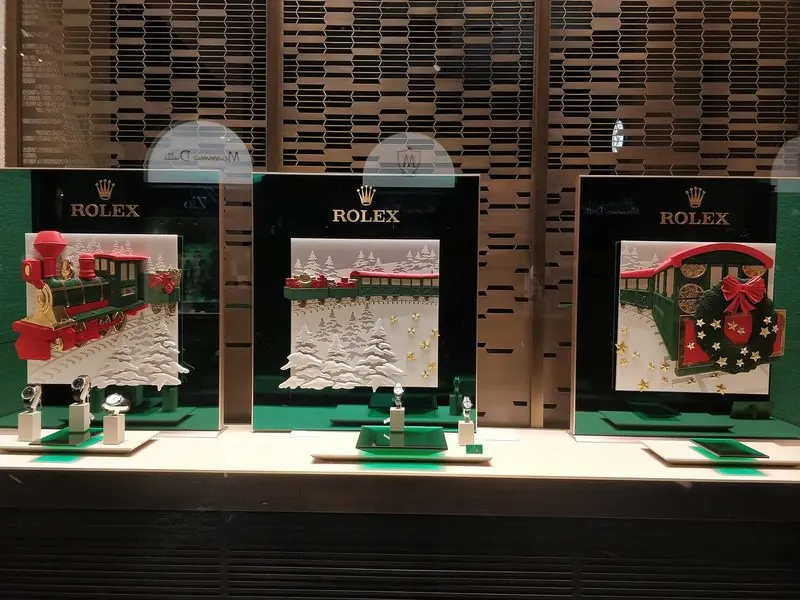
Nel cuore dello sport
Rolex sostiene la vela di alto livello da circa settant'anni ed è profondamente intrecciata a questo sport. È title sponsor di molte delle principali regate del mondo, dalle lunghe corse d'altura alle flotte di grand prix. Appuntamenti come la Rolex Sydney Hobart Yacht Race e la Rolex Fastnet Race portano il suo nome. La Maxi Yacht Rolex Cup raduna sotto la sua insegna alcuni dei più grandi e più begli yacht a vela. Questa presenza fa di Rolex una costante della vela agonistica.
Queste sponsorizzazioni legano il marchio al mondo dello yachting ben oltre gli orologi stessi. Gli armatori che regatano ai massimi livelli competono in eventi che portano il nome Rolex. L'azienda sostiene anche importanti yacht club e velisti, approfondendo le proprie radici nello sport. Questo impegno lungo dà sostanza reale alla sua identità nautica. Rolex è presente negli appuntamenti che contano di più per la comunità velica.
Un segno di status universale
Rolex è fra i marchi del lusso più riconosciuti al mondo, e il suo legame con lo yachting è ben consolidato. Per gli armatori, uno Yacht-Master o un altro Rolex è un segnale di status facile e familiare. La presenza del marchio negli appuntamenti principali dello sport rafforza quell'associazione. I suoi orologi si portano in tutto il mondo dello yachting, da armatori, comandanti e ospiti. Pochi nomi hanno un riconoscimento altrettanto ampio.
La forza di Rolex sta nell'affidabilità sia del prodotto sia della reputazione. Un Rolex è una grandezza nota, che mantiene il proprio valore e il proprio status nel tempo. Le sponsorizzazioni veliche profonde danno radici autentiche alla sua immagine nautica. Per gli armatori che vogliono un segno riconosciuto di conquista sull'acqua, è una scelta ovvia. Rolex resta saldamente legata alla cultura di questo sport.

Guarantee, servicing and where to get it done
New Rolexes carry a five-year international guarantee alongside the Superlative Chronometer certification, and the company recommends a service roughly every ten years, with a two-year warranty on the service work itself. Independent watchmakers commonly advise a shorter interval for a watch that lives in salt air and gets wet regularly.
Service is genuinely international, which matters more for a yacht owner than for anyone else. A watch can be handed in at a service centre in Geneva, Fort Lauderdale, Dubai or Sydney and collected in another. Turnaround is measured in weeks, so it is a job for the winter lay-up and not for the week before a regatta.
The sponsorships, and what they buy
Rolex is title sponsor of fifteen major international events. It has backed the Sydney Hobart and the Middle Sea Race since 2002, the Maxi Yacht Rolex Cup since 1985, the biennial Fastnet as the Royal Ocean Racing Club's first naming-rights partner, and since 2024 the SailGP championship, whose 2026 season ran thirteen races across five continents.
For an owner who races, this is not decoration. Rolex's calendar is effectively the calendar, the winner of each event receives a watch, and the brand's presence at Porto Cervo, Cowes, Malta and Hobart is part of what those weeks feel like. For an owner who cruises and never crosses a start line, the sponsorship buys nothing at all, and the watch should be chosen on the same basis as any other watch.
Holding value, and the awkward part of that
Rolex holds value better than almost any comparable object an owner buys for a boat, and steel sports models have often sold above list on the secondary market. That is a real financial characteristic and it is worth knowing. It is also volatile, and prices for the most speculative references have moved sharply in both directions since 2022.
The practical risk is theft. A recognisable watch worn ashore in a Mediterranean port in August is a known target, and insurance for jewellery carried aboard is usually a separate policy from the yacht's. Check the wording before the season, particularly for items worn off the boat.
Who it suits, and who should buy something else
The Yacht-Master II suits an owner who actually races and starts under a five-minute sequence, and no other mechanical watch does that job as cleanly. The rest of the Yacht-Master line suits an owner who wants a robust, serviceable, internationally supported watch with a nautical face and does not mind that the nautical part is styling.
An owner who dives should buy a dive watch. An owner who needs a start timer and does not care what it looks like should buy a purpose-built electronic regatta watch for a fraction of the money, and it will be easier to read wet. An owner who wants a watch nobody else at the dock is wearing is in the wrong shop entirely.
Buying pre-owned without buying a fake
Every Rolex carries a serial number, engraved behind the bracelet lugs at six o'clock on watches made before 2005 and on the inner rehaut from 2005 onward, exclusively on the rehaut from 2008. On a genuine watch that engraving is crisp and laser sharp; on a counterfeit it is often dotted or slightly blurred under a loupe, and the case weight tends to feel light rather than the solid, balanced heft of the real thing.
Papers and a box are not proof by themselves, because counterfeiters now fake those too, sometimes convincingly. The reliable check is to have an authorised dealer or an established pre-owned specialist verify the serial number and movement against Rolex's own records before money changes hands, which is a service worth paying for on anything bought outside a dealer's own counter.
Informazioni pratiche
| New, list price (US, July 2026) | USD 12,500 for the 37 mm Yacht-Master in Oystersteel and platinum up to USD 40,000 for the 42 mm in white gold; the Yacht-Master II is USD 20,300 in Oystersteel and USD 57,800 in yellow gold. |
|---|---|
| Buying new | Sold only through authorised dealers, who set their own waiting list and allocation by relationship with the shop. Rolex does not publish wait times, and that silence is itself the answer to how scarce a given reference is. |
| Buying used | A recognised secondary market runs through dealers such as Bob's Watches and marketplaces such as Chrono24. Popular steel references such as the 40 mm Yacht-Master 126622 have traded a few thousand dollars over list; some gold Yacht-Master II references have sold below list. |
| Servicing | A standard service at an authorised centre runs roughly USD 800 to USD 1,600, more for a Yacht-Master II with its chronograph movement, with parts replacement pushing a job past USD 2,500. Turnaround is typically six to eight weeks, so plan it for winter lay-up, not the week before a regatta. |
| Warranty | Five years on a new watch, two years on service work. |
| What is not published | Rolex publishes no production figures, no wholesale pricing and no allocation criteria for its authorised dealers; every scarcity figure in circulation is a dealer's or an analyst's estimate, never the company's own. |
Cosa riferiscono armatori ed equipaggi
Comfort and everyday reliability
A long-term owner writing under the name Tokyo Watch Guy described the Yacht-Master 40's movement as insanely robust and accurate, and called it his most comfortable watch.
WatchCrunchThe 2026 redesign was well received on first handling
Hands-on reviewers found the new winch-shaped pushers more intuitive than the previous Ring Command bezel, calling the change a rare case of a company fixing exactly what owners had complained about.
Monochrome WatchesThe pre-2026 countdown function saw little real use
The old Yacht-Master II was described as Rolex's most divisive watch, built around a function that almost none of its owners would ever use.
aBlogtoWatchSecondary-market pricing is model-specific, not uniform
Popular Rolesium and steel references trade at a modest premium to list, while some gold Yacht-Master II references sell below retail, so the invest-grade reputation does not apply evenly across the range.
WatchCharts
Cosa convince e cosa va valutato
Punti di forza
- A service network built for an owner who movesA watch can be handed in at an authorised centre in Fort Lauderdale and collected in Geneva or Dubai, which matters more to an owner who crosses three countries a year than to anyone buying one watch for one desk.
- Genuine value retention on the sports referencesSteel and titanium sports Rolexes have a long record of holding or exceeding retail on the secondary market, which is not true of most watches at any price.
- The 2026 Yacht-Master II fixes the real complaintProgramming the countdown from a winch-shaped pusher instead of the old Ring Command bezel removes the one thing reviewers and owners had complained about since 2007.
Da valutare
- The Yacht-Master is not a dive watch100 m and a bidirectional bezel are a styling choice, not a safety instrument, and an owner who actually dives is buying the wrong Rolex.
- Waiting lists are opaque and can run yearsFor the most wanted steel references, allocation depends on a buyer's history with a dealer rather than a published queue, which is a frustrating way to spend six figures.
- The countdown function goes unused by most ownersReviewers have called the pre-2026 Yacht-Master II Rolex's most divisive watch precisely because most owners never start a race under a five-minute sequence.
A chi si rivolge: Armatori e velisti che vogliono un orologio riconosciuto e legato alla tradizione della vela agonistica.