Seakeeper
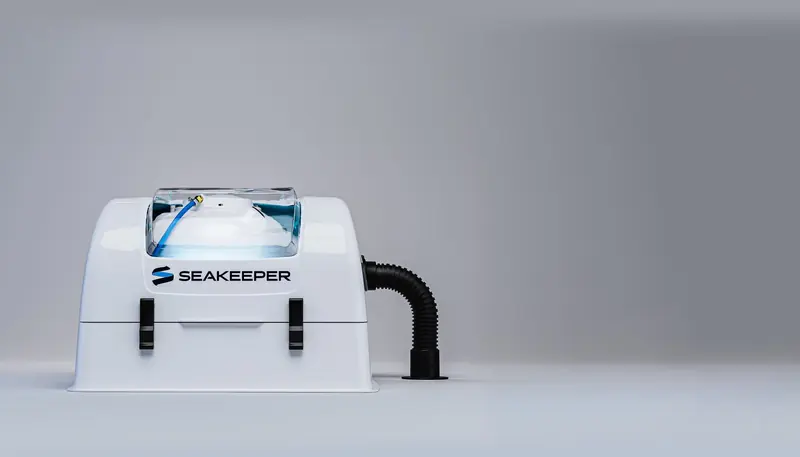
| Categoria | stabilizzatori giroscopici antirollio e controllo dell'assetto dell'unità |
|---|---|
| Fondata | 2001 da Shep McKenney e John Adams, con la prima officina a Solomons Island, Maryland, nel 2002 |
| Proprietà | Madison Industries, che ha acquisito l'azienda nel 2018 |
| Produzione | Leesport, Pennsylvania, in uno stabilimento aperto nel 2022 |
| Tappe | primo prototipo su un Viking di 43 piedi nel 2006, primo contratto di serie con Azimut nel 2008, diecimillesima unità nel 2020 |
| Gamma | quattordici modelli, dal Seakeeper 1 al Seakeeper 40 |
| Seakeeper 1 | barche da circa 7 m a 9 m e fino a 5,5 tonnellate, USD 17.400 |
| Seakeeper 26 | barche da circa 21 m a 26 m e fino a 75 tonnellate, 1.431 kg, USD 268.600 |
| Seakeeper 40 | barche da 26 m e fino a circa 115 tonnellate, 1.848 kg, USD 365.400 |
| Riduzione del rollio | fino al 95 per cento, secondo i dati dell'azienda |
| Messa a regime | 43 minuti alla stabilizzazione piena su un Seakeeper 26, 40 minuti su un Seakeeper 40 |
| Potenza | 3.000 W per portare a regime un Seakeeper 26 e da 1.375 a 3.000 W in esercizio, a 208-230 volt |
| Average installed cost, from a United States Seakeeper installer's published guide compiled from more than 900 installations and read in July 2026: Seakeeper 1 USD 14,600 install for USD 32,000 all in, Seakeeper 2 USD 16,900 for USD 43,000, Seakeeper 3 USD 21,700 for USD 62,000, Seakeeper 4 USD 23,600 for USD 71,000, Seakeeper 4.5 USD 19,400 for USD 75,000, Seakeeper 6 USD 20,400 for USD 90,000, Seakeeper 9 USD 25,300 for USD 140,000, Seakeeper 10 USD 23,200 for USD 150,000, Seakeeper 18 USD 26,300 for USD 210,000 | |
| Installation averages exclude taxes, shipping, travel, yard fees and any vessel-specific work | |
| Seakeeper 26 and Seakeeper 40 are quoted individually. No published installation figure exists for either, which is the whole 21 m to 33 m band | |
Venticinque anni su una sola idea
Shep McKenney e John Adams si sono accordati nel 2001 per sviluppare uno stabilizzatore giroscopico moderno e utilizzabile, e l'anno successivo hanno cominciato a lavorare in un garage a Solomons Island, nel Maryland. Il primo prototipo è finito su un Viking di 43 piedi nel 2006. L'M7000 è stato lanciato commercialmente nel 2008, e nello stesso anno è arrivato il primo contratto di serie da Azimut Yachts, che è quello che ha portato la tecnologia dall'esperimento all'attrezzatura di serie.
L'azienda ha venduto la millesima unità nel 2011 e la diecimillesima nel 2020. Nel 2008 ha comprato il proprio partner produttivo, Joma Machine Company, si è spostata a Mohnton in Pennsylvania e nel 2022 ha aperto uno stabilimento costruito apposta a Leesport. Madison Industries ha acquisito l'attività nel 2018. Nel 2021 è stato aperto un centro di formazione a Tampa, cosa che conta perché è la qualità dell'installazione a decidere se l'attrezzatura rende.
Come funziona davvero il giroscopio
Un volano gira dentro un involucro sotto vuoto. Quando la barca rolla, il giroscopio si inclina verso prua e verso poppa, e quella precessione genera una coppia verso sinistra e verso destra che si oppone al rollio. Il trucco ingegneristico è il vuoto. Permette al volano di girare circa tre volte più veloce di un progetto convenzionale, cosa che ne taglia il peso di due terzi e dimezza la potenza che richiede.
L'azienda dichiara velocità del volano fino a 9.750 giri al minuto sulle unità più piccole e velocità periferiche attorno a 557 miglia orarie. Le unità grandi girano più lentamente, a 5.000 giri su un Seakeeper 26 e a 5.150 su un Seakeeper 40, e portano molto più momento angolare. Un raffreddamento brevettato a glicole e acqua di mare porta via il calore. Il controllo è automatico e legge in continuo lo stato del mare.
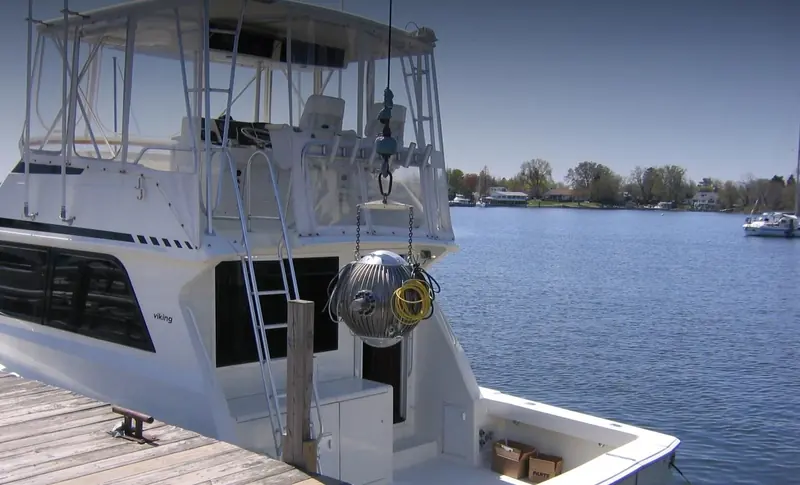
Quaranta minuti di messa a regime sono il prezzo di un ancoraggio da cui nessuno vuole andarsene.
La gamma, e quanto costa
Quattordici modelli coprono barche da circa 7 m a oltre 33 m. Un Seakeeper 1 va bene per unità grosso modo da 7 m a 9 m fino a 5,5 tonnellate ed è a listino a USD 17.400. Un Seakeeper 6 copre circa da 13 m a 16 m fino a 24 tonnellate a USD 69.600. Un Seakeeper 18 copre grosso modo da 18 m a 23 m fino a 56 tonnellate a USD 183.700.
In cima, il Seakeeper 26 gestisce barche da circa 21 m a 26 m e fino a 75 tonnellate per USD 268.600, e il Seakeeper 40 gestisce da 26 m in su fino a circa 115 tonnellate per USD 365.400. Ognuna di quelle cifre esclude l'installazione, che su un retrofit può valere di nuovo una frazione consistente del prezzo dell'unità.

Che cosa cambia nella vita di bordo
La dichiarazione è fino al 95 per cento di riduzione del rollio, e il numero che conta per un armatore non è la percentuale. È se gli ospiti restano a tavola. Uno yacht che sta al traverso dell'onda lunga in un ancoraggio per il resto perfetto si svuota entro le nove di sera, e il rimedio abituale è spostarsi, il che costa l'ancoraggio. Un giroscopio toglie la ragione per spostarsi.
Il secondo effetto è a bassa velocità e da fermi, dove storicamente gli stabilizzatori a pinne non facevano nulla. Seakeeper per progetto lavora a velocità zero, ed è per questo che è comparso prima sulle barche da pesca sportiva, che restano ferme per ore. Su uno yacht cambia le operazioni con il tender, il bagno dalla plancetta e il fatto che qualcuno stia male in quadrato.
Messa a regime, potenza e generatore
Due dati operativi governano il modo in cui l'attrezzatura si usa. Il primo è il tempo di messa a regime. Un Seakeeper 26 arriva alla stabilizzazione piena in circa 43 minuti e un Seakeeper 40 in circa 40, con i giri massimi che sull'unità più grande richiedono 70 minuti. Un giroscopio non si può accendere mentre scende l'ancora. Gli equipaggi lo avviano ben prima dell'arrivo.
Il secondo è la potenza. Un Seakeeper 26 assorbe fino a 3.000 W per andare a regime e da 1.375 a 3.000 W in esercizio a seconda dello stato del mare, a 208-230 volt monofase e 20 ampere. Un Seakeeper 40 richiede 5.000 W per andare a regime e da 1.900 a 4.400 W in esercizio a 30 ampere. Un generatore deve essere in linea ogni volta che l'unità gira, e servono anche da 4 a 8 galloni al minuto di acqua di mare per il raffreddamento.

Peso, spazio e installazione a posteriori
Un Seakeeper 26 pesa 1.431 kg e un Seakeeper 40 pesa 1.848 kg, in pacchetti di poco più di 1,4 m di lato e circa un metro di altezza. Quella massa deve andare su una fondazione ingegnerizzata come si deve, in basso e vicino al centro dell'unità, e spesso la struttura richiede lavori per reggerla. Non ci sono pinne, non ci sono assi e non ci sono passaggi a scafo oltre a quello dell'acqua di raffreddamento.
L'assenza di appendici è l'argomento più forte a favore del retrofit. Gli stabilizzatori a pinne richiedono fori nello scafo, aggiungono resistenza in navigazione e si possono danneggiare in banchina o in acqua bassa. Un giroscopio sta dentro la barca e si può installare quasi ovunque la struttura lo consenta. La variabile è il costo dell'installazione, e quello non è pubblicato.
Dove si ferma
Il tetto è reale. L'unità più grande è tarata su circa 115 tonnellate, cioè una barca grosso modo da 26 m a 33 m. Sopra, un armatore o installa più unità o guarda agli stabilizzatori a pinne con capacità a velocità zero, che è quello che porta la maggior parte degli yacht sopra i 40 m. Chi ha un grande yacht dislocante deve trattare Seakeeper come un'opzione tra diverse e non come la scelta di default.
L'altro limite è lo stato del mare. Un giroscopio riduce il rollio e non fa nulla sul beccheggio, quindi un mare di prua resta tale e quale. La risposta di Seakeeper è Seakeeper Ride, lanciato nel 2023, un sistema di controllo dell'assetto per barche plananti in navigazione. È un prodotto separato che risolve un problema separato.
Assistenza, garanzia e cuscinetti
Le unità hanno una garanzia di fabbrica pluriennale e i cuscinetti sono sostituibili sul posto, che è la singola decisione progettuale più importante per un armatore. Un'unità sigillata che dovesse tornare in Pennsylvania per un cuscinetto usurato sarebbe un guasto capace di chiudere una stagione. Sostituibile sul posto significa che un tecnico viene sulla barca.
Seakeeper forma direttamente installatori e tecnici di assistenza, e la rete segue l'industria americana ed europea delle barche di serie, il che significa copertura in Florida, alle Bahamas, alle Baleari, sulla Riviera italiana e francese e nei Caraibi orientali. La rumorosità è di circa 74 dB a un metro su un Seakeeper 26, quindi la posizione di montaggio e l'insonorizzazione attorno fanno parte della specifica e non sono un ripensamento.
Contro gli stabilizzatori a pinne, e chi dovrebbe montarne uno
Gli stabilizzatori a pinne dei costruttori europei consolidati restano lo standard sui grandi yacht dislocanti, e le pinne moderne lavorano a velocità zero. Costano di più, aggiungono resistenza e mettono superfici mobili fuori dallo scafo. Un giroscopio costa meno, aggiunge peso invece di resistenza ed è invisibile da fuori. Sulle barche fino a circa 115 tonnellate il giroscopio di solito vince su costo installato e semplicità.
Gli armatori che dovrebbero montarne uno sono quelli che stanno all'ancora quasi tutte le notti, che mangiano a bordo e che hanno ospiti senza piede marino. Gli armatori che dovrebbero guardare altrove sono quelli con yacht fuori dalla scala dimensionale, quelli senza capacità di generatore in avanzo e quelli le cui barche vengono usate solo in navigazione e con mare piatto.
Informazioni pratiche
| Equipment prices, published in full | Seakeeper is one of the very few marine makers that publishes every list price. Its own cost page, read August 2026, gives Seakeeper 1 at USD 17,400, 2 at USD 26,100, 3 at USD 40,300, 4 at USD 47,400, 4.5 at USD 55,600, 5 at USD 60,500, 6 at USD 69,600, 7.5 at USD 78,700, 10 at USD 126,800, 10.5 at USD 133,900, 14 at USD 155,900, 18 at USD 183,700, 26 at USD 268,600 and 40 at USD 365,400. Those are equipment only, exclude taxes, storage, docking and haul-out, and the company states they are subject to passthrough on any levied tariff. |
|---|---|
| Installation is the bigger half of the bill | An Elite Seakeeper dealer publishes averages compiled from more than 900 installations as of 2025: Seakeeper 1 at USD 14,600 to fit for USD 32,000 all in, 3 at USD 21,700 for USD 62,000, 4.5 at USD 19,400 for USD 75,000, 6 at USD 20,400 for USD 90,000, 9 at USD 25,300 for USD 140,000, 10 at USD 23,200 for USD 150,000, 14 at USD 24,100 for USD 180,000 and 18 at USD 26,300 for USD 210,000. Averages exclude taxes, shipping, yard fees and any vessel-specific structural work. Access is what moves the number: a unit that has to go in through a cut hatch is a different job from one dropped into an open lazarette. |
| Annual service, with real numbers behind it | Two Elite Seakeeper dealers in Orange Beach, Alabama publish identical annual service tables: USD 750 for a Seakeeper 1, USD 850 for a 4 or 4.5, USD 1,150 for a 2, USD 1,200 for a 3, USD 1,350 for a 10, USD 1,500 for a 5, 6 or 14, USD 1,650 for a 9, USD 1,800 for a 16 or 18, USD 1,900 for a 26 and USD 2,250 for a 35 or 40. An independent Californian yard, Ventura Boat Services, puts a typical annual service at USD 1,500 to USD 3,000 in November 2025, so treat the dealer table as a floor rather than a ceiling. |
| The service schedule the warranty depends on | Remove the covers and inspect visually after every use, with a freshwater rinse and a strainer check. Every three months or 150 hours, inspect, rinse, check the strainer and replace the zinc on Seakeeper 5 and above. Annually or at 1,000 running hours, whichever comes first, a professional inspection checks seawater flow and cooling hoses, flushes the cooling system with glycol and inspects the electronics. Units must also be registered with Seakeeper to access after-sales programmes, and a technician has to verify sea hours for a warranty claim. |
| The long-run item nobody quotes up front | The spherical bearings that carry the spinning flywheel are rated at roughly 10,000 to 20,000 hours on many models. Ventura Boat Services puts bearing service or replacement past 10,000 hours at USD 20,000 to USD 60,000 or more, and hydraulic bushing replacement past 2,000 hours at USD 1,000 or more. Those are one yard's figures, published November 2025, and Seakeeper publishes nothing against which to check them. On a heavily used charter boat this is the number that decides whether the unit is worth keeping at ten years. |
| Power, weight and the generator question | The small units are DC and the rest are not, which changes life at anchor. A Seakeeper 1 weighs 166 kg and runs on 12 VDC at up to 50 amps, about 225 to 600 watts depending on sea state. A Seakeeper 6 weighs 395 kg and needs 220 VAC at 20 amps or 110 VAC at 30 amps, drawing up to 2,300 watts to spool and 1,100 to 2,300 watts running, plus 125 watts of 12 VDC control power. Above the small DC models the gyro is an AC load, so at anchor the generator runs while the gyro does, and that fuel is part of the cost of a quiet dinner. |
| Spool-up: switch it on leaving the berth | A gyro is not a switch you flick on arrival. A Seakeeper 1 reaches stabilising speed at 7,310 rpm in 18 minutes and full 9,750 rpm in 35 minutes. A Seakeeper 6 reaches stabilising speed at 7,275 rpm in 21 minutes and 9,700 rpm in 42 minutes. The large units carry far more angular momentum and take longer still, which the maker puts at about 40 to 43 minutes to full stabilisation on a Seakeeper 26 or 40. |
| Seakeeper Ride is a different product, not a cheap gyro | Ride is a vessel attitude control system that works underway rather than at rest, for boats up to about 55 ft with a cruising speed above 20 mph and a compatible multifunction display. The same dealer guide gives Ride 450 at USD 4,900 with installation from USD 4,500, about USD 9,400 fitted, up to the Ride 750 QUAD at USD 21,500 with USD 8,500 to USD 13,000 to fit, and the Ride 900 to 1500 from USD 24,500 with custom installation. It does not stop a boat rolling at anchor and it is not a substitute for a gyro. |
| What is NOT published | There is no published installation figure for the Seakeeper 26 or the Seakeeper 40. Both are quoted individually, and that is the entire 21 m to 33 m band, exactly where the equipment alone runs USD 268,600 to USD 365,400. Seakeeper publishes no bearing overhaul price, no out-of-warranty parts list and no independent roll-reduction test; the up to 95 percent figure is the company's own. One United States installer's table also lists the Seakeeper 40 at USD 348,000 against the maker's USD 365,400, so take the factory number and get the delivered price in writing. |
Cosa riferiscono armatori ed equipaggi
Owner opinion splits, and both sides are worth reading
Forum threads run from an owner with two Seakeeper 5 units reporting problems on every trip and summarising two years of problems and headaches, to an owner running a Seakeeper 2 on a Pursuit 28 for two years who calls it absolutely the best experience, with no roll sitting still or trolling and much less slamming underway because the boat is kept level. Several long-standing posters note that early units were not as reliable, nor as well supported, as they are now.
The Hull Truth (owner forum)What actually breaks, and what the back half of ownership costs
A service yard's published breakdown ranks cooling system problems first, from clogged heat exchangers and raw-water pump failures to overheat alarms triggering automatic shutdowns, then hydraulic and brake faults with accumulators needing replacement every few years, then electrical faults more common on the Seakeeper 1 to 5, then bearing and flywheel wear at roughly 10,000 to 20,000 hours, then corrosion and zinc depletion. It also states most owners see trouble-free operation for the first five to ten years if the unit is serviced annually.
Ventura Boat Services (November 2025)The competition is measurably faster to stabilise
Comparing the Yanmar-owned Smartgyro SG40 against the Seakeeper 9, the magazine reported both reaching maximum rpm in about 55 minutes but the SG40 reaching stabilisation in 25 minutes against 38 for the Seakeeper, with the SG40 heavier at 650 kg against 550 kg and drawing more power, and Smartgyro's modular sphere serviceable in the field without a factory return. The reviewer was explicit that he had not yet tested a Smartgyro at sea.
Motor Boat and Yachting (Hugo Andreae, July 2021)Ride is a real effect underway, and a separate purchase
In the first published test of Seakeeper Ride the reviewer reported bow rise on climbing onto plane significantly reduced, describing a boat that had previously laboured out of the hole lifting smoothly instead. Motor Boat and Yachting's own trial on a Nimbus T9 in typical lumpy Solent conditions found pitching reduced in size and severity and side to side roll almost entirely gone at 35 knots.
Power and Motoryacht (Dan Harding)The rest of the market is chasing on price and installation
A trade survey of the gyro market recorded Quick's air-cooled MC2 needing no water intake, with managing director Paolo Berni of Quick USA making the point that not needing a water-cooling system means not putting another hole in the boat, and some models retrofitting on eight bolts. Quick had sold about 600 units worldwide by 2021 against Seakeeper's ten thousand. Smartgyro's marketing director Sander Gesink summarised the demand simply: people want comfort and are willing to pay for it.
Soundings Trade Only
Cosa convince e cosa va valutato
Punti di forza
- It does the one thing that changes an evening aboardA gyro stops the roll at anchor, which is where a yacht spends most of its life and where fin stabilisers do least. Seakeeper claims up to 95 percent roll reduction, and owners describe no roll at rest or at trolling speed. It is the single piece of equipment most likely to decide whether guests stay aboard after dinner.
- The prices are published, all fourteen of themEquipment list prices for every model, dealer installation averages drawn from more than 900 jobs, published annual service tables and a stated exclusions list. Almost nothing else in yachting is priced this openly, and it lets an owner build a real budget before a salesman is involved.
- Scale, and the support that comes with itMore than ten thousand units sold since the first prototype went onto a 43 foot Viking in 2006, a purpose-built plant at Leesport opened in 2022, and a training facility at Tampa since 2021. Installation quality decides whether the equipment performs, so a trained network matters more here than the specification sheet does.
- The vacuum enclosure is genuine engineering, not marketingSpinning the flywheel in a vacuum lets it turn roughly three times faster than a conventional design, which cuts its weight by about two thirds and halves the power it needs. That is why a 24 ton boat can carry a 395 kg Seakeeper 6 rather than something twice the size.
- Two years and 2,000 hours of full-system warrantyThe whole line carries the same 2 year, 2,000 hour factory warranty, with an extended programme available while the unit is still inside the factory period. Cover has to be activated by registering the unit, and a technician verifies sea hours on a claim.
Da valutare
- The equipment price is not the priceA Seakeeper 6 lands at about USD 90,000 fitted against USD 69,600 of hardware, and a Seakeeper 1 at about USD 32,000 against USD 17,400. Above the Seakeeper 18 there is no published installation figure at all, so the 21 m to 33 m owner has the least information and the largest bill.
- It takes 18 to 42 minutes to come up to speedStabilisation arrives in 18 minutes on a Seakeeper 1 and 21 on a Seakeeper 6, with full rpm at 35 and 42 minutes, and the maker puts full stabilisation on a Seakeeper 26 or 40 at about 40 to 43 minutes. Forget to switch it on leaving the berth and the first half hour of the anchorage is exactly as rolly as it would have been.
- Above the small DC units it is an AC loadA Seakeeper 6 wants 220 VAC at 20 amps and draws up to 2,300 watts. At anchor that means the generator runs while the gyro runs, so a quiet night is a running genset, and the fuel and the generator hours belong in the running cost.
- The ten-year cost is opaqueBearings are rated at roughly 10,000 to 20,000 hours and an independent yard puts the overhaul at USD 20,000 to USD 60,000 or more, with hydraulic bushings adding USD 1,000 or more past 2,000 hours. Seakeeper publishes no figure for either, so a buyer cannot price the back half of the ownership.
- The failure modes are recurrent and unglamorousClogged heat exchangers, raw-water pump failures and overheat shutdowns lead the list, with hydraulic and brake faults and voltage drops more common on the smaller units and zinc depletion throughout. Owner opinion splits accordingly, between owners who call it the best money they ever spent and owners reporting years of intermittent faults.
A chi si rivolge: Gli armatori di barche fino a circa 115 tonnellate che stanno all'ancora, mangiano a bordo e sono stanchi di spostarsi alle nove di sera per colpa di un'onda lunga.