Alaska & the Inside Passage
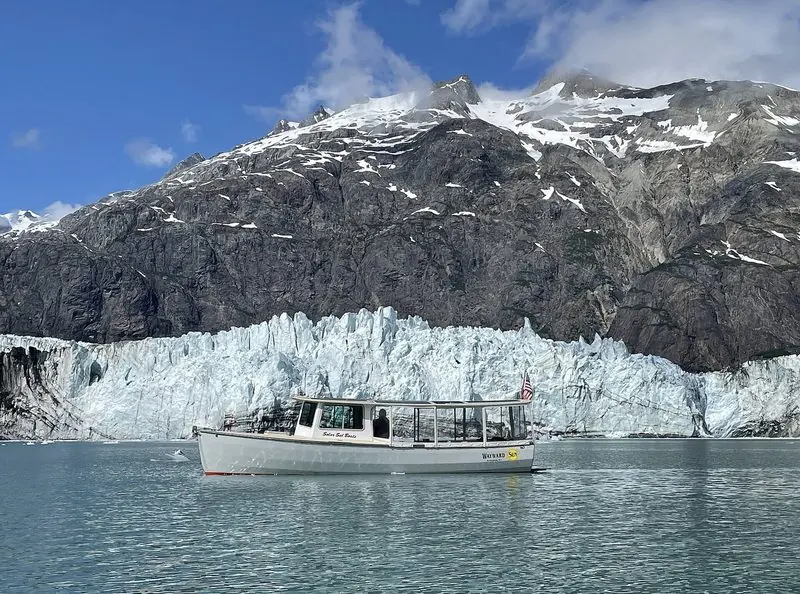
| Region | Inside Passage vom Puget Sound und British Columbia bis Südost-Alaska |
|---|---|
| Route | über 1.000 Meilen von Seattle bis Skagway, überwiegend durch Inseln geschützt |
| Saison | Ende Mai bis Anfang September |
| Genehmigung Glacier Bay | 25 Genehmigungen für private Fahrzeuge am Tag, erforderlich vom 1. Juni bis 31. August, Höchstaufenthalt fünf Tage |
| Berechtigung Glacier Bay | Genehmigungen gelten für eigengeführte oder bareboat gecharterte Fahrzeuge, gewerbliche Betriebe mit zahlenden Passagieren sind nicht berechtigt |
| Antrag Glacier Bay | Lotterien laufen vom 1. bis 31. Januar und vom 1. bis 15. März, kurzfristige Genehmigungen über eine tägliche Lotterie drei Tage im Voraus |
| Tracy Arm | über 30 Meilen lang, rund 45 Meilen südlich von Juneau, mit sommerlichem Eis von Handgröße bis zur Größe eines dreistöckigen Gebäudes |
| Seymour Narrows | Strom bis 15 Knoten durch eine rund 750 Meter breite Enge, passiert bei Stauwasser |
| Niederschlag | Ketchikan verzeichnet im Mittel 3.798 mm im Jahr und gilt als Regenhauptstadt Alaskas |
| Verkehr | Ketchikan zählte 2018 mehr als 500 Kreuzfahrtanläufe und über 1.073.000 Besucher |
| Liegeplätze | keine eigens für Superyachten gebaute Marina in Südost-Alaska, große Yachten ankern oder organisieren Platz an einem kommerziellen Kai |
| Flughäfen | Juneau, Ketchikan und Sitka, mit Anchorage und Seattle als Langstreckentoren |
| Berth cost | Juneau Docks and Harbors FY26 reservation rate at the Intermediate Vessel Float and Statter Harbor breakwater, 1 May to 30 September, USD 6.24 per foot per day for vessels of 65 ft and over from 1 April 2026 |
| Juneau harbour tariff | 79 cents per foot a day and USD 5.75 per foot a calendar month at Douglas, Harris and Aurora Harbors from 1 July 2026, on slips built for the fishing fleet |
| Shore power at Juneau | USD 32.72 a day for 50 amp, USD 112.58 for 100 amp at 208 V and USD 259.19 for 100 amp at 480 V from 1 July 2026, plus 5 per cent local sales tax |
| Charter | the PVSA penalty is USD 300 per passenger under 19 CFR 4.80, inflation-adjusted to USD 996 per passenger for 2025, and a commercially operated yacht is separately ineligible for a Glacier Bay private vessel permit |
| Cruising licence | 19 CFR 4.94, valid up to one year, private use only, with a Canadian clearance in each direction on the Inside Passage |
| Nearest lift | Ketchikan Shipyard, operated by Vigor, drydock rated at 10,000 tons taking vessels to 460 ft, with a second dock of 2,500 tons |
| Discharge | 33 CFR 159.309 permits treated sewage or graywater from a cruise vessel in Alaskan waters only under way at 6 knots or more and at least one nautical mile from shore |
| Discharge permit | Alaska's Commercial Passenger Vessel Environmental Compliance programme bars small commercial passenger vessels from discharging treated sewage, graywater or other wastewater in Alaska waters without a state permit |
| Cruise traffic | Ketchikan was reported to expect about 1.47 million passengers and over 500 ship calls in 2025, and was forecast in March 2026 to exceed 1.6 million in 2026 |
Die Form der Passage
Vom Puget Sound läuft die Route nach Norden durch die Salish Sea und die Strait of Georgia, an der Innenseite von Vancouver Island durch die Johnstone Strait, entlang der Küste von British Columbia hinter Princess Royal und den Pitt Islands und in das Alexanderarchipel von Südost-Alaska. Inseln schützen fast alles davon. Es gibt zwei oder drei offene Abschnitte, an denen der Pazifik hereinkommt, und der Rest ist flaches Wasser mit Bergen zu beiden Seiten.
Das sind von einem Ende zum anderen mehr als 1.000 Meilen, und die Entfernungen sind das Erste, was ein Eigner akzeptieren muss. Ketchikan, der erste Hafen Alaskas, liegt rund 600 Meilen nördlich von Seattle. Juneau weitere 250 dahinter. Nichts an diesem Revier ist verdichtet, und das Boot verbringt echte Stunden in Fahrt. Rund 36.000 Freizeitfahrzeuge nutzen die Passage jedes Jahr, fast alle unter 20 Metern.
Eine Woche, und drei Wochen
Eine Woche funktioniert hier nur als Abschnitt. Gäste fliegen nach Juneau, das Boot bringt sie nach Süden zum Tracy Arm und zum Endicott Arm für die Gletscher, nach Westen durch den Frederick Sound für die Buckelwale und in Sitka oder Petersburg wieder hinaus. Das ist eine volle und sehr gute Woche, und sie setzt voraus, dass die Yacht schon zwei Wochen für den Weg nach Norden gebraucht hat.
Drei bis vier Wochen ist die ehrliche Zahl für das Ganze, von Seattle oder Vancouver zur Glacier Bay und zurück, und die meisten Eigner, die es richtig machen, lassen das Boot im Mai mit der Crew nach Norden laufen und fliegen Gäste über Juni, Juli und August blockweise ein und aus. Eine Yacht, die von der Pazifikküste Mexikos heraufgekommen oder aus Japan herübergefahren ist, hat sich ohnehin auf eine Saison hier festgelegt. Das ist kein Revier, in das ein Boot für zehn Tage hineinspringt.
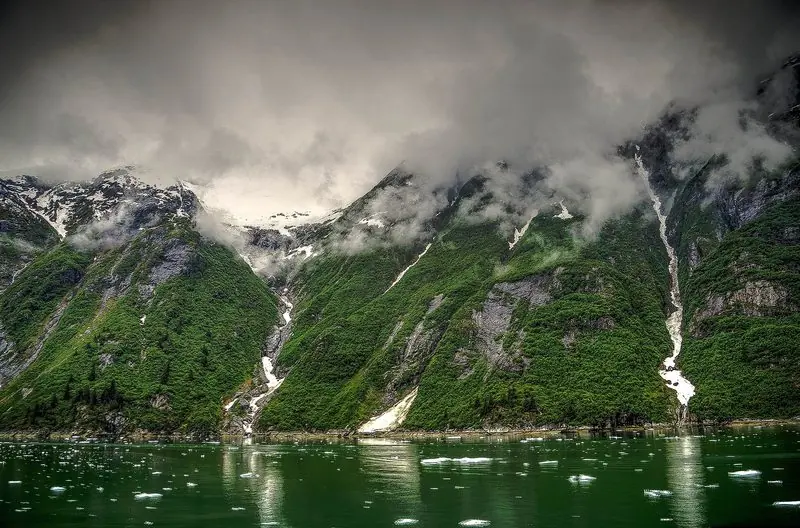
Fünfundzwanzig Genehmigungen am Tag für den besten Teil, und eine Tidenenge, die entscheidet, wann das Boot ablegt.
Glacier Bay und die Genehmigung
Die Glacier Bay ist das Schaustück, und der Zugang ist rationiert. Fünfundzwanzig Genehmigungen für private Fahrzeuge werden pro Tag ausgegeben, fünfzehn mit Vorlauf und zehn kurzfristig, und vom 1. Juni bis 31. August braucht es eine Genehmigung, um nördlich der Linie zwischen Point Gustavus und Point Carolus zu fahren. Die Vorlaufgenehmigungen werden im Januar und noch einmal in der ersten Märzhälfte verlost, der Rest wird nach Reihenfolge des Eingangs freigegeben. Kurzfristige Genehmigungen laufen über eine rollierende Tageslotterie drei Tage im Voraus. Der Höchstaufenthalt beträgt fünf Tage.
Die Klausel, die Eigner erwischt, ist die Berechtigung. Genehmigungen gelten für eigengeführte oder bareboat gecharterte Fahrzeuge, und ein Boot mit zahlenden Passagieren oder im gewerblichen Betrieb ist nicht berechtigt. Eine Yacht in gewerblicher Registrierung, die eine Charter fährt, kann sich nicht einfach bewerben. Wer einfährt, muss eine jährliche Einweisung für Bootsführer absolvieren, sich in Bartlett Cove per UKW an- und abmelden und die Beschränkungen für Geschwindigkeit und Kurs in den Wal-Gewässern beachten, die der Park über die Saison für Buckelwale erlässt.
Die Fjorde und Ankerplätze, die die Reise lohnen
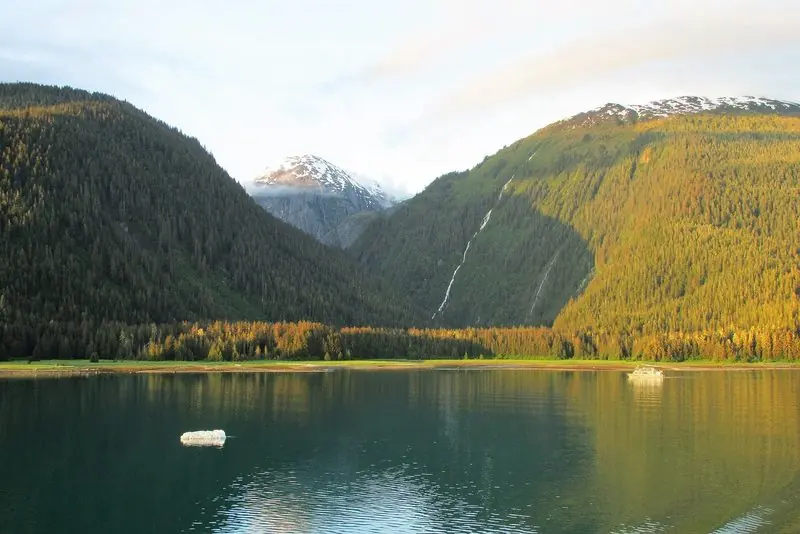
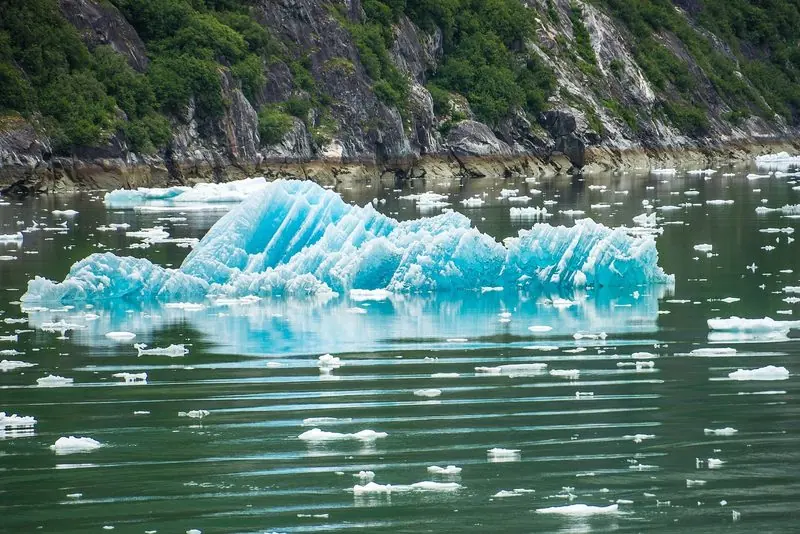
Der Tracy Arm ist der, den die meisten Eigner an die erste Stelle setzen. Über 30 Meilen Granitwände rund 45 Meilen südlich von Juneau, endend an den beiden Sawyer-Gletschern, mit Treibeis von Handgröße bis zu Brocken von der Größe eines dreistöckigen Gebäudes. Das Eis ist der begrenzende Faktor, und eine Yacht arbeitet sich so weit hinein, wie das Eis es zulässt, und nicht weiter. Der Endicott Arm und der Dawes-Gletscher nebenan leisten dasselbe mit weniger Booten.
Weiter südlich wird das Princess Louisa Inlet an der Küste von British Columbia bei Stauwasser durch die Malibu Rapids angelaufen und endet an den Chatterbox Falls, und es lohnt, einen ganzen Tag darum herum zu planen. Der Desolation Sound hat das wärmste Wasser der Küste. Das Broughton-Archipel und der Great Bear Rainforest geben tagelang leere Ankerplätze mit Bären am Ufer. In Alaska sind es die heißen Quellen von Baranof Island, die Red Bluff Bay und die Buchten an der Chatham Strait, zu denen Crews zurückkehren.
Wo ein 50-Meter-Boot hineinpasst und wo nicht
Eine eigens für Superyachten gebaute Marina gibt es in Südost-Alaska nicht. Juneau, Sitka, Ketchikan und Petersburg haben alle Häfen, die für die kommerzielle Fischereiflotte gebaut sind, mit entsprechend bemessenen Fingerstegen. Eine 50-Meter-Yacht organisiert über einen Agenten Platz an einem kommerziellen Kai oder an einem Kreuzfahrtkai, oder sie ankert, und das tut sie die meiste Zeit. Die Tiefen in den Fjorden sind nahe am Ende oft zu groß, um überhaupt zu ankern, die guten Stellen sind also konkret und bekannt.
Vancouver und Seattle am südlichen Ende sind die Ausnahme, mit ordentlichen Marinas, tiefen Liegeplätzen und vollem Service. Alles nördlich davon wird zunehmend dünner. Die Yacht, die hier am besten funktioniert, hat große Reichweite, gute Tenderkapazität, ein starkes Radarbild und eine Crew, die sich damit wohlfühlt, in 25 Metern mit einer Heckleine an einen Baum zu ankern. Durchfahrtshöhe und Breite sind ohne Belang. Eis, Strom und das Fehlen von Anlegemöglichkeiten sind die Schranken.
Wetter, Tiden und Ströme
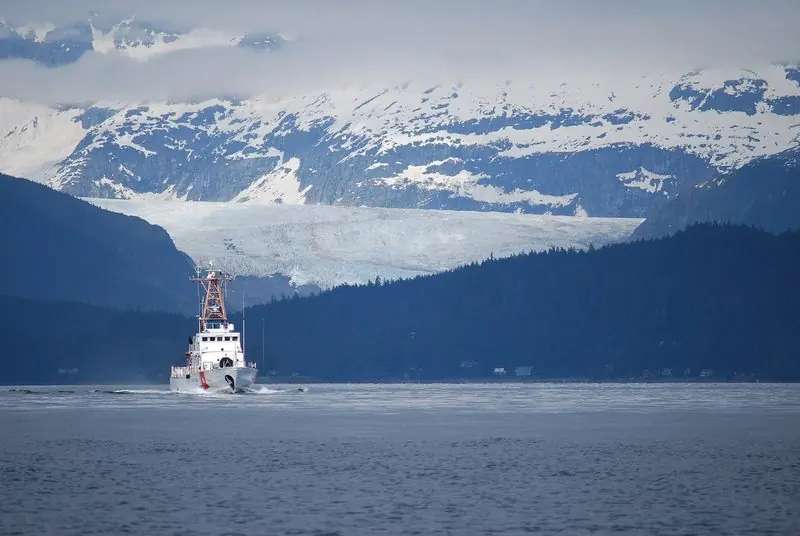
Das ist eine Regenküste. Ketchikan verzeichnet im Mittel 3.798 mm im Jahr, und die ganze Passage ist wolkig, feucht und kühl. Die sommerlichen Lufttemperaturen liegen an einem guten Tag bei rund fünfzehn Grad Celsius. Nebel und tiefe Wolken sind ständige Begleiter, und die Flugpläne der Wasserflugzeuge richten sich danach. Eigner sollten damit rechnen, nass zu werden, und sich freuen, wenn sie es nicht werden.
Tiden und Ströme zählen mehr als der Wind. Hübe von fünf Metern und mehr sind normal, und das Wasser muss durch enge Pässe, Engen wie die Seymour Narrows laufen also mit bis zu 15 Knoten durch einen rund 750 Meter breiten Kanal und werden bei Stauwasser passiert. Kapitän Vancouver nannte sie eines der übelsten Gewässer der Welt, und selbst nachdem Ripple Rock 1958 weggesprengt wurde, bestimmt sie den Zeitplan des Tages. Ein Törn hier läuft nach den Tidentafeln und nicht nach der Uhr.
Die Saison und was sie füllt
Ende Mai bis Anfang September, und das ist alles. Juni und Juli sind die Monate mit dem langen Tageslicht, im Norden mit nutzbarem Licht bis weit nach zehn Uhr abends. Der August bringt stellenweise beständigeres Wetter und die Lachszüge, die die Bären an die Flüsse holen. Bis Mitte September sind die Boote auf dem Weg nach Süden, und die Werften in Seattle und Vancouver sind mit der zurückkehrenden Flotte ausgebucht.
Die Konkurrenz sind nicht andere Yachten. Es sind Kreuzfahrtschiffe. Ketchikan nahm 2018 mehr als 500 Kreuzfahrtanläufe und über eine Million Besucher auf, und Juneau, Skagway und Sitka tragen ähnliche Lasten. Eine Yacht, die ihre Tage um den Kreuzfahrtfahrplan herum plant, sieht eine völlig andere Küste als eine, die das nicht tut, und jeder ordentliche Agent vor Ort hat den Fahrplan.
Gäste an Bord bringen, und was sie an Land tun
Juneau, Ketchikan und Sitka haben alle Flughäfen mit planmäßigem Jetverkehr, und Juneau ist der übliche Punkt für den Gästewechsel. Anchorage und Seattle sind die Langstreckentore, und die letzte Etappe ist ein planmäßiger oder gecharterter Kurzflug. Wasserflugzeuge und Hubschrauber sind hier die lokale Währung, und jede Yacht nutzt sie, für Gletscherlandungen, für abgelegenes Fischen und um einen Gast herauszubekommen, wenn das Wetter zumacht.
An Land sind nicht die Städte die Attraktion. Es sind die Bärenbeobachtung am Pack Creek und am Anan Creek, Heli-Hiking auf den Eisfeldern, ein wirklich weltklasse Fischen auf Lachs und Heilbutt und die russische Kirche und der Totempark von Sitka für den einen Nachmittag Kultur. Das Essen ist Fisch, und der Fisch ist hervorragend. Nachtleben ist eine Bar in einer Fischerstadt. Gäste, die eine Restaurantszene brauchen, sind binnen drei Tagen unglücklich.
Treibstoff, Unterstützung und der ehrliche Nachteil
Treibstoff gibt es in Ketchikan, Petersburg, Juneau und Sitka, an Stegen, die auf die Fischereiflotte ausgelegt sind, eine große Abnahme wird also im Voraus und manchmal per Schute organisiert. Proviant auf dem gewohnten Niveau bedeutet, ihn aus Seattle einfliegen zu lassen. Die technische Unterstützung in Südost-Alaska ist fähig und praktisch und auf kommerzielle Boote ausgerichtet, und ein ernsthafter Ausfall bedeutet entweder einen eingeflogenen Spezialisten oder 600 Meilen nach Süden. Die Ersatzteillogistik ist der mit Abstand häufigste Frust, den Crews berichten.
Der Rest des Nachteils liegt offen. Es regnet, es ist kalt, das Wasser ist nicht zum Schwimmen, die Städte sind klein, und die Kreuzfahrtschiffe waren zuerst da. Die Glacier Bay kann eine Genehmigung verweigern. Eine gewerblich registrierte Yacht ist vom privaten Genehmigungssystem ganz ausgeschlossen. Dagegen bekommt ein Eigner Gezeitengletscher, die 200 Meter querab kalben, und Ankerplätze, an denen in keiner Richtung etwas von Menschenhand zu sehen ist, was mit jedem Jahr seltener wird.
What a month costs, on a published municipal tariff
There is no superyacht marina to quote, so the numbers come from the harbour authorities and they are public. Juneau Docks and Harbors publishes its FY26 schedule: 79 cents per foot a day and USD 5.75 per foot for a calendar month at Douglas, Harris and Aurora Harbors from 1 July 2026. Those are fishing-fleet slips and a 50 m yacht will not get one. The tariff that applies to her is the reservation rate at the Intermediate Vessel Float and the Statter Harbor breakwater, running 1 May to 30 September and, from 1 April 2026, charging USD 3.74 per foot per day for vessels under 65 ft, USD 6.24 per foot per day at 65 ft and over and USD 7.47 per foot per day at 200 ft and over. A 164 ft yacht at USD 6.24 is USD 1,023 a day, about USD 31,700 for a month. Shore power is charged on top at USD 32.72 a day for 50 amp, USD 112.58 for 100 amp at 208 volts and USD 259.19 for 100 amp at 480 volts from 1 July 2026, and a 5 per cent City and Borough of Juneau sales tax may apply to all of it.
Against Marina di Porto Cervo's published 2026 tariff, which charges EUR 3,698 a day in the band to 40 m between 1 and 20 August and about EUR 102,000 for the month, Alaska is roughly a third of the price and there is nothing to spend the difference on. The permit that rations the best of the ground costs nothing at all, which is the surprise: Glacier Bay's twenty-five private vessel permits a day are allocated by lottery rather than by price. The costs that do bite are the ones that do not appear on a tariff. A large fuel uplift is arranged in advance and sometimes comes by barge, provisioning at guest standard is flown from Seattle, and the delivery north and south either side of the season is three to four weeks of running that no owner is aboard for.
The PVSA, the permit bar and the yard nobody expects
Two rules exclude a commercially registered yacht from this ground and they compound. The Passenger Vessel Services Act bars a foreign-flagged vessel from carrying passengers between United States points, and the penalty under 19 CFR 4.80 is USD 300 per passenger transported and landed, inflation-adjusted to USD 996 per passenger for 2025. On top of that, Glacier Bay's private vessel permits are issued to owner-operated or bareboat-chartered vessels only, and a vessel carrying paying passengers or operating commercially is not eligible, so a charter yacht is shut out of the best of the park by the park itself rather than by customs. A foreign-flagged yacht cruising privately takes a cruising licence under 19 CFR 4.94, valid up to a year, which lets her move between United States ports without formally entering at each one, and the Inside Passage adds a Canadian clearance in each direction because most of the route is British Columbian water.
The yard position is much better than the reputation of the coast suggests. Ketchikan Shipyard, operated by Vigor, runs a drydock rated at 10,000 tons taking vessels to 460 ft, with a second dock of 2,500 tons and a covered assembly hall. A 50 m yacht can be docked in south-east Alaska, which is not true of the Maldives, French Polynesia or the Grenadines. What Ketchikan does not have is a superyacht paint shed, a joinery shop or the finishing trades, so the honest description is that structural and mechanical work can be done here and cosmetic work cannot.
Discharge, and how busy it now is
Alaska has its own federal discharge standard and it is stricter than the general rule. Under 33 CFR 159.309 a cruise vessel may discharge treated sewage or graywater in Alaskan waters only when under way at not less than 6 knots and not less than one nautical mile from the nearest shore, with fecal coliform not exceeding 20 per 100 millilitres as a geometric mean and total residual chlorine not exceeding 10.0 micrograms per litre. Alaska's own Commercial Passenger Vessel Environmental Compliance programme goes further for small commercial passenger vessels, which may not discharge treated sewage, graywater or other wastewater in Alaska waters without a state permit. A yacht carrying paying passengers is inside that regime. A private yacht is outside the letter of both and inside the culture of neither, because the fjord anchorages have no flushing and everybody notices.
The traffic picture has also moved a long way, and any planning built on figures from the last decade is wrong. Ketchikan was reported to expect about 1.47 million cruise passengers across more than 500 ship calls in 2025, and in March 2026 was forecast to take more than 1.6 million in the 2026 season, an increase of over 100,000 and enough to pass Juneau for the first time. Juneau and Skagway each took over a million in 2025 as well. That is the schedule a yacht plans around, and it is why the good days here start early and end in an anchorage no ship can reach.
An Land, Anfahrt und Buchung
| Getting there | Juneau and Ketchikan are where itineraries start and where guests join, both served by jet from Seattle. Sitka, Wrangell and Petersburg fill in the middle of the route. The working season is late May to early September, with June and July the strongest for wildlife, and there is no realistic shoulder either side of it. |
|---|---|
| Pilotage, which catches almost every foreign flag | This is the rule that reshapes an Alaskan plan. Alaska requires state pilotage for foreign-flagged vessels over 65 ft LOA. Between 65 ft and 175 ft a yacht may apply to the Alaska Marine Pilot Board for an exemption, but the application goes in a minimum of 30 days before arrival and needs a registered agent to file it. Between 125 ft and 175 ft a pilot must be taken on arrival at the first Alaskan port whether or not an exemption is held. Over 175 ft there is no exemption at all. Wrangell Narrows and Peril Strait require a pilot from everyone regardless of exemption status, and both sit squarely on the Inside Passage route. |
| The cruising permit trap | A foreign-flagged pleasure vessel of an eligible flag can hold a US cruising permit that exempts it from formal entry and clearance at each port; the eligible register list is at 19 CFR 4.94 and includes the British Virgin Islands, Cayman Islands, Bahamas, Jamaica and the Marshall Islands. The trap is that a cruising permit cannot be renewed while the vessel is in Alaskan waters. A permit that expires mid-season is not a paperwork problem, it is a passage: the yacht has to leave and come back. |
| Over 400 GT | A vessel above 400 gross tons must hold a current Alaska Certificate of Financial Responsibility and an approved Oil Spill Response Plan before it enters Alaskan waters, not on arrival. That is a lead-time item measured in weeks and it is the one most often discovered too late by a yacht repositioning up from the Pacific Northwest. |
| Glacier Bay, and how the quota really works | Glacier Bay runs a daily quota of 25 private vessel permits from 1 June to 31 August, one of which the superintendent designates as a transit permit usable only to run out of the bay from Bartlett Cove and back. From September through May there is no quota on private or charter vessels at all. Permits are non-transferable between vessels, a private vessel may hold at most two, only one of which can be an advance-notice permit, and no vessel may hold permits for more than 14 days in any 21-day period. That last rule, not the daily quota, is what actually limits a yacht that wants to spend real time in the bay. |
| The other permits nobody budgets for | Separate permits are required for Anan Creek Bear Observatory, the Pack Creek Bear Sanctuary and Baranof Warm Springs. These are the three shore excursions guests most often ask for by name once they are aboard, and none of them can be arranged on the day. |
| Agricultural inspection | A vessel that has operated outside the United States within the previous two years must be able to show proof of agricultural inspection. For a yacht arriving from Mexico, the South Pacific or a Vancouver refit this is a live requirement rather than a formality. |
| Fuel and support | Juneau has fuel docks and shoreside services but they expect a call ahead rather than a walk-up, and capacity is sized for the fishing and small-cruise fleet rather than for a 60 m yacht. There is no superyacht refit capability in southeast Alaska; the nearest real yard capacity is Seattle or Vancouver, which is a multi-day run. Carry the spares. |
| What a chartered week costs | The published charter market runs from roughly USD 46,000 a week for a small four-guest expedition yacht to over USD 200,000 for a full superyacht, before the expenses that Alaska adds: pilotage, permits, and a fuel bill inflated by distance from anywhere. |
Was Eigner und Crew berichten
The pilotage exemption is a 30-day, agent-filed application, not a form on arrival
Agents working Alaskan yacht arrivals state that Marine Pilot Board exemption applications should be submitted a minimum of 30 days ahead and require a registered agent to file them. This is the agent's own account of a service it provides, but the 30-day figure is the operative planning number and it is the one most often missed by yachts repositioning north on a compressed schedule.
Yacht Services of AlaskaThe permit that cannot be renewed is the one that ends seasons early
Practitioners advising foreign-flagged yachts entering US waters flag the non-renewal of cruising permits inside Alaska as a distinct trap from the ordinary permit rules further south. The remedy is always the same and always expensive: leave US waters and re-enter to obtain a fresh permit.
International Yacht Brokers AssociationGlacier Bay's binding limit is the 14-in-21 rule, not the daily quota
Operators report that securing one of the 25 daily permits is achievable, while the restriction preventing any vessel from holding permits for more than 14 days in any 21-day period is what actually forces a yacht out of the bay and shapes a multi-week itinerary around it.
Yacht Services of Alaska
Was gut ist und worauf zu achten ist
Stärken
- Protected water for almost the entire routeThe Inside Passage links Ketchikan, Wrangell, Petersburg, Sitka and Juneau through sheltered channels. A cruising ground of this scale that almost never requires an exposed passage is rare, and it makes Alaska viable for yachts and guests that would not attempt open Pacific water.
- The quota is a feature, not an obstacleTwenty-five private vessels a day across the whole of Glacier Bay in peak season means the single best thing to look at in southeast Alaska is never crowded. Owners used to queueing for a Mediterranean anchorage in August consistently rate this the most valuable thing about the destination.
- Nine months of the year the quota does not existFrom September through May neither private nor charter vessels are subject to quotas. A late-season boat willing to accept weather and short daylight has the bay effectively to itself and needs no permit lottery at all.
- The rules are written down and they are stablePilotage thresholds, the 19 CFR 4.94 flag list, the Glacier Bay quota and the 14-in-21 rule are all published federal or state regulation rather than local practice. An owner can plan an Alaskan season precisely, which is not true of most remote destinations.
Worauf zu achten ist
- Pilotage is a hard cost on any foreign flag over 65 ftThe exemption is discretionary, needs 30 days and a registered agent, and disappears entirely above 175 ft. Between 125 ft and 175 ft a pilot is compulsory at the first port regardless. For a foreign-flagged yacht this is the largest and least avoidable line in an Alaskan budget.
- A cruising permit cannot be renewed in AlaskaIf the permit runs out mid-season the yacht must physically leave US waters and return. That is a multi-day repositioning built on a date, and it has to be designed into the itinerary before the season starts rather than solved when it happens.
- The season is about fourteen weeksLate May to early September. Everything, including the Glacier Bay quota window of 1 June to 31 August, is compressed into it, so a yacht committing to Alaska is committing its whole summer and giving up a Mediterranean one.
- There is no technical support within a thousand milesNo superyacht yard in southeast Alaska, fuel docks sized for the fishing fleet, and Seattle or Vancouver as the nearest real capability. A failure that would be a morning in Antibes is a delivery voyage here.
- The shore excursions all need paperAnan Creek, Pack Creek and Baranof Warm Springs each need a separate permit. Guests ask for these by name and they cannot be produced spontaneously, so a captain who has not applied in advance spends the trip declining requests.
Für wen: Ein Eigner mit einem Boot großer Reichweite, einem fähigen Kapitän und ohne Interesse daran, gesehen zu werden, der lieber einen Gletscher kalben sieht, als in einem Beach Club zu sitzen.