Anguilla
| Port Nimara, Anguilla's first superyacht marina, will open its first 118 berths in 2027, taking yachts up to 240 feet (73 metres) (YachtCharterFleet, MegaYacht News). | |
| Until Port Nimara opens, Anguilla has no marina at all: Road Bay is an open roadstead with privately owned mooring balls, not a marina (Doyle Guides). | |
| Port Nimara is a joint venture of TEI Inc, SF Investments and Antillean Development, led by CEO David Mizrahi, with Consigli as construction partner; excavation began 4 December 2024 (Anguilla Focus, YachtCharterFleet). | |
| The marina sits on Anguilla's southwest coast between Cap Juluca and Altamer, on Maundays Bay, and will include its own customs and immigration facility (YachtCharterFleet). | |
| Six marine protected areas cover most of Anguilla's coastline: Little Bay, Dog Island, Prickly Pear, Sandy Island, Shoal Bay-Island Harbour and Sombrero Island (What We Do In Anguilla). | |
| Mooring buoys inside the marine parks are capped at 65 feet and colour-coded by size: yellow under 40 feet, white under 65 feet, red reserved for licensed Anguillian dive operators (What We Do In Anguilla). | |
| Mooring and anchoring inside the marine parks is day use only, 6am to 7pm; violations carry a fine of up to EC$5,000 and/or six months in prison (What We Do In Anguilla). | |
| A cruising permit for anywhere beyond Road Bay is tiered by tonnage: one 2019 cruiser's log records US$28/day under 5 GRT, US$56/day for 5-20 GRT and US$140/day over 20 GRT, with a sixth day free after six paid (Cherubino's Atlantic); Caribbean Compass separately quotes a top rate nearer US$150/day, US$900/week for larger yachts, a figure the two sources do not fully reconcile. | |
| Road Bay itself sits outside the marine park, and its anchoring fees are among the lowest in the Eastern Caribbean (Doyle Guides). | |
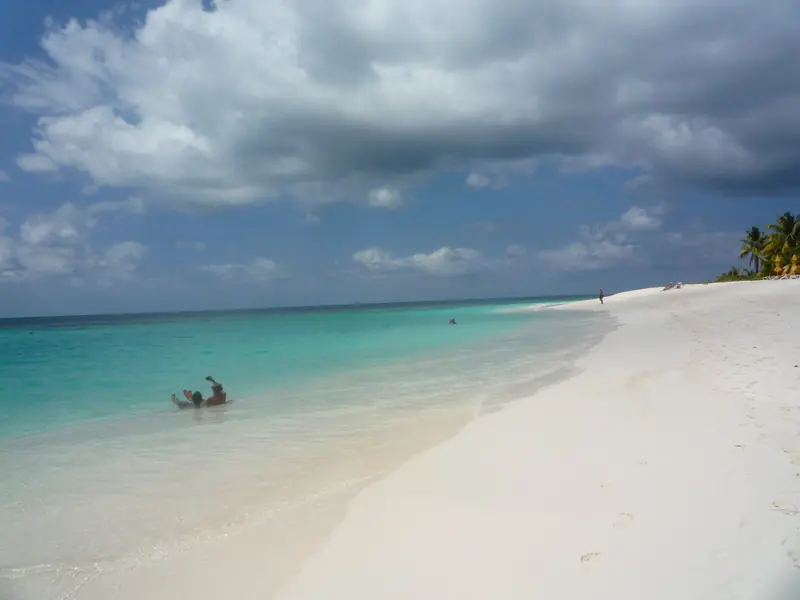
| Anguilla has 33 white sand beaches and a single main road with six traffic lights on the whole island (BOAT International). | |
| Hurricane season runs 1 June to 30 November, with peak risk mid-August to mid-October; a named-storm policy typically forces a haul-out within 48 to 72 hours of a storm being named for the region (World Yacht Insurance). | |
| Hurricane Irma struck Anguilla directly in September 2017, killing one person, leaving roughly 90 per cent of roads impassable and knocking out power into early 2018 (ReliefWeb, West India Committee). | |
| There is no reliable fuel dock, chandlery or grocery infrastructure in Road Bay; diesel, petrol and water are commonly jerry-canned or sourced across the Anguilla Channel in St Martin (Doyle Guides, Cherubino's Atlantic). | |
| The nearest full-service yacht marina is IGY Simpson Bay Marina in St Maarten, across the Anguilla Channel, host of the Heineken Regatta each March (pillars/marinas.json, Superyacht Services Guide). | |
| Chris Doyle's Cruising Guide to the Northern Leeward Islands (17th edition, 2025-2026) now covers Anguilla in a split volume alongside St Martin, St Barths and seven other islands (Amazon, Cruising Guides Publications). |
A Quiet Island About to Get Its First Superyacht Marina
Port Nimara sits on Anguilla's southwest coast, between the Cap Juluca and Altamer estates on Maundays Bay, and is being built as a joint venture of TEI Inc, SF Investments and Antillean Development under CEO David Mizrahi. Excavation of the basin began on 4 December 2024, offshore pontoon fabrication started in Sweden the same year, and Consigli is the lead construction partner alongside SF Marina and local contractors. Mizrahi has described the project as intended to establish, in his words, a world-class maritime destination that honors Anguilla's natural allure while ushering in a new era of economic growth for the island. The marina will carry its own dedicated customs and immigration facility, so a yacht arriving at Port Nimara will clear in on site rather than dinghy ashore to Sandy Ground.
The wider development is larger than the marina alone. A 62-room hotel under the Equinox brand, 18 beachfront villas and up to 35 hillside homes are planned around the basin, with residence sales beginning in early 2026, marina slips available from 2027 and the hotel itself following in 2029. Estimates of the jobs it will create differ by source: YachtCharterFleet puts the figure at 300 to 500, while Anguilla Focus reports closer to 700, split between roughly 200 direct marina and hospitality roles and 500 in supporting sectors. Neither source reconciles the gap, so treat the true figure as somewhere in that range rather than settled. What is not in question is the starting point: before Port Nimara, Anguilla offered a yacht nothing beyond a privately owned mooring ball or open anchor off Road Bay.
Clearing In: Road Bay and the Marine Park Regime
Noonsite and Doyle Guides give office hours as 08:30 to 12:00 and 13:00 to 16:00 with a lunch closure; a cruiser's 2019 log for the yacht Cherubino records the same office working straight through 08:00 to 16:00 with no break. Both describe the same building by the beach, and both agree the captain must complete clearance in person, typically with four copies of the crew list and, often, proof of clearance from the last port. Most owners route this through a local agent such as AXA Yacht Services, which handles clearance formalities, visas and provisioning on a 24-hour basis and can also help pick an anchorage among Anguilla's seven bays and four offshore cays.
Clearing in only covers Road Bay itself. Anywhere else on the island, including day trips to the offshore cays, requires a separate cruising permit, and the fee scales with the boat. One log prices it at US$28 a day for a vessel under 5 gross registered tons, US$56 a day from 5 to 20 tons, and US$140 a day above that, with a seventh day free after six are paid; Caribbean Compass separately quotes a top rate nearer US$150 a day or US$900 a week for larger yachts, a figure that does not cleanly match the tiered log and which this page reports rather than resolves. Road Bay itself sits outside the marine protected area and carries some of the lowest anchoring fees anywhere in the Eastern Caribbean, which is the practical reason most short visits never leave it.
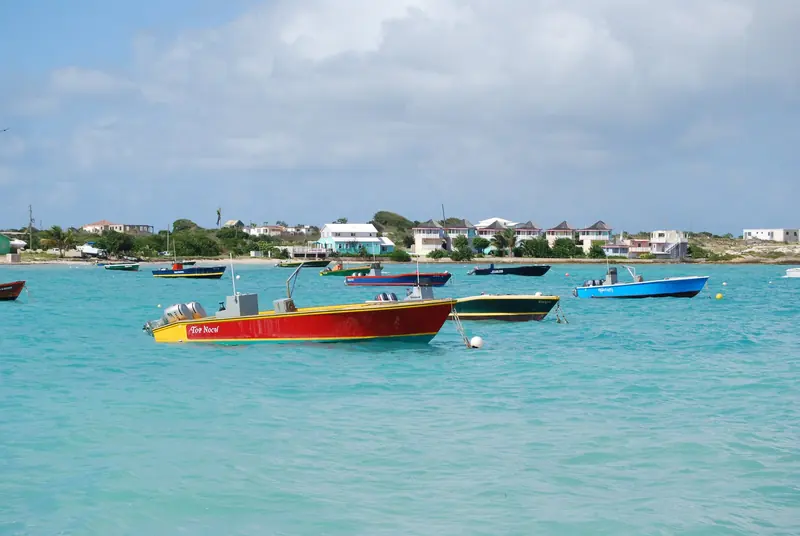
Port Nimara's first 118 berths, for yachts up to 240 feet, open in 2027 on an island that has never had a marina at all.
Where to Anchor: Road Bay and the Five Bays
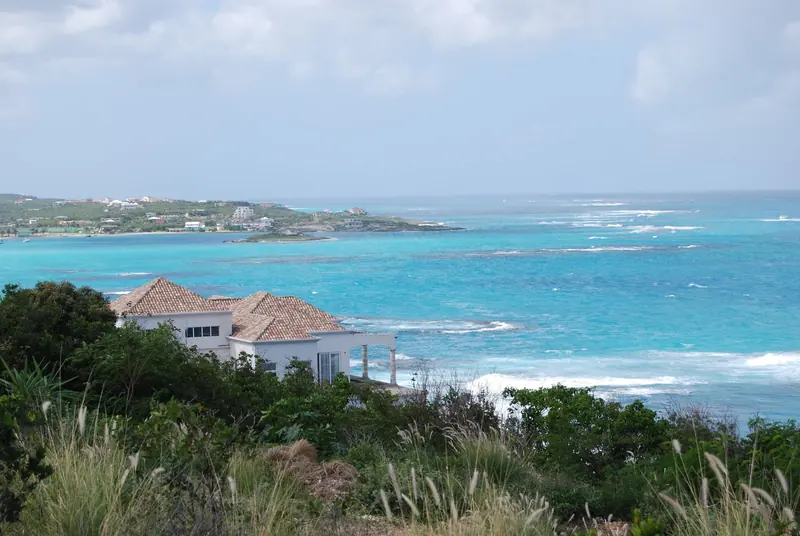
Road Bay is roughly three quarters of a mile wide and half a mile deep, approached from the west with no off-lying hazards and gently shelving depths. Cherubino's skipper anchored on the north side of the informally marked channel to the RoRo dock in 3 to 4 metres, describing the holding in soft sand as excellent; the south side runs 4 to 5 metres. All mooring balls in the bay are privately owned rather than a managed field, so most visiting yachts simply anchor. Meads Bay, a short hop south, sits beneath Malliouhana's bluff and is one of the calmer options when the trades are up; Rendezvous Bay and Cove Bay see less traffic again.
The day cays are the other reason to leave Road Bay. Sandy Island has a lunch-only beach restaurant and a mooring field capped at 65 feet; Prickly Pear and Dog Island offer similar day stops inside the marine park, each carrying its own permit and mooring fee on top of the general cruising permit. Cap Juluca, on Maundays Bay where Port Nimara is now rising, tenders guests ashore depending on sea conditions and vessel size for dinner at Pimms, its Moorish-arched restaurant looking back across the bay. None of these bays, Road Bay included, currently offer fuel, chandlery or a managed berth, which is precisely the gap Port Nimara is built to close from 2027.
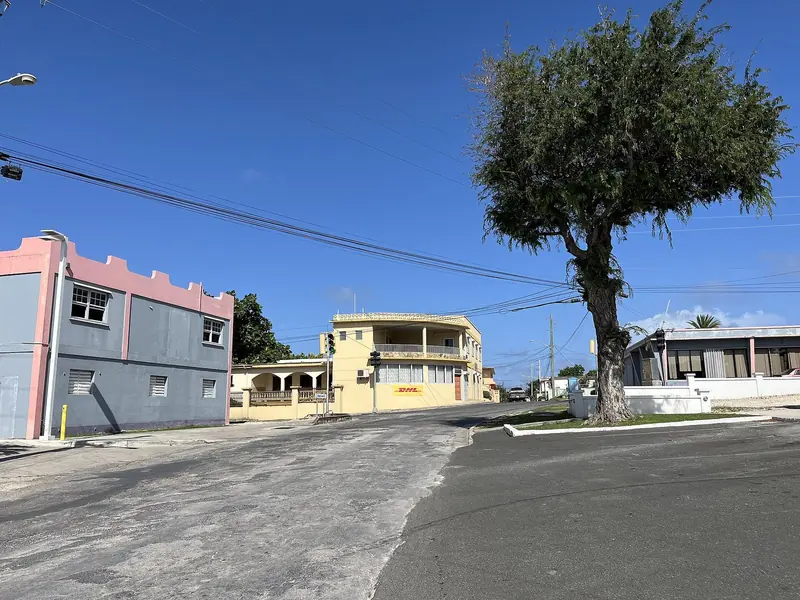
What the Island Cannot Give a Yacht
Doyle Guides and Cherubino's own log agree on this point without qualification: there is no fuel dock, no meaningful chandlery and no grocery infrastructure at Road Bay. Water is typically jerry-canned from shore. A rental car reaches the island's main supermarket, Best Buy, but crews provisioning for a full charter week or a longer stay generally route the order through St Martin, twenty minutes away by ferry, or through a local agent. AXA Yacht Services is the name that keeps coming up for this, run day to day by an agent known locally as Gabi, offering clearance, visas, provisioning and concierge support as one package for a crew that does not want to spend its stay chasing logistics on an island built around villas and beaches rather than a working waterfront.
What the island lacks in dockside infrastructure it makes up in what actually reaches the plate. Jeremy Bearman, executive chef at The Restaurant at Malliouhana, has said getting good product on Anguilla is not as tough as he expected it would be, a line that reads as faint praise until you consider it is coming from a chef running a fine-dining kitchen on an island with no wholesale market of its own. Carrie Bogar, the chef-owner of Veya, works in the same gap from the other direction, describing her own food as Caribbean mixed with an Asian vibe, built from whatever fresh product the island's small supply chain and her own relationships can deliver. Provisioning here is a solved problem for anyone willing to pay an agent; it is not yet a problem the island has solved for itself.
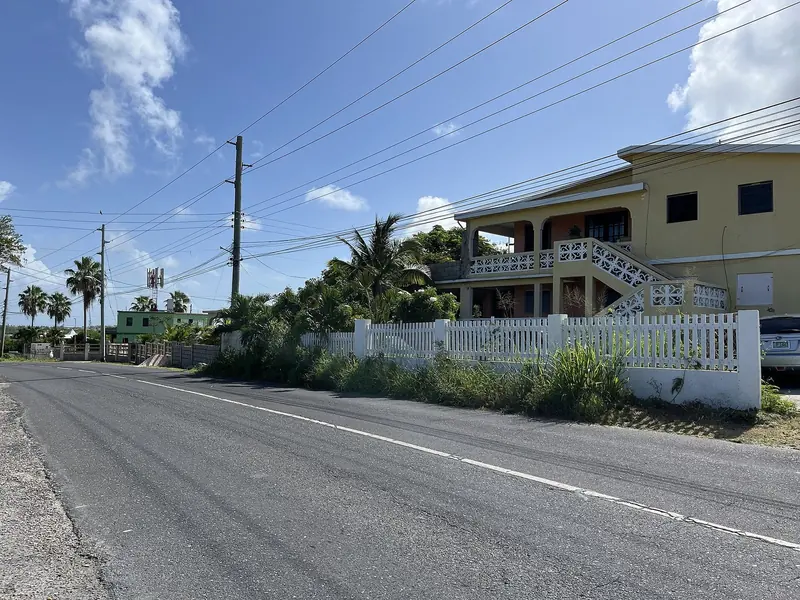
The Draw: Restaurants Built for Yacht Guests
Malliouhana, the only Auberge Resort property in the Caribbean, sits on twenty five acres above Meads Bay, one of the five protected anchorages, with The Restaurant at Malliouhana serving sea to table cooking under Bearman that draws comparisons well beyond the island's size. Cap Juluca, on Maundays Bay, tenders guests to Pimms for a Moorish-arched dining room built around Caribbean and European fusion cooking and fresh seafood. Veya, run independently by Bogar, and the more casual Sandy Island Beach Restaurant and Bayside Bar and Grill at Crocus Bay round out a dining scene that BOAT International has covered specifically for pairing island-casual settings with Michelin-level food, an unusual combination for an island of Anguilla's size.
The other half of the appeal is what is absent. Anguilla has 33 white sand beaches spread across an island served by one main road and six traffic lights, and until Port Nimara there has been no marina to concentrate arrivals, no cruise terminal, and no equivalent of St Barths' Gustavia waterfront scene. For an owner or a CEO reading the market rather than just the menu, that combination, real cooking, low density, and a marina now under construction rather than already saturated, is the case for looking at Anguilla now rather than after Port Nimara opens and the island's profile catches up with its kitchens.
Hurricane Season and the Weather Window
Irma killed one person on Anguilla, left an estimated 90 per cent of roads impassable, and knocked out power into early 2018, according to post-storm reporting compiled by ReliefWeb and the West India Committee. The island's resorts, marinas-in-waiting and restaurants have since been rebuilt, in several cases top to toe, but the storm is recent enough, and the island exposed enough, sitting well out in the Atlantic-facing arc of the Leewards, that no cruising plan for Anguilla should treat hurricane season as a formality.
Caribbean yacht insurance reflects that exposure directly. Policies typically run 1 to 1.5 per cent of the yacht's agreed value a year, with a separate named-storm deductible commonly set at 10 per cent of that value, and most policies carry a named-storm or haul-out warranty requiring the yacht to reach a nominated safe location, often out of the water, within 48 to 72 hours of a storm being named for the region. A policy's hurricane box, its permitted navigation limits for the season, will typically require a boat based in Anguilla through the summer to have a real haul-out plan on the books, whether that means St Martin, Antigua or further south to the ABC islands, rather than an intention to simply watch the forecast.
Getting There and What a Buyer Should Check
A yacht itself must still clear separately at Road Bay regardless of how its owner or guests travel, and most crews use a local agent, commonly AXA Yacht Services, to manage that process alongside the cruising permit for anywhere beyond the bay. Operators such as Calypso Charters run scheduled fast-ferry links between Blowing Point and Princess Juliana specifically for this crew and guest traffic, which is the practical reason Anguilla functions, for now, as an extension of St Martin's logistics rather than a self-sufficient base.
For a buyer or an operator weighing time and money here, the honest checklist runs: no marina until Port Nimara's 2027 opening, so budget for an agent and an open anchorage in the meantime; marine park permit fees that add up quickly on a longer stay rather than a single night in Road Bay; a real, recent hurricane history that should shape any summer haul-out plan rather than an afterthought; and a dining and privacy offer that, by the account of the chefs actually cooking there, already outperforms the island's infrastructure. The nearest full-service alternative, IGY Simpson Bay Marina in St Maarten, sits just across the channel for anyone who wants a proper berth, fuel and a chandlery while Port Nimara is still under construction.
An Land, Anfahrt und Buchung
| Getting there | No practical direct route for most owners or guests. Almost everyone flies into Princess Juliana International Airport (SXM) on St Maarten, then takes the 20-minute public ferry from Marigot or a private launch across the Anguilla Channel to Blowing Point. Anguilla's own Wallblake Airport handles only limited regional traffic. |
|---|---|
| Season and weather window | Safest cruising window is roughly December to May. Hurricane season runs 1 June to 30 November, peak risk mid-August to mid-October. Hurricane Irma hit Anguilla directly in September 2017; treat the season as a real planning constraint, not a formality. |
| Clearance, customs and permits | Every yacht must clear Customs and Immigration at the Sandy Ground dinghy dock in Road Bay before going anywhere else. Sources disagree on exact hours: Noonsite and Doyle Guides give 08:30-12:00 and 13:00-16:00; a 2019 cruiser log records 08:00-16:00 with no break. Captain must clear in person, usually with four copies of the crew list. A separate cruising permit is required for anywhere beyond Road Bay, including the offshore cays. |
| Anchoring and mooring rules | Road Bay: open anchorage, mooring balls privately owned, anchor either side of the informal RoRo channel, 3-5m depths, sand holding. Six marine protected areas cover most of the rest of the coast; mooring buoys there are capped at 65 feet, colour-coded by size, day use only 6am-7pm, with fines up to EC$5,000 and/or six months in prison for violations. |
| Fuel and provisioning | Not reliably available in Road Bay. No fuel dock, no chandlery, minimal groceries. Diesel, petrol and water are typically jerry-canned or sourced via St Martin, 20 minutes away. Best Buy is the main on-island supermarket, reached by rental car. Local agents such as AXA Yacht Services arrange fine provisioning and full clearance as one package. |
| Marina and berth costs | Not published. There is no marina on Anguilla today; Port Nimara has not released berth tariffs ahead of its scheduled 2027 opening for its first 118 slips. |
| What is nearby | IGY Simpson Bay Marina in St Maarten sits across the Anguilla Channel, the nearest full-service marina base with fuel, a chandlery and berths, and host of the annual Heineken Regatta each March. Malliouhana (Meads Bay) and Cap Juluca (Maundays Bay, the site of Port Nimara) are the two resorts most built around tendering yacht guests ashore. |
| What is not published | Port Nimara's berth pricing ahead of 2027, the exact 2026 marine park permit fee schedule (the government's own reference is a fee table published only as an image), and a reconciled jobs figure for Port Nimara: YachtCharterFleet estimates 300-500, Anguilla Focus estimates nearer 700, and neither source explains the gap. |
Was Eigner und Crew berichten
Road Bay anchors well and clears fast, but nothing beyond it is free
Sailing north from Ile Fourche and rounding Anguilla's northeast corner through the Scrub Island Channel, he called the passage an unsurprisingly lumpy experience; once anchored on the north side of Road Bay in 3 to 4 metres he described the holding in soft sand as excellent, but noted dining ashore runs to at least US$20 for a burger and chips, and that the bay itself has no fuel, grocery store or chandlery.
Tom Hester, skipper, S/Y CherubinoProvisioning a fine-dining kitchen on Anguilla is easier than the island's infrastructure suggests
"Getting good product down here is not as tough as I thought it would be."
Jeremy Bearman, Executive Chef, The Restaurant at MalliouhanaThe island's food scene draws on real local supply, not just imports
"It's Caribbean mixed with an Asian vibe. That's the kind of food I'm interested in."
Carrie Bogar, Chef-Owner, VeyaPort Nimara is being built to change the island's economics, not just add berths
"Our aim is to establish a world-class maritime destination that honors Anguilla's natural allure while ushering in a new era of economic growth for the island."
David Mizrahi, CEO, Port Nimara / SF Investments
Was gut ist und worauf zu achten ist
Stärken
- Dining that outclasses the island's sizeMalliouhana, Cap Juluca's Pimms and Veya deliver Michelin-level cooking on an island with no wholesale market of its own, confirmed by the chefs running those kitchens rather than by marketing copy.
- Genuinely low density33 beaches, one main road and six traffic lights across the whole island, with no cruise terminal and, until 2027, no marina to concentrate arrivals the way St Barths or St Maarten now do.
- Some of the cheapest anchoring in the Eastern CaribbeanRoad Bay sits outside the marine protected area and carries anchoring fees Doyle Guides describes as among the lowest in the region, a real saving for a shorter stay.
- Real infrastructure now under constructionPort Nimara is not a rumoured project. Excavation began December 2024, pontoons were being fabricated in Sweden the same year, and the first 118 berths are scheduled for 2027 under a named developer and construction partner.
Worauf zu achten ist
- No marina today, at any priceEvery yacht on Anguilla right now anchors off Road Bay or a private mooring ball. There is no managed berth, no shore power and no marina office until Port Nimara opens.
- No fuel, no chandlery, thin groceriesDiesel, petrol and water are jerry-canned or sourced across the Anguilla Channel in St Martin; the island's own supermarket, Best Buy, is reached by rental car and is not built for provisioning a charter week.
- Marine park fees add up fast beyond Road BayA cruising permit for the day cays or the outer bays runs from roughly US$28 to US$140 a day depending on tonnage by one cruiser's account, or nearer US$150 a day by Caribbean Compass's separate figure, on top of Road Bay's own low fee.
- Direct, recent hurricane exposureHurricane Irma hit Anguilla hard in September 2017, killing one person and leaving most roads impassable for weeks. Any summer stay needs a real haul-out plan, not an intention to watch the forecast.
Für wen: An owner or charter guest who wants Michelin-level cooking and a near-empty anchorage more than a marina berth, and an operator or investor watching Port Nimara turn a day-stop off St Martin into a fixed base on the northeast Caribbean circuit by 2027.