Cape Town & Quay7
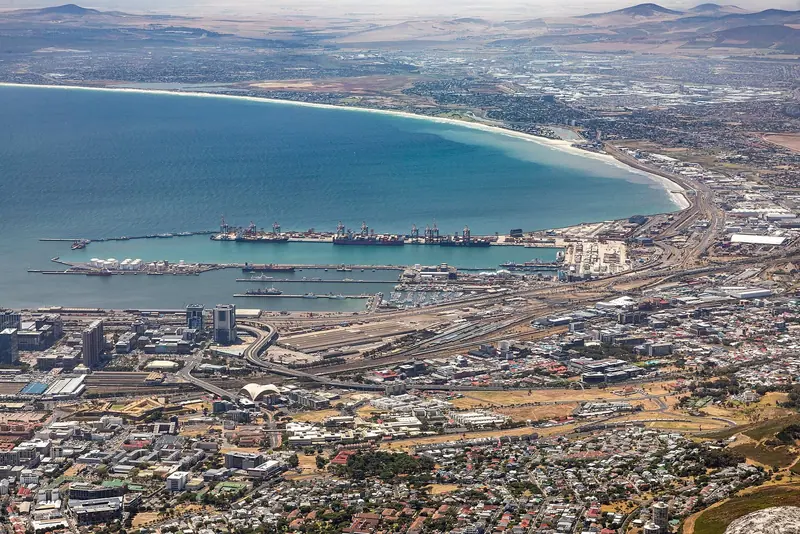
| Location | Cape Town harbour, Table Bay, Western Cape, South Africa, inside the V&A Waterfront precinct |
|---|---|
| Quay7 Superyacht Marina | a new purpose-built facility under construction inside Cape Town harbour, in front of the Cape Town Edition hotel, per Marine Industry News, MarinaWorld and Engineering News |
| Investment | ZAR 230 million, reported as USD 13.5 to 13.7 million depending on the exchange rate used at the time of reporting |
| Berths | 8 positions for vessels between 30 m and 90 m, six stern-to and two beam-on, on six 30 m Damen floating pontoons |
| Completion targeted for October 2026, per the V&A Waterfront and Engineering News; as of this writing the marina has not yet opened and carries no owner or user history of its own | |
| Off-season use | commissioning and export staging for Cape Town's catamaran builders, named as Robertson and Caine, Two Oceans Marine and Balance Catamarans |
| Fuel | bonded supply planned at Elbow Quay through the FFS refuelling facility |
| Refit access | direct links to the Sturrock and Robinson dry docks and a synchrolift rated at 1,806 tonnes, per Crown Publications' Construction World |
| Already operating nearby | Royal Cape Yacht Club, Duncan Dock, publicly reported at between 386 and 412 block-and-chain moorings depending on the source, with fresh water, lighting and 220 V power at every berth |
| RCYC visitor rule | any vessel over 65 ft LOA or 3 m draught must notify the club before arrival; bookings are required in advance |
| V&A Waterfront Marina | a separate, smaller basin at Alfred Basin with limited visitor berths, reached through a swing bridge that must be coordinated with the operator |
| Port Control VHF | channel 14, required contact before any vessel enters Table Bay harbour limits |
| Clearing in or out involves four separate steps: V&A Marina or RCYC paperwork, an RCYC letter of good standing, Transnet National Ports Authority clearance (checked at a manned gate), and Immigration and Customs | |
| Cape to Rio, South Africa's premier offshore race, starts from Royal Cape Yacht Club | |
| Weather | the Cape Doctor south-easter runs roughly September to March, peaking November to March, with typical gusts of 30 to 50 km/h and documented peaks over 100 km/h in Table Bay; winter (May to September) brings Atlantic frontal systems, large swells and can make the open Table Bay anchorage untenable |
| Best cruising season | October to April, with December and February the busiest months |
A working harbour, not a resort, gets a superyacht marina
Cape Town harbour has run as commercial and naval port infrastructure for most of its history, with visiting yachts fitting in around container traffic, fishing fleets and the Royal Cape Yacht Club's own moorings rather than a dedicated superyacht berth. The V&A Waterfront's Quay7 project changes that: a ZAR 230 million, reported as USD 13.5 to 13.7 million, purpose-built marina going in on the working harbour side, in front of the new Cape Town Edition hotel, per Marine Industry News, MarinaWorld and Engineering News.
The plan is eight berths for yachts between 30 and 90 metres, six stern-to and two beam-on, built on six 30 metre Damen floating pontoons with electricity, water and wifi at each position. Construction was targeted for completion in October 2026. As of this writing the marina has not opened, has no berthing tariff published anywhere found, and has no owner or charter history of its own - everything about the lived experience of bringing a yacht into Cape Town still comes from the infrastructure that already exists next door.
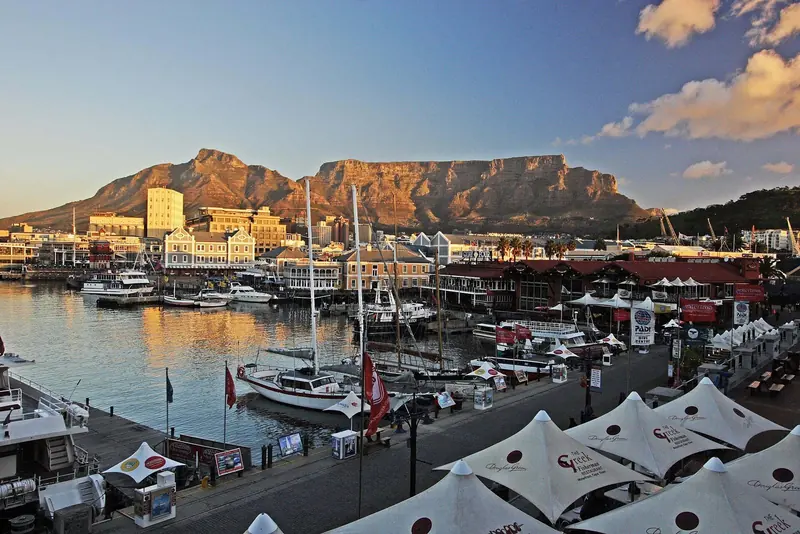
What already exists: Royal Cape Yacht Club and the V&A Marina
Royal Cape Yacht Club, on Duncan Dock, is the club that has actually been hosting visiting yachts here for decades. Sources report the mooring count differently, from 386 to 412 block-and-chain moorings, but agree on the shape of the offer: fresh water, lighting and 220 volt power at every berth, advance booking required, and a rule that anything over 65 feet LOA or 3 metres draught must notify the club ahead of arrival.
The V&A Waterfront runs its own smaller marina at Alfred Basin, with a limited number of visitor berths reached through a swing bridge that has to be coordinated with the operator before entry. Between the two, a visiting yacht today has real options in Cape Town; Quay7 adds capacity and depth at the largest end of the market rather than creating a marina where none existed.
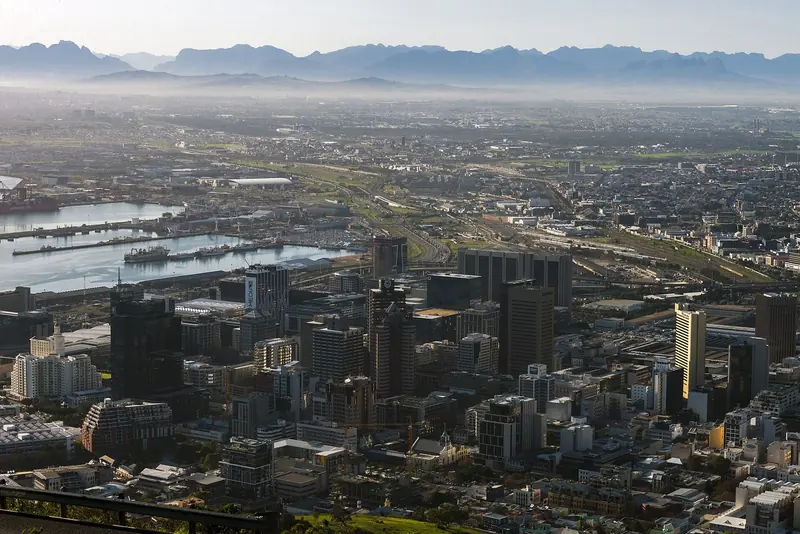
A working harbour building South Africa's first purpose-built superyacht marina behind a synchrolift rated at 1,806 tonnes, with no berthing tariff published yet and every real owner report so far coming from the yacht club next door.
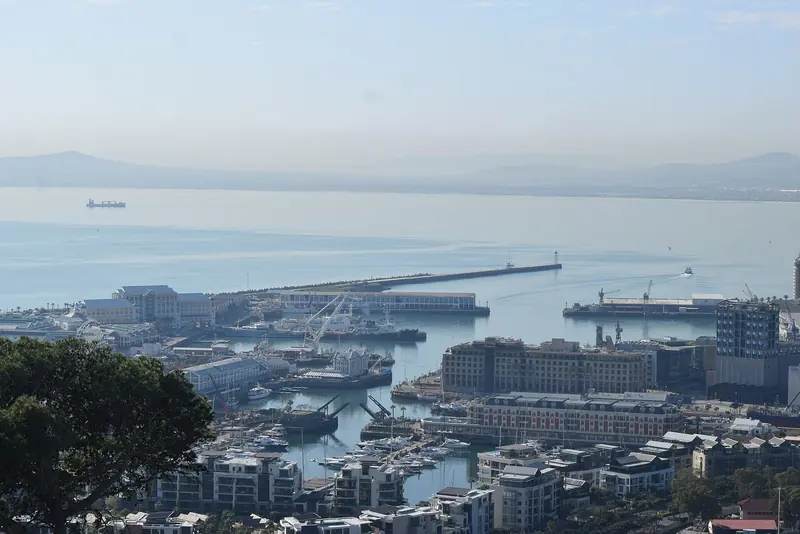
The refit yard behind the new berths
What makes Quay7 more than a set of pontoons is what it connects to. The Sturrock and Robinson dry docks sit minutes apart in the working harbour, backed by a synchrolift rated at 1,806 tonnes and tugs with 40 tonnes of bollard pull, according to Construction World's reporting on the project. Bonded fuel is planned at Elbow Quay through the FFS refuelling facility.
That refit depth is the genuine differentiator against most new-build marinas, which typically offer nothing beyond a travel lift. In the off season the same berths are earmarked for commissioning and export staging for Cape Town's own catamaran builders, named as Robertson and Caine, Two Oceans Marine and Balance Catamarans, which tells its own story about how much production sailing tonnage already moves through this harbour without a dedicated superyacht berth to show for it.
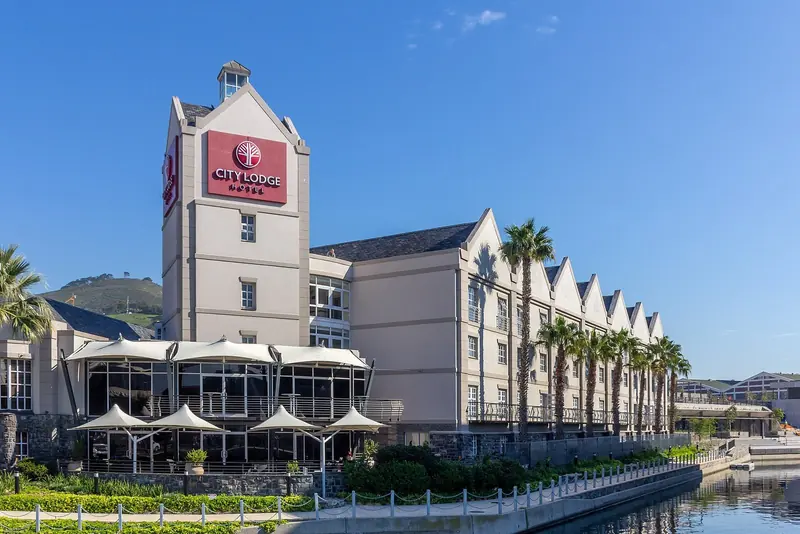
Getting there, and calling in
Cape Town International sits about 20 kilometres from the harbour with direct long-haul connections to Europe, the Gulf and the rest of Africa, but this is a destination reached by sea more often than by air - a stop on an Atlantic circumnavigation, a Cape-to-Cape passage, or the Cape to Rio race that starts from Royal Cape Yacht Club itself, rather than a fly-in weekend.
Call Port Control on VHF channel 14 before entering Table Bay's harbour limits. Royal Cape Yacht Club wants advance booking and prior notice for anything over 65 feet or 3 metres draught. The V&A Marina's swing bridge needs coordinating ahead of arrival rather than assuming an open passage.
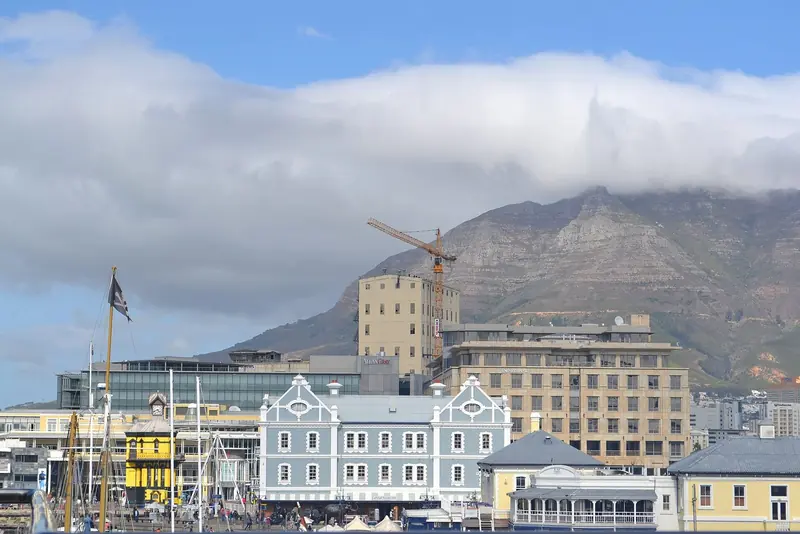
Clearing in, and the longer process of clearing out
Formalities run through Immigration, Customs, Port Health and Transnet National Ports Authority inside the harbour precinct, with a Yacht Club Clearance Certificate checked at the gate. One cruising crew's own account of departure described four separate stops completed in a single day: V&A Marina paperwork, an RCYC letter of good standing, Transnet clearance at a gate that included a breathalyzer test, and a final Immigration and Customs stamp.
Once cleared out, a yacht has 24 hours to leave South African waters with no further stops permitted. It is a more bureaucratic exit than most Mediterranean or Caribbean marinas ask for, and worth budgeting a full day for rather than treating as a formality on the way out.
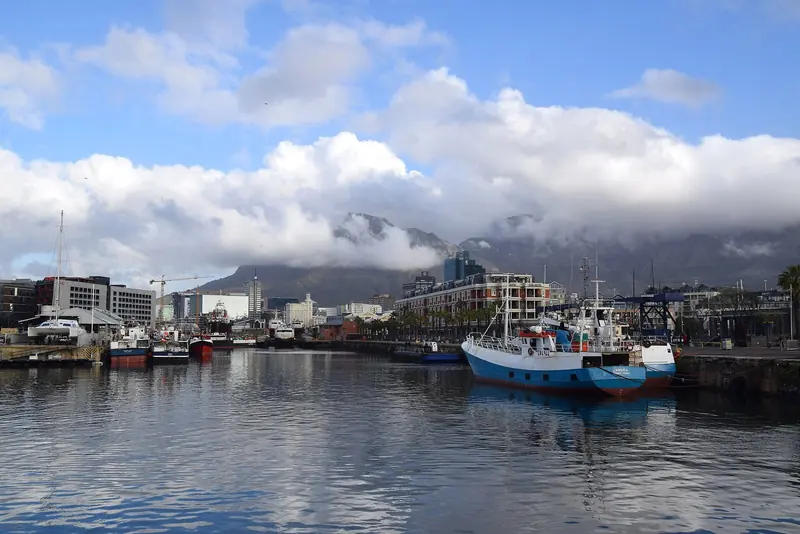
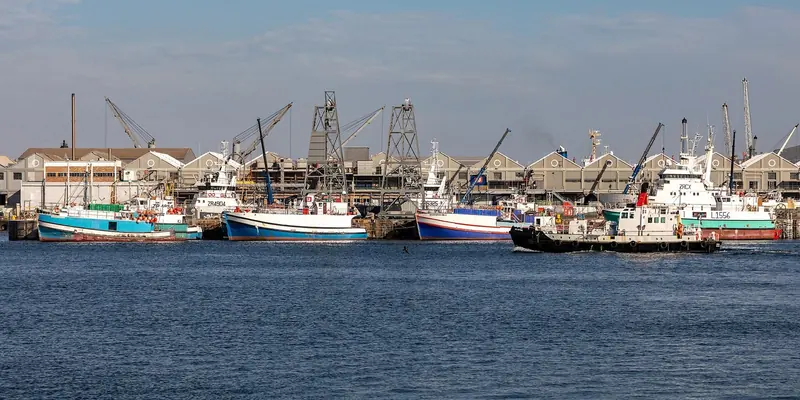
Why owners actually route through here
Cape Town sits on the corner where the South Atlantic meets the Indian Ocean, which makes it the standard stopping and provisioning point for a yacht going around the Cape of Good Hope rather than through the Suez Canal, and for boats crossing to or from St Helena and the South Atlantic islands. The refit capacity behind Quay7 gives an owner already in the region a reason to schedule real yard work here rather than push on to a European yard.
None of that is new; owners and delivery crews have used Cape Town this way for years without a dedicated berth built for it. What Quay7 adds, once it opens, is a purpose-built stop at the top end of the fleet with the same refit access, rather than a 90 metre yacht competing for space with the club's smaller cruising moorings.
What cruisers actually report
The most detailed first-hand account available is a two-month stay by a circumnavigating couple whose generator exhaust elbow kept splitting; a local welder, named in their account only as Chris, rebuilt the compromised sections after temporary fixes failed, and the repair filled enough of the stay that the crew never made it to Table Mountain or the Cape of Good Hope before moving on to St Helena.
Royal Cape Yacht Club's own visitor history includes Swedish sailors Yanne Larsson and Carl Andersson, who called in on their Hallberg-Rassy 42 Albatross during a round-the-world passage and were welcomed warmly enough to leave a copy of their own book at the club. The club runs an offshore-preparation week aimed at boats about to cross an ocean, which is a fair summary of what kind of yacht actually stops here: working boats on a passage, not weekenders.
Ashore, and the weather that decides the plan
Pick n Pay and Woolworths Food at the V&A Waterfront cover routine provisioning within walking distance of both marinas, with the Oranjezicht City Farm Market running weekends and Wednesday evenings for fresh produce. Table Mountain, the city centre and the Cape Peninsula are all a short drive away, which is more than most marina stops on this desk can say.
The weather is the real planning constraint. The Cape Doctor south-easter runs roughly September to March, peaking November to March, with routine gusts of 30 to 50 km/h and documented peaks over 100 km/h funnelled by the terrain around Table Bay. Winter, May to September, swaps that for Atlantic frontal systems and large swells that can make the open Table Bay anchorage untenable. October to April is the season that actually works, with December and February the busiest months.
The honest downside
Quay7 itself is not yet a marina an owner can book. As of this writing it is under construction, targeted for October 2026, with a berth count and refit connections well documented but no published tariff and no owner or charter history to draw on. Everything about the actual experience of stopping in Cape Town by yacht, good and bad, comes from Royal Cape Yacht Club and the existing V&A Waterfront marina, not from the new development itself.
Even setting Quay7 aside, this is not an easy stop. The clearance process runs to four separate government and club steps, the weather closes a six-month window most of the year, and the mooring count at Royal Cape Yacht Club is reported inconsistently across sources that should agree on a fixed number. An owner should treat Cape Town as a serious working stop on a longer passage, not as a resort call, and should confirm Quay7's actual opening and tariff directly before planning around it.
An Land, Anfahrt und Buchung
| Getting there | Cape Town International is a major long-haul airport with direct flights from Europe, the Gulf and elsewhere in Africa, about 20 km from the harbour. This is an arrival point reached by sea more often than by air, usually as a stop on an Atlantic circumnavigation or a Cape-to-Cape passage rather than a fly-in destination. |
|---|---|
| Arriving by sea | Call Port Control on VHF channel 14 before entering Table Bay harbour limits. Royal Cape Yacht Club requires advance booking and wants notice ahead of arrival for anything over 65 ft LOA or 3 m draught. The V&A Waterfront's own smaller marina at Alfred Basin is reached through a swing bridge that has to be coordinated with the operator before entry. |
| Clearing in and out | Formalities run through Immigration, Customs, Port Health and Transnet National Ports Authority inside the harbour precinct, with a Yacht Club Clearance Certificate required at the gate. One cruising crew's account of clearing out described four separate stops in a single day, including a breathalyzer check at the port authority gate. Boats must leave South African waters within 24 hours of clearing out, with no further stops. |
| What Quay7 will cost, and what is not yet known | The ZAR 230 million (USD 13.5 to 13.7 million) Quay7 development has been reported in detail for its berth count, dimensions and refit links, but no berthing tariff has been published anywhere found, and construction was still targeted for October 2026 completion as of this writing. There is no owner or charter history at Quay7 itself yet; everything reported here about the actual experience of Cape Town by yacht comes from Royal Cape Yacht Club and the existing V&A Waterfront marina. |
| Refit and haul-out | The Sturrock and Robinson dry docks sit minutes apart in the working harbour, backed by a synchrolift rated at 1,806 tonnes and tugs with 40 tonnes of bollard pull, according to Construction World. Quay7 is designed to connect directly to this yard capacity rather than duplicate it, which is a genuine advantage over marinas that offer berths with no serious refit depth behind them. |
| Provisioning | Pick n Pay and Woolworths Food at the V&A Waterfront cover the basics within walking distance of both marinas. The Oranjezicht City Farm Market runs weekends and Wednesday evenings for fresh produce, and Cape Town's fishing fleet supplies the seafood market trade beyond that. |
| The season to avoid | Winter, May to September, brings Atlantic frontal systems with large swells and gale-force gusts that can make the open Table Bay anchorage untenable and push exposed berths into rough conditions. The Cape Doctor south-easter, strongest November to March, is a separate hazard: routine gusts of 30 to 50 km/h with documented peaks over 100 km/h funnelled by the terrain around Table Bay. |
Was Eigner und Crew berichten
Cape Town works as a proper repair stop, not just a scenic one
One circumnavigating cruising blog spent two months in Cape Town waiting on a generator exhaust elbow that kept splitting, eventually rebuilt by a local welder named Chris after temporary fixes failed, before the boat continued on to St Helena. The crew never got to Table Mountain or the Cape of Good Hope in that time because the repair work filled the stay.
SV Slow FlightThe paperwork to leave is more involved than the paperwork to arrive
The same crew described clearing out of South Africa from Cape Town as a four-stop process in one day: V&A Marina paperwork, a Royal Cape Yacht Club letter of good standing, Transnet Port Authority clearance at a gate that included a breathalyzer test, and a final Immigration and Customs stamp.
SV Slow FlightThe club culture is real, and circumnavigators are part of it
Royal Cape Yacht Club's own visitor archive records Swedish sailors Yanne Larsson and Carl Andersson calling in on their Hallberg-Rassy 42 Albatross on a round-the-world passage and being received warmly enough to leave a copy of their book behind; the club runs an offshore-prep week aimed squarely at boats about to cross an ocean.
Royal Cape Yacht Club
Was gut ist und worauf zu achten ist
Stärken
- Real refit depth behind the new berthsThe Sturrock and Robinson dry docks and a 1,806 tonne synchrolift sit minutes from Quay7's planned pontoons, which is refit capacity most new marinas simply do not have.
- A genuine working stop, not a manufactured oneRoyal Cape Yacht Club has hosted circumnavigators and ocean racers for decades, runs an offshore-prep week, and start the Cape to Rio race, so the culture and the competence around a hard passage already exist here.
- The corner where two oceans meetCape Town is the standard provisioning and repair stop for a Cape of Good Hope routing or a South Atlantic island passage, independent of whether Quay7 ever opens.
Worauf zu achten ist
- Quay7 is not bookable yetConstruction was still targeted for October 2026 completion as of this writing, with no published tariff and no owner or charter history at the new marina itself.
- A six-month weather window, not a year-round stopWinter Atlantic fronts can make the open Table Bay anchorage untenable and the Cape Doctor south-easter brings gusts over 100 km/h in season, narrowing the reliable window to October through April.
- Clearing out takes a full day of separate officesOne documented departure ran through four stops - V&A Marina, Royal Cape Yacht Club, Transnet Port Authority with a breathalyzer check, and Immigration and Customs - in a single day, then a 24 hour deadline to actually leave.
- Even the existing berth count is not settledRoyal Cape Yacht Club's own mooring total is reported anywhere from 386 to 412 across sources that ought to agree on a fixed figure.
Für wen: An owner or delivery crew routing a Cape of Good Hope passage or a South Atlantic crossing who wants real refit capability and an experienced yacht club rather than a resort marina, and who checks Quay7's actual opening and tariff directly before counting on the new berths.