Corsica
| Region | French Mediterranean island, about 110 nautical miles from Cap Corse to Bonifacio |
|---|---|
| Scale | Bonifacio to Santa Teresa in Sardinia about 7 nautical miles, to Porto Cervo about 25 |
| Season | May to October, with June and September the best combination of weather, space and price |
| Main port | Bonifacio, about 350 pontoon berths plus 170 visitor places, maximum 85 m LOA and 6 m draft |
| The quai d'honneur at Bonifacio is the berth the largest yachts take, and it is contracted well before August | |
| Arrete 260/2026, dated 3 July 2026, established two organised mooring sectors in the Gulf of Sant'Amanza with 14 buoys for vessels of 26 to 70 m | |
| The port's own listing describes 15 ecological buoys in Sant'Amanza for vessels of 24 to 75 m | |
| Bouches de Bonifacio reserve | anchoring on Posidonia is monitored by rangers and fined, sand only, with the Donia app the standard reference |
| Lavezzi | four seabird protection areas closed under Decree 235/2023, with Cala Lazarina and Cala di u Grecu the usable sand anchorages |
| Scandola | UNESCO World Heritage since 1983, partial anchoring ban in the core zones and a 250 m exclusion around marked osprey nests |
| French and Corsican press reported through 2026 that quotas and a booking system are being prepared for Scandola and the Calanches | |
| Belvedere-Campomoro | Arrete 2026-067 sets a mooring field of about 115 berths, roughly a third for visitors, with a 5 knot approach along marked channels |
| Balagne | Arrete 2026-057 defines access channels and motor vessel restrictions at Monticello |
| East coast | Arrete 2026-009 bans anchoring and dragging around the aquaculture installations in the Etang de Diane |
| Ajaccio was closed to traffic from 23 to 31 May 2026 for a freediving event under Arrete 2026-090 | |
| Winds | the mistral accelerates hard through the Strait of Bonifacio, and the libeccio builds swell along the whole west coast |
| Charter VAT | French VAT at 20 per cent on a charter starting in Corsica, with exemption only for the proportion genuinely spent outside French and EU waters |
| The old French lump sum reduction has gone. For yachts of 15 m and over, AIS data is the accepted evidence of time outside EU waters | |
| Airports | Figari Sud-Corse for the south, Ajaccio for the west, Calvi for the Balagne and Bastia for the north east, all strongly seasonal |
| Figari is roughly 20 to 30 minutes from both Bonifacio and Porto-Vecchio | |
| West coast highlights | the Gulf of Porto, the Calanches de Piana, Girolata with no road to it, and the Scandola reserve |
| North coast | Calvi under its Genoese citadel, Saint-Florent, and the Agriates beaches of Saleccia and Lotu reachable by tender |
| Everything structural goes to the French mainland or Italy. Corsica has no superyacht yard | |
One island, four coasts
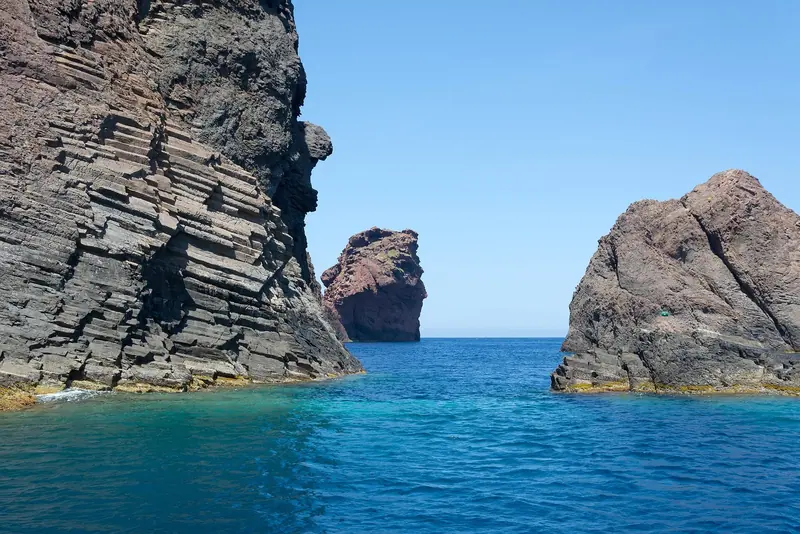
Corsica runs about 110 nautical miles from Cap Corse in the north to Bonifacio in the south and each coast is a different trip. The west is the spectacular one, with the red porphyry of the Calanches, the Gulf of Porto, the Scandola reserve and Girolata reachable only by boat or on foot. The south is the social one, with Bonifacio in its cliff, Porto-Vecchio behind its gulf and the Lavezzi islands scattered in the strait. The east is a long straight beach with Solenzara and very little else. The north is Cap Corse, Saint-Florent and the Balagne beaches at Calvi and Ile Rousse.
The proximity to Sardinia is the point most owners miss. Bonifacio to Santa Teresa on the Sardinian shore is about seven miles, and Porto Cervo is around 25. A boat doing the Costa Smeralda can cross for lunch, and the two weeks that begin in Porto Cervo almost always end in Corsica because the anchorages are as good, the prices are half, and the strait between them is the finest short piece of water in the western Mediterranean when the wind allows it.
Bonifacio, and the harbour in the cliff
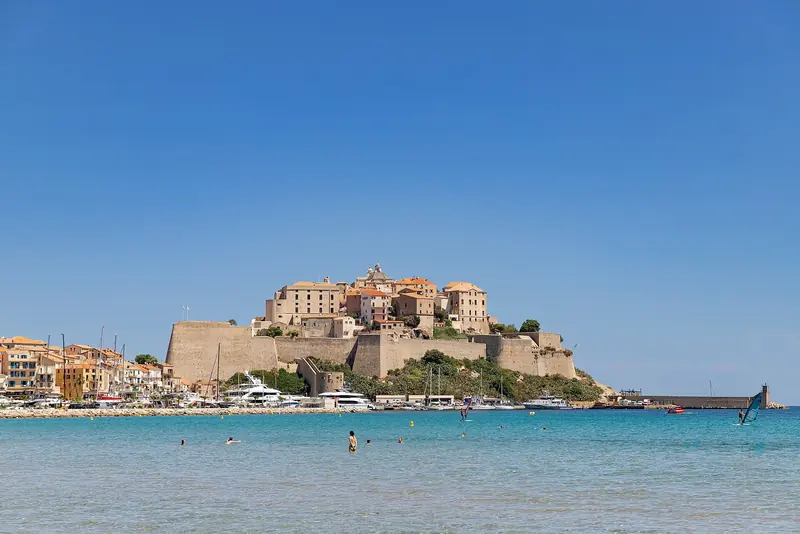
Bonifacio is one of the great arrivals in the Mediterranean. The entrance is a slot in a 60 metre limestone cliff, invisible until you are on it, opening into a long narrow fjord with the medieval citadel standing directly above the quay. The marina holds around 350 boats on pontoons with 170 places kept for visitors, takes a maximum length of 85 metres and up to six metres of draft, and the quai d'honneur along the town side is where the largest yachts lie with the restaurants a step from the passerelle.
It is also the most expensive and the most contested berthing on the island in August, and it is booked. The alternatives in the south are Porto-Vecchio at the head of its gulf, which is the smart resort end of Corsica and takes rather less size, and the anchorages themselves: Rondinara, Santa Giulia, Palombaggia and the Cerbicale islands on the east side of the cape, and Sant'Amanza just around the corner from Bonifacio, which has become the answer for anything the marina cannot take.
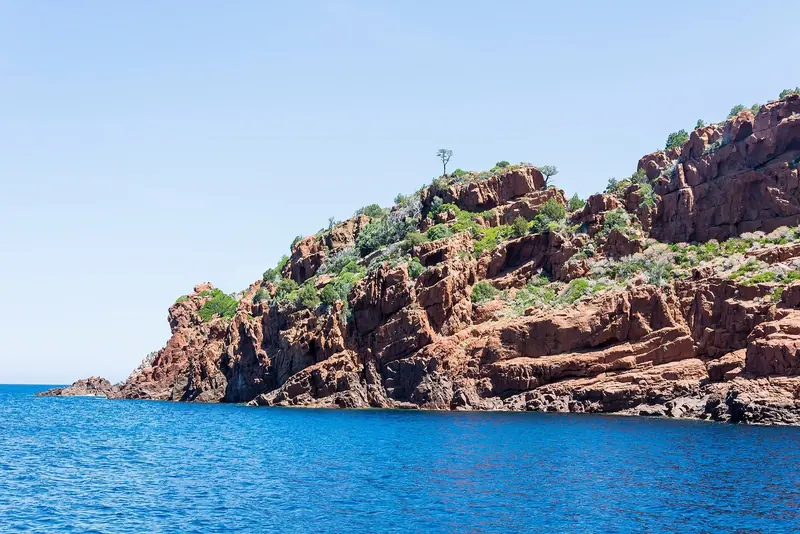
Fourteen buoys for a 70 metre yacht in the Strait of Bonifacio, established by decree in July 2026, because the alternative is a fine for anchoring on seagrass.
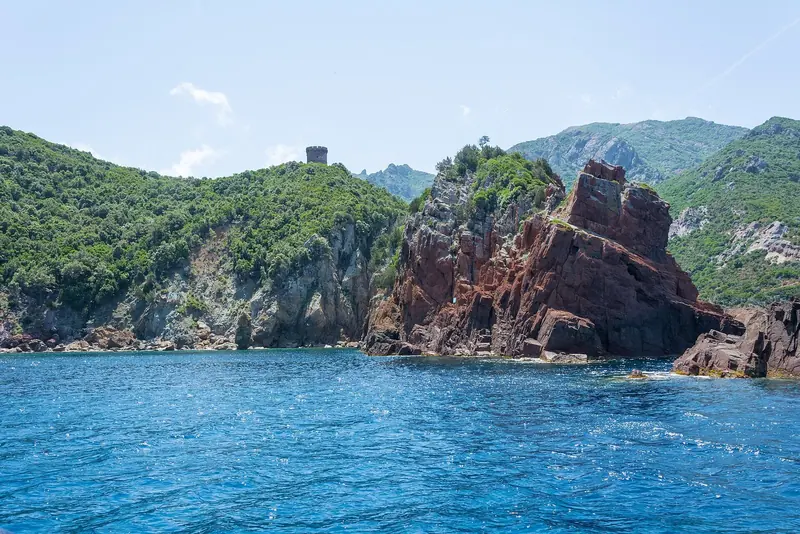
The 2026 decrees changed where a large yacht may stop
France has been closing anchoring over Posidonia for several years and Corsica caught up in 2026. In the Strait of Bonifacio nature reserve, anchoring on the dark ground is monitored by reserve rangers and fined, and the practical rule is that the hook goes on clean sand only, with the Donia app the standard tool for reading the bottom. The most significant instrument for a large yacht is Arrete 260/2026 of 3 July 2026, which formally established two organised mooring sectors in the Gulf of Sant'Amanza carrying 14 buoys sized for vessels between 26 and 70 metres. The port's own listing puts it at 15 buoys for 24 to 75 metres.
The rest of the island has been reorganised the same way. At Belvedere-Campomoro, Arrete 2026-067 replaced the 2017 regime with a mooring field of about 115 berths, roughly a third of them kept for visitors, motor access to the buoys capped at five knots along marked channels, and no anchoring on the red marked western flank. In the Balagne, Arrete 2026-057 sets access channels and motor restrictions at Monticello. On the east coast Arrete 2026-009 bans anchoring and dragging around the aquaculture installations in the Etang de Diane, and Ajaccio was closed to traffic from 23 to 31 May 2026 for a freediving event under Arrete 2026-090.
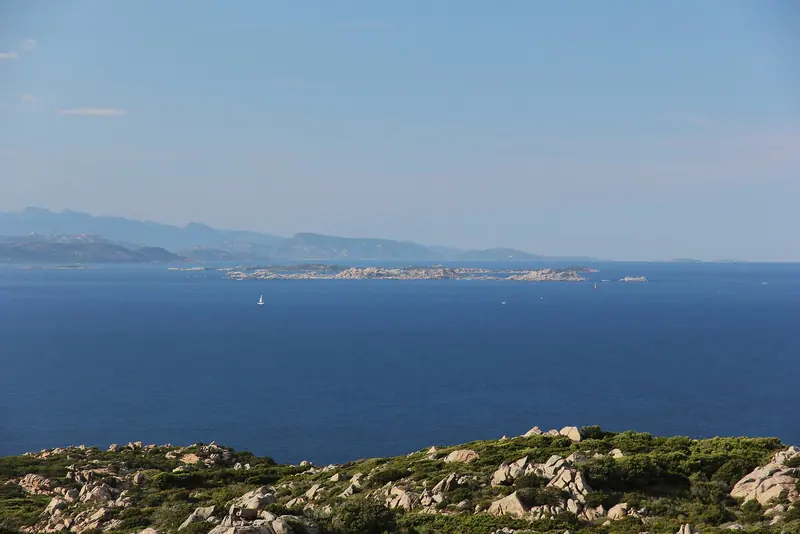
Lavezzi and Scandola are reserves first and anchorages second
The Lavezzi archipelago in the strait is granite, sand and clear water, and it is inside the Bouches de Bonifacio reserve. Four seabird protection areas were established under Decree 235/2023 and are closed. Cala Lazarina and Cala di u Grecu remain the usable anchorages and both are sand only, with rangers watching berthing times and numbers more closely each season. Cavallo, the private island next door, is a separate world with its own small port and its own rules about who lands.
Scandola on the west coast has been a UNESCO World Heritage site since 1983 and is the most restricted water in Corsica. Anchoring is partly prohibited in the core zones, marked by yellow buoys and temporary signage, and a 250 metre exclusion applies around marked osprey nests through the summer. French national and Corsican press reported through 2026 that the authorities are preparing quotas and a booking system to deal with the number of tourist boats working the reserve and the neighbouring Calanches. An owner planning Scandola in 2027 should confirm the access regime before he plans the day.
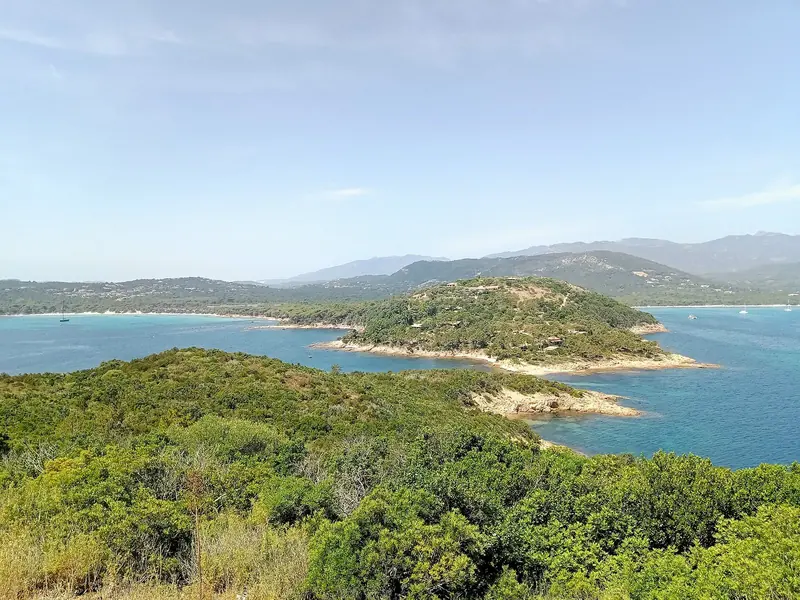
The west coast is the reason to come
From Ajaccio north the coast turns theatrical. The Gulf of Porto is ringed by red cliffs that go orange at the end of the day, the Calanches de Piana above it are a UNESCO landscape of eroded porphyry, and Girolata sits in a bay with no road to it, so the village is supplied by sea and the anchorage empties completely once the day boats leave. Scandola closes the northern side of the gulf with sea caves, stacks and an osprey population that is the reason for the restrictions.
Further north the Balagne opens out. Calvi has a Genoese citadel above a crescent bay with a marina below it and the mountains behind, and it is the one place on the island with a summer social season worth the name. Saint-Florent at the base of Cap Corse is quieter and prettier, with the Agriates desert beaches, Saleccia and Lotu, a tender ride away and reachable no other easy way. Cap Corse itself is a 20 mile finger of villages and small harbours, of which Macinaggio at the top is the practical one.
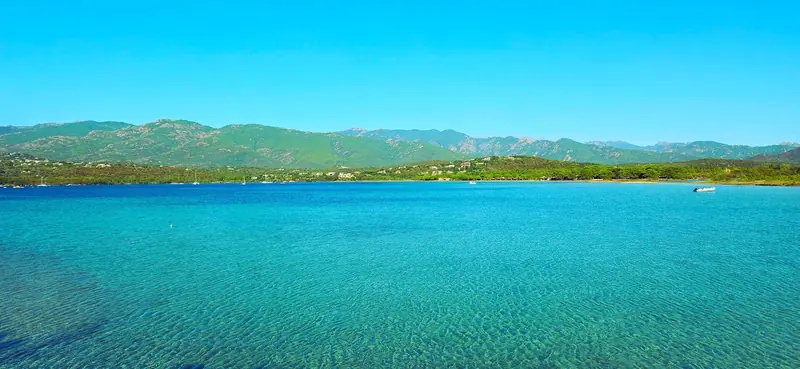
The wind through the strait decides the week
Two winds run the island. The mistral and its local relatives come out of the north west and accelerate viciously through the Strait of Bonifacio, where the gap between Corsica and Sardinia squeezes the flow and 30 knots and more for three or four days is normal rather than exceptional. The libeccio comes from the south west and builds swell on the whole west coast, which is the one that closes Porto and Girolata. In settled weather the strait is glass and the crossing to Sardinia takes an hour.
The season runs from May to October. June is warm, green and quiet and is the best value month on the island. July fills. August is full, with the French and Italian holidays overlapping and the Bonifacio quai contested for weeks in advance. September is the connoisseur's choice, with warm water, empty anchorages and the mountains still walkable. The interior is a genuine alternative to the water, with the GR20 crossing the spine of the island and villages an hour inland that look nothing like the coast.
Getting guests in
Corsica has four airports and they map onto the coasts. Figari Sud-Corse serves Bonifacio and Porto-Vecchio and is the one that matters for the south, roughly 20 to 30 minutes from either. Ajaccio Napoleon Bonaparte serves the west and the middle. Calvi Sainte-Catherine covers the Balagne and Bastia Poretta the north east and Cap Corse. All four are strongly seasonal, with heavy French and northern European scheduled traffic between May and September and thin schedules either side of it.
That seasonality is the planning point. A guest change in the last week of September is a different exercise from the same change in July, and the connections in April and October usually route through Paris, Nice or Marseille rather than direct. Ferries from Nice, Toulon, Marseille, Livorno and Genoa carry cars and are the fallback. Road transfers on the island are slow because the roads follow the mountains, so a crew change is best planned at the airport nearest the boat rather than at the nicest anchorage.
France applies, which cuts both ways
Corsica is France, so the boat is inside the EU customs union and inside the euro, with no clearance formalities from mainland France or Italy and full access to EU technical and medical support. A charter starting from a Corsican port carries French VAT at 20 per cent. The old lump sum reduction has gone, and the exemption now applies only to the proportion of the charter genuinely spent outside French and EU waters, evidenced rather than assumed. For a yacht of 15 metres or more, AIS data is the accepted proof of where it actually was.
The commercial exemption for a qualifying vessel of 15 metres or more registered as a commercial ship is available where the tests for the previous calendar year are met, and it is a matter for the owner's fiscal representative rather than the captain. The practical consequence for a cruise that combines Corsica and Sardinia is that both legs are EU and both are taxed as such. There is no duty free arbitrage in this corner of the Mediterranean, and an itinerary designed to create one will not survive an AIS trace.
Ashore, and what Corsica is not
Bonifacio's citadel, Calvi's, and the Genoese towers along the whole coast give the island a harder and older character than the Riviera. Food is Corsican rather than French, which means charcuterie, brocciu cheese, chestnut flour, wild boar and the Patrimonio and Ajaccio wines, and it is honest cooking at prices that will not frighten anyone who has just come from Porto Cervo. Porto-Vecchio and Calvi carry the summer nightlife, Bonifacio the restaurants along the quay, and Ajaccio the only real city life.
What the island does not have is a scene. There is no Piazzetta, no Gustavia, no equivalent of the Riviera's August. Shopping is limited, the smart hotels are few, and guests who measure a week by the addresses they visited will be disappointed. Guests who measure it by water, mountains and dinner on a quay under a citadel will not. Provisioning at scale is straightforward at Ajaccio, Bastia and Porto-Vecchio and thin everywhere else, and anything technical means the mainland or Sardinia.
The honest downside, and what is not published
The berthing ceiling is the first constraint. Bonifacio takes 85 metres and is the largest port on the island, and it is full in August. Above that a yacht lies in Sant'Amanza on one of the reserve buoys or offshore, which is why the 2026 decree mattered. The mistral is the second, because a three or four day blow through the strait removes a third of a fortnight and pins the boat on one side of the island. And the shore support is the third: for anything structural, Corsica sends the boat to Italy or the French mainland.
Checked in August 2026, the ports of Bonifacio and Saint-Florent publish tariff pages, but no Corsican port publishes a superyacht rate card of the kind Porto Cervo posts, and none publishes a fuel price. The Sant'Amanza mooring sectors are established by decree but the buoy fees are collected on the water. The Scandola quota and booking system reported in the French press has no published date or mechanism. And nothing tells an owner how many of the 170 visitor places at Bonifacio will be free on an August afternoon, which is the number the day turns on.
An Land, Anfahrt und Buchung
| Getting there | Figari Sud-Corse serves the south and is 20 to 30 minutes from both Bonifacio and Porto-Vecchio. Ajaccio Napoleon Bonaparte serves the west and the middle of the island, Calvi Sainte-Catherine the Balagne and Bastia Poretta the north east. All four run heavy French and northern European schedules from May to September and thin sharply outside that, with April and October connections usually routing through Paris, Nice or Marseille. Ferries run from Nice, Toulon, Marseille, Livorno and Genoa. Road transfers are slow because the roads follow the mountains, so plan crew changes at the nearest airport rather than the nicest bay. |
|---|---|
| Arriving by sea | The entrance to Bonifacio is a slot in a 60 metre cliff and is not visible until you are close to it, opening into a narrow fjord with the citadel above. The marina takes 85 m LOA in up to 6 m of draft, with about 350 pontoon berths and 170 visitor places. From Sardinia the crossing from Santa Teresa is about seven miles and from Porto Cervo about 25, and it is an hour in settled weather and a genuinely bad idea in a strong mistral. Saint-Florent, Calvi, Ajaccio, Propriano, Porto-Vecchio, Solenzara, Bastia and Macinaggio are the other ports of call. |
| Where a large yacht may moor | Arrete 260/2026 of 3 July 2026 established two organised mooring sectors in the Gulf of Sant'Amanza with 14 buoys for vessels of 26 to 70 metres, which is the answer for anything Bonifacio cannot take, and the port separately lists 15 ecological buoys there for 24 to 75 metres. Sant'Amanza's wider field has been expanded to around 70 buoys with 20 to 25 kept for visiting yachts. At Belvedere-Campomoro the field under Arrete 2026-067 runs to about 115 berths with roughly a third available to visitors and a five knot approach speed along marked channels. |
| Where you may not anchor | Anchoring on Posidonia is prohibited and enforced by reserve rangers in the Strait of Bonifacio, with heavy fines, so the hook goes on clean sand and the crew reads the bottom with the Donia app before it goes down. Four seabird zones around the Lavezzi are closed under Decree 235/2023, leaving Cala Lazarina and Cala di u Grecu as the usable anchorages. Scandola's core zones are partly closed and marked with yellow buoys, with a 250 metre exclusion around marked osprey nests. The Etang de Diane is closed around its aquaculture installations under Arrete 2026-009. |
| What it costs, and what it does not | Corsica is materially cheaper than the Cote d'Azur and the Costa Smeralda for berthing, provisioning and eating, which is the main financial argument for the island. Bonifacio and Saint-Florent publish tariff pages. What no Corsican port publishes is a superyacht rate card of the kind Porto Cervo posts, or a fuel price, so anything above about 40 metres is a quotation. The mooring buoy fees in the reserve sectors are collected on the water. Budget the crossing to Sardinia or the mainland for anything technical, because the island has no superyacht yard. |
| The wind, and what it costs you | The mistral and its relatives accelerate through the Strait of Bonifacio where the gap between Corsica and Sardinia squeezes the flow, and 30 knots and more for three or four days is a normal summer event rather than a rarity. It decides which side of the island is usable. The libeccio from the south west builds swell along the entire west coast and closes Porto and Girolata. Build a fortnight that can move from one coast to the other rather than one that has to stay put, and take the strait on a settled day. |
| The west coast day | The Gulf of Porto with the red cliffs of the Calanches above it, Girolata in its bay with no road to it and the village supplied by sea, and Scandola closing the northern side with caves and stacks. The day boats from Calvi and Porto work the reserve from mid morning to late afternoon and the anchorages empty afterwards. Access rules are tightening, with quotas and a booking system reported in the French press through 2026, so confirm the position with the reserve before the day is promised to guests. |
| Eating and the evening | Bonifacio's quay is lined with restaurants a step from the passerelle and is the best evening on the island. Porto-Vecchio and Calvi carry what summer nightlife exists, and Ajaccio is the only real city. The food is Corsican rather than French, which means charcuterie, brocciu, chestnut flour, wild boar and the Patrimonio and Ajaccio wines, honestly cooked and priced. Provisioning at scale works at Ajaccio, Bastia and Porto-Vecchio and is thin elsewhere. Guests who want a scene should be told there is not one. |
| What is NOT published | Checked in August 2026, no Corsican port publishes a superyacht tariff and none publishes a fuel price, so anything above about 40 metres is priced by quotation. The Sant'Amanza mooring sectors exist by decree but the buoy fees are taken on the water rather than posted. The Scandola quota and booking system reported by Le Figaro and Corse-Matin has no published date or mechanism. And nothing published tells an owner how many of Bonifacio's 170 visitor places will be free on an afternoon in August, which is the number that decides where the boat sleeps. |
Was Eigner und Crew berichten
A decree in July 2026 created the first organised large yacht moorings in the strait
Arrete 260/2026, dated 3 July 2026, formally established two organised mooring sectors in the Gulf of Sant'Amanza carrying 14 buoys sized for vessels between 26 and 70 metres overall, inside the Strait of Bonifacio nature reserve. The wider Sant'Amanza field has been expanded to around 70 buoys with 20 to 25 of them kept for visiting yachts. The reserve's rangers inspect regularly and the penalties for anchoring on seagrass are described consistently as heavy.
Prefecture Maritime de la Mediterranee, reported by mySKIPPER.guideThe Lavezzi anchorages have been narrowed by a decree most crews have not read
Four seabird protection areas around the Lavezzi archipelago were established under Decree 235/2023 and are closed, leaving Cala Lazarina and Cala di u Grecu as the accessible anchorages, both sand only. Ranger monitoring of berthing times and numbers in those two coves intensified again for the 2026 season. The islands sit inside the Bouches de Bonifacio reserve, so the Posidonia rules apply on top.
Reserve Naturelle des Bouches de BonifacioScandola is heading for quotas, and the timetable is not published
Le Figaro and Corse-Matin reported through 2026 that the authorities are preparing access restrictions, quotas and a QR code booking system for the Scandola reserve and the neighbouring Calanches in response to boat traffic. Today the core zones are partly closed to anchoring and marked with yellow buoys, with a 250 metre exclusion around marked osprey nests through the summer. An owner planning the reserve for 2027 should confirm the regime before promising the day.
Le Figaro and Corse-MatinThe French VAT reduction that owners still ask for no longer exists
The lump sum reduction that used to cut French charter VAT has been withdrawn, and VAT is now due at the full 20 per cent for the time a charter spends in French and EU waters, with exemption only for the proportion genuinely spent outside them. For a vessel of 15 metres or more, AIS data is the accepted evidence of where the boat actually was, which means an itinerary designed on paper to create an exemption does not survive the trace.
La Representation Fiscale and Superyacht InvestorNo Corsican port publishes what a large yacht pays
Checked in August 2026, the ports of Bonifacio and Saint-Florent publish tariff pages for ordinary craft, but no Corsican port publishes a superyacht rate card and none publishes a fuel price. There is no published owner or captain account of superyacht service standards at Bonifacio or Porto-Vecchio. An owner pricing a Corsican season is working from an agent's quotation rather than from anything he can check himself.
Yotters desk, checked August 2026
Was gut ist und worauf zu achten ist
Stärken
- The same water as the Costa Smeralda at half the priceBonifacio to Porto Cervo is about 25 nautical miles. The granite, the sand and the water are the same, the berthing, the provisioning and the restaurants are not.
- The best arrival in the MediterraneanA slot in a 60 metre cliff opening into a fjord with a medieval citadel over the quay, in a port that takes 85 m LOA and 6 m of draft with 170 places kept for visitors.
- A west coast nothing else matchesThe Gulf of Porto, the Calanches de Piana, Girolata with no road to it and Scandola, a UNESCO site since 1983, all inside a day's cruising.
- The 2026 decrees gave large yachts somewhere legal to lieArrete 260/2026 established two mooring sectors in Sant'Amanza with 14 buoys for vessels of 26 to 70 metres, which is a real answer for a boat Bonifacio cannot take.
- EU, euro and French administrationNo clearance from mainland France or Italy, full EU technical and medical support, and a legal framework an owner's advisers already understand.
Worauf zu achten ist
- The mistral can take four days out of a fortnightIt accelerates hard through the Strait of Bonifacio and decides which coast is usable. On an island this shape that means moving rather than waiting it out.
- Anchoring is now a compliance questionPosidonia bans enforced by rangers and fines, closed seabird zones under Decree 235/2023, restricted core zones at Scandola and half a dozen new 2026 decrees to read before the hook goes down.
- The berthing ceiling is 85 metres, and it is full in AugustBonifacio is the largest port on the island. Above it there is a reserve buoy in Sant'Amanza or nothing, and every other Corsican port is smaller.
- No yard and no published pricesAnything structural means Italy or the French mainland. No Corsican port publishes a superyacht tariff or a fuel price, so a season here cannot be budgeted from public information.
- There is no scene, and some guests want oneNo Piazzetta, no Gustavia, limited shopping and few smart hotels. Corsica rewards guests who came for the water and the mountains and disappoints the ones who came to be seen.
Für wen: An owner already committed to a Sardinian season who wants the same water at half the price, or one who prefers mountains, Genoese citadels and empty anchorages to a social calendar, with a boat of 85 metres or less and a captain who reads decrees.