Costa Rica's Pacific Coast
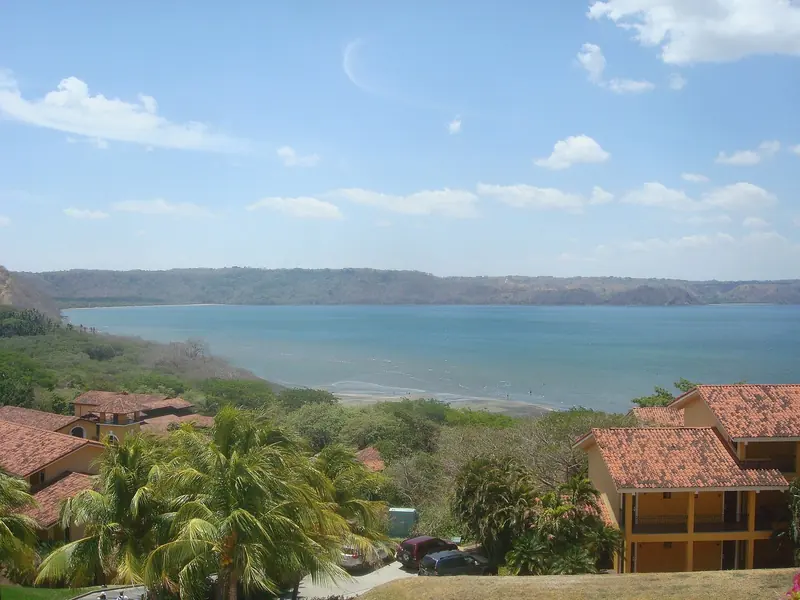
| Region | Costa Rica's Pacific coast, Papagayo Gulf and Guanacaste (north) to the Osa Peninsula and Golfo Dulce (south) |
|---|---|
| Scale | Pacific coastline runs about 1,016 km (roughly 550nm); Papagayo to Golfito is roughly 300nm of coastal sailing |
| Core season | dry season December to April; green season May to November, wettest in September and October |
| Clearance ports north to south | Playas del Coco, Puntarenas, Los Suenos (Jaco), Quepos, Golfito |
| Clearance sequence at each port | Port Authority, then Customs, then Immigration for every crew member |
| Temporary Import Certificate | 90 days on arrival, one 90-day extension, 180 days total, not otherwise renewable |
| Extended option | 1-2 year cruising permit via MOPT Maritime Division, tied to a Costa Rican marina slip contract, under Resolution RES-407-2021 (2 December 2021, CAUCA IV / Law 9977) |
| Reported agent-assisted check-in cost | about $350 and half a day of admin (one 2019-2020 cruising report) |
| Marina Papagayo | 180 berths, yachts to 250ft, D-Pier over 1,000ft, 30 minutes from Liberia (LIR) airport |
| Los Suenos Resort and Marina | 200 wet slips (30-180ft) plus 166 dry slips (under 41ft), opened 1996, first government-approved marina in Costa Rica |
| Marina Pez Vela (Quepos) | 195 slips, yachts to 60m (197ft), floating concrete docks, 200-ton Marine Travelift, the only real haul-out yard on this coast |
| Marina Bahia Golfito (IGY) | 54 berths to 350ft, 13 superyacht berths to 107m, drafts to 9m, fuel dock rated at 210 gallons per minute |
| Puntarenas | tidal range can exceed 3m (about 9ft), entrance currents of 4-5 knots, not workable for yachts drawing more than about 6ft |
| Los Suenos Signature Triple Crown | 23rd season overall in 2026 (14th as the Triple Crown, running since 2004), three legs January to April, entry restricted to boats with a Los Suenos slip |
| 2026 Triple Crown Leg 1 | 42 teams released 2,304 billfish; 2026 series champion Team Galati released 250 sailfish and 3 marlin |
| Hurricane exposure | Costa Rica sits at roughly 8-11 degrees north, south of the 18-21 degree Atlantic hurricane belt |
| Hurricane Otto crossed the Nicaragua-Costa Rica border on 24 November 2016, the first hurricane on record since 1851 to make landfall in the country | |
| Hurricane Nate (2017) caused an estimated $562 million in damage and 14 deaths from rainfall alone, without making landfall | |
| Corcovado National Park (Osa Peninsula): described by National Geographic as the most biologically intense place on Earth, an estimated 3% of global biodiversity | |
| Drake Bay to Golfito | roughly 60nm, the usual approach run to Corcovado National Park |
Three coasts, not one
Cruising guides treat Costa Rica's Pacific side as a single destination, but it behaves as three distinct grounds strung along roughly 1,016 km (about 550nm) of coastline. The north is the Papagayo Gulf and Guanacaste, a resort coast of golf courses and gated peninsulas built around Marina Papagayo. The centre is Los Suenos and Quepos, the country's sportfishing heartland and the only stretch with real large-yacht servicing. The south is the Osa Peninsula and Golfo Dulce, a wilderness run with almost no marine infrastructure at all beyond a single IGY-run marina at Golfito.
The practical distances matter more than the map suggests. Los Suenos to Papagayo runs an estimated 140nm of coastal sailing (not a straight line, since the route has to clear the Nicoya Peninsula), Quepos to Golfito is about 98nm, and the whole Papagayo-to-Golfito run adds up to roughly 300nm. That is a multi-day passage plan, not a weekend hop, and it explains why most owners pick one of the three zones rather than attempting all of them in a single charter.
Why owners actually come here
Three things draw serious money to this coast, and none of them is marina glamour. First is the safety case: Costa Rica sits at roughly 8-11 degrees north, well south of the 18-21 degree band where Jamaica, Puerto Rico and Cancun sit inside the main Atlantic hurricane belt, and the central mountain spine (peaks over 12,000ft) shreds what little tropical energy does track that far south. Second is sportfishing, concentrated around Los Suenos and Quepos, with billfish releases numbered in the thousands each season. Third is Corcovado National Park on the Osa Peninsula, which National Geographic has called the most biologically intense place on Earth, holding an estimated 3% of the planet's biodiversity in one reserve reachable only by boat or light aircraft.
None of that is marketing fluff. It is also not a package deal: the resort infrastructure is in the north, the fishing fleet and the haul-out yard are in the centre, and the wildlife payoff is in the south, three days' sailing away from either.
A hurricane had never made landfall in Costa Rica, until one did, in 2016, and that one fact says more about this coast than any marina brochure.
The marinas, one by one
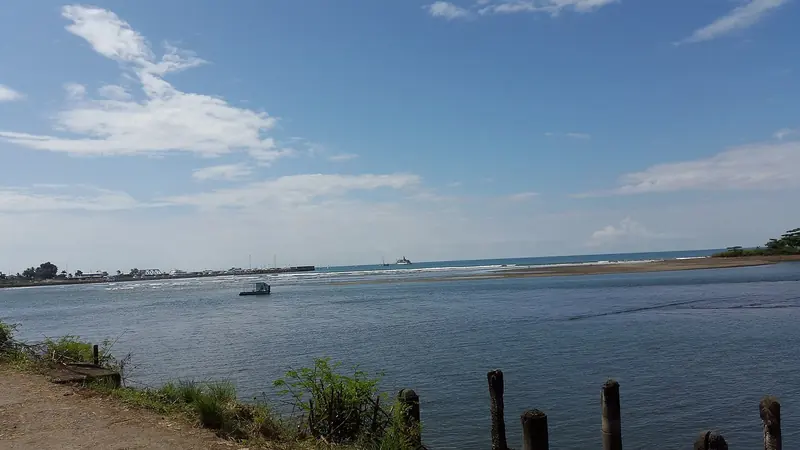
Marina Papagayo (Guanacaste) has 180 fully serviced berths for yachts to 250ft, with D-Pier, over 1,000ft long, taking the biggest boats; it sits 30 minutes from Liberia's international airport (LIR). Los Suenos Resort and Marina, at Playa Herradura near Jaco, was Costa Rica's first government-approved marina (opened 1996) and has 200 wet slips for 30-180ft yachts plus 166 dry slips for boats under 41ft; slip priority goes to owners of on-site real estate. Marina Pez Vela in Quepos is the newest and largest, 195 slips on floating concrete docks taking yachts to 60m (197ft), and it is the only facility on this entire coast with a real haul-out yard, a 200-ton Marine Travelift.
South of Quepos, Marina Bahia Golfito (an IGY property in the Golfo Dulce) has 54 berths to 350ft with 13 dedicated superyacht berths to 107m and drafts to 9m, plus what it markets as the fastest fuel dock in Central America at 210 gallons a minute. What none of the four publish is a current rate card for anything above about 60ft: Papagayo, Pez Vela and Bahia Golfito all direct large-yacht enquiries to a private quote.
Clearance and the paperwork that actually governs your stay
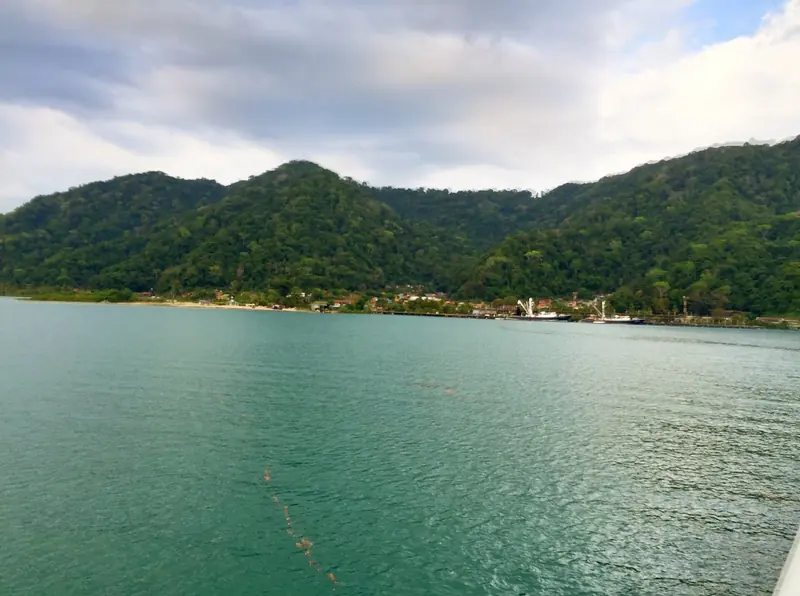
Clearance ports run north to south: Playas del Coco, Puntarenas, Los Suenos (Jaco), Quepos and Golfito, and the in-country sequence at each is fixed: Port Authority, then Customs, then Immigration for every crew member. A Temporary Import Certificate for the vessel is issued for 90 days, renewable once for a further 90 days (180 days total) at Customs in San Jose or Liberia; it is not otherwise renewable, and the boat must leave the country once it lapses. A separate route exists for longer stays: since Resolution RES-407-2021 (issued 2 December 2021, under CAUCA IV and Law 9977 on tourist marinas), foreign vessels holding a Costa Rican marina slip contract can apply through MOPT's Maritime Division for an extended cruising permit of one to two years.
None of this is free of friction. One cruising skipper who ran the process with a local agent in 2019 reported the full check-in costing around $350 and taking about half a day of admin; doing it without an agent is slower and requires two copies each of the vessel documentation, passports, prior port clearance and a Spanish-language crew list. Cabotage is not liberalised: a foreign-flagged yacht clears in and out of each port it visits and is expected to renew its cruising permit at each stop.
Sportfishing is the real economic engine
The Los Suenos Signature Triple Crown is now in its 23rd season overall (14th under the Triple Crown format, running since 2004), fished in three legs each January to April, and entry is restricted to boats that hold a slip at Los Suenos, which tells you how tightly the tournament and the marina's commercial model are bound together. The scale is real: Marlin Magazine recorded 42 teams releasing 2,304 billfish in a single leg of the 2026 series, and the 2026 series champion, Team Galati, released 250 sailfish and 3 marlin across the full season.
This is the one part of the Costa Rica Pacific proposition that is unambiguously world class and independently verifiable through a trade publication with decades of tournament coverage, not a marina's own marketing copy.
The Osa Peninsula and Golfo Dulce: the wilderness payoff
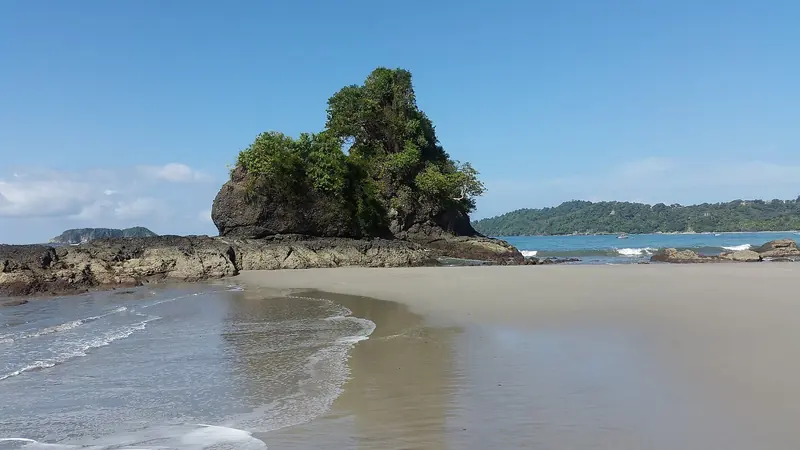
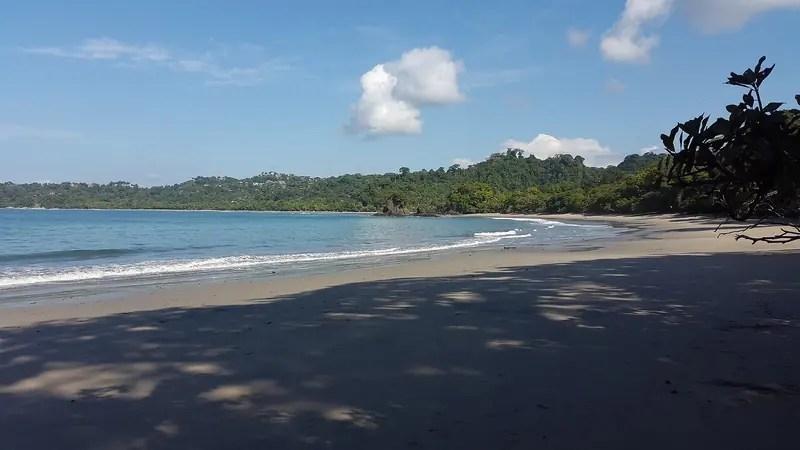
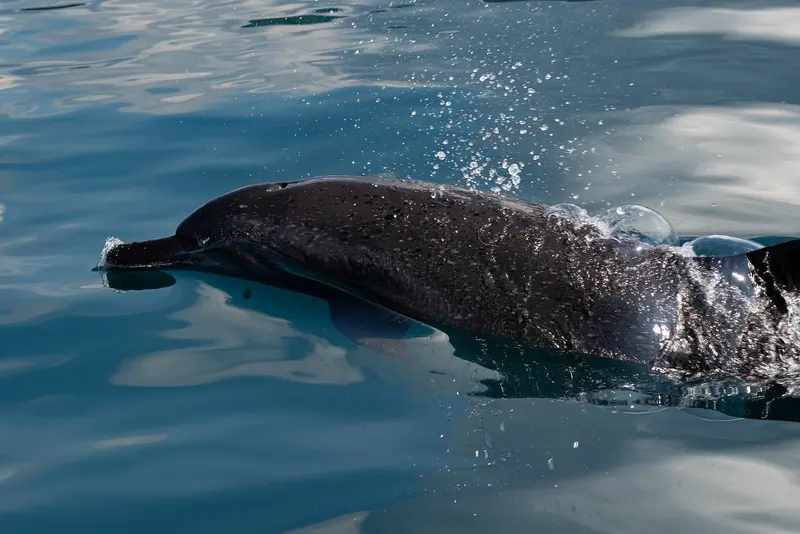
Golfo Dulce is one of only a small number of tropical fjords in the world and serves as a seasonal nursery for humpback whales and their calves, alongside resident bottlenose and common dolphins. Drake Bay, on the Osa Peninsula's northern shoulder, is the usual gateway anchorage for Corcovado National Park; cruisers making the roughly 60nm run down from Golfito report dolphins, turtles, sea snakes and rays along the way. Corcovado itself holds all six of Costa Rica's cat species, all four monkey species, all four sea turtle species and over 400 bird species inside 13 distinct ecosystems.
The cost of that wilderness is infrastructure. South of Quepos there is no haul-out capacity, no real chandlery, and provisioning drops off sharply; a cruising couple who spent three months on this coast in 2019 described Golfito's marine stores and imported parts as expensive and thin compared with David, Panama, a short hop across the border.
Weather, winds and the hurricane claim examined honestly
The dry season runs December through April and is the practical cruising window; the green season runs May through November, with September and October the wettest months, driven by cyclone systems and equatorial monsoon flow rather than local storms. The one seasonal hazard specific to this coast is the Papagayo jet, a gap wind that accelerates through mountain passes into the Gulf of Papagayo in the dry season and can exceed 40 knots with little warning beyond a few days on a GRIB file.
On hurricanes, the honest version matters more than the brochure version. Costa Rica's location at 8-11 degrees north keeps it well south of where Atlantic hurricanes typically track, and it is commonly marketed as a place a hurricane has never made landfall. That is not quite true: Hurricane Otto crossed directly over the Nicaragua-Costa Rica border on 24 November 2016, the first hurricane on record since 1851 to do so, killing people and causing significant damage in the north of the country before continuing into the Pacific. Costa Rica also is not spared indirect damage: Hurricane Nate in 2017 caused $562 million in damage and 14 deaths from rainfall alone, without making landfall at all. The safety case is real and statistically strong. It is not absolute.
Hazards a broker will not volunteer
American crocodiles live in river mouths and estuaries the length of this coast, most visibly at the Tarcoles River bridge near Los Suenos, where more than 100,000 tourists a year stop to look at them from a safe height; fatal attacks on people in the water have been documented by Costa Rican press, and boat crews are routinely warned off swimming near river mouths for this reason. Security is a lesser but real concern at open anchorages: cruisers have reported dinghy gear (oars, outboards, fuel tanks) stolen at anchorages including Playas del Coco, in one case within sight of the local police station, with the standard countermeasure being to lock everything to the dinghy and the dinghy to a fixed point ashore.
Puntarenas, the coast's historic port and an official clearance point, is effectively closed to any yacht with real draft: the channel behind the port is shallow and shifts with a tidal range that can exceed 3m (about 9ft), producing currents of 4-5 knots in the entrance, and vessels drawing more than about 6ft (1.8m) are advised to use Los Suenos instead. A port of entry that cannot take a real yacht is a structural weakness the tourism material does not mention.
Who this destination actually suits
This coast rewards an owner who wants genuine wilderness and serious fishing more than social marina life, is comfortable with a bureaucratic and agent-mediated clearance process, and is not planning to haul out or do major yard work anywhere south of Quepos.
It suits a boat that can comfortably run the 60-180ft range the four working marinas are actually built for; anything drawing more than a few feet has no business trying Puntarenas, and anything needing a serious refit has one real yard in the entire country.
An Land, Anfahrt und Buchung
| Getting there | Liberia's Daniel Oduber Quiros International (LIR) serves the north, about 30 minutes from Marina Papagayo; Juan Santamaria International (SJO) near San Jose serves the central coast and Los Suenos; Quepos has a small domestic airstrip and Golfito has a domestic airstrip for the far south. |
|---|---|
| Arriving by sea | Clear in at Playas del Coco, Puntarenas, Los Suenos, Quepos or Golfito, in that order north to south. Sequence at each port is Port Authority, Customs, then Immigration for every crew member; 48-72 hours advance notice to Customs, arranged through an agent, is standard practice. |
| How you actually reserve | No unified online booking across the coast's marinas; each of Papagayo, Los Suenos, Pez Vela and Bahia Golfito is contacted directly. Los Suenos gives slip priority to owners of on-site real estate, and entry to its Triple Crown tournament requires holding a Los Suenos slip. |
| What a berth costs | Published transient rates exist only for smaller/mid-size boats: Los Suenos around $4 per foot per day; Golfito's Banana Bay Marina around $2.50 per foot per day, Servicios Tierra Mar moorings from $8 per day. Current superyacht-scale rates at Papagayo, Pez Vela and Bahia Golfito are not published and must be requested directly. |
| Power, water and fuel | Fuel docks at Puntarenas, Los Suenos and Golfito; Marina Bahia Golfito advertises the fastest fuel dock in Central America at 210 gallons per minute. Potable water and shore power are available at all four main marinas; boats away from marinas commonly rely on rain catchment or a watermaker. |
| Eating and after dark within walking distance | Los Suenos has an on-site resort village with restaurants and bars; Papagayo is a gated peninsula relying on resort concierge dining; Quepos/Marina Pez Vela sits by a working town with a restaurant strip and is close to Manuel Antonio; Golfito is basic and remote, built around the marina village rather than a town centre. |
| Fixed dates to plan around | Los Suenos Signature Triple Crown: three legs, January through April each year. Dry season runs December to April; September and October are the wettest months of the green season. |
| What is NOT published | Current large-yacht berth rates at Marina Papagayo, Marina Pez Vela and Marina Bahia Golfito (quote-only); real-time slip availability/occupancy at any of the four marinas in high season; detailed haul-out/travel-lift specifications at Marina Bahia Golfito beyond berth and fuel-dock numbers. |
Was Eigner und Crew berichten
Full check-in with an agent cost about $350 and took roughly half a day
Reported from a five-week transit of the full Costa Rican coast (Panama border to Nicaragua border) aboard a classic Swan 37, alongside first-hand notes on the Papagayo jet reaching 40+ knots.
Max Campbell, skipper of Elixir, writing in Yachting WorldTidal currents around Islas Negritos reach up to 5 knots and the tidal range in the Gulf of Nicoya area runs to about 9 feet
Documented during a three-month cruise (May-August 2019) through Costa Rica's three western gulfs, from Papagayo south to Golfito, aboard a Liberty 458 sloop.
Suzy Carmody, aboard Distant Drummer, writing in SAIL MagazineDinghy oars were stolen within sight of the local police station on a first visit to Playas del Coco
The same cruiser reported meeting other boats in the same anchorage who had nothing stolen, framing the theft as a real but inconsistent risk rather than a pattern of serious crime.
Cruising World, The ABCs of Cruising Costa Rica2026 Los Suenos Signature Triple Crown Leg 1 saw 42 teams release 2,304 billfish, and Team Galati won the season series with 250 sailfish and 3 marlin released
Independently tracked tournament results published by a dedicated sportfishing trade title, not marina promotional material.
Marlin Magazine, tournament results coverageA man was fatally attacked by crocodiles at the Tarcoles River, a river mouth crossed daily by tour boats near Los Suenos
Reported alongside ongoing concern over theft of warning signage at the site and continued tourist boat traffic close to known crocodile habitat.
The Tico Times and related Costa Rican press coverage of Tarcoles River incidents
Was gut ist und worauf zu achten ist
Stärken
- A real, if not absolute, hurricane-safety marginAt 8-11 degrees north, well south of the 18-21 degree Atlantic hurricane belt, with a mountain spine that degrades storm energy crossing from the Caribbean; only one hurricane (Otto, 2016) has made landfall since records began in 1851.
- World-class, independently verified sportfishingThe Los Suenos Signature Triple Crown has run since 2004, is entering its 23rd season overall, and posted 2,304 billfish released by 42 teams in a single 2026 leg, tracked by Marlin Magazine, not marina marketing.
- A genuinely unmatched wilderness assetCorcovado National Park on the Osa Peninsula holds an estimated 3% of global biodiversity across 13 ecosystems, reachable by boat via Drake Bay, roughly 60nm from Golfito.
- Two marinas actually built for large yachtsMarina Papagayo (180 berths to 250ft, D-Pier over 1,000ft) and Los Suenos (200 wet slips, 30-180ft, opened 1996 as the country's first government-approved marina) give the north and centre real deep-water infrastructure.
- A workable, if bureaucratic, multi-year stay pathBeyond the standard 90+90 day Temporary Import Certificate, Resolution RES-407-2021 opened a 1-2 year cruising permit route through MOPT for vessels holding a marina slip contract.
Worauf zu achten ist
- The coast's historic port cannot take a real yachtPuntarenas has a tidal range that can exceed 3m and entrance currents of 4-5 knots; yachts drawing more than about 6ft are directed to Los Suenos instead, meaning an official clearance port is functionally closed to most serious boats.
- One haul-out yard for the entire countryMarina Pez Vela's 200-ton Marine Travelift in Quepos is the only real haul-out capacity on this coast; nothing comparable exists at Papagayo or south of Quepos in Golfito or the Osa Peninsula.
- Crocodiles are a genuine, documented hazardAmerican crocodiles inhabit river mouths and estuaries the length of the coast, most visibly at the Tarcoles River near Los Suenos; fatal attacks on people entering the water have been reported by Costa Rican press.
- Anchorage security requires active managementCruisers have reported dinghy gear (oars, outboards) stolen at open anchorages including Playas del Coco, in one case within sight of a police station; there is no cruiser-reported pattern of vessel-level armed robbery in this research, but petty theft at anchor is a recurring, named complaint.
- Clearance is genuinely bureaucratic and not cheapA three-office, in-person sequence (Port Authority, Customs, Immigration) at every port visited, with a reported agent-assisted cost of about $350 for a full check-in, and a Temporary Import Certificate that is not renewable beyond 180 days without leaving the country or securing a slip-linked multi-year permit.
Für wen: An owner who wants genuine wilderness, serious billfishing and a statistically strong (not absolute) hurricane-safety margin, and who is comfortable running a 60-180ft yacht through an agent-mediated clearance process without expecting yard work south of Quepos.