Cyprus & the Aphrodite Coast
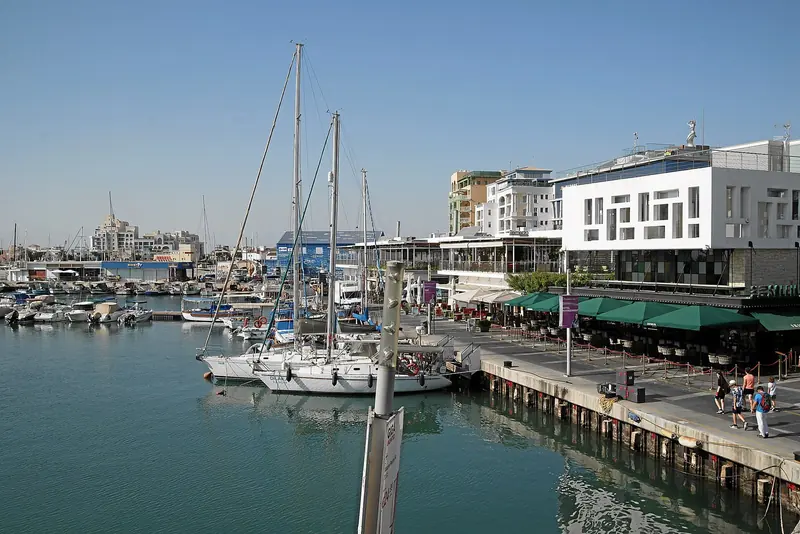
| Limassol Marina | 650 berths, opened 2014, yachts up to a cited 110 to 115 metres LOA |
|---|---|
| Limassol Marina has a 100-ton travel lift, a 40-ton trailer and a 5,000-ton floating dry dock | |
| Limassol Marina reports over 1,000 visiting yachts a year | |
| St Raphael Marina, Pyrgos | 237 berths, maximum 30 metres LOA, 4 metre maximum draft |
| Larnaca Marina | cited at around 360 to 450 berths currently, for boats up to about 40 metres; planned redevelopment targets 600 berths and 115 metres, not yet built |
| Ayia Napa Marina | 600 wet and dry-stack berths, boats up to 60 metres, basin depth 3.5 to 6.5 metres, over EUR 300 million project, operating since June 2020 |
| Karpaz Gate Marina (TRNC, north) | opened 2011, 300 berths, boats up to 60 metres, 5 Gold Anchor Platinum TYHA rating |
| Cyprus standard VAT rate | 19 percent |
| Cyprus's flat 2.4 to 8.5 percent yacht leasing VAT scheme was abolished in 2019, replaced by a use-and-enjoyment calculation | |
| Stamp duty on most instruments, including many maritime documents, abolished in Cyprus from 1 January 2026 under Law 239(I)/2025 | |
| Cyprus ship registry grew 21 percent between September 2023 and the ministry's most recent reporting | |
| As of September 2026, Cyprus is an EU member but not yet inside the Schengen area; Commission gave a positive accession assessment in July 2026 | |
| Cyprus joined the Schengen Information System (SIS II) in July 2023 | |
| Meltemi-influenced wind in Cyprus typically runs 15 to 35 km/h, gusting 50 to 55 km/h, peaking July to August | |
| Larnaca Airport (LCA) to Larnaca Marina: about 7 to 9 km, roughly 9 to 12 minutes by taxi | |
| Paphos Airport (PFO) to Limassol Marina: about 59 to 60 km, roughly 41 to 48 minutes by car | |
| Limassol Marina states a 45 minute car transfer, or 12 minute helicopter transfer, from both international airports (marina's own figure) | |
| A yacht clearing into Kyrenia or Karpaz Gate in the north cannot sail directly to Larnaca, Limassol or Paphos without clearing out via a third country such as Turkey or Greece | |
| Republic of Cyprus authorities warn that visiting the north outside these rules risks arrest, prosecution, fines and imprisonment | |
| Cape Greco, near Ayia Napa, is known for sea caves including the Cyclops Cave and the Blue Hole | |
| The Akamas peninsula's Blue Lagoon sits at the island's northwestern tip and is reachable mainly by boat | |
| No public superyacht berth or fuel rate card for Limassol, Larnaca or Ayia Napa marinas was found in current sources | |
The shape of the coast: a corner, not a loop
The workable cruising ground for a foreign-flagged yacht based in the Republic of Cyprus is the south coast: Paphos in the west, then Limassol, then Larnaca, then round to Ayia Napa and Cape Greco in the southeast, roughly 90 to 100 nautical miles end to end. The Akamas peninsula sits at the northwest corner, a protected, largely undeveloped headland reachable mainly by boat. North of that, the coastline curves round toward Kyrenia (Girne) and the Karpaz peninsula, but that stretch belongs to the Turkish Republic of Northern Cyprus, a jurisdiction the Republic of Cyprus, the EU and almost every country except Turkey does not recognise.
Cyprus also earns its keep as a stepping stone rather than a self-contained circuit. Turkey's mainland coast lies roughly 65 nautical miles north across the strait, Israel around 150 nautical miles east, Lebanon a similar distance northeast and Egypt and the Suez Canal entrance around 230 nautical miles south. That geography, not the island's own coastline, is the real argument for a Cyprus base: it is a jumping-off point for the eastern Mediterranean and Red Sea rather than a Riviera-style hop between anchorages.
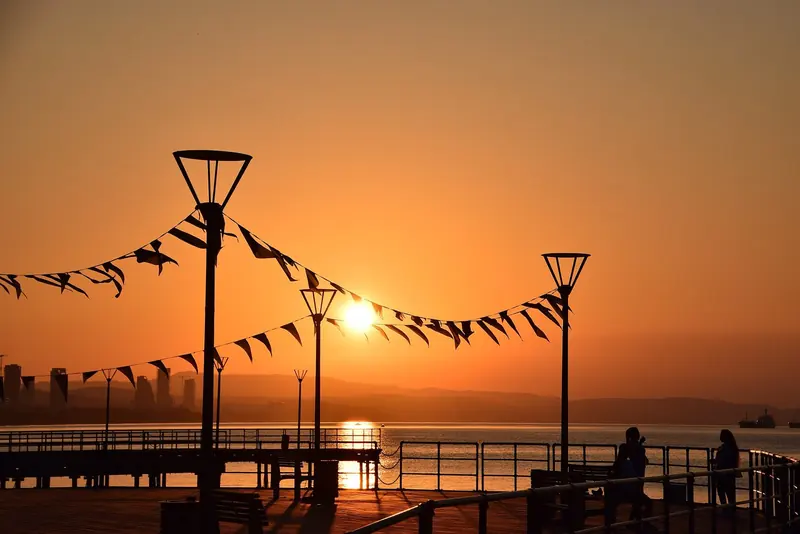
Limassol, Larnaca, St Raphael and Ayia Napa: which marina takes a large yacht
Limassol Marina opened in 2014 as the island's first full-service superyacht marina: 650 berths for vessels from 8 metres up to a cited maximum of 110 to 115 metres LOA (sources differ on the exact ceiling), a 100-ton travel lift plus a 40-ton trailer, a 5,000-ton floating dry dock, a 24-hour fuel dock, and on-site customs and immigration so clearance happens at the berth. The marina reports over 1,000 visiting yachts a year. St Raphael Marina, a short distance along the coast at Pyrgos, is smaller and older: 237 berths, boats up to 30 metres LOA, 4 metre maximum draft, moored stern-to on three concrete piers, and also an official port of entry.
Larnaca Marina's own numbers are inconsistent across sources: one figure puts current capacity at around 360 berths for boats up to about 40 metres, another cites a maximum capacity of 450 yachts; either way, a planned redevelopment under Cyprus's marina and marina environs policy (MEEP) aims for 600 berths and vessels up to 115 metres, but that is a future phase, not the facility as it stands today, so this should be treated as unconfirmed until the rebuild is complete. Ayia Napa Marina, on the southeast coast, is the newest entrant: a mixed marina and residential project costing over EUR 300 million, developed by Gemini Real Estate (Naguib Sawiris) with the Caramondani Group, offering 600 wet and dry-stack berths for boats up to 60 metres and basin depths of 3.5 to 6.5 metres. It has been operating since June 2020 and received a Blue Flag in 2022.
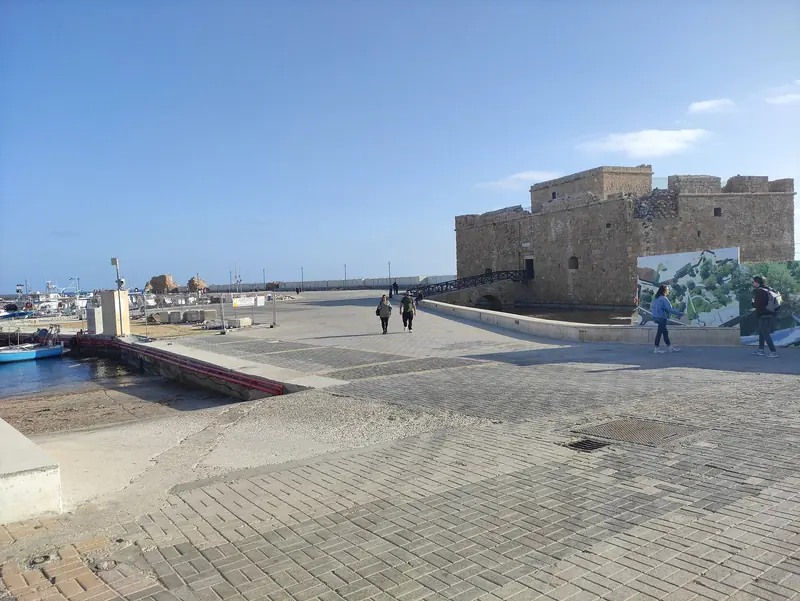
A yacht that clears customs in Kyrenia or Karpaz Gate in the north cannot sail on to Limassol or Larnaca without first clearing out through Turkey or Greece.
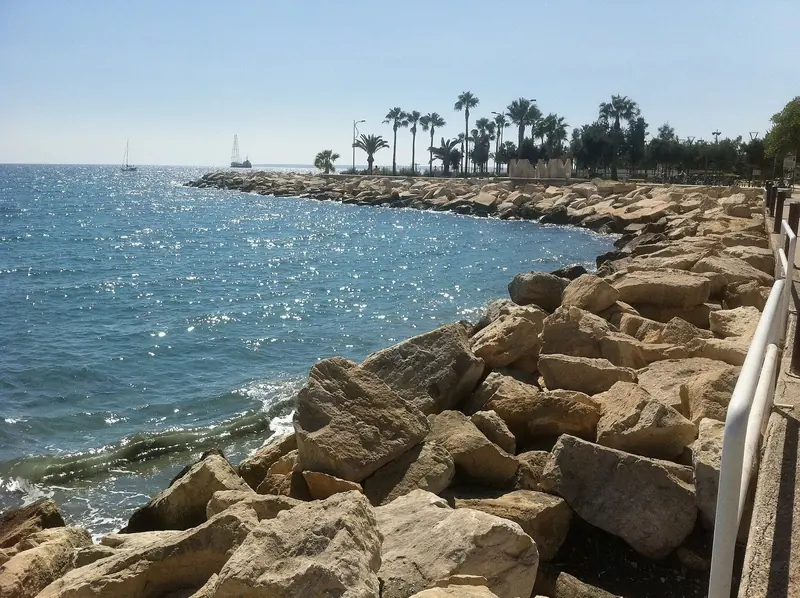
Clearing in: the Republic of Cyprus, Schengen and the Green Line
Standard practice for a foreign yacht arriving in the Republic of Cyprus is to fly the Cypriot courtesy flag, keep everyone aboard until port authority clearance is complete, and present ship's papers, with VAT documentation typically expected in Greek translation. As an EU member state, Cyprus applies the normal EU customs regime, including temporary admission rules for non-EU-flagged, non-EU-owned pleasure yachts. What Cyprus does not yet offer is Schengen membership: the European Commission adopted a positive assessment of Cyprus's readiness in July 2026 and the Council of the EU was expected to take up the file that September, but full accession requires a unanimous vote of existing Schengen members and had not concluded by the time of writing, so travellers and crew should still expect a passport check on arrival rather than the passport-free Schengen experience.
The core obstacle to Schengen accession is the same one that shapes cruising: under Protocol 10 to Cyprus's 2003 EU Act of Accession, application of EU law is suspended in the area the Republic of Cyprus government does not control, and the Green Line is not treated as a normal external EU border, so the checks Schengen requires cannot simply be applied there. In practical cruising terms, a yacht that clears into a northern port such as Kyrenia or Karpaz Gate Marina cannot then sail directly on to Larnaca, Limassol or Paphos; the accepted route is to clear out of the north via a third country, commonly Turkey or Greece, before re-entering the Republic of Cyprus. Republic of Cyprus authorities have stated that boat owners who sail to the north outside these rules risk arrest, prosecution, fines and imprisonment under Cypriot law, and yacht insurance policies frequently exclude TRNC waters outright.
Tax, VAT and the Cyprus flag
Cyprus's headline yacht VAT leasing scheme, once marketed as bringing effective VAT down to as little as 2.4 percent depending on vessel size and propulsion, was abolished in 2019 after EU scrutiny of similar Mediterranean leasing structures. The mechanism that remains applies the standard 19 percent VAT rate only to the share of a leased yacht's use that takes place within EU territorial waters, under a use-and-enjoyment rule, which must be evidenced by actual distances and time logged rather than assumed from the boat's size or engine power alone. Cyprus also offers a Parallel-in registration, letting a foreign-flagged yacht on bareboat charter to a Cyprus shipping company carry the Cyprus flag in parallel for a period, typically up to two years.
The wider push to make Cyprus attractive to owners continued into 2026: stamp duty on most instruments, including many financing, mortgage and maritime documents, was abolished from 1 January 2026 under Law 239(I)/2025, and the Shipping Deputy Ministry has reported a 21 percent increase in the Cyprus ship registry since September 2023, alongside a tonnage-tax reduction of up to 30 percent, in place since January 2024, for vessels showing environmental measures. None of this is a private tax ruling for any individual yacht, and an owner should get their own accountant's figure rather than assume a marketed percentage applies.
Wind and season: when to actually be there
Cyprus's cruising season broadly follows the eastern Mediterranean pattern, April through October, and one advantage owners and charter brokers point to is that sea temperatures stay warm enough for swimming well into November, later than most of the central and western Med, which lets a Cyprus-based season run longer than a typical Riviera or Balearics one.
The dominant summer wind, a version of the meltemi known locally by names such as pounentes or graigos depending on direction, typically blows from the north, northeast or northwest at a steady 15 to 35 km/h, with gusts reaching 50 to 55 km/h on the most intense days, peaking in July and August and easing through September. It usually builds from late morning, strengthens through the afternoon and drops again in the evening, so most operators plan cruising for the calmer morning hours; local excursion operators commonly cancel or reroute once sustained wind passes about 25 km/h.
Getting guests aboard: airports and transfer times
Larnaca International Airport (LCA) sits close to its own marina, around 7 to 9 kilometres away, a 9 to 12 minute taxi ride, making Larnaca Marina the easiest guest handover point on the island. Paphos International Airport (PFO) is about 59 to 60 kilometres from Limassol, a drive of roughly 41 to 48 minutes depending on traffic. Limassol Marina itself has stated a transfer time of about 45 minutes by car, or 12 minutes by helicopter, from both international airports, a figure worth treating as the marina's own estimate rather than an independently verified average, since Larnaca to Limassol is the longer of the two legs at around 70 kilometres.
St Raphael Marina, between Limassol and Larnaca, markets itself on sitting directly on the highway linking both international airports, which is a genuine convenience for a smaller yacht taking on guests. For a yacht in the north, the nearest airport is Ercan, near Nicosia, but because the Turkish Republic of Northern Cyprus is not internationally recognised, Ercan has no direct scheduled flights from most countries outside Turkey; the practical route for northern-bound guests is a flight into Turkey and on to Ercan, or into Larnaca followed by an overland crossing, both adding real time and complexity.
What a season in Cyprus actually costs
Limassol Marina publicised superyacht berth rates when the marina first opened its large-yacht berths in the early 2010s, but no current, verifiable per-metre or per-day figure for 2025 or 2026 could be confirmed in public sources for this piece; the marina runs a 24-hour fuel dock, but duty pricing for fuel is likewise not publicly posted. This is a fair example of what is simply not published for this destination: unlike some Western Mediterranean hubs, Cyprus's superyacht marinas do not appear to run public online tariff sheets for large-yacht berths, and the honest answer for an owner is to contact the marina or a local agent directly for a quote.
Where pricing is visible, it is for smaller boats: St Raphael Marina, capped at 30 metres LOA, publishes a pricing page for its 237 berths aimed at that smaller-vessel market. The gap between what is published for a 30 metre boat and what is quoted privately for a 100 metre-plus superyacht is itself a useful signal of how the market is structured here: retail-scale berthing is transparent, superyacht-scale berthing is negotiated.
Cape Greco, Akamas and the best cruising grounds
Cape Greco, at the southeastern tip near Ayia Napa and Protaras, is known for sea caves and swim-throughs including the Cyclops Cave and the Blue Hole, with clear water and marine life ranging from stingrays and lionfish to barracuda, making it a popular stop for tenders and dive excursions from yachts berthed at Ayia Napa Marina or Larnaca.
At the opposite, northwestern corner of the south coast sits the Akamas peninsula, a largely undeveloped protected headland reachable mainly by boat, with its Blue Lagoon at the northwestern tip a well known stop for clear, sheltered water and snorkelling. Closer to Limassol, local operators and captains know the sheltered anchorages of Akrotiri Bay to the south of the marina, useful for a day out without committing to the longer run to Akamas.
The honest downside
The single biggest constraint is not wind or distance, it is the Green Line. A yacht that clears in through Kyrenia or Karpaz Gate in the north cannot legally continue on to a Republic of Cyprus marina without clearing out via Turkey or Greece first, insurance frequently excludes TRNC waters altogether, and Republic of Cyprus authorities warn of arrest, fines and prosecution for boats that get this wrong. That effectively splits the island's coastline into two cruising grounds that cannot be combined into one simple itinerary, whatever a brochure map might suggest.
On the infrastructure side, published numbers do not always agree: Larnaca Marina is cited at both around 360 and around 450 berths depending on the source, and its planned expansion to 600 berths and 115 metre capacity remains a future phase rather than a built fact. Above 60 metres, real capacity is effectively concentrated at Limassol Marina alone until Ayia Napa's newer development matures further. And there is no public rate card for large-yacht berthing or fuel at any of the south coast marinas, so cost planning depends on a private quote, not a published tariff.
An Land, Anfahrt und Buchung
| Getting there | Larnaca International Airport (LCA) and Paphos International Airport (PFO) serve the south coast. Larnaca Marina is about 9 to 12 minutes from LCA; Limassol Marina is about 41 to 48 minutes from PFO by road, or a stated 45 minutes/12 minutes by helicopter from either airport per the marina's own figures. |
|---|---|
| Arriving by sea | Clear in at an official port of entry (Limassol Marina, St Raphael Marina or Larnaca Marina), fly the Cypriot courtesy flag, keep crew aboard until cleared, and expect VAT papers to require Greek translation. Cyprus is EU but, as of September 2026, not yet in Schengen, so a passport check applies. |
| Berthing a large yacht | Limassol Marina is the only facility genuinely rated for superyachts today, up to a cited 110 to 115 metres across 650 berths. St Raphael tops out at 30 metres, Larnaca's current phase at roughly 40 metres (with a 115 metre expansion planned but unbuilt), and Ayia Napa at 60 metres. |
| The north (TRNC) | Karpaz Gate Marina and Kyrenia are official ports of entry for Northern Cyprus, but a yacht clearing in there cannot sail on to a Republic of Cyprus marina without first clearing out via Turkey or Greece. Insurance often excludes TRNC waters, and Republic of Cyprus authorities warn of arrest and fines for improper visits. |
| What it costs | No public rate card exists for large-yacht berthing or fuel at Limassol, Larnaca or Ayia Napa; expect a private quote from the marina or a local agent. St Raphael, capped at 30 metres, does publish pricing for its smaller berths. |
| Wind and season | Season runs roughly April to October, with sea temperatures warm enough to swim into November. Meltemi-influenced northerly wind peaks July and August at 15 to 35 km/h, gusting 50 to 55 km/h, usually building in the afternoon and easing overnight. |
| Eating and ashore | Limassol's marina district and old town, Larnaca's Finikoudes seafront, and Ayia Napa's harbour area are the main ashore hubs; Cape Greco and the Akamas peninsula (with its Blue Lagoon) are the standout tender and dive excursions. |
| What is not published | Superyacht berth and fuel tariffs for the main marinas, an independently confirmed current berth count for Larnaca Marina (sources give both roughly 360 and roughly 450), and any Cyprus-specific VAT ruling for an individual yacht, which depends on actual EU-waters usage rather than a marketed flat rate. |
Was Eigner und Crew berichten
Limassol pitched as the eastern Mediterranean's Gibraltar
Tom Lord, Marina Manager at Limassol Marina, told SuperyachtNews in May 2022 that Cyprus is 'the eastern-most European country in the Mediterranean' and that its infrastructure, regulations and climate make it 'a perfect destination', positioning the marina as a staging point for yachts transiting toward the Suez Canal and Indian Ocean.
SuperyachtNewsSeason stretches later than the rest of the Med
Reporting on Limassol's growth notes that sea temperatures around Cyprus remain warm enough for swimming well into November, an advantage cited as extending owners' and charterers' cruising plans beyond the traditional Mediterranean cutoff.
SuperyachtNewsAyia Napa Marina confirmed as a second major berthing hub
Construction and investment reporting confirms Ayia Napa Marina as a joint venture between Naguib Sawiris's Gemini Real Estate and the Cyprus-based Caramondani Group, costing over EUR 300 million, with capacity for 600 yachts including vessels up to 60 metres.
Superyacht InvestorNorth-south clearance cannot be combined in one trip
Cruising guidance for the island states plainly that a yacht clearing into Karpaz Gate Marina or Kyrenia in the north cannot then sail directly to Larnaca, Limassol or Paphos without first clearing out via a third country such as Turkey or Greece, since the two administrations are politically separate.
NoonsiteRepublic of Cyprus warns of real legal exposure in the north
Reporting on the Cyprus dispute's impact on shipping notes that, per Republic of Cyprus authorities, boat owners who sail to the northern part of the island outside the accepted clearance route risk arrest, prosecution, fines and prison sentences under Cypriot law.
Interlegal
Was gut ist und worauf zu achten ist
Stärken
- Genuine large-yacht infrastructure at Limassol650 berths, boats cited up to 110 to 115 metres, a 100-ton travel lift and on-site customs, opened 2014 and now handling over 1,000 visiting yachts a year.
- Season extends into autumnSea temperatures stay warm enough to swim into November, letting a Cyprus-based season run later than most of the central and western Mediterranean.
- Real strategic position for onward routesRoughly 65 nautical miles from Turkey, about 150 from Israel and around 230 from the Suez Canal entrance, making it a workable staging base rather than a closed-loop cruising ground.
- Second major marina now operatingAyia Napa Marina, a EUR 300 million-plus project with 600 berths for boats up to 60 metres, has been running since June 2020 and won a Blue Flag in 2022.
- Ongoing tax and registry incentivesStamp duty on most maritime instruments was abolished from 1 January 2026, and the Cyprus ship registry grew 21 percent between September 2023 and the ministry's latest count.
Worauf zu achten ist
- The Green Line splits the island's cruising ground in twoA yacht clearing into Kyrenia or Karpaz Gate in the north cannot sail directly on to Limassol or Larnaca without clearing out via Turkey or Greece, and Republic of Cyprus authorities warn of arrest and fines for improper visits.
- Not yet in SchengenAs of September 2026 Cyprus remains outside the Schengen area pending a unanimous Council vote, so guests still clear a passport check rather than travelling border-free as they would between most mainland EU cruising grounds.
- Afternoon meltemi windGusts of 50 to 55 km/h are common on the worst July and August afternoons, pushing most cruising and excursions into the calmer morning hours.
- Large-yacht capacity is thin outside LimassolSt Raphael caps at 30 metres and Larnaca's current phase at roughly 40 metres, so anything over 60 metres has effectively one south-coast home until Ayia Napa's capacity for bigger yachts, if any, is proven.
- No public pricing for the boats that matter mostUnlike some western Mediterranean hubs, Limassol, Larnaca and Ayia Napa do not publish superyacht berth or fuel rate cards, and even basic capacity figures for Larnaca Marina disagree between sources (roughly 360 versus roughly 450 berths).
Für wen: An owner who wants a genuine large-yacht base for extending the Mediterranean season into autumn and staging trips toward the Suez Canal, Israel, Lebanon and Egypt, and who is willing to treat the island's northern coast as off-limits rather than part of the itinerary.