French Polynesia
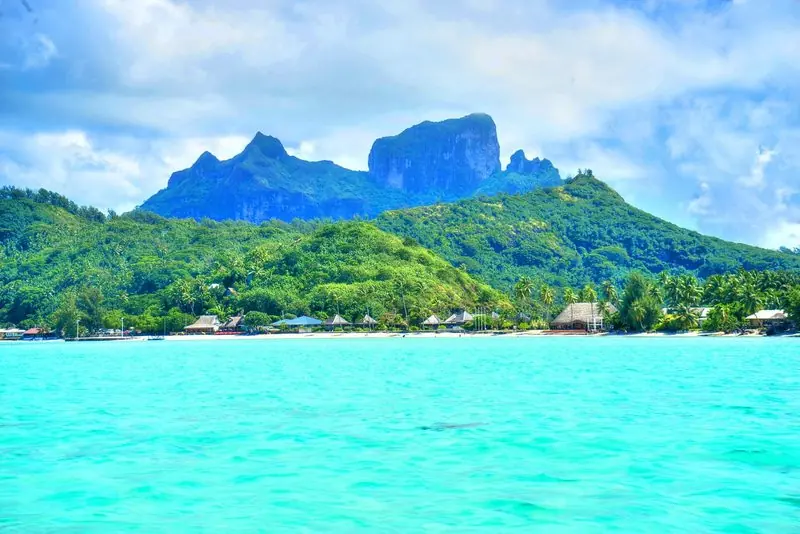
| Region | fünf Archipele im Südpazifik, 121 Inseln und Atolle über mehr als 2.000 km verteilt |
|---|---|
| Größenordnung | 3.521 Quadratkilometer Land, Bevölkerung 278.786 im Jahr 2022, davon rund 69 Prozent auf Tahiti |
| Saison | Trockenzeit etwa Mai bis Oktober, Regenzeit und Zyklonrisiko November bis April |
| Bora Bora | 125 Seemeilen nordwestlich von Papeete, eine Ozeaneinfahrt durch den Pass Teavanui an der Westseite |
| Fakarava | Atoll von 60 km mal 21 km mit einer Lagune von 1.112 Quadratkilometern, die zweitgrößte Französisch-Polynesiens |
| Nordpass von Fakarava | 1,37 km breit und der größte Pass des Gebiets |
| Südpass von Fakarava | seit 2008 geschützt und mit geschätzt 700 Grauen Riffhaien |
| Marquesas | rund 1.370 km nordöstlich von Tahiti, ohne Saumriffe, 2024 von der UNESCO als Te Henua Enata gelistet |
| Einklarierungshäfen | Papeete und Moorea, Nuku Hiva, Hiva Oa und Ua Pou, Bora Bora, Raiatea und Huahine, Rangiroa und Fakarava, dazu die Austral- und die Gambier-Inseln |
| Einreise | ein Ankunftsformular online mindestens 48 Stunden vorher, wobei die Freigabe berichteten Angaben zufolge ein bis drei Tage dauert |
| Biosicherheit | ein Online-Fragebogen mit Gebühr und eine Kontrolle an Bord vor der Ausklarierung |
| Erreichbarkeit | Faa'a International in Papeete ist das einzige Langstreckentor, mit Inlandspisten auf Bora Bora, Raiatea, Rangiroa, Fakarava und vier auf den Marquesas |
| Temporary admission | 24 consecutive months for a foreign pleasure vessel, extended to 36 consecutive months for a hull of 24 m or more, with a further three months possible for force majeure |
| End of the clock | the vessel must leave French Polynesian waters or be cleared through customs, and the regime restarts only on proof of leaving the territory and entering a foreign one, with a reported minimum of six months outside |
| Charter | permitted for foreign-flagged vessels under a licence de charter nautique from the Direction Polynesienne des Affaires Maritimes, granted by presidential decree after an advisory commission, taking several weeks with a provisional licence available |
| Charter conditions | entry in the commercial register, qualifications, insurance and guarantees, a description of the activity and a level three criminal record certificate |
| Cabotage | no bar on carrying paying guests between Polynesian islands once the charter licence is held |
| Tax | French Polynesia is outside the EU VAT territory and levies its own TVA at 5, 13 and 16 per cent, with a 1 per cent rate from 1 July 2026 for operations benefiting the remote archipelagos |
| Fuel | the duty-free diesel benefit for private pleasure vessels under temporary admission was announced for suppression at the Council of Ministers of 10 June 2026 |
| Lifting | the Papeete port slipway is rated at 800 tonnes, 60 m and 4.5 m draught, and Technimarine runs travel lifts of 300 and 75 tonnes taking hulls to about 40 m |
| Berthing | Marina Taina's published tariff documents date from 1 March 2024 and its rates are not public, checked 28 July 2026 |
Die Größenordnung des Ortes
Französisch-Polynesien hat die Ausdehnung Europas und die Landfläche eines kleinen Landkreises. Fünf Archipele, 121 Inseln und Atolle, und Passagen dazwischen, die in Tagen gemessen werden. Auf Tahiti leben rund 69 Prozent der Bevölkerung, und alles andere ist dünn besiedelt. Der Mount Orohena auf Tahiti steigt auf 2.241 Meter, und die vulkanischen Inseln sind generell steil, grün und dramatisch, während die Atolle flache Korallenringe sind, auf denen nichts über Palmenhöhe steht.
Die Folge für einen Eigner ist Planung. Das ist keine Küste, an der eine Yacht umherstreift und schaut, was sich ergibt. Passagen sind Festlegungen, Wetterfenster zählen, und eine Meinungsänderung kann zwei Tage kosten. Der Lohn ist, dass die Ankerplätze, einmal erreicht, so gut sind wie irgendwo auf der Welt und dass niemand darin liegt.
Drei verschiedene Reviere
Die Gesellschaftsinseln sind das zugängliche Drittel: vierzehn Inseln in zwei Gruppen, mit Tahiti, Moorea und Tetiaroa in Luv und Huahine, Raiatea, Taha'a und Bora Bora in Lee. Moorea liegt rund 12 Seemeilen von Papeete. Bora Bora 125. Raiatea und Taha'a teilen sich eine Lagune, was sie zum leichtesten und geschütztesten Revier des Gebiets macht und der Grund ist, warum die Charterflotte dort stationiert ist.
Die Tuamotus, ein paar hundert Meilen nordöstlich von Tahiti, sind die Atolle. Korallenringe mit Lagunen darin, angelaufen durch Pässe, und das Tauchen hier ist der Zweck der ganzen Reise. Die Marquesas liegen rund 1.370 km weiter nordöstlich, hohe Vulkaninseln ohne Saumriffe, was bedeutet, dass die Ankerplätze die Ozeandünung direkt bekommen. Die UNESCO hat die Marquesas 2024 als Te Henua Enata gelistet. Sie sind großartig, und sie sind unbequem.
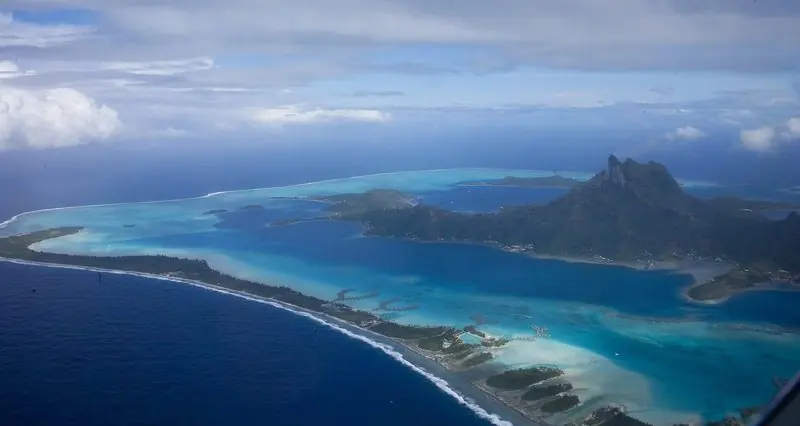
Das beste Lagunenrevier der Welt, versorgt über eine einzige Piste in Papeete.
Eine Woche, und drei Wochen
Eine Woche heißt die Leeward-Inseln der Gesellschaftsgruppe und sonst nichts. Gäste fliegen nach Bora Bora oder Raiatea, das Boot arbeitet die gemeinsame Lagune von Raiatea und Taha'a ab, kreuzt nach Bora Bora und Huahine, und alle fliegen nach Hause. Das ist eine wirklich gute Woche flachen Lagunenwassers, und es ist das, was die meisten Eigner hier tatsächlich machen.
Drei Wochen kaufen die Tuamotus. Papeete oder Moorea, nordöstlich nach Rangiroa und Fakarava für eine Woche zwischen den Pässen, zurück durch die Gesellschaftsinseln. Nimmt man die Marquesas hinzu, wird daraus ein Sechs-Wochen-Programm mit zwei Ozeanpassagen von je mehreren Tagen. Ein Boot, das den Pazifik gequert hat, kommt mit den Marquesas bereits hinter sich an, und so sieht sie üblicherweise überhaupt jemand.
Die Pässe, und wo ein 50-Meter-Boot hineinpasst
Jedes Atoll wird durch einen Pass angelaufen, und der Pass ist das technische Problem dieses Reviers. Wasser drückt über das Riff in die Lagune und läuft durch eine oder zwei Lücken ab, die Ströme laufen also hart und bauen gegen eine gegenlaufende Dünung stehende Wellen auf. Die Durchfahrten werden auf Stauwasser gelegt. Der Pass Garuae bei Fakarava ist mit 1,37 km Breite der leichteste und größte des Gebiets. Andere sind ein paar hundert Meter breit mit Korallen zu beiden Seiten, und manche werden von einer großen Yacht schlicht nicht versucht.
Innen sind die Lagunen flach, von Korallenköpfen durchsetzt und in der Regel schlecht vermessen, ein 50-Meter-Boot bewegt sich also nach Sicht, mit einem Ausguck vorn und gutem Licht im Rücken. Bora Bora hat eine einzige Ozeaneinfahrt durch den Pass Teavanui an der Westseite, die Frachter und Kreuzfahrtschiffe nimmt und keine Schwierigkeit macht. Tetiaroa hat überhaupt keinen befahrbaren Pass, eine Yacht liegt also draußen und tendert hinein. Liegeplätze gibt es kaum: die Marina Taina bei Papeete und den Handelskai in Papeete nach Vereinbarung, dazu Apooiti auf Raiatea. Alles andere ist Anker oder Mooring.
Die Ankerplätze und Tauchgänge, die die Passage rechtfertigen
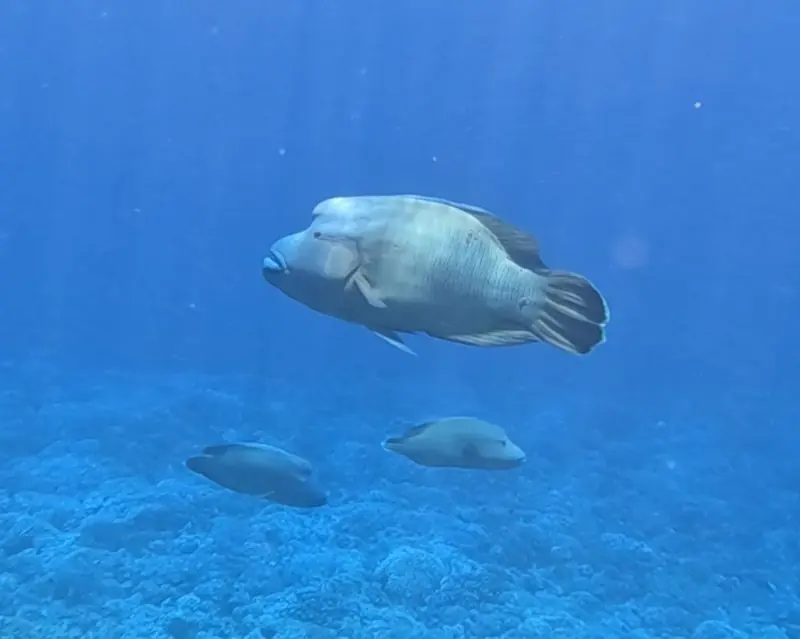
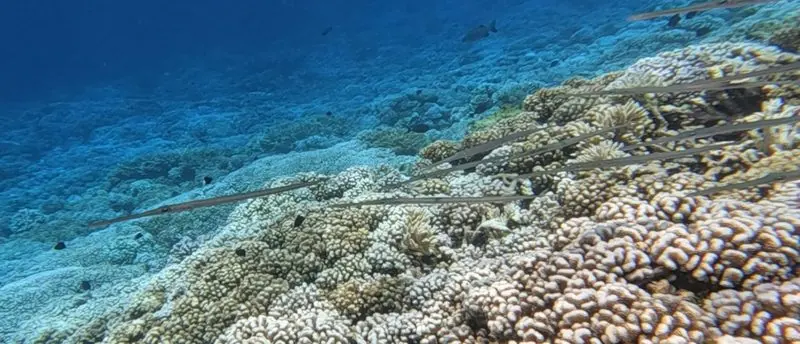
Fakarava ist das, wofür Leute zurückkommen. Der südliche Pass Tumakohua ist seit 2008 geschützt und hält geschätzt 700 Graue Riffhaie, die sich im Pass zu einer Wand sammeln, die Taucher eher zählen als beschreiben. Das ganze Atoll ist ein UNESCO-Biosphärenreservat. Der Pass Tiputa bei Rangiroa hat Delfine, die mit der Tide arbeiten, und ist der andere Pflichttauchgang. Keiner von beiden ist ein Ort, an dem man beiläufig mit dem Tender quer über den Strom fährt.
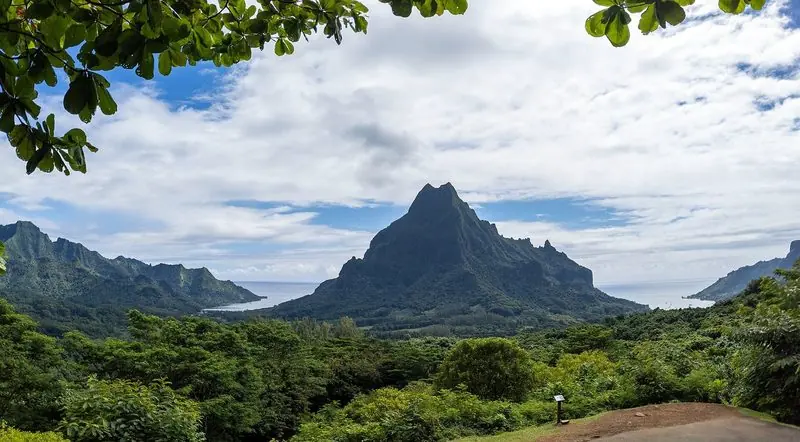
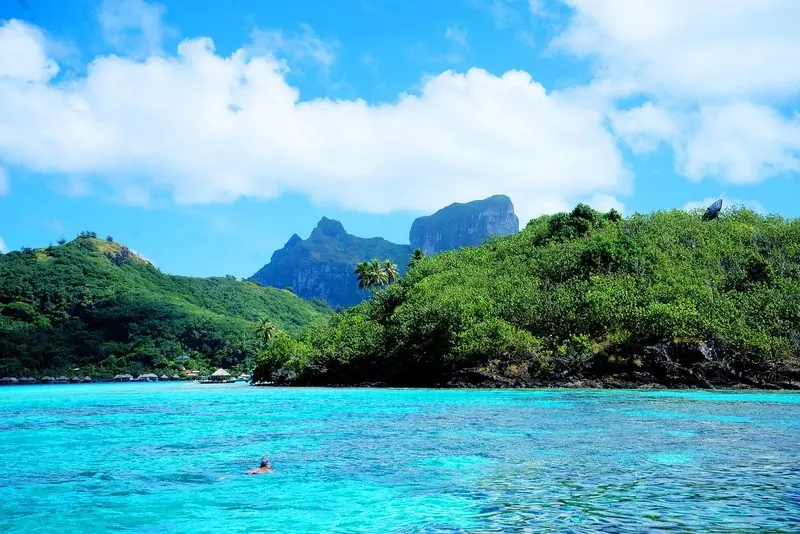
In den Gesellschaftsinseln sind die Ankerplätze sanfter. Der Korallengarten von Taha'a, die Motu-Ankerplätze vor Raiatea, die Bucht von Opunohu auf Moorea unter den vulkanischen Zinnen und die Lagune von Bora Bora mit den Resorts auf den Motus. Tetiaroa trägt The Brando auf einem privaten Atoll und ist der diskrete Stopp für Eigner, die einen wollen. Auf den Marquesas sind Taiohae auf Nuku Hiva und die Buchten von Fatu Hiva die Ankerplätze, und sie rollen alle.
Wetter und Saison
Die Trockenzeit läuft etwa von Mai bis Oktober, mit beständigem Südostpassat, geringerer Luftfeuchte und klarem Wasser. Das ist die Fahrsaison, und dann ist die Flotte hier. Die Regenzeit von November bis April bringt starken Regen, Böen und das Zyklonrisiko, und die Versicherer bepreisen das entsprechend. Sehr wenige große Yachten bleiben darüber hinweg.
Selbst in der Trockenzeit bedeuten die Passate, dass die Passagen nach Nordosten in die Tuamotus und auf die Marquesas gegen Wind und Strom gehen, weshalb Boote, die aus Amerika kommen, vor dem Wind ankommen und nach Westen weiterziehen. Dünung aus dem Südlichen Ozean läuft im Südwinter auf die nach Süden gerichteten Pässe und kann sie schließen. Buckelwale sind in denselben Monaten in diesen Gewässern, was die meisten Gäste höher bewerten als das Tauchen.
Hinkommen und Gäste hinbekommen
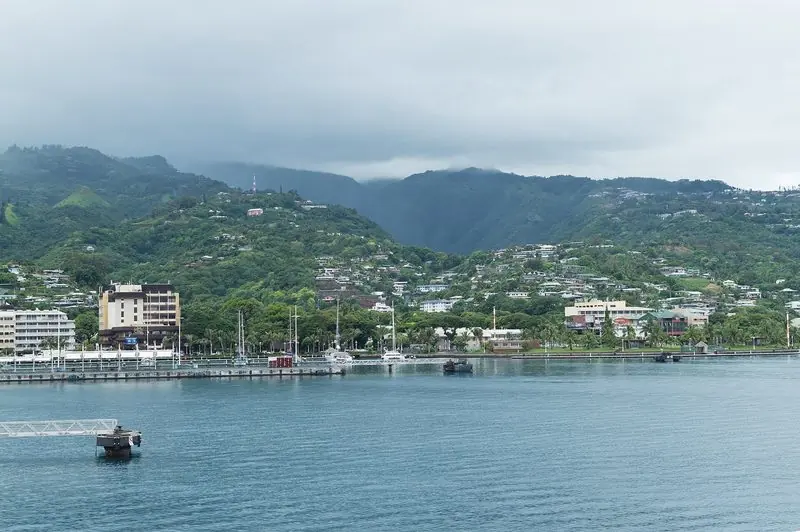
Faa'a International in Papeete ist der einzige Langstreckenflughafen des Gebiets. Flüge kommen aus Los Angeles, aus Paris über Los Angeles, aus Auckland, Tokio und einer Handvoll weiterer Punkte, und jede Gästebewegung läuft durch diesen Trichter. Von Papeete erreichen Inlandsflüge Bora Bora, Raiatea, Huahine, Rangiroa, Fakarava und die vier Pisten der Marquesas, mit kleinen Maschinen und echten Gepäckgrenzen.
Praktisch heißt das, dass ein Gast aus Europa den größeren Teil eines Tages in der Luft verbringt und am Ende einen Inlandsanschluss hat. Privatjets erreichen Papeete, aber die meisten Inlandsplätze nicht. Eigner planen hier deshalb lange Gästeblöcke. Für vier Nächte kommt niemand.
An Land, und was es zu tun gibt
Die ehrliche Lage ist, dass Gäste wegen des Wassers kommen. An Land haben Bora Bora und Taha'a die Overwater-Resorts und ihre Restaurants, Moorea hat die Ananastäler und den Aussichtspunkt Belvedere über Opunohu, und Papeete hat eine arbeitende Stadt, einen Markt und die Roulottes, die Imbisswagen am Wasser, die besser sind, als sie klingen. Raiatea hat das Marae von Taputapuatea, eine bedeutende polynesische Kultstätte und Welterbe.
Das Essen ist französisch geprägt und teuer, weil fast alles eingeführt wird. Poisson cru, örtlicher Thunfisch und Mahi Mahi sind die Ausnahmen und ausgezeichnet. Nachtleben sind Resortbars und gelegentlich eine Tanzvorführung. Was die Tage tatsächlich füllt, sind Tauchen, Kitesurfen, Paddleboarding im ersten Licht über eine Lagune und die Tatsache, dass das Wasser 27 Grad hat und bis 40 Meter klar ist.
Papiere, Unterstützung und der ehrliche Nachteil
Die Abfertigung ist französisch, digitalisiert und erfolgt im Voraus. Yachten reichen mindestens 48 Stunden vor Ankunft ein Ankunftsformular online ein, und Fahrtensegler berichten von ein bis drei Tagen bis zur Freigabe. Die Einklarierungshäfen sind sinnvoll über die Archipele verteilt, von Nuku Hiva im Norden bis Mangareva im fernen Südosten. Vor der Abreise sind ein Biosicherheitsfragebogen mit Gebühr und eine Kontrolle an Bord erforderlich. Der Charterbetrieb und die steuerliche Lage einer Yacht unter fremder Flagge sind hier Spezialfragen und ändern sich, ein Eigner braucht also einen örtlichen Agenten und aktuellen Rat.
Der Nachteil ist die Versorgung. Treibstoff gibt es in Papeete, Raiatea und an einigen äußeren Punkten, zu Preisen, die die Entfernung spiegeln, und eine große Abnahme muss im Voraus organisiert werden. Ersatzteile kommen aus Frankreich oder den Vereinigten Staaten und brauchen Wochen. Es gibt im Gebiet keine Refit-Werft, die eine 50-Meter-Yacht nimmt, ein ernsthafter Ausfall bedeutet also eine Passage über tausende Meilen oder einen eingeflogenen Spezialisten. Proviant auf Gästeniveau heißt einfliegen. Ein Eigner sollte das Boot für die ganze Saison als autark behandeln, denn faktisch ist es das.
Temporary admission, and the clock that decides the programme
This is the number that shapes a Pacific itinerary and it is published. A foreign pleasure vessel may stay in French Polynesia under temporary admission for a maximum of 24 consecutive months, and for a hull of 24 m or more that maximum is 36 consecutive months. Force majeure can extend it by three further months. At the end of it there are only two options, and the customs administration states them plainly: leave French Polynesian waters with the vessel, or clear her through customs, which means importing her and paying what importation costs. Renewal is not automatic and is not a paperwork exercise. The regime restarts only on proof that the vessel left the territory and entered a foreign one, and the working requirement reported by local agents is a minimum of six months outside French Polynesian waters before the clock begins again.
Two consequences follow for an owner. The first is that a 50 m yacht gets three years here, which is long enough to run a genuine Pacific programme out of Papeete rather than a single season, and long enough that the boat can be left in the territory between guest blocks. The second is that the six-month exit is a real voyage in this part of the ocean, not a run across a border, so the decision to import or to leave has to be taken a year before the clock expires and not a month before. Arrival itself is now a single online declaration filed at least 48 hours ahead, with approval reported at one to three days, and a foreign-flagged vessel operating under a charter licence is admitted temporarily without a bond.
Charter: what a foreign flag may actually do here
A foreign-flagged yacht may charter in French Polynesia, and the answer is a licence rather than a flag change. The instrument is the licence de charter nautique, administered by the Direction Polynesienne des Affaires Maritimes, and the governing text applies in terms to francised vessels and to vessels under a foreign flag alike. The conditions are commercial rather than nautical: the owner or operator must be entered in the commercial register, hold the required qualifications, carry the required insurance and guarantees, produce a description of the intended activity and a level three criminal record certificate. The licence is granted by decree of the President of French Polynesia after the advisory commission on charter navigation has been consulted, which takes several weeks, and a provisional licence can be issued while the file is pending. There is no cabotage bar of the American or Turkish kind once the licence is held, which is precisely why a charter fleet exists at Raiatea and why the Leeward Societies are the accessible week.
The tax position is its own jurisdiction and no EU rule reaches it. French Polynesia is outside the European Union VAT territory entirely and levies its own TVA at 5 per cent reduced, which covers passenger transport and hotel accommodation, 13 per cent intermediate and 16 per cent standard, with a new 1 per cent rate introduced from 1 July 2026 for operations benefiting the remote archipelagos, meaning the Tuamotus, the Marquesas, the Australs and the Gambiers. A charter that starts here is taxed here, on local rates, and none of the EU charter VAT structures an owner may have used in the Mediterranean apply or are needed. The classification of a nautical charter between the 5 and 13 per cent bands is the question worth putting to the licensed local operator in writing, because it moves the number by eight points on every booking.
Fuel, the yard, and what the season actually costs
The commercial sweetener here has been fuel, and it is being taken away. Temporary admission has carried duty-free fuel and duty-free spare parts in transit, arranged through a local broker, and it is a material part of why a long Pacific programme works out of Papeete. At the Council of Ministers of 10 June 2026 the government announced that the duty-free diesel benefit for private pleasure vessels under temporary admission is to be suppressed, as part of a hydrocarbon tax package reported at XPF 3.8 billion, on the stated ground of equity between users. An owner planning a 2026 to 2027 season should price fuel duty-paid and treat any remaining exemption as a bonus rather than a budget line, and should get the current position from the agent in writing before committing to a bunkering port.
The yard position is better than the territory's reputation. The port slipway at Papeete is rated at 800 tonnes, 60 m and 4.5 m of draught, and Technimarine at Papeete runs travel lifts of 300 and 75 tonnes taking hulls to about 40 m, with Raiatea Carenage covering the leeward islands. A 50 m yacht can therefore be taken out of the water in French Polynesia, which is not true in the Maldives or the Grenadines, but capacity to lift is not capacity to refit and the paint, joinery and systems trades are not there. Berthing is the number nobody publishes: Marina Taina's tariff documents date from 1 March 2024 and its rates are not reproduced publicly, checked on 28 July 2026. Set that against Marina di Porto Cervo's published 2026 tariff of EUR 3,698 a day in the band to 40 m from 1 to 20 August, about EUR 102,000 for the month, and the shape of a Polynesian season becomes clear. There is almost no berthing line at all. There is fuel that is about to cost more, air freight for everything, and a delivery measured in weeks.
An Land, Anfahrt und Buchung
| Getting there | Faa'a International on Tahiti is the only long-haul gateway, and Marina Taina is about ten minutes from it by road. Everything else in the territory is reached by inter-island flight or by the boat itself. Guest changes are therefore built around Tahiti whether the yacht wants to be there or not, and a Marquesas or Gambier itinerary means either a long repositioning leg or an internal flight for the guests. |
|---|---|
| Arriving by sea | Authorised entry points cover the Marquesas, the Australs, the Tuamotu and Gambier groups, and the Society Islands in both the Windward and Leeward groups. Check-in is required immediately on arrival, not at leisure. The exception that catches people is Moorea: you cannot clear in there, it has to be Tahiti, which matters because Moorea is the obvious first stop for anyone arriving from the west. |
| The bond, and who has to post it | Every non-EU crew member and guest needs a repatriation guarantee. That is either cash lodged with a local bank equivalent to a one-way air ticket home, reported at roughly USD 1,700 per non-EU passport, or a bond letter from a registered local agent undertaking to cover repatriation, which is a paid service typically quoted around USD 300 to USD 400. EU nationals arriving by yacht do not post a bond. Short stays of up to 30 days can have it waived. On a yacht with a mixed crew this is a per-passport cost on every rotation, not a one-off on arrival. |
| Temporary admission | A foreign yacht may stay 24 months under temporary admission without paying import duty, which is among the longest windows available anywhere and materially longer than the 18 months the EU allows. It is the reason a Pacific programme can be based here rather than merely passing through. |
| Duty-free fuel | Duty-free fuel is obtainable on most islands, and the entitlement runs six months and is renewable after that. It is arranged through an agent rather than at the pump. In a territory where every litre has crossed an ocean, this is the difference between an affordable season and an unaffordable one. |
| Where a large yacht actually berths | Marina Taina at Punaauia is the territory's premier superyacht facility, offering limited stern-to dockage with controlling depths of 4 to 15 m. Above roughly 65 m the only suitable dock in Tahiti is Papeete Port, where fuel and water come from pipes on the quay. That is the whole of it. Outside Tahiti the yacht is at anchor or on a mooring, which shapes the itinerary far more than the weather does. |
| Parts, and what they cost to land | Nothing is stocked locally at superyacht scale, so spares are air-freighted and cleared by a customs broker. Broker fees run about XPF 10,000 to XPF 25,000 per shipment depending on the courier, on top of freight and duty. Build the lead time into a refit or a warranty job here; a part that is next-day in Antibes is a week away in Papeete. |
| What is not published | There is no public rate card for superyacht dockage at either Marina Taina or Papeete Port, and no published tariff for the agent packages that in practice are compulsory. Agents quote per call and per boat. An owner cannot cost a French Polynesian season from open sources; the honest planning method is to get two agent quotes and compare them against each other. |
Was Eigner und Crew berichten
The duty-free fuel entitlement runs six months and is renewable, and it is arranged not found
The agent's own published account of its clearance service states that duty-free fuel can be obtained on most islands, that the entitlement is valid for six months and that it is renewable thereafter. This is the agent describing a service it sells, and it should be read as that rather than as an independent audit, but it is consistent across the agents working the territory.
Tahiti CrewClearing in without an agent is possible and is a different set of trade-offs
Published cruiser accounts set the do-it-yourself route against the agent route directly, and the recurring finding is that the agent exists to convert the bond into a letter and to unlock the fuel exemption. Owners who cleared independently report the process as workable but slower, and they pay the cash bond per non-EU passport instead of a letter fee.
Cruising WorldThe customs broker fee is small and the freight lead time is not
Broker charges for a parts shipment are quoted at XPF 10,000 to XPF 25,000 depending on courier. Crews consistently report that the fee is trivial next to the schedule cost: the constraint in French Polynesia is not the price of getting a part cleared but the number of days before it arrives.
Tahiti Crew
Was gut ist und worauf zu achten ist
Stärken
- Twenty-four months of temporary admissionSix months longer than the EU allows, and long enough to base a yacht in the Pacific across two seasons without an import event. For an owner choosing between a Mediterranean and a Pacific programme this is the single most consequential number on the page.
- Duty-free fuel across most of the territorySix-month entitlement, renewable. In a place where fuel has been shipped thousands of miles, an exemption of this kind changes the arithmetic of a long-range programme rather than merely softening it.
- The cruising ground is the pointFive archipelagos across an area the size of western Europe, with the Tuamotu atolls and the Marquesas offering anchorages that receive a handful of yachts a year rather than a handful an hour. Nothing in the Mediterranean is comparable and that is precisely why owners come.
- Clear, published entry rulesThe authorised entry ports, the immediate check-in duty and the bond regime are all stated plainly, and EU nationals are exempt from the bond outright. The paperwork is heavy but it is knowable in advance, which is not true of every remote cruising ground.
Worauf zu achten ist
- The agent is not optionalBond letters, duty-free fuel, inter-island clearance and customs broking all run through a local agent. There is a do-it-yourself route, but it costs the fuel exemption and the bond waiver in practice, so the agent fee is better read as a fixed cost of the destination than as a service you can decline.
- The shore infrastructure is one marina and one quayMarina Taina takes a limited number of yachts stern-to at 4 to 15 m of depth, and anything above about 65 m has exactly one option in Tahiti. There is no second base, no alternative if the berth is taken, and no yard capability of Mediterranean type anywhere in the territory.
- Every non-EU passport is a recurring costThe repatriation bond attaches to people, not to the yacht, so a crew rotation with non-EU nationals repeats the cost and the paperwork each time. On a boat with a mixed nationality crew this is an administrative drag that owners consistently underestimate.
- You cannot clear in at the island you will arrive at firstMoorea is closed as an entry point and Tahiti is not, which forces an arrival routing that is not the natural one and puts the yacht into the territory's one congested area on day one.
- Nothing about the cost is publicNo dockage tariff, no published agent pricing. The figures that circulate for the bond and the broker fees come from agents and cruising guides rather than from an authority, and they should be re-quoted rather than relied upon.
Für wen: Ein Eigner, der bereit ist, eine ganze Saison und ein autarkes Boot zu binden, und dessen Gäste Tauchen und leere Lagunen wollen und dafür einen langen Flug hinnehmen.