Greenland
| Two realistic cruising areas | West Greenland (Ilulissat and Disko Bay) and South Greenland (Qaqortoq and its fjords), separated by Cape Farewell |
|---|---|
| Nuuk International Airport opened 28 November 2024, 2,200 m runway, direct flights from Copenhagen, Reykjavik, Aalborg, Billund and Newark | |
| Qaqortoq Airport (JJU) opened 16 April 2026, replacing Narsarsuaq as South Greenland's fixed-wing gateway; Narsarsuaq downgraded to a heliport | |
| Ilulissat Airport currently runs an 845 m runway limited to Dash-8 turboprops; a 2,200 m extension is due to open in the second half of 2026 | |
| Season | realistic window is July to September; June carries the heaviest ice on both coasts |
| Cape Farewell | found to be the windiest oceanic site on earth by a 2008 buoy study in Geophysical Research Letters, gales roughly a sixth of the time |
| Most yachts crossing between west and south route 100 nm or more north of Cape Farewell and 100 nm offshore to avoid drifting ice | |
| GREENPOS ship-reporting is mandatory for all vessels to or from Greenland waters under Danish Maritime Authority Order No. 170 of 17 March 2003, and is free of charge | |
| KYSTKONTROL reporting applies to ships of 20 GT or more and fishing vessels moving between Greenland ports | |
| Nuuk harbour has been closed to visiting sailboats mooring or anchoring since 19 July 2024 per Noonsite, restricted to cruise ships from 2025 | |
| Greenland's first tourism law took effect 1 January 2025, requiring a Greenland-registered commercial licence for tour and expedition operators | |
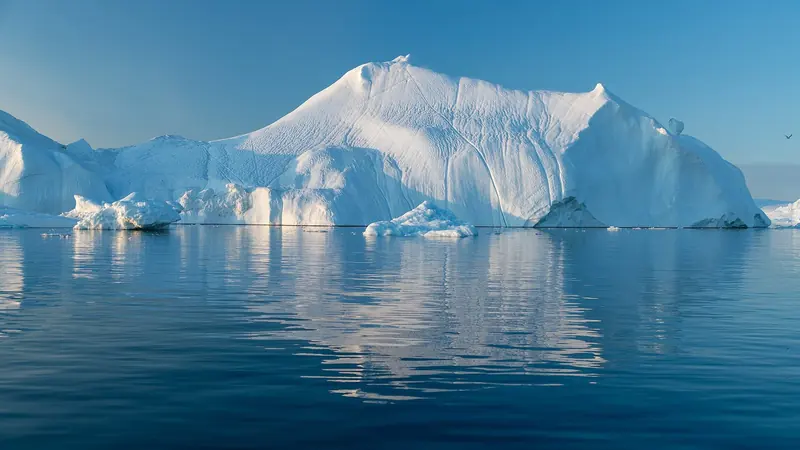
| Ilulissat Icefjord (Sermeq Kujalleq) | glacier moves about 40 m a day; calves an estimated 35 to 46 cubic km of ice a year (UNESCO vs Kangia visitor centre), about 10 percent of all Greenland's calving ice |
| Vessels over 1,000 GRT are barred from the Ilulissat Icefjord World Heritage Area; the Icefjord channel itself is restricted to commercial fishermen and sealers | |
| Kujataa Norse and Inuit farming landscape inscribed by UNESCO in 2017, includes Hvalsey church ruin and Brattahlid (Qassiarsuk), Erik the Red's estate | |
| Reliable fuel towns named by crews | Nuuk and Ilulissat in the west, Qaqortoq and Nanortalik in the south |
| Published Greenland expedition charter rates range from roughly USD 70,000 a week (Legend) to EUR 175,000 a week (Polarfront), plus an APA of about 30-35 percent | |
How a Crew Actually Gets to a Yacht in Greenland
Nuuk International Airport opened on 28 November 2024 with a 2,200 metre runway, the capital's first able to take direct jets rather than the short domestic strip it replaced, and Copenhagen, Reykjavik, Aalborg, Billund and, from June 2025, Newark all now connect straight in. A crew bound for Disko Bay flies into Nuuk and picks up an Air Greenland Dash-8 turboprop on to Ilulissat, roughly 560 to 600 km further north depending on the routing, a domestic leg that still runs several times a day year round. Ilulissat's own airport is still working with the 845 metre runway it has had for decades, which is why the Dash-8 remains the only aircraft that fits; Greenland Airports said in late 2025 that the extended 2,200 metre runway now under construction, which will let jets land directly, is due to open in the second half of 2026, a project that has already slipped once.
South Greenland changed gateway entirely on 16 April 2026, when the new Qaqortoq airport, IATA code JJU, opened and took over as the region's fixed-wing hub, downgrading the old Narsarsuaq strip 60 km away to a heliport. Icelandair now flies Qaqortoq direct from Keflavik seasonally, June to September, a three hour hop that puts a crew straight into the town where a South Greenland charter actually starts, instead of routing them through Narsarsuaq and on by helicopter or open boat as every earlier generation of crew had to.
Why Disko Bay and South Greenland Are Two Separate Trips
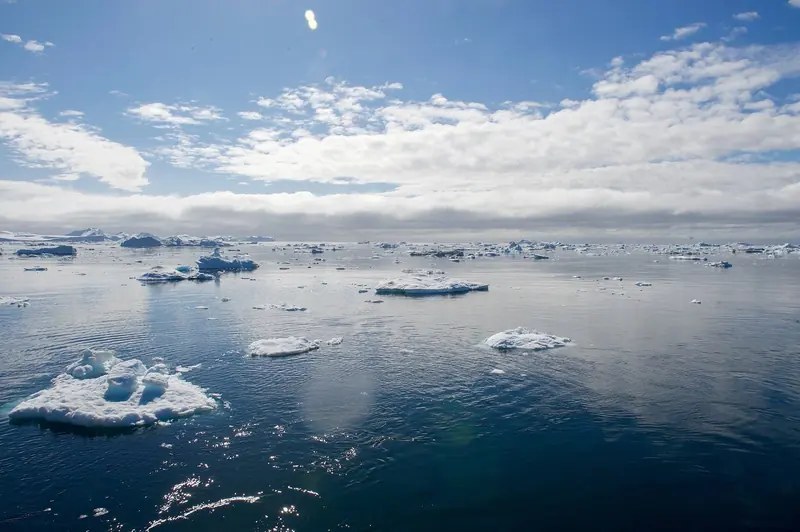
Cape Farewell has a case for being the single worst piece of coast on the route between the two towns. A 2008 buoy study published in Geophysical Research Letters found it the windiest oceanic site on the planet, with gale force winds recorded roughly a sixth of the time, and a companion 2013 study in Eos, the American Geophysical Union's own publication, traced the cause to the topography: the crush zone between the Greenland ice cap's high pressure and the steady procession of Atlantic lows produces conditions that can swing from a gale topping 40 knots to flat calm in fifteen minutes. Ice compounds the wind. Bergs calved off the east coast ride the East Greenland Current around the cape and pile into the fjord maze on its western side, which is the reason yachts making the passage between the two coasts typically steer 100 nautical miles or more north of the cape and stay at least 100 nm offshore, a routing described first-hand by the crew of the yacht Fryd on a Prince Christian Sound transit reported in Yachting World, rather than thread the archipelago itself.
The two areas do not share a season either. Disko Bay is at its most dramatic, and its most ice-choked, in June before the fjord opens up through midsummer, while South Greenland's fjords run their own separate ice year fed from the east coast, one a west-coast forecast says nothing about. A crew set on seeing both areas in one trip is really planning two separate expeditions joined by an offshore passage most operators would rather not make with paying guests aboard, and the practical answer is to pick Disko Bay or the south and do it properly.
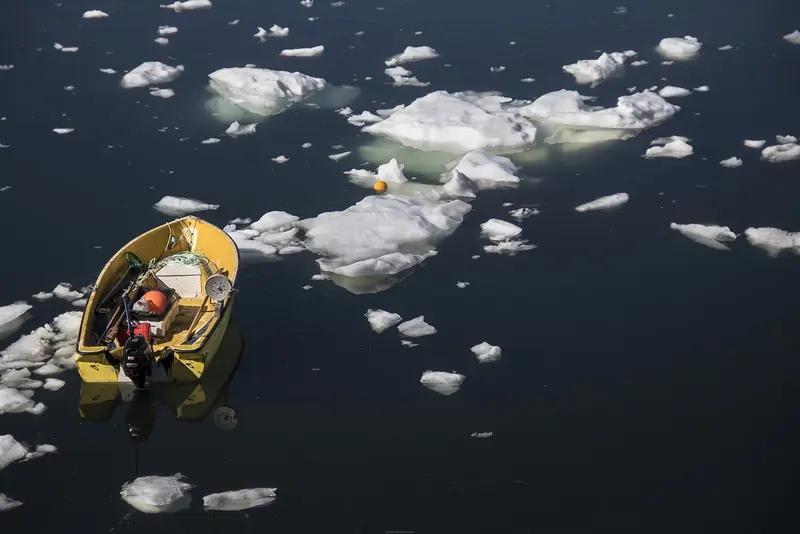
Disko Bay and South Greenland run on separate ice years and sit a passage around the windiest headland on earth apart, so a Greenland season usually means choosing one, not touring both.
The Season Is Shorter Than the Calendar Suggests
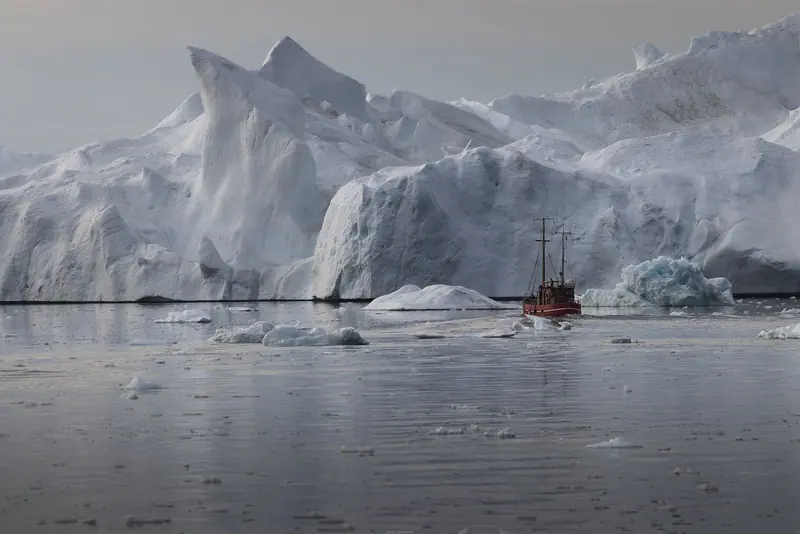
Icelandair's own seasonal Greenland routes, to Ilulissat and to the new Qaqortoq airport, run June through September, which sets the outer bounds most operators plan around, but a first-hand June transit reported in Cruising World described a five mile wide band of ice at the entrance to Ilulissat and bergs the crew had to actively find a path between under perpetual daylight. Both coasts sit far enough north that the midnight sun is real: Ilulissat, at roughly 69 degrees north, keeps genuine daylight through most of the season, useful for spotting ice but no substitute for a weather window. The Danish Meteorological Institute publishes daily Greenland ice charts, available by subscription at [email protected], and its Ice Patrol flies helicopter surveys two to three times a week out of Narsarsuaq during the season, a resource more than one Greenland crew in this research relied on directly.
Fog is the other constant. Warm air moving over cold water off the ice closes a fjord for days at a time with no warning worth the name, and the same local geography that makes Cape Farewell violent produces katabatic gusts off glacier fronts that can hit an anchored yacht without notice. None of this is unique to Greenland among Arctic cruising grounds, Svalbard and Lofoten both carry the same fog and katabatic risk, but a Greenland crew has fewer settlements to duck into while waiting it out than either of those better-served coasts.
Bergy Bits and Growlers Are the Real Hazard, Not the Icebergs
The US National Oceanic and Atmospheric Administration and the International Ice Patrol define a growler as under a metre high and under five metres long, roughly truck sized, and a bergy bit as one to five metres high and five to fifteen metres long; both can originate straight from a glacier front or from a larger berg breaking up, and both sit low enough that a lookout can lose them in any kind of chop. Disko Bay in particular scatters these in their thousands downwind of Sermeq Kujalleq, and a crew's actual defence is eyes, daylight and slow speed rather than instruments, since neither radar nor AIS sees a growler reliably.
Working crews have adapted with tools the pilot books do not mention. The skipper of the Elling E6 that crossed via Greenland to Canada, reported in the German magazine Boote-Magazin, ran a FLIR thermal camera to pick out ice in poor light and used Starlink to pull weather and ice reports underway; the crew of Fryd, transiting Prince Christian Sound per Yachting World, flew a drone ahead to see a path through pack ice that foreshortening made look, in the ice pilot's words, more closely packed from the deck than it actually was. In harbour, Ben Zartman, sailing the Stevens 47 Polar Sun and writing in Cruising World, carried ice poles specifically to fend off the smaller bergs that drift into an anchorage or alongside a raft-up on the tide.
The Reporting Regime Is Real, and It Is Free
The rule sits in Danish Maritime Authority Order No. 170 of 17 March 2003: any ship on a voyage to or from Greenland waters within the continental shelf or exclusive economic zone must submit a GREENPOS sailing plan on entry, a position report four times a day inside fixed UTC windows, and a final report on departure, addressed to the Joint Arctic Command's Fleet Radio at Gronnedal or a coastal radio relay. The order states explicitly that GREENPOS and KYSTKONTROL reports are free of charge, and a missed report that cannot be raised by radio triggers an actual search and rescue response rather than a warning letter. KYSTKONTROL applies more narrowly, to ships of 20 gross tonnes or more and fishing vessels moving between Greenland ports and places of call, reporting instead to the coastal radio station nearest the destination.
Ordinary clearance sits on top of this. Greenland is not in the EU, so Noonsite's cruiser reports describe every arriving yacht, even one direct from an EU country, clearing at a designated port of entry with the usual passports, crew list and insurance paperwork, and Noonsite records that Nuuk harbour itself has been closed to visiting sailboats for mooring or anchoring since 19 July 2024 over overcrowding, with the harbourmaster restricting the port to passenger cruise ships from 2025. A separate Greenland tourism law took effect 1 January 2025 requiring a Greenland-registered commercial licence for tour operators, expeditions included, which affects a crew booking through a local operator but not a privately owned yacht cruising on its own account.
Where a Yacht Can Actually Get Fuel
Ilulissat takes fuel through marine agents such as Revolution Fuel, who describe pipeline, barge and truck delivery arranged ahead of arrival for both yachts and cruise ships transiting the North Atlantic; no public per-litre price was found for any Greenland port in this research, and a crew should request a quote directly rather than budget from a brochure figure. In the south, Qaqortoq is the town cited most consistently as a reliable bunkering stop, with a harbour fuel point, two supermarkets and the nearest thing the south coast has to marine repair capacity, though even there only basic mechanical help is available and nothing resembling a diesel or electronics workshop.
Fuel quality, not just fuel availability, is a live concern for crews who have actually done the passage. Nakomis Nelson, skipper of the Elling E6 reported in Boote-Magazin on a Greenland-to-Canada delivery, singled out Qaqortoq as the largest town in the south where the diesel seemed most likely to be free of contamination, and described smaller settlements such as Aappilattoq, where diesel fuels the generators, the lights and the fish factory alike, as places to take on fuel only if there is no alternative. No published contamination data exists for any Greenland fuel point; this is a reputation carried by word of mouth among crews, not a documented standard.
What a Greenland Trip Actually Costs
Expedition-yacht brokers publish a wide range for a crewed Greenland charter: YachtCharterFleet and 1-800 Yacht Charters cite the expedition yacht Legend from roughly USD 70,000 a week rising toward EUR 460,000 for the full boat and crew depending on the season, CharterWorld lists the expedition yacht Lars at EUR 65,000 to 80,000 a week plus expenses, and Pelorus Yachting quotes the expedition yacht Polarfront from EUR 175,000 a week. Brokers describe fuel, provisions, expedition guide fees and helicopter time as running through an Advance Provisioning Allowance of roughly 30 to 35 percent of the charter fee on top of the headline rate, which is where a genuinely accurate trip cost actually lands.
What is not published anywhere found in this research: a per-night or per-metre berth tariff for a private yacht at Nuuk, Ilulissat or Qaqortoq, a marine diesel price at any Greenland port or an official cost for a private (non-charter) crew simply cruising their own boat through Greenland waters outside a commercial licence. A crew planning independently should request fuel and any harbour dues directly from a local agent rather than assume a rate card exists to check against.
The Icefjord and the Norse Ruins Are the Real Draw
Sermeq Kujalleq, the glacier that feeds the Ilulissat Icefjord and earned it UNESCO World Heritage status in 2004, moves at around 40 metres a day, a figure confirmed independently by the UNESCO listing itself and by Kangia, the Icefjord visitor centre in Ilulissat, which makes it among the fastest-moving glaciers on the planet. The two sources disagree on how much ice it actually calves each year, UNESCO's own listing cites 35 cubic kilometres, Kangia cites 46 and this research found no way to reconcile the difference, but both put the glacier alone at roughly 10 percent of all of Greenland's iceberg production. A yacht cannot follow that ice into the fjord itself: vessels over 1,000 gross tonnes are barred from the whole World Heritage Area per Kangia's own visitor rules, and the actual Icefjord channel is restricted further still, to commercial fishermen and sealers, so a private yacht's real experience is Disko Bay's open water, thick with the bergs the glacier has already sent out, rather than the calving front itself.
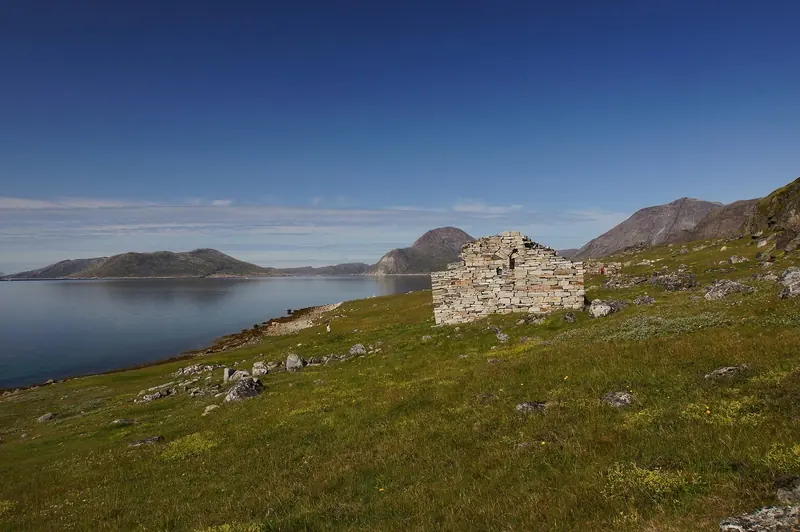
The south coast's draw is older. Kujataa, inscribed by UNESCO in 2017, protects the farming landscape shared by Norse settlers from the late 10th century and Inuit farmers from the 1780s onward, and its component sites sit within a day's dinghy ride of a Qaqortoq anchorage: Hvalsey, Greenland's largest and best-preserved Norse ruin, and Brattahlid, Erik the Red's own estate at what is now Qassiarsuk, complete with a reconstructed Viking longhouse and the foundations of what is described as the first Christian church built in North America. No other cruising ground in this directory pairs that kind of standing medieval European history with Arctic ice navigation in the same short season.
An Land, Anfahrt und Buchung
| Getting there (west) | Fly into Nuuk International Airport (opened Nov 2024, direct from Copenhagen, Reykjavik, Newark and others), then an Air Greenland Dash-8 on to Ilulissat, about 560-600 km further north. Ilulissat's own runway (845 m) is limited to turboprops until its extension, due in the second half of 2026. |
|---|---|
| Getting there (south) | Fly into the new Qaqortoq Airport (JJU, opened 16 April 2026), seasonal Icelandair service from Keflavik June-September. Narsarsuaq, the former gateway 60 km away, is now a heliport only. |
| Season | Realistic window July-September. June carries the heaviest ice on both coasts despite airline and charter schedules quoting June-September. |
| Reporting and clearance | GREENPOS position reporting is mandatory for every vessel to or from Greenland waters and is free of charge by law (DMA Order No. 170/2003). KYSTKONTROL applies to vessels 20 GT+ moving between Greenland ports. Clearance is required at a designated port of entry even from an EU country, since Greenland is outside the EU. Nuuk harbour is closed to visiting sailboats since July 2024. |
| Ice navigation | Bergy bits and growlers, not the icebergs themselves, are the real hazard: low freeboard, poor radar return. Crews report using thermal cameras, drones and DMI's daily ice charts and helicopter surveys; none replace a slow, daylight approach. |
| Fuel and provisioning | Reliable bunkering narrows to Nuuk and Ilulissat (west) and Qaqortoq and Nanortalik (south). No public fuel price found for any Greenland port; crews report fuel quality, not just availability, as a real concern outside these towns. |
| The Icefjord itself | Vessels over 1,000 GRT are barred from the whole Ilulissat Icefjord World Heritage Area; the Icefjord channel itself is open only to commercial fishermen and sealers. A private yacht's realistic view is Disko Bay's open water, not the calving front. |
| What it costs | Published expedition-charter rates run roughly USD 70,000 to EUR 175,000+ a week plus a 30-35 percent APA. No public berth tariff exists for a private yacht at Nuuk, Ilulissat or Qaqortoq; request directly from a local agent. |
| South Greenland's Norse sites | Hvalsey church ruin and Brattahlid (Qassiarsuk), Erik the Red's estate, both part of the Kujataa UNESCO site (2017), are reachable by dinghy or short transfer from a Qaqortoq anchorage. |
Was Eigner und Crew berichten
A drone, not just an ice pilot, is what actually gets a yacht through Prince Christian Sound
Ice pilot Magnus Day warned that foreshortening makes pack ice look more closely packed from the deck than it actually is; the crew flew a drone ahead to find a real path through, with skipper Jarl Spandow conning the 40 foot Najad 415P Fryd on the transit.
Silvia Varela, Yachting WorldFuel quality, not just fuel availability, decides where a crew actually bunkers
Qaqortoq was named as the largest South Greenland town where the diesel seemed most likely to be free of contamination, while a smaller settlement like Aappilattoq was treated as a fuel stop of last resort.
Nakomis Nelson, skipper of the Elling E6, reported in Boote-MagazinIlulissat harbour means rafting up to a tugboat, not finding a berth
With roughly 15 foot tides and boats reported rafted six deep in the harbour, the crew preferred tying up alongside a commercial tug over the town's own bulkheads, and carried ice poles to fend off smaller bergs drifting through.
Ben Zartman, aboard the Stevens 47 Polar Sun, reported in Cruising World
Was gut ist und worauf zu achten ist
Stärken
- Two specific, physical reasons to come that no other Arctic ground matches togetherSermeq Kujalleq, one of the fastest glaciers on earth, calving into a fjord a yacht can actually reach, and Kujataa's Norse ruins, walkable from a South Greenland anchorage rather than viewed from a lecture hall.
- New airport infrastructure has genuinely changed the logisticsNuuk International Airport (November 2024) and the new Qaqortoq airport (April 2026) both opened within the last two years, cutting out the old helicopter and open-boat transfers that used to gate both coasts.
- The mandatory reporting regime is straightforward and costs nothingGREENPOS and KYSTKONTROL are free of charge by law, and the reporting format, while formal, is built around genuine search and rescue coverage rather than revenue.
Worauf zu achten ist
- The two cruising areas are effectively disconnectedCape Farewell, the windiest oceanic site on record, and two separate ice years between Disko Bay and South Greenland mean most crews commit to one coast rather than linking both.
- Fuel is scarce and its quality is genuinely uncertainReliable bunkering narrows to two or three towns per coast, and crews who have made the passage report choosing a fuel stop partly on which town's diesel seems least likely to be contaminated.
- Nuuk harbour, the obvious central stopover, is closed to visiting sailboatsNoonsite records the harbour closed to yacht mooring and anchoring since July 2024 over overcrowding, with cruise ships prioritised from 2025.
- Real costs and berth tariffs are not published anywhereCharter rates exist for a fully crewed expedition yacht, but no public per-night berth cost or fuel price exists for a private yacht at any Greenland port found in this research.
Für wen: An owner or expedition charterer who wants genuine ice navigation and a UNESCO glacier or Norse ruins as the destination, and who accepts picking one Greenland coast rather than touring both in a season.