Indonesia & Raja Ampat
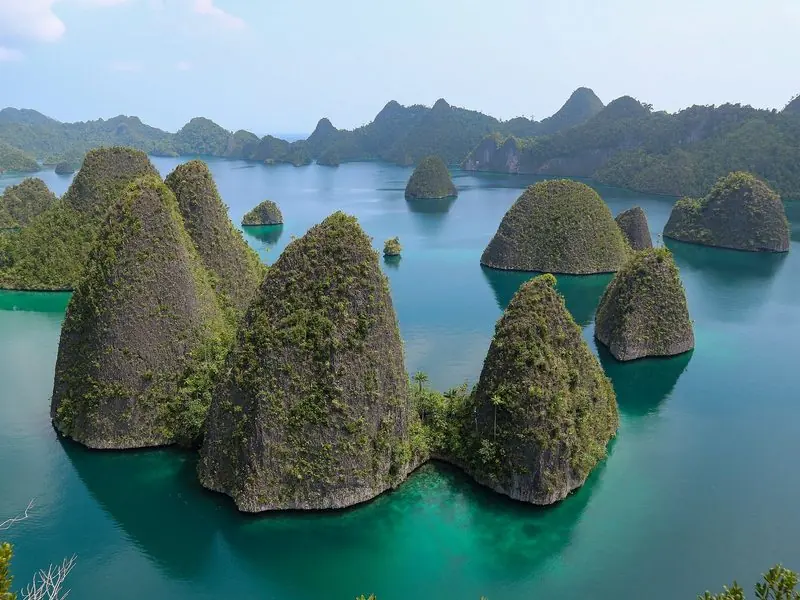
| Region | der indonesische Archipel, von Bali ostwärts über Komodo und die Bandasee bis Raja Ampat in Westpapua |
|---|---|
| Größenordnung | rund 17.000 Inseln über mehr als 5.000 km verteilt |
| Saisons | Komodo in der Regel April bis Oktober, Raja Ampat in der Regel Oktober bis April |
| Komodo-Nationalpark | 1.733 Quadratkilometer, davon 603 Land, seit 1991 UNESCO-Welterbe |
| Komodowarane | rund 1.700 auf der Insel Komodo und 1.300 auf Rinca, auf Padar ausgestorben |
| Raja Ampat | über 1.500 Inseln, Cays und Untiefen rund um Misool, Salawati, Batanta und Waigeo, mit 8.034 Quadratkilometern Land |
| Artenvielfalt in Raja Ampat | mehr als 600 Steinkorallenarten, rund 75 Prozent aller weltweit bekannten, dazu 1.508 Fischarten |
| Status von Raja Ampat | 2009 als mariner Erholungspark ausgewiesen, 2025 UNESCO-Biosphärenreservat |
| Entfernung | Labuan Bajo nach Sorong sind direkt rund 800 Seemeilen |
| Abfertigung | ein Vessel Declaration System online, mit Einklarierungshäfen darunter Benoa auf Bali, Kupang, Ambon, Sorong und Biak |
| Fahrterlaubnis | Yachten müssen jeden geplanten Hafen im Voraus angeben, und viele Häfen verlangen einen registrierten Agenten |
| Flughäfen | Komodo International in Labuan Bajo, Bahn von 2.750 Metern, und Domine Eduard Osok in Sorong mit 2.500 Metern |
| Komodo fees | IDR 150,000 on a weekday and IDR 250,000 at the weekend for international visitors, plus IDR 50,000 for snorkelling and IDR 100,000 for diving, and roughly IDR 150,000 to 200,000 per group for a ranger |
| Raja Ampat permit | IDR 1,000,000 per person for international visitors, about USD 67, valid twelve months and bought by bank transfer through the SIPARI portal |
| Charter | a foreign-flagged yacht may not charter in Indonesia, under the cabotage principle in Law 17 of 2008 on Shipping as amended by Law 66 of 2024 |
| Cruising | the online vessel declaration and e-clearance system that replaced the CAIT covers recreational use only, with no commercial carriage |
| Comparison | Turkey sells a foreign flag a charter licence at EUR 74,423.36 for 39 to 59 m since 19 June 2026 and St Vincent sells one over a customs counter, while Indonesia offers no equivalent |
| Discharge | Indonesian waters are not a MARPOL Special Area on the IMO list and reception facilities east of Benoa are effectively absent, so the standard is the operator's own |
| Berthing | there is no marina berthing for a large yacht east of Bali and no rate card to quote, checked 28 July 2026 |
Die Form des Reviers
Indonesien ist kein Revier in dem Sinn, in dem das Mittelmeer eines ist. Es ist ein Land von der Breite des Atlantiks, und eine Yacht arbeitet hier zwei oder drei definierte Gebiete daraus ab. Bali ist das westliche Tor und der Ort mit so etwas wie Infrastruktur. Komodo, in den Kleinen Sundainseln, liegt rund 250 Seemeilen östlich davon. Raja Ampat, vor der Westspitze Neuguineas, liegt in gerader Linie rund 800 Meilen dahinter und mehr auf jeder Route, die eine Yacht tatsächlich fährt.
Dazwischen liegen die Bandasee und die Gewürzinseln, tiefes Wasser, aktive Vulkane und Dörfer, die eine Handvoll Yachten im Jahr sehen. Diese mittlere Passage ist der Teil, den Eigner entweder lieben oder ganz auslassen. Die praktische Entscheidung lautet, ob das Boot eine Saison an Indonesien bindet oder auf einem längeren Asienprogramm einfach durchfährt.
Komodo
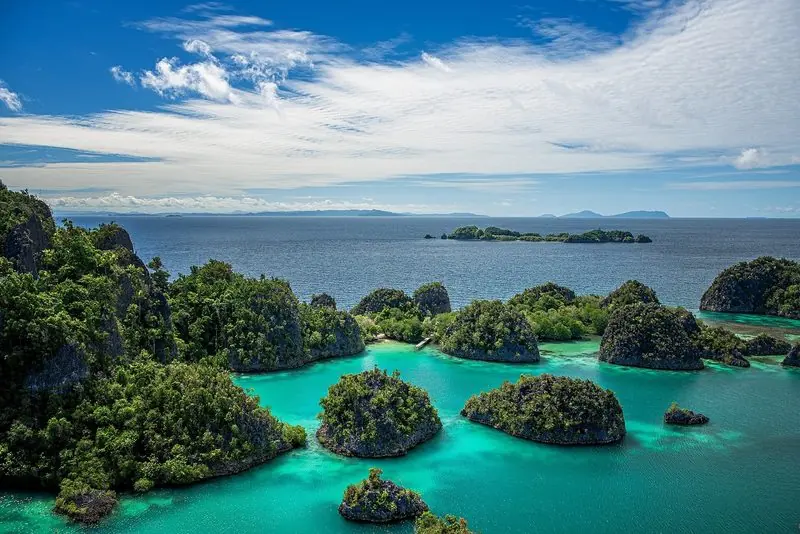
Der Komodo-Nationalpark umfasst 1.733 Quadratkilometer, davon nur 603 Land, über die drei Hauptinseln Komodo, Padar und Rinca und 26 kleinere. Seit 1991 ist er UNESCO-Welterbe. Rund 1.700 Warane leben auf der Insel Komodo und 1.300 auf Rinca, und die geführten Ranger-Wanderungen sind der Gästeausflug, den alle buchen. Der Grat von Padar mit drei Buchten darunter ist das Foto.
Das Tauchen ist der eigentliche Grund, ein Boot herzubringen. Manta Alley, Crystal Rock, Castle Rock, Batu Bolong, der Cauldron und Tatawa Besar sind die benannten Stellen, und die meisten sind strömungsgetrieben, was sie so reich und was sie ernsthaft macht. Das Wasser an der Südseite des Parks ist deutlich kälter als im Norden. Labuan Bajo auf Flores ist der Basisort und ist schnell gewachsen.
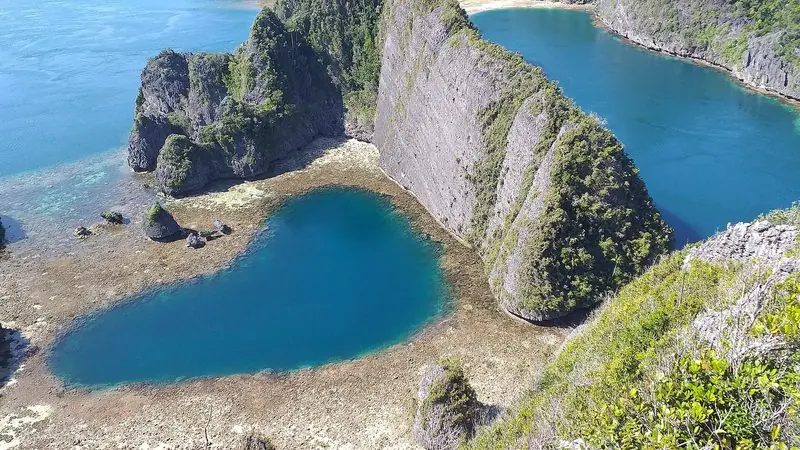
Komodo läuft von April bis Oktober und Raja Ampat von Oktober bis April, und deshalb bleibt ein Boot, das herkommt.
Raja Ampat
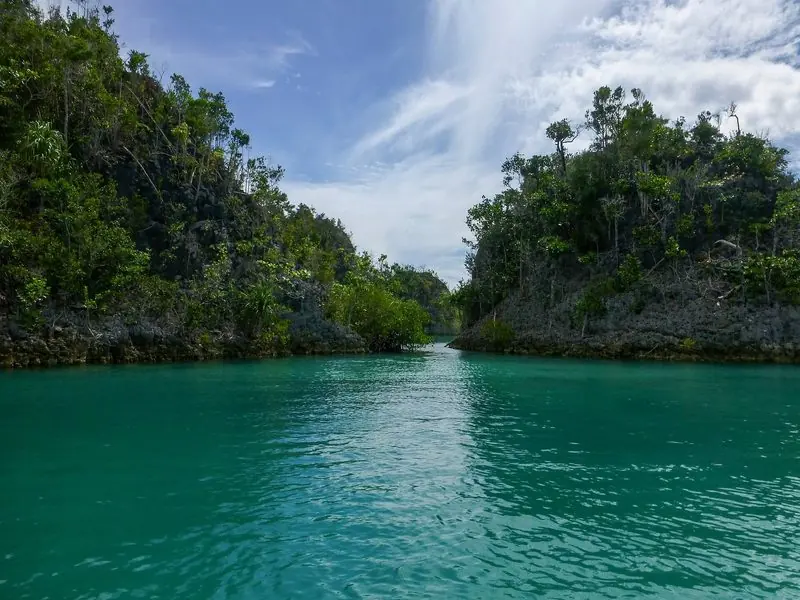
Raja Ampat sind über 1.500 Inseln, Cays und Untiefen rund um die vier großen, Misool, Salawati, Batanta und Waigeo, mit insgesamt 8.034 Quadratkilometern Land. Es hält mehr als 600 Arten von Steinkorallen, rund 75 Prozent aller bekannten Arten, dazu 1.508 Fischarten. 2009 wurde es mariner Erholungspark und 2025 UNESCO-Biosphärenreservat. Die Riffe sind nicht bloß gut. Sie sind der weltweite Maßstab, an dem andere Riffe gemessen werden.
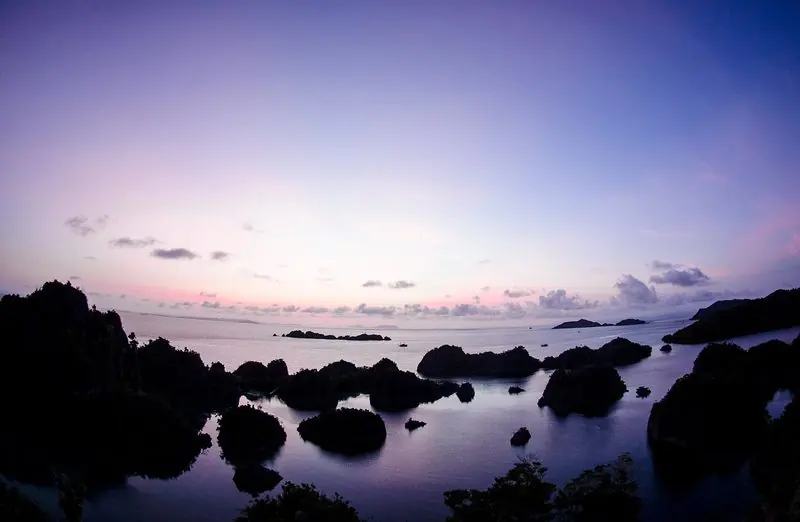
Die vier Arbeitsgebiete sind die Gewässer um das nördliche Salawati, Batanta und das südwestliche Waigeo, die Mayalibit Bay im mittleren Waigeo, der Südosten von Misool und die Sembilan-Inseln. Wayag im äußersten Nordwesten ist die Karstlagune der Postkarten und von überall ein langer Schlag. Die Dampierstraße zwischen Waigeo und Batanta läuft hart, und alles dort ist ein Strömungstauchgang, der auf die Tide geplant wird. Gäste, die tauchen, wollen nicht mehr weg.
Vierzehn Tage, und eine Saison
Vierzehn Tage in Komodo ab Labuan Bajo sind das Standardprogramm und funktionieren gut. Gäste fliegen nach Komodo International, das Boot deckt den Park in einer Woche ab, und die zweite Woche läuft nach Osten in die Floressee oder nach Süden um Sumba. Alles liegt wenige Stunden vom letzten Ankerplatz entfernt, und der Flughafen liegt vor der Tür.
Vierzehn Tage in Raja Ampat ab Sorong sind die andere Hälfte. Was nicht funktioniert, ist der Versuch, beides in einer Gästereise zu machen, denn die 800 Meilen dazwischen sind eine Überführung von mehreren Tagen über offenes Wasser. Eigner, die beides wollen, bringen das Boot in der zweiten Jahreshälfte nach Osten, arbeiten Komodo über die Trockenzeit ab und laufen dann für den Nordwinter nach Raja Ampat. Das ist eine Bindung über sechs Monate, und so arbeitet die ansässige Flotte.
Wo ein 50-Meter-Boot hineinpasst
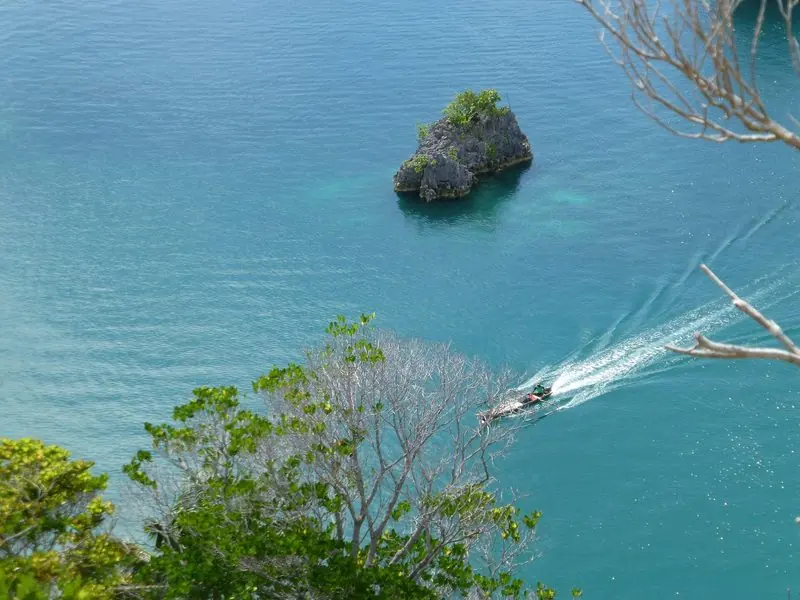
Marinaliegeplätze für eine große Yacht gibt es in diesem Revier faktisch nirgends. Benoa auf Bali ist der Einklarierungshafen und das, was einer Basis am nächsten kommt, und alles östlich davon heißt ankern. Das ist nicht das Problem, nach dem es klingt, weil die Ankerplätze tief, geschützt und leer sind, aber es bedeutet, dass das Boot ab dem Moment, in dem es Bali verlässt, vollständig auf sich gestellt ist.
Die eigentliche Schranke ist die Vermessung. Große Teile Ostindonesiens sind auf dem Stand des neunzehnten Jahrhunderts vermessen oder gar nicht, Riffe steigen steil aus tiefem Wasser auf, und Satellitenbilder werden routinemäßig neben der Seekarte genutzt. Eine 50-Meter-Yacht bewegt sich bei gutem Licht mit einem Ausguck und an den engeren Stellen mit einem Tender voraus. Die Tiefen sind häufig zu groß, um dicht unter Land zu ankern, viel Kette und sorgfältige Kontrollen des Ankerhaltens sind also normal.
Wetter und die zwei Saisons
Der Archipel liegt beiderseits des Äquators und läuft auf Monsunen statt auf Sommer und Winter. Komodo gilt allgemein von April bis Oktober als am besten, im trockenen Südostmonsun, mit beständigen Bedingungen und klarem Wasser. Raja Ampat läuft andersherum, und Oktober bis April ist dort das ruhigere Fenster. Diese Gegenläufigkeit ist die mit Abstand nützlichste Tatsache bei der Planung eines Jahres in indonesischen Gewässern.
Regen kommt, wenn er kommt, hart und kurz. Böen bauen sich schnell auf, und die Sicht fällt mit ihnen. Die Wassertemperatur ist überall warm außer an der Südseite von Komodo, wo Auftrieb sie scharf senkt und Gäste einen Neoprenanzug wollen, den sie nicht erwartet haben. Indonesien liegt am Äquator außerhalb der wichtigsten tropischen Wirbelsturmgürtel, wobei die südlichen Inseln dem australischen System nahe genug sind, um es zu beobachten.
Gäste an Bord bringen
Komodo International in Labuan Bajo hat eine Bahn von 2.750 Metern, wickelte 2024 über eine Million Passagiere ab und erhielt 2024 den internationalen Status mit Verbindungen nach Kuala Lumpur. Domine Eduard Osok in Sorong hat 2.500 Meter und ist über Jakarta und Makassar angebunden, mit der kleinen Piste in Waisai weiter nach Raja Ampat. Beide sind mit dem Geschäftsflugzeug erreichbar.
Die realistische Route für einen europäischen Gast ist ein Langstreckenflug nach Singapur, Jakarta oder Bali und danach ein Inlandsanschluss von zwei bis vier Stunden. Rechnet man die Fahrt und den Tenderweg dazu, sind es von London aus fast zwei Tage. Die Gepäckabfertigung auf den Inlandsetappen ist ein echtes Risiko, und Crews halten hier routinemäßig Tauchausrüstung an Bord, statt sich darauf zu verlassen, dass Gäste sie mitbringen.
An Land, und was Gäste tatsächlich tun
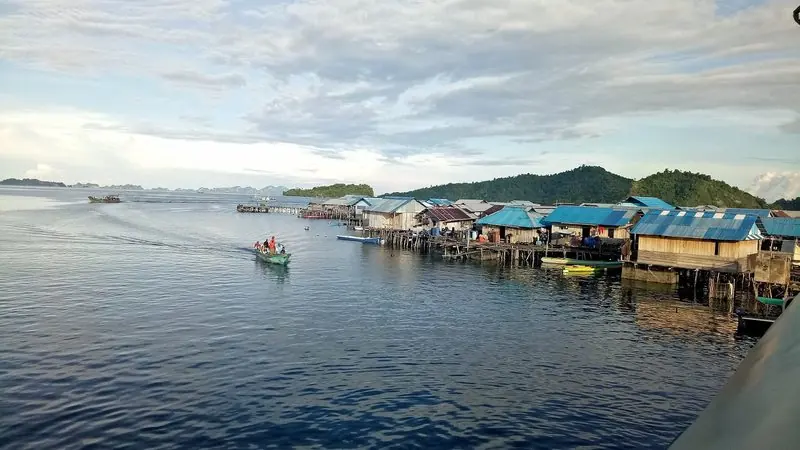
Das ist ein Wasserziel, und ein Eigner sollte die Erwartungen entsprechend setzen. An Land sind es in Komodo die Ranger-Wanderungen zu den Waranen, der Grat von Padar und die rosa Sandstrände. In Raja Ampat sind es Dorfbesuche, die Paradiesvögel im Morgengrauen auf Waigeo und der Aussichtspunkt über dem Karst von Piaynemo. Bali am Anfang oder am Ende liefert Tempel, Ubud, Restaurants und alles andere, was ein Gast vermissen könnte.
Das Essen außerhalb Balis ist einheimisch und einfach, ein Boot proviantiert also ordentlich in Benoa oder lässt einfliegen. Nachtleben gibt es östlich von Bali nicht. Was die Tage füllt, sind Tauchen, Schnorcheln über Riffen mit mehr Korallenarten als die gesamte Karibik, Kajakfahren durch Karst und die Tatsache, dass in den meisten Ankerplätzen nichts liegt außer einem Fischerboot.
Papiere, Treibstoff, Unterstützung und der ehrliche Nachteil
Die Abfertigung läuft über ein Online-System zur Fahrzeuganmeldung, das mehr als einmal geändert wurde, mit Einklarierungshäfen darunter Benoa, Kupang, Ambon, Sorong und Biak. Von Yachten wird erwartet, dass sie jeden geplanten Hafen im Voraus angeben, was sich schlecht damit verträgt, wie irgendjemand tatsächlich einen Archipel fährt, und viele Häfen verlangen inzwischen einen registrierten örtlichen Agenten. Eintrittsgenehmigungen für National- und Meeresparks werden gesondert berechnet und kontrolliert. Die Charterlage für eine Yacht unter fremder Flagge ist das Erste, was zu klären ist, und braucht aktuellen Rat vor Ort und keine aus Europa mitgebrachte Annahme.
Treibstoff gibt es in Benoa und in den größeren Häfen, und die Verfügbarkeit ist in Ordnung, während die Qualität die Sorge ist, Reinigung und Filtration zählen also. Es gibt in Indonesien keine Refit-Werft, die eine 50-Meter-Yacht nimmt, und Singapur, Phuket oder Australien sind der Rückfall, jeweils Tage entfernt. Eine medizinische Evakuierung aus Raja Ampat ist eine ernsthafte Planungsaufgabe. Dagegen gehalten sind die Riffe von Misool die reichsten, über denen eine Privatyacht irgendwo auf der Welt ankern kann.
What the permits cost, and what a berth does not
The park fees are the running cost here and they are published. Komodo National Park charges international visitors IDR 150,000 on a weekday and IDR 250,000 at the weekend, with IDR 50,000 more for snorkelling and IDR 100,000 for diving per person, and a ranger fee of roughly IDR 150,000 to 200,000 per group, and the park has been moving during 2026 to a single bundled ticket per route. Raja Ampat is the bigger number and the better value: the marine park entry permit is IDR 1,000,000 per person for international visitors, about USD 67, valid for twelve months from purchase and bought by bank transfer when registering on the SIPARI portal. For twelve guests that is IDR 12,000,000 for a year of access to the richest reefs on the planet, and it is checked.
Berthing does not exist east of Bali in any form a rate card could describe, so the berthing line in an Indonesian season is close to zero and the cost sits in fuel, agency, park permits and air freight. That is the inverse of the Mediterranean arithmetic. Marina di Porto Cervo's published 2026 tariff charges EUR 3,698 a day in the band to 40 m from 1 to 20 August, roughly EUR 102,000 for the month, and EUR 195,819 for a 1 May to 31 October contract, which is more than an entire Indonesian programme will spend on anything except fuel. What an owner is buying instead is total self-sufficiency: no yard in the country will take a 50 m yacht, Singapore, Phuket and Australia are each days away, and a medical evacuation from Raja Ampat is a planning exercise rather than a phone call.
Charter: the cabotage answer, stated plainly
A foreign-flagged yacht may not charter in Indonesia. The cabotage principle is codified in Law 17 of 2008 on Shipping, most recently amended by Law 66 of 2024, and it reserves the carriage of goods and the transport of passengers within domestic waters to Indonesian-flagged vessels crewed by Indonesian nationals. There is no permit, licence or fee that buys a foreign flag out of it for passenger carriage. What a foreign yacht may do is cruise, under the online vessel declaration and e-clearance system that replaced the old CAIT, and that clearance covers recreational use only with no commercial carriage of any kind. The narrow exemptions in the 2024 amendment are for offshore work where no Indonesian-flagged vessel is available, and they do not reach yacht charter.
That single rule explains the shape of the fleet an owner sees here. The commercial boats working Komodo and Raja Ampat are Indonesian-flagged, which is why the phinisi is the local charter platform rather than a European motor yacht, and it is why a visiting owner cannot defray a season by putting the boat out between guest blocks. An owner who wants the yacht to earn in Indonesian waters is looking at Indonesian registration and an Indonesian operating structure, not at paperwork. Set against Turkey, which since 19 June 2026 sells a charter licence to a foreign flag for EUR 74,423.36, and the Grenadines, which sell one over a customs counter, Indonesia simply does not offer the transaction.
Discharge, and why it matters more here than anywhere
Indonesian waters are not a MARPOL Special Area, so the general convention rules are the legal floor and they are a long way below what these reefs need. There is no MARPOL Special Area covering the archipelago on the IMO's own list, and there are no reception facilities of any consequence east of Benoa. The binding rules a yacht will actually meet are the park ones: Komodo and Raja Ampat both regulate anchoring and activity inside their boundaries, permits are checked, and both are UNESCO-listed, Komodo as a World Heritage site since 1991 and Raja Ampat as a biosphere reserve since 2025.
The practical position is therefore a matter of the operator's own standard rather than of enforcement, which is exactly why it should be written into the boat's orders before she leaves Bali. A yacht working Misool for a week over reefs holding about 75 per cent of the world's known hard coral species has no business discharging anything, and the tankage to avoid it is a specification question settled at build or refit. Anchoring is the same discipline. Depths are frequently too great to anchor close in, charts are nineteenth-century in places, and a chain laid across a coral head does damage that no permit fee compensates.
An Land, Anfahrt und Buchung
| Getting guests aboard | Komodo International at Labuan Bajo has a 2,750 m runway and gained international status in 2024 with services to Kuala Lumpur. Domine Eduard Osok at Sorong has 2,500 m and connects through Jakarta and Makassar, with the small strip at Waisai onward into Raja Ampat. The realistic route for a European guest is a long-haul flight to Singapore, Jakarta or Bali and a domestic connection of two to four hours, the better part of two days from London. Baggage handling on the domestic legs is a real risk, which is why crews here routinely keep dive gear aboard rather than trust it to a guest's suitcase. |
|---|---|
| How the cruising clearance works | Clearance runs through an online Vessel Declaration System that replaced the old CAIT and has been changed more than once, with ports of entry including Benoa, Kupang, Ambon, Sorong and Biak. Yachts are expected to declare every intended port in advance, which sits awkwardly with how anyone actually cruises an archipelago, and many ports now require a registered local agent. The clearance covers recreational use only, with no commercial carriage of any kind. |
| Local pilots are now a rule, not a courtesy | Government rules are being implemented to require boats in Raja Ampat to engage local pilots and captains, both to provide employment and to bolster reef protection. The reason is on the record: since 2017, three vessels - the 120-passenger cruise ship Caledonian Sky and two yachts - have crashed into the corals, often at low tide, causing irreparable damage to the reef structure. |
| What the permits actually cost | Komodo National Park charges international visitors IDR 150,000 on a weekday and IDR 250,000 at the weekend, plus IDR 50,000 for snorkelling and IDR 100,000 for diving per person, and a ranger fee of roughly IDR 150,000 to 200,000 per group. Raja Ampat's marine park permit is IDR 1,000,000 per person for international visitors, about USD 67, valid twelve months from purchase and bought by bank transfer through the SIPARI portal - for twelve guests that is IDR 12,000,000 for a year of access. |
| What a berth does not cost, because there is none | There is no marina berthing for a large yacht anywhere east of Bali and no rate card to quote, checked 28 July 2026. The cost that would sit on a Mediterranean berthing line instead sits in fuel, agency fees, park permits and air freight - the inverse of the Mediterranean arithmetic, where Marina di Porto Cervo's 2026 tariff alone runs about EUR 102,000 for a August month. |
| Charter: the cabotage answer | A foreign-flagged yacht may not charter in Indonesia at any price. The cabotage principle in Law 17 of 2008 on Shipping, as amended by Law 66 of 2024, reserves domestic passenger carriage to Indonesian-flagged vessels crewed by Indonesian nationals, and there is no permit or fee that buys a foreign flag out of it. That is unlike Turkey, which has sold a foreign-flag charter licence for EUR 74,423.36 since 19 June 2026, or St Vincent, which sells one over a customs counter. |
| Fuel, refit and medical evacuation | Fuel is available at Benoa and the larger ports; availability is fine and quality is the concern, so onboard polishing and filtration matter. No refit yard in Indonesia will take a 50 m yacht - Singapore, Phuket or Australia are the fallback, each days away. Medical evacuation from Raja Ampat is a serious planning exercise, not a phone call. |
Was Eigner und Crew berichten
The reserve's own recovery numbers, not a marketing claim
Fish biomass inside the Misool no-take zones rose 250 per cent over six years, a figure drawn from a Mark Allen study at Murdoch University and cited by the foundation that runs the reserve. The Misool Marine Reserve, founded by Andrew and Marit Miners in 2005, now spans about 1,220 square kilometres of no-take zones and has been credited elsewhere with lifting shark populations sharply within its boundaries.
Marit Miners, co-founder, Misool Foundation (Ocean Panel perspective piece)Three groundings on coral since 2017 are why local pilots are now compulsory
The 120-passenger cruise ship Caledonian Sky and two yachts have crashed into the reefs since 2017, often at low tide, causing irreparable damage to the coral structure. That record is the reason Indonesia is moving to require boats in Raja Ampat to engage local pilots and captains.
Boat International, reporting from the phinisi Prana by AtzaroShark numbers are the crew's own yardstick for a healthy reef, and this one has plenty
Mick Taylor, cruise director and dive instructor aboard the 55 m phinisi Prana by Atzaro, has said shark numbers are one of the best indicators of a healthy reef system in these waters, and that Raja Ampat has them in quantity.
Mick Taylor, cruise director and dive instructor, Prana by Atzaro (Boat International)The crew who work here still find the place disorienting in a good way
Captain Saiful Hadi, who navigates Prana by Atzaro through Raja Ampat's bays, has said nothing prepares a visitor for a place like this, and that he sometimes cannot believe it exists himself.
Captain Saiful Hadi, master, Prana by Atzaro (Boat International)
Was gut ist und worauf zu achten ist
Stärken
- The reef recovery here is measured, not just claimedMisool's no-take marine reserve, run by the Misool Foundation, saw fish biomass increase by 250 per cent over six years, a figure the foundation's own co-founder cites from a Mark Allen, Murdoch University study. Onboard, the crew of the phinisi Prana by Atzaro rate shark numbers as one of the best live indicators of a healthy reef, and Raja Ampat has plenty.
- Two seasons that run in opposition keep a resident boat in season year-roundKomodo's dry season runs April to October and Raja Ampat's calm window runs October to April, so an owner committing six months to Indonesia never has to sit out either ground's bad weather.
- The published park fees are cheap for what they buyRaja Ampat's marine park permit runs about USD 67 a guest for twelve months of access to reefs holding roughly 75 per cent of the world's known hard coral species - a fraction of a single Mediterranean berth night.
- No berth invoice, but real self-sufficiency insteadThere is no marina berthing east of Bali at any price, so the cost that would sit on a Mediterranean tariff card moves entirely into fuel, agency and permits - a different kind of ownership, not a cheaper version of the same one.
- The place still produces the reaction owners come here forCaptain Saiful Hadi, who has run guests through these waters, put it simply: sometimes he cannot believe Raja Ampat exists himself.
Worauf zu achten ist
- The charts cannot be fully trustedMuch of eastern Indonesia is surveyed to nineteenth-century standards or not at all. Since 2017, three vessels - the 120-passenger cruise ship Caledonian Sky and two yachts - have crashed into the coral, often at low tide, causing irreparable damage to the reef structure.
- There is no refit capability in the country for a boat this sizeSingapore, Phuket or Australia are the fallback for anything serious, each of them days away by sea, and medical evacuation from Raja Ampat is a genuine planning exercise rather than a call to an ambulance.
- Cabotage closes the one thing a European owner might expectA foreign-flagged yacht cannot charter in Indonesia at any price under Law 17 of 2008 as amended in 2024. There is no licence to buy here, unlike Turkey's EUR 74,423.36 foreign-flag charter licence or the Grenadines' over-the-counter version.
- The new local-pilot rule could price some vessels out altogetherPrana by Atzaro's own cruise director and dive instructor, discussing the proposal that followed the coral groundings, said it could help price certain vessels out of Raja Ampat, though he also called streamlining boat traffic crucial to saving the destination from overtourism.
- Nightlife and food ashore do not exist east of BaliWhat fills the days is diving and village visits; a boat provisions properly in Benoa or flies supplies in, and an owner should set guest expectations accordingly before the yacht leaves Bali.
Für wen: Ein Eigner, dessen Gäste tauchen, mit einem autarken Boot, einem guten Agenten und der Geduld für Genehmigungen und Passagen, die in Tagen gemessen werden.