Ireland's Atlantic Coast & Cork Harbour
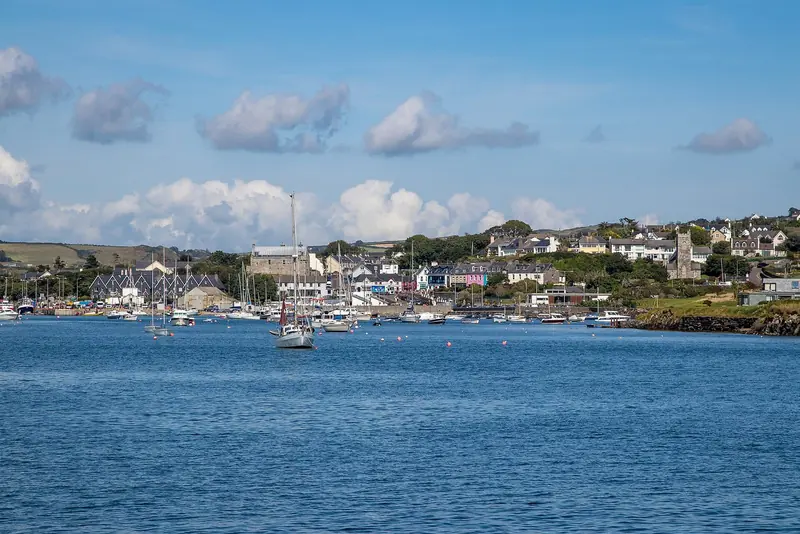
| Royal Cork Yacht Club, founded in 1720 at Crosshaven, is generally credited as the world's oldest yacht club. | |
| The Port of Cork describes Cork Harbour as the world's second-largest natural harbour, a title several other harbours also claim. | |
| Kinsale Yacht Club's 2024-25 visitor rate is 5.00 euros per metre per night plus harbour dues of 4.00 to 8.00 euros a night depending on length. | |
| Royal Cork Yacht Club's 2025-26 annual berth rate is 250.69 euros per metre for the April-to-March year. | |
| Fastnet Rock lies about 4 miles southwest of Cape Clear Island and 8 miles from the Cork mainland. | |
| The 1979 Fastnet Race storm sank five yachts and killed 15 sailors and three rescuers; Baltimore's lifeboat was at sea for about 24 hours during the height of it. | |
| The Rolex Fastnet Race has finished at Cherbourg instead of Plymouth since 2021 and no longer calls at any Irish port. | |
| A UK-flagged pleasure boat may stay in Ireland under temporary admission for up to 18 months without customs formality. | |
| Glandore's six visitor moorings cost 15 euros a night but are not all kept serviceable in a given season. |
A Working Harbour and a Peninsula Coast, Not One Marina
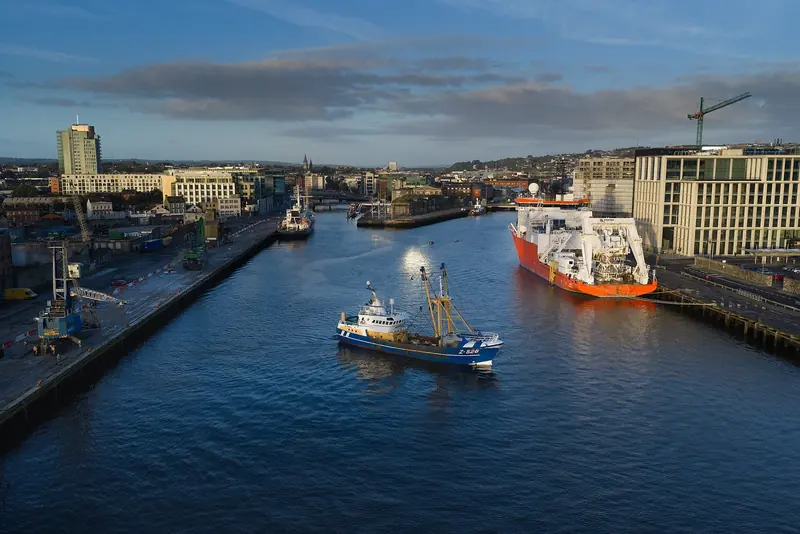
Cork Harbour is one of the world's largest natural harbours, and the Port of Cork's own material calls it the second-largest, a claim Sydney Harbour, Pearl Harbor and a handful of others also make without any independent ranking settling the question. What is not in dispute is the scale: the harbour holds Cork city's docks, Cobh's deep-water anchorage where transatlantic liners once called, and Crosshaven at its mouth, home to the Royal Cork Yacht Club, founded in 1720 and generally credited as the oldest yacht club in the world.
Kinsale sits eight miles further west on its own smaller, landlocked harbour and functions as the region's second base, and beyond it the coast turns into a run of drowned river valleys and rock-strewn bays: Glandore, Union Hall, Baltimore behind Sherkin Island, Roaringwater Bay's Carbery's Hundred Isles and Bantry Bay behind the Beara and Sheep's Head peninsulas. The Irish Cruising Club's Sailing Directions for the South and West Coasts, now in its 16th edition (2025), is the pilotage reference most owners carry aboard rather than relying on a generic chartplotter chart.
Getting a Boat and a Crew There
Cork Airport (ORK) connects directly to London Heathrow, London Stansted and Amsterdam Schiphol, with Aer Lingus, British Airways and Qatar Airways flying around 28 flights a week between them to Heathrow alone and KLM flying Amsterdam roughly 21 times a week at about 1 hour 42 minutes in the air. Cork last had scheduled transatlantic service in 2019, when Norwegian Air's short-lived US route ended, so a crew member flying in from North America currently lands in Dublin or Shannon and drives roughly 2.5 to 3 hours south.
Brittany Ferries sails Cork to Roscoff about twice a week in season on the Armorique or Pont-Aven, an overnight crossing of around 15 hours, which is a genuine way to bring a car, spares or extra crew from France without flying, though it is not a daily service and bookings tighten around the July and August school holidays. Nobody publishes a single door-to-door cost for reaching the boat: flights, the ferry and the drive from Dublin or Shannon all vary by season and how far ahead you book.
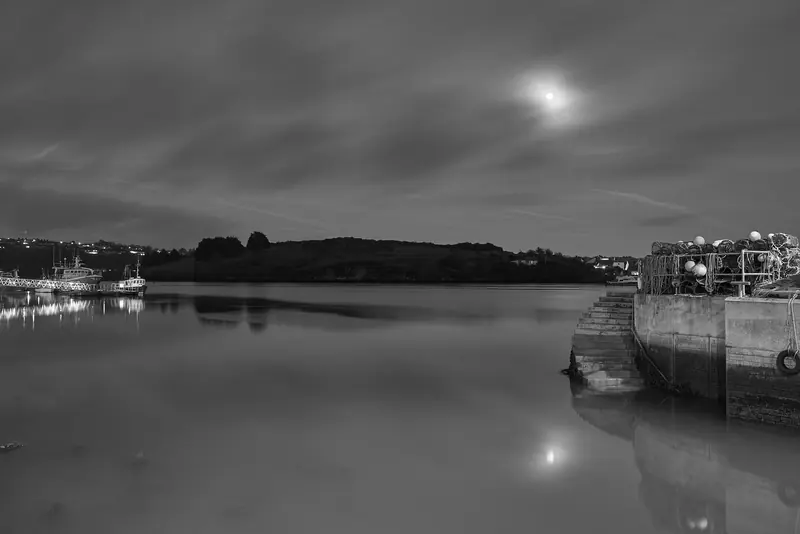
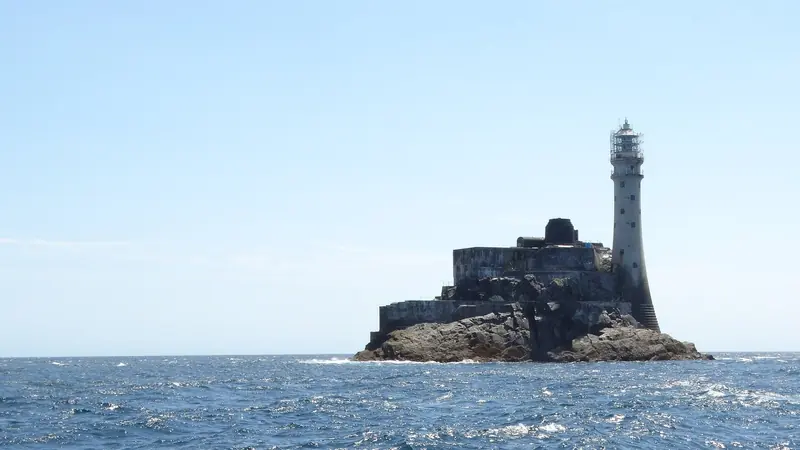
The current Fastnet lighthouse, first lit on 27 June 1904 and built from more than 2,000 dovetailed granite blocks, replaced an 1854 cast-iron tower that reportedly vibrated so violently in Atlantic storms it shook crockery off the table inside.
The Season Is Shorter Than the Brochures Say
West Cork's sailing season is genuinely settled for about three months a year, and cruising guides to Ireland's west and south coasts consistently name April, May and June, sometimes stretching to a good July, as that core period, while warning that August and September get wetter as the first remnants of the Atlantic hurricane season begin crossing the ocean. The prevailing wind through summer is westerly, which makes this whole coast a lee shore for anyone caught out mid-passage, and several guides note conditions can change with little warning.
Met Eireann's marine and sea-area forecasts are the reference every guide and forum recommends checking before any passage west of Kinsale, and Roaringwater Bay in particular has a reputation among cruising sailors for a heavy Atlantic swell that pushes in even in settled weather, a hazard several cruising accounts single out by name. None of this rules out the coast; it means passage planning here is built around waiting for windows rather than around a fixed itinerary.
Clearing Customs Since Brexit Changed the Paperwork
Ireland's Revenue authority states plainly that there are normally no Revenue formalities on importing or exporting a pleasure boat, and that a UK vessel used privately can stay in Ireland under temporary admission, without formality, for up to 18 months before VAT becomes payable if it remains longer. Customs control for Cork Harbour and the whole south-west coast, including Kinsale, Bantry and Castletownbere, sits with Revenue's Customs unit at Cork Port and Airport, which also runs a dedicated patrol cutter, the Cosaint, based in Kinsale.
Immigration is the part that catches people out: an arriving crew needs an Irish immigration stamp, and if no officer comes down to the boat, the crew are expected to report themselves to the nearest Garda station. Northern Ireland is a separate case entirely under the Windsor Framework, treated as inside the EU single market for goods, which matters if a boat is routing on to or from Belfast or Derry rather than staying within the Republic. What is not published anywhere in one place is a single government page walking a cruising yacht through the whole sequence; owners assemble it from Revenue's own site, the RYA's Brexit guidance and word of mouth.
Cork Harbour Has Three Marinas, and They Are Not Interchangeable
Royal Cork Yacht Club runs a 100-berth marina at Crosshaven with access at all stages of the tide, and its published 2025-26 annual rate is 250.69 euros per metre for the April-to-March year, with winter storage from November to March at 118.70 euros per metre and berths over 18 metres or catamarans priced on application only. Salve Marina, 300 metres upriver of Crosshaven's town quay, has 56 berths for boats from 8 to 50 metres with draughts to 4.2 metres and is the most convenient of the three for walking into the village.
East Ferry Marina, on the east side of Great Island, is smaller at 80 berths with a minimum approach depth of 3 metres at low water, and trades Crosshaven's convenience for a genuinely quiet corner of the harbour with its own pub on site. None of the three is a realistic base for seeing Cork city itself: the city-centre pontoon lacks facilities, and Yachting Monthly's own cruising guide to the south coast recommends basing at Crosshaven and taking a ferry or taxi into the city rather than trying to berth there.
Kinsale Is the Second Base, and the Better Town
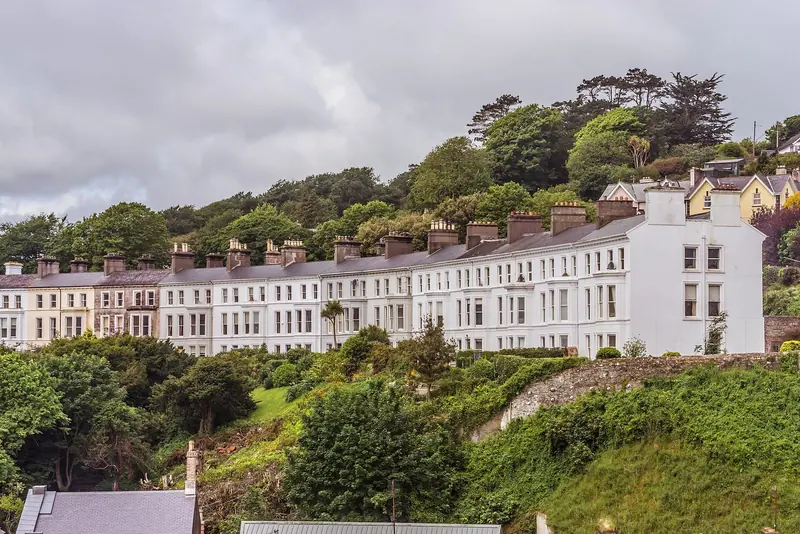
Kinsale Yacht Club's marina publishes 2024-25 visitor rates of 5.00 euros per metre per night plus harbour dues that scale from 4.00 euros a night for boats under 11 metres to 8.00 euros a night for boats up to 18 metres, charged for the first two nights of any seven, which puts a single night for an 11.4-metre boat at roughly 63 euros all in. Castlepark Marina sits across the harbour as the second option and holds the harbour's diesel pontoon, so fuel is a short hop by water or a walk to a filling station in town rather than available at KYC's own berths.
Provisioning is genuinely easy: two supermarkets and several food shops sit within walking distance of the marina, and while the nearest proper chandlery is in Cork city, it runs a same-day delivery to Kinsale if called before midday and it has the item in stock. Kinsale also hosts two of the region's biggest regattas, the biennial Sovereign's Cup, which drew close to 95 boats in its 2025 edition, and shares the calendar with Crosshaven's Cork Week, so berths tighten hard around both.
West of Kinsale, You Are Choosing Between a Mooring and an Anchor
Glandore Harbour Yacht Club looks after six Cork County Council visitor moorings just west of the harbour in about 2 metres of water, charged at 15 euros a vessel a night and booked by phone or through the club's own Facebook page, but harbour guides report that not all six are kept serviceable in a given season, so calling ahead before picking one up is standard practice rather than excess caution. The harbour itself gives poor shelter in south to south-east winds, and cruising guides warn against anchoring close to the marked channel because of constant trawler traffic in and out.
Baltimore, tucked behind Sherkin Island, is a thriving working harbour in cruising-guide accounts, with a pontoon, moorings and open anchorage, plus a chandlery, marine repair services and a grocer's shop for reprovisioning, and it hosts its own Fiddle Fair every May. Anchoring on Sherkin's east side gives shelter from the prevailing westerlies but leaves a boat exposed if the wind swings easterly, which is the pattern right along this coast: good shelter from one direction and none from its opposite.
Fastnet Rock Is a Turning Mark, Not a Port Call Anymore
Fastnet Rock carries a 54-metre granite lighthouse, first lit on 27 June 1904 and built from more than 2,000 dovetailed granite blocks, which replaced an 1854 cast-iron tower that reportedly vibrated badly enough in storms to shake crockery off the table inside. The Fastnet Race, first sailed in 1925, takes its name from the rock and still rounds it as the race's namesake mark, but for the 2021, 2023 and 2025 editions the Royal Ocean Racing Club moved the finish from Plymouth to Cherbourg, so the fleet passes the rock and turns for home without calling at any Irish port.
The rock's other legacy is grimmer: the 1979 Fastnet Race storm sank five yachts and killed 15 sailors and three rescuers, and the RNLI's own account records Baltimore's lifeboat at sea for about 24 hours and Courtmacsherry's for around 22 hours at the height of it, out of 13 lifeboats that together towed or escorted 18 stricken yachts to safety. Baltimore's lifeboat station has since logged more than 600 launches and over 250 lives saved, which is the honest context for anyone treating a Fastnet day trip as a casual outing: the weather that made the rock famous has not gone away.
Bantry Bay Is the Quiet Extension, With Its Own Hazard After Dark
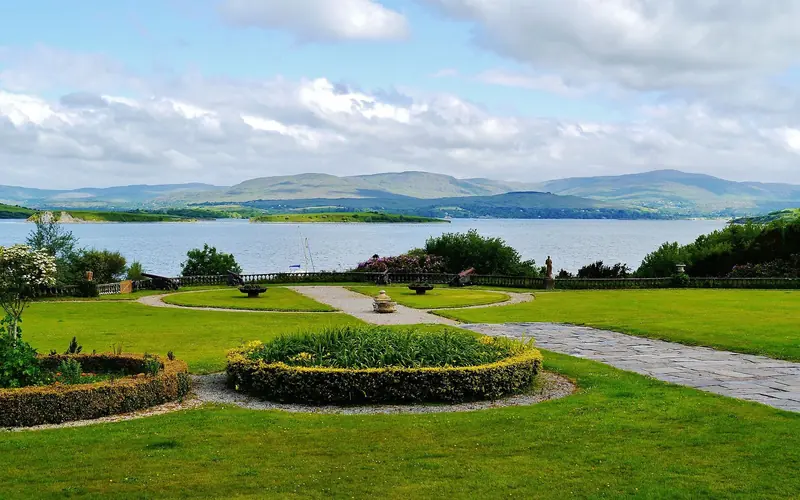
Bantry Bay sits behind the Sheep's Head and Beara peninsulas, well beyond Baltimore and Roaringwater Bay, and cruising guides describe several well-sheltered anchorages inside it alongside Bantry town's own harbour, which is accessible in all weather during daylight. The floating pontoon on the right-hand side of the harbour entrance is the usual tie-up, and Bantry House's gardens, with cannon still lining the terrace above the bay, are a short walk from the harbour and one of the few genuine visitor attractions directly on the water here.
The unlit fish farms east of Whiddy Island are a hazard specific enough that the Irish Cruising Club's sailing directions call them out by name as the reason not to attempt a night entrance, a level of specific warning most of this coast's other anchorages do not carry in print. Bantry is far enough from Cork Airport and Kinsale, at roughly two to three hours by road, that most cruising itineraries treat it as a final leg rather than a weekend add-on.
What Owners and Racers Actually Say About Sailing Here
Yachting Monthly's cruising guide to the south coast singles out Crosshaven over Cork city's own pontoon specifically because the city berth lacks facilities, and recommends Kinsale precisely because it has two working marinas and real anchoring choice, a stronger endorsement than the generic praise most cruising-guide entries receive. Kinsale Yacht Club and Royal Cork Yacht Club both run their marinas as member clubs rather than commercial operators, which shows up in small ways: KYC's marina office keeps set hours rather than round-the-clock staffing, and both clubs ask visitors to call ahead on VHF before arriving rather than simply turning up.
On the racing side, Cork Week 2026 drew over 120 boats and 1,200 sailors to Crosshaven in July, and Kinsale's 2025 Sovereign's Cup drew close to 95 entries, both genuine draws that fill the two towns' marinas for a week at a time and are worth avoiding if a quiet berth matters more than a party. The recurring honest complaint across cruising accounts is not the harbours themselves but the Atlantic weather window: guides and forums alike describe waiting days for a settled forecast before rounding into or out of Roaringwater Bay, and treat that waiting as normal rather than as bad luck.
What It Actually Costs, and What Nobody Publishes
Kinsale Yacht Club's published 2024-25 rates work out to roughly 56 to 65 euros for a single night for boats in the 7 to 15 metre range once harbour dues are added, while Royal Cork Yacht Club's annual rate of 250.69 euros a metre puts a 12-metre boat's full-season berth at just over 3,000 euros before winter storage or electricity, and boats over 18 metres or catamarans at Crosshaven are quoted only on application, meaning there is no public number at all for larger yachts. Glandore's council moorings and Baltimore's informal berthing are cheap by comparison at around 15 euros a night, but availability rather than price is the real constraint.
What is genuinely not published anywhere is a consolidated figure for getting a boat and crew to Cork Harbour in the first place: flights into Cork or Dublin, the Brittany Ferries crossing from Roscoff, road transport south and the insurance premium for an Atlantic-facing coast with a real hurricane-season tail all vary by owner and season, and none of the marinas, clubs or tourism boards here try to add it up into one number. That gap, more than any berth rate, is what a first-time visitor has to go and find out for himself.
An Land, Anfahrt und Buchung
| Getting there by air | Cork Airport (ORK) flies direct to London Heathrow, London Stansted and Amsterdam Schiphol; no scheduled transatlantic route since 2019, so US crew typically route via Dublin or Shannon, about 2.5 to 3 hours' drive south. |
|---|---|
| Getting there by sea | Brittany Ferries sails Cork to Roscoff about twice weekly in season on the Armorique or Pont-Aven, a roughly 15-hour overnight crossing. |
| Customs and clearance | No formal Revenue paperwork for a pleasure boat on entry; a UK-flagged yacht gets 18 months' temporary admission before VAT applies. Every non-Irish crew member needs an immigration stamp within 12 hours of arrival, at the boat or at the nearest Garda station. |
| Cork Harbour berthing | Royal Cork Yacht Club, Crosshaven: 250.69 euros a metre annually (2025-26), 100 berths, all-tide access; boats over 18 metres and catamarans priced on application. Salve Marina: 56 berths, 8 to 50 metres LOA. East Ferry Marina: 80 berths, quiet, all-tide, minimum 3-metre approach depth. |
| Kinsale berthing | Kinsale Yacht Club Marina: 5.00 euros a metre a night plus 4.00 to 8.00 euros a night harbour dues (2024-25 rates); Castlepark Marina across the harbour holds the diesel pontoon. |
| West Cork moorings | Glandore: six Cork County Council visitor moorings, 15 euros a night, not all serviceable in a given season. Baltimore: pontoon, moorings and open anchorage, no marina. |
| Provisioning and chandlery | Two supermarkets and food shops within walking distance of Kinsale marina; the nearest full chandlery is in Cork city but offers same-day delivery to Kinsale. |
| Season | April to June is the settled core of the season, July is usually still good, August and September turn wetter as Atlantic tropical-system remnants begin arriving. |
| What is not published | No single official source walks a cruising yacht through clearance start to finish, and no marina, club or tourism board adds up the real cost of getting a boat and crew here from outside Ireland. |
Was Eigner und Crew berichten
Crosshaven over the city pontoon
Recommends basing at Crosshaven rather than Cork city's own pontoon because the city berth lacks facilities, and calls out Kinsale specifically for having two working marinas and real anchoring choice.
Yachting MonthlyGlandore's moorings are not all usable
Reports that of Glandore's six Cork County Council visitor moorings, not all are kept in serviceable condition in a given season, and recommends calling ahead rather than assuming one will hold.
VisitMyHarbourThe 1979 storm still defines local rescue capacity
Its own retrospective records Baltimore's lifeboat at sea for about 24 hours and Courtmacsherry's for around 22 hours during the height of the 1979 Fastnet Race storm, out of 13 lifeboats that towed or escorted 18 yachts to safety.
RNLIBantry's fish farms are a named night hazard
Calls out the unlit fish farms east of Whiddy Island by name as the specific reason not to attempt a night entrance to Bantry Harbour.
Irish Cruising ClubRegatta weeks fill both towns
Reported Kinsale's 2025 Sovereign's Cup drawing close to 95 boats and Cork Week 2026 drawing over 120 boats and 1,200 sailors to Crosshaven, both filling marina berths for the week.
Afloat.ie
Was gut ist und worauf zu achten ist
Stärken
- Two real bases, not oneCork Harbour's three marinas and Kinsale's two give a cruising boat a genuine choice of base within eight miles of each other, which most single-harbour cruising grounds cannot offer.
- Oldest yacht club in the worldRoyal Cork Yacht Club, founded 1720, and its Cork Week regatta give the harbour a racing pedigree and calendar that drew over 120 boats and 1,200 sailors in 2026.
- Fastnet Rock as a genuine day sailThe rock and its 1904 lighthouse are a realistic day trip from Baltimore or Schull in anything like settled weather, not a remote bucket-list target.
Worauf zu achten ist
- No marina at all west of KinsaleBetween Kinsale and Baltimore there is nothing but Glandore's six council moorings, which are not consistently serviceable, and open anchorage; a boat relying on a guaranteed berth will be disappointed.
- The season is shorter than advertisedGuides that quote April to September as the cruising season understate how wet and unsettled August and September have become as Atlantic tropical-system remnants arrive.
- The Fastnet Race no longer visitsSince 2021 the Rolex Fastnet Race finishes at Cherbourg, not Plymouth, and the fleet never calls at an Irish port, so the region's most famous race brings none of the spectator draw a finish would.
Für wen: Suits an owner or charterer who wants genuine, uncrowded Atlantic cruising with two proper bases at Cork Harbour and Kinsale and is willing to build a passage plan around the weather window, not a captain or guest who wants a guaranteed fixed-week itinerary or warm-water swimming.