Japan's Seto Inland Sea
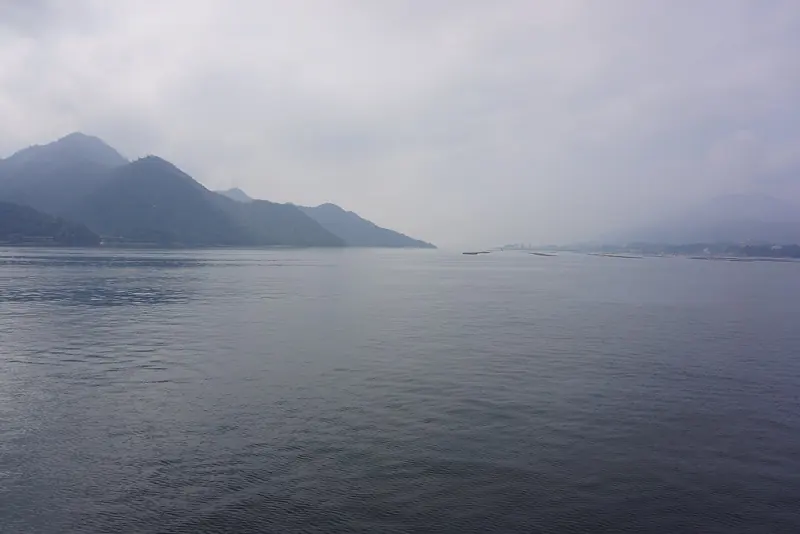
| Location | enclosed sea between Honshu, Shikoku and Kyushu, Japan; about 450 km east to west |
|---|---|
| Scale | roughly 700 islands, 296 ports region-wide, ferry/cruise network linking about 110 inhabited islands |
| Art islands | Naoshima, Teshima and Inujima (Benesse Art Site Naoshima) hold the Chichu Art Museum, the Lee Ufan Museum and the Teshima Art Museum among other permanent works |
| Setouchi Triennale | held every three years across 12 islands and 2 coastal cities, roughly 100 days in three sessions (spring/summer/autumn); most recent edition 18 April to 9 November 2025, next full edition expected 2028 |
| Onomichi U2 | 2014 conversion of a maritime warehouse into a hotel, restaurants and bike shop on the Honshu end of the Shimanami Kaido cycling route |
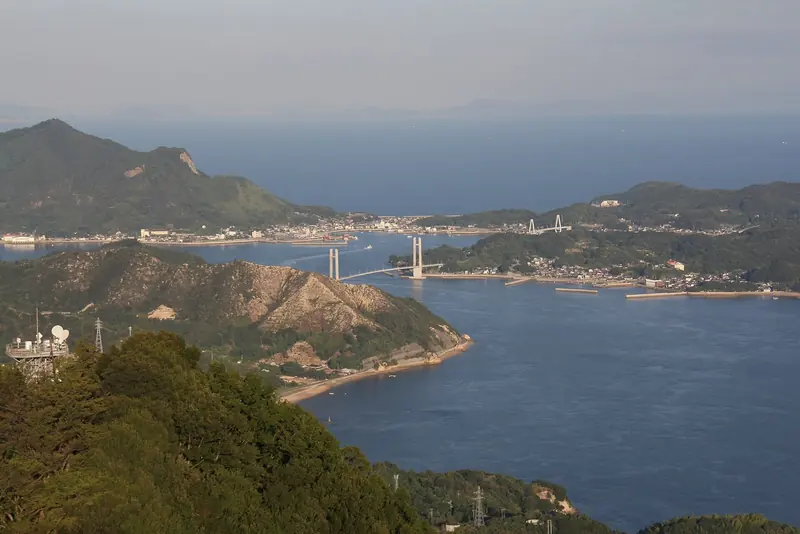
| Shimanami Kaido | chain of bridges linking islands between Onomichi (Honshu) and Imabari (Shikoku), about 70 km |
| Naruto Strait | one of the world's three fastest tidal-current locations (with the Strait of Messina and Seymour Narrows); currents about 13-15 km/h ordinary tide, up to about 20 km/h on springs, whirlpools to about 20 m across |
| Customs/entry | almost every sizeable Japanese port is a designated port of entry; Japan Coast Guard requires a Pre-Arrival Procedure Form at least 24 hours ahead, about a week's notice strongly preferred |
| Named marinas/docks in the region | Takamatsu Port Marina, Nio Marina (Shikoku), Bellavista Marina, Grand Prince Hotel Marina, Toyoshima Marina (Hiroshima area), Omishima town dock, Onomichi U2 waterfront; none publish consolidated LOA/depth/rate data |
| Typhoon season | roughly July to October, peaking August-September; Inland Sea swell and wind are measurably reduced versus Japan's open Pacific coast, but not eliminated |
| Best season | autumn for clearest, most stable conditions; spring (March-May) strong second choice with cherry blossom |
| Nearest airports | Okayama Momotaro (OKJ, about 14 km from Okayama), Takamatsu (TAK), Hiroshima (HIJ); nearest major international gateway Kansai International (KIX), Osaka Bay |
| Japan has no Western-style dedicated FBO network; private aircraft use general-aviation ramp areas | |
A sea that is really a strait system
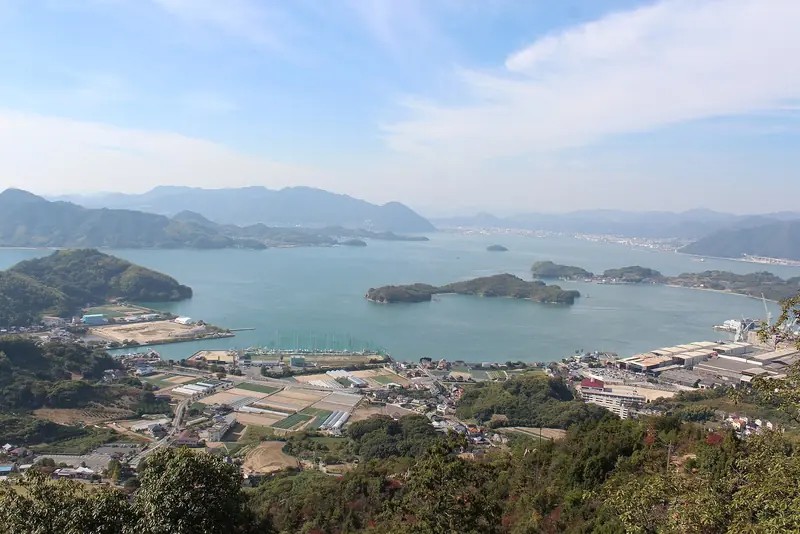
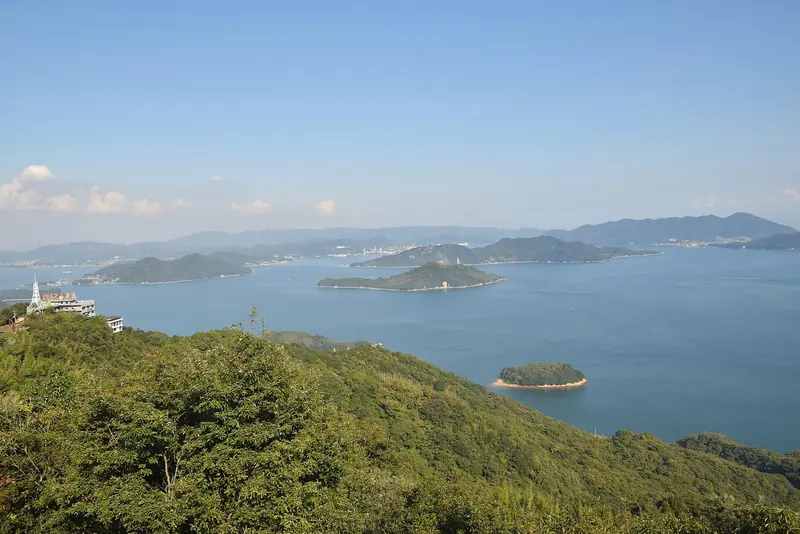
The Seto Inland Sea, Setonaikai in Japanese, runs about 450 kilometres east to west between Honshu to the north, Shikoku to the south and Kyushu at the western end, connected to the Pacific and the Sea of Japan through a handful of named straits. Around 700 islands sit inside it, ranging from small uninhabited rocks to working ports of real size, and the region counts 296 ports in total with cruise and ferry networks linking about 110 of the inhabited islands. The scale is genuinely unlike anywhere else a yacht cruises in Asia: this is closer in concept to Croatia's Dalmatian archipelago than to anything in Southeast Asia, but built on a Japanese working coastline of fishing ports, shipyards and small industrial towns rather than a resort economy.
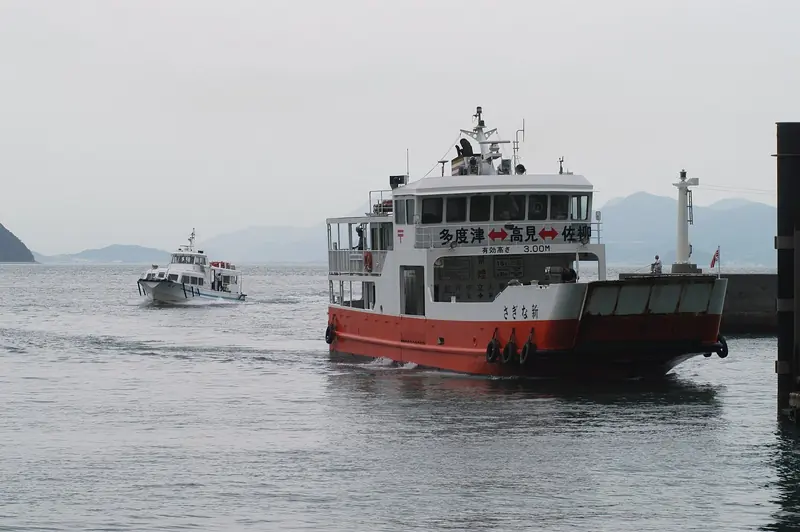
That working character is part of the appeal rather than a flaw. A day's cruising typically mixes an uninhabited forested islet, a small port still running a local ferry, and one of the region's contemporary-art islands, often inside a run of only twenty or thirty nautical miles, a density of genuinely different experiences that few other cruising grounds offer this close together.
Naoshima and the art islands
Naoshima is the anchor of what the region now markets as Benesse Art Site Naoshima, a decades-long project that put the Chichu Art Museum, the Lee Ufan Museum and permanent outdoor works across the island, with sister sites on Teshima (the Teshima Art Museum) and Inujima. These are internationally significant museums by any standard, not resort-town galleries, and reaching them by private yacht rather than the public ferry network is one of the more distinctive things a boat can offer a guest anywhere in Asia. The islands are formal venues of the Setouchi Triennale, a contemporary art festival held every three years across twelve islands and two coastal cities, running in three sessions across roughly 100 days of spring, summer and autumn; the most recent edition ran 18 April to 9 November 2025, and the next full Triennale is expected in 2028, with the region's Art Setouchi programming continuing in the intervening years.
A second, entirely different kind of stop sits at the eastern gateway to the art islands: Onomichi U2, a 2014 renovation of a Meiji-era maritime warehouse on the Onomichi waterfront into a hotel, restaurants, a bakery and a bike shop built around cyclists riding the Shimanami Kaido, the roughly 70 kilometre chain of bridges linking the islands between Onomichi on Honshu and Imabari on Shikoku. A boat can put a guest ashore to walk or hire a bicycle onto the same bridges photographed from the water the day before, a pairing of maritime and cycling tourism that is unusual anywhere in the world.
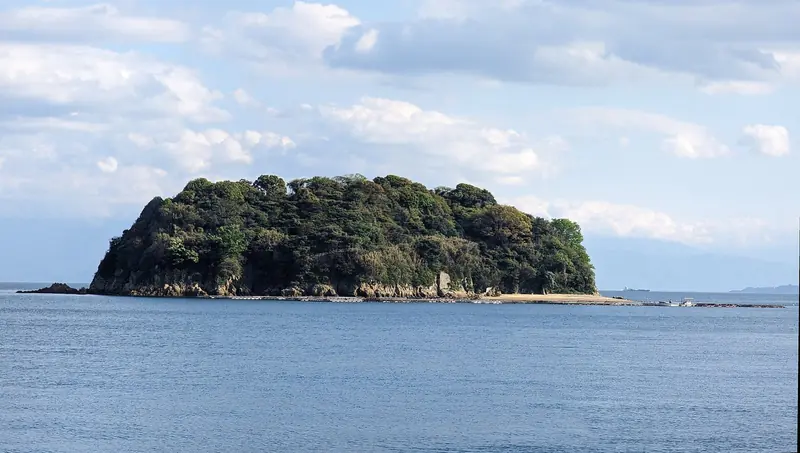
The land around the Seto Inland Sea does for a Japanese typhoon what Bruny Island does for the Roaring Forties: it takes the worst of it so the water inside does not have to.
The one hazard worth knowing about
The Naruto Strait, where the Inland Sea meets the Pacific between Naruto on Shikoku and Awaji Island, is ranked alongside Italy's Strait of Messina and Canada's Seymour Narrows as one of the world's three fastest tidal-current locations. Water moves through the narrow channel at around 13 to 15 kilometres per hour on an ordinary tide, four times a day, and can reach roughly 20 kilometres per hour on a spring tide, generating whirlpools up to 20 metres across and a water-level difference of up to 1.5 metres between the Inland Sea side and the Pacific side. It is a genuine, charted navigational hazard, famous enough that dedicated sightseeing boats run tourists out to watch the whirlpools form.
For a cruising itinerary built around the art islands, Onomichi and the central and western Inland Sea, Naruto is a feature to know about and route around, not a constant condition of the whole sea; the vast majority of the region's water is calm, tide-influenced but not violently so, and the strait itself is simply avoided or timed to slack water by anyone without a specific reason to run it.
Clearing into Japan
Japan places comparatively few restrictions on a visiting foreign yacht, and almost every port of a reasonable size, including the working ports scattered across the Inland Sea, is a designated port of entry. The Japan Coast Guard requires a Pre-Arrival Procedure Form (PAPF) at least 24 hours before arrival, but officials strongly prefer and appreciate roughly a week's notice, giving time for customs, immigration and quarantine to coordinate. The master, owner or an agent can file the paperwork, and once cleared, crew changes and shore access run with relative ease compared with the reputation the process sometimes has.
This matters for an Inland Sea itinerary specifically because the cruising ground is made up of dozens of small working ports rather than a handful of major resort marinas; a captain who has pre-cleared properly can genuinely island-hop through fishing harbours and small-town docks that would be closed to an unannounced foreign vessel, which is a large part of what makes the region cruisable at all.
Marinas and the state of the infrastructure
Large-yacht infrastructure in the Inland Sea is real but thin and scattered, reflecting a country where superyacht cruising is still a comparatively recent visitor category rather than an established industry. Named facilities across the region include Takamatsu Port Marina and Nio Marina on Shikoku, Bellavista Marina, Grand Prince Hotel Marina and Toyoshima Marina around Hiroshima, and the Omishima town dock and the Onomichi U2 waterfront on the Honshu side, alongside the Setouchi DMO, the regional tourism body that promotes the whole area to visiting yachts. None of these publish maximum LOA, depth or berthing rates in any consolidated public listing; an owner plans a season here through a Japan-based agent rather than a marina website comparison.
Japan overall has no North American or European-style FBO network either: business jets and private aircraft use general-aviation ramp areas at airports including Hiroshima, Kansai and Kobe rather than a dedicated private terminal, which is a genuine difference from the infrastructure an owner used to the Mediterranean or the Caribbean will expect. None of this makes the Inland Sea impractical; it makes it a destination that still runs on relationships and local knowledge rather than a mature commercial marina network.
Weather and the typhoon question
Japan's typhoon season runs roughly July through October, peaking in August and September, and it is the single biggest planning factor for any Japanese cruising ground. The Inland Sea's real advantage is that the surrounding landmasses of Honshu, Shikoku and Kyushu measurably reduce swell and moderate wind strength compared with Japan's open Pacific coast, so weather here is genuinely more stable through the typhoon months than it is outside the straits; gusts and heavy rain still reach the Inland Sea during a storm, but the sea state that makes the open coast dangerous is significantly damped.
Autumn is generally rated the best season for cruising, with clearer skies, moderate winds and comfortable temperatures once the peak typhoon weeks have passed; spring (March to May) is a strong second choice and adds cherry blossom along the coastal routes. Summer is warm, humid and often hazy with light winds, and winter is cold but navigable, with stronger northerly winds in exposed stretches that most passages inside the Inland Sea still handle without difficulty.
Getting people there
No single international airport sits inside the Inland Sea itself, so access is a genuinely regional exercise. Okayama Momotaro Airport (OKJ) is about 14 kilometres from Okayama city and the nearest of the regional fields to the central Inland Sea and the Uno Port yacht charter base; Takamatsu Airport (TAK) on Shikoku and Hiroshima Airport (HIJ) both handle general and business aviation and sit within striking distance of the art islands and Onomichi respectively. For a genuinely large aircraft, Kansai International (KIX), on its artificial island in Osaka Bay, is the region's serious international gateway, with Osaka, Kyoto and Nara all reachable from there for a guest wanting to combine the boat with mainland Japan.
As with the rest of Japan, none of these airports run a Western-style dedicated FBO; private aircraft use general-aviation ramp space, and ground transfers from any of the regional airports to a boat in the Inland Sea should be planned as a genuine leg of the itinerary, not an afterthought.
Who this is actually for
The Seto Inland Sea suits an owner who has done the obvious Asian cruising grounds and wants something structurally different: a sheltered, island-dense sea that damps Japan's own typhoon season rather than simply avoiding it, paired with a concentration of serious contemporary art on islands most visitors reach only by public ferry. It is a destination for a captain willing to plan around a real regional infrastructure gap, thin and scattered marina facilities, no dedicated FBOs, and a clearance process that rewards a week's notice rather than a same-day arrival.
In exchange, it offers something almost nowhere else does: a genuinely calm large-scale cruising ground inside one of the world's most developed economies, where a tender can put guests ashore at an internationally significant art museum in the morning and a working fishing port with nobody else's yacht in it by afternoon.
An Land, Anfahrt und Buchung
| Getting there by air | Okayama Momotaro (OKJ), Takamatsu (TAK) and Hiroshima (HIJ) serve the region for general and business aviation; Kansai International (KIX) in Osaka Bay is the major international gateway for a large aircraft. Japan has no Western-style FBO network; private aircraft use general-aviation ramp space. |
|---|---|
| Clearing in | File a Pre-Arrival Procedure Form (PAPF) with the Japan Coast Guard at least 24 hours ahead; about a week's notice is strongly preferred by officials. Almost every sizeable port in the region is a designated port of entry, and the master, owner or an agent can file. |
| Berthing | Named facilities include Takamatsu Port Marina and Nio Marina (Shikoku), Bellavista Marina, Grand Prince Hotel Marina and Toyoshima Marina (Hiroshima area), and the Omishima town dock and Onomichi U2 waterfront. None publish LOA, depth or rate data online; arrange through a Japan-based yacht agent or the Setouchi DMO. |
| The one hazard to route around | The Naruto Strait, at the eastern gateway between Shikoku and Awaji Island, runs among the world's fastest tidal currents (up to about 20 km/h on springs, whirlpools to 20 m). It is well charted and simply avoided, or timed to slack water, by any itinerary not specifically visiting it. |
| Best season | Autumn for the clearest, most stable weather, once the worst of typhoon season (roughly July-October, peaking August-September) has passed. Spring (March-May) is a strong second choice with cherry blossom along the coast. |
| The art islands | Naoshima, Teshima and Inujima hold the Chichu Art Museum, Lee Ufan Museum and Teshima Art Museum (Benesse Art Site Naoshima). They are Setouchi Triennale venues; the next full Triennale is expected in 2028. |
| What is not published | Maximum LOA and berth depth at any named Inland Sea marina, and typhoon-season contingency berthing for a large yacht; both are confirmed directly with a Japan-based agent, not listed online. |
Was Eigner und Crew berichten
The Inland Sea is specifically recommended as the reliable choice during Japan's typhoon season
Cruising guidance for the region notes that weather in the Setonaikai is more stable than on Japan's Pacific coast because the surrounding landmasses reduce swell and moderate wind strength, while cautioning that gusts and heavy rain can still disrupt plans when a storm passes nearby.
sailboatliveaboard.com Seto Inland Sea cruising guideA week's notice, not the 24-hour minimum, is what actually keeps a Japanese port-entry clean
The Japan Coast Guard's stated requirement is 24 hours ahead via the Pre-Arrival Procedure Form, but officials strongly recommend and appreciate roughly a week's notice, and note that Japan otherwise imposes few restrictions on a visiting yacht once that paperwork is filed.
Japan Coast Guard port-entry guidanceThe Naruto Strait is treated by professional sailors as a specific hazard to route around, not a general feature of the sea
Its currents are ranked alongside Italy's Strait of Messina and Canada's Seymour Narrows among the world's fastest, reaching about 20 km/h on spring tides with whirlpools up to 20 m across, which is why sightseeing boat operators run dedicated trips there rather than it being an incidental sight from a passing itinerary.
Naruto Strait navigational recordsJapan's private aviation infrastructure is genuinely different from the Mediterranean and the Gulf
Industry coverage of Japanese business aviation notes there are no North American or European-style FBOs anywhere in the country; private jets use general-aviation ramp areas at airports including Hiroshima, Kansai and Kobe.
Business Airport International
Was gut ist und worauf zu achten ist
Stärken
- A large, genuinely sheltered cruising ground inside a typhoon countryThe land mass of Honshu, Shikoku and Kyushu measurably reduces swell and wind through Japan's July-to-October typhoon season, making the Inland Sea markedly calmer than the open Pacific coast during the exact months most of the year's weather risk sits in.
- Internationally significant art reachable only by boat or public ferryThe Chichu Art Museum, the Lee Ufan Museum and the Teshima Art Museum on Naoshima, Teshima and Inujima are major museums by any global standard, and a private yacht reaches them on its own schedule rather than the public ferry timetable.
- A working coastline, not a resort economyFishing ports, small shipyards and towns like Onomichi give the region a texture almost no other Asian or Mediterranean cruising ground has; the Onomichi U2 warehouse hotel and the Shimanami Kaido cycling bridges add a second, land-based activity most yacht itineraries cannot offer.
- A genuinely open clearance regimeAlmost every sizeable Japanese port is a designated port of entry, and a foreign yacht clears with a single Pre-Arrival Procedure Form rather than the multi-agency processes common elsewhere in Asia and South America.
Worauf zu achten ist
- Thin, scattered, unpublished marina infrastructureNamed facilities exist across the region but none publish maximum LOA, depth or rates in any consolidated way; planning a season needs a Japan-based agent, not a website comparison.
- No dedicated FBO anywhere in the countryPrivate aircraft use general-aviation ramp space at Okayama, Takamatsu, Hiroshima or Kansai International rather than a Western-style private terminal, a genuine step down in guest logistics from the Mediterranean or the Gulf.
- A real, named navigational hazard at the eastern gatewayThe Naruto Strait's tidal currents rank among the fastest on earth and generate whirlpools up to 20 metres across; it demands specific route planning rather than casual transit.
- Typhoon exposure is reduced, not removedGusts and heavy rain still reach the Inland Sea during a storm passing nearby, so a July-to-October season still needs a genuine weather contingency, just a less severe one than the open coast requires.
Für wen: An owner who has cruised the obvious Asian grounds and wants a structurally different one: a large, calm, island-dense sea that damps Japan's own typhoon season, paired with internationally significant contemporary art reachable only by boat or public ferry, and who will plan around thin, scattered marina infrastructure and a Japan-based agent rather than a mature commercial marina network.