Punta del Este & the Uruguayan Coast
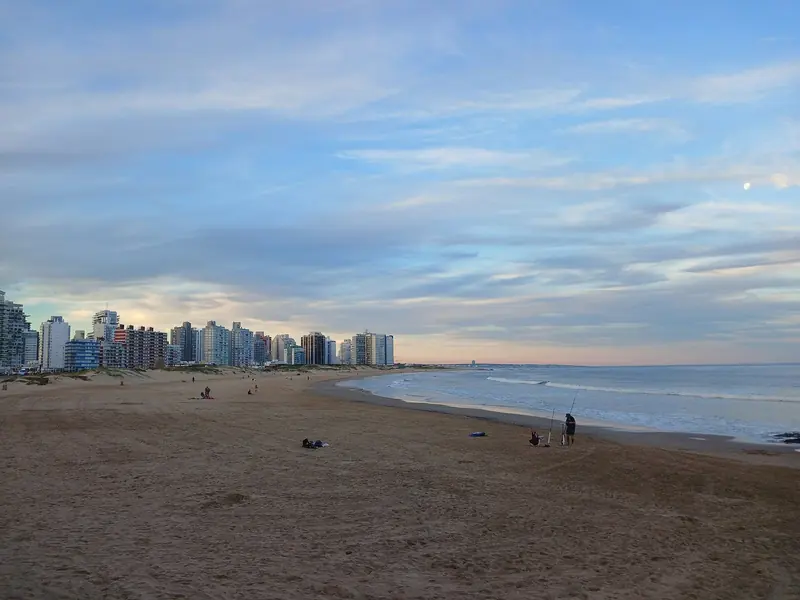
| Location | the tip of a peninsula in Maldonado department, Uruguay, at the mouth of the Rio de la Plata where it meets the open Atlantic |
|---|---|
| Season | December to February is the Southern Hemisphere summer high season, the reverse of the Mediterranean and Caribbean calendars, with Christmas, New Year and Argentine school-holiday crowds through late January |
| Puerto de Punta del Este (formally Puerto Nuestra Senora de la Candelaria): capacity reported anywhere from about 520 to 850 moorings depending on year and source, and which category is counted. No single figure is authoritative | |
| The port has reported zero available moorings since October 2025 with a standing waitlist of 180 to 200 or more boats, described by one report as historic | |
| Mooring fees reported per metre LOA per day have ranged from about 4 dollars (2021, 2023) to over 10 dollars (2017) to about 8 dollars (2025), reflecting real year on year swings, not a single stable tariff | |
| The crossing from Buenos Aires | about 175 nautical miles straight line, typically sailed longer, up to 46 hours under calm conditions; a distinct hazard profile from any Mediterranean or Caribbean passage |
| The sudestada | a sudden rotation to a southeast wind loading the air with Atlantic humidity, sustained 25 to 45 knots, pushing water inland and raising river levels on both banks. Most frequent July to October but a real hazard the whole year |
| The pampero, a southwest storm wind, can hit 100 to 120 km/h and turns the Uruguayan shore into a dangerous lee shore; shelter is sought at Riachuelo, Sauce or San Juan rather than at Colonia | |
| Isla de Lobos, about 8 km offshore, holds the largest sea lion and fur seal colony in the Southern and Western Hemisphere, over 1,500 sea lions and 250,000 fur seals by a 2005 census, landing prohibited, its 1858 lighthouse automated since 2001 | |
| Isla Gorriti, about 2.5 km offshore, carries the ruins of an 18th century fort built to defend the river against Portuguese incursion, with the anchorage on its south side in deeper water | |
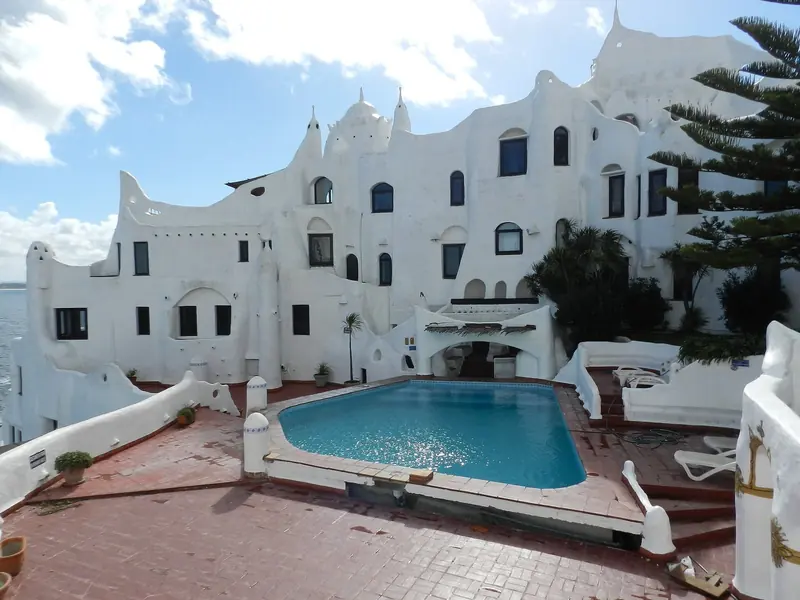
| Casapueblo, the artist Carlos Paez Vilaro's cliff house at Punta Ballena, took 36 years to build from 1960, without formal blueprints | |
| Uruguay's tax residency track (Law 20.446, effective 1 January 2026) grants an 11 year tax holiday on foreign sourced capital income against a real estate investment from about 2,000,000 dollars, part of why Argentine and Brazilian wealth bases itself here rather than at home | |
| Argentina's own entry rules have been the counter-example: a single national entry point for all private vessels, at Buenos Aires's Yacht Club Argentino, operated in 2022, stranding boats and drawing criticism from Argentina's own yachting federation | |
| No published superyacht-specific tariff exists at Punta del Este; the standard is a flat per metre per day rate applied to every boat | |
A Season the Rest of the Calendar Does Not Have
The crowd numbers alone show how compressed the season is. Infobae reported that in the days around New Year 2023 the port reached its stated 520 mooring capacity plus fifty on a waitlist and 320 boats in dry storage, with more than 200 private aircraft landing at the nearby Laguna del Sauce airport and every hotel full; the same outlet's count for the turn of 2025 put 150,000 Argentines arriving in the first days of that season alone, out of more than 308,000 entrants across the border in the Dec 20 to Jan 1 window. Brazilians arrive in a short, sharp burst around New Year's Eve, locally reveillon, and again for Carnival; Argentines come for weeks at a time and increasingly live aboard rather than renting a house, a shift La Nacion's owners described in their own words as addictive once tried.
The port itself has stopped pretending it can absorb the growth. A December 2025 report put the mooring count, variously stated at 520 to 543 spaces, at zero availability since October, a standing waitlist of 180 to 200 boats and rising, and even the dry-storage yard full, attributing part of the growth explicitly to boats migrating from Argentina to the Uruguayan coast. That is not a one-year spike: reports from 2017, 2023 and 2025 each describe the port at or past its stated capacity, just with a different number attached each time, which is itself the honest fact to report rather than any single mooring count.
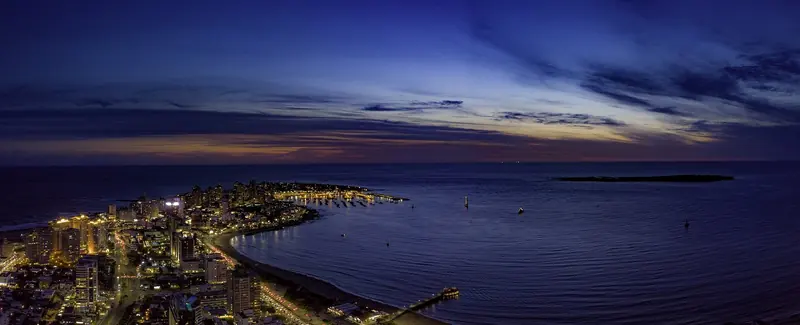
Crossing the Rio de la Plata
The straight line distance is about 175 nautical miles, but the sailed track runs longer once shoals and wrecks are worked around, and a full passage under calm conditions can take up to 46 hours, typically departing Puerto Madero around six in the morning and passing abeam Montevideo's Cerro by nightfall on the first day. The estuary itself is shallow and famously silt-laden, averaging only around 11 metres deep and reaching up to 220 km wide at its mouth, which is why the sunken wrecks and shoal ground around features like the Banco Ortiz are named hazards in cruising guidance rather than a footnote.
The named storms are what actually decide the crossing. The pampero, a violent southwesterly, can hit 100 to 120 km/h and turns the Uruguayan coast into a dangerous lee shore, with cibernautica.com's own navigation guidance naming Riachuelo, Sauce and San Juan as the shelter and Colonia as the place to avoid in one. The nortazo, a shorter, violent northerly, calls for running downwind toward Buenos Aires or finding open sea room rather than trying to hold a course. Both are planning problems with known answers. The third, the sudestada, is not, and gets its own section below because it is the one that most often catches a summer crossing unprepared.
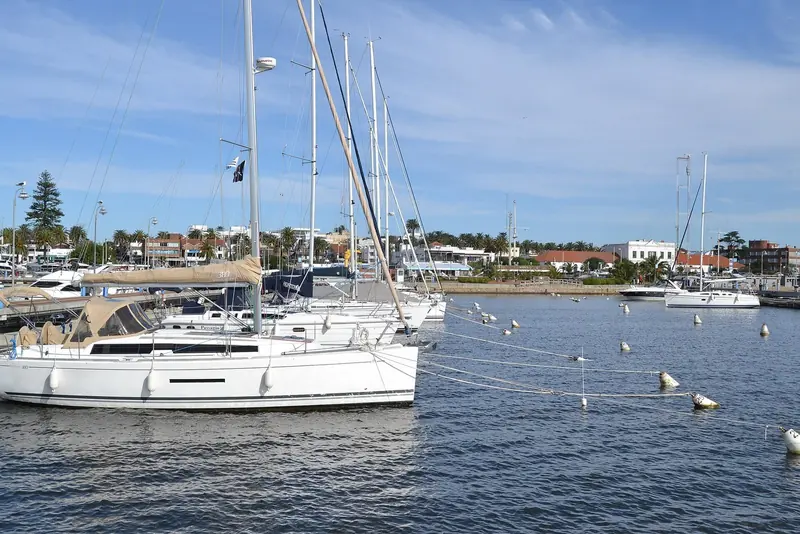
Puerto de Punta del Este has had zero available moorings since October 2025, with a standing waitlist reported at 180 to 200 boats and rising through the following season.
The Sudestada, Named for a Reason
Described in English language sources as the Rio de la Plata's own equivalent of a North Atlantic nor'easter, a sudestada rotates the wind suddenly to the southeast, loads it with Atlantic humidity, and produces heavy rain over rough, close-packed seas. Wikipedia's own account puts sustained winds at 25 to 45 knots and states the phenomenon is most frequent between July and October, the Southern Hemisphere winter and spring, which sits in real tension with a Dec to Feb cruising season built around exactly the months it is least common in. A dated event from September 2026, covered by the meteorological outlet Meteored, recorded gusts of 40 to 50 km/h in the outer estuary with short, choppy, unforgiving seas and a temperature drop to 12 to 13C, evidence the phenomenon is real and current rather than folklore, even outside its stated peak months.
The practical guidance from a dedicated Rio de la Plata navigation-strategy site is blunt: once a sudestada has fully developed, a boat is safer seeking open water and riding it out offshore than attempting a port entry with the wind and sea dead ahead. The storm's other reliable effect is on the river itself: a sudestada pushes water inland and raises levels on both the Argentine and Uruguayan banks, independently confirmed by Infobae's own flood coverage from January 2026 reporting water levels over three metres above normal. No source found for this page could quantify how often a sudestada actually strikes within the December to February window specifically, so the honest position is to treat it as a year-round risk to plan against, not a winter problem a summer season is exempt from.
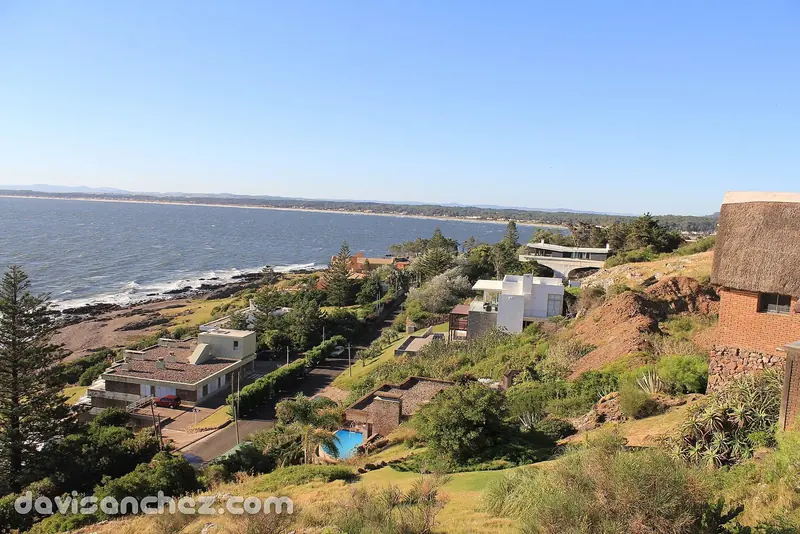
Isla de Lobos, Isla Gorriti and the Anchoring Life
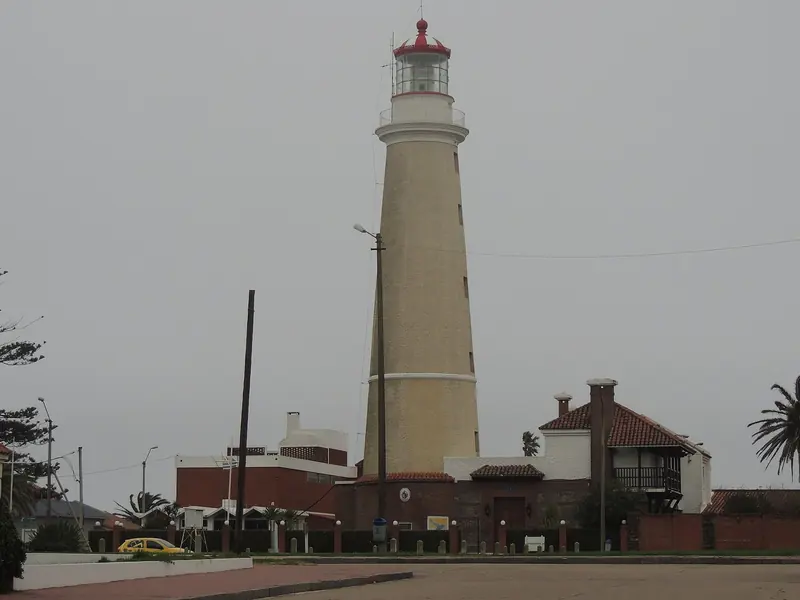
Isla de Lobos sits about 8 km southeast of the peninsula and holds the largest sea lion and fur seal colony in the Southern and Western Hemisphere, a 2005 census counting more than 1,500 sea lions and around 250,000 fur seals across two species; landing is prohibited under its status inside the Coastal Islands National Park since 1992, so the visit is a boat circuit rather than a stop ashore, past a lighthouse built in 1858 and automated since 2001. Isla Gorriti, closer in at about 2.5 km and twenty minutes by boat, carries the ruins of an eighteenth century fort built by the Spanish commander Francisco Gorriti to defend the river against Portuguese incursion, with cannon emplacements still visible and the preferred anchorage on the island's south side in deeper water, the north side being rocky.
La Nacion's own reporting on the culture around these anchorages, gathered from owners directly, describes a real shift toward living aboard for the whole stay rather than renting a house, families anchoring off Gorriti, Lobos and Punta Ballena, buying fish straight off the dock and grilling on deck for the length of a typical fifteen day summer stay. A separate, less polished side of the same anchorage life exists at Playa Honda, on the far side of Gorriti from the main peninsula, where regional press describe up to 300 boats on a good day, most Argentine flagged, in a floating, rafted-together party scene rather than the quiet wildlife circuit Lobos offers a few miles further out.
Casapueblo, and Why the Money Is Here at All
Casapueblo, the whitewashed cliff complex artist Carlos Paez Vilaro built at Punta Ballena from 1960, took 36 years to finish without a formal blueprint and functions today as a museum, gallery, cafe and hotel with a nightly sunset ceremony played from a recording of the artist's own voice. It sits a few miles from La Barra, connected to the main peninsula by the 1965 Leonel Viera stressed ribbon bridge, itself doubled by a second span in 1999 to handle the traffic, and from La Barra's beach scene to the quieter, more private town of Jose Ignacio further along the coast, the whole stretch reads as a single, deliberately graduated scale of exposure, from Punta del Este's towers to Casapueblo's art crowd to Jose Ignacio's privacy.
The financial reason underneath the postcard is better sourced than the postcard itself. Reporting from the Rio Times describes Uruguay functioning as a private banking hub for Argentine wealth specifically, citing figures in the range of 17 to 20 billion dollars in Argentine-held assets and advisors managing over 40 billion dollars in total, with Banco do Brasil separately examining expanding service in Punta del Este to serve wealthy Argentine clients. On top of that, a tax residency law taking effect 1 January 2026 grants an eleven year tax holiday on foreign sourced capital income against a real estate investment of around 2,000,000 dollars, with no coastal or border zone restriction on a foreign buyer and no requirement to reside permanently, just a visit at least once every three years to keep the resident card valid.
Uruguay Made This Easy; Argentina Made It Look Easy by Comparison
Clearance into Uruguay runs through two agencies with a clear division: Customs (the DNA) handles the sworn declaration that authorises a vessel to move through the country, while the Prefectura Nacional Naval handles the actual entry and exit paperwork, done for free, processable online or in person twenty four hours at any coastal station, provided the vessel and everyone aboard is registered in the Prefectura's own SIGEMAR system. At Punta del Este specifically, pilotage is compulsory for entering or anchoring in the bay and has to be arranged in advance through an agent in Montevideo, a genuine planning step for a first time visitor rather than something handled on arrival.
Argentina's own restriction is the clearest illustration of why boats have been moving to the Uruguayan side of the river. La Nacion reported that Argentina barred private international boat entry for roughly 700 days through the pandemic, then in January 2022 opened exactly one national entry point for every private vessel in the country, the Yacht Club Argentino in Buenos Aires's Darsena Norte, with only ten to fifteen courtesy berths for transiting boats against nationwide demand. The Argentine Yachting Federation's own president called the single point system unworkable, noting a boat on the Rio Uruguay had no Gualeguaychu option under the rule, and the same report counted fifty to sixty Argentine boats stranded at Punta del Este during the restriction, paying around 70 dollars a day for a 16 metre vessel simply to wait it out on the Uruguayan side.
An Land, Anfahrt und Buchung
| Getting there | Laguna del Sauce International Airport serves Punta del Este directly with heavy seasonal traffic; over 200 private aircraft landed there in the peak days of one recent season. By sea from Buenos Aires the crossing is about 175 nautical miles, up to 46 hours in calm conditions. |
|---|---|
| Berthing | Puerto de Punta del Este (Puerto Nuestra Senora de la Candelaria): capacity reported anywhere from about 520 to 850 depending on year and category counted. Zero available moorings reported since October 2025 with a waitlist of 180 to 200-plus boats. Book months ahead, not weeks. |
| Fees | Per metre LOA per day mooring fees have ranged roughly 4 to 10-plus dollars across 2017 to 2025, a real swing rather than a stable rate; water and electricity are billed separately by consumption. No superyacht-specific tariff exists; the flat per-metre rate applies to every boat. |
| Clearance | Customs (DNA) sworn declaration plus Prefectura Nacional Naval entry and exit paperwork, free of charge, processable online or at any station. Pilotage into Punta del Este bay is compulsory and must be arranged in advance through a Montevideo agent. |
| The crossing from Argentina | About 175 nautical miles from Buenos Aires. Watch for the pampero (southwest, to 120 km/h, shelter at Riachuelo, Sauce or San Juan), the nortazo (short, violent, run downwind) and the sudestada (southeast, 25 to 45 knots, seek open water rather than attempt a port entry once developed). |
| What is not published | No single reliable mooring-capacity figure, no superyacht tariff, and no primary-decree confirmation of exactly how long a foreign pleasure boat may stay under temporary admission; treat any single number in secondary sources as approximate. |
Was Eigner und Crew berichten
The port's own capacity figures have not agreed with each other for a decade
Reported mooring capacity has ranged from about 520 moorings (2023 report, quoting the port chief) to roughly 850 total vessel capacity in the same period, to 520 to 543 spaces in a 2025 report describing zero availability since October and a waitlist of 180 to 200 boats and rising, attributed partly to boats migrating from Argentina to the Uruguayan coast.
La Nacion and comunidadnautica.com, reporting 2023 and 2025Argentine families increasingly live aboard for the whole summer rather than renting a house
Owners quoted directly described the lifestyle as addictive once tried, anchoring off Isla Gorriti, Isla de Lobos and Punta Ballena for a typical fifteen day stay, buying fish at the dock and grilling on deck rather than going ashore to a rented house.
La Nacion, owner interviews, 2017 reporting updated 2026A single national entry point stranded boats across Argentina in 2022
Argentina restricted private international boat entry for roughly 700 days through the pandemic, then opened exactly one entry point nationwide, the Yacht Club Argentino in Buenos Aires, for every private vessel regardless of destination; the Argentine Yachting Federation's own president called the system unworkable, and fifty to sixty Argentine boats were reported stranded at Punta del Este paying daily fees to wait it out.
La Nacion, 1 February 2022, quoting the Argentine Yachting FederationA real, dated sudestada struck outside its official peak season
A September 2026 sudestada produced gusts of 40 to 50 km/h in the outer Rio de la Plata estuary with short, unforgiving seas and a temperature drop to 12 to 13C, direct evidence the storm is a live hazard even outside the July to October window most sources cite as its peak.
Meteored, September 2026Uruguay's tax residency track is now law, not a rumour
Law 20.446, effective 1 January 2026, grants qualifying new tax residents an eleven year exemption on foreign sourced capital income against a real estate investment of around 2,000,000 dollars or a smaller annual contribution to the National Innovation Fund over eleven years, with no residency requirement beyond one visit every three years.
Global Citizen Solutions and Immigrant Invest, citing Law 20.446
Was gut ist und worauf zu achten ist
Stärken
- A genuine Southern Hemisphere seasonDecember to February gives an owner a real third window against the Mediterranean and Caribbean calendars rather than a repeat of either.
- A real wildlife and history stop within a few milesIsla de Lobos's sea lion and fur seal colony and Isla Gorriti's eighteenth century fort ruins are both a short run from the peninsula, not a day's passage away.
- Financial stability that genuinely explains the money hereA sourced, current tax residency track and a real private-banking role for Argentine and Brazilian wealth, not just a resort's own marketing about why owners come.
- Clearance itself is straightforward and freeUruguay's Prefectura runs a free, decentralised, twenty four hour process, a real contrast with Argentina's own single-entry-point rule next door.
- Casapueblo and Jose Ignacio give the coast real rangeFrom Punta del Este's towers to Casapueblo's art crowd to Jose Ignacio's privacy, in a stretch of coast small enough to cover by tender.
Worauf zu achten ist
- The port has had no free mooring since October 2025A standing waitlist reported at 180 to 200-plus boats means an owner without a booking well in advance is very likely turned away or left waiting, exactly as fifty to sixty Argentine boats were during 2022's Argentine entry restriction.
- No number in this piece is stable year to yearMooring capacity, mooring fees and even the port's own name for its capacity have all been reported differently across 2017, 2021, 2023 and 2025. Anyone quoting a single figure is quoting one year, not a fact.
- The crossing from Argentina is a genuine passage, not a ferry ride175 nautical miles of shallow, silty water with named storms on both ends of the wind compass and a sudestada that can develop with little warning.
- The sudestada's seasonality creates real uncertainty for a summer bookingOfficially most frequent outside the Dec to Feb season, but demonstrably capable of striking inside it, and no source could quantify the actual in-season frequency.
- Pilotage adds a planning step most owners will not expectCompulsory pilotage into the bay has to be arranged in advance through a Montevideo agent, not on arrival, and a first-time visitor who does not know this will lose time finding out.
Für wen: An Argentine, Brazilian or European owner who wants a real Southern Hemisphere summer season rather than a second Caribbean winter, with a crew who will treat the Rio de la Plata crossing and the sudestada with the same respect they would give a genuine ocean passage, and who has booked a mooring well before arriving because there almost certainly is not one waiting.