Zanzibar and the Tanzanian Coast
| Region | Zanzibar (Unguja) and the Tanzanian Swahili coast, western Indian Ocean |
|---|---|
| Airport | Abeid Amani Karume International (ZNZ), new terminal 2020, runway over 3,000 m |
| Zanzibar clears customs and immigration separately from mainland Tanzania, even for boats already cleared into Dar es Salaam | |
| Main port | Malindi Port, Stone Town, about 95 percent of Zanzibar's trade, anchorage 10-15 m off the ferry pier |
| Only marina | Azam Zanzibar Marina (Hotel Verde), 18 docks, reported barely operational as of a 2019 firsthand account |
| Nearest real yacht club facility | Dar es Salaam Yacht Club, founded 1933, moorings for 100+ boats, cashless/membership system |
| Kaskazi (NE monsoon) | late Nov to mid-March. Kusi (SE monsoon): June to early October |
| Mnemba Marine Conservation Area | USD 25 adult / USD 10 child (non-EAC), unchanged in the September 2025 fee revision; no anchoring, 8 boats/day cap |
| Four other Zanzibar MCAs (Menai Bay, Chumbe, Changuu-Bawe, Pemba Channel) rose from USD 3 to USD 10/adult in the same revision | |
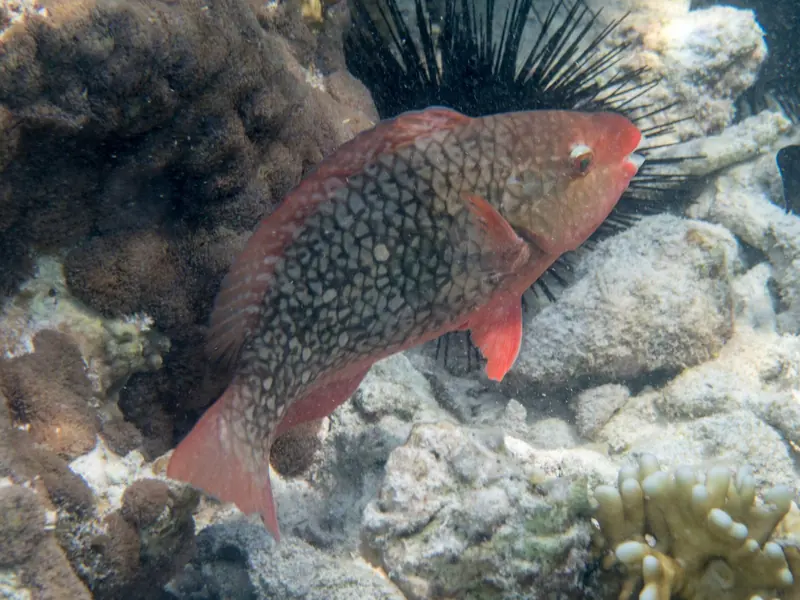
| Chumbe Island Coral Park | no-anchor MPA since 1994, over 470 recorded reef fish species |
| Menai Bay Conservation Area | 470 sq km, largest in Zanzibar, resident Indian Ocean humpback dolphins |
| Somali piracy resurgence confirmed in multiple 2026 reports, highest level in about a decade, but concentrated off Somalia, not the Tanzanian coast | |
| No dedicated superyacht fuel, provisioning or repair infrastructure found in Zanzibar; nearest real technical support is South Africa | |
| Zero crewed luxury yachts listed for charter in Zanzibar as of this research, per YachtCharterFleet's own guide | |
Getting to Zanzibar
The runway itself is confirmed at over 3,000 metres by two independent sources, long enough for wide-body traffic, and customs and immigration are both present airside. Handling agents Equity AST, Transworld Aviation and Zanzibar Aviation Services all operate at the field, with Jet A1 and Avgas available, though this research found no dedicated superyacht crew-transfer service on the island, unlike the established operations in the Seychelles or the Gulf.
Road transfers connect Stone Town with the northern beach resorts at Nungwi and Matemwe and the southern Kizimkazi area, and light aircraft link Zanzibar directly with the mainland safari circuit around Arusha and the Serengeti, which is how most operators sell a combined safari-and-beach itinerary.
Arriving by sea and Zanzibar's own clearance
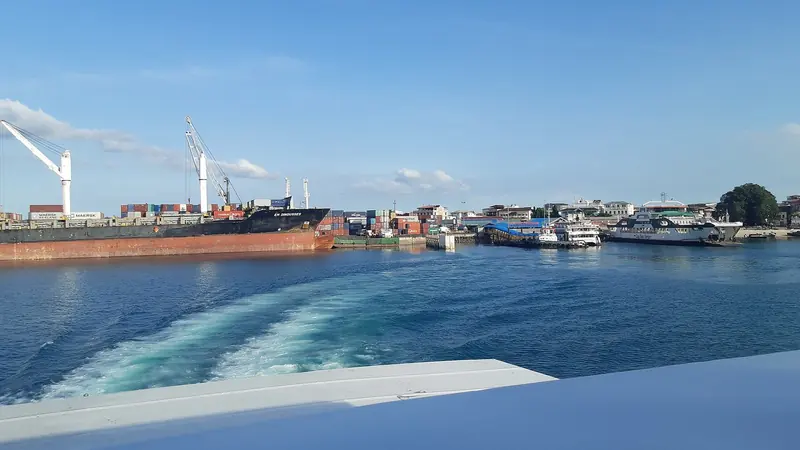
Malindi Port carries about 95 percent of Zanzibar's imports and exports across two main berths, a 240 metre quay for larger vessels and a 113 metre quay for coasters, and is the busiest passenger terminal in the region. A visiting yacht typically anchors off in 10 to 15 metres just west of the ferry pier, a spot cruising accounts describe as workable but uncomfortable given the volume of ferry and cargo traffic sharing the same water.
Clearance runs Port Health for pratique, then Immigration, then Customs, which wants the original ship's papers and a copy, a crew list, an equipment and goods list and the last port's clearance certificate. A Customs CM23 form, referred to by cruisers as a transire, is required for every move between Tanzanian ports and for departure toward another East African Community state such as Kenya. A three-month visa runs about 50 US dollars a person.
One marina serves the whole East African coast, and a major charter aggregator lists zero crewed yachts here today.
The one marina on the coast
The marina offers 18 docks with water and electricity at each slip, a dockside restaurant that does not serve alcohol, free WiFi and outdoor showers a visiting crew reported having to hunt for. Rates quoted in that 2019 account ran around 50 US dollars a night, closer to 25 dollars a night on a monthly stay, though these figures are now several years old and should be reconfirmed before a passage plan relies on them.
The nearest alternative with real facilities is the Dar es Salaam Yacht Club on the mainland, founded in 1933 and now based at Leopard's Cove in Msasani Bay, with moorings for over 100 boats. It runs on a cashless, membership basis: a visiting yacht anchors outside the main moorings, calls the club on channel 9 for a dinghy pickup, and takes temporary membership against a refundable deposit before fuel, water or a mooring are available.

Monsoon seasons and the piracy picture
Water temperature holds around 26 to 29 degrees C year-round, dipping slightly from July to September, and diving visibility commonly runs 15 to 30 metres. Multiple 2026 maritime security reports, independently confirmed by the Center for Maritime Strategy and by Danish Shipping's own analysis, put Somali piracy at its highest level in roughly a decade, with attacks running well into double figures for the year against single figures in 2024 and 2025, driven partly by naval patrols stretched thin covering the Red Sea and the Strait of Hormuz at the same time.
None of the sources behind that resurgence place the renewed activity as far south as Zanzibar or the Tanzanian coast; the incidents cluster off Somalia and the Somali Basin, hundreds of miles to the north. A prudent owner should still get a current, Zanzibar-specific read from a maritime security firm before a passage, rather than relying on either the old all-clear or the new headline alone.
Mnemba and the marine conservation fees
That wider fee increase, confirmed independently by both the African Travel and Tourism Association and the Africa Travel and Tourism Alliance, covers Menai Bay Conservation Area, Chumbe Island Coral Park, Changuu-Bawe and the Pemba Channel Conservation Area. Chumbe, a short sail southwest of Zanzibar City, has run a strict no-anchor, no-fishing, snorkel-only policy since 1994 and is cited as the first financially self-sustaining marine protected area in the world, with reef fish counts over 470 species.
Menai Bay, Zanzibar's largest marine protected area at 470 square kilometres, holds resident populations of the endangered Indian Ocean humpback dolphin. No specific anchoring restriction map for the bay turned up in this research, so a crew planning to anchor there should confirm current rules directly with Zanzibar's forestry and natural resources department before dropping the hook.
Fuel, provisioning and the technical support gap
Cape Town's Yachtport SA, at the V&A Waterfront, offers inspection-through-refit services and covers logistics across Southern African ports. Durban has a bigger claim in progress: a letter of intent with the yacht-industry firm Navigo to build what is billed as Africa's first dedicated superyacht refit hub, backed by a reported investment above 1.9 billion South African rand, but this is a planned facility, not yet an operating yard, and should not be described as available today.
That absence of listed infrastructure is itself the finding for anyone planning a Zanzibar stop: provision before arrival, expect the Azam Marina's own restaurant and a handful of shops to cover the basics, and do not plan on any technical work being done locally.
Diving Mnemba and the safari combination
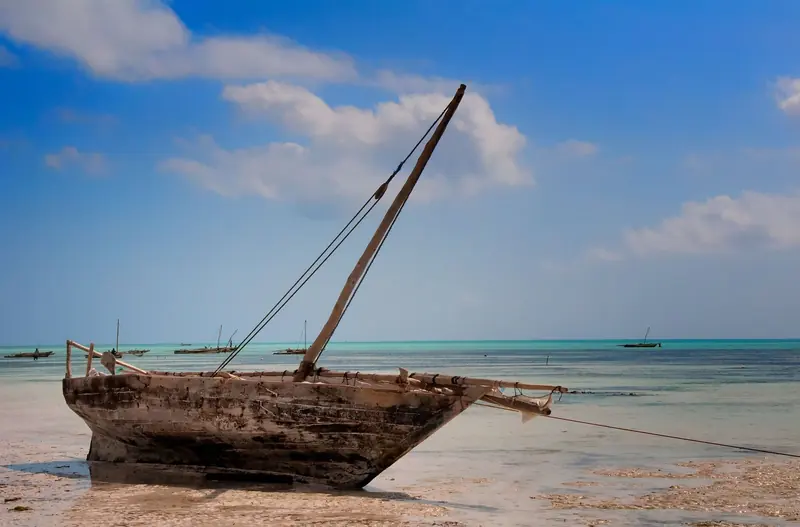
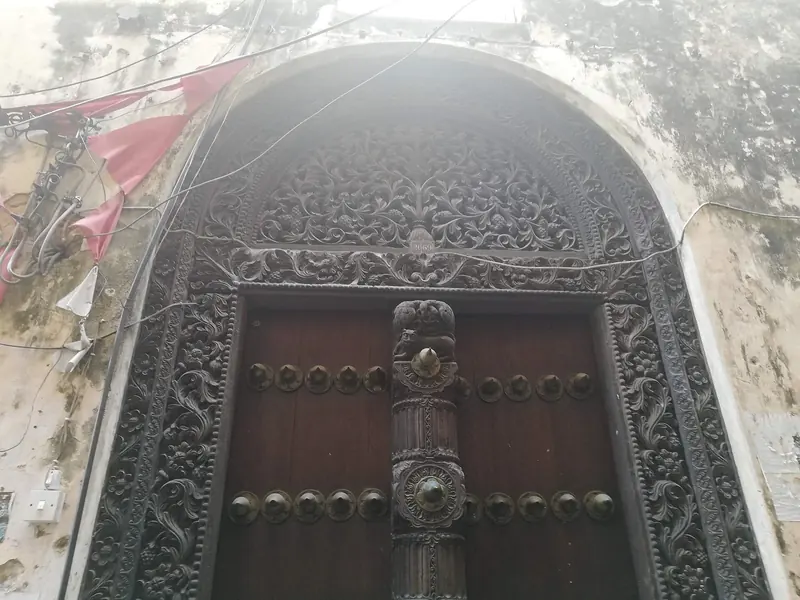
Zanzibar Town's own Stone Town quarter adds a second, land-based draw next to the diving: narrow streets of Swahili, Arab, Persian and Indian merchant houses, the carved doors that mark the old trading families, and a spice-growing hinterland that gave the island its old Spice Island name, still working plantations for clove, nutmeg, cinnamon and pepper. A dhow sailing culture runs alongside all of it, sunset trips out of Stone Town harbour on wooden boats whose design has barely changed across centuries of Indian Ocean trade.
Whale sharks gather off Mafia Island further south roughly October to March, driven by nutrient-rich outflow from the Rufiji river, and are commonly added as a further leg for an owner already combining Zanzibar with a mainland safari. None of this infrastructure is superyacht-specific, though: the diving and dhow operators work at a day-boat, tourist-charter scale, not a large-yacht support scale, and a crew should plan logistics accordingly, chartering a local dive or dhow operator for the day rather than expecting the yacht's own tenders to carry the trip.
Why an owner actually goes there
Whale sharks gather off Mafia Island to the south roughly October to March, fed by nutrient outflow from the Rufiji river, and Zanzibar's spice plantations and centuries of Arab, Persian and Indian trade give Stone Town a genuinely different architectural and cultural texture from anywhere else on this coast. The same YachtCharterFleet guide notes a charterer here is unlikely to see another superyacht for days, which for the right owner is exactly the point.
What is not published: this research found no named superyacht confirmed visiting Zanzibar or the wider Tanzanian coast in recent trade press, and the same aggregator that supplied the emptiness quote also reported zero crewed luxury yachts currently listed for charter in Zanzibar. This is a coast to visit on your own boat with your own planning, not yet one with an established charter market to lean on, which for the right owner is closer to a feature than a defect: it is one of the few Indian Ocean calls left where a yacht is still a genuine novelty rather than one of a dozen tied up along the same waterfront, and Stone Town's harbourmaster and marina staff both have a real, direct interest in making a rare visiting yacht welcome.
An Land, Anfahrt und Buchung
| Getting there | Abeid Amani Karume International Airport (ZNZ), new international terminal since 2020. Air France, KLM, Turkish Airlines, Qatar Airways, Ethiopian and Kenya Airways connect; Airlink adds Johannesburg/Cape Town from October 2026. |
|---|---|
| Arriving by sea | Malindi Port, Stone Town, the main harbour; anchor off in 10-15 m near the ferry pier. Zanzibar clears customs and immigration separately from mainland Tanzania, even for a boat already cleared elsewhere in the country. |
| The only marina | Azam Zanzibar Marina (Hotel Verde), a few miles north of Stone Town, 18 docks. Reported barely operational in a 2019 firsthand account; confirm current status before relying on it. |
| Season | Kusi monsoon (June-Oct) for steadier wind, Kaskazi (late Nov-mid March) for warmer, lighter conditions. Outside the main cyclone belt. |
| Marine park fees | Mnemba USD 25 adult / USD 10 child (non-EAC), unchanged Sept 2025. The other four Zanzibar MCAs rose from USD 3 to USD 10/adult the same month. |
| Anchoring | No anchoring at Mnemba (8 boats/day cap) or at Chumbe Island Coral Park. Menai Bay anchoring rules not confirmed; check directly with Zanzibar's forestry department. |
| Fuel, repairs, provisioning | No dedicated superyacht agent, fuel contract or repair yard found on the island. Provision before arrival; nearest real technical support is Cape Town's Yachtport SA or Durban's planned Navigo hub. |
| Piracy | A genuine 2026 resurgence off Somalia, highest level in about a decade, but reported incidents cluster well north of Tanzania. Get a current, region-specific security read before planning a passage. |
| What is not published | No current superyacht charter rate, no named recent superyacht visit in trade press, and no confirmed technical service network anywhere on this coast. |
Was Eigner und Crew berichten
The marina was real but barely open
Writing after a month based there, this cruiser described Azam Zanzibar Marina as the only marina in East Africa at the time, water and power at each slip but showers hard to find and no alcohol served at the dockside restaurant.
Where Is SV Brick House?, cruising blog, March 2019Zanzibar's separate clearance catches boats out
Zanzibar and Pemba still see themselves as independent, and travel from the Tanzanian mainland to either island requires full immigration and customs clearance on arrival, even for a boat already cleared into the country.
Des Cason aboard SV Gambit, Noonsite cruising report, 30 September 2023The region is priced and marketed as a frontier, not a hub
East Africa has remained largely off-limits to superyachts, with cruising options here only slowly opening up as owners look further afield.
YachtCharterFleet, East Africa yacht charter guide
Was gut ist und worauf zu achten ist
Stärken
- Genuinely uncrowded compared with any other Indian Ocean stopA trade guide for the region states plainly a charterer here will not see another superyacht for days, and this research found zero crewed yachts currently listed for charter in Zanzibar.
- Stone Town and Mnemba are both real, first-rank drawsA UNESCO World Heritage old town built on centuries of Swahili, Arab, Persian and Indian trade, next to a marine conservation area with some of the region's best reef diving.
- Low cyclone riskZanzibar sits outside the main southwest Indian Ocean cyclone belt, unlike destinations further south such as Madagascar or Mozambique.
Worauf zu achten ist
- One marina, and its condition is unconfirmedAzam Zanzibar Marina was reported barely operational in the only firsthand account found, dated 2019, and no evidence surfaced of a second marina having opened anywhere on this coast since.
- No technical support networkNo dedicated fuel agent, provisioning contract or repair yard was found in Zanzibar; the nearest confirmed capability is hundreds of miles south in Cape Town, with a Durban hub still only at the planning stage.
- Zanzibar clears separately, every timeA boat already cleared into mainland Tanzania must go through full immigration and customs again on arrival in Zanzibar, and the reverse applies leaving.
- Piracy has returned to the wider region in 2026Multiple independent reports put Somali piracy at its highest level in about a decade; while the activity is concentrated off Somalia, not Tanzania, it is a live regional factor an owner should have assessed before transiting the western Indian Ocean.
Für wen: An owner who wants Stone Town, Mnemba's reef and genuine emptiness, and who is prepared to plan and provision independently rather than lean on an established local charter or service industry.