Antarctica & the Patagonian Channels
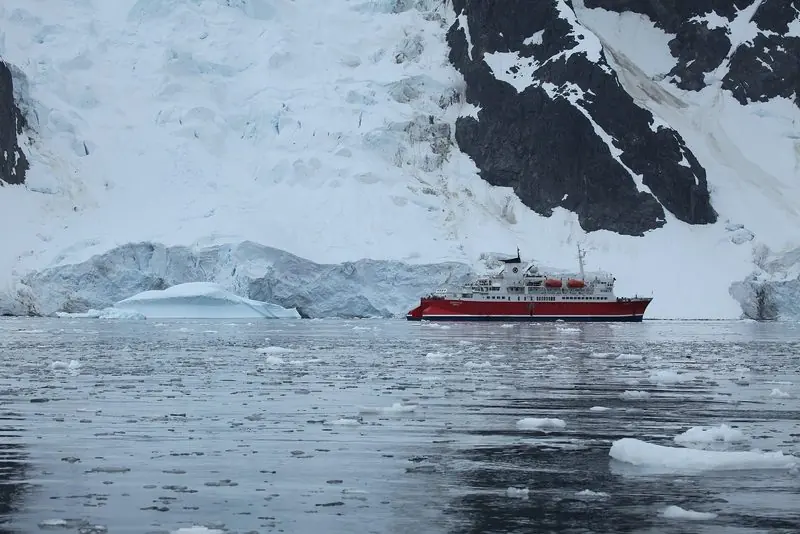
| Región | los canales chilenos y argentinos, del estrecho de Magallanes hacia el sur hasta el cabo de Hornos, y la península Antártica más allá |
|---|---|
| Temporada | el verano austral, de noviembre a marzo aproximadamente |
| Paso de Drake | unos 800 km, o 500 millas, del cabo de Hornos a la isla Livingston, con olas registradas de hasta 12 metros |
| Corriente | la corriente Circumpolar Antártica transporta unos 100 a 150 Sverdrups y es la corriente oceánica más fuerte del planeta |
| Ushuaia | a unos 1.100 km de la península Antártica y principal puerto de salida del mundo hacia ella, con unas 540 escalas de crucero al año |
| Canal Beagle | unos 240 km de largo y 5 km de ancho en su punto más estrecho |
| Practicaje | el Tratado de Paz y Amistad de 1984 obliga a los buques extranjeros a llevar prácticos chilenos entre el estrecho de Magallanes y Ushuaia |
| Estrecho de Magallanes | unos 570 km de largo, con unos 2 km en su punto más estrecho, y practicaje obligatorio |
| Canales chilenos | un sistema navegable que va de los 42 a los 55 grados sur aproximadamente, con vías de navegación reguladas por el decreto chileno 416 de 1977 |
| Normativa antártica | no más de 100 visitantes en tierra en un mismo sitio a la vez, y los barcos con más de 500 pasajeros no pueden desembarcar a nadie |
| Permisos | las partes del Tratado Antártico emiten permisos en lugar de visados, que se obtienen a través de la autoridad nacional del operador |
| Tráfico | las cifras de visitantes de la Antártida publicadas rondaban los 124.000 al año en 2025 |
| Chilean pilotage | set by gross tonnage under Supreme Decree 427 of 1979, in US dollars, revalued annually to the US CPI |
| Published pilotage band | USD 3,836.04 to 6,552.16 for 2,000 to 4,000 GRT for continuous navigation between Bahia Ancud and Bahia Posesion within 120 hours with two pilots, with section multipliers of 0.038 to 1.150 |
| Pilotage extras | USD 55.75 an hour for delayed departure beyond twelve hours, for navigation beyond 120 hours, and for pilot transfer outside a station |
| Port billing | the Austral ports tariff effective 1 May 2025 applies its yacht rates only to vessels up to 50 gross tonnage, so a large yacht is charged on the commercial scale |
| Permits | issued by a national authority of an Antarctic Treaty party to the organiser of the activity, with an environmental impact assessment and contingency planning, and taking months |
| Discharge | the Antarctic is a MARPOL Special Area under Annexes I, II and V, in force since 17 March 1992, and nothing may be discharged |
| Fuel | MARPOL Annex I Regulation 43 has prohibited the carriage and use of heavy grade oil south of 60 degrees south since 1 August 2011 |
Dos zonas, un solo viaje
Casi nadie hace la Antártida sola. La península está al final de una ruta que empieza en los fiordos chilenos, y los fiordos merecen el viaje por sí mismos. El sistema de canales navegables va de los 42 grados sur hasta los 55, mil millas de paso interior glaciado con un solo tramo genuinamente expuesto al cruzar el golfo de Penas. Puerto Montt, Puerto Natales y Punta Arenas son los puertos de esa ruta.
Abajo del todo, el canal Beagle corre 240 km de este a oeste, con cinco kilómetros de ancho en su punto más estrecho, con Ushuaia en el lado argentino y Puerto Williams en el chileno. De ahí se pasa al cabo de Hornos y luego a mar abierto. El armador que monte un programa de dos meses se lleva los canales, el Hornos y la península. Quien solo tenga tres semanas debería hacer los canales y dejar el Drake en paz.
Los canales patagónicos
Esta es la parte que recuerdan casi todos los invitados. Glaciares que bajan hasta el agua a los dos lados, cóndores, y fondeaderos donde el barco larga cuatro cabos a los árboles porque el fondo se cae y el viento llega sin avisar. El brazo noroeste del Beagle tiene una hilera de glaciares de marea que todo el mundo llama la Avenida de los Glaciares. Seno Pia y Seno Garibaldi son los dos fiordos que las tripulaciones ponen por encima del resto. Puerto Natales es el punto de partida hacia Torres del Paine.
El peligro que define la zona es el williwaw, una racha catabática que se descuelga por una ladera glaciada y golpea a un yate fondeado a 50 o 60 nudos desde una calma chicha. Aquí los cabos a tierra no son opcionales, son la técnica. El practicaje chileno es obligatorio en el estrecho de Magallanes y, según el tratado de 1984, para los barcos extranjeros que se muevan entre el estrecho y Ushuaia. La Armada de Chile controla los movimientos mediante el sistema de zarpes, y un yate no sale de un fondeadero sin uno.
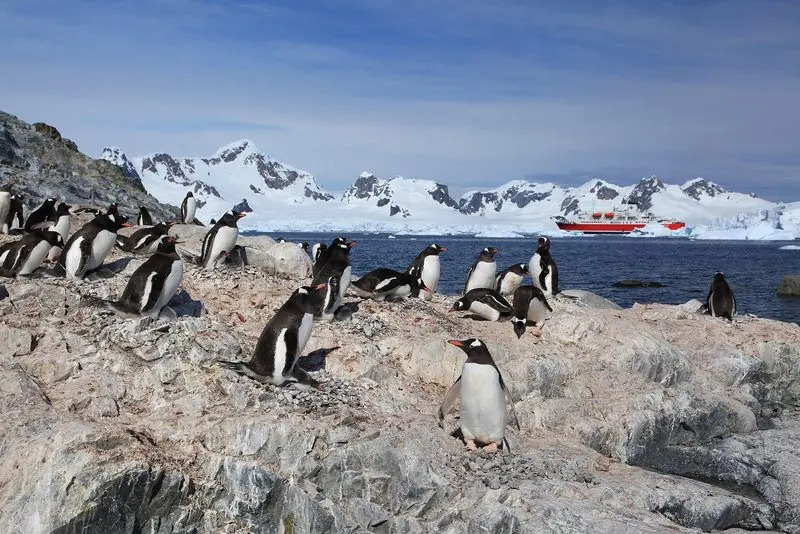
Dos días de paso de Drake compran una costa que casi ningún yate privado llega a ver.
El Drake y la península
El paso de Drake son 800 kilómetros del cabo de Hornos a la isla Livingston, que para casi todos los yates son dos días en cada sentido. La corriente Circumpolar Antártica lo atraviesa a unos 100 a 150 Sverdrups, la corriente más fuerte del océano, y el estado de la mar tiene una reputación merecida. Se han registrado olas de 12 metros. Un cruce se planifica sobre una ventana de previsión y el barco o va o espera.
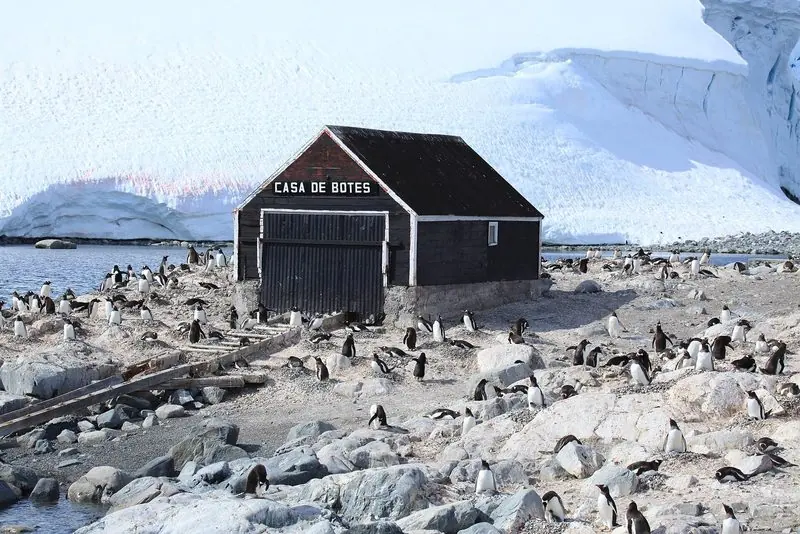
Al otro lado, la península da agua abrigada la mayor parte del tiempo. La isla Decepción es una caldera activa a la que se entra por un hueco llamado los Fuelles de Neptuno, con las ruinas de una estación ballenera dentro. El canal Lemaire es el paso estrecho de paredes de hielo del que sale cada fotografía. Paradise Harbour, Neko Harbour y Wilhelmina Bay son los fondeaderos, y Port Lockroy tiene una base británica con museo y oficina de correos. El hielo, y no el calado, decide adónde va un yate cada día.
Una quincena, y un mes
Una quincena con base en Ushuaia hace el canal Beagle, los brazos chilenos y el cabo de Hornos, y son dos semanas llenas y exigentes con paisaje de verdad cada día. Los invitados entran y salen por un solo aeropuerto. Esa es la versión por la que debería empezar la mayoría de los armadores, y muchos no pasan de ahí.
Un mes es el programa de la península: Ushuaia, el Drake, de diez a catorce días trabajando hacia el sur a lo largo de la península, y otra vez el Drake. Añadir Georgia del Sur, que queda bastante al este y guarda las colonias de pingüino rey y la tumba de Shackleton en Grytviken, lo convierte en seis o siete semanas. Cada una de esas etapas es una travesía, así que la autonomía del barco, su comportamiento en la mar y el aguante de la tripulación deciden el plan más que el itinerario.
Lo que necesita un barco de 50 metros
Aquí el amarre no es la cuestión. Hay un muelle comercial en Ushuaia, muelles en Punta Arenas y en Puerto Williams, y nada en absoluto en la Antártida. Lo que importa es la especificación: casco reforzado para hielo o al menos una notación de clase capaz de trabajar en hielo, hélices y timones protegidos, calefacción y energía redundantes, equipo de fondeo pesado con montaje para cabos a tierra, un radar que vea el hielo a flor de agua y autonomía suficiente para cruzar el Drake dos veces sin repostar.
El seguro es la puerta práctica. Los aseguradores preguntan por la notación de clase, los prácticos de hielo, la experiencia de la tripulación y los medios sanitarios, y las primas de una temporada austral reflejan la ausencia total de capacidad de salvamento o de rescate. Casi todos los yates que van llevan un práctico de hielo y un equipo de expedición, y tener un médico a bordo es lo normal. Un barco que no está construido para esto no consigue póliza, y ese suele ser el momento en el que un armador descubre qué implica el viaje de verdad.
Permisos, IAATO y qué se permite en tierra
Nadie es dueño de la Antártida, así que nadie expide un visado. Las partes del Tratado Antártico emiten permisos en su lugar, y un yate obtiene la autorización a través de la autoridad nacional de su pabellón o de la del organizador, al amparo del Protocolo Ambiental. Ese proceso lleva meses, exige una evaluación de impacto ambiental y un plan de contingencia, y no se puede arreglar con poca antelación desde Ushuaia. Los yates que se presentan sin ella son una categoría conocida y mal recibida.
En la práctica, la mayoría de los operadores legítimos trabajan dentro de IAATO, cuyas normas limitan los desembarcos a 100 visitantes en tierra en un mismo sitio a la vez y prohíben a cualquier barco con más de 500 pasajeros desembarcar a nadie. Para un yate privado esas cifras no son una limitación, pero el sistema de reserva de sitios que hay detrás sí lo es, y por eso importa la relación con el operador. Las cifras de visitantes de la Antártida llegaron a unos 124.000 al año en 2025, así que los buenos puntos de desembarco van programados.
Tiempo, hielo y la temporada
La temporada es el verano austral, de noviembre a marzo aproximadamente. Noviembre y principios de diciembre dan más hielo y la nieve más limpia. Enero y febrero son los más cálidos, con más actividad de fauna y más tráfico. Para marzo los días se acortan y la flota va rumbo al norte. Fuera de esa ventana, la península no es sitio para ningún yate privado.
El tiempo en los canales es húmedo, ventoso y cambiante de una forma que no tiene equivalente mediterráneo, con las cuatro estaciones en una tarde como descripción de manual. En la península el aire es seco y frío y el viento suele ser menos del que espera un armador, con el riesgo puesto en el hielo. Los episodios catabáticos que bajan del casquete, el hielo menudo que ahoga una bahía de la noche a la mañana y un cambio en el banco de hielo que cierra un canal son los problemas de trabajo de cada día.
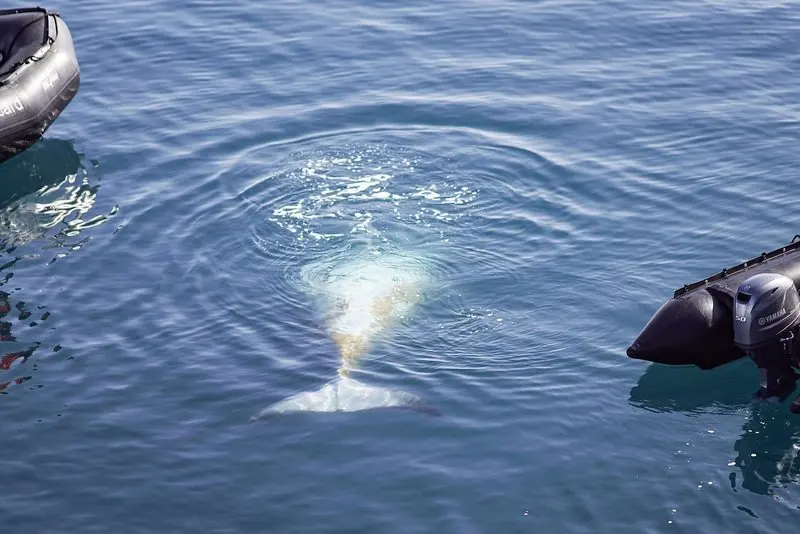
Llevar a los invitados a bordo, y qué hacen
El aeropuerto internacional de Ushuaia admite reactores y conecta por Buenos Aires, Santiago y El Calafate. Punta Arenas es el equivalente chileno. Los dos están muy lejos de todo y los dos dependen del tiempo, así que los invitados deberían llegar un día antes y contar con que el barco puede no salir la mañana prevista. No hay acceso aéreo a la península para un invitado de yate, salvo un chárter a la pista de la isla Rey Jorge, que algunos operadores organizan para saltarse el Drake.
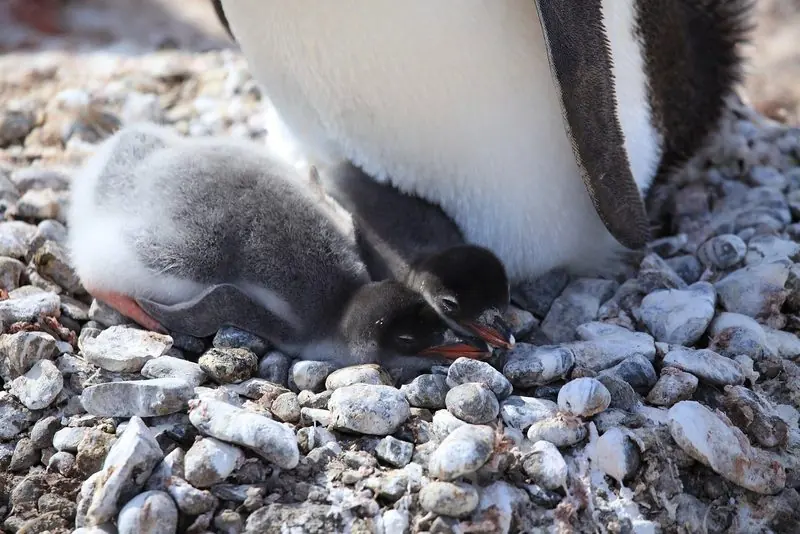
En tierra, el día son desembarcos en tender. Colonias de pingüinos en Neko y en Petermann, la base y la oficina de correos de Port Lockroy, la caldera de Decepción, kayak entre el hielo y un baño en las someras volcánicas para quien insista. En la Patagonia es trekking en Torres del Paine, caminatas sobre glaciar y las estancias. La comida y la vida nocturna no forman parte de este destino de ninguna manera que un armador reconozca. Ushuaia tiene restaurantes y centolla, y eso es todo.
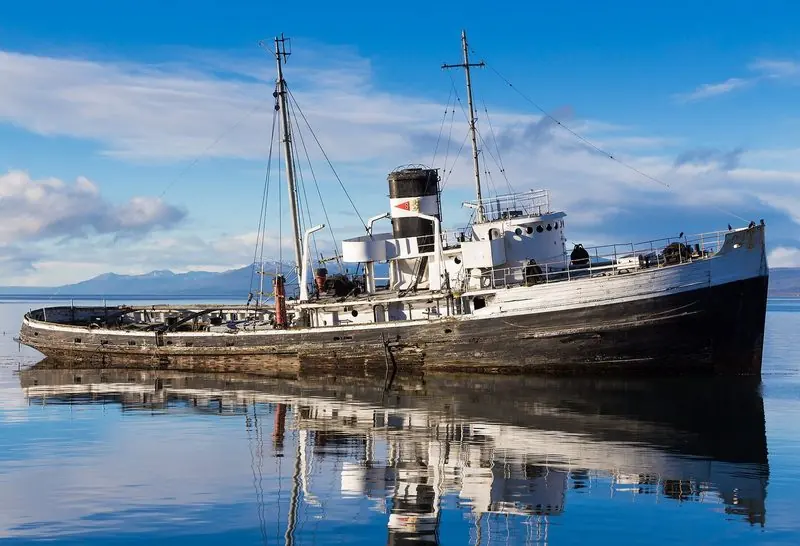
Combustible, servicio y la pega honesta
El combustible y los víveres salen de Ushuaia, de Punta Arenas o de Puerto Williams y de ningún otro sitio, y un yate que cruza el Drake lleva todo lo de la etapa austral entera. El soporte técnico al nivel que necesita un yate de 50 metros no existe al sur de Buenos Aires o de Santiago, y una avería seria en la península es un autorrescate cruzando otra vez el Drake con lo que haya a bordo. Los recambios, los especialistas y hasta una evacuación médica se miden en días.
La lista de pegas es larga y ninguna es una sorpresa. El proceso de permisos es lento. El practicaje chileno y los trámites de zarpe suman coste y tiempo en cada paso. El seguro es caro, si es que se consigue. El Drake será incómodo y puede ser peor. El invitado que no venga convencido estará hundido para el cuarto día. Frente a eso, la península en febrero es el paisaje menos concurrido al que puede llegar un yate privado por sus propios medios, y los armadores que van suelen ir más de una vez.
The compulsory costs, and the one tariff that is published
Chilean pilotage is the line an owner cannot avoid and it is the only part of this voyage with a public tariff. Fees are set by gross tonnage under Supreme Decree 427 of 1979, denominated in US dollars and revalued each year against the US consumer price index. The published standard fee covers continuous navigation between Bahia Ancud and Bahia Posesion within 120 hours with two pilots aboard, and runs from USD 3,836.04 to USD 6,552.16 for vessels of 2,000 to 4,000 GRT, rising through USD 11,505.15 to USD 12,623.55 at 10,000 to 12,000 GRT. A 50 m yacht sits below the bottom of that band, so her base fee is lower, but the structure around it applies in full: section multipliers of 0.038 to 1.150 depending on the route through the Strait and the channels, and USD 55.75 an hour for a delayed departure beyond twelve hours, for navigation beyond 120 hours, and for embarking or landing a pilot outside a transfer station. On a channels programme that runs for weeks, the hourly charges are the part that moves.
Port charges are the other surprise. The Austral ports tariff effective 1 May 2025 applies its yacht rates to vessels up to 50 gross tonnage, which means a 50 m yacht is not a yacht for billing purposes and is charged on the commercial vessel scale at Punta Arenas. Ushuaia's commercial pier is agent-arranged and the agencies that handle expedition ships and superyachts publish nothing. Set the whole thing against the Mediterranean alternative for scale: Marina di Porto Cervo's published 2026 tariff is EUR 3,698 a day in the band to 40 m between 1 and 20 August, about EUR 102,000 for the month. A southern season will cost more than that and almost none of it will be berthing. It is pilotage, agency, fuel carried for the whole leg, an ice pilot, an expedition team, a doctor and an insurance premium priced for a coast with no salvage capability.
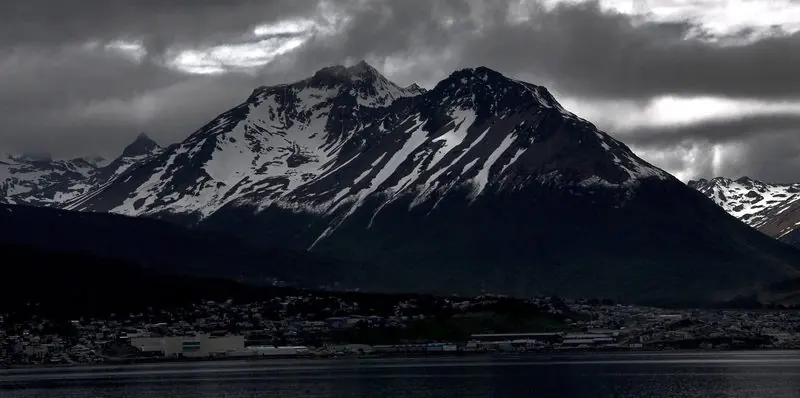
Permits, and why a commercial charter is a different application
Nobody owns Antarctica, so there is no visa and no port state to license the yacht. Authorisation comes from a national authority of an Antarctic Treaty party, under the Environmental Protocol, and it is issued to the organiser of the activity rather than to the vessel. That distinction is the one that catches commercial operations: a charter is an organised activity and the permit application has to be made in the name of whoever is organising it, supported by an environmental impact assessment, contingency planning and evidence of self-sufficiency. It takes months, it cannot be assembled from Ushuaia in a fortnight, and a yacht that arrives on the Peninsula without it is in a category the other operators report. There is no fine schedule of the kind a Mediterranean state would publish, because enforcement runs through the flag state and through the permit rather than through a coastguard alongside.
The operational limits come from IAATO rather than from law, and for a private yacht they are not the constraint. No more than 100 visitors ashore at a site at one time, and no landings at all from a vessel carrying more than 500 passengers. What does constrain a yacht is the site booking system behind those numbers, which allocates the good landings among operators who are inside the system, and Antarctic visitor numbers reported at about 124,000 a year by 2025 mean the popular sites are scheduled rather than available. In Chilean and Argentine waters the yacht is back inside ordinary jurisdiction, with compulsory pilotage between the Strait of Magellan and Ushuaia under the 1984 Treaty of Peace and Friendship and the Armada de Chile controlling every movement through the zarpe system.
Discharge and fuel: the strictest regime a yacht will meet
The Antarctic area is a MARPOL Special Area under Annex I for oil, Annex II for noxious liquids and Annex V for garbage, and unlike the Red Sea these designations are in force, having taken effect on 17 March 1992. Garbage discharge is prohibited. Oil discharge is prohibited. Nothing goes over the side, and a yacht crossing the Drake carries out everything she carried in, which is a real volume calculation over a month with guests aboard and a driver of tankage on any boat built for this.
The fuel rule is the one that decides whether a hull can go at all. Under MARPOL Annex I Regulation 43, in force since 1 August 2011, the carriage in bulk as cargo, the use as ballast and the carriage and use as fuel of heavy grade oil are prohibited south of 60 degrees south. A yacht burning distillate is unaffected, which is most of them, but the rule is absolute and applies to what is in the tanks, not to what is being burned that day. Combined with the Polar Code requirements on structure, equipment and crew training, this is the point at which an owner discovers whether the boat is genuinely capable or merely large.
En tierra, accesos y reservas
| Getting guests aboard | Ushuaia's international airport takes jets and connects through Buenos Aires, Santiago and El Calafate; Punta Arenas is the Chilean equivalent. Both are weather-dependent, so guests should arrive a day early and expect the boat may not sail on the planned morning. There is no air access to the Peninsula for a yacht guest short of a charter to the airstrip on King George Island, which some operators arrange to skip the Drake. |
|---|---|
| What the boat itself needs | Berthing is not the gate, the specification is: an ice-strengthened hull or at least an ice-capable class notation, protected propellers and rudders, redundant heating and power, heavy ground tackle with a shore-line arrangement for williwaw anchorages, radar that sees growlers, and range enough to cross the Drake twice without bunkering. |
| How the permit actually works | Authorisation comes from the national authority of an Antarctic Treaty party, issued to the organiser of the activity rather than to the vessel, and requires an environmental impact assessment and contingency planning. It takes months and cannot be assembled from Ushuaia in a fortnight. A commercial charter is a harder, separate application made in the organiser's name. IAATO's site-booking system, not a law, then allocates the actual landing slots among operators inside it. |
| What it costs: the one published tariff | Chilean pilotage under Supreme Decree 427 of 1979, denominated in US dollars and revalued yearly to US CPI, is compulsory and public: USD 3,836.04 to 6,552.16 for 2,000 to 4,000 GRT on the standard continuous transit, rising to USD 11,505.15 to 12,623.55 at 10,000 to 12,000 GRT. A 50 m yacht sits below that band, but the section multipliers of 0.038 to 1.150 and the USD 55.75 an hour charge for delays, extended transit or an off-station pilot transfer apply in full, and on a weeks-long channels programme the hourly charges are what moves. |
| What it costs: port charges and everything unpublished | The Austral ports tariff effective 1 May 2025 caps its yacht rate at 50 gross tonnage, so a 50 m yacht is billed on the commercial vessel scale at Punta Arenas. Ushuaia's commercial pier is agent-arranged and the agencies that handle expedition ships and superyachts there publish nothing. Almost none of a southern season's cost is berthing - it is pilotage, agency fees, fuel carried for the whole leg, an ice pilot, an expedition team, a doctor, and an insurance premium priced for a coast with no salvage capability. |
| Insurance and crew | Underwriters ask about ice class notation, ice pilots, crew experience and medical provision before extending a policy south, and premiums reflect the absence of any salvage or rescue capability. Captain Gerhard Veldsman of the 85.9 m sailing ketch Aquijo, who has made the run, put it plainly: an ice pilot is mandatory for insurance in the region, and although he initially thought hiring one was a waste of money, he found real value in a pilot who could read how the ice moved with the tide and wind. |
| Discharge and fuel rules | The Antarctic area is a MARPOL Special Area under Annexes I, II and V, in force since 17 March 1992: nothing is discharged, and a yacht crossing the Drake carries out everything she carried in. Under MARPOL Annex I Regulation 43, in force since 1 August 2011, heavy grade oil may not be carried or used as fuel south of 60 degrees south. A distillate-burning yacht is unaffected, but the rule is absolute on what is in the tanks, not on what is being burned that day. |
Lo que cuentan armadores y tripulaciones
An ice pilot is not optional, and a real one earns his place
Captain Gerhard Veldsman of the 85.9 m sailing ketch Aquijo has said an ice pilot is mandatory for insurance in the region. He initially thought carrying one was a waste of money, but found that a good pilot adds real value, talking the boat through a path in the ice by reading how it moves with the tide and wind.
Captain Gerhard Veldsman, master of Aquijo (Boat International)Two weeks between Ushuaia and southern Chile without seeing another vessel
Veldsman also described the isolation of the Patagonian leg directly: his crew travelled for two weeks from Ushuaia to Chacabuco without seeing another living soul, and a yacht is on her own even if she carries a helicopter, because it is not flown unless it has to be.
Captain Gerhard Veldsman, master of Aquijo (Boat International)The smaller the group ashore, the better the Antarctic experience actually is
Ben Lyons, CEO of EYOS Expeditions, which organises private yacht polar voyages, has said there is a genuine privilege in being the only people ashore in Antarctica, and that on a smaller vessel the boat can stop for whales and have guests in the zodiacs within two minutes - flexibility a scheduled expedition ship does not have.
Ben Lyons, CEO, EYOS Expeditions (Forbes, November 2025)A private yacht changes what a landing feels like, not just who else is there
An Antarctic expedition leader has said the sense of wilderness is diminished when landing with around 100 people at once, and that a yacht-scale group lets guests discover Antarctica for themselves rather than as part of a managed crowd.
Richard White, expedition leader (Boat International)
Lo bueno y lo que conviene vigilar
Puntos fuertes
- The least crowded landscape a private yacht can reach under her own powerEYOS Expeditions CEO Ben Lyons: being the only people ashore somewhere in Antarctica, surrounded by that scale of landscape with nobody else around, is a real privilege, and the smaller the group the better the experience is.
- A private yacht changes what the day can be, not just who is on itLyons again: on a smaller vessel, spotting whales means the boat simply stops and the zodiacs are in the water two minutes later, a kind of responsiveness a scheduled expedition ship cannot offer.
- One genuinely public, price-able cost existsChilean pilotage is set by gross tonnage under a 1979 supreme decree, denominated in US dollars and revalued to CPI every year, so an owner can actually cost this one compulsory line rather than guess at it.
- The channels alone are a complete programmeA fortnight based on Ushuaia covers the Beagle Channel, the Chilean arms and Cape Horn with real scenery every day, and does not require the Drake crossing at all - many owners never need to go further.
- Expedition leaders report the exclusivity is real, not marketingRichard White, an Antarctic expedition leader, has said the sense of wilderness is diminished landing with 100 people at once, and that a private yacht lets guests discover Antarctica for themselves rather than as part of a crowd.
A tener en cuenta
- There is no salvage or rescue capability south of Buenos Aires or SantiagoA serious failure on the Peninsula is a self-rescue back across the Drake with whatever is aboard. Spares, specialists and medical evacuation are all measured in days, not hours.
- Isolation is a literal fact, not an atmosphereCaptain Gerhard Veldsman of Aquijo: his crew travelled two weeks from Ushuaia to Chacabuco in southern Chile without seeing another living soul, and even a yacht carrying a helicopter cannot fly it unless it has to - you have to be able to survive on what is aboard.
- The permit process is slow and cannot be rushedAuthorisation is issued to the organiser of the activity, not the vessel, requires an environmental impact assessment and contingency planning, and takes months - it cannot be assembled from Ushuaia in a fortnight, and a commercial charter faces a harder, separate application.
- Insurance is expensive where it exists at allAn ice pilot is a mandatory condition of cover for this region, not an optional guide, and underwriters price the whole policy against a coast with no salvage capability.
- Guests who are not committed will struggleThe Drake will be uncomfortable and may be worse than forecast. There is no food or nightlife destination in any form an owner would normally recognise - Ushuaia's restaurants and king crab are the extent of it.
Para quién es: Un armador con un barco capaz de navegar en hielo, un capitán experimentado y la paciencia para un proceso de permisos que se mide en meses, cuyos invitados quieren un viaje en vez de una playa.