Cuba and the Jardines de la Reina
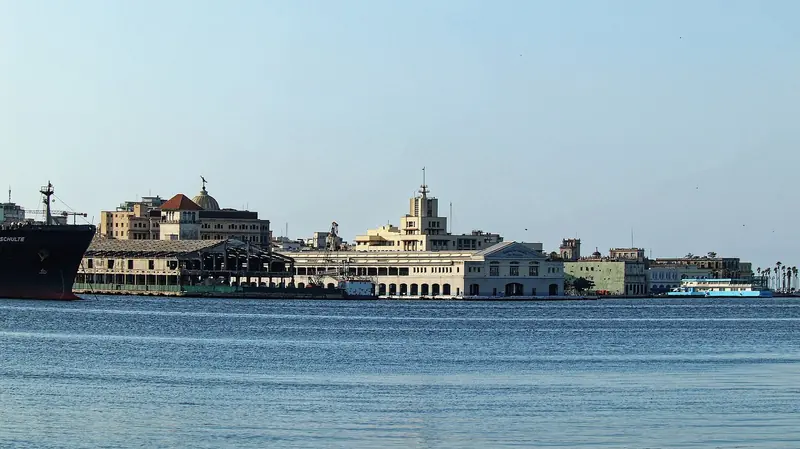
| Region | Cuba, primarily Havana/Marina Hemingway, Varadero and the Jardines de la Reina archipelago south of the mainland |
|---|---|
| Main yacht port | Marina Hemingway, Havana, officially ~400 boats/5 channels, realistically closer to 100 usable slips |
| Alternative | Marina Gaviota Varadero, eventual capacity near 1,000 berths, better repair infrastructure than Marina Hemingway |
| Full clearance sequence | Quarantine, Immigration, Customs, Agriculture, Guarda Frontera; despacho (cruising permit) stamped at every port |
| Dec 2024 clearance example | about 1 hour, roughly USD 550 total for a 5-person crew at Santiago de Cuba |
| US export control | BIS License Exception AVS has applied a general policy of denial to recreational/passenger vessel sojourn to Cuba since June 2019, still current |
| US travel | OFAC removed the individual people-to-people general license; 12 narrow authorised travel categories remain as of the 2025 tightening (6 Feb and 14 Jul 2025 amendments) |
| Non-US-flagged, non-US-owned, no-US-person-aboard yachts sit outside both US regimes per standard industry reading | |
| Hurricane season June-November; Hurricane Ian (Cat 3, Sept 2022) and Hurricane Irma (Sept 2017, 600m storm surge into Havana) both hit western Cuba/Havana | |
| May 2026 | Cuba's energy minister confirmed oil and diesel supplies had run dry under intensified US sanctions on state oil company CUPET |
| Jardines de la Reina | 840 sq mile marine park, national park status since 2010, sole liveaboard concession held by Avalon, 6 liveaboards, no independent yacht access |
| Currency | dual CUP/MLC system, floating official rate about USD 1 = 410 CUP from December 2025; US-affiliated cards generally do not work |
| Havana Old Town (Habana Vieja) | UNESCO World Heritage listed since 1982 |
Getting to Cuba
US aircraft access to Cuba has its own separate restriction, distinct from the maritime rules covered below: private and business jet charter access has at times been suspended outright under the same regulatory regime that governs vessels. No source in this research gave a confirmed transfer time from either airport to a specific marina dock, and a crew should get that directly from the marina or a local agent when planning a guest change.
For a non-US owner or charterer, routing is otherwise straightforward: both airports handle international traffic, and Havana in particular sits close enough to the city and to Marina Hemingway that a same-day guest change is realistic once the airport-side logistics are confirmed.
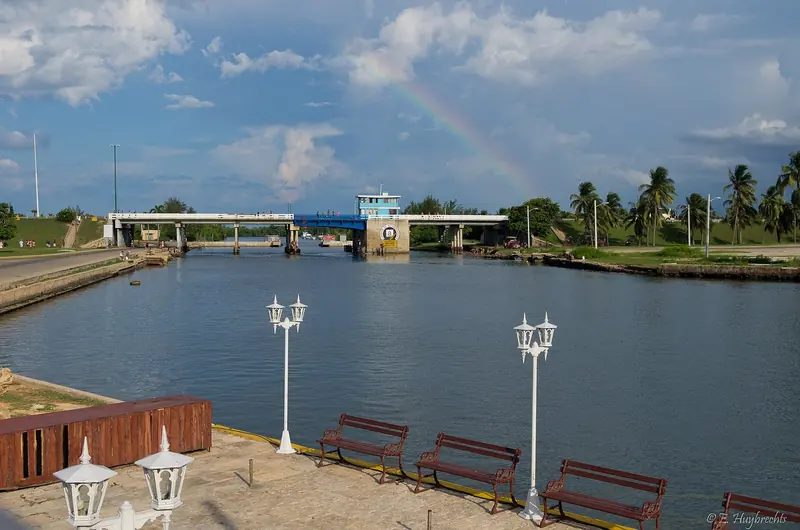
Marina Hemingway, and what condition it is actually in
The marina is run by the state tourism company Cubanacan, and a Havana Times history piece describes its 1990s-era infrastructure as having seen next to no refurbishing since. Reported maximum length overall ranges from 60 to 70 metres depending on the source, and draft figures across the marina's channels range from about 3.6 to 4.5 metres, inconsistencies that point to real variation between berths rather than a single confirmed number.
Marina Gaviota Varadero is the more capable alternative, with a stated eventual capacity near 1,000 berths including 13 mooring pontoons and a haul-out yard described by cruising-guide sources as, for the most part, operational, offering better repair infrastructure than Marina Hemingway. Cuba's full list of official ports of entry also includes Cabo San Antonio, Puerto Vita, Santiago de Cuba, Cienfuegos and Cayo Largo del Sur on the south coast, with Cayo Guillermo depth-restricted to exit traffic only and Baracoa and Manzanillo not authorised for entry at all.
One marine park closed to casual access for decades now dives close to untouched, and one US regulatory regime means every visit needs a lawyer before it needs a chart.
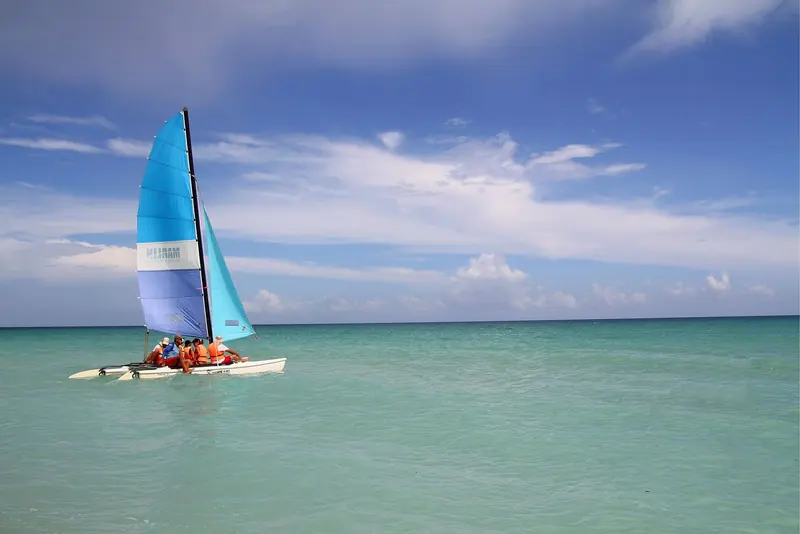
Clearing in, and Cuba's multi-agency process
A documented December 2024 clearance at Santiago de Cuba, arranged in advance by email and WhatsApp with the marina manager, took about an hour once the marina manager, immigration, customs and a doctor were all waiting dockside, and cost around 550 US dollars in total for a five-person crew, split between 200 dollars in doctor's certificates and roughly 350 dollars in immigration and customs fees. Older despacho fee schedules quoted in Convertible Pesos, a currency phased out in the 2021 reform, are now stale and should not be used for budgeting.
Twenty-four hours' notice is recommended even for a short hop between two Cuban ports, and the despacho is surrendered on final departure in exchange for an exit despacho. A crew should expect the process to run two to three hours at a normal port absent complications, longer at a port less accustomed to visiting yachts.
The rule an owner has to clear before any of this
The 2019 rule amended what is called License Exception AVS to bar non-commercial aircraft and non-cargo, recreational or passenger vessels from sailing to Cuba absent a specific foreign-policy or national-security justification, confirmed as still current by a direct check of the Bureau of Industry and Security's own published guidance. Separately, the Treasury's Office of Foreign Assets Control tightened its own Cuba rules further in February and July 2025 and removed the general license for individual people-to-people travel, leaving twelve narrow categories of authorised travel, none of which cover ordinary recreational cruising.
A non-US-flagged yacht with no US owner and no US citizen or US resident aboard, including crew, sits outside both regimes, which is the standard industry reading of how this jurisdiction works. But because the rules have changed repeatedly since 2015 and enforcement risk is real, including voided insurance, fines or confiscation, this guide states the position and stops there: verify the specific vessel's flag, ownership structure and every person aboard's nationality with a maritime sanctions attorney before planning a Cuba visit, every time, regardless of what changed the year before.
Season, hurricanes and the 2026 fuel crisis
Hurricane Ian made landfall in western Cuba as a Category 3 in September 2022, destroying about 8,000 homes and damaging tens of thousands more in Cuba's costliest storm since 2007; Hurricane Irma caused a storm surge that reached some 600 metres into Havana in September 2017. Both are a reasonable proxy for what a boat left on the island through the season risks.
The 2026 fuel shortage was independently reported by CNBC, The Hill and Invezz on the same date in May, all describing blocked crude and fuel imports worsening blackouts and queues nationwide. A crew should confirm current fuel availability directly with Marina Hemingway or Marina Gaviota before any passage plan assumes bunkering is possible in Cuba.
Jardines de la Reina, the reef nobody else got to dive
Decades of restricted access left the reef close to untouched, and divers cite it as one of the best sites anywhere for silky shark aggregations, alongside Caribbean reef sharks, Nassau and Goliath grouper and tarpon, a reputation that has earned it comparison to the Galapagos. Reported annual visitor caps vary meaningfully across sources, from around 1,200 to 3,000 divers a year, and should be confirmed directly with Avalon rather than quoted as a fixed figure.
Cayo Coco and Cayo Guillermo, about 80 km north of Ciego de Avila near the Old Bahama Channel, offer general cruising and anchoring outside the marina-controlled areas, though no source in this research detailed specific permitted-versus-prohibited anchoring zones for that stretch, and a crew should get current guidance locally rather than assume open water is open anchorage.
Cayo Coco and the northern cays
Marina Marlin Cayo Guillermo, reached from Cayo Coco across the causeway known locally as the Hemingway Bridge, is marketed toward larger yachts with a claimed 60 metre maximum length, though a separately quoted 9 metre draft figure looks anomalously deep for a Cuban cay marina and most likely describes an approach-channel depth rather than a berth, a distinction worth confirming directly before it is treated as a hard number, and worth raising with the marina by name rather than assuming the figure printed in a directory listing is the one that will greet the boat on arrival.
This cluster suits an owner who wants beach resort infrastructure and a shorter, more reliable supply chain than Havana offers, at the cost of the old-town culture and the direct proximity to Jardines de la Reina that a Cienfuegos or Santiago clearance would give instead. It suits a shorter, resort-anchored stop far more than the open-ended, culturally immersive visit Havana rewards a crew willing to plan for, and it is the more forgiving choice for a first Cuba call while a crew is still learning how the country's bureaucracy actually behaves in practice, before committing a longer stay to Havana or a passage south toward Cienfuegos.
Costs, currency and what a visit is really for
A floating official exchange rate introduced in December 2025 put the US dollar at roughly 410 Cuban pesos, against a considerably higher informal cash rate, and 2026 sanctions reporting suggests Visa and Mastercard processing has become less reliable on top of the existing card restrictions. No current per-foot berth rate for either main marina turned up in this research, a genuine gap worth closing with a direct quote before budgeting a stay.
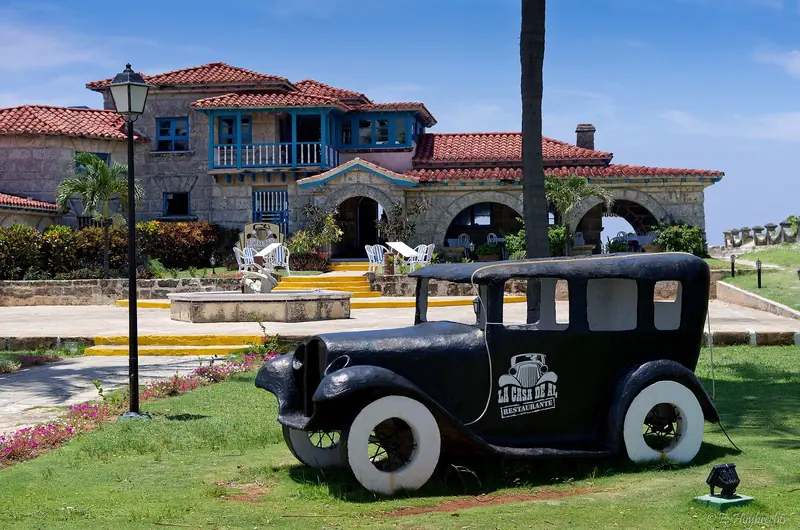
What draws a boat here regardless: Old Havana's UNESCO-listed fortification system, the country's persistent 1950s American car culture, a direct legacy of the embargo halting parts imports after 1960, and Ernest Hemingway's own history at Finca Vigia outside Havana, the house he wrote The Old Man and the Sea in and lived in until 1960. This is a destination for an owner willing to plan around real bureaucratic and technical friction for a genuinely different Caribbean call, not one to add casually to a wider itinerary.
En tierra, accesos y reservas
| Getting there | Jose Marti International (Havana) or Juan Gualberto Gomez (Varadero). Both take international traffic; confirm marina transfer times directly, none were found published. |
|---|---|
| Arriving by sea | Marina Hemingway (Havana) is the main port of entry; Marina Gaviota Varadero an alternative with better repair infrastructure. Full ports-of-entry list: Cabo San Antonio, Havana, Varadero, Puerto Vita, Santiago de Cuba, Cienfuegos, Cayo Largo del Sur. |
| US sanctions gate | A private/recreational vessel faces a general policy of denial under BIS License Exception AVS (current since June 2019). Separately, OFAC's 2025 rules leave only 12 narrow US-person travel categories. Verify with a maritime sanctions attorney for the specific vessel flag, ownership and everyone aboard before planning any visit. |
| Clearance | Quarantine, Immigration, Customs, Agriculture and Guarda Frontera board in sequence; despacho required and stamped at every port. Dec 2024 example: about 1 hour, roughly USD 550 for a 5-person crew at Santiago de Cuba. |
| Season | Dry season November-April. Hurricane season June-November, real risk mid-August to early October; Ian (2022) and Irma (2017) both struck western Cuba/Havana directly. |
| Fuel | As of May 2026, Cuba's energy minister confirmed nationwide oil and diesel shortages under intensified US sanctions on CUPET. Confirm current fuel availability directly with the marina before relying on it. |
| Jardines de la Reina access | No independent yacht anchoring or diving access. Avalon holds the sole liveaboard concession, 6 vessels; annual diver caps reported anywhere from about 1,200 to 3,000 depending on source, confirm directly. |
| Currency | Dual CUP/MLC system, official rate about USD 1 = 410 CUP from December 2025. US-affiliated cards generally do not function; plan for cash. |
| What is not published | Current per-foot berth rates at either main marina; the despacho fee in current currency terms; confirmed marina-to-airport transfer times. |
Lo que cuentan armadores y tripulaciones
A well-organised clearance can be fast and reasonably priced
Arranging clearance in advance by email and WhatsApp with the marina manager produced a clearance completed within an hour at Santiago de Cuba on 25 December 2024, with a marina manager, immigration, customs and a doctor all waiting dockside, at a total cost around 550 US dollars for a five-person crew.
Noonsite cruising report, 'Cuba: Friendly and Helpful People Make a Visit Worthwhile'The marina's condition has never really recovered
Marina Hemingway's infrastructure is 1990s-era and has seen next to no refurbishment since, consistent with independent reports that only about a quarter of its officially rated capacity is actually usable.
Havana Times, 'Havana's Marina Hemingway, a Little History'Jurisdiction under US sanctions follows the flag, the owner and everyone aboard, not just the passengers' travel category
A maritime lawyer advising on Cuba compliance has warned that non-compliance risk includes voided insurance, fines, confiscation or jail, and that Havana's proximity to US enforcement makes an undetected transit effectively inconceivable for a US-linked vessel.
Paul Madden, maritime lawyer, quoted in SuperyachtNews, 21 July 2016 (jurisdictional principle still current; procedural detail in this piece predates 2019 and 2025 rule changes)
Lo bueno y lo que conviene vigilar
Puntos fuertes
- The Jardines de la Reina is a genuinely rare reefDecades of restricted access left it close to untouched, with silky shark aggregations divers rank among the best anywhere, and a reputation earning it comparison to the Galapagos.
- Havana's old town is a first-rank UNESCO siteOld Havana and its fortification system has carried World Heritage status since 1982, alongside the country's persistent 1950s car culture and Hemingway's own history at Finca Vigia.
- Cuba's dry season is genuinely settledNovember to April brings reliable weather outside the hurricane window, with a documented, workable clearance process when arranged in advance.
A tener en cuenta
- The US sanctions gate is real, current and unforgivingA general policy of denial has applied to recreational vessel sojourn since 2019, tightened further by 2025 OFAC amendments; any US-flagged, US-owned or US-crewed yacht needs a maritime sanctions attorney's clearance before planning a visit, not after.
- A live, nationwide fuel shortage as of May 2026Cuba's own energy minister confirmed the country's oil and diesel supplies had run dry under intensified sanctions, directly undercutting any assumption that marina fuel is reliably available.
- Marina Hemingway's real capacity is a quarter of its ratingOfficially rated near 400 boats across five channels, independent sources agree only about 100 slips are actually usable, the rest awaiting repair in a marina whose infrastructure has seen next to no refurbishment since the 1990s.
- Currency and payment friction is constantA cash-dependent, dual-currency economy where US-affiliated cards generally do not work, worsened by 2026 reports of wider Visa and Mastercard processing disruption.
Para quién es: A non-US-flagged owner, cleared through a maritime sanctions attorney for their specific vessel and crew, who wants Havana's old town and a marine park that stayed closed long enough to still be pristine, and who accepts real bureaucratic, currency and fuel-supply friction as the cost of it.