Dubai & the Arabian Gulf
| Region | the southern Arabian Gulf, principally Dubai and Abu Dhabi, with Musandam in Oman 60 to 80 nautical miles east |
|---|---|
| The Gulf is shallow, low lying and has no natural archipelago, coves or fjords on this coast | |
| Dubai to Abu Dhabi is about 75 nautical miles by sea. Qatar is around 200 and Bahrain around 250 | |
| Dubai Harbour West Marina | over 560 berths for yachts of 12 to 40 m |
| Dubai Harbour East Marina | more than 180 berths taking 12 to 160 m |
| Dubai Harbour North Marina | 37 berths for superyachts up to 70 m |
| Mina Rashid Marina, run by P&O Marinas | 424 berths for craft to 80 m plus seven for superyachts over 80 m |
| Mina Rashid's superyacht basin can accommodate up to 60 large yachts | |
| Rashid Yachts and Marina | a full service marina with more than 600 berths for vessels from 10 m to over 100 m |
| From January 2026 a unified inter emirate permit lets foreign flagged yachts move between Abu Dhabi and Dubai without repeated approvals or separate entry and exit formalities | |
| Establishing a licensed UAE charter company is quoted from about AED 4,888 to AED 35,000 or more, in five to fifteen working days | |
| Season | October to May, with December to March giving 24 to 28 degrees and low humidity |
| Summer air temperatures exceed 45 degrees and sea temperature reaches the mid thirties, which makes the boat unusable | |
| Winter sea temperature runs about 21 to 23 degrees | |
| The shamal is a north westerly that can blow 25 to 35 knots for two or three days, raising a short steep sea and carrying dust | |
| Ramadan moves about eleven days earlier each year and fell in February and March in 2026, inside the best cruising weather | |
| Alcohol is served in licensed venues and aboard, and public drunkenness is treated seriously | |
| Photography of people and of government or military installations is a real sensitivity | |
| Dubai hosts a significant international boat show at Dubai Harbour, which gathers the regional brokerage and charter trade | |
| Routine maintenance, paint and systems work is available locally, but heavy refit still means Europe or Asia | |
| Dubai International is among the busiest airports in the world for international passengers, with Al Maktoum handling private aviation | |
| Visas are straightforward for most nationalities, English is the working language of the marine trade | |
| The dirham is pegged to the United States dollar, which removes the exchange risk of a European season | |
A cruising ground that was constructed
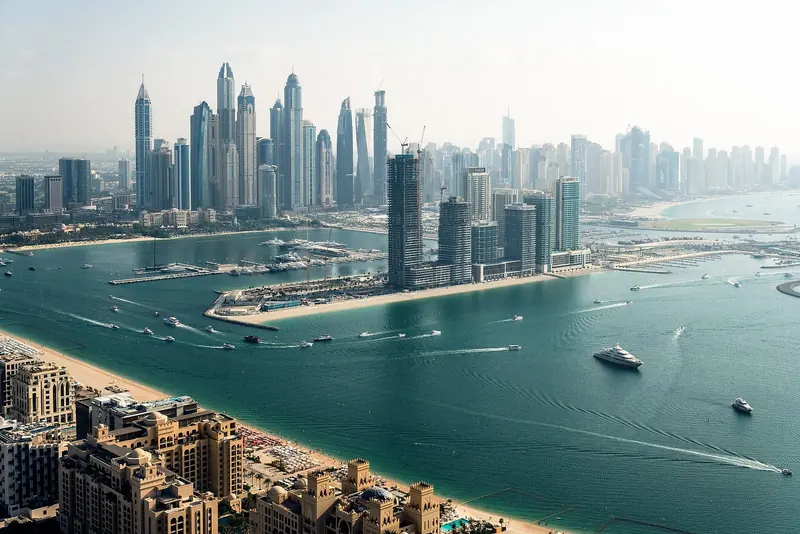
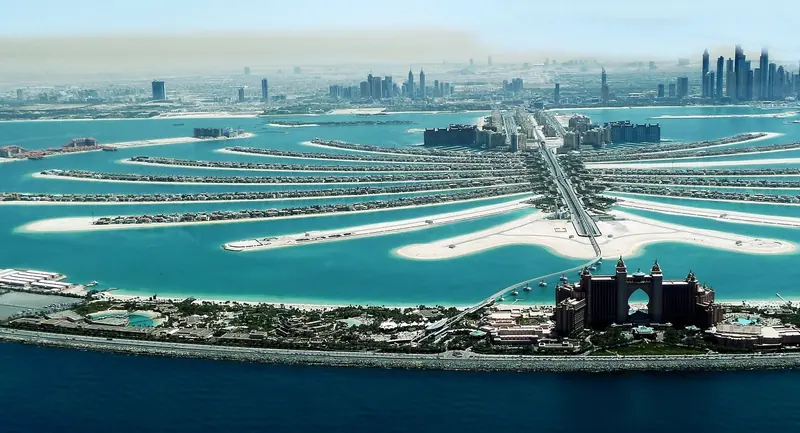
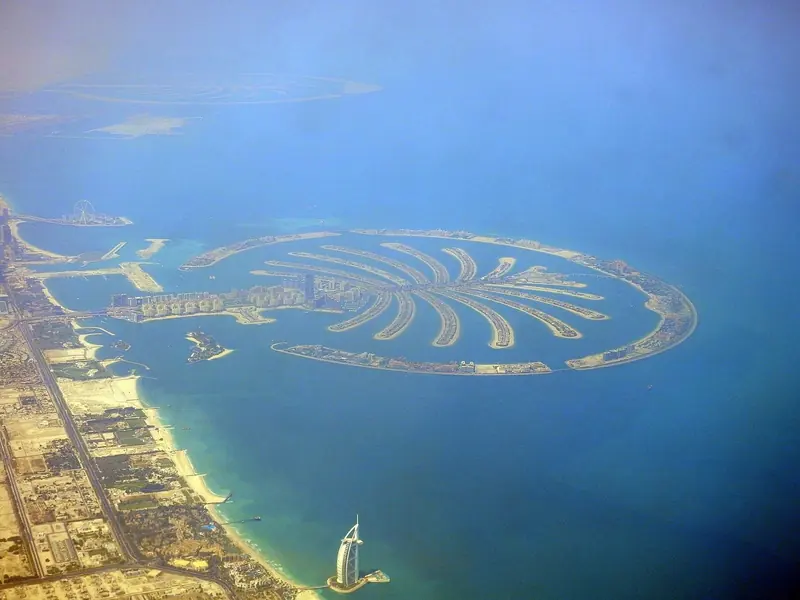
The southern Arabian Gulf is shallow, warm and almost featureless. The natural coast from Abu Dhabi to Ras al Khaimah is low sand and sabkha, the water is rarely deeper than 30 or 40 metres, and there is no archipelago, no fjord and no headland to anchor behind. Everything a yacht uses here was built: Dubai Marina's canal district, the Palm Jumeirah, Bluewaters, Dubai Harbour, the World Islands, and Yas and Saadiyat down in Abu Dhabi.
That produces a very particular kind of yachting. The distances are short, Dubai to Abu Dhabi is about 75 nautical miles by sea, the shelter is engineered rather than natural, and the interest is the city rather than the coast. It is closer to Monaco than to the Cyclades in character, without the mountains behind it. An owner who wants to swim off the transom in an empty bay is 60 miles away, off Musandam in Oman, and that is a different page.
The berthing, which is the real story
Dubai Harbour, between Bluewaters and the Palm, is the flagship and runs three marinas: a West Marina with over 560 berths for 12 to 40 metre yachts, an East Marina with more than 180 berths taking 12 to 160 metres, and a North Marina of 37 berths for superyachts up to 70 metres. Mina Rashid Marina, operated by P&O Marinas in the old commercial port, holds 424 berths for craft to 80 metres plus seven for superyachts longer than that, with a superyacht basin able to take up to 60 large yachts.
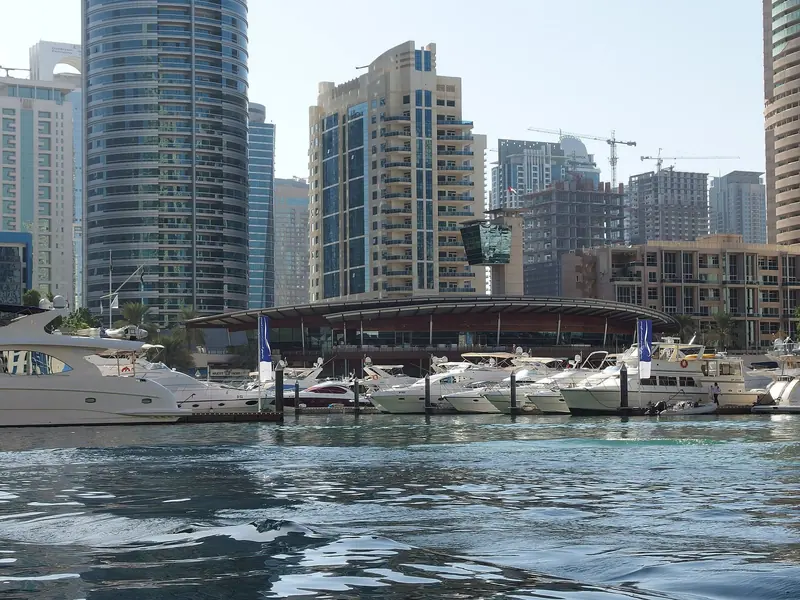
Emaar's Rashid Yachts and Marina, the residential development built around the same historic port, adds a full service marina with more than 600 berths for vessels from 10 metres to over 100. Dubai Marina itself, the original canal, is the busiest and the most social and takes smaller boats. Between them these give the emirate a range of berthing that no Mediterranean city can match on capacity, and almost all of it has been built since 2010.
Berths from ten metres to over a hundred, three marina complexes built since 2010, and one permit for two emirates from January 2026.
The 2026 permit change
From January 2026 a unified inter emirate permit system applies to foreign flagged yachts cruising between Abu Dhabi and Dubai, removing the need for repeated approvals and separate entry and exit formalities each time a boat crosses the boundary between the two emirates. This sounds administrative and it is not. Until now the UAE's federal structure meant a yacht moving 75 miles down its own coast dealt with two separate regulatory processes, which was the single most common complaint from visiting captains.
It sits alongside a wider push to make the UAE a base rather than a stop. Charter operation still requires a licensed company, and the cost of establishing one is quoted from around AED 4,888 to AED 35,000 or more depending on jurisdiction and visa requirements, with a typical timeline of five to fifteen working days. The regulatory direction is clearly towards simplification, and an owner should check the position at the time rather than working from a captain's experience of two seasons ago.
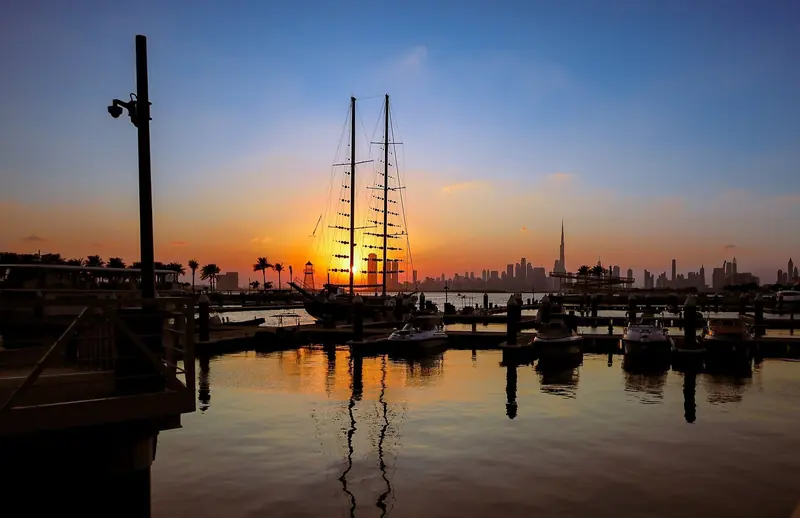
The season runs the other way round
The Gulf inverts the Mediterranean calendar. The season is October to May. Summer here is not merely hot, it is unusable: air temperatures over 45 degrees, humidity that makes the shade irrelevant, and sea temperatures that reach the mid thirties, which is warmer than a swimming pool and does nothing for the air conditioning plant. Boats that stay through the summer stay on shore power with the crew ashore.
The winter is genuinely excellent. December to March gives 24 to 28 degrees, low humidity, flat water most days and a sea temperature around 21 to 23 degrees. The wind to know is the shamal, a north westerly that blows down the length of the Gulf, which can reach 25 to 35 knots for two or three days and raises a short steep sea in shallow water. It also carries dust, and a strong shamal reduces visibility and coats everything on deck in fine sand.
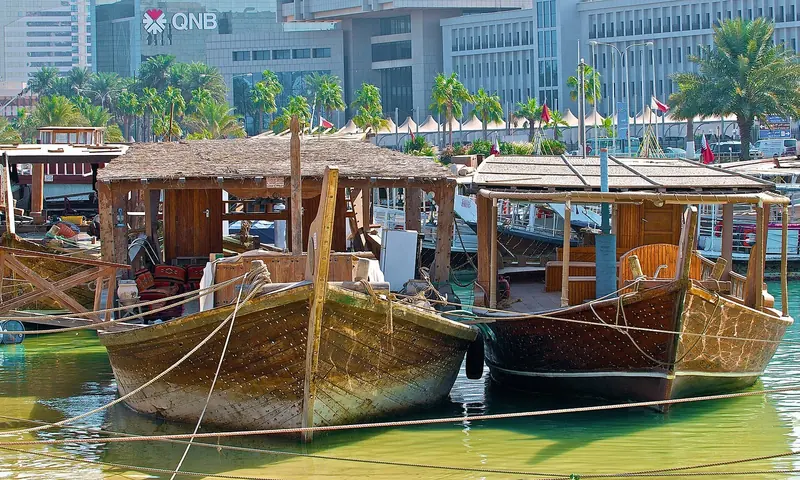
What a yacht actually does here
The pattern is city based. The boat lies at Dubai Harbour or Mina Rashid, guests use it as a floating suite with the restaurants, hotels and shopping of one of the world's most concentrated luxury markets a few minutes away, and the day trips are short: out past the Palm and the World Islands, down to the Burj Al Arab, an afternoon anchored off the breakwater with the tenders and the toys. It is a display and hospitality ground rather than a passage making one.
For a longer cruise the boat goes east. Musandam, the Omani enclave at the Strait of Hormuz, is about 60 to 80 miles from Dubai and gives the fjords and empty anchorages the Gulf lacks entirely. Abu Dhabi is 75 miles south with Yas Marina and the Saadiyat cultural district. Qatar and Bahrain are 200 and 250 miles up the Gulf. Each of those crossings involves a separate country and its own clearance, which is why the 2026 Dubai to Abu Dhabi simplification matters.
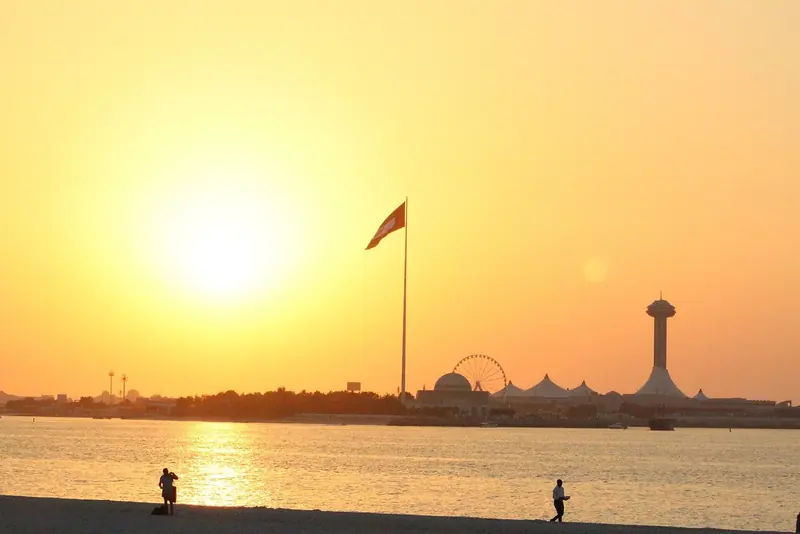
Rules, custom and the guest brief
The UAE is a comfortable place for a visiting yacht and there are conventions worth briefing. Alcohol is served in licensed hotels, restaurants and clubs and is available aboard, but public drunkenness is treated seriously. Dress ashore is relaxed in the tourist districts and modest in the older parts of the city and in government buildings. Photography of people, particularly women, and of government and military installations is a genuine sensitivity rather than a formality.
Ramadan changes the rhythm of the whole city for a month and it moves about eleven days earlier each year, falling in February and March in 2026 and earlier again in 2027, which puts it in the middle of the best cruising weather. Restaurants adjust their hours, entertainment programmes thin out and the pace ashore changes. None of it stops a yacht cruising, and guests who arrive expecting the ordinary schedule will find a quieter city than the brochures show.
The industry that has grown around it
Dubai is a builder as well as a berth. The emirate hosts a substantial domestic boatbuilding industry and one of the significant international boat shows, held at Dubai Harbour, which draws the regional brokerage and charter trade into one week. The service trade has developed with it: agents, provisioners, crew agencies and technical contractors are now established in a way they were not a decade ago, and the labour costs are low by European standards.
Where the Gulf is still thin is heavy refit. There is capacity, and it is not the concentration of Barcelona, La Spezia or Palma, so a major project usually means sending the boat west or to the yards in Asia. For routine maintenance, paint work and systems, Dubai now does the job. That change is what has allowed owners to keep a boat in the region year round rather than shipping it in for a season.
Getting guests in
Dubai International is one of the busiest airports in the world for international passengers and connects to essentially everywhere, with Al Maktoum to the south handling private aviation and a growing share of traffic. Abu Dhabi is an hour and a half by road. For an owner the practical consequence is that a Gulf berth is the easiest in this directory to reach from Asia, Africa and India, and no harder from Europe than the Mediterranean is in winter.
Visas for most nationalities are issued on arrival or in advance without difficulty, English is the working language of the marine trade, and the currency is pegged to the United States dollar, which removes the exchange risk that a Mediterranean season carries. Transfers within Dubai are short and the roads are good, so a guest can land, clear and be aboard within an hour of the aircraft door opening.
The honest downside, and what is not published
There is nowhere natural to go. No islands, no coves, no protected water that was not built, and a coastline that is flat sand for 200 miles. The summer removes half the year. The water is shallow enough that a shamal makes it unpleasant quickly. And the whole proposition depends on the city being what the guests came for, because the sea here is a setting rather than a destination.
Checked in August 2026, none of Dubai Harbour, Mina Rashid Marina or Rashid Yachts and Marina publishes a superyacht rate card, and none publishes a fuel price, so a season is priced by quotation through an agent. The berth counts and size ranges are published in detail and the tariffs are not. And nothing published sets out, for a foreign flagged private yacht, what the new unified permit actually requires in documents at the counter, which is the question a captain needs answered.
En tierra, accesos y reservas
| Getting there | Dubai International is among the busiest airports in the world for international passengers and connects to essentially everywhere, while Al Maktoum to the south handles private aviation. Abu Dhabi is an hour and a half by road. Visas are issued on arrival or in advance without difficulty for most nationalities, English is the working language of the marine trade, and the dirham is pegged to the United States dollar. A guest can land and be aboard within an hour. |
|---|---|
| Where the boat berths | Dubai Harbour runs three marinas: West with over 560 berths for 12 to 40 metres, East with more than 180 berths taking 12 to 160 metres, and North with 37 superyacht berths to 70 metres. Mina Rashid Marina, operated by P&O Marinas in the old commercial port, has 424 berths to 80 metres plus seven above that, with a superyacht basin taking up to 60 large yachts. Rashid Yachts and Marina adds more than 600 berths from 10 metres to over 100. Dubai Marina itself is the social canal and takes smaller boats. |
| The permit position from January 2026 | A unified inter emirate permit system applies from January 2026 to foreign flagged yachts cruising between Abu Dhabi and Dubai, removing the repeated approvals and the separate entry and exit formalities that previously applied each time a yacht crossed between the two emirates. Chartering still requires a licensed UAE company, quoted from about AED 4,888 to AED 35,000 or more depending on jurisdiction and visas, in five to fifteen working days. Confirm the documentary requirements with an agent rather than relying on a previous season's practice. |
| When to be here | October to May, with December to March the best of it at 24 to 28 degrees, low humidity and flat water on most days, and a sea temperature of about 21 to 23 degrees. Summer is not a shoulder season, it is unusable: air over 45 degrees, extreme humidity and sea temperatures in the mid thirties that undermine the air conditioning plant. Boats that stay through the summer lie on shore power with the crew working ashore. |
| The wind to plan around | The shamal blows from the north west down the length of the Gulf and can reach 25 to 35 knots for two or three days at a time. In water this shallow it raises a short steep sea quickly, which is uncomfortable rather than dangerous but ends a day's cruising. It also carries dust, so a strong shamal cuts visibility and leaves fine sand over every surface on deck. Build the guest programme so that a shamal day is a city day. |
| What a day on the water looks like | The pattern is city based: the boat lies at Dubai Harbour or Mina Rashid, guests use it as a floating suite with the restaurants and hotels minutes away, and the cruising is short, out past the Palm and the World Islands, down to the Burj Al Arab and an afternoon at anchor off the breakwater with the tenders out. For a real anchorage the boat runs 60 to 80 miles east to Musandam in Oman, which is a separate country and its own clearance. |
| Custom, and the guest brief | Alcohol is served in licensed hotels, restaurants and clubs and is available aboard, and public drunkenness is treated seriously. Dress is relaxed in the tourist districts and modest in the older parts of the city and in government buildings. Photographing people, particularly women, and any government or military installation is a genuine sensitivity. Ramadan moves about eleven days earlier each year, fell in February and March in 2026 and will fall earlier again in 2027, which puts it inside the best cruising weather and changes the rhythm ashore for a month. |
| Support and refit | Agents, provisioners, crew agencies and technical contractors are established in Dubai in a way they were not a decade ago, and labour costs are low by European standards, so routine maintenance, paint and systems work can be done here properly. Heavy refit is the gap: the region does not have the concentration of Barcelona, La Spezia or Palma, so a major project still means sending the boat west or to the Asian yards. The regional boat show at Dubai Harbour is the week to see the whole trade in one place. |
| What is NOT published | Checked in August 2026, none of Dubai Harbour, Mina Rashid Marina or Rashid Yachts and Marina publishes a superyacht rate card, and none publishes a fuel price, so a season is priced by quotation through an agent. Berth counts and size ranges are published in unusual detail and tariffs are not. And nothing published sets out what the new unified inter emirate permit requires in documents at the counter for a foreign flagged private yacht, which is the question a captain actually needs answered. |
Lo que cuentan armadores y tripulaciones
The permit change is the first structural fix to a long standing complaint
From January 2026 foreign flagged yachts cruising between Abu Dhabi and Dubai come under a unified inter emirate permit system that removes the need for repeated approvals and for separate entry and exit formalities when moving between the two emirates. Until then, the federal structure meant a yacht travelling 75 miles along its own coast dealt with two regulatory processes, which visiting captains had consistently identified as the most obstructive feature of a UAE season.
UAE maritime authorities, reported by YachtCharterFleet and Travel And Tour WorldMina Rashid is the largest single concentration of superyacht berthing in the region
P&O Marinas describes Mina Rashid Marina as offering 424 berths for craft up to 80 metres with a further seven berths for superyachts longer than 80 metres, and a superyacht basin able to take up to 60 large yachts, with configurations that include berthing alongside for vessels well beyond 100 metres. It sits inside the historic commercial port rather than in a resort district, which is why it can offer that scale at all.
P&O Marinas and DockwalkDubai Harbour is three marinas rather than one
The complex between Bluewaters and the Palm comprises a West Marina with over 560 berths for yachts of 12 to 40 metres, an East Marina with more than 180 berths taking 12 to 160 metres, and a North Marina of 37 berths for superyachts up to 70 metres. Emaar's Rashid Yachts and Marina adds a full service marina of more than 600 berths for vessels from 10 metres to over 100, built around the same historic port basin.
Dubai Harbour and EmaarSetting up to charter is a company formation exercise
Operating charters in the UAE requires a licensed company, and advisers quote formation costs from about AED 4,888 to AED 35,000 or more depending on the jurisdiction chosen and the visa requirements attached, with standard routes taking five to fifteen working days. That is a materially lighter process than the Greek or Spanish charter licence regimes, and it is a separate question from the cruising permit.
Najoom Corporate ServicesThe capacity is published and the price is not
Checked in August 2026, none of Dubai Harbour, Mina Rashid Marina or Rashid Yachts and Marina publishes a superyacht rate card, and none publishes a fuel price, so a season in the emirate is priced entirely by quotation through an agent. No independent published owner or captain account of superyacht service standards at the Dubai marinas could be found, and no public document sets out the documentary requirements of the new unified permit for a private yacht.
Yotters desk, checked August 2026
Lo bueno y lo que conviene vigilar
Puntos fuertes
- Berthing at any size, and plenty of itDubai Harbour's three marinas, Mina Rashid's 424 berths and superyacht basin for up to 60 large yachts, and Rashid Yachts and Marina's 600 plus berths from 10 to over 100 metres.
- One permit for two emirates from January 2026The unified inter emirate system removes the repeated approvals and separate entry and exit formalities that used to apply every time a foreign flagged yacht moved between Dubai and Abu Dhabi.
- A winter season while Europe is shutDecember to March at 24 to 28 degrees with low humidity and flat water, and a sea temperature of 21 to 23 degrees, in a city that works all year.
- The easiest airport in this directoryDubai International connects to essentially everywhere, Al Maktoum handles private aviation, visas are simple and the currency is pegged to the dollar.
- A service trade that now existsAgents, provisioners, crew agencies and technical contractors are established, labour costs are low by European standards, and routine work no longer means shipping the boat away.
A tener en cuenta
- There is nowhere natural to goNo islands, no coves and no protected water that was not built. Two hundred miles of flat sand coast, and the nearest real anchorage is in another country.
- Half the year is unusableSummer air over 45 degrees, extreme humidity and a sea in the mid thirties. Boats stay on shore power and the crew works ashore.
- Shallow water and the shamalTwenty five to 35 knots down the length of the Gulf for two or three days, raising a short steep sea in shallow water and coating the boat in dust.
- No heavy refit capacityRoutine maintenance and paint are fine. A major project still means Europe or the Asian yards, with a delivery voyage at each end.
- Nothing is publishedNo rate card and no fuel price from any of the three marina complexes, and no public statement of what the new unified permit requires in documents.
Para quién es: An owner whose guests come for a city rather than a coastline, who wants a warm winter base with berthing at any size and an airport that connects to everything, and who will take the boat to Musandam when he actually wants an anchorage.