French Polynesia
| Región | cinco archipiélagos en el Pacífico Sur, 121 islas y atolones repartidos por más de 2.000 km |
|---|---|
| Escala | 3.521 kilómetros cuadrados de tierra, con una población de 278.786 habitantes en 2022 y alrededor del 69 por ciento de ella en Tahití |
| Temporada | estación seca de mayo a octubre aproximadamente, estación húmeda y riesgo de ciclón de noviembre a abril |
| Bora Bora | a 125 millas náuticas al noroeste de Papeete, con una sola entrada al océano por el paso de Teavanui, en el lado oeste |
| Fakarava | atolón de 60 km por 21 km con una laguna de 1.112 kilómetros cuadrados, la segunda mayor de la Polinesia Francesa |
| Paso norte de Fakarava | 1,37 km de ancho y el mayor del territorio |
| Paso sur de Fakarava | protegido desde 2008, alberga unos 700 tiburones de arrecife grises |
| Marquesas | a unos 1.370 km al noreste de Tahití, sin arrecifes de franja, inscritas por la UNESCO en 2024 como Te Henua Enata |
| Puertos de entrada | Papeete y Moorea, Nuku Hiva, Hiva Oa y Ua Pou, Bora Bora, Raiatea y Huahine, Rangiroa y Fakarava, más las Australes y las Gambier |
| Entrada | formulario de llegada por internet con al menos 48 horas de antelación, con una aprobación que según lo publicado tarda de uno a tres días |
| Bioseguridad | cuestionario por internet con tasa e inspección a bordo antes del despacho de salida |
| Acceso | Faa'a International, en Papeete, es la única puerta de largo radio, con pistas domésticas en Bora Bora, Raiatea, Rangiroa, Fakarava y cuatro en las Marquesas |
| Temporary admission | 24 consecutive months for a foreign pleasure vessel, extended to 36 consecutive months for a hull of 24 m or more, with a further three months possible for force majeure |
| End of the clock | the vessel must leave French Polynesian waters or be cleared through customs, and the regime restarts only on proof of leaving the territory and entering a foreign one, with a reported minimum of six months outside |
| Charter | permitted for foreign-flagged vessels under a licence de charter nautique from the Direction Polynesienne des Affaires Maritimes, granted by presidential decree after an advisory commission, taking several weeks with a provisional licence available |
| Charter conditions | entry in the commercial register, qualifications, insurance and guarantees, a description of the activity and a level three criminal record certificate |
| Cabotage | no bar on carrying paying guests between Polynesian islands once the charter licence is held |
| Tax | French Polynesia is outside the EU VAT territory and levies its own TVA at 5, 13 and 16 per cent, with a 1 per cent rate from 1 July 2026 for operations benefiting the remote archipelagos |
| Fuel | the duty-free diesel benefit for private pleasure vessels under temporary admission was announced for suppression at the Council of Ministers of 10 June 2026 |
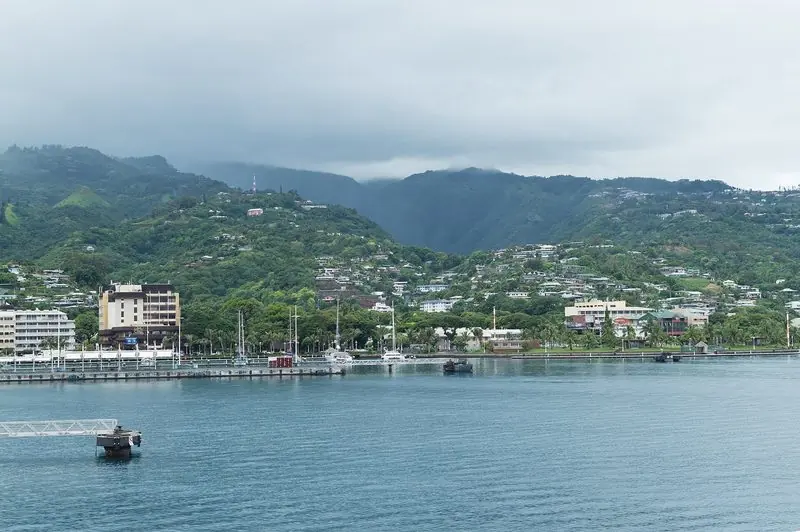
| Lifting | the Papeete port slipway is rated at 800 tonnes, 60 m and 4.5 m draught, and Technimarine runs travel lifts of 300 and 75 tonnes taking hulls to about 40 m |
| Berthing | Marina Taina's published tariff documents date from 1 March 2024 and its rates are not public, checked 28 July 2026 |
La escala del sitio
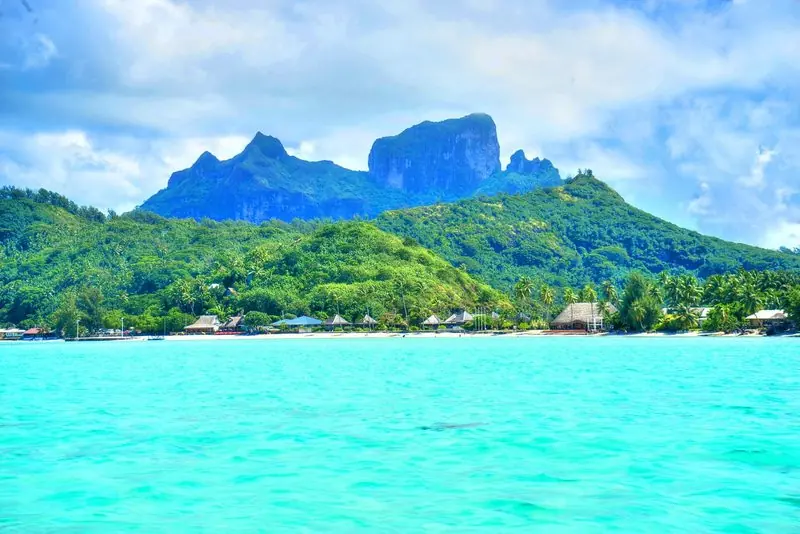
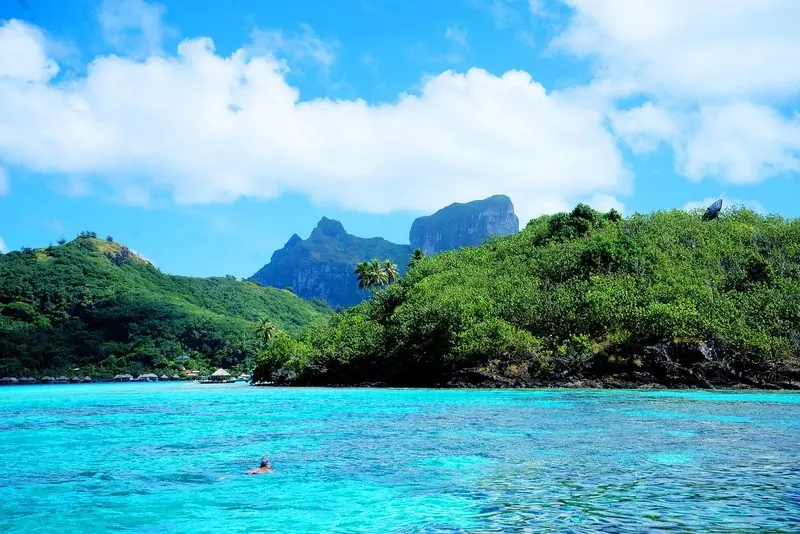
La Polinesia Francesa tiene el tamaño de Europa con la superficie de tierra de una comarca pequeña. Cinco archipiélagos, 121 islas y atolones, y travesías entre ellos que se miden en días. Tahití concentra alrededor del 69 por ciento de la población y todo lo demás está poco poblado. El monte Orohena, en Tahití, se eleva a 2.241 metros, y las islas volcánicas en general son escarpadas, verdes y espectaculares, mientras que los atolones son anillos planos de coral sin nada encima por encima de la altura de una palmera.
La consecuencia para el armador es la planificación. Esta no es una costa por la que un yate deambula a ver qué aparece. Las travesías se comprometen, las ventanas de tiempo importan y un cambio de idea puede costar dos días. La recompensa es que los fondeaderos, una vez alcanzados, son tan buenos como cualquiera del planeta y no hay nadie en ellos.
Tres zonas de navegación distintas
Las islas de la Sociedad son el tercio accesible: catorce islas en dos grupos, con Tahití, Moorea y Tetiaroa a barlovento y Huahine, Raiatea, Taha'a y Bora Bora a sotavento. Moorea está a unas 12 millas náuticas de Papeete. Bora Bora, a 125. Raiatea y Taha'a comparten una sola laguna, lo que las convierte en la navegación más fácil y más protegida del territorio y en la razón de que la flota de charter tenga allí su base.
Los Tuamotu, un par de cientos de millas al noreste de Tahití, son los atolones. Anillos de coral con lagunas dentro, a los que se entra por pasos, y el buceo de aquí es el sentido de todo el viaje. Las Marquesas están unos 1.370 km más al noreste, islas volcánicas altas sin arrecife de franja, lo que significa que sus fondeaderos reciben el mar de fondo del océano de forma directa. La UNESCO inscribió las Marquesas en 2024 como Te Henua Enata. Son magníficas y son incómodas.
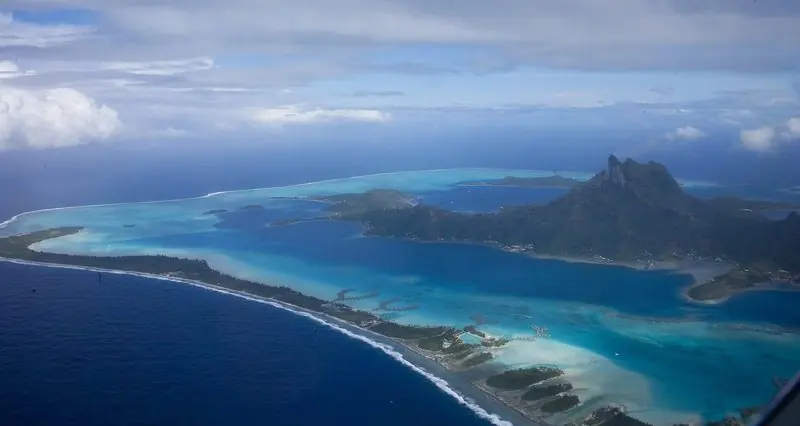
La mejor navegación de laguna del planeta, abastecida por una única pista en Papeete.
Una semana, y tres semanas
Una semana significa las Sociedad de sotavento y nada más. Los invitados vuelan a Bora Bora o a Raiatea, el barco trabaja la laguna compartida de Raiatea y Taha'a, cruza a Bora Bora y Huahine, y todos vuelan de vuelta a casa. Esa es una semana genuinamente buena de agua plana de laguna, y es lo que hace de verdad la mayoría de los armadores aquí.
Tres semanas compran los Tuamotu. Papeete o Moorea, al noreste hasta Rangiroa y Fakarava para una semana entre los pasos, y de vuelta por las Sociedad. Añadir las Marquesas lo convierte en un programa de seis semanas con dos travesías oceánicas de varios días cada una. Un barco que ha cruzado el Pacífico llega con las Marquesas ya hechas, que es la forma habitual en la que alguien las ve.
Los pasos, y dónde cabe un barco de 50 metros
A cada atolón se entra por un paso, y el paso es el problema técnico de esta zona de navegación. El agua se amontona dentro de la laguna por encima del arrecife y sale por uno o dos huecos, así que las corrientes van duras y levantan olas estacionarias contra un mar de fondo contrario. Los tránsitos se programan en la estoa. El paso Garuae de Fakarava, con 1,37 km de ancho, es el más fácil del territorio y el mayor. Otros miden unos pocos cientos de metros con coral a los dos lados, y algunos sencillamente no los intenta un yate grande.
Por dentro, las lagunas son someras, con cabezas de coral y en general mal cartografiadas, así que un barco de 50 metros se mueve con navegación a ojo, un vigía a proa y buena luz por la espalda. Bora Bora tiene una única entrada al océano por el paso de Teavanui, en el lado oeste, que admite cargueros y cruceros y no presenta dificultad. Tetiaroa no tiene ningún paso navegable, así que un yate queda fuera y entra en tender. El amarre apenas existe: Marina Taina, cerca de Papeete, y el muelle comercial de Papeete previo acuerdo, más Apooiti en Raiatea. Todo lo demás es fondeo o boya.
Los fondeaderos y las inmersiones que justifican la travesía
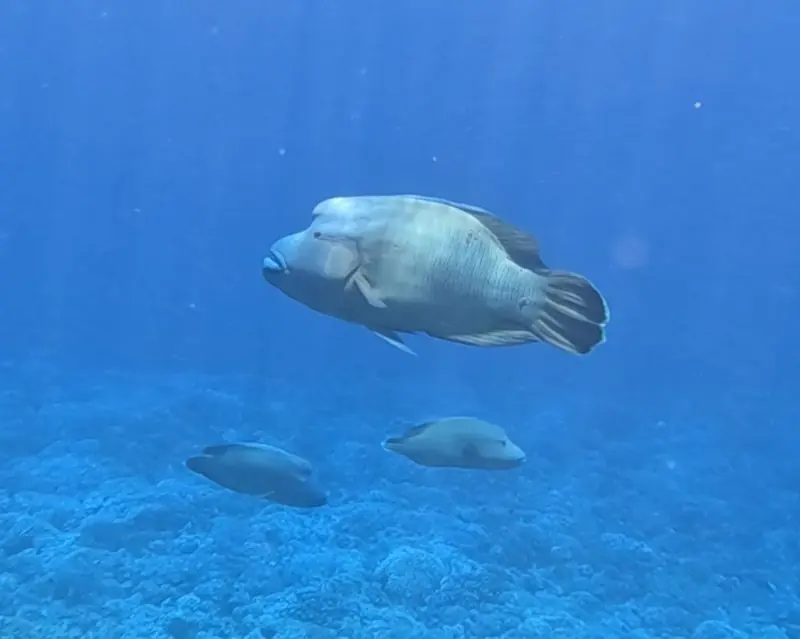
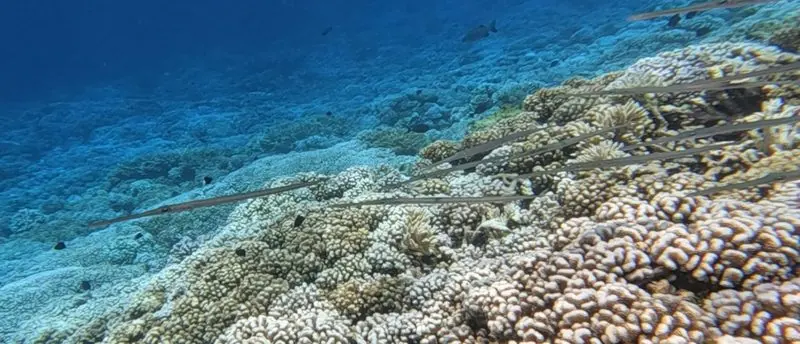
Fakarava es aquel al que vuelve la gente. El paso sur de Tumakohua está protegido desde 2008 y alberga unos 700 tiburones de arrecife grises, que se juntan en el paso formando una pared que los buceadores tienden a contar en vez de describir. El atolón entero es Reserva de la Biosfera de la UNESCO. El paso de Tiputa, en Rangiroa, tiene delfines trabajando la marea y es la otra inmersión obligada. Ninguno de los dos es sitio para cruzar la corriente con un tender a la ligera.
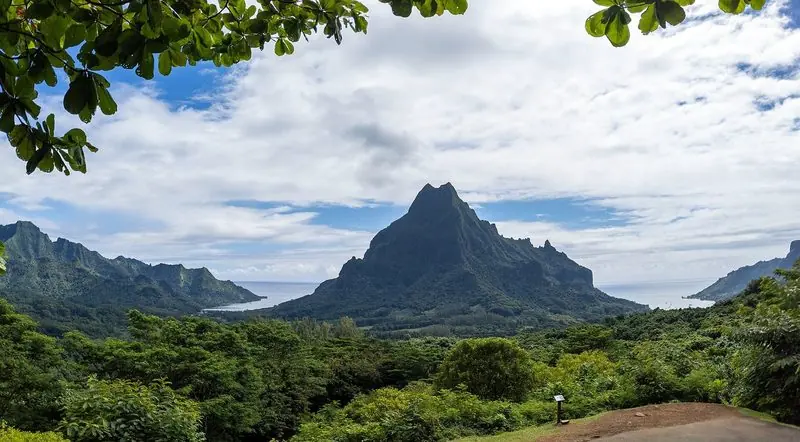
En las Sociedad los fondeaderos son más amables. El jardín de coral de Taha'a, los fondeaderos de motu frente a Raiatea, la bahía de Opunohu en Moorea bajo las agujas volcánicas, y la laguna de Bora Bora con los resorts sobre el motu. Tetiaroa alberga The Brando en un atolón privado y es la escala discreta para el armador que quiera una. En las Marquesas, Taiohae en Nuku Hiva y las bahías de Fatu Hiva son los fondeaderos, y todos ellos balancean.
El tiempo y la temporada
La estación seca va de mayo a octubre aproximadamente, con los alisios del sureste estables, menos humedad y el agua clara. Esa es la temporada de navegación y es cuando está aquí la flota. La estación húmeda, de noviembre a abril, trae lluvia fuerte, chubascos y el riesgo de ciclón, y los aseguradores lo tarifan en consecuencia. Muy pocos yates grandes se quedan durante ella.
Incluso en la estación seca, los alisios significan que las travesías al noreste hacia los Tuamotu y las Marquesas se hacen contra el viento y contra la corriente, que es la razón por la que los barcos que cruzan desde América llegan de popa y se van hacia el oeste. El mar de fondo del océano austral llega a los pasos orientados al sur durante el invierno austral y puede cerrarlos. Las yubartas están en estas aguas durante los mismos meses, algo que la mayoría de los invitados valora por encima del buceo.
Llegar, y traer a los invitados
Faa'a International, en Papeete, es el único aeropuerto de largo radio del territorio. Los vuelos vienen de Los Ángeles, de París vía Los Ángeles, de Auckland, de Tokio y de un puñado de puntos más, y todo movimiento de invitados se embudona por ahí. Desde Papeete, los servicios domésticos llegan a Bora Bora, Raiatea, Huahine, Rangiroa, Fakarava y las cuatro pistas marquesanas, en aviones pequeños con límites de equipaje reales.
El efecto práctico es que un invitado que llegue desde Europa se enfrenta a casi un día entero en el aire y a una conexión doméstica al final. Los reactores privados llegan a Papeete pero no a la mayoría de los campos domésticos. Por eso los armadores planifican aquí bloques largos de invitados. Nadie viene por cuatro noches.
En tierra, y qué hay que hacer
La posición honesta es que los invitados vienen por el agua. En tierra, Bora Bora y Taha'a tienen los resorts sobre el agua y sus restaurantes, Moorea tiene los valles de piña y el mirador del Belvedere sobre Opunohu, y Papeete tiene una ciudad de trabajo, un mercado y las roulottes, los food trucks del paseo marítimo, que son mejores de lo que suenan. Raiatea tiene el marae de Taputapuatea, un enclave religioso polinesio de primer orden y Patrimonio Mundial.
La comida tiene influencia francesa y es cara porque casi todo se importa. El poisson cru, el atún local y el mahi mahi son las excepciones y son excelentes. La vida nocturna son los bares de resort y alguna actuación de danza. Lo que llena los días de verdad es el buceo, el kitesurf, cruzar una laguna en paddle a primera hora y el hecho de que el agua está a 27 grados y clara hasta 40 metros.
Papeles, servicio y la pega honesta
El despacho es francés, está digitalizado y se hace por adelantado. Los yates presentan un formulario de llegada por internet al menos 48 horas antes de llegar, y los navegantes informan de que la aprobación tarda de uno a tres días. Los puertos de entrada están repartidos con sentido por los archipiélagos, de Nuku Hiva en el norte a Mangareva en el extremo sureste. Antes de salir hacen falta un cuestionario de bioseguridad con su tasa y una inspección a bordo. La operación de charter y la situación fiscal de un yate de pabellón extranjero aquí son cuestiones de especialista y cambian, así que el armador necesita un agente local y asesoramiento actualizado.
La pega es el suministro. Hay combustible en Papeete, en Raiatea y en unos pocos puntos exteriores, a precios que reflejan la distancia, y un suministro grande hay que gestionarlo por adelantado. Los recambios vienen de Francia o de Estados Unidos y tardan semanas. No hay en el territorio ningún astillero de refit que admita un yate de 50 metros, así que una avería seria significa una travesía de miles de millas o un especialista traído en avión. El aprovisionamiento al nivel de invitados significa traerlo por aire. El armador debería tratar el barco como autosuficiente durante toda la temporada, porque funcionalmente lo es.
Temporary admission, and the clock that decides the programme
This is the number that shapes a Pacific itinerary and it is published. A foreign pleasure vessel may stay in French Polynesia under temporary admission for a maximum of 24 consecutive months, and for a hull of 24 m or more that maximum is 36 consecutive months. Force majeure can extend it by three further months. At the end of it there are only two options, and the customs administration states them plainly: leave French Polynesian waters with the vessel, or clear her through customs, which means importing her and paying what importation costs. Renewal is not automatic and is not a paperwork exercise. The regime restarts only on proof that the vessel left the territory and entered a foreign one, and the working requirement reported by local agents is a minimum of six months outside French Polynesian waters before the clock begins again.
Two consequences follow for an owner. The first is that a 50 m yacht gets three years here, which is long enough to run a genuine Pacific programme out of Papeete rather than a single season, and long enough that the boat can be left in the territory between guest blocks. The second is that the six-month exit is a real voyage in this part of the ocean, not a run across a border, so the decision to import or to leave has to be taken a year before the clock expires and not a month before. Arrival itself is now a single online declaration filed at least 48 hours ahead, with approval reported at one to three days, and a foreign-flagged vessel operating under a charter licence is admitted temporarily without a bond.
Charter: what a foreign flag may actually do here
A foreign-flagged yacht may charter in French Polynesia, and the answer is a licence rather than a flag change. The instrument is the licence de charter nautique, administered by the Direction Polynesienne des Affaires Maritimes, and the governing text applies in terms to francised vessels and to vessels under a foreign flag alike. The conditions are commercial rather than nautical: the owner or operator must be entered in the commercial register, hold the required qualifications, carry the required insurance and guarantees, produce a description of the intended activity and a level three criminal record certificate. The licence is granted by decree of the President of French Polynesia after the advisory commission on charter navigation has been consulted, which takes several weeks, and a provisional licence can be issued while the file is pending. There is no cabotage bar of the American or Turkish kind once the licence is held, which is precisely why a charter fleet exists at Raiatea and why the Leeward Societies are the accessible week.
The tax position is its own jurisdiction and no EU rule reaches it. French Polynesia is outside the European Union VAT territory entirely and levies its own TVA at 5 per cent reduced, which covers passenger transport and hotel accommodation, 13 per cent intermediate and 16 per cent standard, with a new 1 per cent rate introduced from 1 July 2026 for operations benefiting the remote archipelagos, meaning the Tuamotus, the Marquesas, the Australs and the Gambiers. A charter that starts here is taxed here, on local rates, and none of the EU charter VAT structures an owner may have used in the Mediterranean apply or are needed. The classification of a nautical charter between the 5 and 13 per cent bands is the question worth putting to the licensed local operator in writing, because it moves the number by eight points on every booking.
Fuel, the yard, and what the season actually costs
The commercial sweetener here has been fuel, and it is being taken away. Temporary admission has carried duty-free fuel and duty-free spare parts in transit, arranged through a local broker, and it is a material part of why a long Pacific programme works out of Papeete. At the Council of Ministers of 10 June 2026 the government announced that the duty-free diesel benefit for private pleasure vessels under temporary admission is to be suppressed, as part of a hydrocarbon tax package reported at XPF 3.8 billion, on the stated ground of equity between users. An owner planning a 2026 to 2027 season should price fuel duty-paid and treat any remaining exemption as a bonus rather than a budget line, and should get the current position from the agent in writing before committing to a bunkering port.
The yard position is better than the territory's reputation. The port slipway at Papeete is rated at 800 tonnes, 60 m and 4.5 m of draught, and Technimarine at Papeete runs travel lifts of 300 and 75 tonnes taking hulls to about 40 m, with Raiatea Carenage covering the leeward islands. A 50 m yacht can therefore be taken out of the water in French Polynesia, which is not true in the Maldives or the Grenadines, but capacity to lift is not capacity to refit and the paint, joinery and systems trades are not there. Berthing is the number nobody publishes: Marina Taina's tariff documents date from 1 March 2024 and its rates are not reproduced publicly, checked on 28 July 2026. Set that against Marina di Porto Cervo's published 2026 tariff of EUR 3,698 a day in the band to 40 m from 1 to 20 August, about EUR 102,000 for the month, and the shape of a Polynesian season becomes clear. There is almost no berthing line at all. There is fuel that is about to cost more, air freight for everything, and a delivery measured in weeks.
En tierra, accesos y reservas
| Getting there | Faa'a International on Tahiti is the only long-haul gateway, and Marina Taina is about ten minutes from it by road. Everything else in the territory is reached by inter-island flight or by the boat itself. Guest changes are therefore built around Tahiti whether the yacht wants to be there or not, and a Marquesas or Gambier itinerary means either a long repositioning leg or an internal flight for the guests. |
|---|---|
| Arriving by sea | Authorised entry points cover the Marquesas, the Australs, the Tuamotu and Gambier groups, and the Society Islands in both the Windward and Leeward groups. Check-in is required immediately on arrival, not at leisure. The exception that catches people is Moorea: you cannot clear in there, it has to be Tahiti, which matters because Moorea is the obvious first stop for anyone arriving from the west. |
| The bond, and who has to post it | Every non-EU crew member and guest needs a repatriation guarantee. That is either cash lodged with a local bank equivalent to a one-way air ticket home, reported at roughly USD 1,700 per non-EU passport, or a bond letter from a registered local agent undertaking to cover repatriation, which is a paid service typically quoted around USD 300 to USD 400. EU nationals arriving by yacht do not post a bond. Short stays of up to 30 days can have it waived. On a yacht with a mixed crew this is a per-passport cost on every rotation, not a one-off on arrival. |
| Temporary admission | A foreign yacht may stay 24 months under temporary admission without paying import duty, which is among the longest windows available anywhere and materially longer than the 18 months the EU allows. It is the reason a Pacific programme can be based here rather than merely passing through. |
| Duty-free fuel | Duty-free fuel is obtainable on most islands, and the entitlement runs six months and is renewable after that. It is arranged through an agent rather than at the pump. In a territory where every litre has crossed an ocean, this is the difference between an affordable season and an unaffordable one. |
| Where a large yacht actually berths | Marina Taina at Punaauia is the territory's premier superyacht facility, offering limited stern-to dockage with controlling depths of 4 to 15 m. Above roughly 65 m the only suitable dock in Tahiti is Papeete Port, where fuel and water come from pipes on the quay. That is the whole of it. Outside Tahiti the yacht is at anchor or on a mooring, which shapes the itinerary far more than the weather does. |
| Parts, and what they cost to land | Nothing is stocked locally at superyacht scale, so spares are air-freighted and cleared by a customs broker. Broker fees run about XPF 10,000 to XPF 25,000 per shipment depending on the courier, on top of freight and duty. Build the lead time into a refit or a warranty job here; a part that is next-day in Antibes is a week away in Papeete. |
| What is not published | There is no public rate card for superyacht dockage at either Marina Taina or Papeete Port, and no published tariff for the agent packages that in practice are compulsory. Agents quote per call and per boat. An owner cannot cost a French Polynesian season from open sources; the honest planning method is to get two agent quotes and compare them against each other. |
Lo que cuentan armadores y tripulaciones
The duty-free fuel entitlement runs six months and is renewable, and it is arranged not found
The agent's own published account of its clearance service states that duty-free fuel can be obtained on most islands, that the entitlement is valid for six months and that it is renewable thereafter. This is the agent describing a service it sells, and it should be read as that rather than as an independent audit, but it is consistent across the agents working the territory.
Tahiti CrewClearing in without an agent is possible and is a different set of trade-offs
Published cruiser accounts set the do-it-yourself route against the agent route directly, and the recurring finding is that the agent exists to convert the bond into a letter and to unlock the fuel exemption. Owners who cleared independently report the process as workable but slower, and they pay the cash bond per non-EU passport instead of a letter fee.
Cruising WorldThe customs broker fee is small and the freight lead time is not
Broker charges for a parts shipment are quoted at XPF 10,000 to XPF 25,000 depending on courier. Crews consistently report that the fee is trivial next to the schedule cost: the constraint in French Polynesia is not the price of getting a part cleared but the number of days before it arrives.
Tahiti Crew
Lo bueno y lo que conviene vigilar
Puntos fuertes
- Twenty-four months of temporary admissionSix months longer than the EU allows, and long enough to base a yacht in the Pacific across two seasons without an import event. For an owner choosing between a Mediterranean and a Pacific programme this is the single most consequential number on the page.
- Duty-free fuel across most of the territorySix-month entitlement, renewable. In a place where fuel has been shipped thousands of miles, an exemption of this kind changes the arithmetic of a long-range programme rather than merely softening it.
- The cruising ground is the pointFive archipelagos across an area the size of western Europe, with the Tuamotu atolls and the Marquesas offering anchorages that receive a handful of yachts a year rather than a handful an hour. Nothing in the Mediterranean is comparable and that is precisely why owners come.
- Clear, published entry rulesThe authorised entry ports, the immediate check-in duty and the bond regime are all stated plainly, and EU nationals are exempt from the bond outright. The paperwork is heavy but it is knowable in advance, which is not true of every remote cruising ground.
A tener en cuenta
- The agent is not optionalBond letters, duty-free fuel, inter-island clearance and customs broking all run through a local agent. There is a do-it-yourself route, but it costs the fuel exemption and the bond waiver in practice, so the agent fee is better read as a fixed cost of the destination than as a service you can decline.
- The shore infrastructure is one marina and one quayMarina Taina takes a limited number of yachts stern-to at 4 to 15 m of depth, and anything above about 65 m has exactly one option in Tahiti. There is no second base, no alternative if the berth is taken, and no yard capability of Mediterranean type anywhere in the territory.
- Every non-EU passport is a recurring costThe repatriation bond attaches to people, not to the yacht, so a crew rotation with non-EU nationals repeats the cost and the paperwork each time. On a boat with a mixed nationality crew this is an administrative drag that owners consistently underestimate.
- You cannot clear in at the island you will arrive at firstMoorea is closed as an entry point and Tahiti is not, which forces an arrival routing that is not the natural one and puts the yacht into the territory's one congested area on day one.
- Nothing about the cost is publicNo dockage tariff, no published agent pricing. The figures that circulate for the bond and the broker fees come from agents and cruising guides rather than from an authority, and they should be re-quoted rather than relied upon.
Para quién es: Un armador dispuesto a comprometer una temporada entera y un barco autosuficiente, cuyos invitados quieren buceo y lagunas vacías y aceptan un vuelo largo para conseguirlo.