Ilha Grande & the Costa Verde
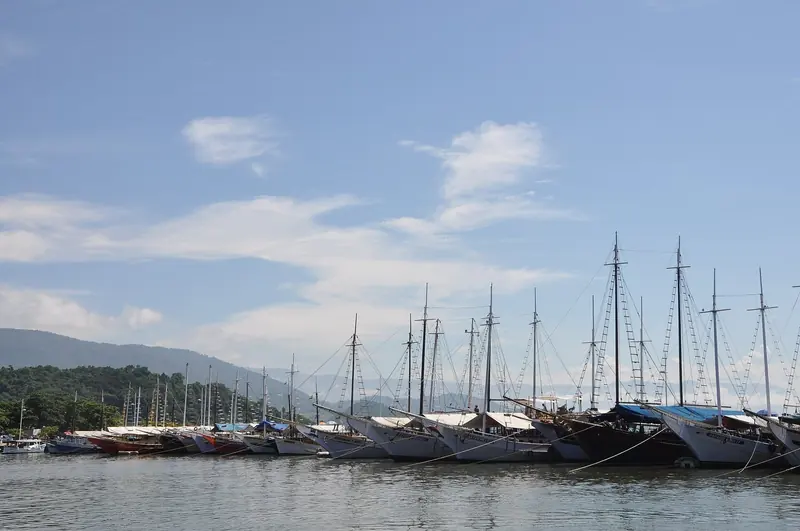
| Location | Baia da Ilha Grande, Angra dos Reis municipality, Rio de Janeiro state, Brazil, about 150 km SW of Rio de Janeiro |
|---|---|
| Ilha Grande | no motor vehicles anywhere on the island; single main settlement Vila do Abraao; 106 named beaches |
| History | former quarantine hospital, then the Instituto Penal Candido Mendes maximum-security prison, demolished by the state government in 1994 |
| UNESCO listing | Paraty and Ilha Grande - Culture and Biodiversity, inscribed 5 July 2019, combining Paraty's colonial centre with four Atlantic Forest protected areas |
| Main marinas, Angra dos Reis bay | Marina Verolme (full-service, near the city centre), Marina Bracuhy (3-5 m depth, haul-out and workshops), Marina Piratas (3-4 m, central and basic), Marina Porto Frade |
| Baia da Ilha Grande | commonly cited at more than 300 islands inside the bay |
| Clearance | three agencies in sequence, Policia Federal (immigration, 90-day tourist visa), Receita Federal (customs, online pre-clearance form, issues the TECAT temporary admission permit), Capitania dos Portos (navy); commonly takes about two days |
| TECAT temporary admission | yacht may remain duty-free in Brazil up to 180 days if not used commercially |
| Driest months | June (about 2 percent daily rain chance) and August (about 1 percent); wettest: January and February (about 37 percent each) |
| Best overall season for a yacht | June to November, opposite the Northern Hemisphere calendar and ahead of the December-February domestic tourism peak |
| Airports, Rio de Janeiro | Galeao (GIG) for intercontinental/large-jet arrivals, Santos Dumont (SDU) for downtown access, Jacarepagua (SBJR) as the main helicopter/light-aircraft base for the coast west of the city |
| Rio to Angra dos Reis | about 150-160 km by road (roughly 2 to 2.5 hours), under 30 minutes by fast helicopter |
A bay shaped by a prison nobody rebuilt
Ilha Grande sits inside the Baia da Ilha Grande, about 150 kilometres southwest of Rio de Janeiro and part of the municipality of Angra dos Reis. For most of the 20th century it was closed to casual visitors: first as a quarantine hospital for arriving immigrants, then as the site of the Instituto Penal Candido Mendes, a maximum-security prison that held Brazil's most dangerous offenders and became infamous for escape stories, including a drug lord who left by helicopter. The state government demolished the prison in 1994 after years of allegations of torture and overcrowding, and the ruins now hold a small museum near Dois Rios on the island's south side.
That closure is the reason the island looks the way it does today: no cars anywhere on Ilha Grande, a single village, Vila do Abraao, as the only real settlement, and 106 named beaches across the island, most reachable only by boat or on foot through Atlantic Forest trail. Paraty and Ilha Grande together were inscribed on the UNESCO World Heritage List on 5 July 2019 as a combined Culture and Biodiversity site, covering Paraty's 18th century colonial centre and four protected natural areas of the Atlantic Forest, one of the world's five key biodiversity hotspots, home to jaguar, white-lipped peccary and several primate species including the woolly spider monkey.
The marinas of Angra dos Reis
The working yachting infrastructure for the Costa Verde sits on the mainland side of the bay, in and around Angra dos Reis. Marina Verolme, a few minutes from the city centre, is generally rated the most modern and fully equipped facility in the bay, with fuel, water, a nautical shop, restaurants and taxi-boat service on site. Marina Bracuhy, further along the coast toward Paraty, is a sheltered basin holding 3 to 5 metres of depth with haul-out, workshops, chandlery, fuel dock, power, water and security, marketed on its position between Ilha Grande, Paraty and the hundreds of smaller islands scattered across the bay. Marina Piratas offers a central, more basic berth at 3 to 4 metres depth, and Marina Porto Frade rounds out the bay's main options.
None of these publish a superyacht tariff online; pricing for a large vessel is arranged directly, and an agent is the standard way to secure a berth, plan a Brazilian season and handle the paperwork below. What the bay does offer, uniquely among Brazil's cruising grounds, is a genuine concentration of protected, deep, island-studded water: locals count well over 300 islands inside the Baia da Ilha Grande, which is the reason the area is cruised at all rather than simply visited by day boat from Rio.
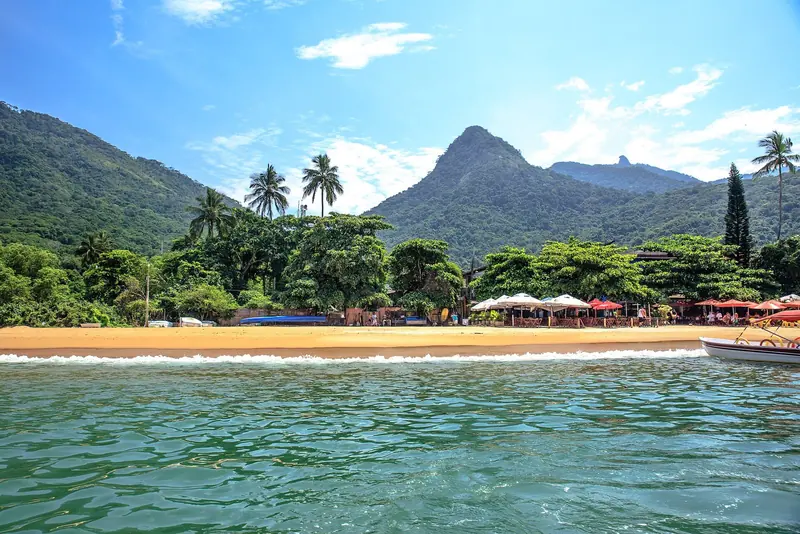
The reason Ilha Grande has 106 undeveloped beaches two hours from Rio is that it spent most of the last century as a prison island, not a resort.
Clearing into Brazil
Clearance for a foreign yacht runs through three agencies in sequence: the Policia Federal for immigration, which issues a free individual tourist visa typically valid for 90 days; the Receita Federal for customs, which requires an online form filed in advance and issues the Termo de Concessao de Admissao Temporaria (TECAT), the document that allows the vessel to remain in Brazil duty-free, provided it is not used commercially, for up to 180 days; and the Capitania dos Portos, the navy authority responsible for maritime security along the coast. The full process is commonly cited as taking about two days to complete.
Angra dos Reis and the marinas around it are a recognised, agent-supported clearance point on the Brazilian coast, alongside better-known northern entry points like Cabedelo. A first-time captain should engage a local agent before arrival rather than attempt the three-agency sequence unassisted; the paperwork, not the sailing, is the part of a Brazilian season most likely to go wrong without local help.
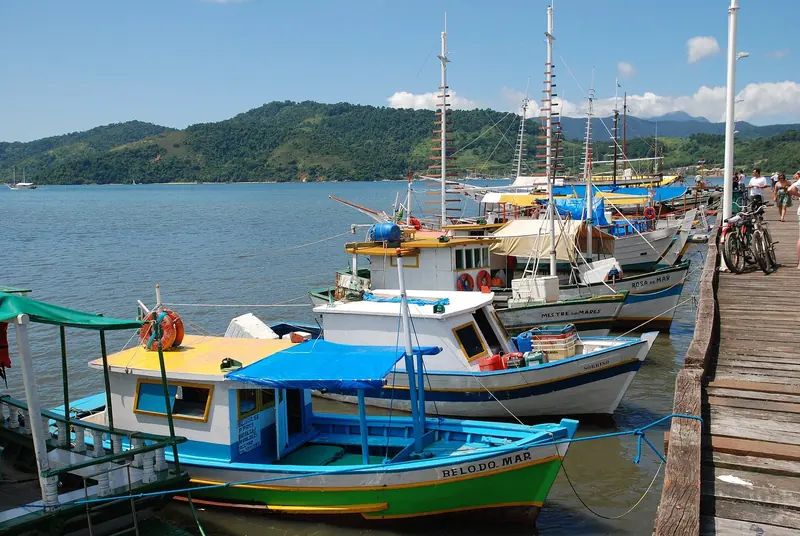
The season and the weather that actually matters
The Costa Verde runs opposite the Northern Hemisphere calendar, since it sits south of the equator: winter, June through August, brings the driest and most comfortable conditions, with June recording only about a 2 percent chance of significant rain on a given day and August dropping to roughly 1 percent, alongside the lowest humidity of the year. Spring (September to November) and autumn (March to May) are usually rated the best overall combination, with temperatures around 23 to 27 degrees Celsius and less rain than the wet season proper.
January and February, Brazil's summer, are the wettest months, each carrying close to a 37 percent chance of significant rain on any given day, and December is the single busiest month for domestic tourism, when the beaches nearest Vila do Abraao, above all Lopes Mendes, get genuinely crowded on weekends. A yacht with the flexibility to choose its own season is better served by the June to November window than by the Brazilian summer most land-based tourists book around.
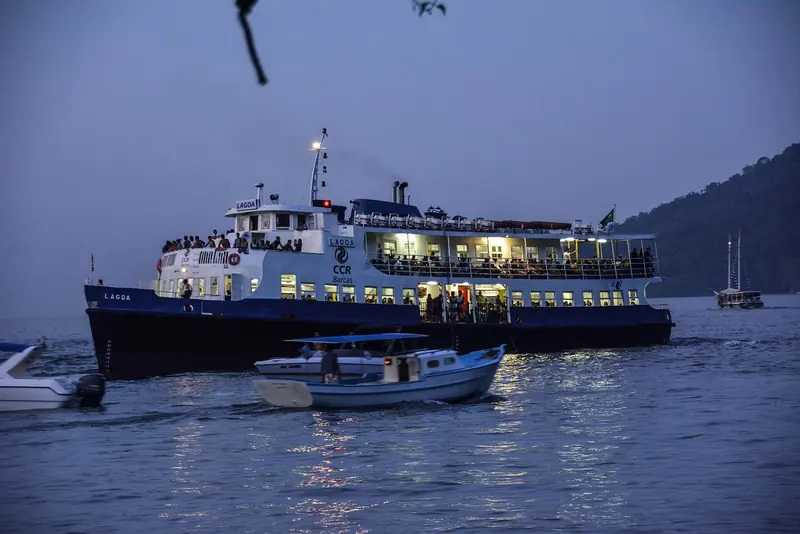
What a day actually looks like
Lopes Mendes, on Ilha Grande's ocean-facing east side, is the beach the whole bay is measured against: a long, wide stretch of fine white sand with a gently sloping bottom, reachable by tender directly or by a roughly two hour walk from Abraao through the forest for anyone who wants the approach on foot. The wider island carries 106 named beaches in total, so a boat with local knowledge, or an agent who has one aboard, can trade Lopes Mendes' crowds for something quieter on the same tide. Paraty, at the western end of the Costa Verde, adds a genuinely different kind of day: a colonial harbour town of cobbled streets closed to cars, traditional schooners for hire in the harbour, and a working historic centre rather than a resort built to look like one.
Safety on the water and ashore is better than the island's prison-colony reputation might suggest. Ilha Grande itself records very little violent crime, has no motor vehicles at all, and keeps a visible police presence in Abraao; the real risk for a visiting yacht is opportunistic petty theft in crowded ferry-arrival areas during the December to February peak, not anything resembling the maritime piracy risk zones tracked elsewhere in the world. Very little piracy against yachts has been reported in this part of the Brazilian coast, and most crews report the coast as demanding to sail but straightforwardly rewarding once ashore.
Getting people there
Rio de Janeiro is the gateway. Galeao International (GIG) handles intercontinental arrivals and larger business jets; Santos Dumont (SDU), in the city centre by Copacabana, is the quickest option for guests already in Rio; and Jacarepagua (SBJR) is the primary base for helicopter and light-aircraft operators serving the coast west of the city, including Angra dos Reis and Paraty. By road Angra is about 150 to 160 kilometres from central Rio, roughly a two to two and a half hour drive depending on traffic on the BR-101. By helicopter the same run is a genuinely different proposition: a fast machine covers it in under half an hour, while a Robinson R44 takes about 32 minutes, which is why most owners moving guests for a single day fly rather than drive.
This makes the Costa Verde one of the more accessible remote-feeling cruising grounds anywhere: a guest can leave a Rio hotel after breakfast and be swimming off Lopes Mendes by mid-morning, something neither the Caribbean nor most of the Mediterranean's quieter corners can offer this close to a major international airport.
Who this is actually for
The Costa Verde suits an owner who wants a South Atlantic cruising ground that reads as genuinely undeveloped rather than merely quiet, and who is willing to run the Brazilian clearance process through an agent rather than treat it as an afterthought. It pairs two very different pleasures inside one short cruising radius: Ilha Grande's near-total absence of infrastructure, a direct legacy of decades as a closed prison island, and Paraty's UNESCO-listed colonial town at the other end of the bay, with 300-plus islands and well over a hundred beaches to fill the water between them.
It is not a place with mature superyacht infrastructure in the way the Mediterranean or the northeast Caribbean is: no marina in the bay publishes a large-yacht tariff, and an owner books through relationships and agents rather than a website. In exchange, a boat gets a genuinely different Atlantic coast, roughly opposite the Northern Hemisphere's calendar, with June through November offering the driest, most comfortable and least crowded conditions of the year.
En tierra, accesos y reservas
| Getting there by air | Galeao International (GIG), Rio de Janeiro, for intercontinental and large business jet arrivals. Santos Dumont (SDU) for fast downtown access. Jacarepagua (SBJR) is the main helicopter and light-aircraft base for the coast west of the city, including Angra dos Reis and Paraty. |
|---|---|
| Getting to Angra dos Reis | About 150-160 km by road from central Rio (roughly 2 to 2.5 hours on the BR-101). By helicopter the same run takes well under an hour, and a fast machine covers it in under 30 minutes. |
| Clearing in | Three agencies in sequence: Policia Federal (immigration, free 90-day tourist visa), Receita Federal (customs, online pre-arrival form, issues the TECAT temporary admission document), Capitania dos Portos (navy). Commonly about two days. Engage a local agent before arrival; Angra dos Reis is a recognised, agent-supported clearance point. |
| Temporary admission | The TECAT permits a foreign-flagged yacht to remain in Brazil duty-free for up to 180 days, provided it is not used commercially. |
| Berthing | Marina Verolme (full service, near Angra city centre), Marina Bracuhy (3-5 m, haul-out and workshops, closest to Ilha Grande and Paraty), Marina Piratas (3-4 m, central), Marina Porto Frade. None publish a large-yacht tariff online; rates and berths are arranged directly or through an agent. |
| Best season | June to November for the driest, least crowded conditions (June and August are the driest months); avoid December to February, Brazil's wet, crowded domestic-tourism peak, unless the itinerary specifically wants the summer social calendar. |
| What is not published | Superyacht berth pricing at any Angra dos Reis marina, current TECAT processing times for a first-time foreign captain, and a consolidated English-language piracy/security assessment specific to the Costa Verde; all confirmed directly through an agent. |
Lo que cuentan armadores y tripulaciones
The Costa Verde is demanding to sail but the payoff ashore is real
Cruising accounts of the coast describe it as a genuinely challenging stretch of water to work, with great people, food and music once anchored, and note that security concerns are manageable with ordinary precautions rather than being a reason to avoid the area.
sailboatliveaboard.com Ilha Grande cruising guideThe prison closure, not tourism planning, is why the island stayed undeveloped
The Instituto Penal Candido Mendes held Brazil's most dangerous offenders for decades and was demolished by state order in 1994 following allegations of torture and overcrowding; the island's near-total lack of roads and development dates from that closure, not from any conservation programme that came before it.
Instituto Penal Candido Mendes historical recordAngra dos Reis is a recognised clearance point, not an improvised one
Cruisers moving down the Brazilian coast specifically note having more success clearing through Jacare Marina in Cabedelo and through the Angra dos Reis area than at less yacht-familiar ports, which is why an agent based in Angra is the standard route in.
noonsite.com Brazil clearance reportsDecember is the crowd month to plan around, not avoid entirely
December is flagged as the single busiest month for Ilha Grande, with weekends on Lopes Mendes and the other beaches near Abraao described as packed, a useful marker for a captain choosing which weeks to hold an anchorage versus which to expect company.
Costa Verde seasonal travel data
Lo bueno y lo que conviene vigilar
Puntos fuertes
- Genuine, accidental undevelopment two hours from a major cityIlha Grande's decades as a closed prison and quarantine island left it with no cars, a single village and 106 largely untouched beaches, a combination almost impossible to find this close to an international airport anywhere else in the world.
- UNESCO-listed culture at one end, a wild Atlantic Forest hotspot at the otherThe 2019 Paraty and Ilha Grande listing pairs a genuinely preserved 18th century colonial town with four protected natural areas holding jaguar, white-lipped peccary and woolly spider monkey, inside one short cruising radius.
- Fast, real helicopter access from RioA guest can leave a Rio hotel after breakfast and be on Lopes Mendes by mid-morning; the Jacarepagua-based helicopter run takes well under an hour, most of it under 30 minutes.
- A low actual security risk, despite the island's historyIlha Grande records very little violent crime, has no motor vehicles and keeps a visible police presence in Vila do Abraao; reported piracy against yachts in the wider Costa Verde is minimal.
A tener en cuenta
- No marina in the bay publishes superyacht pricingVerolme, Bracuhy, Piratas and Porto Frade all arrange large-vessel berths directly rather than online, so budgeting a Costa Verde season needs a broker or agent relationship before a number can be confirmed.
- A genuinely bureaucratic clearance processThree separate agencies (Policia Federal, Receita Federal, Capitania dos Portos) over roughly two days is a heavier process than a typical Mediterranean or Caribbean check-in, and the TECAT paperwork is the part most likely to go wrong without a local agent.
- December to February is genuinely crowded on the name beachesLopes Mendes and the other beaches near Vila do Abraao fill with domestic weekend tourism during the Brazilian summer, working against the sense of undiscovered remoteness the destination otherwise offers.
- Petty theft risk at crowded ferry points in peak seasonThe island's overall security record is good, but ferry-arrival crowding in the December to February peak is a known opportunistic-theft window worth a standard level of caution, not alarm.
Para quién es: An owner who wants a genuinely undeveloped South Atlantic cruising ground within a short helicopter hop of a major international airport, and who will clear Brazilian customs and immigration through a local agent rather than expect the process to run like a Mediterranean check-in.