Indonesia & Raja Ampat
| Región | el archipiélago indonesio, de Bali hacia el este pasando por Komodo y el mar de Banda hasta Raja Ampat, en Papúa Occidental |
|---|---|
| Escala | unas 17.000 islas repartidas por más de 5.000 km |
| Temporadas | Komodo en general de abril a octubre, Raja Ampat en general de octubre a abril |
| Parque nacional de Komodo | 1.733 kilómetros cuadrados, de los cuales 603 son tierra, Patrimonio Mundial de la UNESCO desde 1991 |
| Dragones de Komodo | unos 1.700 en la isla de Komodo y 1.300 en Rinca, y extinguidos en Padar |
| Raja Ampat | más de 1.500 islas, cayos y bajos alrededor de Misool, Salawati, Batanta y Waigeo, con 8.034 kilómetros cuadrados de tierra |
| Biodiversidad de Raja Ampat | más de 600 especies de coral duro, alrededor del 75 por ciento del total conocido en el mundo, más 1.508 especies de peces |
| Estatus de Raja Ampat | parque de recreo marino declarado en 2009 y reserva de la biosfera de la UNESCO en 2025 |
| Distancia | de Labuan Bajo a Sorong hay unas 800 millas náuticas en línea recta |
| Despacho | un sistema de declaración de barcos por internet, con puertos de entrada que incluyen Benoa en Bali, Kupang, Ambon, Sorong y Biak |
| Permiso de navegación | los yates están obligados a declarar por adelantado todos los puertos previstos, y muchos puertos exigen un agente registrado |
| Aeropuertos | Komodo International en Labuan Bajo, con pista de 2.750 metros, y Domine Eduard Osok en Sorong, con 2.500 metros |
| Komodo fees | IDR 150,000 on a weekday and IDR 250,000 at the weekend for international visitors, plus IDR 50,000 for snorkelling and IDR 100,000 for diving, and roughly IDR 150,000 to 200,000 per group for a ranger |
| Raja Ampat permit | IDR 1,000,000 per person for international visitors, about USD 67, valid twelve months and bought by bank transfer through the SIPARI portal |
| Charter | a foreign-flagged yacht may not charter in Indonesia, under the cabotage principle in Law 17 of 2008 on Shipping as amended by Law 66 of 2024 |
| Cruising | the online vessel declaration and e-clearance system that replaced the CAIT covers recreational use only, with no commercial carriage |
| Comparison | Turkey sells a foreign flag a charter licence at EUR 74,423.36 for 39 to 59 m since 19 June 2026 and St Vincent sells one over a customs counter, while Indonesia offers no equivalent |
| Discharge | Indonesian waters are not a MARPOL Special Area on the IMO list and reception facilities east of Benoa are effectively absent, so the standard is the operator's own |
| Berthing | there is no marina berthing for a large yacht east of Bali and no rate card to quote, checked 28 July 2026 |
La forma de la zona
Indonesia no es una zona de navegación en el sentido en que lo es el Mediterráneo. Es un país del ancho del Atlántico, y aquí un yate trabaja dos o tres áreas concretas de él. Bali es la puerta occidental y el sitio donde hay algo parecido a infraestructura. Komodo, en las islas menores de la Sonda, está a unas 250 millas náuticas al este. Raja Ampat, frente a la punta occidental de Nueva Guinea, queda unas 800 millas más allá en línea recta y más por cualquier ruta que haga de verdad un yate.
Entre medias están el mar de Banda y las islas de las especias, agua profunda, volcanes activos y aldeas que ven un puñado de yates al año. Esa travesía intermedia es la parte que los armadores o adoran o se saltan por completo. La decisión práctica es si el barco va a dedicar una temporada a Indonesia o simplemente está de paso en un programa asiático más largo.
Komodo
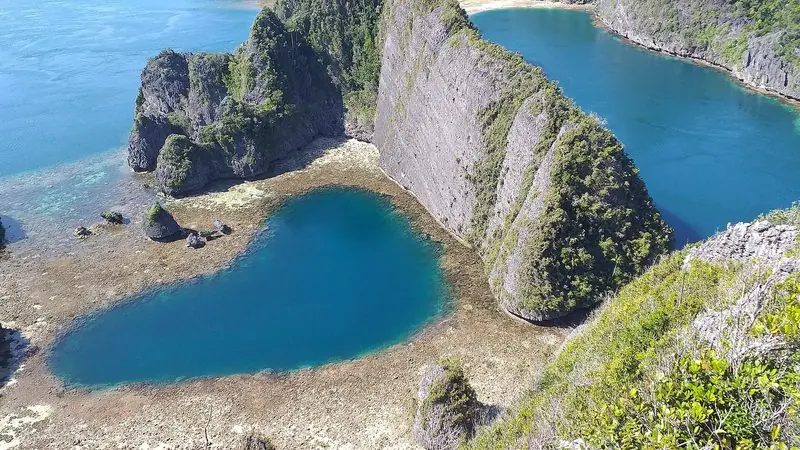
El parque nacional de Komodo cubre 1.733 kilómetros cuadrados, de los cuales solo 603 son tierra, repartidos entre las tres islas principales de Komodo, Padar y Rinca y otras 26 menores. Es Patrimonio Mundial de la UNESCO desde 1991. Unos 1.700 dragones viven en la isla de Komodo y 1.300 en Rinca, y las caminatas guiadas por los guardas son la excursión que reservan todos los invitados. El recorrido por la cresta de Padar, con tres bahías por debajo, es la fotografía.
El buceo es la razón real para traer un barco. Manta Alley, Crystal Rock, Castle Rock, Batu Bolong, the Cauldron y Tatawa Besar son los puntos con nombre, y casi todos funcionan con corriente, que es lo que los hace tan ricos y lo que los hace serios. El agua del lado sur del parque es notablemente más fría que la del norte. Labuan Bajo, en Flores, es el pueblo base y ha crecido deprisa.
Komodo va de abril a octubre y Raja Ampat de octubre a abril, que es la razón por la que un barco que viene aquí se queda.
Raja Ampat
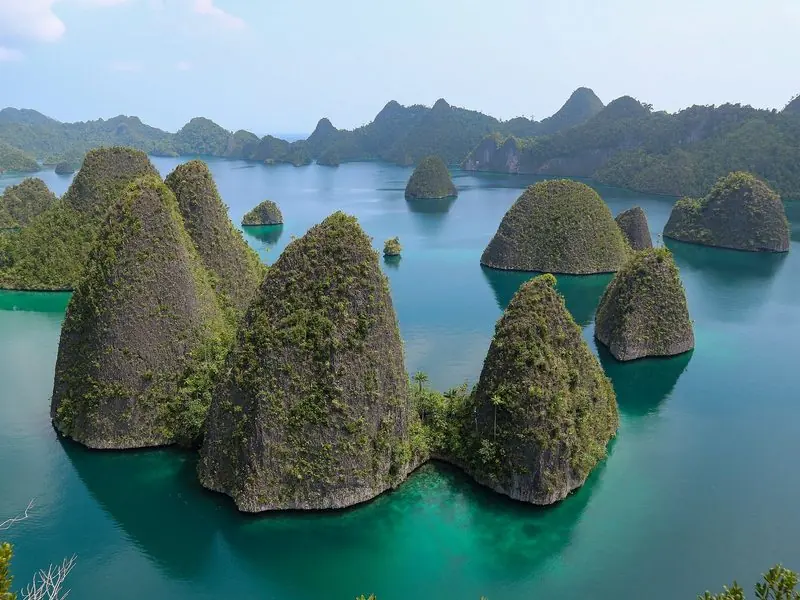
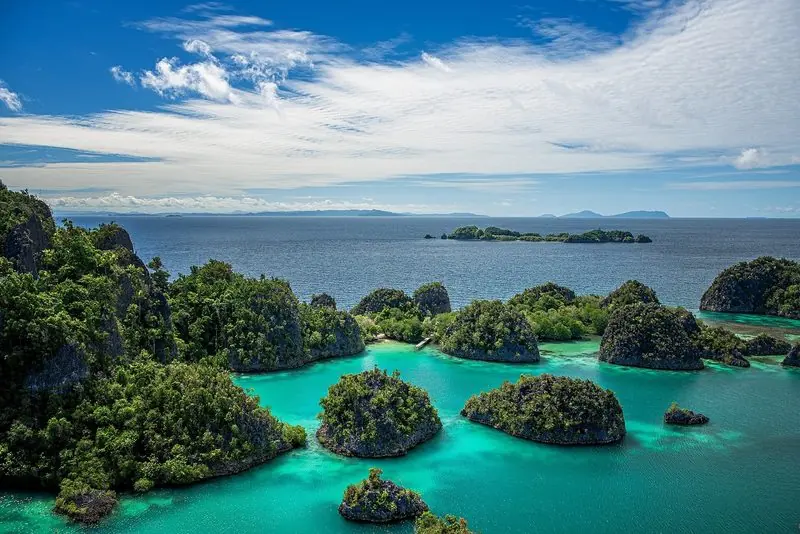
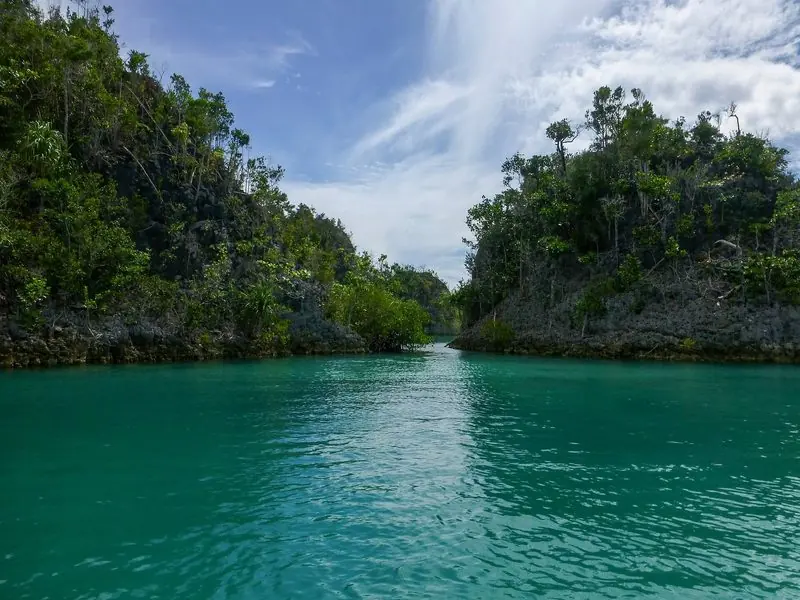
Raja Ampat son más de 1.500 islas, cayos y bajos alrededor de las cuatro grandes, Misool, Salawati, Batanta y Waigeo, con 8.034 kilómetros cuadrados de tierra en total. Alberga más de 600 especies de coral duro, alrededor del 75 por ciento de todas las especies conocidas, junto con 1.508 especies de peces. Se convirtió en parque de recreo marino en 2009 y en reserva de la biosfera de la UNESCO en 2025. Los arrecifes no son solamente buenos. Son la referencia mundial con la que se miden los demás arrecifes.
Las cuatro áreas de trabajo son las aguas del norte de Salawati, Batanta y el suroeste de Waigeo, la bahía de Mayalibit en el centro de Waigeo, el sureste de Misool y las islas Sembilan. Wayag, en el extremo noroeste, es la laguna kárstica de las postales y queda a una navegación larga de cualquier sitio. El estrecho de Dampier, entre Waigeo y Batanta, tiene corriente dura, y allí todo es inmersión a la deriva planificada con la marea. Los invitados que bucean no se van a querer marchar.
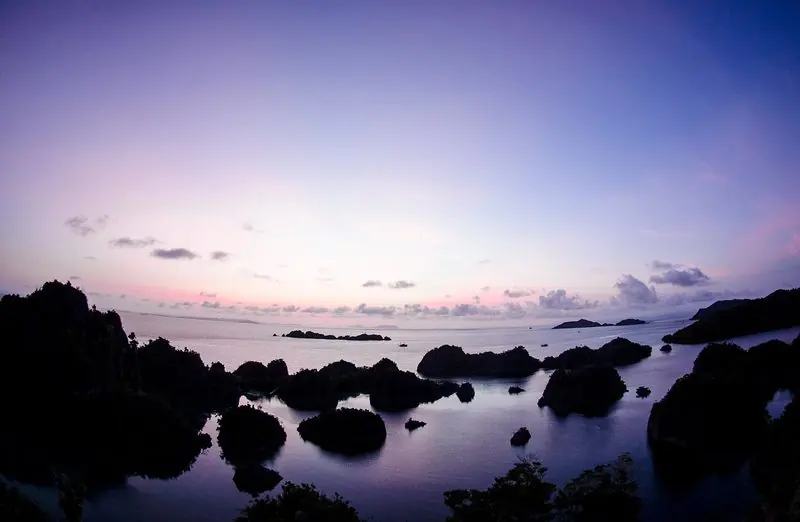
Una quincena, y una temporada
Una quincena en Komodo saliendo de Labuan Bajo es el programa estándar y funciona bien. Los invitados vuelan a Komodo International, el barco cubre el parque en una semana y la segunda semana va al este hacia el mar de Flores o al sur rodeando Sumba. Todo está a unas horas del fondeadero anterior y el aeropuerto está en la puerta.
Una quincena en Raja Ampat saliendo de Sorong es la otra mitad. Lo que no funciona es intentar hacer las dos en un mismo viaje de invitados, porque las 800 millas que las separan son una travesía de traslado de varios días por mar abierto. El armador que quiere las dos trae el barco al este en la segunda mitad del año, trabaja Komodo durante la estación seca y luego navega a Raja Ampat para el invierno boreal. Eso es un compromiso de seis meses y es como opera la flota residente.
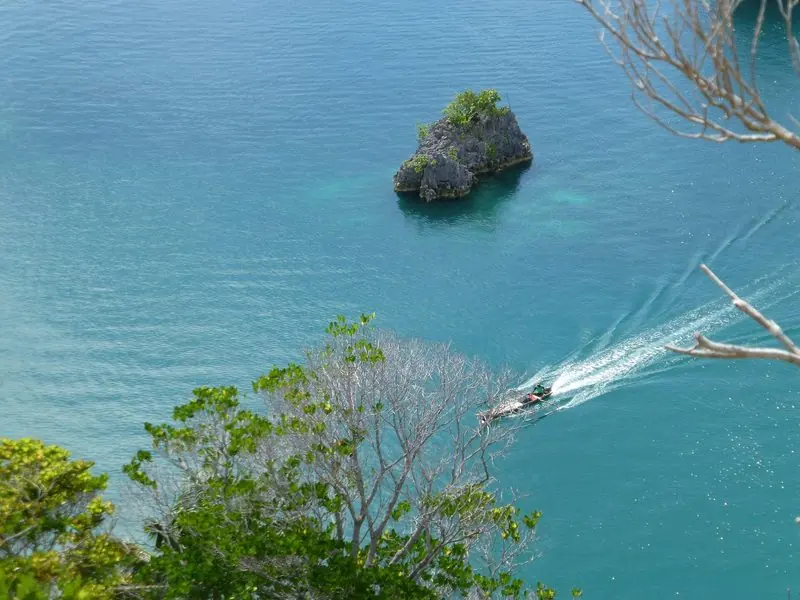
Dónde cabe un barco de 50 metros
En la práctica no hay amarre de marina para un yate grande en ningún punto de esta zona de navegación. Benoa, en Bali, es el puerto de entrada y lo más parecido a una base, y todo lo que queda al este es fondear. No es el problema que parece, porque los fondeaderos son profundos, abrigados y están vacíos, pero significa que el barco se sostiene por completo a sí mismo desde el momento en que sale de Bali.
La limitación real es la cartografía. Buena parte del este de Indonesia está levantada con estándares del siglo diecinueve o no lo está en absoluto, los arrecifes suben en vertical desde agua profunda y la imagen de satélite se usa junto a la carta de forma rutinaria. Un yate de 50 metros se mueve con buena luz, con un vigía y con un tender por delante en los sitios más estrechos. Las profundidades son a menudo demasiado grandes para fondear cerca de tierra, así que filar mucha cadena y comprobar el tenedero con cuidado es lo normal.
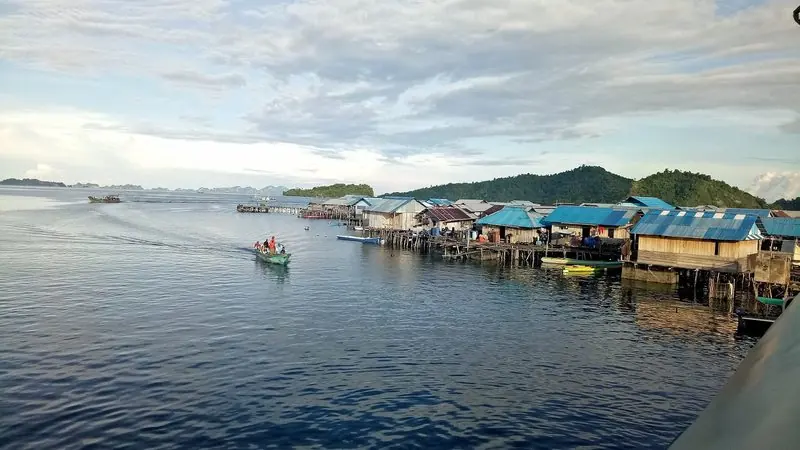
El tiempo y las dos temporadas
El archipiélago está a caballo del ecuador y funciona con monzones en vez de con un verano y un invierno. Komodo se considera generalmente en su mejor momento de abril a octubre, con el monzón seco del sureste, con condiciones estables y agua clara. Raja Ampat va al revés, y allí la ventana más tranquila va de octubre a abril. Esa oposición es el dato más útil que existe para planificar un año en aguas indonesias.
La lluvia, cuando llega, llega fuerte y breve. Los chubascos se montan deprisa y la visibilidad cae con ellos. La temperatura del agua es cálida en todas partes salvo en el lado sur de Komodo, donde el afloramiento la baja de golpe y los invitados van a querer un traje de neopreno con el que no contaban. Indonesia queda fuera de los cinturones principales de ciclón tropical por su cercanía al ecuador, aunque las islas del sur están lo bastante cerca del sistema australiano como para tenerlo vigilado.
Llevar a los invitados a bordo
Komodo International, en Labuan Bajo, tiene una pista de 2.750 metros, movió más de un millón de pasajeros en 2024 y obtuvo el estatus internacional ese mismo año, con vuelos a Kuala Lumpur. Domine Eduard Osok, en Sorong, tiene 2.500 metros y conecta por Yakarta y Makassar, con la pista pequeña de Waisai para seguir hacia Raja Ampat. A los dos se llega en avión de negocios.
La ruta realista para un invitado europeo es un vuelo de largo radio a Singapur, Yakarta o Bali y una conexión doméstica de dos a cuatro horas después. Súmese el coche y la etapa en tender y el invitado se enfrenta a casi dos días desde Londres. La gestión de equipajes en las etapas domésticas es un riesgo real, y aquí las tripulaciones guardan de forma rutinaria el equipo de buceo a bordo en vez de confiar en que lo traigan los invitados.
En tierra, y qué hacen de verdad los invitados
Este es un destino de agua y el armador debería ajustar las expectativas en consecuencia. En tierra, en Komodo son las caminatas con los guardas para ver los dragones, la cresta de Padar y las playas de arena rosa. En Raja Ampat son las visitas a las aldeas, las aves del paraíso al amanecer en Waigeo y el mirador sobre el karst de Piaynemo. Bali, al principio o al final, aporta los templos, Ubud, los restaurantes y todo lo demás que un invitado pueda echar de menos.
La comida fuera de Bali es local y sencilla, así que el barco se aprovisiona como es debido en Benoa o lo trae en avión. Al este de Bali no existe la vida nocturna. Lo que llena los días es el buceo, el snorkel sobre arrecifes con más especies de coral que todo el Caribe, el kayak entre el karst y el hecho de que en casi todos los fondeaderos no hay nada más que un barco de pesca.
Papeles, combustible, servicio y la pega honesta
El despacho va por un sistema de declaración de barcos por internet que se ha cambiado más de una vez, con puertos de entrada que incluyen Benoa, Kupang, Ambon, Sorong y Biak. Se espera que los yates declaren por adelantado todos los puertos previstos, lo que encaja mal con la forma en que se navega de verdad un archipiélago, y muchos puertos exigen ya un agente local registrado. Las entradas a los parques nacionales y marinos se cobran aparte y se comprueban. La situación del charter para un yate de pabellón extranjero es lo primero que hay que cerrar y necesita asesoramiento local actualizado, no un supuesto traído de Europa.
Hay combustible en Benoa y en los puertos mayores, y la disponibilidad está bien mientras que la preocupación es la calidad, así que la purificación y la filtración importan. No hay en Indonesia ningún astillero de refit que admita un yate de 50 metros, y Singapur, Phuket o Australia son la alternativa, cada una a días de distancia. Una evacuación médica desde Raja Ampat es un ejercicio de planificación serio. Frente a todo eso, los arrecifes de Misool son los más ricos sobre los que puede fondear un yate privado en cualquier punto del planeta.
What the permits cost, and what a berth does not
The park fees are the running cost here and they are published. Komodo National Park charges international visitors IDR 150,000 on a weekday and IDR 250,000 at the weekend, with IDR 50,000 more for snorkelling and IDR 100,000 for diving per person, and a ranger fee of roughly IDR 150,000 to 200,000 per group, and the park has been moving during 2026 to a single bundled ticket per route. Raja Ampat is the bigger number and the better value: the marine park entry permit is IDR 1,000,000 per person for international visitors, about USD 67, valid for twelve months from purchase and bought by bank transfer when registering on the SIPARI portal. For twelve guests that is IDR 12,000,000 for a year of access to the richest reefs on the planet, and it is checked.
Berthing does not exist east of Bali in any form a rate card could describe, so the berthing line in an Indonesian season is close to zero and the cost sits in fuel, agency, park permits and air freight. That is the inverse of the Mediterranean arithmetic. Marina di Porto Cervo's published 2026 tariff charges EUR 3,698 a day in the band to 40 m from 1 to 20 August, roughly EUR 102,000 for the month, and EUR 195,819 for a 1 May to 31 October contract, which is more than an entire Indonesian programme will spend on anything except fuel. What an owner is buying instead is total self-sufficiency: no yard in the country will take a 50 m yacht, Singapore, Phuket and Australia are each days away, and a medical evacuation from Raja Ampat is a planning exercise rather than a phone call.
Charter: the cabotage answer, stated plainly
A foreign-flagged yacht may not charter in Indonesia. The cabotage principle is codified in Law 17 of 2008 on Shipping, most recently amended by Law 66 of 2024, and it reserves the carriage of goods and the transport of passengers within domestic waters to Indonesian-flagged vessels crewed by Indonesian nationals. There is no permit, licence or fee that buys a foreign flag out of it for passenger carriage. What a foreign yacht may do is cruise, under the online vessel declaration and e-clearance system that replaced the old CAIT, and that clearance covers recreational use only with no commercial carriage of any kind. The narrow exemptions in the 2024 amendment are for offshore work where no Indonesian-flagged vessel is available, and they do not reach yacht charter.
That single rule explains the shape of the fleet an owner sees here. The commercial boats working Komodo and Raja Ampat are Indonesian-flagged, which is why the phinisi is the local charter platform rather than a European motor yacht, and it is why a visiting owner cannot defray a season by putting the boat out between guest blocks. An owner who wants the yacht to earn in Indonesian waters is looking at Indonesian registration and an Indonesian operating structure, not at paperwork. Set against Turkey, which since 19 June 2026 sells a charter licence to a foreign flag for EUR 74,423.36, and the Grenadines, which sell one over a customs counter, Indonesia simply does not offer the transaction.
Discharge, and why it matters more here than anywhere
Indonesian waters are not a MARPOL Special Area, so the general convention rules are the legal floor and they are a long way below what these reefs need. There is no MARPOL Special Area covering the archipelago on the IMO's own list, and there are no reception facilities of any consequence east of Benoa. The binding rules a yacht will actually meet are the park ones: Komodo and Raja Ampat both regulate anchoring and activity inside their boundaries, permits are checked, and both are UNESCO-listed, Komodo as a World Heritage site since 1991 and Raja Ampat as a biosphere reserve since 2025.
The practical position is therefore a matter of the operator's own standard rather than of enforcement, which is exactly why it should be written into the boat's orders before she leaves Bali. A yacht working Misool for a week over reefs holding about 75 per cent of the world's known hard coral species has no business discharging anything, and the tankage to avoid it is a specification question settled at build or refit. Anchoring is the same discipline. Depths are frequently too great to anchor close in, charts are nineteenth-century in places, and a chain laid across a coral head does damage that no permit fee compensates.
En tierra, accesos y reservas
| Getting guests aboard | Komodo International at Labuan Bajo has a 2,750 m runway and gained international status in 2024 with services to Kuala Lumpur. Domine Eduard Osok at Sorong has 2,500 m and connects through Jakarta and Makassar, with the small strip at Waisai onward into Raja Ampat. The realistic route for a European guest is a long-haul flight to Singapore, Jakarta or Bali and a domestic connection of two to four hours, the better part of two days from London. Baggage handling on the domestic legs is a real risk, which is why crews here routinely keep dive gear aboard rather than trust it to a guest's suitcase. |
|---|---|
| How the cruising clearance works | Clearance runs through an online Vessel Declaration System that replaced the old CAIT and has been changed more than once, with ports of entry including Benoa, Kupang, Ambon, Sorong and Biak. Yachts are expected to declare every intended port in advance, which sits awkwardly with how anyone actually cruises an archipelago, and many ports now require a registered local agent. The clearance covers recreational use only, with no commercial carriage of any kind. |
| Local pilots are now a rule, not a courtesy | Government rules are being implemented to require boats in Raja Ampat to engage local pilots and captains, both to provide employment and to bolster reef protection. The reason is on the record: since 2017, three vessels - the 120-passenger cruise ship Caledonian Sky and two yachts - have crashed into the corals, often at low tide, causing irreparable damage to the reef structure. |
| What the permits actually cost | Komodo National Park charges international visitors IDR 150,000 on a weekday and IDR 250,000 at the weekend, plus IDR 50,000 for snorkelling and IDR 100,000 for diving per person, and a ranger fee of roughly IDR 150,000 to 200,000 per group. Raja Ampat's marine park permit is IDR 1,000,000 per person for international visitors, about USD 67, valid twelve months from purchase and bought by bank transfer through the SIPARI portal - for twelve guests that is IDR 12,000,000 for a year of access. |
| What a berth does not cost, because there is none | There is no marina berthing for a large yacht anywhere east of Bali and no rate card to quote, checked 28 July 2026. The cost that would sit on a Mediterranean berthing line instead sits in fuel, agency fees, park permits and air freight - the inverse of the Mediterranean arithmetic, where Marina di Porto Cervo's 2026 tariff alone runs about EUR 102,000 for a August month. |
| Charter: the cabotage answer | A foreign-flagged yacht may not charter in Indonesia at any price. The cabotage principle in Law 17 of 2008 on Shipping, as amended by Law 66 of 2024, reserves domestic passenger carriage to Indonesian-flagged vessels crewed by Indonesian nationals, and there is no permit or fee that buys a foreign flag out of it. That is unlike Turkey, which has sold a foreign-flag charter licence for EUR 74,423.36 since 19 June 2026, or St Vincent, which sells one over a customs counter. |
| Fuel, refit and medical evacuation | Fuel is available at Benoa and the larger ports; availability is fine and quality is the concern, so onboard polishing and filtration matter. No refit yard in Indonesia will take a 50 m yacht - Singapore, Phuket or Australia are the fallback, each days away. Medical evacuation from Raja Ampat is a serious planning exercise, not a phone call. |
Lo que cuentan armadores y tripulaciones
The reserve's own recovery numbers, not a marketing claim
Fish biomass inside the Misool no-take zones rose 250 per cent over six years, a figure drawn from a Mark Allen study at Murdoch University and cited by the foundation that runs the reserve. The Misool Marine Reserve, founded by Andrew and Marit Miners in 2005, now spans about 1,220 square kilometres of no-take zones and has been credited elsewhere with lifting shark populations sharply within its boundaries.
Marit Miners, co-founder, Misool Foundation (Ocean Panel perspective piece)Three groundings on coral since 2017 are why local pilots are now compulsory
The 120-passenger cruise ship Caledonian Sky and two yachts have crashed into the reefs since 2017, often at low tide, causing irreparable damage to the coral structure. That record is the reason Indonesia is moving to require boats in Raja Ampat to engage local pilots and captains.
Boat International, reporting from the phinisi Prana by AtzaroShark numbers are the crew's own yardstick for a healthy reef, and this one has plenty
Mick Taylor, cruise director and dive instructor aboard the 55 m phinisi Prana by Atzaro, has said shark numbers are one of the best indicators of a healthy reef system in these waters, and that Raja Ampat has them in quantity.
Mick Taylor, cruise director and dive instructor, Prana by Atzaro (Boat International)The crew who work here still find the place disorienting in a good way
Captain Saiful Hadi, who navigates Prana by Atzaro through Raja Ampat's bays, has said nothing prepares a visitor for a place like this, and that he sometimes cannot believe it exists himself.
Captain Saiful Hadi, master, Prana by Atzaro (Boat International)
Lo bueno y lo que conviene vigilar
Puntos fuertes
- The reef recovery here is measured, not just claimedMisool's no-take marine reserve, run by the Misool Foundation, saw fish biomass increase by 250 per cent over six years, a figure the foundation's own co-founder cites from a Mark Allen, Murdoch University study. Onboard, the crew of the phinisi Prana by Atzaro rate shark numbers as one of the best live indicators of a healthy reef, and Raja Ampat has plenty.
- Two seasons that run in opposition keep a resident boat in season year-roundKomodo's dry season runs April to October and Raja Ampat's calm window runs October to April, so an owner committing six months to Indonesia never has to sit out either ground's bad weather.
- The published park fees are cheap for what they buyRaja Ampat's marine park permit runs about USD 67 a guest for twelve months of access to reefs holding roughly 75 per cent of the world's known hard coral species - a fraction of a single Mediterranean berth night.
- No berth invoice, but real self-sufficiency insteadThere is no marina berthing east of Bali at any price, so the cost that would sit on a Mediterranean tariff card moves entirely into fuel, agency and permits - a different kind of ownership, not a cheaper version of the same one.
- The place still produces the reaction owners come here forCaptain Saiful Hadi, who has run guests through these waters, put it simply: sometimes he cannot believe Raja Ampat exists himself.
A tener en cuenta
- The charts cannot be fully trustedMuch of eastern Indonesia is surveyed to nineteenth-century standards or not at all. Since 2017, three vessels - the 120-passenger cruise ship Caledonian Sky and two yachts - have crashed into the coral, often at low tide, causing irreparable damage to the reef structure.
- There is no refit capability in the country for a boat this sizeSingapore, Phuket or Australia are the fallback for anything serious, each of them days away by sea, and medical evacuation from Raja Ampat is a genuine planning exercise rather than a call to an ambulance.
- Cabotage closes the one thing a European owner might expectA foreign-flagged yacht cannot charter in Indonesia at any price under Law 17 of 2008 as amended in 2024. There is no licence to buy here, unlike Turkey's EUR 74,423.36 foreign-flag charter licence or the Grenadines' over-the-counter version.
- The new local-pilot rule could price some vessels out altogetherPrana by Atzaro's own cruise director and dive instructor, discussing the proposal that followed the coral groundings, said it could help price certain vessels out of Raja Ampat, though he also called streamlining boat traffic crucial to saving the destination from overtourism.
- Nightlife and food ashore do not exist east of BaliWhat fills the days is diving and village visits; a boat provisions properly in Benoa or flies supplies in, and an owner should set guest expectations accordingly before the yacht leaves Bali.
Para quién es: Un armador cuyos invitados bucean, con un barco autosuficiente, un buen agente y paciencia para permisos y travesías que se miden en días.