Montenegro & the Adriatic
| Región | Adriático meridional, entre Croacia y Albania |
|---|---|
| Escala | la bahía de Kotor tiene unos 28 km desde la entrada hasta Kotor, y Dubrovnik queda a unas 25 millas náuticas costa arriba |
| Temporada | de mayo a octubre, con punta en julio y agosto |
| Porto Montenegro | 450 amarres con ampliación prevista hasta 850, eslora máxima 250 m |
| Combustible | el pantalán de combustible de Porto Montenegro admite yates de hasta 250 m y 15 m de calado y almacena hasta 800.000 litros de gasóleo libre de impuestos |
| Portonovi | 238 amarres, eslora máxima 140 m, cerca de la boca de la bahía en Herceg Novi |
| El estrecho de Verige | el punto más angosto de la bahía, de unos 330 a 340 m de ancho, con profundidades en torno a 30 m y hasta 75 m |
| Fondeo | la bahía es profunda muy cerca de la orilla, con profundidades medias en torno a 30 m, así que casi todos los yates cogen amarre |
| Jurisdicción | Montenegro está fuera de la UE y usa el euro de forma unilateral |
| Entrada | despacho de aduana e inmigración a la entrada y a la salida, cosa que importa en cualquier crucero que cruce desde o hacia Croacia |
| Adhesión a la UE | Montenegro apunta a 2028, con alrededor de la mitad de los capítulos de negociación cerrados provisionalmente a mediados de 2026 |
| Acceso aéreo | el aeropuerto de Tivat está a unos diez minutos de Porto Montenegro |
| Duty-free diesel at Porto Montenegro | EUR 0.74 a litre, best-sourced figure reported February 2025, with no current published pump price |
| Regional retail diesel on 20 July 2026 | EUR 1.721 a litre in Croatia, EUR 1.81 in Montenegro, EUR 2.11 in Italy |
| A 60,000 litre uplift saves roughly EUR 59,000 against Croatian pump diesel and roughly EUR 82,000 against Italian, on figures whose dates do not match | |
| The 72-hour minimum stay condition for duty-free fuel has been removed, so a yacht may cross the border, bunker and leave | |
| Croatia offers no duty-free fuel, supplies or services at all, and Italian duty-free bunkers are limited to commercially registered yachts | |
| Neither Porto Montenegro nor Portonovi published a berthing tariff in July 2026 | |
| Charter VAT | none in Montenegrin waters, against 13 per cent in Croatia, with Croatian VAT applying to the Croatian days of a cross-border charter |
| Customs | leaving the EU discharges the 18 month temporary admission period, and a documented run to Kotor is a common way to reset it |
| EU accession, targeted for 2028, would end the duty-free fuel position and bring Montenegro inside the same 18 month clock | |
Un día y medio de costa
La costa utilizable de Montenegro es corta. La bahía de Kotor tiene unos 28 kilómetros desde la entrada en Herceg Novi hasta el pueblo de Kotor, en su fondo, repartidos en cuatro dársenas encadenadas, y la costa abierta al sur pasa por Budva y Sveti Stefan hasta Bar y Ulcinj, en la frontera albanesa. Eso son en total cosa de día y medio de navegación. Dubrovnik queda 25 millas náuticas al norte, poco más de una hora de camino.
Nadie pasa aquí una quincena y nadie debería. El patrón realista son dos o tres días en la bahía al principio o al final de un crucero croata, o un amarre de temporada en Tivat con el barco trabajando hacia el norte, hacia Dalmacia, y de vuelta. Una semana montada alrededor de Montenegro sería la bahía, la costa abierta hasta Budva, una noche en Sveti Stefan y después Croacia.
La bahía en sí
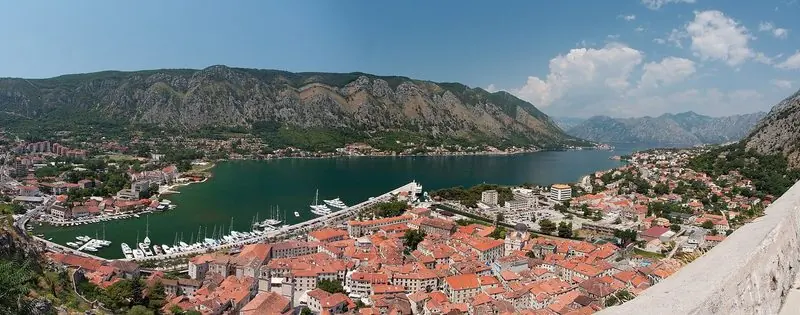
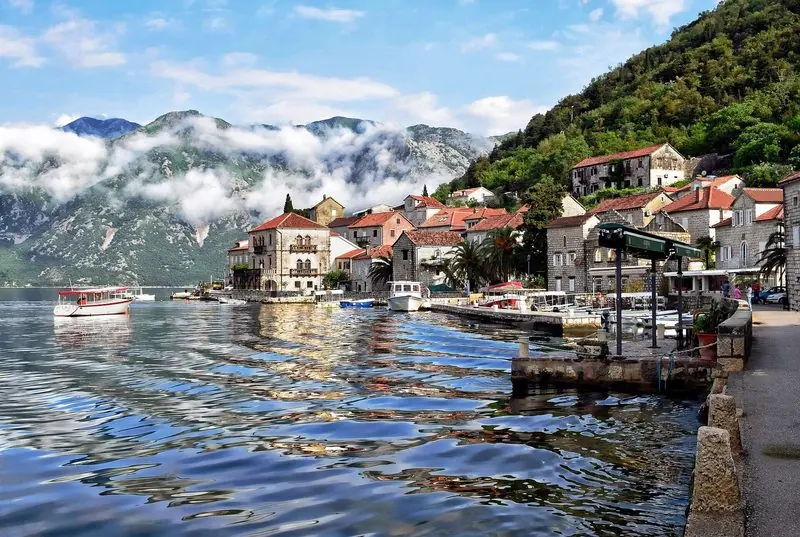
La bahía de Kotor es la razón para venir y no se parece a nada más del Mediterráneo. Las montañas se levantan más de 1.500 metros directamente desde un agua que ronda los 30 metros de profundidad, y todo el brazo de mar es Patrimonio de la Humanidad. El estrecho de Verige, el punto más angosto con unos 330 o 340 metros de anchura, separa las bahías exteriores de las interiores y es donde sale a cubierta cada invitado. Perast, a mitad de camino, es un pueblo barroco pequeño sobre el agua con dos islotes delante.
Nuestra Señora de las Rocas es el islote artificial de la iglesia de cúpula azul, levantado durante siglos sobre un arrecife, y está a quince minutos en tender desde un amarre o desde un fondeadero frente a Perast. La costa abierta más allá de la bahía es otro sitio, con agua más clara, playas de arena y de canto rodado en Jaz y Becici, y el fotografiadísimo islote de Sveti Stefan sobre su istmo. Kotor, en el fondo de la bahía, es un pueblo veneciano amurallado con una fortaleza en la ladera de encima.
Montenegro vende un amarre, un precio de combustible y unas vistas, y para un barco que trabaja el Adriático eso basta.
Porto Montenegro, Portonovi y Kotor
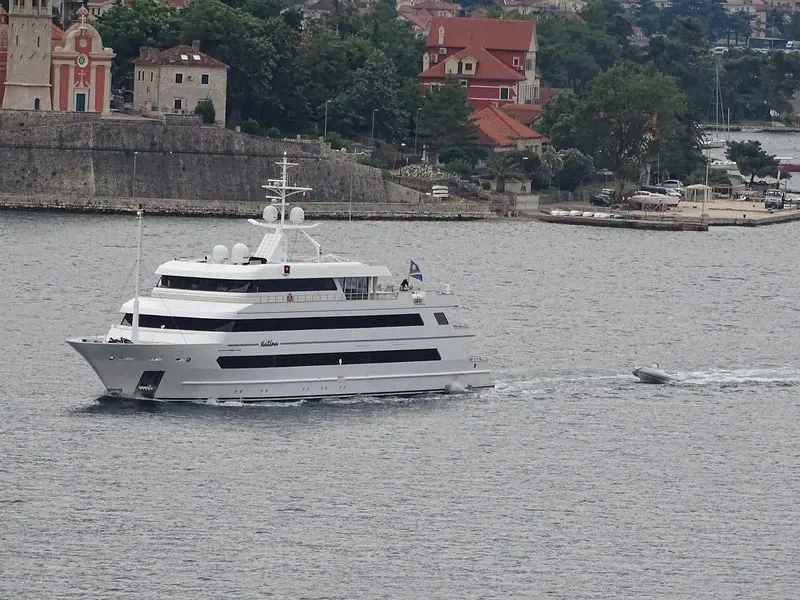
Esto es lo que vende Montenegro y es de verdad bueno. Porto Montenegro, en Tivat, construido sobre una antigua base naval yugoslava, explota 450 amarres con una ampliación prevista hasta 850 y admite yates de hasta 250 metros, con un pueblo de marina de tiendas, restaurantes, un hotel y un club náutico detrás. Portonovi, cerca de la boca de la bahía en Herceg Novi, tiene 238 amarres y admite hasta 140 metros junto a un resort y un hotel One and Only. Lustica Bay, en la península entre los dos, es el tercer desarrollo y el más nuevo.
Kotor tiene un muelle urbano bajo las murallas que admite un número limitado de yates en el escenario más espectacular de la bahía, y comparte el agua con el tráfico de cruceros. Budva, en la costa abierta, tiene una marina de tamaño modesto. Fondear es el punto débil, porque la bahía cae a plomo y el agua es profunda casi en todas partes cerca de la orilla, así que los sitios utilizables son pocos y la mayoría de los yates de aquí pasan mucho más tiempo en un amarre del que pasarían en Grecia o en Croacia. Para un armador que quería un amarre desde el principio, eso no es una queja.
Una bahía abrigada, y los meses
La temporada va de mayo a octubre y la bahía tiene el tiempo más benigno del Adriático porque la abrigan las montañas. Julio y agosto son calurosos y quietos, con el agua lo bastante templada desde junio hasta principios de octubre. Mayo y septiembre son cómodos y tranquilos, y la bahía es verde de una manera que las islas griegas no lo son nunca, porque esta es una de las zonas más lluviosas de Europa en invierno.
La bahía cerrada le hace dos cosas al tiempo. Mata casi todo el estado de la mar, así que los días a bordo son de calma chicha aunque el Adriático abierto no lo esté, y encañona el viento montaña abajo en rachas que llegan desde una dirección inesperada. Las tormentas de verano se montan con el calor y pueden dar media hora violenta. La bora llega aquí en las temporadas medias y el jugo, el sureste cálido, trae lluvia y mar de fondo a la costa abierta de fuera. Nada de eso va a cambiar un crucero como lo harán el meltemi o el mistral.
Cuándo se llena la marina
Montenegro se llena más tarde y se vacía más tarde que Croacia. Junio está tranquilo, julio y agosto son la punta con la gente concentrada en Budva y en la costa abierta, y septiembre es el mejor mes para un yate grande. El peso lo lleva el propio calendario de Porto Montenegro, con regatas, un programa social de verano y el Yacht Club en el centro, y la marina tiene su mayor movimiento a mediados de agosto.
Aquí no hay ninguna cita que se apropie de una semana como hacen el salón de Mónaco o la Bucket. Lo que hay es el patrón de tránsito, porque buena parte de la flota adriática pasa por Montenegro al principio y al final de la temporada para cargar combustible libre de impuestos, y la demanda de amarre se dispara en torno a esos movimientos. Reservar un amarre grande para agosto sigue exigiendo hacerlo con meses de antelación.
El aeropuerto de Tivat, y la frontera
El aeropuerto de Tivat es lo mejor de la logística de Montenegro. Está a unos diez minutos por carretera de Porto Montenegro, admite aviación de negocios y tiene servicio regular de verano desde varias ciudades europeas, y un invitado puede estar a bordo veinte minutos después de aterrizar. Podgorica es el aeropuerto grande del país, a cosa de hora y media. El aeropuerto de Dubrovnik está más o menos a la misma distancia por carretera, pero implica un paso fronterizo terrestre que en agosto puede llevar una hora.
Dentro del país, las carreteras que rodean la bahía son estrechas y lentas, y el trayecto de Tivat a Kotor es más largo de lo que parece en el mapa, así que el tender suele ser más rápido. Hay traslados en helicóptero, pero están menos asentados que en Italia o en Francia. Lo único que hay que planificar es la frontera, porque un yate que llega de Croacia despacha salida de la UE y entrada en Montenegro y hace lo contrario a la vuelta, y cada despacho es una parada programada y no un trámite.
Kotor, Perast y la carretera de Lovcen
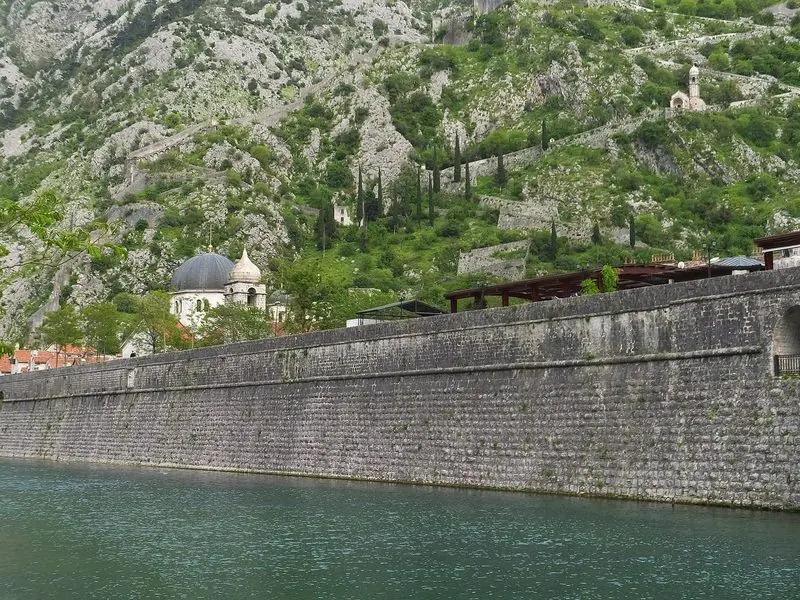
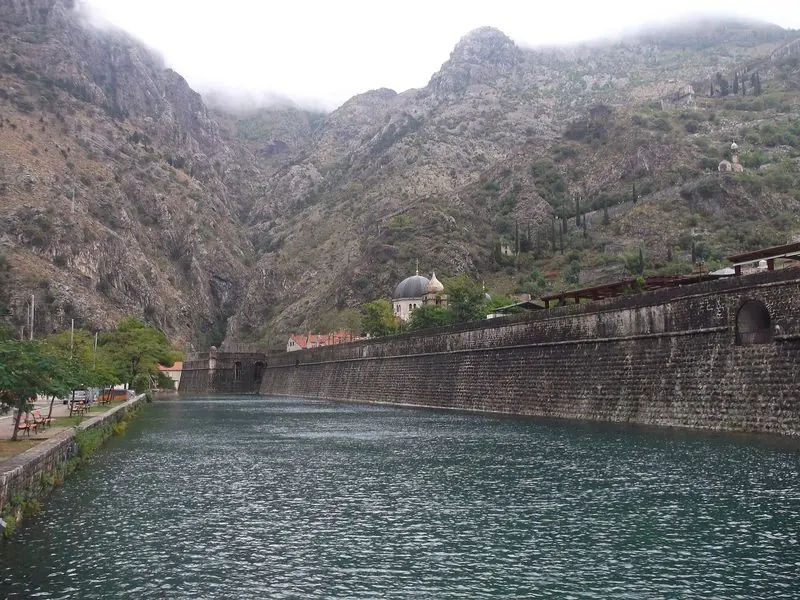
El casco antiguo de Kotor es la pieza de exhibición, un laberinto veneciano compacto de plazas e iglesias con la subida a la fortaleza de San Giovanni por encima, y se hace mejor a las ocho de la mañana, antes de que desembarquen los pasajeros de crucero. Perast es más bonito y más tranquilo y tiene un puñado de buenos restaurantes junto al agua. El propio pueblo de Porto Montenegro tiene la restauración moderna y las tiendas en el amarre, lo cual es cómodo y parece un desarrollo de marina porque lo es. Los precios en todo el país siguen estando claramente por debajo de los de Italia o Francia.
El interior del país es la sorpresa y casi nadie que llegue en yate lo ve. La carretera que sube al parque nacional de Lovcen y al mausoleo de Njegos trepa por 25 curvas de herradura con toda la bahía abajo, el pueblo de Njegusi, arriba, hace el jamón y el queso por los que se conoce al país, y Cetinje, más allá, fue la antigua capital real. La vida nocturna se concentra en Budva y es de público joven de la región.
Despacho, combustible libre de impuestos y adhesión a la UE
Montenegro está fuera de la Unión Europea y usa el euro de forma unilateral, así que un yate despacha aduana e inmigración a la entrada y a la salida y debería llevarlo un agente. El país aspira a entrar en la UE en 2028 y a mediados de 2026 había cerrado provisionalmente alrededor de la mitad de sus capítulos de negociación, y un armador debería dar por hecho que la adhesión cambiará la situación aduanera y con ella el régimen de combustible que atrae a buena parte de la flota. Las operaciones de charter en aguas montenegrinas tienen sus propios requisitos de registro y de fiscalidad y necesitan asesoramiento local.
El combustible es la razón comercial por la que vienen los yates grandes. El pantalán de combustible de Porto Montenegro admite barcos de hasta 250 metros con 15 metros de calado y almacena hasta 800.000 litros de gasóleo libre de impuestos, lo que en un llenado completo de un yate grande es una cifra seria y es la razón por la que hay barcos que se reposicionan expresamente para repostar aquí. El apoyo técnico en Tivat es mejor de lo que sugiere el tamaño del país, con un astillero de servicio, un travel lift y un grupo de oficios que ha crecido alrededor de la marina.
El inconveniente sincero
La zona de navegación es minúscula. El armador que reserve dos semanas en Montenegro lo habrá visto todo el tercer día y pasará el resto del tiempo en un amarre de un pueblo de marina, por bueno que sea ese amarre. La bahía es cerrada y su renovación de agua es limitada, así que bañarse dentro no es lo que esperan los invitados de unas vacaciones adriáticas y el agua clara está fuera, en la costa abierta pasado Budva. Las opciones de fondeo son de verdad pobres por la profundidad.
Los otros apuntes sinceros son el coste y la aglomeración. Porto Montenegro era una ganga cuando abrió y hoy tiene precio de gran marina mediterránea, y la ventaja del combustible libre de impuestos lleva pegada una fecha de caducidad visible con la adhesión a la UE. Kotor mete cruceros en un puerto muy pequeño y el casco antiguo un día de dos barcos es desagradable. Y los pasos de frontera hacen que usar Montenegro como base para navegar Croacia cueste medio día en cada extremo de cada viaje.
Putting a number on the duty-free fuel
The commercial argument here is diesel and it can be sized, with one honest caveat: Porto Montenegro publishes no live pump price and quotes bunkering by email. The best-sourced figure for duty-free and tax-free diesel at the marina is EUR 0.74 a litre, reported in February 2025, against the marina's own long-standing claim of a price around 45 per cent below retail. Retail diesel across the region on 20 July 2026 stood at EUR 1.721 a litre in Croatia, EUR 1.81 in Montenegro and EUR 2.11 in Italy on GlobalPetrolPrices data. Croatia offers no duty-free fuel, supplies or services at all, and Italian duty-free bunkers are available only to commercially registered yachts, so for a privately used yacht working the Adriatic the Tivat fuel dock is the only untaxed fill on the coast. Montenegro has also removed the 72-hour minimum stay that used to be attached, so a yacht can cross the border, bunker and leave.
On a 60,000 litre uplift the gap between the February 2025 duty-free figure and Croatian pump diesel in July 2026 is roughly EUR 59,000, and against Italian pump diesel roughly EUR 82,000. Those two dates do not match and the arithmetic should be read as an order of magnitude rather than as a quotation. What is firm is the size of the thing: one full uplift for a large yacht saves about what a July and August month costs at ACI Split, which on the 2026 ACI card is EUR 53,900 for a 50 m boat. That is the entire reason yachts reposition here, and it explains why berth demand at Tivat spikes at each end of the season rather than through it. On berthing itself Montenegro publishes nothing. Neither Porto Montenegro nor Portonovi posts a tariff, both quote on application, and no rate card for either was public in July 2026.
Outside the EU, and what that is actually worth
Montenegro sits outside the European Union and outside its customs territory, and everything an owner comes here for follows from that. Two consequences matter. The first is the customs clock. A non-EU flagged yacht cruising the EU privately runs 18 months of temporary admission under Article 217(e) of Delegated Regulation (EU) 2015/2446, and that period is discharged by leaving the Union rather than by crossing an internal border, so a properly evidenced run to Kotor and back is one of the cleanest ways to reset it. The exit and the re-entry both have to be documented, which in practice means the clearances and the AIS track, not an assertion afterwards. The second is that every crossing to or from Croatia is a full customs and immigration clearance in both directions, which is a scheduled stop measured in hours and the reason using Tivat as a base for Dalmatian cruising costs half a day at each end.
On charter, Montenegro applies no VAT to a charter taking place in Montenegrin waters, which is the sharpest possible contrast with Croatia's 13 per cent an hour up the coast. An itinerary that continues into Croatia is taxed there on the Croatian days, so a cross-border charter is taxed on half of itself. Charter operations in Montenegrin waters carry their own registration and tax requirements and are a matter for a local adviser rather than an assumption. The real risk to all of it is a date rather than a rule. Montenegro is targeting EU membership in 2028 and had provisionally closed around half its negotiating chapters by mid 2026, and accession takes the country into the EU customs and VAT area. That would end the duty-free fuel position, fold Montenegro inside the same 18 month clock the yacht came here to reset, and remove the border stop that currently costs half a day. An owner signing a long berth contract at Tivat is buying a real advantage with a visible expiry attached.
En tierra, accesos y reservas
| Getting there | Tivat airport sits about 3.8 km from Porto Montenegro, roughly eight minutes by road, which is the shortest airport-to-quay run of any serious yachting base in Europe. Dubrovnik is the alternative for long-haul and larger private jets at about 48 km, but budget close to two hours rather than the hour the distance suggests, because the Croatian frontier at Debeli Brijeg queues badly in July and August. Podgorica is the third option and the least useful for a guest change. |
|---|---|
| Arriving by sea | Porto Montenegro answers on VHF 71 on +382 32 661 061. Clear in at Zelenika, Tivat, Kotor or Bar. Fly the Q flag on arrival with the Montenegrin courtesy flag, and give 24 hours notice of ETA through the marina or an agent. The Bay of Boka is held to 10 knots throughout, dropping to 6 knots in the Kumbor and Verige narrows, so a fast boat is a slow boat from the moment it enters the bay. Pilotage is compulsory for vessels of 1,000 GT and over entering Marina Bar, Porto Montenegro, Kotor or the port of Zelenika. |
| The vignette, and what it actually is | Montenegro's vignette is not a berth fee and not a wealth tax. It is a navigation-safety charge issued by the harbour master, and no foreign yacht may move in Montenegrin waters without one. It is sold by duration, from a single day through one week, one month, three months, six months and twelve, and it is priced per metre, so the cost scales hard with length and worse for a commercially registered motor yacht than a private sailing one. The harbour master publishes a calculator at vinjete.kapetanija.com, and there is a EUR 5 administrative charge on issue. First issue needs the certificate of registry, crew and passenger list, all passports, the insurance, the skipper's licence, evidence of the last port of departure, and a notarised power of attorney in English, Italian or French where the skipper is not the owner. |
| How you actually reserve a berth | Porto Montenegro takes bookings online, by telephone on +382 32 661 061 or by email to [email protected]. The marina accepts 6 m to 250 m LOA, which is the widest band on the Adriatic and the reason the bay collects boats that cannot be placed in Croatia. There is no allocation committee and no lottery of the kind Monaco runs in Grand Prix week; in practice the constraint here is simply how early you ask for August. |
| What a berth costs, and what is not published | Porto Montenegro publishes no transient rate card. Daily, weekly and monthly visitor berthing all price on application, and the only figures in open circulation are third-party guides quoting annual contracts in a broad band of roughly EUR 950 to over EUR 1,550 per metre a year depending on size. Treat those as indicative and not as the marina's own numbers. The marina's published capacity also disagrees with itself across its own pages and its press material, which quote 460, 481 and 580 berths, so do not plan around a berth count either. An owner cannot compare this marina against a Croatian or Italian one on published price before committing, and that is a real weakness of the destination rather than an oversight of this page. |
| On the quay | Water and electricity on every berth, with shore power running from 16A all the way to 1000A, which is what lets the marina take 250 m. Grey and black water pump-out is fitted on all berths over 15 m, as is fibre optic internet at speeds up to 50 Mb/s. Duty-free fuel is available, and spare parts attract preferential VAT treatment. The duty-free fuel is the single strongest commercial reason a Mediterranean programme detours here. |
| Where to eat, within walking distance | Al Posto Giusto in the marina village is the one with the local crowd rather than the visiting one: a wood-fired oven, homemade pasta, an open kitchen and the specials chalked straight onto black walls. One is the contemporary Mediterranean room in the village, most often praised for its octopus and seafood risotto. Murano at the Regent is the hotel dining room and the formal option, with Gourmet Corner alongside it for patisserie and delicatessen and the Onyx Bar and Garden for a nightcap. All of it is inside the marina village, which means guests walk and crew do not need a car. |
| After dark | The promenade is the nightlife. Bars and lounges spill onto the waterfront through the summer and several of the marina restaurants turn into cocktail rooms after dinner, so bar-hopping happens along the jetties on foot. It is a convivial rather than a loud scene, closer to Portofino than to Ibiza, and people eat late. Porto Montenegro and the municipality run live music, DJ sets, wine events and regattas across the summer. |
| The season | July and August are the peak and the only months when berth availability is genuinely tight. Shoulder months are quiet and the bay is at its best in them. Winter is a serious proposition here in a way it is not elsewhere on the Adriatic: the marina sells Premium and Platinum winter packages on a pay-six-months-get-the-seventh basis, which is why a number of Mediterranean boats winter in Tivat rather than running back to Italy or Spain. |
Lo que cuentan armadores y tripulaciones
Berth ownership prices have come off, and visibly
A 50 m berth at Porto Montenegro was re-listed at a 22 per cent reduction, reported as a significant price drop in the berth market rather than a routine repricing. For an owner weighing a purchased berth against paying transient rates that are never published, the second-hand berth market is currently the only place in Tivat where a real number can be seen.
YACHTZOOClearance is straightforward but it is not self-service
Agents working the bay describe the same fixed sequence on every arrival: 24 hours notice of ETA, Q flag and courtesy flag on approach, then the vignette issued against the registry, crew list, passports, insurance and evidence of the last port. Yachts already holding a valid vignette clear on a shorter pack. The procedure rewards having the document set assembled before the passage, not on arrival.
Montenegro DestinationsThe vignette is the item most often mispriced in a budget
It is quoted per metre and by duration, and the harbour master maintains a public calculator rather than a flat table, so two similar yachts can pay very different amounts depending on registration type and length of stay. Crews report treating it as a fixed arrival cost and being wrong; the calculator is the only reliable way to price a stay in advance.
Montenegro Harbour Master (Lucka Kapetanija) vignette calculator
Lo bueno y lo que conviene vigilar
Puntos fuertes
- Duty-free fuel, and the reason the detour paysMontenegro sits outside the EU customs territory, and Porto Montenegro sells fuel duty free. On a large motor yacht that single line can pay for the passage into the Adriatic and the berth on top of it, which is why the bay collects boats whose owners never intended to cruise Montenegro.
- Eight minutes from an international airport to the passerelleTivat is about 3.8 km from the marina. Nothing in the western Mediterranean comes close on guest-change friction, and it turns a mid-charter crew rotation from a half-day operation into an errand.
- It takes boats that have nowhere else to go on this coastThe marina accepts 6 m to 250 m with shore power to 1000A. The Adriatic otherwise runs out of berth above roughly 60 m very quickly, so for a 90 m or a 120 m the bay is not one option among several, it is the option.
- Genuinely sheltered, not nominally shelteredThe Boka is a drowned river canyon with high ground on both sides and a narrow entrance, so the anchorages hold in weather that empties exposed Adriatic roadsteads. Combined with pump-out on every berth over 15 m and fibre to the boat, it works as a base rather than as a stop.
A tener en cuenta
- Nothing about the price is publishedNo transient rate card at any duration, and the marina's own berth count is quoted three different ways across its material. A buyer or a charter broker cannot compare Tivat against Croatia or Italy on any published number, which is the opposite of how the destination markets itself.
- The bay is a 10-knot bay10 knots throughout the Boka and 6 knots in the Kumbor and Verige narrows, with automatic penalties. A 30-knot boat is worth nothing inside the bay, and Kotor, the thing most guests come to see, is at the far end of those limits from Tivat.
- The vignette scales against youIt is charged per metre and it is charged more heavily on commercially registered motor yachts than on private sailing ones, so the boats that most need to be here pay the most to be here. It is also a separate errand from berthing, with its own document pack and its own EUR 5 charge.
- Compulsory pilotage at 1,000 GTAny vessel of 1,000 GT or more takes a pilot into Porto Montenegro, Kotor, Bar or Zelenika. That is a modest cost but it is a scheduling dependency, and it applies to exactly the size of yacht the marina advertises for.
- It is a destination of one placeTivat and Kotor are the substance of Montenegrin yachting and they are twelve miles apart. An owner wanting variety leaves for Croatia within a few days, and that means the border, the vignette ending and a fresh clearance.
Para quién es: El armador que quiere un amarre grande y moderno y repostaje libre de impuestos en el extremo sur del Adriático, y que lo va a usar como base para navegar Croacia.