The French Atlantic Coast & the Bay of Biscay
| La Rochelle average spring tidal range | 5.3 m, with a maximum recorded high of 7.2 m; near Ile de Re the range can reach up to 6 m with currents exceeding 3 knots at springs |
|---|---|
| Arcachon's tidal range is smaller and more variable: as little as about 2 m at neap coefficients, recent measured spring highs of 3.8 to 4.1 m | |
| Bay of Biscay regional tidal range runs about 6 m near Ushant in the north tapering to about 3.5 m near Biarritz in the south | |
| Port des Minimes, La Rochelle | reported at around 5,000 berths, one of the largest marinas in Europe (exact counts across sources range from 4,500 to over 5,000); entrance channel dredged to only 0.8 m below datum |
| The historic tide gate is La Rochelle's Vieux Port, not Port des Minimes: the lock opens from 2 hours 30 minutes before high water to 1 hour 30 minutes after | |
| Saint-Martin-de-Re, Ile de Re | a genuine tidal lock, 12 m wide, opening on a schedule set by the day's tidal coefficient |
| Grand Pavois boat show, Port des Minimes: 2026 edition runs 22 to 27 September, over 700 boats and exhibitors from about 30 countries, roughly 80,000 visitors | |
| Practical cruising season | roughly May to October, water above 20 C from July to the end of September; gale frequency rises from about 3 percent in September to 10 percent in November |
| Vendee Globe | the 2024-2025 edition started 10 November 2024 from Les Sables-d'Olonne; the next edition starts 12 November 2028 |
| Port des Minimes 2026 tariff | EUR 12.80 a night for a boat under 5 m rising to EUR 355.60 for 40 to 49.99 m in high season, 50 percent off outside 1 May to 30 September, third night free on daily bookings |
| Port d'Arcachon | about 250 visitor berths, roughly EUR 35 to 65 a night in high season depending on length, about 40 percent cheaper outside season |
| Antibes comparison | a 40-foot boat runs EUR 150 to 300 a night in season on the French Riviera, well above the equivalent Minimes bracket |
| Anchoring is prohibited inside Arcachon Bay's oyster and mussel concessions, chart-marked but hard to see at high water; a 5-knot limit applies within 300 m of shore or a concession edge | |
| Dune du Pilat | over 100 m tall, commonly cited near 106.6 m, the tallest sand dune in Europe, stretching about 2.7 km along the coast at La Teste-de-Buch |
| EU temporary admission for a non-EU-flagged yacht: up to 18 months without VAT, the same EU-wide rule that applies on the Mediterranean French Riviera | |
A Different French Coast, Governed by a Different Force
La Rochelle's average spring tidal range is 5.3 m, with a maximum recorded high of 7.2 m, confirmed independently by two separate tide-data sources. Around Ile de Re, in the strait known as the Pertuis d'Antioche, the range can reach up to 6 m with ebb and flood currents exceeding 3 knots at springs near Ile d'Aix and Fort Boyard. For context, the wider Bay of Biscay's tidal range itself varies along its length, from about 6 m near Ushant in the north down to roughly 3.5 m near Biarritz in the south, so even the regional baseline shifts depending on where a boat actually is.
Arcachon, further south, runs a noticeably smaller and more variable range: as little as about 2 m at a weak neap coefficient, against recent measured spring highs of only 3.8 to 4.1 m, and the basin itself physically shrinks from 150 square kilometres at high tide to just 40 at low. None of this resembles the Mediterranean, where a Riviera owner plans a season around berth availability and the mistral. Here the tide, not the wind, decides whether this afternoon's plan is even physically possible.
Port des Minimes and the Tide Gate Everyone Gets Backwards
Port des Minimes is reported at around 5,000 berths, though the exact count varies from about 4,500 to over 5,000 depending on the source and the year counted, making it one of the largest marinas in Europe by any of those figures. Its entrance channel is dredged to only 0.8 m below chart datum, giving an average-draft sailboat sea access more than 80 percent of the time, though currents can exceed 2 knots at springs near low water. It is genuinely close to tide-free by the standard of this coast, which is exactly why it is so often assumed to be the tide-gated basin people have heard about.
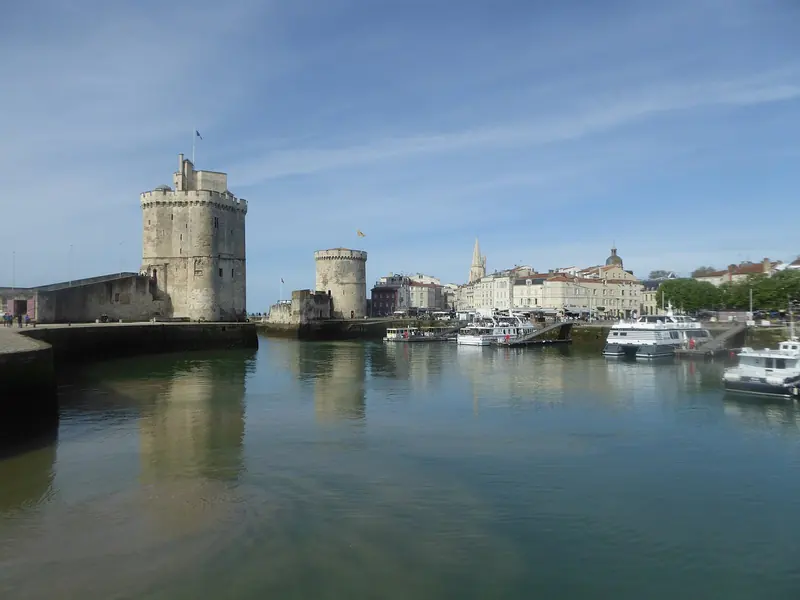
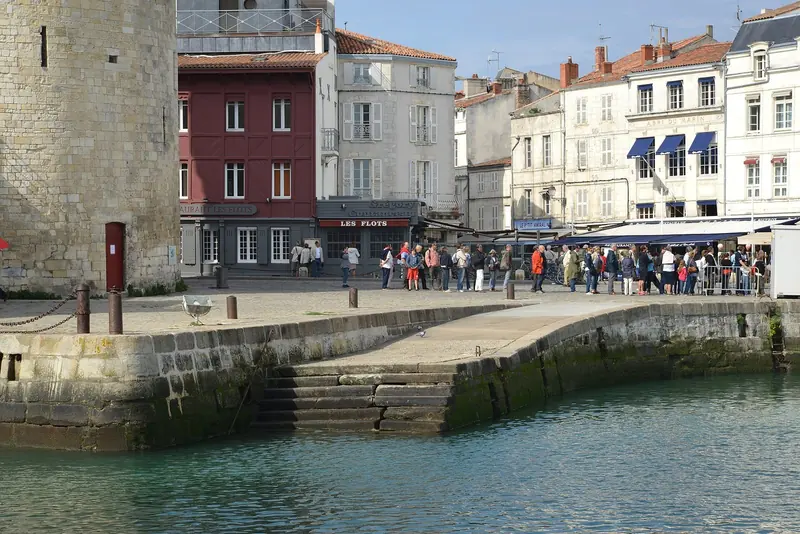
That basin is actually La Rochelle's Vieux Port, the historic Old Port between the Tour Saint-Nicolas and the Tour de la Chaine, entered through a lock gate that opens only from two and a half hours before high water to one and a half hours after, plus a lifting bridge operating within that same window. Saint-Martin-de-Re, on Ile de Re, has its own genuine tidal lock, 12 m wide, with an opening schedule that shifts depending on the day's tidal coefficient. An owner planning to enter either of these two smaller, historic basins needs the tide table in hand; an owner heading for Minimes largely does not.
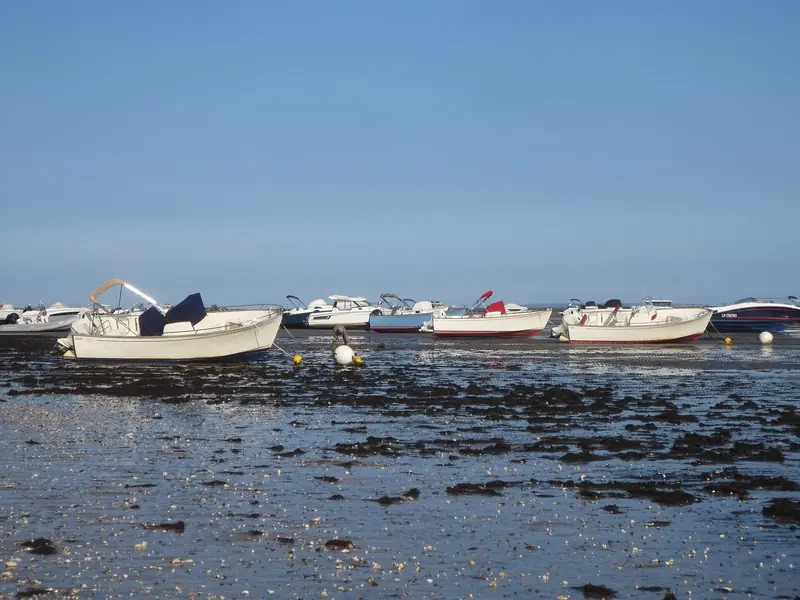
Port des Minimes markets itself as tide-free and mostly is. The genuine tide-gated basin, entered through a lock that opens only for a window either side of high water, is La Rochelle's historic Old Port a few hundred metres away, and confusing the two is the easiest mistake to make on this coast.

The Arcachon Bar: a Named, Documented Hazard
A UK boating forum thread carries direct, dated testimony from sailors who made the crossing: one describes consulting Cap Ferret Semaphore before entering, who tell you what to expect and speak perfect English, while another notes the entrance needs to be taken at or within two hours of high water and certainly not with any wind over the ebb. A third account is blunt about the risk of getting the timing wrong: I would not attempt the channel at low water or even half water, the swell trough is simply too dangerous and there's a real risk of bottoming the boat. A fourth sailor describes following a fishing vessel in and out as a practical confidence check, since local boats time their own passages to the same slack-water window.
A separate, independently written sailing-magazine account describes Arcachon Bay's entrance channels as one of Europe's most complex navigation areas, language that matches the forum testimony rather than contradicting it. Inside the bay itself, anchoring is strictly prohibited within the chart-marked oyster and mussel concessions that cover roughly 175 hectares of the basin, and a 5-knot speed limit applies within 300 m of shore or the edge of any concession, rules that exist specifically because the bay is a working shellfish farm as much as it is a cruising ground.
The Season, and the Vendee Globe's Own Front Door
Water temperature exceeds 20 C from July through the end of September, but the shoulder months carry real risk that the Riviera's does not: gale frequency rises from about 3 percent in September to 10 percent in November, as Atlantic depressions begin arriving in earnest. This is a genuinely shorter, more weather-dependent season than the Mediterranean French coast, where cruising traffic routinely runs into November.
Les Sables-d'Olonne, a short way south along this same Atlantic coast, is the start and finish line of the Vendee Globe, the non-stop, solo, round-the-world race that has become one of ocean sailing's defining events. The 2024-2025 edition started 10 November 2024, and the next edition starts 12 November 2028, since the race runs on a roughly four-year cycle rather than annually. An owner cruising this coast in early November of a race year will find the town, and a fair amount of the surrounding waterfront traffic, entirely given over to the start.
What a Berth Actually Costs, Against the Riviera
Port des Minimes' official price list sets high-season daily rates, 1 May to 30 September, from EUR 12.80 for a boat under 5 m up to EUR 355.60 for 40 to 49.99 m, with multihulls charged at 1.6 times the monohull rate and anything over 24 m paying an extra 5 percent a metre. Outside that window rates drop 50 percent, and a boat paying the daily rate on arrival gets its third night free. Water, showers, toilets, refuse collection and a modest 1.3 kW of electricity are all included in the price. Port d'Arcachon, with about 250 visitor berths, runs roughly EUR 35 to 65 a night in high season depending on length, dropping about 40 percent outside it.
Set those figures against the Mediterranean French Riviera and the gap is real: a 40-foot boat at Antibes's Port Vauban runs EUR 150 to 300 a night in season, while a comparable length at Minimes sits well under EUR 100 even before the low-season discount, and Saint-Tropez's published rate for a large yacht can run into the thousands of euros a night. None of that makes this coast a bargain-basement Riviera. It reflects a different market entirely, oriented around cruising sailors and family boating rather than the megayacht service economy of Antibes, Monaco and Saint-Tropez, and the price difference is a symptom of that positioning as much as it is a discount.
Ile de Re, the Dune du Pilat and What Is Worth Going Ashore For
Ile de Re is reached over a 2.9 km toll bridge, free for cyclists and pedestrians on a separated lane, and the island itself carries about 138 km of dedicated cycling paths, an official Cyclists Welcome destination in its own right. La Rochelle's old harbour is framed by the Tour Saint-Nicolas, construction begun around 1345, and the Tour de la Chaine, begun in 1375, the pair that once held a chain strung between them at night to seal the port, both central to the city's defence during the Great Siege of La Rochelle in 1627 to 1628.
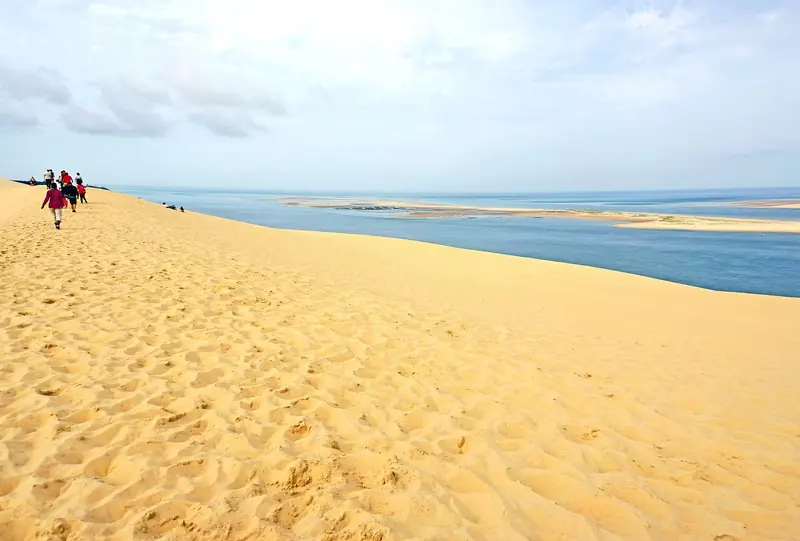
Further south, the Dune du Pilat is the coast's real showpiece, over 100 m tall by every measurement checked for this page, commonly cited near 106.6 m though the exact figure shifts year to year as the dune itself moves, stretching about 2.7 km along the shore at La Teste-de-Buch and advancing inland 1 to 5 m a year depending on wind. Arcachon's oyster culture is the other genuine draw: 81 oyster huts operate around the basin, and a dozen oysters run from around EUR 8 at a basic cabane up to about EUR 38 for premium Gillardeau oysters at a proper restaurant.
The Honest Downside
Set against the French Riviera, the season here is meaningfully shorter, roughly May to October against the Riviera's April to October or later, and the shoulder months carry real Atlantic-depression risk rather than the Mediterranean's comparatively gentle autumn. The tide complicates almost everything: a 5.3 to 6 m spring range, currents exceeding 3 knots in the Pertuis d'Antioche, and a genuinely dangerous bar entrance at Arcachon that documented forum testimony describes in terms no Riviera anchorage would ever need.
The upside of a lower-cost, less crowded coast comes with the honest tradeoff of less superyacht-scale infrastructure: Port des Minimes' own entrance channel, dredged to only 0.8 m below datum, is a genuine draft constraint that simply does not exist at Antibes or Monaco, and this coast's marina culture, Grand Pavois aside, is built around cruising sailors and family boating rather than the megayacht service economy further south. An owner coming here for a cheaper, wilder, more technically demanding French coast will find exactly that. An owner expecting Riviera-style superyacht service at Riviera prices in reverse will not.
En tierra, accesos y reservas
| Getting there | La Rochelle-Ile de Re airport serves the northern end of the coast; Bordeaux-Merignac serves Arcachon, about an hour's drive away. By sea, La Rochelle to Arcachon is about 191 nm; repositioning to the Mediterranean via Gibraltar runs roughly 1,000 to 1,200 nm, about a week to 10 days non-stop. |
|---|---|
| Arriving by sea | Port des Minimes' channel is dredged to 0.8 m below datum, passable more than 80 percent of the time. The Vieux Port's tide gate opens 2 hours 30 minutes before high water to 1 hour 30 minutes after. The Arcachon bar should be crossed within 2 hours of high water and never with wind over the ebb; check with Cap Ferret Semaphore first. |
| What a berth costs | Port des Minimes 2026: EUR 12.80 a night under 5 m up to EUR 355.60 for 40 to 49.99 m in high season, 50 percent off outside 1 May to 30 September, third night free. Port d'Arcachon: roughly EUR 35 to 65 a night in season for an 8 to 10 m boat. |
| Tides | La Rochelle spring range 5.3 m, up to 7.2 m recorded; Pertuis d'Antioche up to 6 m with currents over 3 knots at springs. Arcachon spring range as low as 2 m at neaps to about 4 m at springs. Plan every entrance around the tide table, not the forecast. |
| Clearance | Standard EU temporary admission applies to a non-EU-flagged yacht, up to 18 months without VAT, the same rule as the Mediterranean French Riviera. No regional variation was found for this coast. |
| Anchoring restrictions | Anchoring is prohibited inside Arcachon Bay's chart-marked oyster and mussel concessions, covering roughly 175 hectares. A 5-knot limit applies within 300 m of shore or a concession edge, and a 3-knot limit inside designated mooring zones. |
| Eating and ashore | Ile de Re: about 138 km of cycling paths over a free pedestrian/cycle bridge. La Rochelle: the Tour Saint-Nicolas and Tour de la Chaine flank the Vieux Port. Arcachon: 81 oyster huts around the basin, from about EUR 8 to EUR 38 a dozen depending on grade. |
| Fixed dates | Grand Pavois boat show, Port des Minimes, 22 to 27 September 2026. The Vendee Globe starts from Les Sables-d'Olonne every four years; the next start is 12 November 2028. |
| What is NOT published | A single, reconciled berth count for Port des Minimes (sources range 4,500 to over 5,000). An exact La Rochelle to Ile de Re nautical distance, which one source gives as 27 nm, a figure this research flags as inconsistent with the islands' actual proximity. |
Lo que cuentan armadores y tripulaciones
Crossing the Arcachon bar means calling the shore station first, not guessing
A UK sailor describes the standard local practice directly: you do have to check with Cap Ferret Semaphore for the sea state across the sand bank and swell height, and that they are very informative and speak perfect English, treating the call as routine rather than exceptional.
YBW.com forum, Cruising towards Portugal threadTiming the tide wrong at Arcachon carries a real risk of grounding
A second sailor on the same thread is explicit about the danger: I would not attempt the channel at low water or even half water, the swell trough is simply too dangerous and there's a real risk of bottoming the boat, matched by a forecast that proved accurate on the day, actual swell of 2 metres as the semaphore had predicted.
YBW.com forum, Cruising towards Portugal threadFollowing local fishing traffic is a genuine, practical confidence check
A third account describes timing entrance or exit to coincide with local fishing vessels, noting that boosts one's confidence somewhat, since local boats time their own passages to the same slack-water window a visiting yacht should use.
YBW.com forum, Cruising towards Portugal thread
Lo bueno y lo que conviene vigilar
Puntos fuertes
- France's own sailing capital, on its own numbersLa Rochelle's tourism board itself uses the phrase, backed by more than 150 years of the Societe des Regates Rochelaises and one of the largest marinas in Europe.
- Genuinely cheaper than the Riviera, on published pricesPort des Minimes' official 2026 tariff tops out at EUR 355.60 a night for the largest bracket, against Saint-Tropez rates that run into the thousands for a comparable yacht.
- A serious ocean-racing pedigree on the doorstepLes Sables-d'Olonne, a short way down the coast, starts and finishes the Vendee Globe every four years, one of sailing's defining events.
- A genuine natural landmark, not a marketing oneThe Dune du Pilat, over 100 m tall and Europe's tallest sand dune, is an unmissable, undebatable draw the Riviera has no equivalent for.
- A real cycling and food culture ashoreIle de Re's 138 km of dedicated paths and Arcachon's 81 working oyster huts offer a genuinely different, less curated experience than the Riviera's beach clubs.
A tener en cuenta
- The tide governs almost every decision on this coastA 5.3 to 6 m spring range and currents over 3 knots in the Pertuis d'Antioche mean a channel or a berth can be passable or impassable four hours apart.
- The Arcachon bar is a genuinely dangerous, named hazardDocumented forum testimony describes real risk of bottoming the boat outside the two-hour high-water window, in a way no Riviera anchorage requires.
- A meaningfully shorter season than the MediterraneanRealistically May to October, with gale frequency already at 10 percent by November against the Riviera's gentler autumn.
- Port des Minimes' own channel is a real draft constraintDredged to only 0.8 m below datum, a limitation that simply does not exist at Antibes or Monaco.
- Berth counts and distances are inconsistently published even by good sourcesPort des Minimes' own berth count is disputed across sources by several hundred, and one cited La Rochelle to Ile de Re distance looks inconsistent with the islands' actual geography.
Para quién es: An owner who wants serious sailing pedigree, real Atlantic scale and genuinely cheap berthing next to the French Riviera's prices, and who is prepared to plan every entrance and every channel around the tide rather than around the wind.