Loro Piana
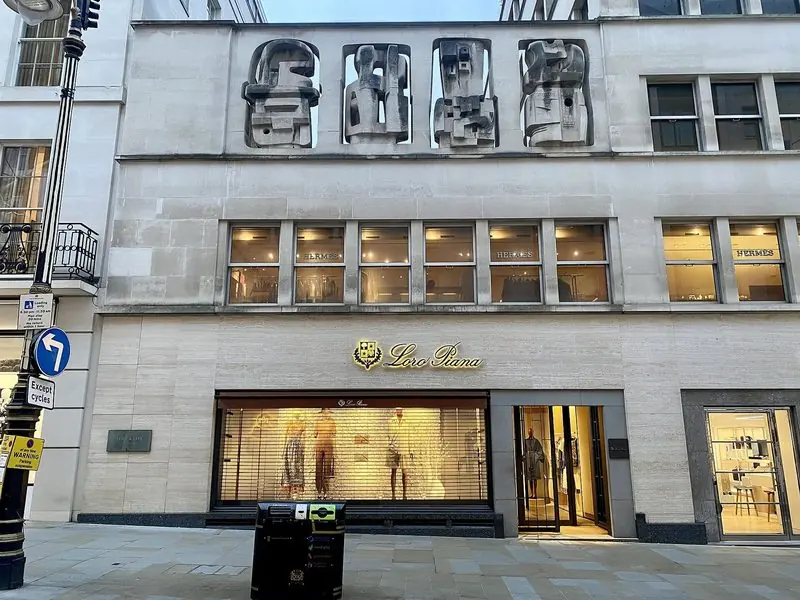
| Categoría | textiles de lujo y tejidos de interior |
|---|---|
| Fundada | 1924 por Pietro Loro Piana |
| Sede | Quarona, Piamonte, Italia |
| Propiedad | parte del grupo LVMH |
| Fibras características | vicuña, cachemir fino y lana merina extrafina |
| Oferta náutica | división de interiores que suministra tejidos y decoración para yates |
| Herencia velera | patrocinador titular de la Loro Piana Superyacht Regatta de 2009 a 2021 |
| Marine certification | Loro Piana publishes no IMO 2010 FTP Code approval or MED wheelmark for its interiors fabrics |
| Superyacht Regatta | title sponsor at Porto Cervo with the Yacht Club Costa Smeralda from 2009 to 2021, an event that now runs under Giorgio Armani |
| Giraglia | title sponsor since 2024, run by the Yacht Club Italiano with the Societe Nautique de Saint-Tropez, the 2026 edition being the 73rd, with a 241 nm offshore leg from Saint-Tropez to Genoa around the Giraglia rock |
| Supply chain | placed under judicial administration by the Court of Milan on 14 July 2025 over subcontractors accused of exploiting workers, with the measure revoked early in April 2026 |
| Remediation | about 2,400 supply-chain audits since 2024 and business ended with around 100 suppliers and subcontractors that failed the company's criteria |
Una casa de fibras raras
Loro Piana la fundó en 1924 Pietro Loro Piana en Quarona, en la región del Piamonte, en el norte de Italia. La familia comerciaba con lana desde principios del siglo diecinueve, así que la empresa se levantó sobre una larga tradición textil. Se hizo un nombre buscando las fibras naturales más raras del mundo, entre ellas la vicuña de Sudamérica y el mejor cachemir de Asia. La lana merina extrafina y otros materiales raros conviven con ellas en su gama. Esa persecución de la materia prima excepcional sigue siendo el núcleo de la marca.
La empresa se organiza en textiles, artículos de lujo e interiores, y hoy forma parte del grupo LVMH. Su reputación descansa en controlar la calidad desde la fibra en bruto hasta el tejido acabado. Ese enfoque vertical le permite garantizar unos estándares que pocos rivales pueden igualar. Los tejidos que fabrica se usan mucho más allá de la ropa, y llegan a la decoración y al interiorismo. Las mismas fibras que hacen un abrigo pueden aparecer en un cojín o en un revestimiento de pared.
Tejidos para el interior
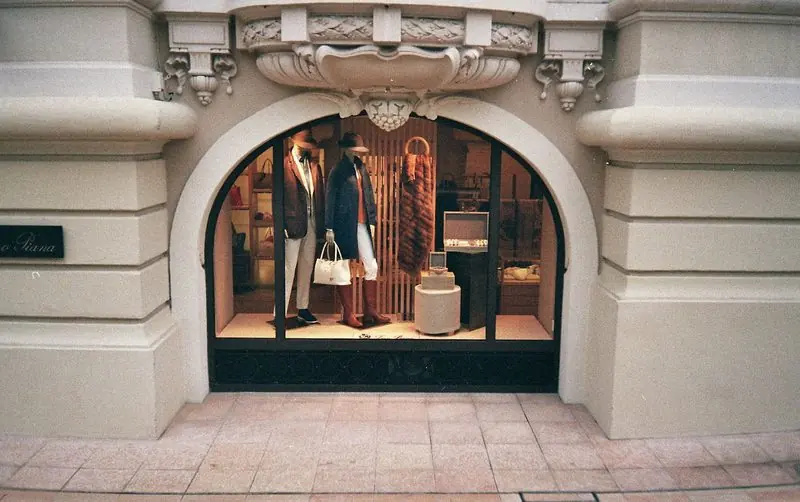
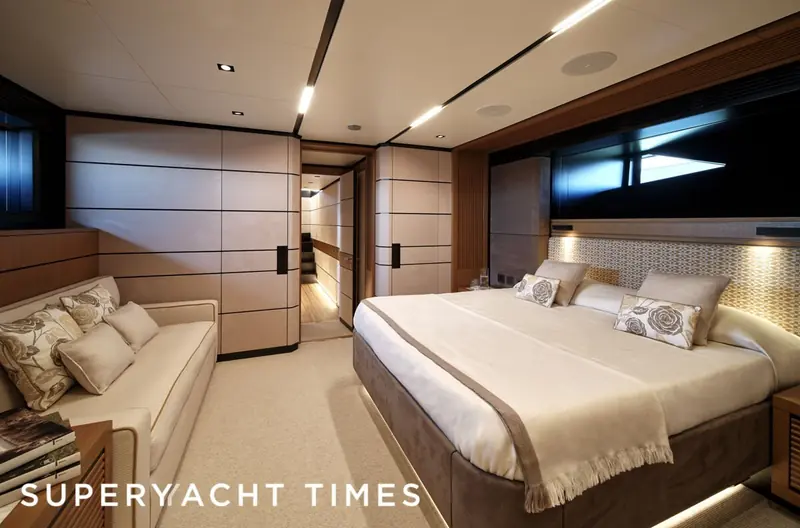
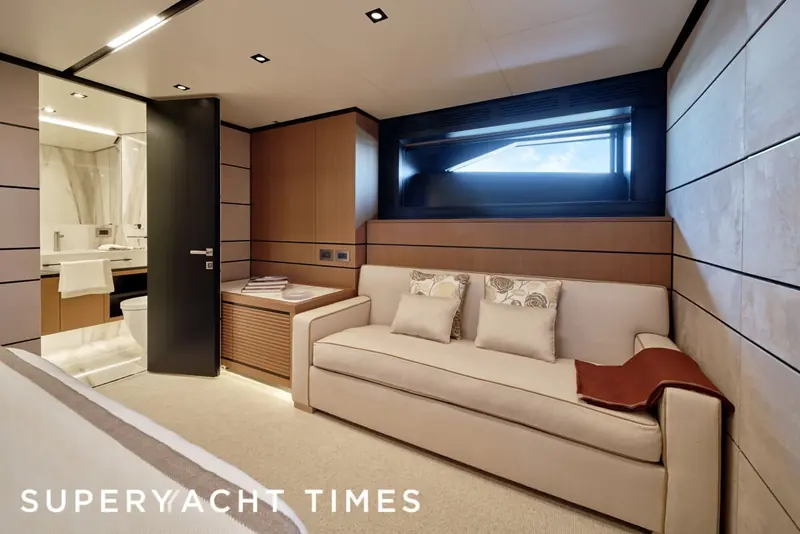
La división de interiores de Loro Piana lleva sus tejidos a casas, yates, aviones privados y hostelería. Para los yates eso significa tapicería, cojines, cortinas y revestimientos de pared tejidos con las fibras de la casa. El atractivo es la misma calidad de material que define su ropa, aplicada a las superficies de un interior. Un diseñador puede especificar tejido de Loro Piana para dar a un salón o a un camarote una calidez y una textura concretas. El trabajo de interiores se ha convertido en una parte clara y diferenciada del negocio.
El uso náutico impone exigencias añadidas al tejido, porque tiene que aguantar el sol, la sal y un desgaste fuerte. La casa desarrolla materiales pensados para rendir en condiciones reales y no solo para quedar bien en un showroom. La gama de interiores extiende la identidad de la marca desde el armario hasta el propio tejido del yate. Eso permite al armador que valora Loro Piana llevarla a todo su entorno. El tejido pasa a ser parte de cómo se siente el interior.
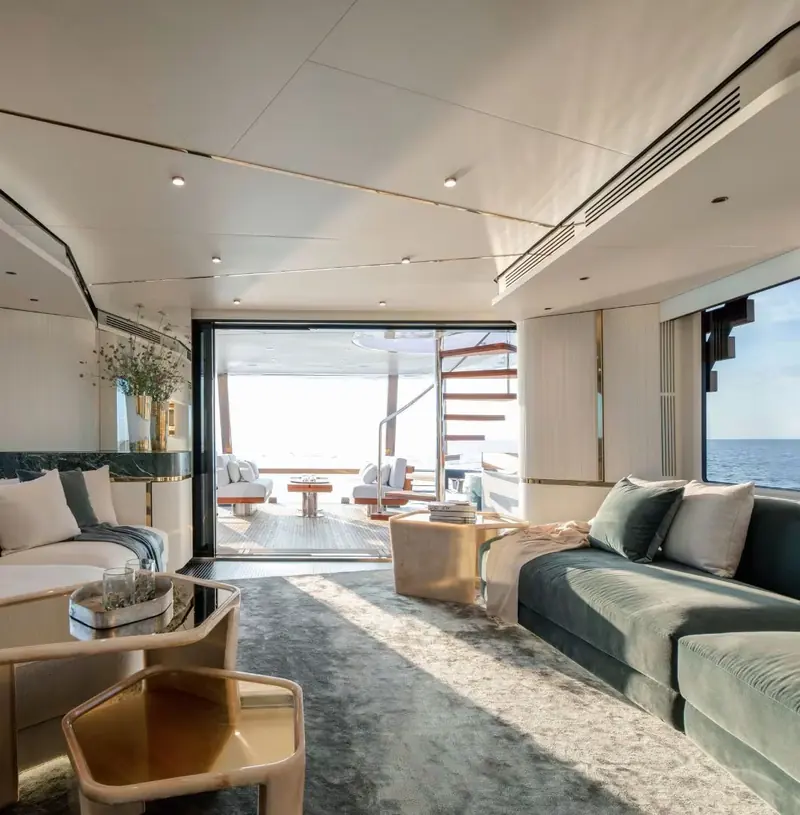
La casa de la vicuña y del cachemir, cuya herencia velera es tan profunda como su tejido.
Oficio de la fibra al tejido
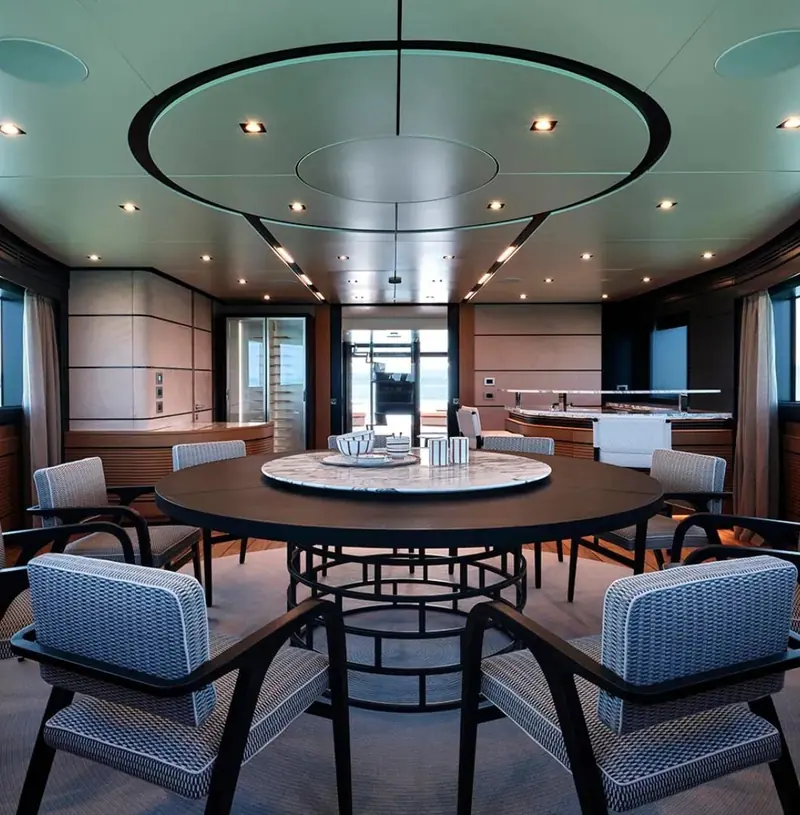
La fuerza de Loro Piana está en su dominio de todo el proceso textil. Compra las fibras directamente, trabajando a menudo con las comunidades y los animales que las producen, y controla el hilado y el tejido. Eso le permite mantener una calidad constante desde la materia prima hasta el tejido acabado. Las fibras más raras, como la vicuña, solo están disponibles en cantidades diminutas, lo que añade a su valor. Convertirlas en un tejido bello y duradero es el oficio central de la empresa.
Para el interiorismo, ese oficio se adapta a las necesidades de la decoración y no a las de la ropa. Los tejidos de un yate tienen que equilibrar la suavidad por la que se conoce a la marca con la resistencia que exige un interior en uso. La casa tira de un siglo de conocimiento textil para dar con ese equilibrio. Su larga experiencia con fibras naturales informa cómo se comportan los materiales con el tiempo. Esa profundidad es lo que paga el armador cuando elige la marca.
La vela en la sangre de la marca
La vela está cerca del corazón de la identidad de Loro Piana, empujada en parte por la pasión personal de la familia. Durante años la empresa prestó su nombre a la Loro Piana Superyacht Regatta, celebrada en Porto Cervo, en Cerdeña, en cooperación con el Yacht Club Costa Smeralda. Aquel evento reunía a algunos de los mejores veleros del mundo bajo la enseña de Loro Piana. La marca se ha vinculado también a otras regatas destacadas del Mediterráneo y del Caribe. Esa conexión le da una presencia náutica con profundidad real.
La herencia velera es más que patrocinio, porque miembros de la familia han sido navegantes entusiastas y serios. Esa implicación genuina da credibilidad al sitio que ocupa la marca en el mundo náutico. Condiciona además cómo piensa la casa los materiales que tienen que rendir al aire libre y en la mar. La asociación con la regata ató firmemente el nombre a la vela de superyates durante más de una década. Pocas casas de lujo tienen un vínculo tan directo con el deporte.
Posición entre los armadores
Loro Piana ocupa una posición rara como casa de moda y textil con lazos auténticos con la vela. El armador que conoce la marca por su ropa la reconoce al instante a bordo de un yate. Su división de interiores le da una manera de llevar esa calidad al propio barco. El largo patrocinio de la regata reforzó su posición en la comunidad náutica. Entre los armadores exigentes el nombre lleva un prestigio silencioso.
Para el armador, elegir tejido de Loro Piana es una declaración de preferencia por los mejores materiales naturales. Señala un gusto por la calidad sin ruido antes que por el logotipo evidente. La herencia velera de la casa hace que esa elección resulte especialmente adecuada en un yate. Su combinación de fibras raras y de credibilidad marina es difícil de igualar. Loro Piana sigue siendo una referencia del textil de lujo a flote.
What it costs, and how it is actually bought
Loro Piana publishes no price per metre for interiors fabric, and the range is sold through agents and specifier showrooms to interior designers. Owners do not buy it direct. The clothing side gives a sense of scale: a pure vicuna stole starts around USD 7,800 and a part-vicuna cape runs past USD 32,000. Interiors cloth is priced by fibre, weight and width, and the spread across the range is enormous.
The number that matters on a yacht is not the metre rate. It is the total metreage, which pattern repeat and grain direction can inflate by a third, plus the make-up cost of the upholsterer. Ask for the quotation to state metreage, repeat and wastage separately, and buy the spare cloth in the same dye lot at the same time.
The supply chain, and why an owner should care
On 14 July 2025 the Court of Milan placed Loro Piana under judicial administration for twelve months, having found the company negligently facilitated the exploitation of workers at subcontractors, in a case that began with the assault of a migrant worker seeking unpaid wages. The company said its supplier had not disclosed the subcontractors and that it ended the relationship within 24 hours of being told.
The court revoked the measure early in April 2026, describing the company's response as a virtuous path. Loro Piana says it has run about 2,400 supply-chain audits since 2024 and cut ties with around 100 suppliers and subcontractors. An owner chartering a yacht photographed for a magazine is lending his boat to whatever the brands aboard are carrying, and this one now has among the most closely examined supply chains in Italy.
Sailing, and what the sponsorship actually signals
Loro Piana put its name to the superyacht regatta at Porto Cervo with the Yacht Club Costa Smeralda from 2009 to 2021, and that event now runs under Giorgio Armani. Since 2024 the house has been title sponsor of the Giraglia, organised by the Yacht Club Italiano with the Societe Nautique de Saint-Tropez, whose 2026 edition was the 73rd.
The Giraglia is a real race and not a fashion week afloat. Four days of coastal racing off Saint-Tropez lead into a 241 nautical mile offshore leg to Genoa around the Giraglia rock at the top of Corsica. Owners who race their own boats meet the brand at the dock, which is a materially different kind of association from a showroom.
Against the alternatives, and who should buy elsewhere
The furnishing textile houses are the direct rivals, with Rubelli and Dedar in Italy and Pierre Frey in France covering the same designers and the same yachts, generally with deeper marine documentation. Against those, Loro Piana wins on fibre quality and on a name the owner's wife already knows. Against a technical marine supplier it loses on certification and on abrasion.
The owner who should specify it wants the private areas of the boat, the owner's suite, the study, the master headboard, to feel like nothing else afloat. The owner who should look elsewhere is furnishing a charter yacht throughout, is putting the cloth where guests sit wet, or wants a single supplier to carry the fire certification for the whole interior.
Seeing the collection before ordering
Loro Piana shows its interiors range each year at Milan's Salone del Mobile alongside the rest of the Haworth Lifestyle group, and an owner or a designer can see and handle a season's cloths on the stand rather than working from swatches alone. For a yacht order that spans several rooms and multiple weights of cloth, seeing the hand and the drape of a fabric in person before it is cut is worth the trip.
The trade-only channel cuts both ways. It keeps quality and consistency high because every yard of cloth passes through the same specifier network, but it means an owner has no direct account with the house and no way to reorder a discontinued colourway once a designer's relationship with Loro Piana ends. Keep the interior designer's specification sheet with the yacht's own documents, not just on the designer's file.
Información práctica
| How it is bought | Interiors fabric is sold through agents and specifier showrooms to interior designers and yacht outfitters; owners do not buy it direct and there is no published price list. |
|---|---|
| Pricing benchmark | General retail Loro Piana fabric has been seen at roughly GBP 150 to 165 a metre through specifier stockists; the marine range, sold only through the trade, is not quoted at that level and has to be requested project by project. |
| What actually drives the bill | Total metreage, not the rate per metre. Pattern repeat and grain matching can inflate the metreage needed by around a third, so ask any quotation to state metreage, repeat and wastage as separate lines. |
| Fire certification | Loro Piana publishes no blanket IMO 2010 FTP Code approval or MED wheelmark for its interiors range; a commercially registered yacht over 24 m needs the certificate named and supplied in the purchase order before any hide is cut, not assumed. |
| Care aboard | Fine natural fibres need a written laying-up procedure: air conditioning maintained through a summer layup, and spare cloth from the same dye lot bought at the time of order, because dye lots drift over time. |
| What is not published | No per-metre marine price list, and no public list of which of its roughly 200 fabrics currently hold fire-test certificates. |
Lo que cuentan armadores y tripulaciones
Loro Piana is a recurring name on delivered superyacht interiors
The house is credited with the interior decor of Ferretti's wallywhy200 and, in partnership with Benetti, the new Motopanfilo 37M.
SuperyachtTimesThe Milan court's monitor endorsed the remediation as genuine
The ruling that lifted the judicial administration early found the company had undertaken and swiftly completed a virtuous path, after roughly 2,400 supplier audits and around 100 supplier terminations since 2024.
WWDThe marine range is a deliberate technical adaptation, not a residential fabric repurposed
A Paris showroom opened in 2017 specifically to develop yacht and private-jet interiors, and the outdoor line is built on Sunbrella rather than the house's own noble fibres.
Boat International
Lo bueno y lo que conviene vigilar
Puntos fuertes
- Vertical control of exceptional fibreOwnership of the supply chain from animal through spinning to finished cloth, in fibres such as 12 to 13 micron vicuna and 13.5 micron baby cashmere, is not something a rival can replicate quickly.
- A name with a current, active record aboardNamed work on record includes Ferretti's wallywhy200 and, with Benetti, the new Motopanfilo 37M, which puts the brand in the conversation as an active marine supplier and not a legacy claim.
- Continuity as a supplierA house now valued at about EUR 11 billion inside LVMH is a supplier with close to zero risk of disappearing mid-refit, unlike a boutique atelier.
A tener en cuenta
- No published fire certificationUnlike some technical marine fabric houses, Loro Piana does not publish an FTP Code or MED wheelmark position, leaving the owner to chase paperwork the supplier could simply publish.
- The fibre is wrong for anywhere guests sit wetAniline-dyed cashmere and fine merino absorb sunscreen and salt water and abrade under daily use, so the range is only correct for the private, dry parts of the interior.
- A live supply-chain finding, even though resolvedThe Court of Milan placed the company under judicial administration in July 2025 over labour conditions at a subcontractor; the measure was lifted early in April 2026 after audited remediation, but it is a fact an owner chartering the yacht should be able to answer for.
Para quién es: Armadores que quieren las fibras naturales más raras del mundo tejidas en el interior de su yate.