Mantus Marine
| Category | anchors and ground tackle - the M1 and M2 anchor ranges, chain, bridles and swivels |
|---|---|
| Founded | 2011 according to Marine Products Direct, 2012 according to Fisheries Supply - sources disagree on the exact year |
| Founder | Greg Kutsen M.D., an emergency room physician, after his own anchor dragged on him |
| Headquarters and retail storefront | 8820 Frey Rd, Houston, Texas 77034 |
| Ownership | privately held, run directly by its founder |
| Sold | direct at mantusmarine.com, through a worldwide dealer network, and from the Houston storefront |
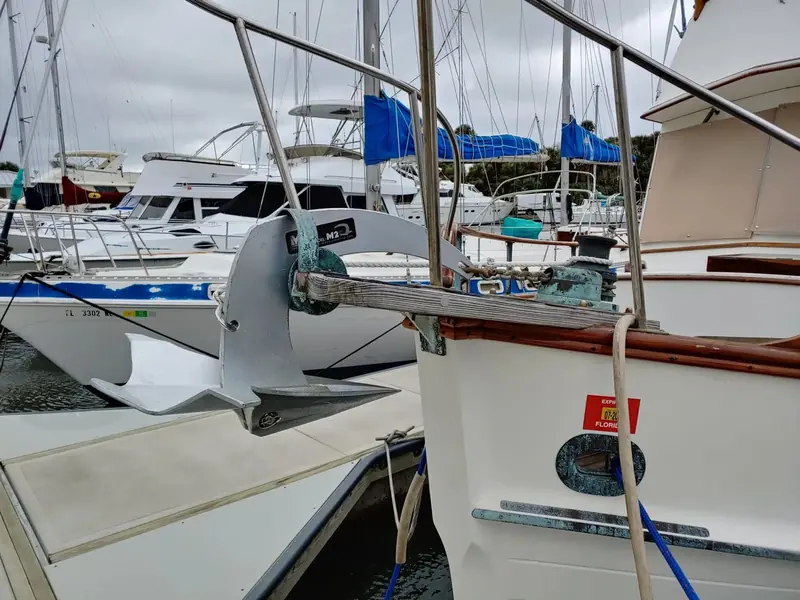
| M1 range | 2.5 lb to 220 lb, with a roll bar, self-launching shank geometry for most bow rollers |
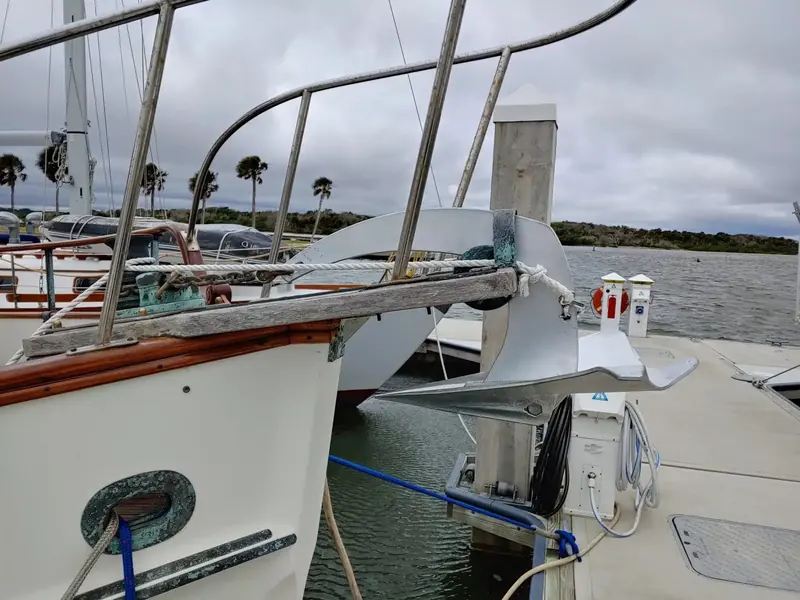
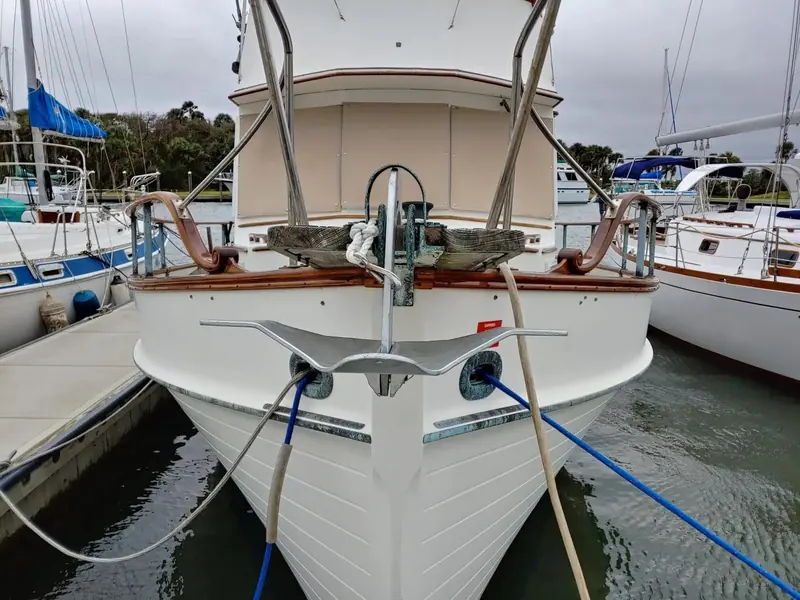
| M2 range | 8 lb to 175 lb, no roll bar, built to fit bow sprits and pulpits with a slotted anchor housing |
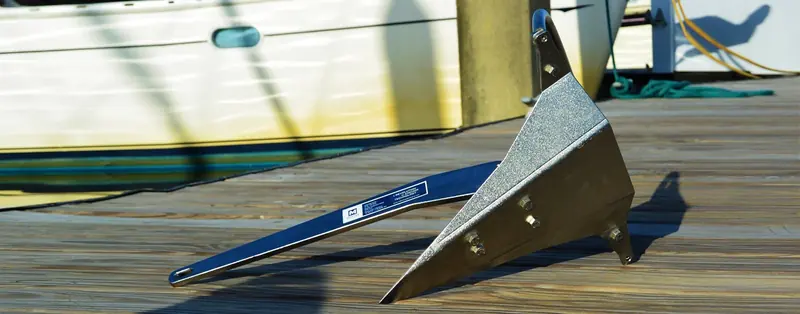
| Materials | hot dip galvanized carbon steel, or a 2205 duplex stainless steel shank with a 316L stainless fluke |
| Warranty | lifetime on original-purchaser parts, 3 years on the galvanized coating |
| Award | Practical Sailor's 2016 Editors' Choice for the Mantus Dinghy Anchor |
| 2020 | shifted its 3D printing capacity to make PPE for Houston hospitals during the COVID-19 shortage |
A Houston ER Doctor's Anchor
Kutsen's own account, told publicly in interviews including a 2016 podcast conversation on Slow Boat Sailing, is that years of anchoring problems on his own cruising boat pushed him to design something better rather than accept the anchors already on the market. Sources differ on whether the company began in 2011 or 2012, but they agree on the place, Houston, and the founder, and the company has stayed headquartered and retailing from the same Frey Road address since. The stated mission on its own site is blunt: build the most reliable and durable boating gear it can, then back it with real service and warranty rather than a marketing claim.
The range grew from the original M1 anchor into the no-roll-bar M2, a dedicated Quick Connect dinghy anchor, chain, universal bridles, swivels and a wider catalogue of boating accessories, dive gear and lighting. In 2020, with COVID-19 causing a personal protective equipment shortage in Texas hospitals, Mantus repurposed its 3D printing capacity to convert snorkel masks into BiPAP ventilator masks and produce acrylic intubation shields for local emergency rooms and ICUs, a detail reported by both Boating Industry and the National Marine Manufacturers Association. It is a small detail for an anchor maker, but it fits a company still run by the physician who founded it.
M1 or M2: Two Different Answers to the Same Bow
The M1 is Mantus's original design and the one built around a roll bar, a curved bar across the top of the shank that helps the anchor tumble upright and re-engage the bottom when the boat swings on its rode. Mantus's own M1 page lists fifteen sizes from a 2.5 lb day anchor up to 220 lb, with the 45 lb suited to roughly 39 to 43 ft boats and the 220 lb to boats around 95 to 100 ft. The M2 was designed afterward specifically for boats whose bow sprit or pulpit will not clear a roll bar, and it uses rear foils and a nose ballast instead to get the same self-righting behaviour without the bar. Mantus's own copy is candid that the M1's roll bar rolls better in really soft silty bottoms, which is exactly what the M2 trades away for a slimmer fit.
SV Panope, a widely cited independent YouTube tester who drops real anchors into real seabeds and measures the pull, found the two ranges genuinely diverge rather than one simply beating the other. The M2 recorded some of the highest holding numbers of any anchor of its type in seabeds with at least some sand, but performed poorly in sand-free soft mud. The M1 showed the opposite pattern, some of the best numbers in soft mud and only middle-of-the-pack holding in sand. Reset behaviour split the same way: in a sandy-mud seabed the M2 re-engaged well after a direction change, but in the softer mud of Sucia Island the M2 fouled on its own fluke and failed to reset at all, while the M1 re-engaged in the same seabed. A buyer choosing between the two should be choosing for a home seabed and a bow fitting, not for whichever one carries the newer product photography.
Mantus prices a 155 lb anchor on its own website the same way it prices a headlamp, and that alone sets it apart from most of the marine hardware trade.
What a Yacht-Sized Mantus Actually Costs
Every price above was read directly from Mantus's own product pages in September 2026, and every one of them is quoted against a higher struck-through comparison price on the same page, for example the 155 lb stainless M1 at 3,498 USD against 5,830 USD, and the 175 lb galvanized M2 at 2,030 USD against 2,900 USD. That pattern held on every product page checked, which makes the struck-through figure function as something close to a list price and the live figure as the real one. Stainless costs roughly double galvanized at the same weight across the range, which is the ordinary premium for a mirror-finish 2205 duplex shank and a 316L fluke over hot dip galvanized carbon steel.
The gap between buying direct and buying through a dealer is real and it is sourced from two independent retail listings rather than from Mantus itself. The same 45 lb stainless M1 that Mantus sells direct for 1,040.40 USD is listed by the retailer MauriPro at 1,734.00 USD list, discounted to 1,647.95 USD, which is close to Mantus's own struck-through comparison price and well above what the maker charges through its own site. Beyond the anchor itself, Mantus prices its G4 galvanized chain from 4.13 USD a foot at 1/4 inch up to 9.33 USD a foot at 1/2 inch, and its universal bridles at 315 to 361 USD for a 30 to 40 ft boat, 404 to 516 USD for 40 to 50 ft and 691 to 788 USD for 50 to 70 ft, each including the matching chain hook. What is not published anywhere on the site is a single all-in system price for anchor, chain, swivel and bridle together for a given boat length, so a buyer has to add the line items himself.
The Independent Tests: Practical Sailor, SAIL and SV Panope
Practical Sailor's most consequential Mantus story is not a holding-power number but a safety catch. Testing a bolt-together M1 shank, the magazine found it was the weakest shank of any similarly designed anchor it had tested, built from mild steel. Mantus moved fast: every anchor sold after 8 December 2013 shipped with a redesigned shank in 700 megapascal steel, and existing owners could get the upgraded part for the cost of shipping, backed by the same lifetime guarantee as the rest of the anchor. Practical Sailor kept checking rather than taking the fix on faith, and on a later sample found the bolts stamped 307A, a lower grade than the Grade 5, 800 megapascal bolts Mantus claimed to ship as standard, and told readers to check their own bolt markings. Separately, the magazine named the Mantus Dinghy Anchor its 2016 Editors' Choice in the small-anchor class, after testing it against four competing 2 to 3 lb anchors and calling it the only 2 lb anchor the reviewers had ever felt safe leaving a dinghy attached to.
SAIL Magazine ran its own gear review of the Mantus Dinghy Anchor in April 2025, written by technical editor Adam Cove from several years of real use on a 7 ft 6 in Puffin dinghy from the coast of Maine to Caribbean beaches, concluding it had never dragged and outperformed anything else he had used at that size. For the full-size M1 and M2, the most detailed independent record available publicly is SV Panope's video testing, which drops anchors into known seabeds and measures resistance directly rather than relying on a manufacturer's tank. Its findings on the M1 and M2 mud-versus-sand split, described above, are the closest thing to an independent holding-power comparison that exists for the yacht-sized range, and neither Practical Sailor nor SAIL has published a load-cell test of the 45 to 175 lb sizes this site is written for. That gap is worth knowing before treating any single holding number as settled.
Materials, Finish and What the Warranty Actually Covers
The material choice is a real decision, not a finish option. Galvanized carbon steel is the working cruiser's choice, cheaper by roughly half at the same weight and proven at sea for decades, but the coating is a sacrificial layer that wears at the bow roller pivot and the shackle pin faster than anywhere else on the anchor, which is what the separate three-year galvanizing warranty is written around. The stainless build uses 2205 duplex steel for the shank, a grade chosen for fatigue strength rather than just corrosion resistance, paired with a 316L stainless fluke that Mantus surface hardens to resist the scoring a fluke takes dragging across rock and shell. It looks better at the bow and it costs roughly double.
The warranty itself is lifetime on the original purchaser for the anchor's structural parts, which is where the 2013 shank story matters again: Mantus did not just recall the bad part, it built a permanent free-replacement pipeline under the same guarantee, and that pipeline is still how an owner with an old mild-steel shank gets the upgrade today, paying only shipping. What the warranty page does not cover, and does not claim to, is wear items - the galvanizing itself past three years, and any part damaged by a rock or a mooring chain rather than a manufacturing fault. An owner buying secondhand should ask for the anchor's age and shank generation before assuming the current warranty terms apply to a decade-old casting.
The Rest of the Ground Tackle: Chain, Bridles and Swivels
The chain and bridle side of the catalogue is priced the same way as the anchors, by the foot or by boat length rather than by a quote. G4 galvanized chain to Grade 40/43 runs 4.13 USD a foot at 1/4 inch up to 9.33 USD a foot at 1/2 inch, with a Cromox duplex stainless G4 chain sold alongside it for owners who want to match a stainless anchor all the way to the windlass. The bridle line is sized by boat length rather than by chain diameter, 315 to 361 USD for 30 to 40 ft, 404 to 516 USD for 40 to 50 ft and 691 to 788 USD for 50 to 70 ft, each bundled with the matching Mantus M3 chain hook rather than sold as a bare rope.
The swivel is the one product in the line where real owner experience genuinely splits. On Trawler Forum's own swivel thread, one owner who paired a Mantus swivel with a Manson Supreme reported hit-or-miss sets and resets that stopped happening entirely once the swivel came off, and dove on the anchor to watch it lying on its side rather than digging in, suspecting the swivel's own weight was the cause. In the same thread, another owner running a Mantus swivel with a Rocna anchor reported hundreds of nights at anchor across five summers with no such problem at all. Both reports are genuine and neither cancels the other out, which is itself the honest answer: a swivel changes how any anchor sets, Mantus's own knowledge base says so, and the failures reported are consistent with that general caution about swivels rather than a defect unique to this one.
Who Should Buy One, and Where It Falls Short
The buyer this is built for is the cruising or passage-making owner re-equipping ground tackle on a 35 to 65 ft yacht, who wants a firm number before he calls a chandlery and who anchors in a genuine range of seabeds rather than one home marina. Owners on The Hull Truth and Trawler Forum describe exactly that use case: one Hull Truth poster reported his Mantus as the only anchor he has owned that never dragged across many difficult anchorages, and Practical Sailor separately noted that several cruising boats rode out Hurricane Matthew on Mantus anchors along the Florida coast. Fishing owners on The Hull Truth are more mixed, some reporting the anchor can glide before it bites and that it is not their first choice on a rocky bottom, which matters for a working boat that resets often in a day rather than sets once and stays.
The real weaknesses are specific rather than vague. Picking the wrong model for a given bow is the biggest one: the M1's roll bar is a genuine soft-mud advantage but it is also the exact bulk that will not clear some bow sprits and pulpits, which is the entire reason the M2 exists, and SV Panope's testing shows the M2 can pay for that slimmer fit with a real failure to reset in soft mud. The swivel line has a genuinely mixed owner record rather than a uniformly good one. And the size band this site's readers are most likely to buy, 105 lb to 220 lb for yachts from roughly 20 to 33 m, is the one with the least independent load-cell data publicly available; the detailed seabed comparisons that exist were run on smaller recreational sizes, not the largest castings in the range.
Información práctica
| M1 galvanized, direct from Mantus, read September 2026 | 105 lb at 1,127.00 USD, discounted from a struck-through 1,610.00 USD; 155 lb at 1,793.40 USD, discounted from 2,562.00 USD. Both prices are equipment only and exclude shipping and any bow-roller modification. |
|---|---|
| M1 stainless, direct from Mantus, read September 2026 | 45 lb at 1,040.40 USD, discounted from 1,734.00 USD; 155 lb at 3,498.00 USD, discounted from 5,830.00 USD. Stainless runs roughly double galvanized at the same weight. |
| M2, direct from Mantus, read September 2026 | 45 lb galvanized at 780.00 USD; 85 lb galvanized at 1,029.00 USD, discounted from 1,470.00 USD; 175 lb galvanized at 2,030.00 USD, discounted from 2,900.00 USD. |
| Buying through a dealer instead of direct | The retailer MauriPro lists the same 45 lb stainless M1 at 1,734.00 USD, on sale to 1,647.95 USD, roughly 58 percent more than Mantus's own direct price for the identical anchor. Confirm model, weight and material match exactly before comparing any two listings. |
| Chain and bridles | G4 galvanized chain from 4.13 USD a foot at 1/4 inch to 9.33 USD a foot at 1/2 inch. Universal bridles at 315 to 361 USD for 30 to 40 ft boats, 404 to 516 USD for 40 to 50 ft, 691 to 788 USD for 50 to 70 ft, each bundled with a matching chain hook. |
| Warranty and what it excludes | Lifetime on original-purchaser structural parts, 3 years separately on the galvanized coating. Wear from rock, chain chafe or age past the coating warranty is on the owner, and a secondhand buyer should confirm the shank generation before assuming full cover applies. |
| How you order | Direct at mantusmarine.com, through Mantus's worldwide dealer network, or in person at the Houston storefront on Frey Road. No stated minimum lead time is published; large stainless sizes are the ones most likely to be made to order rather than held in stock. |
| What is NOT published | No all-in system price for anchor, chain, swivel and bridle together by boat length. No independent load-cell test of the 105 to 220 lb sizes; published third-party seabed testing (SV Panope) covers smaller recreational weights. No confirmed founding year, sources split 2011 versus 2012. |
Lo que cuentan armadores y tripulaciones
Never dragged across many difficult anchorages
A Hull Truth poster reviewing his own Mantus reported it as the only anchor he has owned that has never dragged, across a range of anchorages he described as difficult.
The Hull TruthSeveral boats rode out Hurricane Matthew on a Mantus
Practical Sailor reported that several cruising boats weathered Hurricane Matthew's winds on Mantus anchors along the Florida coast, cited by the magazine as real-world evidence alongside its own bench testing.
Practical SailorMixed results pairing a Mantus swivel with another maker's anchor
One owner running a Mantus swivel ahead of a Manson Supreme reported repeated hit-or-miss sets and resets that stopped once the swivel was removed, and dove on the anchor to find it lying on its side rather than dug in.
Trawler ForumFive trouble-free summers with the same swivel design
A different owner running a Mantus swivel ahead of a Rocna reported hundreds of nights at anchor across five summers with no setting problems at all, in the same thread as the mixed report above.
Trawler ForumNot the first choice for a working fishing boat on rock
Hull Truth posters discussing the Mantus for fishing use reported it can glide before it bites and is not their preferred anchor on a rocky bottom, a different use case from the cruising anchorages where most owner praise comes from.
The Hull TruthNever dragged in years of dinghy use from Maine to the Caribbean
SAIL Magazine's own technical editor reported years of real use of the small Mantus dinghy anchor without a single drag, from the rocky coast of Maine to Caribbean beaches.
SAIL Magazine
Lo bueno y lo que conviene vigilar
Puntos fuertes
- Real prices, checkable by anyoneEvery size and material combination is priced on Mantus's own site, not quoted through a dealer, and the direct price is verifiably lower than dealer listings for the same anchor, roughly 58 percent lower on the 45 lb stainless M1 compared with MauriPro's listing.
- It fixed a real safety fault fast and kept fixing itPractical Sailor found a weak mild-steel shank, Mantus redesigned it in 700 megapascal steel within months and built a permanent free-upgrade pipeline under its lifetime warranty, one that Practical Sailor's later bolt-grade check shows the company is still expected to answer for.
- Two real anchors, not one anchor in two coloursSV Panope's independent testing shows the M1 and M2 genuinely trade soft-mud reliability against sand holding and bow fit, which means a buyer who matches the model to his own seabed and bow gets a real advantage, not a marketing choice.
- An award from a magazine with no reason to flatter itPractical Sailor's 2016 Editors' Choice for the Mantus Dinghy Anchor, and SAIL Magazine's own April 2025 gear review reaching the same conclusion independently years apart, are both tests run on the anchor's own performance rather than the company's word.
A tener en cuenta
- The M2 can fail to reset in soft mudSV Panope's testing found the M2 fouled on its own fluke and failed to re-engage after a direction change in the soft mud at Sucia Island, exactly the seabed where the roll-bar M1 performed best, so picking the slimmer M2 for its bow fit can cost real holding in the wrong bottom.
- The swivel's owner record is genuinely mixedOn Trawler Forum's own swivel thread, one owner reported repeated hit-or-miss sets that stopped once the Mantus swivel came off, while another reported five trouble-free summers with the same swivel on a different anchor. Neither report is invented, and neither settles it.
- Quality control has needed independent checking beforeEven after the 2013 shank fix, Practical Sailor found a sample anchor with bolts stamped to a lower grade than Mantus's own stated Grade 5 specification, which is the kind of thing a buyer cannot verify himself without a caliper and a metallurgy reference.
- The largest, most yacht-relevant sizes are the least independently testedPublished third-party seabed comparisons exist mainly for recreational weights. Nobody has publicly run a load-cell test on the 105 to 220 lb sizes that a 20 to 33 m yacht would actually carry, so a buyer at that end of the range is relying more on the maker's own figures than a smaller-boat owner is.
- The company will not settle its own founding yearPublic sources split between 2011 and 2012 for when Mantus started, a small thing but a sign that a company this size has not standardised its own basic history, which matters less for anchoring performance than it does for judging how carefully the rest of its published material has been checked.
Para quién es: An owner re-equipping the ground tackle on a 35 to 65 ft cruising yacht who wants a published price and a model matched to his own bow fitting and home seabed, rather than whichever anchor the chandlery happens to stock.