Nautical Structures
| Founded | 1986, as a division of NS Industries, Inc. |
|---|---|
| Headquarters and main plant | 94,000 sq ft facility, Largo, Florida |
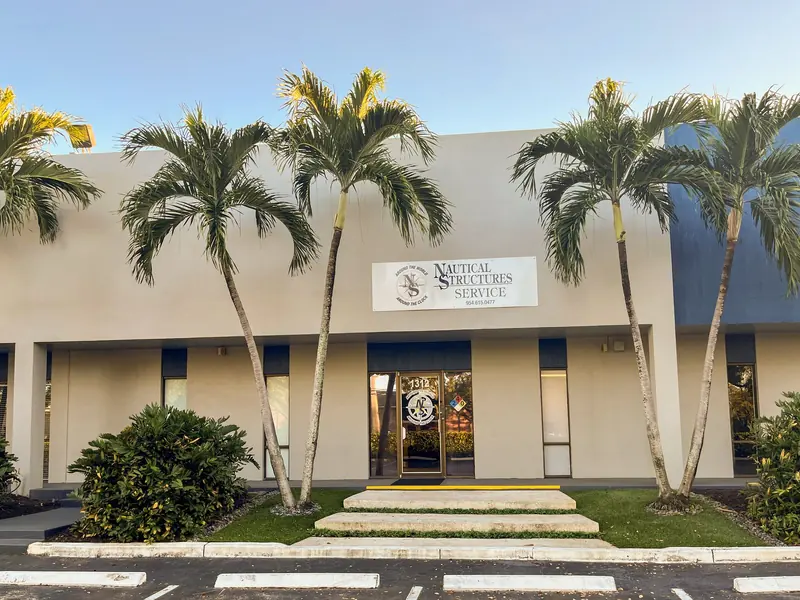
| Service headquarters | 1312 W. McNab Road, Fort Lauderdale, FL, opened January 2023 |
| Product lines | EZ Fixed, Extending, Knuckle and Folding deck cranes; Overhead Beam cranes; HMC and Euro Series davits; passerelles, gangplanks and transom lifts |
| EZ Series safe working load | 2,500 lb to 20,000-plus lb, for yachts 30 to 115-plus metres |
| HMC Hydraulic Mini-Crane | aluminum alloy construction, in production more than 25 years |
| NS-Series type approval, announced METSTRADE November 16 2023: Cargo-UMT 2,000-5,300 lb, HOP 1,300-4,400 lb, LSA (under 500GT) 1,300-4,400 lb, SOLAS (over 500GT) 1,700-2,600 lb | |
| Named case | Captain Noel Kormos, M/Y Azteca II, replaced an Opacmare Galactica crane with a Nautical Structures knuckle-boom crane, autumn 2012 |
| Founder Rick Thomas, on uncertified personnel lifting: "This subject has been the elephant in the room for years" | |
| Pricing | not published anywhere found in this research; quoted per installation |
What Nautical Structures actually builds
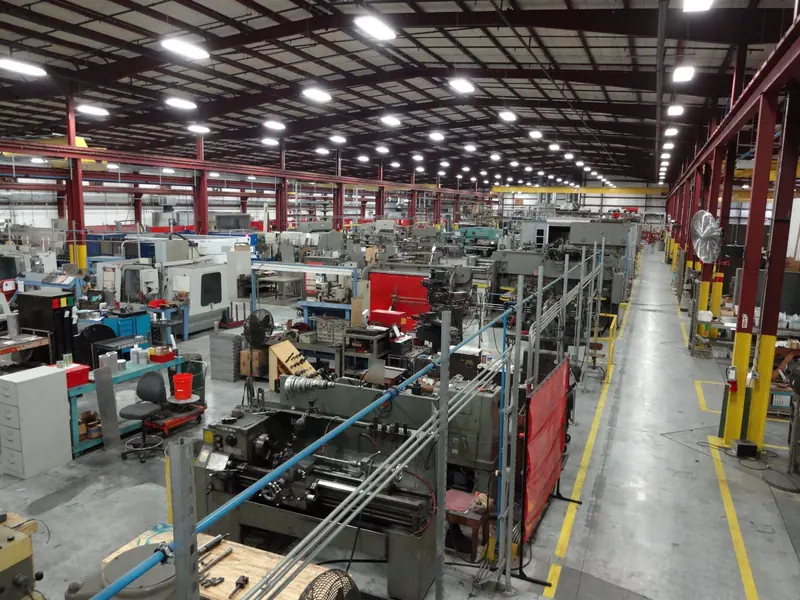
Nautical Structures Industries was founded in 1986 and operates as a division of the parent company NS Industries, alongside separate divisions for commercial, marine and military work and a precision fabrication arm called NSI Precision. Its main plant sits on 94,000 square feet in Largo, Florida, renovated for higher-throughput production, and the company states it has spent more than twenty five years building a dedicated network of service and support partners for round-the-clock global coverage.
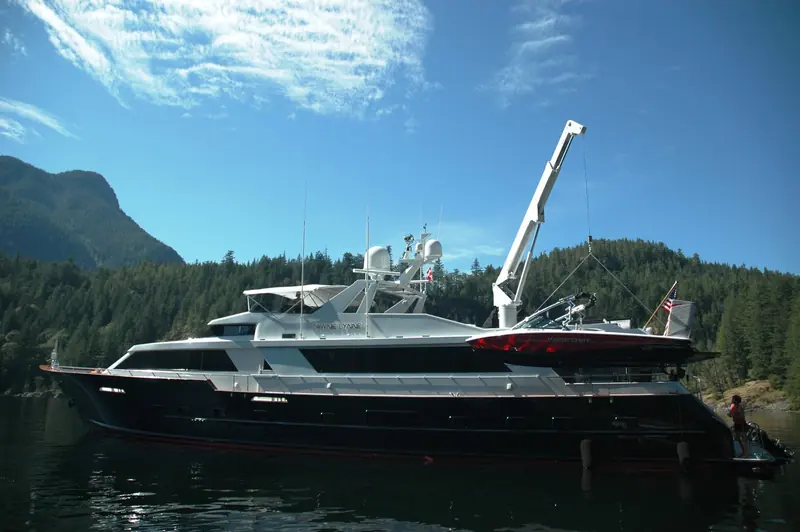
The product range covers more ground than the word crane suggests: fixed, extending, knuckle-boom and folding deck cranes, overhead beam cranes that slide or rotate as part of a boat's structure, dock-mounted davits, gangplanks and passerelles for boarding and transom lift platforms. The company's separate Nautical Structures Service division moved into a new Fort Lauderdale headquarters at 1312 W. McNab Road in January 2023, putting a dedicated support base close to the largest concentration of refit and service yards on the US East Coast. A yacht's own engineering or refit team should confirm which of these product lines a given quote actually covers, since a crane quote and a passerelle quote are handled as separate jobs even when they are ordered for the same refit.
The engineering claim behind the EZ and NS Series
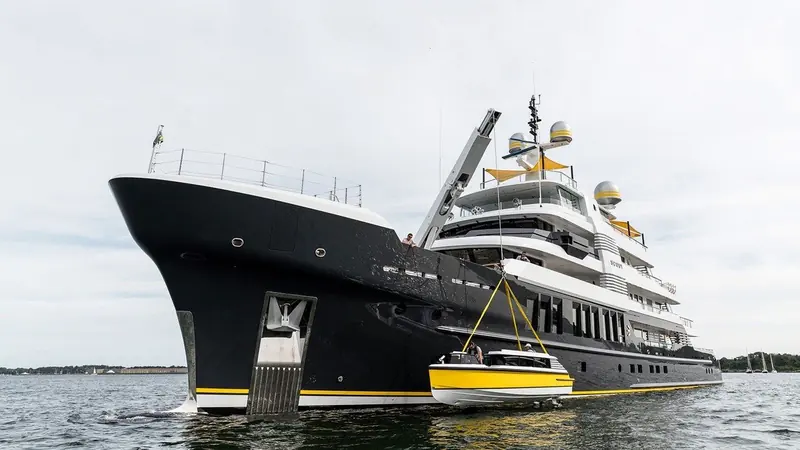
The EZ Series is sold in four configurations: fixed boom, extending boom with telescoping sections for extra reach, knuckle boom for a folding design that stows compactly and a fully folding version built to tuck under a deck hatch. Overhead beam cranes, sold as full-beam, sliding or rotating variants for integrated installations, run from 500 lb up to the same 20,000-plus lb ceiling. On the smaller end, the HMC, or Hydraulic Mini-Crane, is an aluminum alloy davit system the company has built for more than twenty five years and describes as the best-selling small davit in its category, aimed at the bow of a sportfish boat or the foredeck of a large motoryacht.
The newer NS-Series is built around what Nautical Structures calls a 2:1 strength-to-weight ratio and modular construction, and in November 2023 at METSTRADE the company announced type approval across four separate certification classes on the same crane platform: Cargo-UMT from 2,000 to 5,300 lb (907 to 2,404 kg), HOP, meaning handling of personnel, from 1,300 to 4,400 lb (590 to 1,996 kg), LSA for vessels under 500 gross tons at the same 1,300 to 4,400 lb range, and SOLAS for vessels over 500 gross tons at 1,700 to 2,600 lb (771 to 1,180 kg). The company's own framing was that certified lifting equipment had been priced out of reach for smaller operators, and type approval was meant to lower that barrier.
The company's own founder has called using an uncertified cargo crane to lift crew or guests the industry's elephant in the room, which is the exact problem the HOP certification on its own cranes is built to answer.
Why the HOP certification exists, in the founder's own words
Speaking to SuperyachtNews, Rick Thomas called the practice of using ordinary cargo cranes to raise and lower people "the elephant in the room for years" in the industry, and said plainly that "it's a very unsafe practice unless done properly." That is an unusually blunt admission from a crane manufacturer's own founder, and it frames the HOP and LSA certification classes on the NS-Series as a response to a real, named safety gap rather than a marketing checkbox: a cargo-rated crane and a personnel-rated crane are not interchangeable, even though on many existing yachts they have been treated as if they were.
The practical upshot for a buyer is that the certification class matters more than the safe working load number on its own. A crane rated for 4,400 lb of cargo is not automatically approved to lift a person of a fraction of that weight in a bosun's chair or a rescue basket, and Thomas's comments suggest that conflation has been common enough on yachts to count as an industry problem worth naming publicly, not a hypothetical one raised only by a rival trying to sell a safer product.
A named captain's account of swapping out a rival crane
Kormos's account, published by SuperyachtNews, is one of the few named, on-the-record captain testimonials found anywhere in this research for a superyacht deck crane brand, and it is a direct swap-out comparison rather than a first-time buyer's impression: Azteca II had already been running Opacmare's Galactica crane, a direct competitor also covered elsewhere on Yotters, and Kormos changed to Nautical Structures after running into operational problems with it. His verdict on the replacement was specific rather than generic: the crane "can gain access quickly and efficiently to all our toys without ever having to remove stations," cutting a task that used to take real time down to less than half as long.
Kormos also praised the company's own delivery, saying Nautical Structures "presented a professional and positive outlook, while delivering the crane ahead of schedule," and said he would recommend the company to all captains and owners. That is a strong single data point, but it remains a single data point: this research did not find a second, independently sourced captain or crew account of a Nautical Structures installation to weigh against it, so it should be read as one detailed and credible case rather than a representative sample.
Beyond cranes: passerelles, gangways and the commercial side of the business
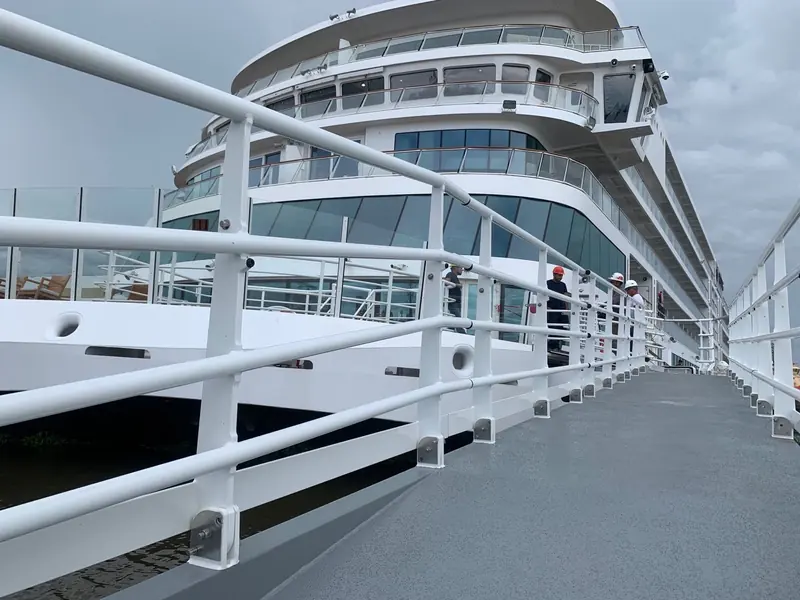
A boarding gangway looks like a simple structure, a railed walkway between a vessel's shell door and a quay, but on a moving hull it carries real engineering requirements: it has to accommodate tide and draft changes, flex without fatiguing and stay safe to cross for passengers and crew who may not be paying full attention to their footing. Nautical Structures builds these alongside its crane lines, and the same company that fits a knuckle-boom crane to a sportfish boat's tower also fits shell-door gangways on cruise ships, which is a wider span of vessel classes than most yacht-focused deck equipment makers cover.
The company's commercial, marine and military division, run separately from the yacht-focused side of the business, extends the same crane engineering to jobs like submarine handling, with safe working loads stated up to 10 tons for that class of commercial application, well above anything a yacht owner would ever specify. That commercial and military work is a useful signal for a yacht buyer even though it is a different market: a crane maker with a track record on submarine-handling equipment is being held to a harder engineering standard elsewhere in its own product line, which is a different kind of assurance than a manufacturer whose only customers are yacht owners.
What a Nautical Structures crane actually costs, and what is not published
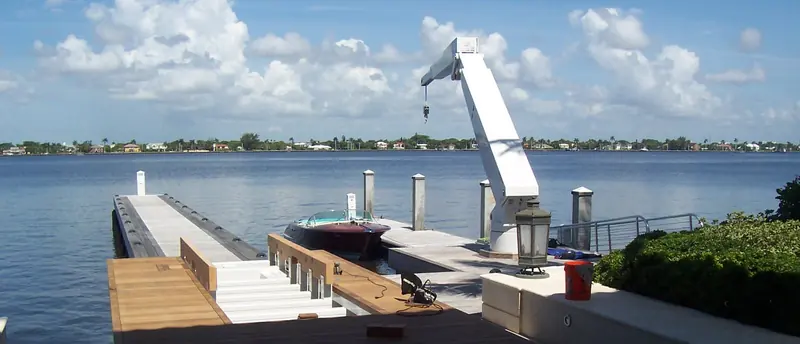
Every distributor and marketplace listing found in this research, including Mercer Yachting and the nauticexpo.com marine equipment directory, describes Nautical Structures pricing the same way: available on request, engineered against the specific installation. That is common across the whole superyacht crane category, not unique to this brand; competitors including Besenzoni and Opacmare price the same way, because a crane's cost depends on boom reach, safe working load, mounting structure and certification class in combination, not on a single model number the way a retail product would. A dock-mounted davit for a private residential dock, the kind photographed at a Florida waterfront property for this entry, is a simpler and cheaper installation than a deck-integrated knuckle-boom crane rated for a large explorer yacht's tender, even though both fall under the same Nautical Structures product family.
What that means in practice for an owner is that the only real way to compare Nautical Structures against a rival on price is to request quotes for the same job from both, since no published base price, lead time or typical installed cost was found for any Nautical Structures product in this research. A buyer should also ask specifically which certification class a quoted crane carries, given Rick Thomas's own comments about how often that distinction gets blurred in practice, and should get that classification in writing on the quote itself rather than relying on a verbal assurance from a sales contact who may not be the engineer who actually specified the unit.
Información práctica
| Price | not published; every crane, davit or passerelle is quoted individually against tender weight, boom reach, deck layout and certification class |
|---|---|
| Safe working load range | EZ Series 2,500 lb to 20,000-plus lb; NS-Series HOP class (personnel) 1,300 to 4,400 lb; Overhead Beam cranes 500 lb to 20,000-plus lb |
| Certification to confirm before ordering | ask specifically whether a quoted crane is HOP or LSA/SOLAS classed for lifting people, or Cargo-UMT rated for cargo only, since the two are not interchangeable |
| Where it is built and serviced | manufacturing at a 94,000 sq ft plant in Largo, Florida; dedicated service headquarters in Fort Lauderdale since January 2023 |
| What is not published | no price list, no typical lead time and no detail found on service locations outside the United States beyond a general claim of worldwide technician dispatch |
Lo que cuentan armadores y tripulaciones
A captain's direct comparison after swapping brands
Captain Noel Kormos of M/Y Azteca II replaced an Opacmare Galactica crane with a Nautical Structures knuckle-boom crane in autumn 2012 and reported access to tenders and water toys in under half the previous time, without removing deck stations, plus an on-time, professionally managed delivery
Captain Noel Kormos, M/Y Azteca II, via SuperyachtNewsThe founder naming a safety problem publicly rather than only marketing a solution to it
Rick Thomas, founder and partner, told SuperyachtNews that using uncertified cargo cranes to lift crew or guests has been a widespread, unsafe practice across the industry, which is a stronger and more specific claim than typical marketing language
Rick Thomas, Nautical Structures founder and partner, via SuperyachtNewsOnly one named captain account found; no second independent case to weigh against it
Beyond Captain Kormos's account, this research did not find another named captain, crew member or owner describing their own experience with a Nautical Structures installation, whether positive or negative
Yotters research desk
Lo bueno y lo que conviene vigilar
Puntos fuertes
- Certification classes that match how the crane is actually usedThe NS-Series covers Cargo-UMT, HOP, LSA and SOLAS classes on one platform, which lets a buyer match the crane to cargo lifting, personnel lifting, or a specific vessel tonnage bracket rather than assuming one generic rating covers every use
- A named, detailed captain account with a direct competitor comparisonCaptain Kormos's swap from an Opacmare crane to a Nautical Structures crane is a real, specific, attributed before-and-after account, which is rare in this category and more useful than an anonymous testimonial
- One manufacturer covers the whole deck-handling jobDavits, deck and beam cranes, passerelles, gangplanks and transom lifts all come from the same company, which simplifies warranty and service relationships for a yard fitting out a boat's whole tender and boarding system at once
A tener en cuenta
- No published pricing anywhere, for any productEvery crane and davit is quoted individually with no base price, typical cost or lead time published, which is standard for the category but still means a buyer cannot compare Nautical Structures against a rival without requesting quotes from both first
- The founder's own comments confirm a real risk of buying the wrong certificationIf uncertified personnel lifting has been common enough across the industry for the company's own founder to call it an elephant in the room, a buyer has to actively confirm which certification class a quoted crane carries rather than assume any deck crane is safe to lift a person
- Service infrastructure concentrated in FloridaThe main plant and the newer service headquarters are both in South Florida; the company states it can send technicians worldwide from three official service locations or through partners, but this research did not find published detail on where those other locations are or how service response time changes outside the US
Para quién es: A captain or owner replacing worn-out or uncertified deck lifting gear who needs a specific, documented safe working load and certification class, especially for lifting crew or guests rather than only cargo, and who is prepared to go through a full custom quote process rather than buy off a price list.