Rolex
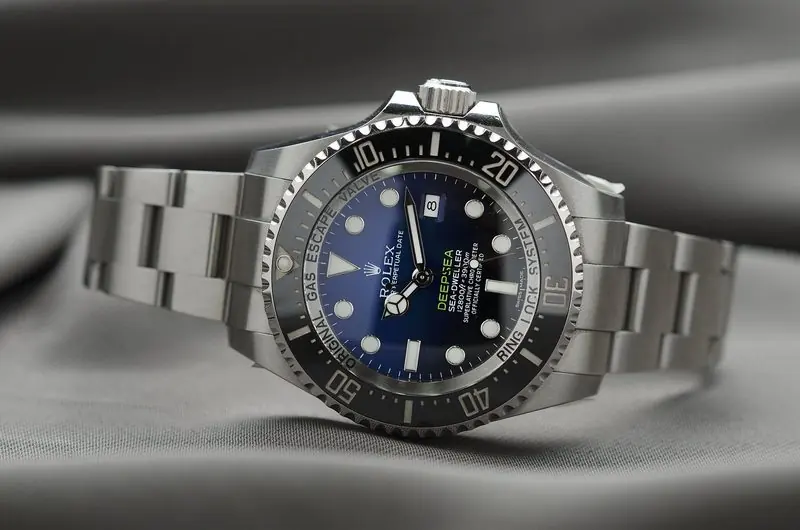
| Categoría | relojes de lujo con herencia velera |
|---|---|
| Fundada | 1905 por Hans Wilsdorf |
| Sede | Ginebra, Suiza |
| Reloj náutico | el Yacht-Master, lanzado en 1992 |
| Innovaciones | la caja estanca Oyster y el movimiento automático Perpetual |
| Patrocinio | patrocinador titular de muchas de las principales regatas internacionales |
| Pruebas estrella | la Rolex Sydney Hobart, la Rolex Fastnet y la Maxi Yacht Rolex Cup |
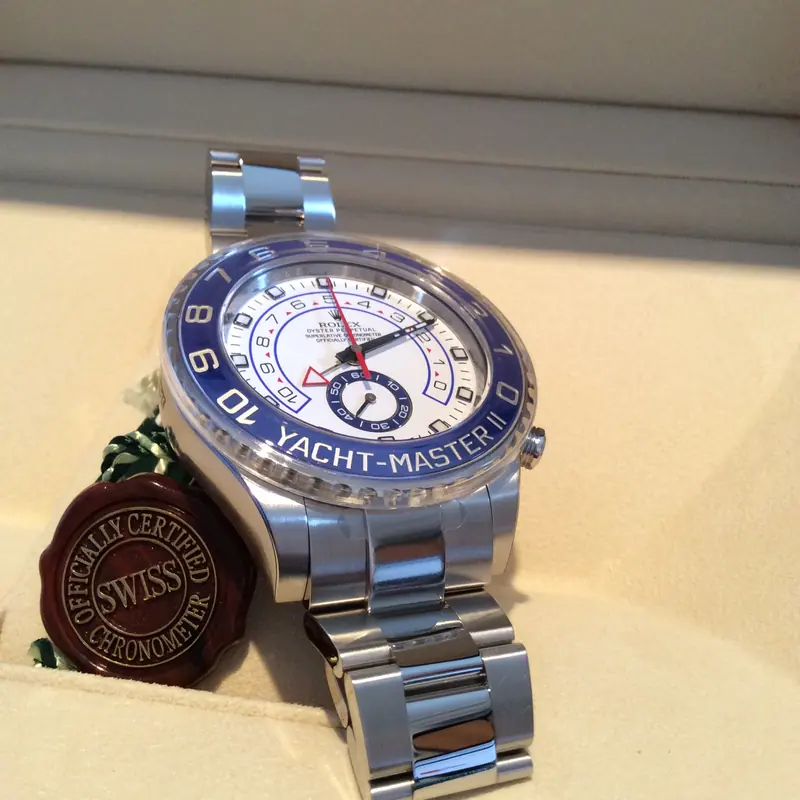
| The 2026 change | the countdown is now programmed from the lower pusher instead of the Ring Command bezel, with the countdown hands running anticlockwise |
| Yacht-Master II prices, July 2026 | USD 20,300 in Oystersteel and USD 57,800 in 18 ct yellow gold |
| Water resistance | the Yacht-Master case is guaranteed to 100 m, and the bezel is bidirectional |
| Guarantee and service | a five-year international guarantee on new watches, with Rolex recommending a service roughly every ten years |
| Sailing | title sponsor of fifteen major international events, including the Rolex Sydney Hobart and Rolex Middle Sea Race since 2002, the Maxi Yacht Rolex Cup since 1985, the biennial Rolex Fastnet Race and the Rolex SailGP Championship since 2024 |
Una relojera construida sobre el Oyster
Rolex la fundó en 1905 Hans Wilsdorf, que trasladó el negocio a Ginebra en 1919. La empresa construyó su reputación sobre la precisión y sobre la caja Oyster, sellada y estanca, que introdujo en los años veinte. Después llegó un movimiento automático, del que nació el nombre Oyster Perpetual que todavía define buena parte de la gama. Esas innovaciones hicieron que los relojes de Rolex encajaran con una vida activa, incluido el tiempo pasado sobre el agua. La marca creció hasta ser uno de los nombres de lujo más reconocidos que existen.
La resistencia al agua está en el corazón de la historia de Rolex, lo que da una lógica natural a su vínculo con la vela. Las mismas cualidades que servían a buceadores y a exploradores servían también a los navegantes. A lo largo del siglo veinte la empresa construyó un catálogo de relojes herramienta para actividades exigentes. Sus relojes se convirtieron en símbolos de logro tanto como en instrumentos. Esa doble identidad sostiene su sitio en la náutica.
El Yacht-Master
Rolex lanzó el Yacht-Master en 1992 como un reloj dirigido al mundo de la vela y del mar. Combinaba la robustez de la caja Oyster con un estilo náutico y unos acabados pensados para un público de yate. La línea ha crecido desde entonces hasta incluir varias variantes en materiales y tamaños distintos. Un modelo Yacht-Master posterior añadió una función de cuenta atrás de regata para los navegantes de competición. Juntos, estos relojes forman el vínculo más explícito de la marca con el deporte.
El Yacht-Master es un reloj de estilo de vida enraizado en el imaginario de la vela. Lleva los códigos del mundo náutico a la muñeca de una manera reconocible. Para armadores y aficionados señala una conexión con el mar y con la cultura que rodea al deporte. La línea se ha convertido en uno de los pilares de la gama Rolex junto al Submariner y al Daytona. Su nombre ata la marca a la vida del yate de forma más abierta que ningún otro modelo de la esfera.
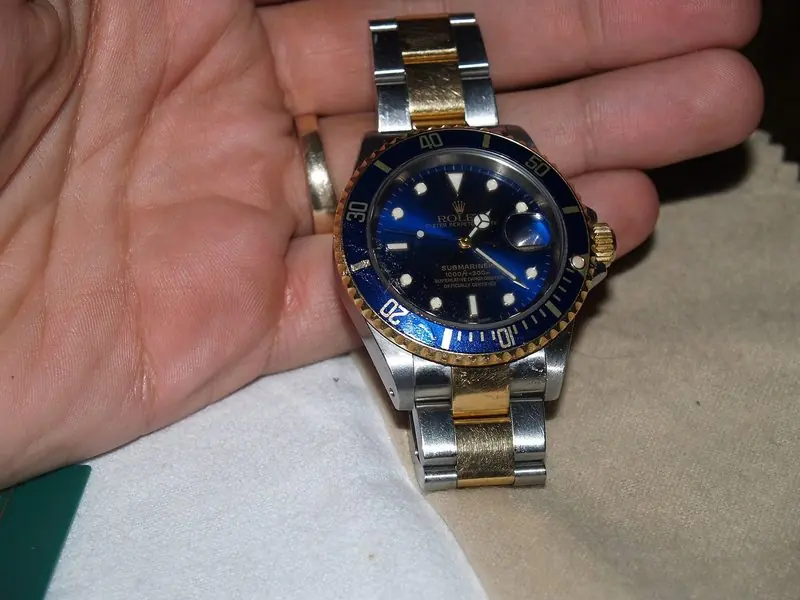
El Oyster que se echó al mar, y el nombre que hay detrás de las mayores regatas del deporte.
Ingeniería de precisión
Rolex es conocida por fabricar sus relojes a un estándar interno exigente, controlando buena parte del proceso dentro de casa. La caja Oyster está calculada para mantener el agua fuera bajo presión, una cualidad demostrada a lo largo de décadas. Los movimientos se construyen y se prueban con tolerancias estrechas de precisión y de fiabilidad. Los materiales, del acero al oro y a la cerámica, se trabajan a un acabado alto. Esa ingeniería es el cimiento de la reputación de la marca.
Para un reloj asociado al mar, la estanqueidad y la durabilidad son esenciales y no decorativas. Rolex lleva un siglo afinando esas cualidades. Un Yacht-Master está construido para sobrevivir a un uso real sobre el agua además de para estar a la altura. Esa fiabilidad es parte de lo que paga el comprador. El oficio que hay detrás del reloj está a la altura del prestigio del nombre de la esfera.
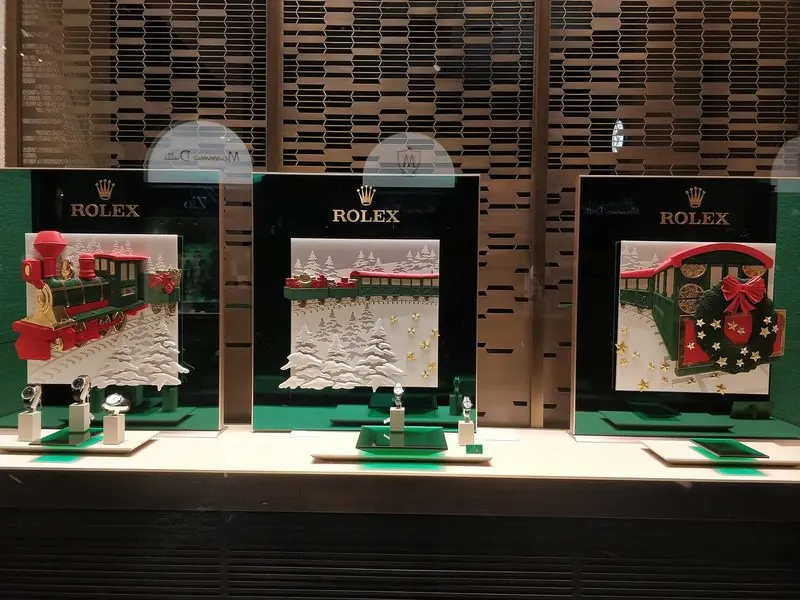
En el corazón del deporte
Rolex apoya la vela de alto nivel desde hace unos setenta años y está profundamente tejida en el deporte. Es patrocinador titular de muchas de las principales regatas del mundo, de las travesías largas de altura a las regatas de flota de gran premio. Pruebas como la Rolex Sydney Hobart Yacht Race y la Rolex Fastnet Race llevan su nombre. La Maxi Yacht Rolex Cup reúne bajo su enseña a algunos de los veleros más grandes y mejores. Esa presencia hace de Rolex una constante en la vela de competición.
Esos patrocinios conectan a la marca con el mundo náutico mucho más allá de los propios relojes. Los armadores que regatean al máximo nivel compiten en pruebas que llevan el nombre de Rolex. La empresa apoya además a clubes náuticos y a regatistas importantes, lo que ahonda sus raíces en el deporte. Ese compromiso largo da sustancia real a su identidad náutica. Rolex está presente en las pruebas que más importan a la comunidad de la vela.
Una marca universal de posición
Rolex está entre las marcas de lujo más reconocidas del mundo, y su conexión náutica está bien establecida. Para el armador, un Yacht-Master u otro Rolex es una señal fácil y familiar de posición. La presencia de la marca en las principales pruebas del deporte refuerza esa asociación. Sus relojes se llevan por todo el mundo náutico, por armadores, capitanes e invitados. Pocos nombres tienen un reconocimiento tan amplio.
La fuerza de Rolex está en la fiabilidad tanto del producto como de la reputación. Un Rolex es una cantidad conocida que conserva su valor y su estatus con el tiempo. Los patrocinios profundos de vela dan raíces genuinas a su imagen náutica. Para el armador que quiere una marca reconocida de logro sobre el agua, es la opción evidente. Rolex sigue firmemente atada a la cultura del deporte.

Guarantee, servicing and where to get it done
New Rolexes carry a five-year international guarantee alongside the Superlative Chronometer certification, and the company recommends a service roughly every ten years, with a two-year warranty on the service work itself. Independent watchmakers commonly advise a shorter interval for a watch that lives in salt air and gets wet regularly.
Service is genuinely international, which matters more for a yacht owner than for anyone else. A watch can be handed in at a service centre in Geneva, Fort Lauderdale, Dubai or Sydney and collected in another. Turnaround is measured in weeks, so it is a job for the winter lay-up and not for the week before a regatta.
The sponsorships, and what they buy
Rolex is title sponsor of fifteen major international events. It has backed the Sydney Hobart and the Middle Sea Race since 2002, the Maxi Yacht Rolex Cup since 1985, the biennial Fastnet as the Royal Ocean Racing Club's first naming-rights partner, and since 2024 the SailGP championship, whose 2026 season ran thirteen races across five continents.
For an owner who races, this is not decoration. Rolex's calendar is effectively the calendar, the winner of each event receives a watch, and the brand's presence at Porto Cervo, Cowes, Malta and Hobart is part of what those weeks feel like. For an owner who cruises and never crosses a start line, the sponsorship buys nothing at all, and the watch should be chosen on the same basis as any other watch.
Holding value, and the awkward part of that
Rolex holds value better than almost any comparable object an owner buys for a boat, and steel sports models have often sold above list on the secondary market. That is a real financial characteristic and it is worth knowing. It is also volatile, and prices for the most speculative references have moved sharply in both directions since 2022.
The practical risk is theft. A recognisable watch worn ashore in a Mediterranean port in August is a known target, and insurance for jewellery carried aboard is usually a separate policy from the yacht's. Check the wording before the season, particularly for items worn off the boat.
Who it suits, and who should buy something else
The Yacht-Master II suits an owner who actually races and starts under a five-minute sequence, and no other mechanical watch does that job as cleanly. The rest of the Yacht-Master line suits an owner who wants a robust, serviceable, internationally supported watch with a nautical face and does not mind that the nautical part is styling.
An owner who dives should buy a dive watch. An owner who needs a start timer and does not care what it looks like should buy a purpose-built electronic regatta watch for a fraction of the money, and it will be easier to read wet. An owner who wants a watch nobody else at the dock is wearing is in the wrong shop entirely.
Buying pre-owned without buying a fake
Every Rolex carries a serial number, engraved behind the bracelet lugs at six o'clock on watches made before 2005 and on the inner rehaut from 2005 onward, exclusively on the rehaut from 2008. On a genuine watch that engraving is crisp and laser sharp; on a counterfeit it is often dotted or slightly blurred under a loupe, and the case weight tends to feel light rather than the solid, balanced heft of the real thing.
Papers and a box are not proof by themselves, because counterfeiters now fake those too, sometimes convincingly. The reliable check is to have an authorised dealer or an established pre-owned specialist verify the serial number and movement against Rolex's own records before money changes hands, which is a service worth paying for on anything bought outside a dealer's own counter.
Información práctica
| New, list price (US, July 2026) | USD 12,500 for the 37 mm Yacht-Master in Oystersteel and platinum up to USD 40,000 for the 42 mm in white gold; the Yacht-Master II is USD 20,300 in Oystersteel and USD 57,800 in yellow gold. |
|---|---|
| Buying new | Sold only through authorised dealers, who set their own waiting list and allocation by relationship with the shop. Rolex does not publish wait times, and that silence is itself the answer to how scarce a given reference is. |
| Buying used | A recognised secondary market runs through dealers such as Bob's Watches and marketplaces such as Chrono24. Popular steel references such as the 40 mm Yacht-Master 126622 have traded a few thousand dollars over list; some gold Yacht-Master II references have sold below list. |
| Servicing | A standard service at an authorised centre runs roughly USD 800 to USD 1,600, more for a Yacht-Master II with its chronograph movement, with parts replacement pushing a job past USD 2,500. Turnaround is typically six to eight weeks, so plan it for winter lay-up, not the week before a regatta. |
| Warranty | Five years on a new watch, two years on service work. |
| What is not published | Rolex publishes no production figures, no wholesale pricing and no allocation criteria for its authorised dealers; every scarcity figure in circulation is a dealer's or an analyst's estimate, never the company's own. |
Lo que cuentan armadores y tripulaciones
Comfort and everyday reliability
A long-term owner writing under the name Tokyo Watch Guy described the Yacht-Master 40's movement as insanely robust and accurate, and called it his most comfortable watch.
WatchCrunchThe 2026 redesign was well received on first handling
Hands-on reviewers found the new winch-shaped pushers more intuitive than the previous Ring Command bezel, calling the change a rare case of a company fixing exactly what owners had complained about.
Monochrome WatchesThe pre-2026 countdown function saw little real use
The old Yacht-Master II was described as Rolex's most divisive watch, built around a function that almost none of its owners would ever use.
aBlogtoWatchSecondary-market pricing is model-specific, not uniform
Popular Rolesium and steel references trade at a modest premium to list, while some gold Yacht-Master II references sell below retail, so the invest-grade reputation does not apply evenly across the range.
WatchCharts
Lo bueno y lo que conviene vigilar
Puntos fuertes
- A service network built for an owner who movesA watch can be handed in at an authorised centre in Fort Lauderdale and collected in Geneva or Dubai, which matters more to an owner who crosses three countries a year than to anyone buying one watch for one desk.
- Genuine value retention on the sports referencesSteel and titanium sports Rolexes have a long record of holding or exceeding retail on the secondary market, which is not true of most watches at any price.
- The 2026 Yacht-Master II fixes the real complaintProgramming the countdown from a winch-shaped pusher instead of the old Ring Command bezel removes the one thing reviewers and owners had complained about since 2007.
A tener en cuenta
- The Yacht-Master is not a dive watch100 m and a bidirectional bezel are a styling choice, not a safety instrument, and an owner who actually dives is buying the wrong Rolex.
- Waiting lists are opaque and can run yearsFor the most wanted steel references, allocation depends on a buyer's history with a dealer rather than a published queue, which is a frustrating way to spend six figures.
- The countdown function goes unused by most ownersReviewers have called the pre-2026 Yacht-Master II Rolex's most divisive watch precisely because most owners never start a race under a five-minute sequence.
Para quién es: Armadores y navegantes que quieren un reloj reconocido y ligado a la herencia de la vela de competición.