Vetus
| Category | marine systems, engines, generators, bow and stern thrusters, exhaust systems, steering and electrical equipment |
|---|---|
| Founded | 1964 in Rotterdam by Willem den Ouden, trading from home before the first catalogue was published in 1965 |
| First product | a seawater strainer, developed after the company hired its first in-house engineer in 1968 |
| Renamed | from VETUS den Ouden to simply VETUS in 2004, after the founder stepped back from day to day management in 2000 |
| Milestone acquisitions | bought Maxwell and Marex in 2008 and joined the YARMEE Group in 2013 |
| First bow thruster for leisure boats | introduced in 1982, thirty six years before the current BOW PRO line launched in 2018 |
| Global footprint | headquartered in Schiedam, Netherlands, relocated to a new headquarters in 2025, with subsidiaries in 17 countries |
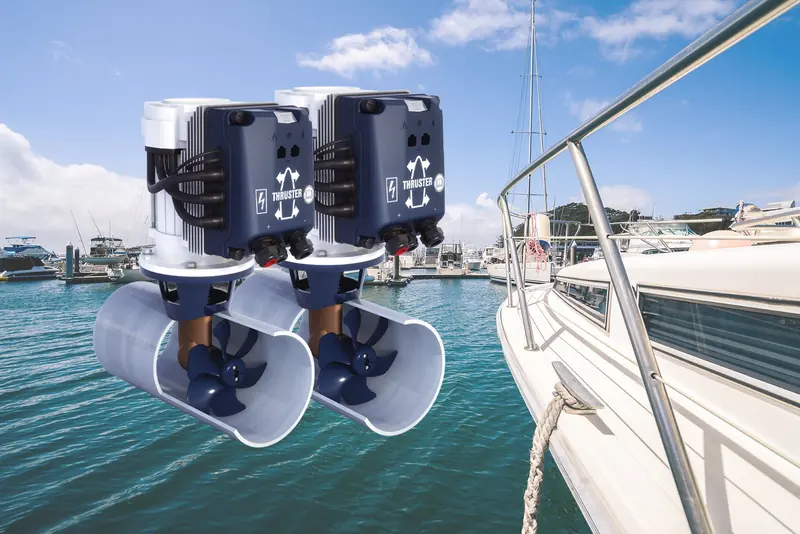
| BOW PRO range | seven brushless, maintenance-free thruster models from 30 kgf to 76 kgf on 110 to 185 mm tunnels, plus the Boosted series running 57 kgf to 420 kgf |
| Largest Boosted thruster | the BOWB420 at 420 kgf on a 400 mm tunnel, rated for boats of 110 to 130 ft (33 to 40 m) |
| Entry price | the smallest BOW PRO thrusters start at roughly GBP 1,889 to GBP 2,507 depending on retailer and model, before installation |
| Efficiency claim | Vetus states 93 percent efficiency for the brushless BOW PRO motor against about 65 percent for a traditional carbon-brush thruster |
| Exhaust systems | NLP waterlock mufflers in 40 to 90 mm connection sizes, priced from roughly USD 234.95 to USD 429.95 depending on capacity |
| Backward compatibility | BOW PRO shares tunnel sizes and C and D tailpieces with older Vetus thrusters, so a retrofit does not require re-cutting the hull |
From a Rotterdam Front Room to Seventeen Countries
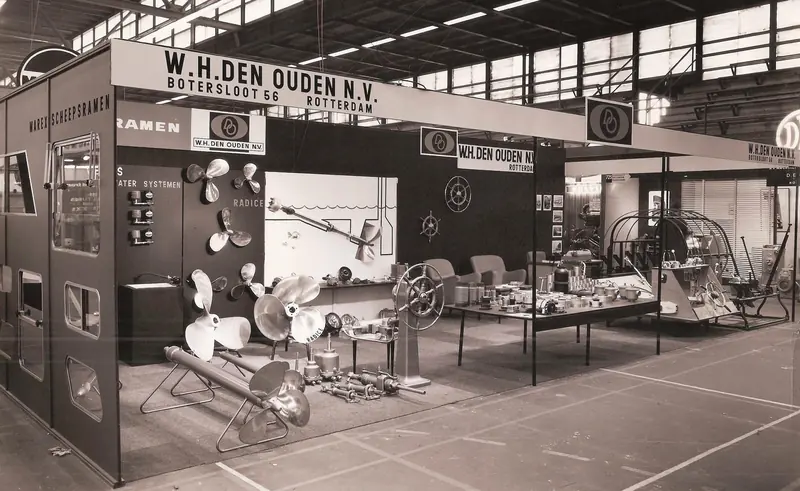
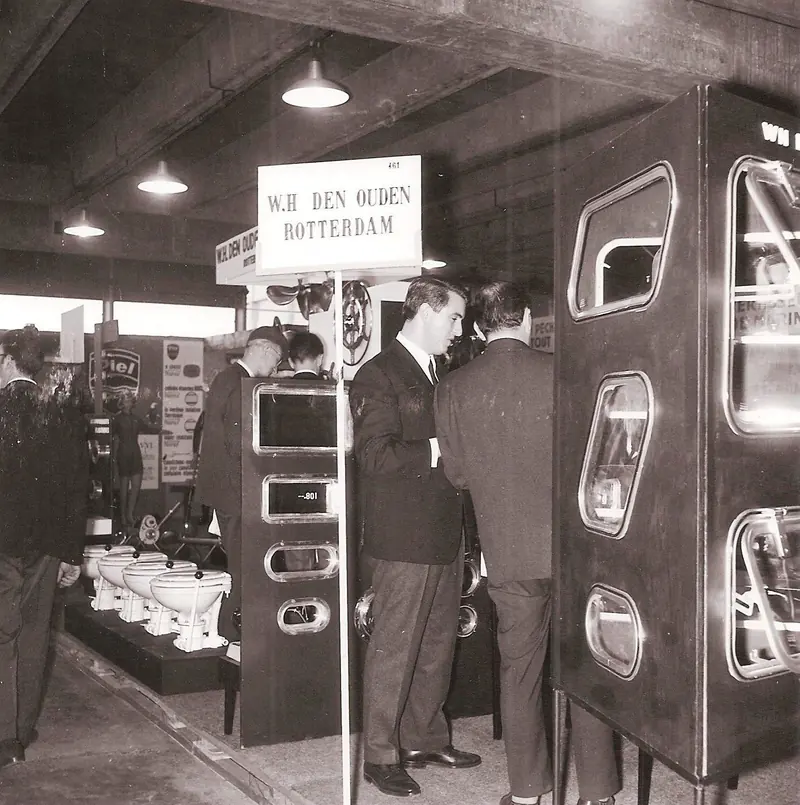
Willem den Ouden started the business in 1964 as a home-based wholesale operation in Rotterdam, and the first catalogue, published the following year in Dutch and German, ran to 50,000 copies. The company hired its first in-house engineer in 1968, and the first product it developed itself was something almost nobody thinks about until it fails: a seawater strainer. International expansion followed quickly, with a German subsidiary in 1966, a US branch office in 1973, a Spanish subsidiary and the start of diesel engine development in 1974, and a French branch in 1977.
The founder relinquished day-to-day management in 2000, and the company renamed itself from VETUS den Ouden to simply VETUS in 2004. It acquired the bow thruster and windlass maker Maxwell along with the Marex brand in 2008, added Australian, New Zealand, Swedish and Finnish operations over the following years, and joined the YARMEE Group in 2013. The company relocated to a new Schiedam headquarters in 2025, sixty years after that first Rotterdam catalogue, still describing itself as the creator of boat systems.
1982: the First Thruster Most Recreational Boats Ever Had
Before 1982, docking a boat without help meant judging wind, current and momentum by eye, and a badly judged approach could mean real damage to a hull or a marina berth. Vetus's 1982 thruster did not invent the concept, but it was among the first built and marketed specifically for leisure boats rather than commercial vessels, and it set the company on a path that now accounts for a large share of what most owners actually associate with the brand.
That single product line has been through several generations since, culminating in the BOW PRO series launched in 2018, which replaced the older carbon-brush DC motors that had defined marine thrusters for decades with maintenance-free brushless induction motors. The jump matters more than it sounds: Vetus states 93 percent efficiency for the new motor against roughly 65 percent for a traditional brushed design, which translates directly into more thrust for the same battery drain, or the same thrust from a smaller unit.
An anode nobody checked for eighteen months in the Mediterranean eroded away completely, and the thruster body itself started to de-zinc underneath it.
The BOW PRO Range, Model by Model
The base BOWA series covers smaller boats directly off a 12V or 48V system: 30 kgf on a 110 mm tunnel for boats up to 24 ft, up through 76 kgf on a 185 mm tunnel for boats to about 45 ft. Above that, the Boosted series adds a built-in DC-to-DC smart charger and runs on 12/24V or 24/48V depending on model, starting at 57 kgf for 26 to 39 ft boats and climbing through 90, 110, 130, 150, 180, 210, 285, 300 and 320 kgf steps, each one specified against a real length-overall range rather than a single blanket rating.
At the top sit the BOWB385 and BOWB420, rated at 385 and 420 kgf on a 400 mm tunnel for vessels of 100 to 120 ft and 110 to 130 ft respectively, which puts the largest Boosted model squarely in the 30 to 40 metre bracket this site covers. Every model in the line shares tunnel sizing and the older C and D tailpiece format with previous Vetus thrusters, so a yard replacing a tired brushed unit can usually fit the brushless replacement without recutting the hull.
What Proportional Control Actually Changes
Most bow thrusters for decades have been binary: press the button and the unit delivers full thrust in one direction, release it and it stops. That is a blunt tool for a delicate job, particularly holding a bow steady against a crosswind while a spring line goes ashore. BOW PRO's fully proportional joystick control instead lets the operator dial in exactly the nudge needed, a difference Motor Boat and Yachting's Nick Burnham, reviewing the range, called particularly interesting against the on-off systems most owners have used until now.
Burnham also singled out the near-silent running as a real advantage in practice, since a docking manoeuvre that draws no attention from neighbouring boats is one an owner is far more willing to make in a crowded marina. A patented motor controller adds over-temperature and low-battery protection, and the large heat sink lets the unit run at full power continuously for ten minutes, well beyond the couple of short bursts a traditional brushed thruster tolerates before it needs a rest.
The Systems Business Behind the Thruster
Fisheries Supply, a major US marine retailer, lists Vetus products across more than fifteen categories and over two hundred individual items, from ventilation and hatches to plumbing fixtures and anchor hardware. The exhaust range alone runs the NLP waterlock muffler line in 40 to 90 mm connection sizes, priced from roughly USD 234.95 for the smaller 4.5 litre capacity models to USD 429.95 for the 10 litre versions, engineered for low back pressure and easy winterising with a built-in drain plug.
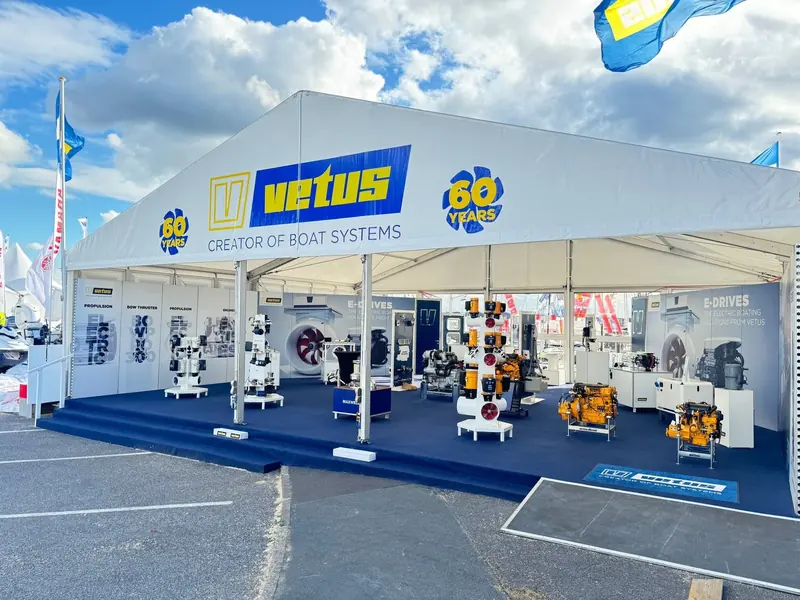
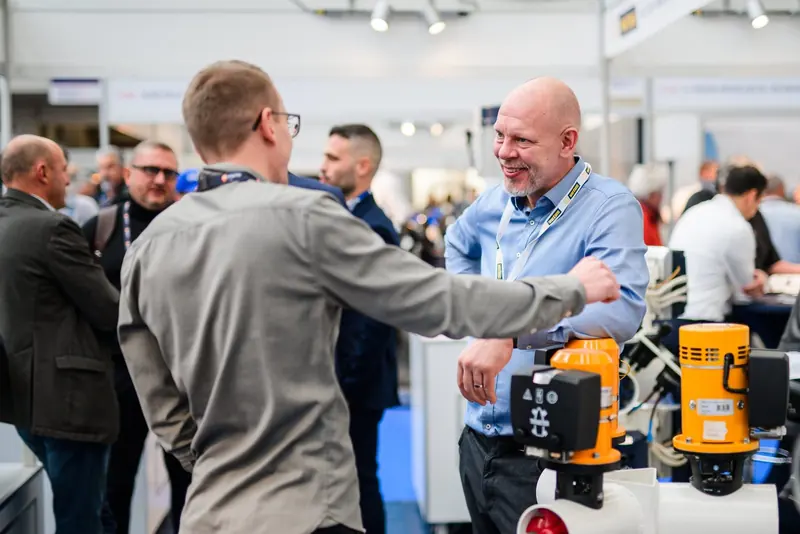
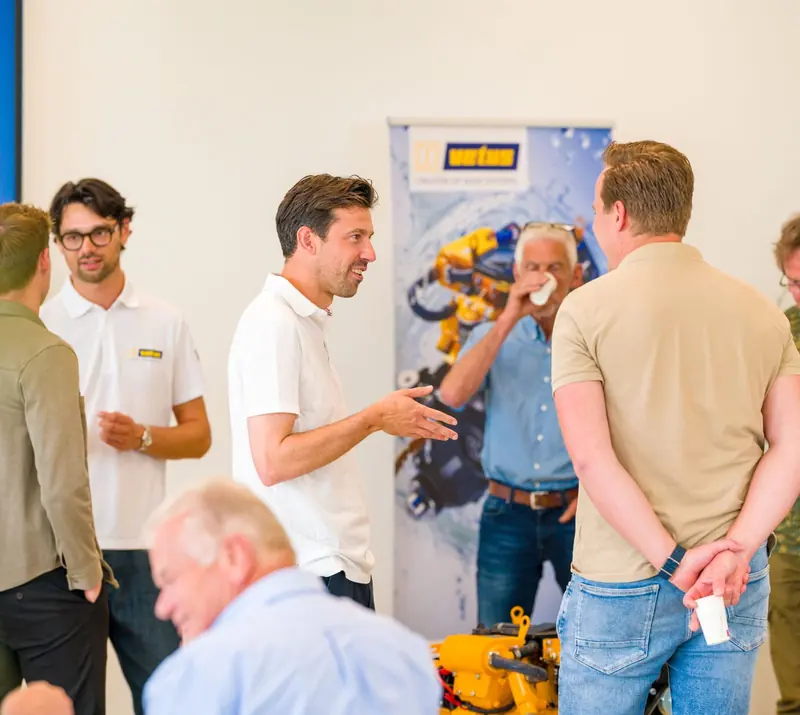
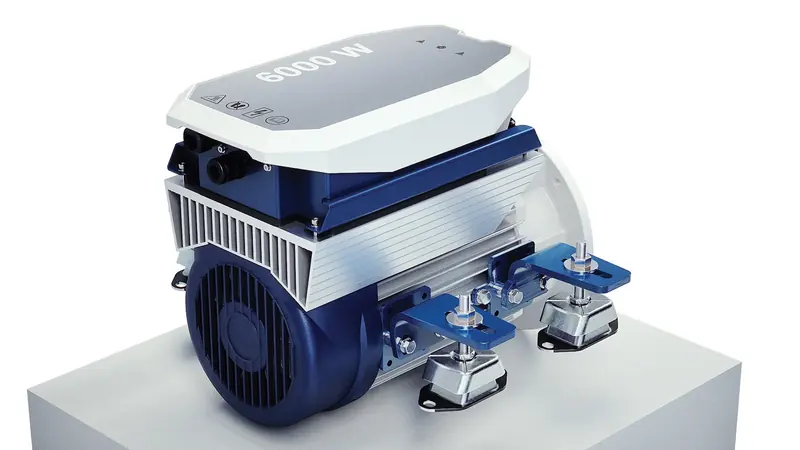
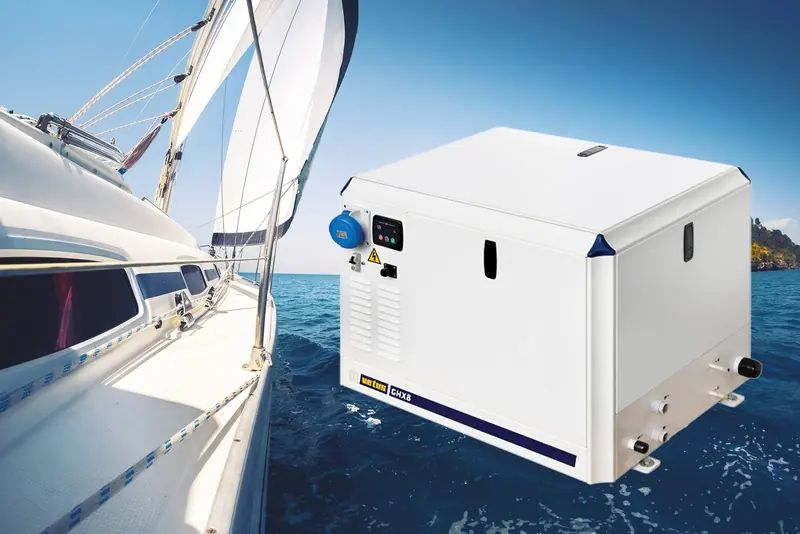
The company's own trade show presence makes the breadth obvious: its 60th anniversary pavilion displayed engines, generators, thrusters and electric drive units side by side under one roof, badged Propulsion, Bow Thruster, Engines and E-Drives. That range is the actual business model. A yard specifying a full refit can source the thruster, the generator, the exhaust and the steering gear from one supplier with one warranty structure and one parts catalogue, rather than stitching together five separate brands.
What Actually Breaks, According to Owners
A recurring pattern on owner forums is a thruster that worked fine last season failing the moment it is needed after months of disuse, most often traced to worn or stuck carbon brushes on the older brushed motors, sometimes cleared with nothing more than contact cleaner. A 5mm shear pin behind the propeller, and a separate 3mm brass pin inside the motor shaft that does not always appear on the parts diagram, are both known failure points that call for the unit to be partly disassembled to find.
The more serious reports involve corrosion rather than a simple mechanical part. One owner reported the sacrificial anodes on a thruster eroding away completely over eighteen months in the Mediterranean, leaving the thruster body itself starting to de-zinc, a fault that was only caught at haul-out and could, left longer, have compromised the hull fitting itself. Against that, another owner running a 20 year old 50 kgf unit reported only a single failure in two decades, caused by rope fouling the propeller rather than any part of the thruster wearing out, needing nothing more than new brushes in that time.
Choosing Between Lewmar, Side-Power and Vetus
A recurring YBW Forum thread comparing Lewmar, Side-Power and Vetus finds owners of all three reporting both satisfied years of service and the occasional failure, which is a fair reflection of a product category where correct installation and regular use matter as much as the badge on the motor housing. Side-Power, sold under the Sleipner name in some markets, has historically led on continuous-duty ratings for larger installations, while Lewmar's wider availability through chandleries makes it an easy default for a straightforward refit.
Vetus's own argument is less about any single thruster being better and more about the retrofit path: because BOW PRO shares tunnel sizes and tailpieces with the brand's own older models, an owner already running an older Vetus thruster gets a straightforward upgrade path to the brushless range, while switching brands entirely usually means a new tunnel diameter and a re-engineered installation.
Who Actually Needs to Think About This
An owner with an older brushed thruster who finds it sluggish, hot after short use, or unresponsive after a season laid up is a strong candidate for a straightforward upgrade rather than a repair, given how directly BOW PRO's brushless design addresses exactly those complaints. A yard planning a full systems refit gets a genuine advantage from sourcing thruster, generator, exhaust and steering from one Vetus catalogue rather than reconciling warranty and parts support across five brands.
And anyone who has gone more than a haul-out cycle without physically checking a thruster's anodes should treat the Mediterranean de-zincing report above as a direct warning rather than an edge case: an eroded anode is cheap and routine to replace, while the corrosion it was protecting against is neither.
Información práctica
| BOW PRO entry pricing | The smallest BOW PRO thrusters start at roughly GBP 1,889 through one UK retailer and USD 2,507 for the BOW PRO 301 (30 kgf) through a US dealer, both read September 2026, before installation and wiring. |
|---|---|
| The Boosted range covers up to a 130 ft yacht | Boosted models run 57 to 420 kgf across nine steps. The BOWB385 (385 kgf) suits 100 to 120 ft yachts and the BOWB420 (420 kgf) suits 110 to 130 ft, both on a 400 mm tunnel with a built-in DC-to-DC smart charger. |
| Exhaust waterlocks, real retail prices | NLP waterlock mufflers in 40 to 90 mm connections run roughly USD 234.95 for the 4.5 litre capacity models up to USD 429.95 for the 10 litre models, per a US marine retailer. |
| Retrofit compatibility is a genuine saving | BOW PRO shares tunnel sizes and the C and D tailpiece format with older Vetus thrusters, so replacing a worn brushed unit with a brushless BOW PRO usually does not require re-cutting the hull or the tunnel. |
| Duty cycle: know the limit before it trips | A traditional brushed thruster is generally limited to 2 to 3 minute bursts with equal rest between them to avoid overheating. BOW PRO's larger heat sink is built to run continuously at full power for up to ten minutes. |
| Check the anodes, not just the motor | A documented case saw a thruster's sacrificial anodes erode away completely over 18 months in the Mediterranean, with the thruster body itself beginning to de-zinc before it was caught at haul-out. Anode condition deserves a physical check every haul-out, not just when the motor stops working. |
| Known mechanical failure points | A 5mm shear pin behind the propeller and a separate 3mm brass shear pin inside the motor shaft, the latter absent from some parts diagrams, are both recurring points of failure reported by owners; carbon brush wear after long idle periods is the most common electrical complaint on older brushed models. |
| What is NOT published | Vetus does not publish consumer list prices for most of its range on its own site; every price in this entry comes from a UK or US retailer. The company also does not publish independent third-party thrust or noise test data alongside its own efficiency and performance claims. |
Lo que cuentan armadores y tripulaciones
Anode neglect nearly cost more than the anode itself
Sacrificial anodes eroded away completely over an 18 month Mediterranean deployment, and the thruster body had begun to de-zinc underneath them before the problem was caught at haul-out.
YBW ForumA long-idle thruster often fails on carbon brushes first
Electrics commonly fail after a short period of use following a long spell of inactivity, and a similar issue on a windlass was resolved with nothing more than contact cleaner on the connections.
YBW Forum (pandos)Worn brushes are the first thing to check on a non-starting unit
A thruster that stopped working despite functioning solenoids was most likely suffering from worn carbon brushes, a common failure point in DC motors after extended dormancy.
YBW Forum (GeorgeLlewellin)A well-maintained older unit can run two decades on one repair
A 20 year old Vetus 50 kgf thruster needed new brushes but was otherwise reliable, with its only outright failure caused by a rope fouling the propeller rather than any part of the thruster itself wearing out.
YBW ForumThe proportional control is a genuine, noticeable upgrade over older systems
Fully proportional joystick control lets an operator dial in a precise thrust output rather than the binary on and off of most electric thrusters, and the near-silent running allows a discreet docking manoeuvre without drawing attention from neighbouring boats.
Motor Boat and Yachting (Nick Burnham)
Lo bueno y lo que conviene vigilar
Puntos fuertes
- Sixty years of history behind a genuinely broad systems catalogueFounded in 1964 and still growing, Vetus covers thrusters, engines, generators, exhaust, steering and electrical equipment under one brand with subsidiaries in 17 countries, which is a rare breadth for a single marine equipment maker.
- The brushless BOW PRO motor is a real technical step forward93 percent efficiency against roughly 65 percent for a traditional carbon-brush thruster, ten minutes of continuous full-power running against 2 to 3 minute bursts and proportional joystick control together represent a genuine generational improvement, not a marketing refresh.
- The model range is specified precisely against real boat lengthsSixteen distinct models across the BOWA and Boosted lines each carry a stated length-overall range, from 24 ft up to 130 ft, rather than one thruster stretched across an implausibly wide span of vessel sizes.
- Retrofit compatibility genuinely saves money and disruptionSharing tunnel sizes and tailpiece formats with older Vetus thrusters means an owner upgrading from a brushed to a brushless unit is not also paying for a re-engineered hull tunnel.
- Real owners report genuine long-term reliability alongside the failuresA 20 year old 50 kgf thruster with only one failure, caused by rope fouling rather than a worn part, shows the underlying mechanical design can go the distance when properly maintained.
A tener en cuenta
- Corrosion can progress silently until it is seriousA documented case of anodes eroding completely over 18 months, with the thruster body itself beginning to de-zinc before discovery at haul-out, shows the failure mode that matters most is not obvious day to day operation.
- Vetus publishes almost no consumer pricing itselfEvery price cited in this entry comes from a third-party UK or US retailer rather than Vetus's own site, which makes direct comparison shopping across markets and currencies necessary rather than optional.
- Known mechanical weak points require partial disassembly to fixThe internal 3mm brass shear pin that does not appear on some parts diagrams means a straightforward-sounding fault can turn into a more involved repair simply because the failure point is not documented clearly.
- Old and new product lines can confuse a retrofit decisionAn owner comparing a legacy brushed thruster against the current BOW PRO range has to work out compatibility model by model, since not every historic Vetus thruster shares the same tunnel and tailpiece format the newer line is compatible with.
- Independent third-party performance testing is thinThe 93 percent efficiency figure and the ten-minute continuous-run rating both come from Vetus itself; buyers relying on these numbers for a critical installation are trusting the manufacturer's own bench testing rather than an independently published result.
Para quién es: Owners replacing an ageing bow thruster or exhaust system, and yards specifying a full systems refit who want thruster, generator, exhaust and steering under one supplier.