Lofrans
| Founded | 1966, Monza, Italy |
|---|---|
| Current facility | Via Leonardo Da Vinci n.6, Cambiago (MI), Italy, opened 2026 for the company's 60th anniversary |
| Ownership | Lalizas Italia s.r.l. Unipersonale, part of the Greek marine equipment group Lalizas, acquired 2012 alongside Max Power and Nuova Rade |
| Vessel range | 6 to 50 metres (20 to 160 ft); 25-plus models; classification approval from RINA, Bureau Veritas and DNV |
| Distribution | more than 40 official distributors worldwide, per Lofrans |
| Tigres horizontal windlass | 1500 W, 12V/24V, boats 36-49 ft, pull capacity stated as either 2,300 lb or 1,700 lb depending on the Lofrans listing |
| Tigres price 2026 | USD 3,312.45 (Fisheries Supply), USD 2,972.99 (West Marine), from EUR 1,344.50 base config (SVB) |
| Cayman horizontal windlass | 1000 W, boats 20-45 ft, up to 1,400 lb pull |
| Practical Sailor bench test, Dorado | 62 fpm no-load measured vs 79 fpm claimed; USD 730 |
| Practical Sailor bench test, Project 1500 vs Project 1000: 89 fpm vs 96 fpm no-load, USD 2,160 vs USD 1,320, no significant performance gain found for the extra cost | |
| Reviewer | Darrell Nicholson, Practical Sailor |
What Lofrans is, and who owns it now
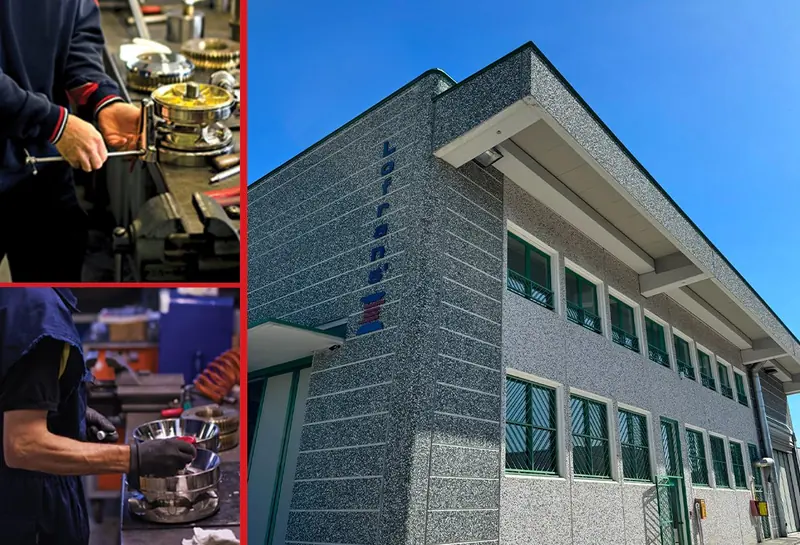
Lofrans was established in Monza in 1966 and has spent close to sixty years on one narrow job: anchor windlasses and the deck hardware around them. The company moved into a new, larger facility at Via Leonardo Da Vinci in Cambiago, north of Milan, in 2026, the year it marked its 60th anniversary, describing the new site as privately owned and state of the art. Lofrans states its product line now runs to more than 25 models across boats from 6 to 50 metres, roughly 20 to 160 feet, and that its windlasses carry approval from three classification societies: RINA, Bureau Veritas and DNV.
Since 2012 the company has traded as Lofrans under Lalizas Italia s.r.l. Unipersonale, a subsidiary of the Greek marine equipment group Lalizas, which bought Lofrans the same year alongside the bow thruster maker Max Power and the fender and accessories brand Nuova Rade. That means a Lofrans windlass now sits inside a much larger corporate parts and distribution network than the standalone Italian company that built its reputation, with Lofrans stating a worldwide network of more than 40 official distributors. The company's own history also records a 2013 investment round that put in an SAP enterprise resource planning system, a new warehouse management system and a B2B ordering platform, infrastructure aimed squarely at a dealer buying spares or a new unit rather than a private owner, which is the channel most Lofrans windlasses actually sell through.
The engineering claims: Automatic Free Fall and the Control Box
Automatic Free Fall lets an anchor drop under its own weight rather than under motor power, which is the mode most sailors actually want in a hurry: paying the anchor straight down rather than winding it out at motor speed. The Control Box is Lofrans' electronic management layer for the windlass motor, and the company markets a plug-and-play design intended to cut the wiring and configuration work an installer has to do compared with an older-style windlass wired directly to a deck switch and a circuit breaker.
None of these three claims, Automatic Free Fall, the Control Box or plug-and-play wiring, were independently verified against a named rival's equivalent system in this research; they are reported here as Lofrans' own description of its engineering, sourced to the company's own technical information pages rather than a third party test. What can be checked independently is why the claim matters in practice: a windlass installation that used to need an installer to run separate circuits for up, down, free fall and chain counting now runs through one control box and one harness, which is the kind of change that shows up as fewer wiring faults over a boat's life rather than as a headline number on a spec sheet.
A named, independent bench test found Lofrans' own bigger, pricier windlass barely outperforming its smaller, cheaper sibling, and both running slower than the company's own published speed claims.
The range: vertical, horizontal and capstan, with real numbers on two models
The Tigres, a horizontal windlass aimed at boats from 36 to 49 feet, runs a 1500 W motor on 12V or 24V and takes 1/4 inch, 5/16 inch or 3/8 inch chain depending on the gypsy fitted. Two figures for its maximum pull capacity appear across Lofrans' own retail listings, 2,300 lb by one account and 1,700 lb by another, a discrepancy this research could not resolve from the company's own site, so both are reported here rather than one being picked as correct. Current US pricing for the 5/16 inch, 12V version was USD 3,312.45 at Fisheries Supply and USD 2,972.99 at West Marine in 2026, two independent retailers landing within about ten percent of each other, while SVB, a European retailer, listed the Tigres from EUR 1,344.50 for a lower-specification base configuration.
The Cayman is the compact horizontal alternative, aimed at 20 to 45 foot boats with a 1000 W motor and up to 1,400 lb of pull. Above the horizontal line sit the vertical windlasses, including the X1, X2 and X3 families and the Marlin, and the wrapping capstans, which Lofrans states cover boats from 6 to 45 metres. Both horizontal and vertical designs share the independent gypsy and drum operation, manual chain release and manual override features that Lofrans lists across the range. The practical sizing question for a buyer is not the windlass alone but the gypsy fitted to it, since a gypsy is cut for one specific chain size and type, and a Tigres ordered with a 5/16 inch high-tensile gypsy will not correctly feed 5/16 inch BBB chain of a different link shape, a mismatch that shows up as slipping or jamming rather than as an obvious fault at the point of sale. Getting a length of the boat's actual anchor chain to a dealer before ordering, rather than quoting the chain size from memory, is the cheapest way to avoid that mistake.
What an independent bench test actually found
On the Dorado, a horizontal windlass that carries its motor belowdecks for the smallest on-deck footprint of any horizontal model Practical Sailor tested, Nicholson measured a no-load speed of 62 feet per minute against Lofrans' own claimed 79 fpm, with a working-load speed of 48 fpm against a claimed 46 fpm, a maximum pull of 550 lb on rope and 1,000 lb on chain, at a tested price of USD 730. The reviewers singled out the Dorado's metal chain and rope guide, which Lofrans calls a pressure finger, for praise, expecting it to outlast the plastic guides used on some rival windlasses before needing replacement. Practical Sailor's test rig applies a measured load rather than relying on a windlass's own current draw as a proxy for pull, which is why its figures can differ from a manufacturer's bench numbers even when both are measured honestly.
On the Project range, the more expensive Project 1500 measured a no-load speed of 89 fpm and a working-load speed of 66 fpm at USD 2,160, against the smaller Project 1000's 96 fpm no-load and 72 fpm working-load at USD 1,320, a full 840 dollars less. Nicholson's own conclusion was direct: "though the 1500 uses a larger motor and higher gear ratio than the 1000, we did not find significant performance increases." In the same comparative test, Practical Sailor found the Maxwell Freedom 800 faster on no-load retrieval speed and the Lewmar V3 stronger on chain pull than either Lofrans model, which is a genuine, named, third-party finding rather than a rival's marketing claim.
The vertical and manual lines, for a smaller boat or a simpler installation
The X series, running X1 through X4 plus a heavier Ercole Vertical model, is built in mirror-polished marine bronze rather than the anodized aluminium of the Tigres and Cayman, and is aimed at sail and motor boats from 6 to 27 metres. The X2 and X3 are also offered in a Plus version machined from AISI 316L stainless steel for owners who want the strongest available corrosion resistance, and every model in the X series carries a watertight stainless steel ball bearing built into the base, which Lofrans markets as a zero-maintenance feature and states is unusual in the wider windlass market, where a base bearing is normally a routine service item.
At the simple end of the range sits the Royal, a fully manual horizontal windlass with an anodized aluminium body weighing about 10 kg, worked entirely by hand through independent gypsy and drum operation with a manual chain release and override, and no motor, wiring or electrical draw of any kind. For an owner of a smaller boat, or one who wants a mechanically simple backup windlass with nothing to fail electrically, the Royal is the option that removes the motor, gearbox and control box entirely from the reliability question that Practical Sailor's bench test raises for the electric models, at the cost of every pull of the anchor taking real physical effort rather than the press of a switch.
Informations pratiques
| Price, Tigres 5/16 inch 12V | USD 3,312.45 (Fisheries Supply) or USD 2,972.99 (West Marine), 2026; from EUR 1,344.50 for a lower-spec base configuration (SVB, Europe) |
|---|---|
| Price, Cayman and entry models | Practical Sailor bench-test pricing put the Dorado at USD 730 and the Project 1000 at USD 1,320, both several years old and likely below current retail |
| Boat size range | 6 to 50 metres (20 to 160 ft) across the full range; Tigres specifically for 36-49 ft, Cayman for 20-45 ft |
| Classification approval | RINA, Bureau Veritas and DNV |
| Before ordering | confirm the exact pull capacity figure for the specific Tigres configuration quoted, since Lofrans' own listings do not agree, and ask whether the model has been independently bench tested against its claimed speed |
| What is not published | no reconciliation of the two conflicting Tigres pull-capacity figures, no independent verification of the Automatic Free Fall or Control Box claims and no confirmed named owner account beyond the Practical Sailor bench test |
Ce que rapportent propriétaires et équipages
A named, measured, independent bench test of three models
Darrell Nicholson tested the Lofrans Dorado, Project 1000 and Project 1500 against their own published speed and pull figures, finding the Dorado and Project 1500 underperforming their claimed no-load speeds, and the pricier Project 1500 failing to clearly beat the cheaper Project 1000 despite a larger motor and higher gear ratio
Darrell Nicholson, Practical SailorNo independently attributable named owner testimony was confirmed for this entry
Owner forum threads on Lofrans windlasses were found and describe both praise and specific complaints (motors ceasing to turn the gypsy, intermittent operation), but this research could not independently confirm a real name behind the forum handles involved, so those accounts are not used here as named owner_reports
Yotters research desk
Les points forts et les points de vigilance
Points forts
- Nearly sixty years building one product categoryLofrans has built anchor windlasses since 1966 and now covers boats from 6 to 50 metres with classification approval from three separate societies, RINA, Bureau Veritas and DNV, which most rival windlass brands do not carry across their whole range
- A component an independent tester specifically praisedPractical Sailor singled out the Dorado's metal pressure finger, the chain and rope guide, as likely to outlast the plastic guides used on some competing windlasses, a specific, named, mechanical advantage rather than a general reputation claim
- Backed by a large parent distribution network since 2012Ownership under Lalizas gives Lofrans access to a wider spares and distribution network than a standalone Italian manufacturer would carry alone, with more than 40 official distributors worldwide
Points de vigilance
- Independent testing found real gaps between claimed and measured speedPractical Sailor measured the Dorado at 62 fpm against a claimed 79 fpm no-load speed, a shortfall of more than 20 percent against Lofrans' own published number, on a named, bench-tested unit rather than an outlier complaint
- The more expensive Project 1500 did not clearly outperform the cheaper Project 1000At USD 840 more than the Project 1000, the Project 1500's larger motor and higher gear ratio produced, in Practical Sailor's own words, no significant performance increase, which is a real argument for buying the smaller model unless a specific reason favours the larger one
- Lofrans' own retail listings disagree on the Tigres pull capacityTwo figures for the Tigres maximum pull, 2,300 lb and 1,700 lb, appear across different Lofrans-sourced retail listings, and this research could not establish which is correct or whether they describe different configurations, which is exactly the kind of discrepancy a buyer should ask a dealer to resolve before ordering
Pour qui: An owner sizing a windlass for a 20 to 160 foot boat who wants classification-society approval and a large parts and distributor network behind the purchase, and who should check independent bench figures rather than the model's own claimed speed before choosing between two Lofrans models a step apart in price.