Seakeeper
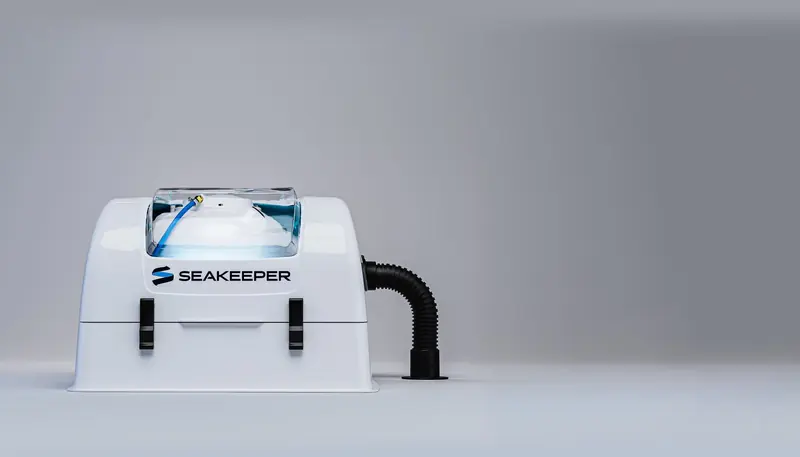
| Catégorie | stabilisateurs gyroscopiques anti-roulis et contrôle d'assiette |
|---|---|
| Fondée | en 2001 par Shep McKenney et John Adams, premier atelier à Solomons Island, Maryland, en 2002 |
| Actionnaire | Madison Industries, qui a racheté la société en 2018 |
| Fabrication | Leesport, Pennsylvanie, dans une usine ouverte en 2022 |
| Jalons | premier prototype sur un Viking de 43 pieds en 2006, premier contrat de série avec Azimut en 2008, dix millième unité en 2020 |
| Gamme | quatorze modèles, du Seakeeper 1 au Seakeeper 40 |
| Seakeeper 1 | bateaux d'environ 7 m à 9 m et jusqu'à 5,5 tons, USD 17 400 |
| Seakeeper 26 | bateaux d'environ 21 m à 26 m et jusqu'à 75 tons, 1 431 kg, USD 268 600 |
| Seakeeper 40 | bateaux de 26 m et jusqu'à environ 115 tons, 1 848 kg, USD 365 400 |
| Réduction du roulis | jusqu'à 95 %, selon les chiffres de la société |
| Montée en régime | 43 minutes jusqu'à la stabilisation complète sur un Seakeeper 26, 40 minutes sur un Seakeeper 40 |
| Puissance | 3 000 W pour lancer un Seakeeper 26 et 1 375 à 3 000 W en fonctionnement, sous 208 à 230 volts |
| Average installed cost, from a United States Seakeeper installer's published guide compiled from more than 900 installations and read in July 2026: Seakeeper 1 USD 14,600 install for USD 32,000 all in, Seakeeper 2 USD 16,900 for USD 43,000, Seakeeper 3 USD 21,700 for USD 62,000, Seakeeper 4 USD 23,600 for USD 71,000, Seakeeper 4.5 USD 19,400 for USD 75,000, Seakeeper 6 USD 20,400 for USD 90,000, Seakeeper 9 USD 25,300 for USD 140,000, Seakeeper 10 USD 23,200 for USD 150,000, Seakeeper 18 USD 26,300 for USD 210,000 | |
| Installation averages exclude taxes, shipping, travel, yard fees and any vessel-specific work | |
| Seakeeper 26 and Seakeeper 40 are quoted individually. No published installation figure exists for either, which is the whole 21 m to 33 m band | |
Vingt-cinq ans autour d'une seule idée
Shep McKenney et John Adams se sont entendus en 2001 pour développer un stabilisateur gyroscopique moderne et utilisable, et se sont mis au travail l'année suivante dans un garage de Solomons Island, dans le Maryland. Le premier prototype est monté sur un Viking de 43 pieds en 2006. Le M7000 a été commercialisé en 2008, et le premier contrat de série est venu d'Azimut Yachts la même année, ce qui a fait passer la technologie de l'expérimentation à l'équipement monté d'usine.
La société a vendu sa millième unité en 2011 et sa dix millième en 2020. Elle a racheté son partenaire industriel, Joma Machine Company, en 2008, s'est installée à Mohnton en Pennsylvanie et a ouvert une usine construite pour elle à Leesport en 2022. Madison Industries a acquis l'affaire en 2018. Un centre de formation a ouvert à Tampa en 2021, ce qui compte parce que c'est la qualité de l'installation qui décide des performances de l'équipement.
Comment fonctionne réellement le gyroscope
Un volant d'inertie tourne dans une enceinte sous vide. Quand le bateau roule, le gyroscope bascule d'avant en arrière, et cette précession engendre un couple bâbord et tribord qui s'oppose au roulis. Le vide est le tour de force technique. Il permet au volant de tourner environ trois fois plus vite qu'une conception classique, ce qui réduit sa masse des deux tiers et divise par deux la puissance qu'il consomme.
La société annonce des vitesses de volant allant jusqu'à 9 750 tr/min sur les petites unités et des vitesses en périphérie d'environ 557 miles par heure. Les grandes unités tournent plus lentement, à 5 000 tr/min sur un Seakeeper 26 et 5 150 tr/min sur un Seakeeper 40, et portent bien plus de moment cinétique. Un refroidissement breveté au glycol et à l'eau de mer évacue la chaleur. La commande est automatique et lit l'état de la mer en continu.
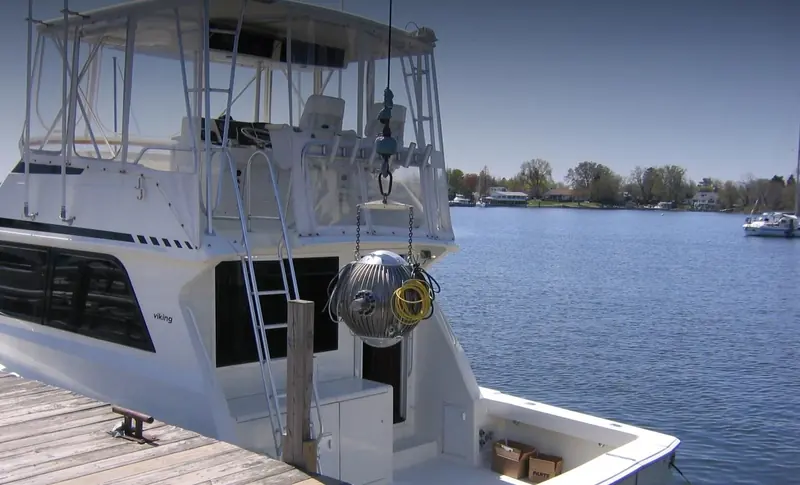
Quarante minutes de montée en régime, c'est le prix d'un mouillage que personne n'a envie de quitter.
La gamme, et ce qu'elle coûte
Quatorze modèles couvrent des bateaux d'environ 7 m à plus de 33 m. Un Seakeeper 1 convient à des unités de 7 m à 9 m environ jusqu'à 5,5 tons et s'affiche à USD 17 400. Un Seakeeper 6 couvre environ 13 m à 16 m jusqu'à 24 tons à USD 69 600. Un Seakeeper 18 couvre environ 18 m à 23 m jusqu'à 56 tons à USD 183 700.
Au sommet, le Seakeeper 26 traite des bateaux d'environ 21 m à 26 m et jusqu'à 75 tons pour USD 268 600, et le Seakeeper 40 traite 26 m et au-delà jusqu'à environ 115 tons pour USD 365 400. Aucun de ces montants ne comprend l'installation, qui, sur une pose en rétrofit, peut représenter à nouveau une fraction substantielle du prix de l'unité.

Ce que cela change à la vie du bord
L'annonce est une réduction du roulis jusqu'à 95 %, et le chiffre qui compte pour un propriétaire n'est pas le pourcentage. C'est de savoir si les invités restent à table. Un yacht couché en travers de la houle dans un mouillage par ailleurs parfait se vide dès neuf heures du soir, et le remède habituel est de bouger, ce qui coûte le mouillage. Un gyroscope supprime la raison de bouger.
Le second effet se produit à faible vitesse et à l'arrêt, là où les stabilisateurs à ailerons ne faisaient historiquement rien. Seakeeper travaille à vitesse nulle par conception, ce qui explique qu'il soit d'abord apparu sur des bateaux de pêche sportive qui restent immobiles des heures. Sur un yacht, cela change les opérations de tender, la baignade depuis la plateforme et la question de savoir si quelqu'un a le mal de mer dans le carré.
Montée en régime, puissance et groupe électrogène
Deux réalités d'exploitation gouvernent l'usage de cet équipement. La première est le temps de montée en régime. Un Seakeeper 26 atteint la stabilisation complète en 43 minutes environ et un Seakeeper 40 en 40 environ, le régime maximal demandant 70 minutes sur la plus grosse unité. Un gyroscope ne s'allume pas au moment où l'ancre descend. Les équipages le lancent bien avant l'arrivée.
La seconde est la puissance. Un Seakeeper 26 tire jusqu'à 3 000 W pour se lancer et 1 375 à 3 000 W en fonctionnement selon l'état de la mer, sous 208 à 230 volts monophasé et 20 ampères. Un Seakeeper 40 demande 5 000 W au lancement et 1 900 à 4 400 W en fonctionnement sous 30 ampères. Un groupe électrogène doit être en ligne dès que l'unité tourne, et elle réclame en plus 4 à 8 gallons par minute d'eau de mer pour son refroidissement.

Poids, place et pose en rétrofit
Un Seakeeper 26 pèse 1 431 kg et un Seakeeper 40 pèse 1 848 kg, dans des ensembles d'un peu plus de 1,4 m de côté et d'environ un mètre de haut. Cette masse doit reposer sur une fondation correctement calculée, bas et près du centre du navire, et la structure demande souvent des travaux pour l'encaisser. Il n'y a ni ailerons, ni arbres, ni percements de coque au-delà de l'eau de refroidissement.
L'absence d'appendices est l'argument le plus fort en rétrofit. Les stabilisateurs à ailerons exigent des trous dans la coque, ajoutent de la traînée en route et peuvent être endommagés à quai ou en eau peu profonde. Un gyroscope se loge à l'intérieur du bateau et peut s'installer à peu près partout où la structure le permet. C'est le coût de l'installation qui est la variable, et il n'est pas publié.
Là où cela s'arrête
Le plafond est réel. La plus grande unité est calibrée pour environ 115 tons, soit un bateau d'environ 26 m à 33 m. Au-delà, un propriétaire installe plusieurs unités ou se tourne vers des stabilisateurs à ailerons à capacité vitesse nulle, ce que portent la plupart des yachts de plus de 40 m. Quiconque possède un grand yacht à déplacement devrait traiter Seakeeper comme une option parmi d'autres et non comme le choix par défaut.
L'autre limite est l'état de la mer. Un gyroscope réduit le roulis et ne fait rien contre le tangage, si bien qu'une mer de face n'est pas affectée. La réponse de Seakeeper est Seakeeper Ride, lancé en 2023, un système de contrôle d'assiette pour bateaux planants en route. C'est un produit distinct qui règle un problème distinct.
Service, garantie et roulements
Les unités portent une garantie usine de plusieurs années et les roulements sont remplaçables sur site, ce qui est la décision de conception la plus importante pour un propriétaire. Une unité scellée qu'il faudrait renvoyer en Pennsylvanie à l'usure d'un roulement serait une panne qui coûte une saison. Le remplacement sur site veut dire qu'un technicien vient au bateau.
Seakeeper forme directement installateurs et techniciens de service, et le réseau suit l'industrie du bateau de série américaine et européenne, ce qui veut dire une couverture en Floride, aux Bahamas, aux Baléares, sur les rivieras italienne et française et dans les Caraïbes orientales. Le niveau sonore est d'environ 74 dB à un mètre sur un Seakeeper 26, si bien que l'emplacement de montage et l'isolation acoustique autour font partie de la spécification et non d'une réflexion après coup.
Face aux stabilisateurs à ailerons, et à qui cela s'adresse
Les stabilisateurs à ailerons des fabricants européens établis restent la norme sur les grands yachts à déplacement, et les ailerons modernes travaillent à vitesse nulle. Ils coûtent plus cher, ajoutent de la traînée et placent des surfaces mobiles à l'extérieur de la coque. Un gyroscope coûte moins, ajoute du poids au lieu de la traînée et reste invisible de l'extérieur. Sur les bateaux jusqu'à environ 115 tons, le gyroscope l'emporte en général sur le coût installé et la simplicité.
Les propriétaires qui devraient en installer un sont ceux qui mouillent au large la plupart des nuits, qui dînent à bord et qui reçoivent des invités qui n'ont pas le pied marin. Ceux qui devraient regarder ailleurs sont ceux dont le yacht dépasse la plage de tailles, ceux qui n'ont pas de puissance de groupe électrogène disponible, et ceux dont le bateau ne sert jamais qu'en route sur une eau plate.
Informations pratiques
| Equipment prices, published in full | Seakeeper is one of the very few marine makers that publishes every list price. Its own cost page, read August 2026, gives Seakeeper 1 at USD 17,400, 2 at USD 26,100, 3 at USD 40,300, 4 at USD 47,400, 4.5 at USD 55,600, 5 at USD 60,500, 6 at USD 69,600, 7.5 at USD 78,700, 10 at USD 126,800, 10.5 at USD 133,900, 14 at USD 155,900, 18 at USD 183,700, 26 at USD 268,600 and 40 at USD 365,400. Those are equipment only, exclude taxes, storage, docking and haul-out, and the company states they are subject to passthrough on any levied tariff. |
|---|---|
| Installation is the bigger half of the bill | An Elite Seakeeper dealer publishes averages compiled from more than 900 installations as of 2025: Seakeeper 1 at USD 14,600 to fit for USD 32,000 all in, 3 at USD 21,700 for USD 62,000, 4.5 at USD 19,400 for USD 75,000, 6 at USD 20,400 for USD 90,000, 9 at USD 25,300 for USD 140,000, 10 at USD 23,200 for USD 150,000, 14 at USD 24,100 for USD 180,000 and 18 at USD 26,300 for USD 210,000. Averages exclude taxes, shipping, yard fees and any vessel-specific structural work. Access is what moves the number: a unit that has to go in through a cut hatch is a different job from one dropped into an open lazarette. |
| Annual service, with real numbers behind it | Two Elite Seakeeper dealers in Orange Beach, Alabama publish identical annual service tables: USD 750 for a Seakeeper 1, USD 850 for a 4 or 4.5, USD 1,150 for a 2, USD 1,200 for a 3, USD 1,350 for a 10, USD 1,500 for a 5, 6 or 14, USD 1,650 for a 9, USD 1,800 for a 16 or 18, USD 1,900 for a 26 and USD 2,250 for a 35 or 40. An independent Californian yard, Ventura Boat Services, puts a typical annual service at USD 1,500 to USD 3,000 in November 2025, so treat the dealer table as a floor rather than a ceiling. |
| The service schedule the warranty depends on | Remove the covers and inspect visually after every use, with a freshwater rinse and a strainer check. Every three months or 150 hours, inspect, rinse, check the strainer and replace the zinc on Seakeeper 5 and above. Annually or at 1,000 running hours, whichever comes first, a professional inspection checks seawater flow and cooling hoses, flushes the cooling system with glycol and inspects the electronics. Units must also be registered with Seakeeper to access after-sales programmes, and a technician has to verify sea hours for a warranty claim. |
| The long-run item nobody quotes up front | The spherical bearings that carry the spinning flywheel are rated at roughly 10,000 to 20,000 hours on many models. Ventura Boat Services puts bearing service or replacement past 10,000 hours at USD 20,000 to USD 60,000 or more, and hydraulic bushing replacement past 2,000 hours at USD 1,000 or more. Those are one yard's figures, published November 2025, and Seakeeper publishes nothing against which to check them. On a heavily used charter boat this is the number that decides whether the unit is worth keeping at ten years. |
| Power, weight and the generator question | The small units are DC and the rest are not, which changes life at anchor. A Seakeeper 1 weighs 166 kg and runs on 12 VDC at up to 50 amps, about 225 to 600 watts depending on sea state. A Seakeeper 6 weighs 395 kg and needs 220 VAC at 20 amps or 110 VAC at 30 amps, drawing up to 2,300 watts to spool and 1,100 to 2,300 watts running, plus 125 watts of 12 VDC control power. Above the small DC models the gyro is an AC load, so at anchor the generator runs while the gyro does, and that fuel is part of the cost of a quiet dinner. |
| Spool-up: switch it on leaving the berth | A gyro is not a switch you flick on arrival. A Seakeeper 1 reaches stabilising speed at 7,310 rpm in 18 minutes and full 9,750 rpm in 35 minutes. A Seakeeper 6 reaches stabilising speed at 7,275 rpm in 21 minutes and 9,700 rpm in 42 minutes. The large units carry far more angular momentum and take longer still, which the maker puts at about 40 to 43 minutes to full stabilisation on a Seakeeper 26 or 40. |
| Seakeeper Ride is a different product, not a cheap gyro | Ride is a vessel attitude control system that works underway rather than at rest, for boats up to about 55 ft with a cruising speed above 20 mph and a compatible multifunction display. The same dealer guide gives Ride 450 at USD 4,900 with installation from USD 4,500, about USD 9,400 fitted, up to the Ride 750 QUAD at USD 21,500 with USD 8,500 to USD 13,000 to fit, and the Ride 900 to 1500 from USD 24,500 with custom installation. It does not stop a boat rolling at anchor and it is not a substitute for a gyro. |
| What is NOT published | There is no published installation figure for the Seakeeper 26 or the Seakeeper 40. Both are quoted individually, and that is the entire 21 m to 33 m band, exactly where the equipment alone runs USD 268,600 to USD 365,400. Seakeeper publishes no bearing overhaul price, no out-of-warranty parts list and no independent roll-reduction test; the up to 95 percent figure is the company's own. One United States installer's table also lists the Seakeeper 40 at USD 348,000 against the maker's USD 365,400, so take the factory number and get the delivered price in writing. |
Ce que rapportent propriétaires et équipages
Owner opinion splits, and both sides are worth reading
Forum threads run from an owner with two Seakeeper 5 units reporting problems on every trip and summarising two years of problems and headaches, to an owner running a Seakeeper 2 on a Pursuit 28 for two years who calls it absolutely the best experience, with no roll sitting still or trolling and much less slamming underway because the boat is kept level. Several long-standing posters note that early units were not as reliable, nor as well supported, as they are now.
The Hull Truth (owner forum)What actually breaks, and what the back half of ownership costs
A service yard's published breakdown ranks cooling system problems first, from clogged heat exchangers and raw-water pump failures to overheat alarms triggering automatic shutdowns, then hydraulic and brake faults with accumulators needing replacement every few years, then electrical faults more common on the Seakeeper 1 to 5, then bearing and flywheel wear at roughly 10,000 to 20,000 hours, then corrosion and zinc depletion. It also states most owners see trouble-free operation for the first five to ten years if the unit is serviced annually.
Ventura Boat Services (November 2025)The competition is measurably faster to stabilise
Comparing the Yanmar-owned Smartgyro SG40 against the Seakeeper 9, the magazine reported both reaching maximum rpm in about 55 minutes but the SG40 reaching stabilisation in 25 minutes against 38 for the Seakeeper, with the SG40 heavier at 650 kg against 550 kg and drawing more power, and Smartgyro's modular sphere serviceable in the field without a factory return. The reviewer was explicit that he had not yet tested a Smartgyro at sea.
Motor Boat and Yachting (Hugo Andreae, July 2021)Ride is a real effect underway, and a separate purchase
In the first published test of Seakeeper Ride the reviewer reported bow rise on climbing onto plane significantly reduced, describing a boat that had previously laboured out of the hole lifting smoothly instead. Motor Boat and Yachting's own trial on a Nimbus T9 in typical lumpy Solent conditions found pitching reduced in size and severity and side to side roll almost entirely gone at 35 knots.
Power and Motoryacht (Dan Harding)The rest of the market is chasing on price and installation
A trade survey of the gyro market recorded Quick's air-cooled MC2 needing no water intake, with managing director Paolo Berni of Quick USA making the point that not needing a water-cooling system means not putting another hole in the boat, and some models retrofitting on eight bolts. Quick had sold about 600 units worldwide by 2021 against Seakeeper's ten thousand. Smartgyro's marketing director Sander Gesink summarised the demand simply: people want comfort and are willing to pay for it.
Soundings Trade Only
Les points forts et les points de vigilance
Points forts
- It does the one thing that changes an evening aboardA gyro stops the roll at anchor, which is where a yacht spends most of its life and where fin stabilisers do least. Seakeeper claims up to 95 percent roll reduction, and owners describe no roll at rest or at trolling speed. It is the single piece of equipment most likely to decide whether guests stay aboard after dinner.
- The prices are published, all fourteen of themEquipment list prices for every model, dealer installation averages drawn from more than 900 jobs, published annual service tables and a stated exclusions list. Almost nothing else in yachting is priced this openly, and it lets an owner build a real budget before a salesman is involved.
- Scale, and the support that comes with itMore than ten thousand units sold since the first prototype went onto a 43 foot Viking in 2006, a purpose-built plant at Leesport opened in 2022, and a training facility at Tampa since 2021. Installation quality decides whether the equipment performs, so a trained network matters more here than the specification sheet does.
- The vacuum enclosure is genuine engineering, not marketingSpinning the flywheel in a vacuum lets it turn roughly three times faster than a conventional design, which cuts its weight by about two thirds and halves the power it needs. That is why a 24 ton boat can carry a 395 kg Seakeeper 6 rather than something twice the size.
- Two years and 2,000 hours of full-system warrantyThe whole line carries the same 2 year, 2,000 hour factory warranty, with an extended programme available while the unit is still inside the factory period. Cover has to be activated by registering the unit, and a technician verifies sea hours on a claim.
Points de vigilance
- The equipment price is not the priceA Seakeeper 6 lands at about USD 90,000 fitted against USD 69,600 of hardware, and a Seakeeper 1 at about USD 32,000 against USD 17,400. Above the Seakeeper 18 there is no published installation figure at all, so the 21 m to 33 m owner has the least information and the largest bill.
- It takes 18 to 42 minutes to come up to speedStabilisation arrives in 18 minutes on a Seakeeper 1 and 21 on a Seakeeper 6, with full rpm at 35 and 42 minutes, and the maker puts full stabilisation on a Seakeeper 26 or 40 at about 40 to 43 minutes. Forget to switch it on leaving the berth and the first half hour of the anchorage is exactly as rolly as it would have been.
- Above the small DC units it is an AC loadA Seakeeper 6 wants 220 VAC at 20 amps and draws up to 2,300 watts. At anchor that means the generator runs while the gyro runs, so a quiet night is a running genset, and the fuel and the generator hours belong in the running cost.
- The ten-year cost is opaqueBearings are rated at roughly 10,000 to 20,000 hours and an independent yard puts the overhaul at USD 20,000 to USD 60,000 or more, with hydraulic bushings adding USD 1,000 or more past 2,000 hours. Seakeeper publishes no figure for either, so a buyer cannot price the back half of the ownership.
- The failure modes are recurrent and unglamorousClogged heat exchangers, raw-water pump failures and overheat shutdowns lead the list, with hydraulic and brake faults and voltage drops more common on the smaller units and zinc depletion throughout. Owner opinion splits accordingly, between owners who call it the best money they ever spent and owners reporting years of intermittent faults.
Pour qui: Les propriétaires de bateaux jusqu'à environ 115 tons qui mouillent au large, dînent à bord et en ont assez de devoir bouger à neuf heures du soir à cause d'une houle.