Side-Power
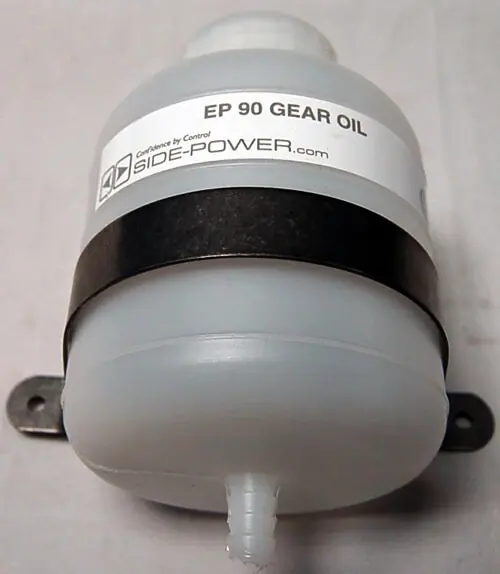
| Category | bow and stern thrusters, electric and hydraulic, the Side-Power brand of Sleipner Motor AS |
|---|---|
| Founded | 1908 as a marine engine maker; headquarters and factory in Fredrikstad, Norway since 1910 |
| Ownership | independently held; no shareholding or parent group disclosed in the sources checked for this page |
| Pivot to thrusters | early 1980s, when the Side-Power name was introduced as an English-language brand for the new product line |
| Rebrand | the parent reverted from the Side-Power name back to Sleipner across its whole range in 2021 |
| Scale | about 230 employees and roughly NOK 800 million in annual revenue, with subsidiaries in Denmark, Finland, Germany, Italy, Poland, Sweden and the UK |
| Range | ten DC electric thruster models from about 66 lbf to 627 lbf, plus four hydraulic models from 220 lbf to 1,210 lbf, in tunnel, external and retractable mounting |
| Proportional (variable) speed control introduced in 2011, three years ahead of Vetus or Lewmar matching it | |
A Norwegian Engine Maker That Became a Thruster Brand
Sleipner was founded in 1908 and spent roughly its first sixty years as a maker of marine engines for Norwegian fishing and leisure boats, reliable enough that some of that era's motors are still reported running today. The company moved its works to Fredrikstad in 1910, on the Oslofjord, and has manufactured there ever since. The change that created the business as it exists now came in the early 1980s, when Sleipner began developing thruster systems and coined "Side-Power" as an English-language brand name for the new line, a direct reference to what a thruster does: push the boat sideways.
The Side-Power name lasted forty years. In 2021 the parent company reversed the branding, retiring "Side-Power" from the logo and packaging and returning to "Sleipner" across its full range, which by then had grown to include fin stabilisers, hydraulic systems and steering alongside thrusters, a spread the old thruster-specific name no longer covered. Sleipner Motor AS is still printed on the owner's manual and on a tag on every motor, rebrand or not. Today the group employs more than 230 people, turns over roughly NOK 800 million a year and runs sales subsidiaries in Denmark, Finland, Germany, Italy, Poland, Sweden and the UK, with the factory still in Fredrikstad.
Two Power Types, Three Mounting Styles
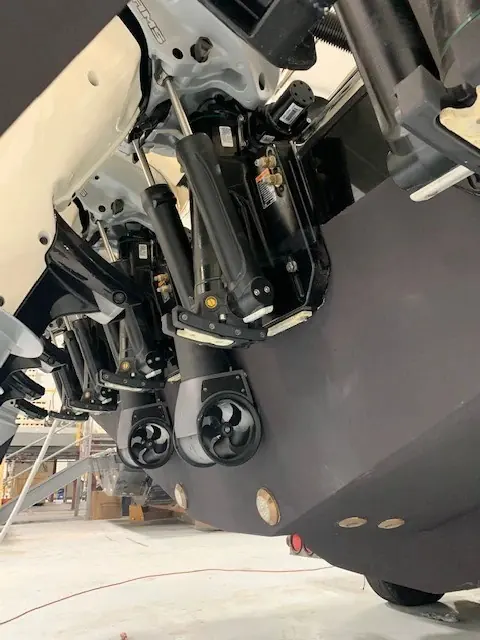
The electric line runs on 12, 24 or 48 volt DC power from a dedicated battery bank, starting with the SE40 at 40 kgf, 88 lbf at 10.5 V and rising to 105 lbf at a full 12 V, through a 125 mm tunnel, and climbing through single and twin counter-rotating propeller models to units rated past 250 kgf. A proprietary five-blade composite propeller and, on the smaller models, a composite gear leg that needs no zinc anode are standard across the electric range. The hydraulic SH line, driven off the boat's own hydraulic system rather than a battery bank, spans four published models from the SH160 at 160 kgf, 352 lbf, to the SH550 at 550 kgf, 1,210 lbf, aimed at the 75 to 140 foot boats where a hydraulic system is already aboard for steering or stabilisers.
Mounting is the other axis. A tunnel thruster, the default, sits in a hole cut through the hull below the waterline. Side-Power also sells external units, bolted to a transom or hull face with no tunnel at all, for boats with too little room in the bow, sailboats and shallow-draft hulls among them, and it is the only one of the three big leisure-thruster brands, against Vetus and Lewmar, that offers this configuration. A third family, the retractable SR and SRV range, houses the gear leg inside the hull and drops the propeller down only when needed, up to 250 kgf on the SRV210 for boats of roughly 55 to 78 feet, trading the lowest drag of the three styles for the most complex and expensive installation.
A Norwegian engine maker since 1908 that spent sixty years building motors before it ever built a thruster.
What a Unit Costs, Before It Goes In
Two American chandlers give a consistent read on the small end. Fisheries Supply lists the base SE40/125S, 40 kgf through a 125 mm tunnel, at USD 1,997.21, while Mauripro prices the ignition-protected SE40/125S-IP variant, built to ISO 8846 for use near a gasoline engine compartment, at USD 3,170 against a USD 3,658.85 list. Both dealers publish the same thrust figures for the base motor, 88 lbf at 10.5 V and 105 lbf at 12 V, the kind of agreement that is reassuring on a spec sheet nobody double-checks. Fisheries Supply prices the next size up, the SE60/185S through a 185 mm tunnel with a 4 hp, 3.1 kW motor, at USD 2,484.34, and larger twin-prop electric models and the whole SH hydraulic line, from the SH160 up to the SH550, are quoted on request rather than posted, standard practice once a thruster is sized to a specific hull and hydraulic system rather than sold off a shelf.
Installation is where a like-for-like comparison actually exists. Imtra, Side-Power's North American distributor, priced product and fitting for a Side-Power SE60, a Vetus BOW60 and a Lewmar 185TT3, all sized for the same 35 foot boat and 185 mm tunnel, and found all three landed at or just under USD 10,000 all in. That single data point matters more than any individual list price: at the size most owners actually buy, the boat and the yard decide the bill, not the badge on the motor.
Installing One: The Tunnel, the Battery and the Duty Cycle
Cutting a tunnel is structural work, not an accessory fit. It is a good-sized hole through the hull below the waterline, faired on both sides, and while a properly installed tunnel adds negligible drag and even stiffens the bow as a kind of stringer, it is real fibreglass or metal work that cannot be undone cheaply if the boat is later resold to a buyer who does not want one. Side-Power's own dealer specification sheets set the electrical side just as concretely: the SE40 wants a battery bank of at least 570 CCA, SAE rating, behind a 250 A ANL fuse, and the SE60 wants 665 CCA behind a 325 A fuse, dedicated circuits most boats under about 35 feet do not already carry.
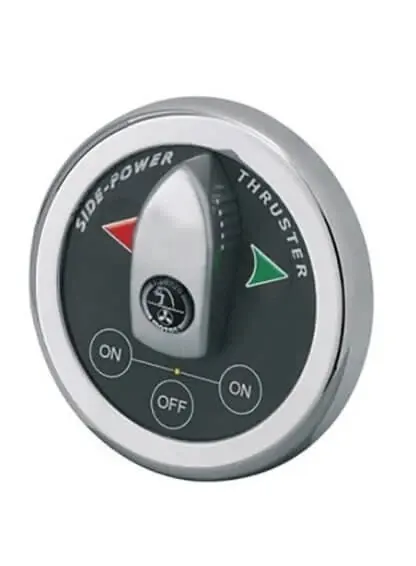
The duty cycle is the part a first-time buyer usually misses. Side-Power's own spec for the SE40 rates it for a 2 to 3 minute duty cycle at 20 C, meaning the motor is built for short bursts while docking, not for holding position against a current for ten minutes straight, and owner-forum threads describe the factory control panel timing itself out automatically six to nine minutes after the last press, a battery-protection default rather than a fault. Hydraulic units sidestep the battery question entirely, drawing off the boat's existing hydraulic pump instead, which is why the SH range is aimed at boats that already carry a hydraulic system for steering or stabilisers rather than one built from nothing. No maker in this category, Side-Power included, publishes a decibel figure for any model. Forum comparison against older four-blade Max Power units suggests Side-Power's five-blade composite propeller runs quieter, but installers are consistent that the mounting and the hull matter more than the brand.
Side-Power Against Vetus, Lewmar and Max Power
Imtra, which sells all three brands' worth of competing hardware alongside its own Side-Power line, published a direct comparison in 2021 that is unusually specific for a distributor's own website. Side-Power introduced proportional, variable-speed control in 2011; Vetus and Lewmar both matched it only in 2019. Side-Power and Lewmar use five-blade composite propellers against Vetus's six-blade design, and Side-Power's and Lewmar's gear legs are sealed and factory-filled with oil, where Vetus still sells a mix of sealed and older oil-fed units that need periodic topping up. Side-Power is the only one of the three offering externally mounted thrusters at all. Against that, Vetus and Lewmar both carry a three-year warranty where Side-Power's is two, a real gap on equipment that lives permanently underwater.
Against Max Power, a cheaper alternative common on production sailboats, the comparison in owner forums runs the other way on price: Max Power units are consistently reported less expensive than a Side-Power of similar thrust, and at least one installer rates Max Power's corrosion resistance ahead of Side-Power's. Owners crediting Side-Power's five-blade prop with running quieter than an older four-blade Max Power of equal output, and Side-Power's variable-speed joystick option, are the reasons most often given for paying more. None of this is independently laboratory-tested; it is dealer and owner opinion repeated consistently enough across separate threads to be worth relaying, not a certified result.
Who Actually Fits Side-Power at the Factory
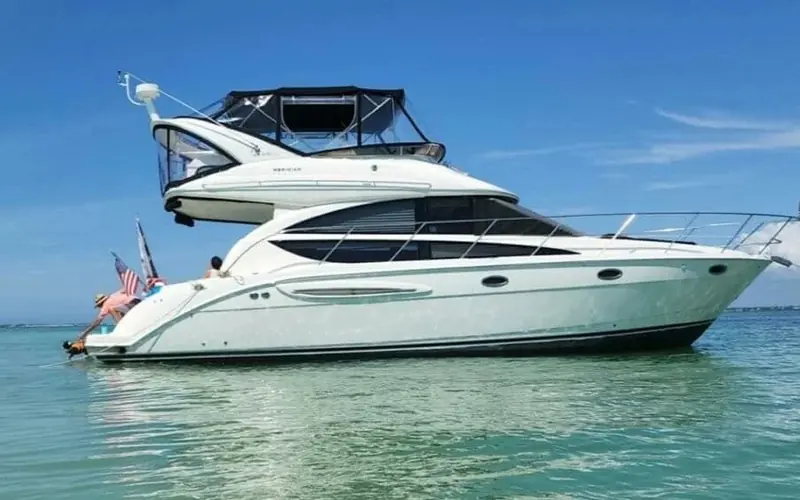
Imtra supplied Brunswick Boat Group with Side-Power thrusters for the Meridian range, models 341 through 459, with the first systems going in from 1999 and thrusters becoming standard equipment across the line in 2002. Brunswick has since discontinued Meridian entirely, but Imtra's own upgrade guide for the model notes hundreds of those boats are still in service, most now old enough that an owner is choosing between a like-for-like part swap and a move to newer proportional-speed control. A factory-fitted Side-Power SE60 also turns up as standard equipment on Bavaria production sailboats, per owners reporting six-year-old units running with no problems, though Sleipner does not publish a customer list.
The company's own marketing states its thrusters are chosen by most high-quality boat manufacturers, a claim this research cannot verify beyond the two relationships confirmed independently here. What is clear from the OEM side is longevity rather than documented breadth: a thruster fitted at the factory in 1999 was still being asked about, by name, on an owner forum a quarter century later, a longer service life than most of the equipment surrounding it.
What Owners Actually Report
The positive reports are the majority, and they are specific about duration rather than vague about satisfaction. Owners on Trawler Forum and similar boards describe a hydraulic bow thruster running eight years with no issues, a pair of Side-Power units nine years in with the same result, and a factory-fitted Bavaria unit still fine at six years old. That pattern, long service followed by silence on the subject, which on an owner forum is itself a form of good news, is the more common shape of the record for this brand.
It is not universal. One Trawler Forum thread from owners of newly commissioned boats fitted with Side-Power's retractable thrusters described a sheared coupling on both the bow and stern units of a single yacht during commissioning, with Sleipner's local agent first attributing it to set-up error or low voltage before acknowledging a known weakness in the coupling design across multiple boats. A replacement coupling on one of those boats failed again within seconds of running at partial power, and the thread's author reported no formal recall or wider communication from Sleipner at the time of writing. Separately, at least one owner of a five-year-old Bavaria 41 reported three breakdowns and high repair bills on the same SE-series unit that other owners call trouble-free at twice the age, a reminder that a single bad example survives on a public forum exactly as long as the many good ones.
Informations pratiques
| List price, small end | Fisheries Supply prices the base SE40/125S tunnel thruster, 40 kgf, 125 mm tunnel, at USD 1,997.21. Mauripro prices the ignition-protected SE40/125S-IP variant at USD 3,170 against a USD 3,658.85 list. Both dealers publish the same thrust figures for the base motor. |
|---|---|
| List price, next size up | Fisheries Supply lists the SE60/185S, 132 to 161 lbf, 185 mm tunnel, 4 hp motor, at USD 2,484.34. Twin-prop electric models and the entire SH hydraulic range, SH160 at 160 kgf up to SH550 at 550 kgf, are quoted on request rather than posted online. |
| Installed cost | Imtra priced product and installation for a Side-Power SE60, a Vetus BOW60 and a Lewmar 185TT3 on the same 35 foot boat with a 185 mm tunnel. All three landed at or just under USD 10,000 all in, so at this size the yard and the boat set the bill more than the brand does. |
| Battery and fuse sizing | The SE40 needs a minimum 570 CCA, SAE rating, battery behind a 250 A ANL fuse. The SE60 needs 665 CCA behind a 325 A fuse, both dedicated circuits most boats under 35 feet do not already carry. |
| Duty cycle | The SE40's factory spec rates it for a 2 to 3 minute duty cycle at 20 C. It is built for short docking bursts, not for holding position continuously, and the standard control panel times out automatically 6 to 9 minutes after last use as a battery-protection default. |
| Warranty | Two years from Side-Power, against three years from both Vetus and Lewmar on comparable models. |
| What is NOT published | No decibel figure for any model, from Side-Power or its two closest competitors. No online list price for the SH hydraulic range or for the larger twin-prop electric models, which are quoted per installation. No public customer list confirming which yards fit Side-Power as standard beyond what owners report themselves. |
Ce que rapportent propriétaires et équipages
Retractable-thruster coupling failures on newly commissioned boats
Owners of at least one newly built European motor yacht reported sheared couplings on both the bow and stern Side-Power retractable units during commissioning. The local Sleipner agent first blamed set-up error or low voltage before acknowledging a known coupling weakness across multiple boats, and a replacement coupling on one boat failed again within seconds of running at partial power.
Trawler ForumLong service life on older factory-fitted units
Owners separately reported a hydraulic Side-Power bow thruster running eight years with no issues, a pair of units nine years in and still trouble-free, and a factory-fitted SE60 on a six-year-old Bavaria with no problems at all.
Trawler ForumRepeated breakdowns on one older unit
One owner of a five-year-old Bavaria 41 reported three separate breakdowns and high repair costs from the same SE-series thruster that other owners describe as trouble-free at twice that age.
YBW ForumMax Power costs less; Side-Power's propeller reported quieter
Owners comparing the two brands describe Max Power thrusters as consistently less expensive for similar thrust, with at least one installer rating Max Power's corrosion resistance ahead of Side-Power's, against Side-Power's five-blade propeller reported quieter than an older four-blade Max Power of equal output.
Trawler ForumA proportional-speed retrofit praised by a sailboat owner
An owner who fitted the highest-thrust single-speed Side-Power thruster available to a Catalina 480 reported using it constantly and being fully satisfied three years on.
Trawler Forum
Les points forts et les points de vigilance
Points forts
- The widest range of any of the big threeTen DC electric models and four hydraulic models, in tunnel, external and retractable mounting. Side-Power is the only one of the major leisure brands selling externally bolted units at all, which matters on a sailboat or shallow-draft hull with no room for a tunnel.
- First to proportional speed controlSide-Power introduced variable-speed DC thrusters in 2011, three years before Vetus or Lewmar matched it in 2019, and the technology is now standard across most of its electric range.
- A company old enough to have finished learning the easy lessonsSleipner has built marine equipment in the same Norwegian factory since 1910 and has sold thrusters since the early 1980s. The Meridian OEM relationship alone put units into service from 1999 that owners were still discussing, by name, decades later.
- Long service life is the common owner reportMultiple independent owner-forum threads describe eight, nine and ten years of trouble-free running, including a factory-fitted unit on a six-year-old Bavaria, a more consistent pattern than the isolated failure reports below.
Points de vigilance
- A documented coupling weakness with no confirmed fixOwners of newly commissioned boats with Side-Power's retractable thrusters reported sheared couplings on both bow and stern units, a replacement that failed again within seconds, and no formal recall or communication from Sleipner at the time the thread was written.
- Real pricing is hidden past the smallest modelsTwin-prop electric units and the entire hydraulic SH range carry no published list price online. A buyer above the smallest tunnel sizes cannot budget without a quote already in hand.
- Two-year warranty against three years from both direct competitorsVetus and Lewmar both cover comparable thrusters for three years. Side-Power's factory warranty is two, on equipment that lives permanently below the waterline.
- Cutting the tunnel is a real structural commitmentA tunnel thruster needs a hole cut through the hull below the waterline. It is common practice and, faired properly, a small drag penalty, but it cannot be reversed cheaply and it changes what the boat is worth to a buyer who does not want one.
Pour qui: Owners of boats from about 26 feet to Side-Power's stated 160 foot ceiling who want the widest choice of tunnel, external or retractable mounting from one maker, and who are prepared to size a real battery bank or hydraulic circuit around it rather than treat the thruster as a bolt-on afterthought.