Bannenberg & Rowell
| Gründer | Jon Bannenberg (Studio ab den frühen 1960er Jahren) |
|---|---|
| Heutige Leitung | Dickie Bannenberg und Simon Rowell |
| Umbenannt | Bannenberg & Rowell im Jahr 2003 |
| Sitz | Fulham, London |
| Disziplinen | Exterieur- und Interieurdesign, Neubauten und Refits |
| Prägende Yachten | Valor (79,5 m), Renaissance (112 m), Avantage (87 m) |
| Erbe | Jon Bannenberg, genannt der Vater des modernen Yachtdesigns |
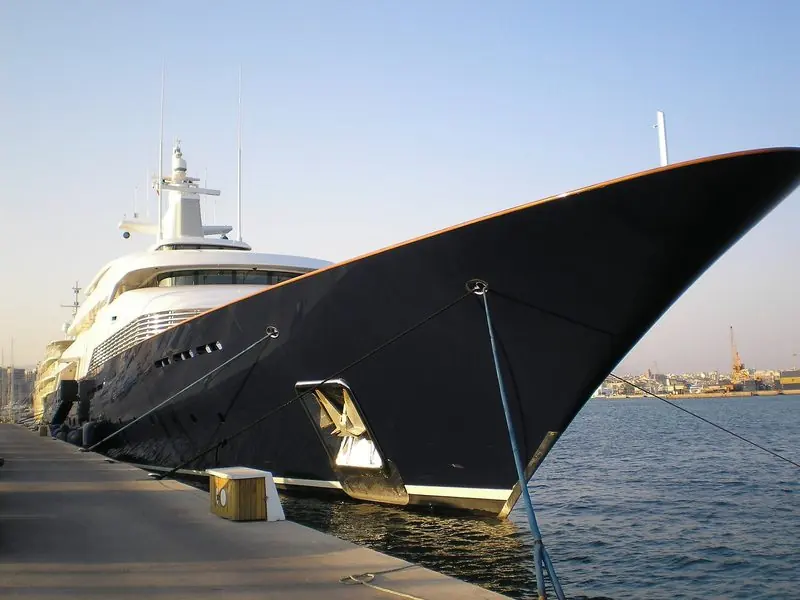
| Jon Bannenberg landmark | Nabila, 85.9 m, Benetti, 1980, now sailing as Kingdom 5KR |
| Renaissance, 112 m, Freire Shipyard, 2023: exterior and interior, and the largest superyacht built in Spain | |
| Avantage, 87 m, Lurssen, 2020 | exterior and interior |
| Valor, 79.5 m, Feadship, launched May 2025: interior, under a Studio De Voogt exterior and naval architecture | |
| Other interior-only work | Predator (72.8 m, Feadship, 2008) and Scott Free, delivered as Elandess (60 m, Abeking and Rasmussen, 2009) |
| Team | twelve people as described by Forbes in February 2017. The studio publishes no current headcount (checked 28 July 2026) |
| Design fee | not published. Market band 1 to 5 per cent of build cost, plus 2 to 4 per cent project management, both outside the yard price (SuperYachtReview 2026 price guide, updated March 2026) |
| On a refit, ownership of the original designer's as-built drawings sets the cost of the project and should be established before the design contract is signed | |
Erbe des Vaters der modernen Yacht
Jon Bannenberg gründete das Studio in den frühen 1960er Jahren und veränderte in den folgenden Jahrzehnten grundlegend, wie Yachten entworfen wurden. Er gilt weithin als Vater der modernen Superyacht, und sein Einfluss durchzieht große Teile der Branche. Sein Sohn Dickie Bannenberg und der Designer Simon Rowell führen das Büro heute. Die beiden arbeiteten viele Jahre an Jons Seite, bevor sie das Ruder übernahmen. Dickie Bannenberg arbeitete annähernd zwei Jahrzehnte an der Seite seines Vaters, bevor er die Firma führte.
Das Studio wurde 2003 in Bannenberg & Rowell umbenannt, im Jahr nach dem Tod von Jon Bannenberg. Es sitzt in Fulham in London und arbeitet an Yachten wie an Projekten an Land. Seit der Umbenennung hat es rund vierzig Yachtprojekte aus Neubauten und Refits abgeliefert. Das Erbe des Gründers bleibt ein lebendiger Teil der Identität des Studios. Das heutige Team versteht dieses Erbe als Auftrag zum Weiterbauen und nicht als Trophäe zum Handeln.
Kreativ und zugänglich
Das Studio beschreibt seine Arbeit als kreativ, zeitgenössisch und zugänglich und widersetzt sich einem einzigen festen Hausstil. Es entwirft Interieurs wie Exterieurs und gibt jeder Yacht gern einen eigenen Charakter. Die Arbeit hat oft einen Sinn für Witz und Farbe, der sie von ernsteren Wettbewerbern abhebt. Diese Offenheit spiegelt den Geist, für den ihr Gründer bekannt war. Jon Bannenberg brach die Regeln seiner Zeit, und das Studio widersetzt sich bis heute dem Einrasten in eine einzige Formel.
Das Büro ist mit einem kühnen Refit ebenso zu Hause wie mit einem Neubau von Grund auf. Es behandelt jeden Auftrag nach seinen eigenen Bedingungen, statt eine Schablone aufzulegen. Diese Beweglichkeit hat ein abwechslungsreiches und lebendiges Portfolio hervorgebracht. Das Studio stellt Ideen über Formeln. Ein kühner Refit kann in den Händen des Studios so erfinderisch sein wie ein Neubau.
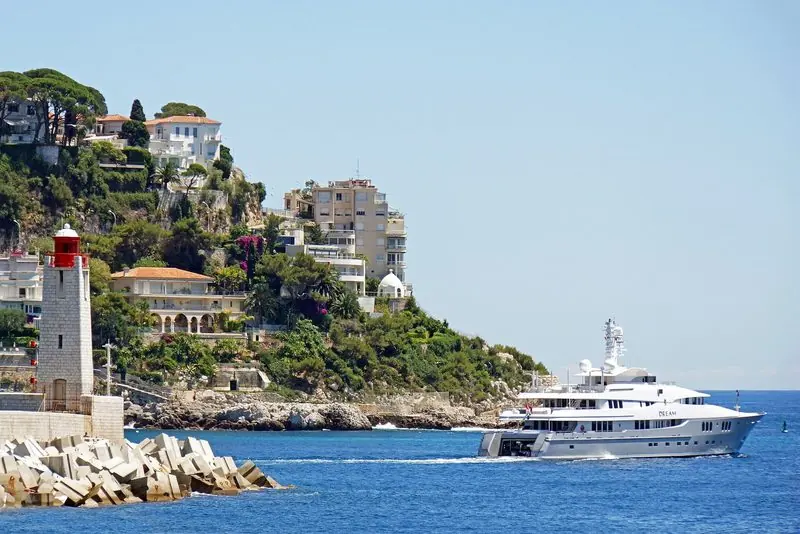
Jon Bannenbergs Revolution, weitergetragen mit Witz und Farbe.
Ein vielfältiges Portfolio
Zu den gebauten Arbeiten des Studios zählen die 79,5 Meter lange Feadship Valor und die 112 Meter lange Renaissance von der Werft Freire. Die 87 Meter lange Lurssen Avantage und die 60 Meter lange Yacht Elysian von Abeking and Rasmussen, zuvor Elandess, stehen daneben. Kleinere Yachten von Heesen und Feadship runden eine breite Größenspanne ab. Die Vielfalt an Werften und Größen fällt auf. Über so viele verschiedene Werften hinweg zu arbeiten ist das Zeichen eines Studios, dem breit vertraut wird, statt an eine Werft gebunden zu sein.
Die eigenen Landmarken des Gründers, etwa die viel diskutierte Nabila von 1980, bleiben Bezugspunkte in der Geschichte des Fachs. Das heutige Studio baut mit einer eigenen Reihe neuer Arbeiten auf diesem Erbe auf. Seine Refits haben einer Reihe älterer Yachten neues Leben gegeben. Das Portfolio liest sich erfinderisch statt wiederholend. Das Studio überrascht einen Eigner lieber, als sich von einem Projekt zum nächsten zu wiederholen.
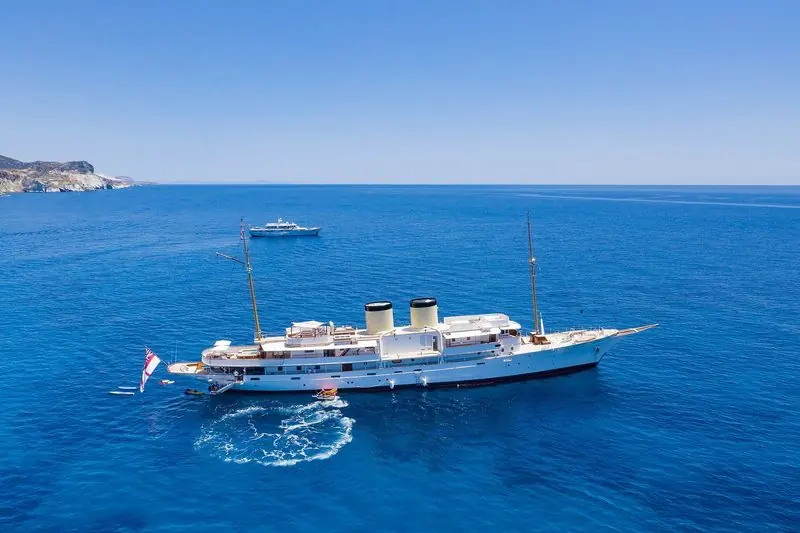
Eigner, Werften und Refits
Bannenberg & Rowell arbeitet mit einem breiten Kreis von Werften in den Niederlanden, Deutschland und darüber hinaus. Seine Bereitschaft, neben Neubauten auch Refits zu übernehmen, erweitert den Kreis der Eigner, die es bedient. Das Studio geht auf Eigner entspannt und partnerschaftlich zu. Diese zugängliche Art gehört zu seiner Anziehungskraft. Eigner beschreiben die Zusammenarbeit mit dem Studio als leicht und angenehm, was über einen Bau von mehreren Jahren zählt.
Das Büro behält bei Neubauten wie bei Refits vom Konzept bis zur Ablieferung eine praktische Rolle. Seine Designer schützen den Charakter eines Entwurfs durch den langen Bauprozess. Die Breite des Studios erlaubt ihm, sich sehr unterschiedlichen Aufträgen anzupassen. Diese Vielseitigkeit hält sein Auftragsbuch abwechslungsreich. Neubauten und Refits gleichermaßen zu übernehmen erweitert den Kreis der Eigner, die das Studio bedienen kann.
Ein Erbe weitertragen
Das Studio nimmt als unmittelbarer Nachfolger des revolutionären Büros von Jon Bannenberg einen besonderen Platz ein. Diese Linie gibt ihm eine Autorität, die nur wenige beanspruchen können. Unter Dickie Bannenberg und Simon Rowell hat es sich einen eigenen Ruf erarbeitet, statt von der Vergangenheit zu zehren. Die Balance aus Erbe und frischer Arbeit ist seine Stärke. Allein von der Vergangenheit zu zehren wäre der leichte Weg gewesen, und das Studio hat sich sichtlich dagegen entschieden.
Das Büro liefert weiterhin Neubauten und Refits in stetigem Takt ab. Sein kreativer, zugänglicher Stil hat es über zwei Generationen hinweg relevant gehalten. Der Name Bannenberg hat in der gesamten Branche weiterhin Gewicht. Das Studio bleibt eine unverwechselbare Stimme im Yachtdesign. Zwei Generationen später steht der Name Bannenberg noch immer dafür, die Dinge ein wenig anders zu machen.
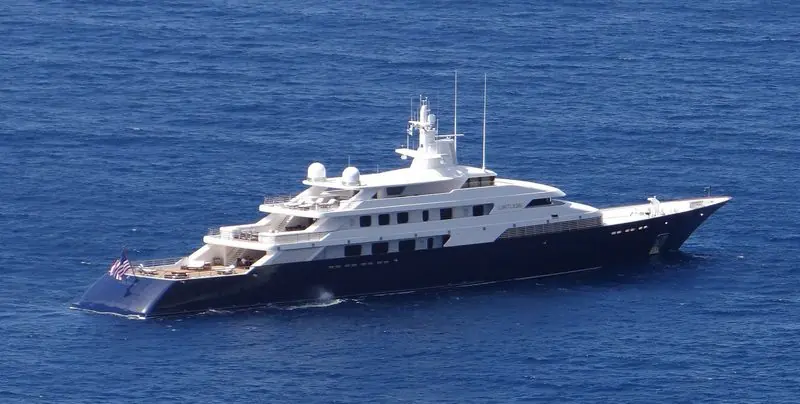
Valor, and interiors inside other people's boxes
Valor was launched by Feadship in May 2025 at 79.5 metres and 2,025 GT over six decks, with Studio De Voogt taking the naval architecture and the exterior and Bannenberg and Rowell the interior. She has a two metre ice belt above and below the waterline and a Bureau Veritas Young Ice 2 notation, which qualifies her to transit the Northwest Passage. Her propulsion is diesel-electric hybrid with four variable-speed generators, a water-cooled lithium-ion battery bank, a solar array on the mast and twin Schottel azimuthing thrusters, and Feadship quotes zero-carbon operation for up to two days.
An explorer interior is a distinct discipline. Furniture has to be secured for conditions a Mediterranean yacht never sees, surfaces have to survive wet gear and cold, and the crew spaces carry a heavier load because the boat is used harder. The studio has similar work behind it. Predator, 72.8 metres from Feadship in 2008 and the first Feadship delivered with a reverse bow, carries a Bannenberg and Rowell interior and took a Neptune at the World Superyacht Awards in 2009.
Refits, which many studios avoid
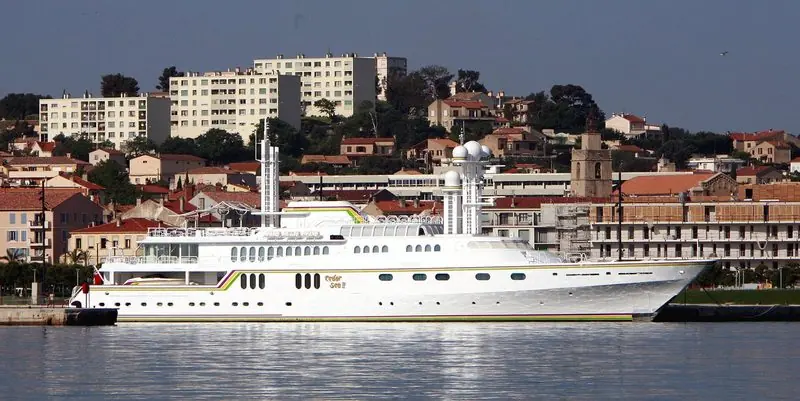
The office takes refits as readily as new builds, and that is unusual at this level. Predator returned to Feadship in 2016 for a refit that added two guest suites. Scott Free, the 60 metre Abeking and Rasmussen delivered in 2009 as Elandess with a Donald Starkey exterior, carries a Bannenberg and Rowell interior.
Refit work is a harder brief than a new build and it pays less. The structure, the systems and the deck heights are fixed, half the drawings are missing or wrong, and every discovery on site costs money that was not budgeted. A studio willing to do it is a useful appointment for an owner buying a good hull with a tired interior, which at current new-build prices and delivery slots is an increasingly sensible route into a large yacht.
How a commission runs, and what it costs
The studio works closely and informally with owners from concept through delivery, on new builds and refits alike, and its designers stay on a project through construction to protect the scheme. There is no naval architecture in house, so the yard or an outside office holds the hull, the structure and every performance guarantee in the build contract. On a Feadship the platform comes from Studio De Voogt. Commercially the design agreement is separate from the build agreement and is signed and paid first, in stages, which means an owner can stop after concept for the price of the concept and can take the drawings to more than one yard for quotation, subject to the confidentiality undertakings the studio will require.
No studio at this level publishes a fee scale. The market band is 1 to 5 per cent of build cost for the designer and 2 to 4 per cent for project management, both outside the yard's quoted price, per the SuperYachtReview guide updated March 2026, and a mandate covering exterior and interior sits in the upper half of it. A refit is a different animal. It is faster, far less predictable, and the design fee is a smaller number attached to a much larger unknown, because a refit specification is written against a boat nobody has fully opened up yet. A contingency of real size should be budgeted and expected to be used.
Recognition, and who it does not suit
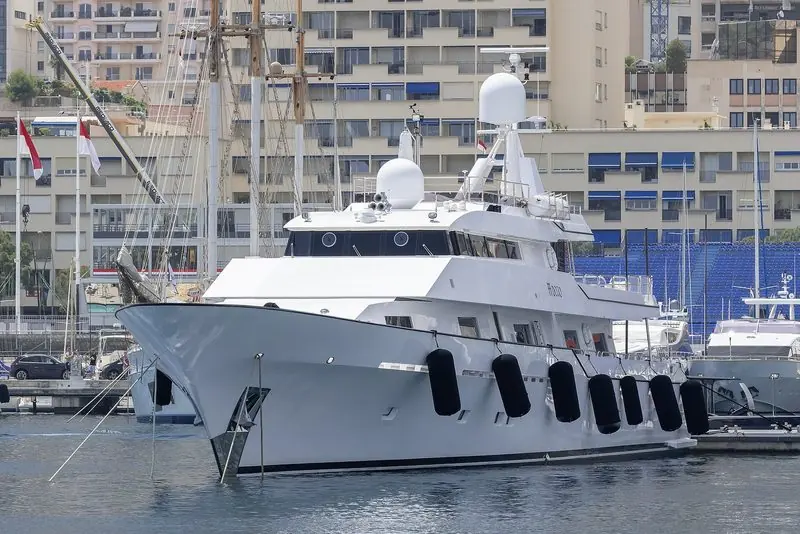
The studio's work has been recognised repeatedly, including the Neptune for Predator in 2009, and the Bannenberg name still carries weight across the industry. Awards are worth a narrow amount to an owner, confirming a finish standard and helping a broker at resale. The more useful signal is the spread of yards, which runs from Feadship and Lurssen to a Spanish builder and a German one, on new builds and refits alike.
This studio does not suit an owner who wants to buy a recognisable signature, because the practice deliberately does not have one. It does not offer naval architecture. It is not the obvious choice above about 112 metres, and it is not a sailing yacht office. Anyone who wants formal, polished grandeur will find the work too playful for the brief.
Two principals, an archive, and what the contract should cover
The practice runs on two named people, a director and a creative director, in a studio Forbes described as twelve strong in February 2017, and no current headcount is published. That concentration is part of what an owner is buying and it is also a risk that the standard documents ignore. The ITIC standard trading conditions for naval architects, dated 8 July 2025, cover intellectual property and cap liability at ten times the consultant's charges or GBP 100,000, whichever is higher, and say nothing about the unavailability of a named principal. Commercial consultancy handles this routinely, treating death or long incapacity of a key person as a termination event and requiring a replacement of equal standing subject to the client's approval.
The drawing question is sharper here than at most studios because of the archive. Copyright normally stays with the designer, with the owner licensed to build one hull, and superyacht practice at its best converts that into an exclusive, irrevocable and assignable licence, which is the standard clause Federico Santini describes in Barche magazine in August 2018. On a refit the same logic applies to the original designer's drawings, which the studio will not own and may not be permitted to copy. An owner buying a good hull that needs a new interior should establish who holds the as-built drawings before he signs anything, because that answer sets the cost of the whole project.
No signature means nothing to date
The deliberate absence of a house style is the most resale-friendly position in the directory, and almost nobody buys it for that reason. A boat that does not announce a studio also does not announce a decade. There is no fashionable silhouette to fall out of fashion and no theme the next owner has to either adopt or rip out. Ocean Independence, on 11 May 2026, ranks builder pedigree, specification and condition above cosmetic detail in what holds value, which is a polite way of saying the market prices the boat and not the byline. Work that is unformulaic by intention slips through that filter without a penalty.
Against that, the Bannenberg name still carries with brokers and with the trade, and it earns a hearing that an unknown studio would not get. The one place the approach costs money is with a buyer who wants to be told what he is looking at. Something recognisable is easier to market in a listing photograph, which matters when the median yacht of 24 metres and over took 277 days to sell in 2025 against an average of 487. A characterful boat with no obvious label needs a broker willing to explain it, and is worth more to the buyer who works that out for himself.
Praktische Angaben
| Design fee | Not published by the studio; the market-wide band from the SuperYachtReview 2026 price guide is 1 to 5 percent of build cost for the designer plus 2 to 4 percent for project management, both outside the yard's quoted price |
|---|---|
| How the commission runs | Concept, then design development, then detailing, procurement and site support, each stage its own fee and each a point where an owner can stop |
| Who owns the drawings | Standard practice keeps copyright with the studio; an owner should insist on an exclusive, irrevocable, assignable licence rather than the bare non-exclusive licence the ITIC standard terms default to |
| Before commissioning a refit | Establish who holds the as-built drawings of the existing interior before signing, the original designer may own them and may not permit a new studio to copy them |
| Liability cap | The ITIC standard trading conditions (8 July 2025) cap the consultant's liability at ten times its charges or GBP 100,000, whichever is higher |
Was Eigner und Crew berichten
A captain given complete authority over the design of a major project
The owner of Predator (72.8 m Feadship) gave Captain Drewes 100 percent control over the decision-making for the entire project, including the interior brief for quiet running, no vibration and 25 knots without a turbine.
Captain Drewes, Predator (72.8 m Feadship de Vries)The studio's own account of that same project
Dickie Bannenberg said the real difficulty was making a lightweight interior look the opposite, massive and solid, using Macassar ebony and zebrano veneers, and described client contact as almost the least frequent the studio has had on any project, because Drewes had full sign-off.
Dickie Bannenberg, Bannenberg & Rowell (the studio's own account)
Was gut ist und worauf zu achten ist
Stärken
- The name and the track record are real, not marketingDirect lineage from Jon Bannenberg, credited with founding modern yacht design in the 1960s, and roughly forty projects delivered since the 2003 relaunch, spanning Feadship and Lurssen to Spanish and German yards.
- No house style ages better than a strongly authored oneA Bannenberg & Rowell interior doesn't announce a decade the way a strongly authored scheme does, which Ocean Independence ranks among the things that actually hold resale value.
- It takes on work most studios avoidThe office does refits as well as new builds, including finishing interiors inside hulls and layouts originally designed by other people.
Worauf zu achten ist
- The whole studio rests on two named peopleThe practice runs on a director and a creative director, last a published headcount of twelve (Forbes, 2017) with no current figure available, and the standard ITIC contract terms have no clause for a named principal becoming unavailable.
- No naval architecture in-houseThe studio doesn't offer naval architecture, so an owner has to appoint and coordinate a separate NA office alongside it.
- Not the natural pick at the very top of the marketThe studio is not positioned as the obvious choice above roughly 112 metres, and it does not do sailing yachts.
Für wen: Eigner, die erfinderisches, charaktervolles Design mit einem Sinn für Witz wollen, auf einem Neubau oder einem Refit.