RWD (Redman Whiteley Dixon)
| Vollständiger Name | Redman Whiteley Dixon (RWD) |
|---|---|
| Gründer | Justin Redman und Mark Whiteley, Tony Dixon kam 2001 hinzu |
| Gegründet | 1993 |
| Sitz | Beaulieu, Hampshire, England |
| Disziplinen | Exterieur- und Interieurdesign |
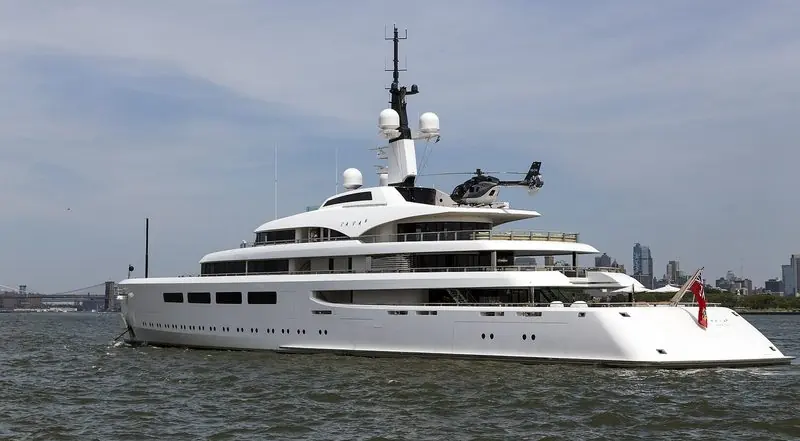
| Prägende Yachten | Ilona (73 m), Al Said (155 m), Vava II, Como |
| Portfolio | rund 75 Yachten von etwa 35 m bis 155 m |
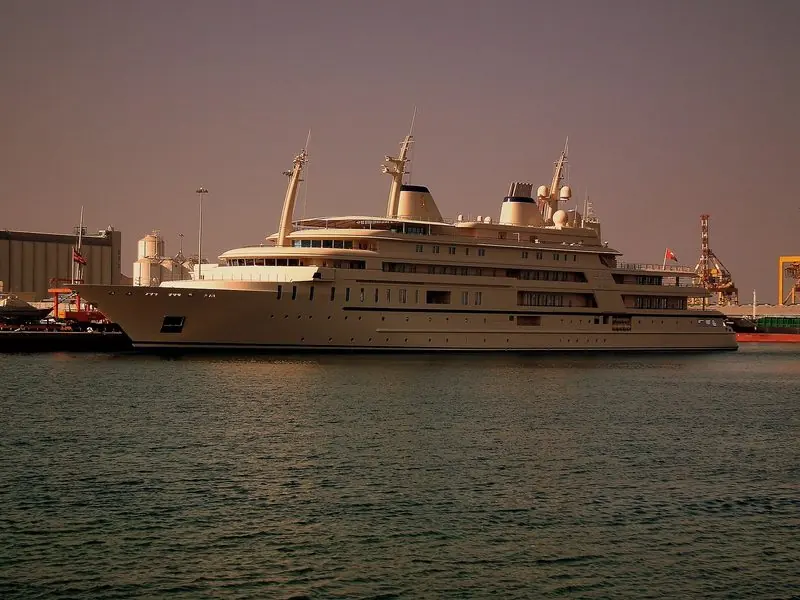
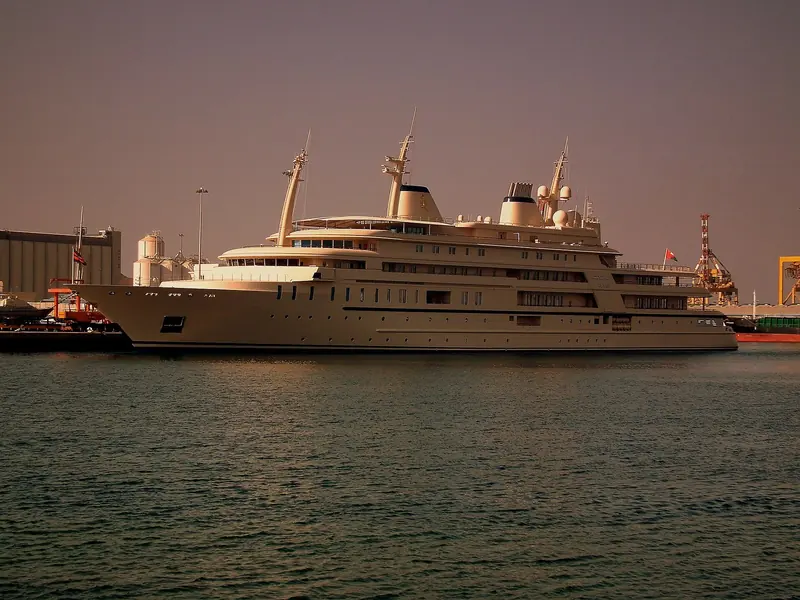
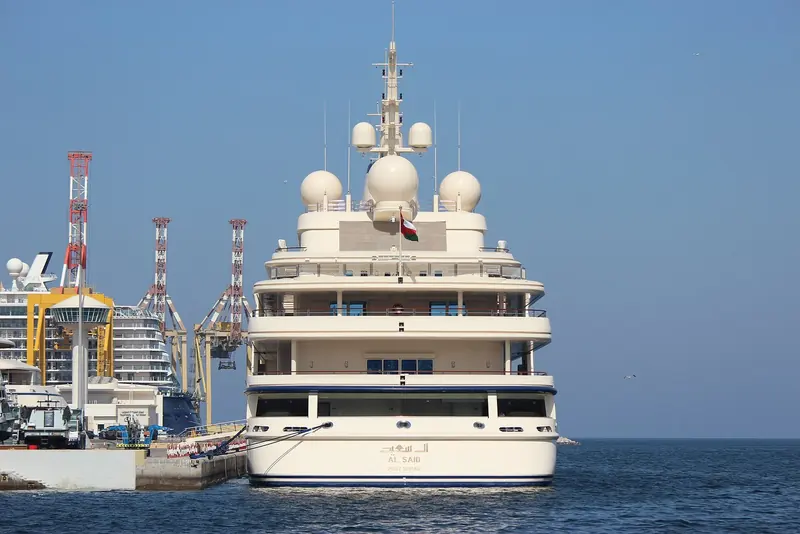
| Largest | Al Said, 155 m, Lurssen, 2008, RWD interior over an Espen Oeino exterior |
| Breakthrough, 118.8 m, Feadship, launched May 2024: exterior and interior by RWD, the first hydrogen fuel-cell superyacht, 7,247 GT | |
| Sophia, 96.55 m, Feadship, delivered 2017 as Faith: exterior and interior | |
| Vava II, 96 m, Devonport, 2012 | drawn by RWD, with the interior credited to Remi Tessier |
| Series work | Benetti's B.Now range at 50, 60, 67 and 72 metres, and the Oasis range at 34 and 40 metres |
| Design fee | not published. Market band 1 to 5 per cent of build cost, plus 2 to 4 per cent project management, both outside the yard price (SuperYachtReview 2026 price guide, updated March 2026) |
| Construction-phase attendance is normally charged in addition to the design fee rather than included in it, which is standard naval architecture practice (Sponberg Yacht Design and Kasten Marine published terms, read 28 July 2026) | |
| Series work for Benetti puts RWD lines into the brokerage market in numbers, which gives valuers comparables that a one-off design does not have | |
Gegründet an der Südküste
RWD steht für Redman Whiteley Dixon, die Nachnamen hinter dem Büro und nicht für eine andere Lesart der Initialen. Justin Redman und Mark Whiteley lernten sich im Industriedesign-Studium in London kennen und gründeten das Studio 1993. Tony Dixon kam 2001 hinzu, und das Unternehmen nahm bald darauf seinen heutigen dreiteiligen Namen an. Das Büro sitzt in einem umgebauten Elektrizitätswerk am Ufer des Beaulieu River in Hampshire. Jeder der drei Nachnamen gehört einem seiner Designer und nicht einer erfundenen Wortfolge.
Von einem frühen Sitz in Chelsea zog das Studio an die Küste des New Forest, näher an das Wasser und die Werften, die es bedient. Über drei Jahrzehnte stetiger Arbeit hat es ein großes Team aufgebaut. Der Umzug gab dem Büro Raum zum Wachsen und zugleich eine ruhige Lage am Fluss. Dieser Sitz ist Teil der Identität des Studios geworden. Die Lage am Wasser passt zu einem Büro, dessen Arbeit ganz vom Leben auf See handelt.
Zurückhaltung und Proportion
Die Handschrift von RWD bevorzugt klare, ausgewogene Linien und eine ruhige Selbstsicherheit statt visuellem Lärm. Das Studio ist für Proportion bekannt und für Exterieurs, die gut altern, statt einer vorübergehenden Mode nachzujagen. Es entwirft Exterieur und Interieur, was hilft, eine Yacht vom Profil bis zum Salon stimmig zu halten. Die Arbeit liest sich zurückhaltend, passend zu ihren britischen Wurzeln. Das Studio zieht eine Linie, die in zwanzig Jahren noch stimmt, einer vor, die schnell altert.
Das Büro zielt auf Zeitlosigkeit, auf eine Yacht, die viele Jahre nach dem Stapellauf noch richtig aussieht. Diese Disziplin passt zu Eignern, die Langlebigkeit über Neuheit stellen. Das Studio bewältigt eine große Spanne an Größen, ohne seinen abgewogenen Charakter zu verlieren. Seine Zurückhaltung ist ein bewusster Gegensatz zu extrovertierteren Häusern. Dieser abgewogene Charakter ist eine Entscheidung und keine Grenze dessen, was das Studio zeichnen kann.
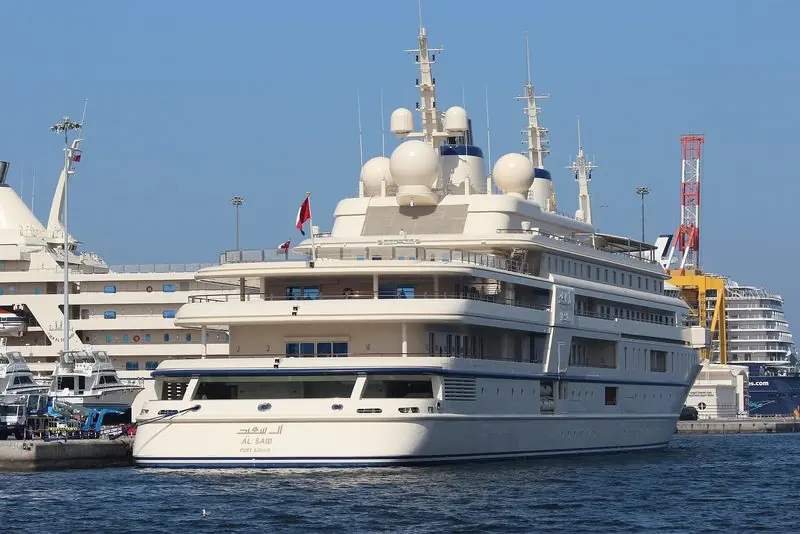
Britische Zurückhaltung in jeder Größe, vom 35-Meter-Cruiser bis zum 155-Meter-Flaggschiff.
Von Ilona bis Al Said
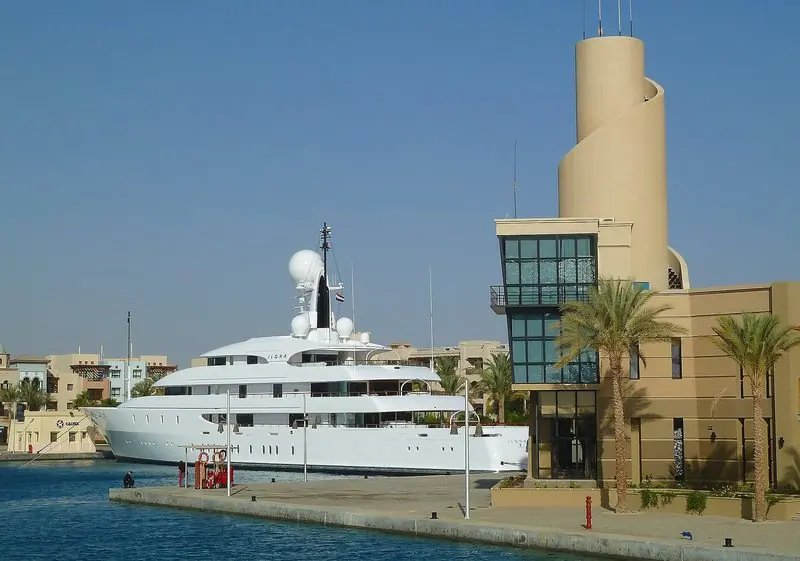
Die 73 Meter lange Ilona, gebaut von Amels, etablierte das Studio in der Superyachtwelt und öffnete die Tür zu größeren Arbeiten. Am anderen Ende ist die 155 Meter lange Al Said die größte Yacht im Portfolio von RWD. Zwischen diesen Polen liegen Yachten wie Vava II, Twizzle und Como, die die Bandbreite des Studios zeigen. Das Büro hat über diese Spanne hinweg eine große Zahl von Yachten fertiggestellt. Der Aufstieg zu Superyachtgrößen kam stetig und nicht durch einen einzelnen Sprung.
Zu den jüngeren Arbeiten zählen Faith und weitere bedeutende Motoryachten, die von führenden Werften abgeliefert wurden. Das Studio hat rund 75 Yachten von etwa 35 Metern bis 155 Metern gestaltet. Diese Menge macht es zu einem der erfahrensten Büros in Großbritannien. Die Breite der Flotte steht im Zentrum seines Rufs. In diesem Tempo über drei Jahrzehnte abzuliefern verlangt ein tiefes und eingespieltes Team hinter den Gründern.
Ein kooperatives Büro
RWD arbeitet eng mit Eignern und Werften in ganz Europa und passt seinen Prozess jedem Projekt an. Das Studio ist es gewohnt, einen vollständigen Entwurf zu führen oder sich allein auf Exterieur oder Interieur zu konzentrieren. Seine lange Erfahrung erlaubt ihm, Erstkäufer ebenso zu führen wie erfahrene Eigner. Diese Flexibilität erklärt einen Teil des stetigen Auftragsflusses. Das Studio passt seine Rolle dem Eigner an, statt jedem Auftrag einen festen Prozess aufzuzwingen.
Das Büro hat über wiederkehrende Aufträge Beziehungen zu mehreren großen Werften aufgebaut. Yachten bis 155 Meter abzuliefern verlangt enge Abstimmung mit den Ingenieuren einer Werft, und das Studio ist diese Disziplin gewohnt. Es behält während des Baus eine praktische Rolle, um die Entwurfsabsicht zu schützen. Diese Sorgfalt bis zur Ablieferung ist ein Grund, warum Eigner zurückkehren. Wiederkehrende Kunden sind ein starkes Zeichen dafür, dass die fertige Yacht den frühen Zeichnungen entsprach.
Unter den produktivsten Büros Großbritanniens
Mit rund 75 Yachten unter eigenem Namen zählt RWD zu den produktivsten Designhäusern Großbritanniens. Seine Arbeit schreit nicht, was es in der Presse mitunter leiser gehalten hat als auffälligere Wettbewerber. Innerhalb der Branche jedoch gebietet seine Bilanz Respekt. Der Ruf des Studios ruht auf einem tiefen und gleichmäßigen Bestand gebauter Arbeit. Stille Beständigkeit, nicht eine einzelne Schlagzeilenyacht, macht das Büro aus.
RWD hat bewiesen, dass es in jeder Größe arbeiten kann, vom Mittelklasse-Cruiser bis zu einem Flaggschiff von nationalem Maßstab. Diese Vielseitigkeit ist ungewöhnlich und wertvoll. Das Büro gewinnt weiterhin Aufträge an der Spitze des Marktes. Seine Mischung aus Zurückhaltung und Bandbreite hält es fest etabliert. Nur wenige britische Studios erreichen diese Verbindung aus stetigem Ausstoß und Größenbreite.
The Dutch and German order book
Feadship has been the closest relationship. Sophia, 96.55 metres, was delivered in 2017 under the name Faith with exterior and interior by the studio, and the 73.55 metre Sherpa followed in 2018. Destiny, at 101.2 metres, is listed for 2026. Vava II, 96 metres from the British yard Devonport in 2012, was drawn by RWD with the interior credited to Remi Tessier.
At Lurssen the studio has Al Said behind it, the 102.4 metre Nixie listed for 2026 and the 122.5 metre Project Omega with a delivery date well into the future. Benetti built the 108 metre I.J.E. in 2019. That spread across the three or four yards capable of building above 100 metres matters when an owner has already picked a builder, because it means the studio arrives knowing how that yard prices a change and how long its engineering department really needs.
The Benetti series, for owners who will not commission from nothing
RWD drew Benetti's B.Now range at 50, 60, 67 and 72 metres, and the smaller Oasis range at 34 and 40 metres. These are semi-custom platforms. The hull, the engineering and the general arrangement are largely settled before a buyer appears, and the yard builds them speculatively or against early orders.
What the buyer gives up is authorship of the profile, which will be shared with every other hull in the series. What he gets is a delivery measured in a year or two, a price fixed at contract and a boat with an established resale market, because brokers know exactly what a B.Now is worth. The Oasis range in particular put the studio's habit of opening the hull into production form, with fold-down beach club terraces as a standard feature.
How a commission runs, and what it costs
A project starts with conversations about how the owner and his family actually use a boat, because the studio's leverage is on layout and volume before it is on styling. Concept sketches and a general arrangement follow, then exterior and interior develop in parallel because one office holds both. The fee is staged against those deliverables and paid before the yard is contracted. What an owner buys at concept stage, for the smallest tranche of the total, is a package a yard can price, and the right to walk away holding drawings he has licensed. The commitment is the yacht building agreement, and the practical commitment is the day the yard starts engineering to these drawings.
There is no published fee scale. The market band for a designer, from the SuperYachtReview guide updated March 2026, is 1 to 5 per cent of build cost, with project management a separate 2 to 4 per cent, neither of them inside the yard's number. Exterior and interior together sit high in that band, and the studio's construction-phase involvement is normally an additional charge rather than part of the design fee, which is how the profession bills supervision. That charge is the one an owner should not negotiate away. Drawings get value-engineered on the shop floor, and the difference between a design that survives and one that quietly degrades is whether the designer is still in the room when the yard proposes a cheaper detail.
Recognition, and who it does not suit
RWD does not shout, and it has historically been quieter in the consumer press than more flamboyant houses. Within the industry the record speaks for itself, and the studio's work has been recognised repeatedly at the design awards. Awards are worth a narrow and real amount to an owner, because they confirm a finish standard and they help a broker at resale. They say nothing about behaviour under pressure.
This studio does not suit an owner who wants a profile nobody has seen before, because the work is deliberately calm and will disappoint anyone chasing spectacle. It does not do naval architecture, so an owner who wants hull form and styling from one firm needs a different structure. It is not the obvious choice for a sailing yacht today, whatever the studio's origins, and it is not set up for boats below about 30 metres outside the Benetti ranges.
Understatement is a resale strategy, whether or not it was meant as one
A yacht carrying this studio's name sells better than average, and the reason is the thing that disappoints owners looking for spectacle. Calm work does not date, so a buyer in 2035 is not looking at a boat that announces the year it was drawn. The second reason is structural. Benetti's B.Now and Oceans ranges put dozens of hulls to RWD lines into the brokerage market, and comparables are what valuations are made of. Ocean Independence, on 11 May 2026, ranks builder pedigree and specification above cosmetic detail in what holds value, and this studio's work is almost always attached to a Dutch, German or top Italian yard.
The honest deduction is that an owner is not paying a premium for a name the market rewards. He is paying for a hull that opens up, and the resale benefit is a consequence of restraint rather than of the signature. The one place it costs him is at the point of sale to a buyer who wants drama, and there are such buyers. A boat that photographs quietly gets fewer enquiries and better ones. Given a median 277 days on market across the 470 yachts of 24 metres and over sold in 2025, fewer and better is the right trade.
Praktische Angaben
| Design fee | not published; market band is 1 to 5 per cent of build cost plus 2 to 4 per cent project management, both outside the yard price (SuperYachtReview 2026 price guide, updated March 2026) |
|---|---|
| What the studio covers | exterior design, interior design and interior architecture; naval architecture belongs to the yard or a specialist office |
| Studio size and base | around 60 people, including the interior studio POD Interior Style, working from a converted power station on the Beaulieu River, Hampshire |
| Series routes to a faster, cheaper commission | Benetti's B.Now (50, 60, 67, 72 m) and Oasis (34, 40 m) semi-custom ranges, where the hull, engineering and general arrangement are largely settled before a buyer appears |
| The largest project by length | the interior of Al Said, 155 m, Lurssen 2008, a state yacht for Oman with a concert hall sized for a fifty-piece orchestra - RWD interior over an Espen Oeino exterior |
Was Eigner und Crew berichten
No independently attributable owner testimony found
search returned the partners' own description of their approach (Justin Redman on hand-drawing and collaboration, Tony Dixon calling large yachts 24-hour hotels) and a Feadship build captain's comment on Breakthrough's owner reducing his global footprint, but no on-the-record quote from a private owner or a named captain assessing RWD's design work specifically; RWD's client base skews toward owners who stay out of the consumer press, which the studio's own quiet public profile reflects
Yotters research desk
Was gut ist und worauf zu achten ist
Stärken
- One office for both exterior and interiora styling change and a layout change get argued by the same team against the same general arrangement, rather than negotiated between two studios; Breakthrough and Sophia (delivered as Faith) both carried exterior and interior from RWD
- Proven at the largest and most technically demanding end of the marketthe 118.8 metre Breakthrough is the largest superyacht ever launched in the Netherlands and the first hydrogen fuel-cell superyacht, at 7,247 GT, with fourteen balconies and seven unfolding platforms, the most apertures Feadship has ever built into one hull
- A slow, real succession planToby Ecuyer joined in 2004, became creative director in 2006 and made partner after a decade in the studio; several of the best-known single-name practices in this directory have no succession plan at all
- Series work gives an owner real resale comparablesBenetti's B.Now range at 50, 60, 67 and 72 metres and the Oasis range at 34 and 40 metres put dozens of RWD-drawn hulls into the brokerage market, which is unusual for a studio that also does full bespoke work at 150 metres plus
Worauf zu achten ist
- No naval architecturehull engineering sits with the yard or a specialist office - De Voogt on the Feadships - so an owner is buying how the boat looks and lives, not how it is engineered to move
- No published fee scalethe only public figures are the market-wide SuperYachtReview band of 1 to 5 per cent of build cost plus 2 to 4 per cent project management, and construction-phase attendance is normally billed on top of the design fee rather than included in it
- A quiet public profile cuts both waysthe studio has historically stayed out of the consumer press compared with more flamboyant houses, which suits owners who want discretion but leaves a buyer with less independent commentary to check the work against before commissioning
- Key-person risk across three named partners rather than onethe practice trades on the Redman Whiteley Dixon name; a step-in or replacement clause covering any of the three partners becoming unavailable mid-build has to be negotiated into the contract, not assumed
Für wen: Eigner, die zurückhaltendes, gut proportioniertes Design schätzen, das auch Jahrzehnte nach dem Stapellauf noch richtig aussieht.